In this guide
💡 The Short Version: Our judgement, not a ranking: pick Tokyo for four to five days of contrasting modern districts (Asakusa and Ueno in the east, Meiji Jingu, Shibuya and Shinjuku in the west), teamLab Planets (from ¥3,800), Shibuya Sky (¥2,700–¥3,400) and day trips to Mount Fuji, Hakone or Kamakura. Pick Kyoto for three days of Japan’s former imperial capital: more than 1,600 Buddhist temples, 400 Shinto shrines and 17 UNESCO monuments — including Fushimi Inari, Kiyomizu-dera (¥500 cash) and Kinkaku-ji (¥500 cash) — plus Gion and Nara 35 minutes away. With a week or more, do both: the Nozomi Shinkansen links Tokyo Station and Kyoto Station in 2 hours 15 minutes. Or book a tour: the Asakusa and Senso-ji walking tourad is from ¥2,000 in Tokyo, and the Kyoto early-morning Fushimi Inari, Arashiyama and Kinkaku-ji tourad is from ¥11,775 in Kyoto (GetYourGuide).
⚠️ Tokyo demands timed tickets weeks ahead; Kyoto demands early mornings, cash and bus-luggage discipline. In Tokyo, teamLab Planets sells no door tickets, the Ghibli Museum releases an entire month’s allocation on the 10th of the previous month via Lawson Ticket, and Mondays shut the Imperial Palace East Gardens, Shinjuku Gyoen and the Tokyo National Museum. In Kyoto, major temples operate daytime cash-only gates (Kinkaku-ji shuts at 17:00, last entry 16:40), Kyoto City Buses restrict suitcases over 160 cm, and Gion enforces ¥10,000 fines for photography in marked private alleys.
Tokyo and Kyoto side by side
Prices are each operator’s adult rate in Japanese yen (¥). Each row links to the city’s own guide for full booking rules and hours.
| Tokyo | Kyoto | |
|---|---|---|
| What to book & advance window | teamLab Planets from ¥3,800 (timed online only); Shibuya Sky ¥2,700 before 15:00 / ¥3,400 after (2 weeks ahead); Ghibli Museum ¥1,000 (10th of prior month on Lawson Ticket); Tokyo Disney 2 months ahead at 14:00 JST; Skytree from ¥1,800 online | Sagano Romantic Train (30 days ahead, essential in spring/autumn; Klookad{rel=“sponsored nofollow noopener”}); tea ceremonies (1–4 weeks ahead); kaiseki dining (1–2 months ahead); Nijo Castle & Ninomaru Palace ¥1,300; Kiyomizu-dera & Kinkaku-ji ¥500 cash at gate; Fushimi Inari free, 24/7 |
| Closed days | Mondays: Imperial Palace East Gardens (also Fridays), Shinjuku Gyoen, Tokyo National Museum, Edo-Tokyo Museum. Tuesdays: Ghibli Museum (most weeks). Year-end shutdown from 28 Dec | Mondays: Kyoto Imperial Palace. Most major temples open daily, but close early (Kinkaku-ji 09:00–17:00, Kiyomizu-dera 06:00–18:00, Nijo Castle 08:45–17:00) |
| City pass verdict | 72-hour Tokyo Subway Ticket is ¥2,000 (covers Tokyo Metro & Toei, not JR); pays back easily on metro-heavy days. Japan Rail Pass (¥50,000 for 7 days) does not pay for Tokyo–Kyoto return alone and excludes the Nozomi without a supplement | Use an ICOCA (or mobile Suica/Pasmo) across subways, JR, Keihan, Hankyu and buses. Avoid relying on city buses at peak hours due to traffic and suitcase bans |
| Public transport | Dense rail and subway web (JR Yamanote, Tokyo Metro, Toei). Suica/Pasmo (¥500 refundable deposit) or mobile IC card. Contactless bank cards work at metro gates, not JR | Two subway lines (Karasuma & Tozai) plus JR, Keihan (east bank/Gion/Fushimi Inari) and Hankyu (Shijo/Arashiyama). City buses ban suitcases over 160 cm |
| Airport to centre | Haneda: Monorail to Hamamatsucho ¥520, Keikyu to Shinagawa ~15 min. Narita: Keisei Skyliner to Ueno 41 min (¥2,580); Narita Express to Tokyo Station (¥3,140) | Kansai Airport (KIX): direct JR Haruka Express to Kyoto Station in 75–80 min, every 30 min (Klook e-ticketad{rel=“sponsored nofollow noopener”} saves ~35% vs counter) |
| Tourist tax & entry rules | Hotel tax ¥100–¥200/night (rooms ¥10,000+). Visa-free 90 days for UK, US, Canada, Australia, EU; complete Visit Japan Web before arrival; see Tokyo entry rules | Municipal accommodation tax (from 1 Mar 2026): ¥200 (<¥6,000), ¥400 (¥6,000–¥20,000), ¥1,000 (¥20,000–¥50,000), ¥4,000 (¥50,000–¥100,000), ¥10,000 (¥100,000+). Same Japan entry rules; see Kyoto entry rules |
| Price level & currency | Japanese yen (¥). Wide spread from ¥1,000 ramen to ¥8,250+ concierge sushi lunches. Zero tipping | Japanese yen (¥). Cheap temple entries (¥500) offset by higher peak-season hotel rates and accommodation tax. Heavy cash reliance at temples and Nishiki Market. Zero tipping |
| How many days | 4 to 5 days; see 3 days in Tokyo and 5 days in Tokyo | 3 days; see 3 days in Kyoto and 5 days in Kyoto |
| Best day trips | Mount Fuji, Hakone (¥7,100 Freepass), Kamakura (¥2,080 return JR), Nikko, Yokohama | Nara (35–45 min), Uji (17 min, ¥240 JR), Osaka (29 min, ¥580 JR), Hiroshima & Miyajima (1h 40m Shinkansen), Kurama–Kibune |
| Best season & weather | Mar–May & Oct–Nov; normal full cherry blossom 31 Mar; Aug high 31.3 °C; Sep–Oct wettest (225–235 mm) | Mid-Nov–early Dec (autumn maples, peak 20–28 Nov) & late Mar–mid-Apr (blossom 31 Mar–7 Apr); basin traps summer heat (Jul–Aug highs 33–35 °C+); Jan–Feb quietest and cheapest |
Kyoto’s mountain basin makes summer notably more oppressive than Tokyo’s coastal plain: July and August regularly exceed 35 °C with stagnant humidity, while spring blossom and late-November maple weeks push Kyoto hotel rates to their yearly ceiling.
Book a tour instead
Guided tours solve Kyoto’s dispersed cross-city temple logistics and Tokyo’s neighbourhood-bar language barriers in one booking. Prices are GetYourGuide’s lowest “from” rates for one adult in yen.
| City | From | Tour |
|---|---|---|
| Tokyo | ¥2,000 | Asakusa and Senso-ji guided walking tourad, 2 hours, 4.9 stars from 1,100 reviews |
| Tokyo | ¥13,200 | Shinjuku food and izakaya tourad, 13 dishes at 4 eateries, 3 hours, 4.8 stars from 4,035 reviews |
| Tokyo | ¥7,800 | Mount Fuji day trip to Oishi Park and Oshino Hakkaiad, 10 hours, 4.8 stars from 6,916 reviews |
| Tokyo | ¥9,200 | Kamakura and Enoshima full-day tripad, 9–9.5 hours, 4.6 stars from 1,803 reviews |
| Kyoto | ¥11,775 | Kyoto early-morning tour of Fushimi Inari, Arashiyama and Kinkaku-jiad, 6 hours, 4.9 stars from 1,828 reviews |
| Kyoto | ¥19,000 | Kyoto full-day highlights coach tourad, 1 day, 4.8 stars from 5,497 reviews (Kinkaku-ji, Arashiyama, Fushimi Inari with lunch) |
| Kyoto | ¥8,125 | Nara and Arashiyama full-day bus tourad, 9–10 hours, 4.8 stars from 4,173 reviews, departing Kyoto or Osaka |
For independent visits, Kyoto’s public rail links cost a fraction of coach tours: Uji is ¥240 each way on the JR Nara Line, Osaka is ¥580 on the JR Special Rapid, and Fushimi Inari is free 24 hours a day.
Which city for whom
Each verdict below builds directly on the figures and logistics in the table.
A first visit: both if you have 8+ days; Tokyo for metropolitan energy, Kyoto for traditional Japan
These two cities are complementary rather than interchangeable. If you have only four or five days in Japan and must choose one, pick Tokyo for a first visit if you want neon neighbourhoods, contemporary art (teamLab), observation decks, shopping and direct international flights into Haneda or Narita. Pick Kyoto if your mental picture of Japan is vermilion torii gates, wooden temple eaves, bamboo groves, tea houses and geisha alleys — and pair it with a 29-minute train evening in Osaka for street food.
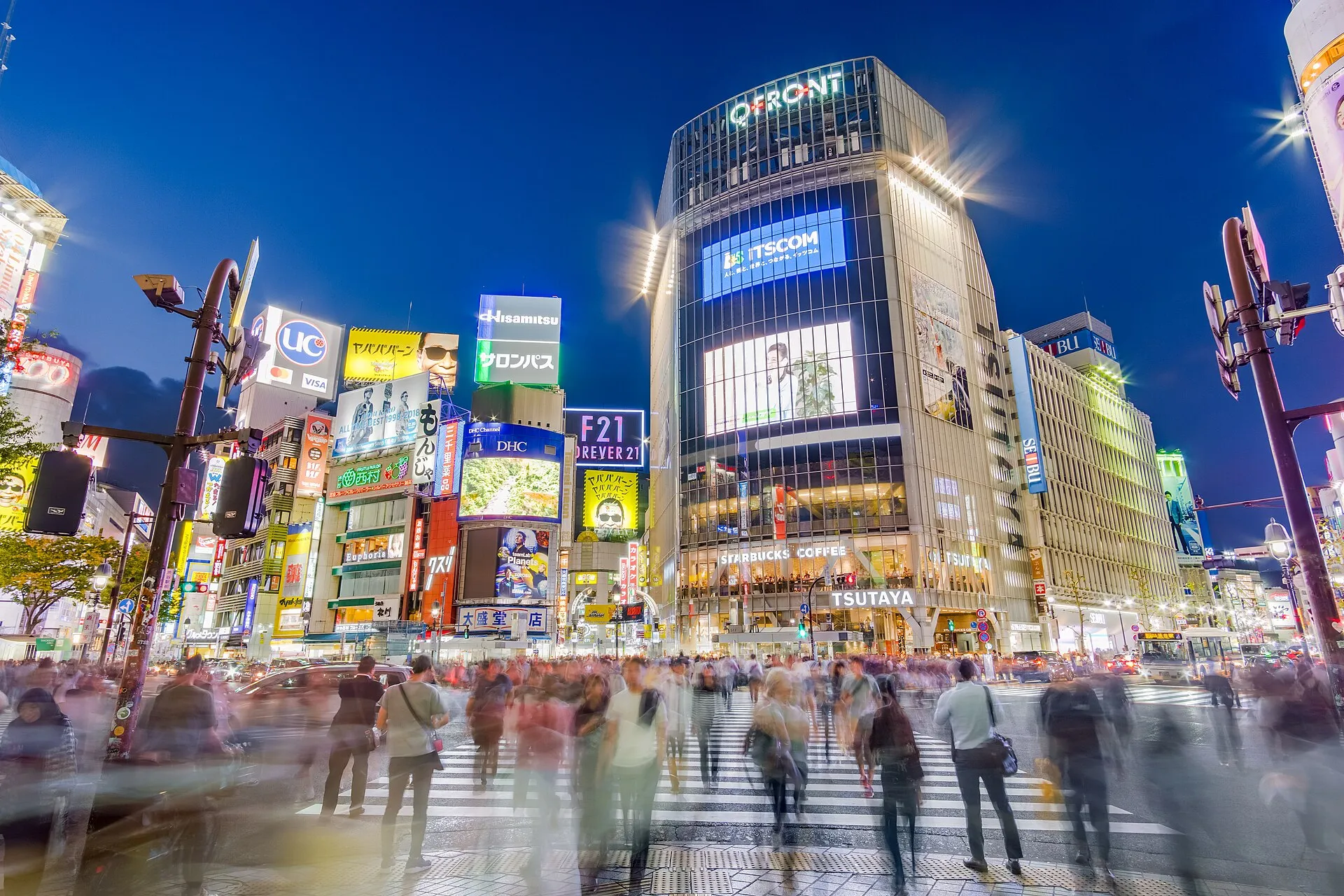
Shibuya Crossing at dusk in western Tokyo. Photo: Benh LIEU SONG, Wikimedia Commons, CC BY-SA 2.0.
A short stay (2 to 3 days): Kyoto for heritage density, Tokyo for direct airport speed
Kyoto fits a focused three-day plan (3 days in Kyoto): Day 1 eastern Higashiyama (Kiyomizu-dera at 06:00, Yasaka Pagoda, Gion), Day 2 Fushimi Inari at dawn plus Nijo Castle and Nishiki Market, Day 3 Arashiyama Bamboo Grove before 08:30 and Kinkaku-ji. However, Kyoto has no airport of its own (75–80 minutes by Haruka from Kansai Airport), whereas Tokyo’s Haneda Airport puts you in Shinagawa in 15 minutes — giving Tokyo the edge on a tight 48-hour stopover (Tokyo in one or two days).
Food and drink: Tokyo for sheer breadth, Kyoto for kaiseki, tofu and matcha
Tokyo wins on volume and variety: ¥1,000 ramen shops such as Fuunji, standing soba counters, Tsukiji/Toyosu market breakfasts, Shinjuku izakaya alleys and concierge-booked omakase sushi counters (where to eat in Tokyo).
Kyoto wins on regional tradition: multi-course seasonal kaiseki dinners (book 1 to 2 months ahead), Buddhist vegetarian shojin-ryori, simmered yudofu around Nanzen-ji, Nishiki Market grazing and matcha sweets sourced from Uji, 17 minutes away (where to eat in Kyoto, Kyoto food tours).
Sights and culture: Kyoto for pre-modern heritage, Tokyo for museums and pop culture
Kyoto stands apart for preserved architecture because it escaped large-scale Second World War bombing: 17 UNESCO World Heritage sites, the gold-leafed Kinkaku-ji, Kiyomizu-dera, Nijo Castle and Gion.
Tokyo delivers modern and contemporary culture: teamLab Planets, the Ghibli Museum, the Tokyo National Museum in Ueno, sumo tournaments in January, May and September, kabuki theatre and skyscraper decks (Shibuya Sky, Skytree).
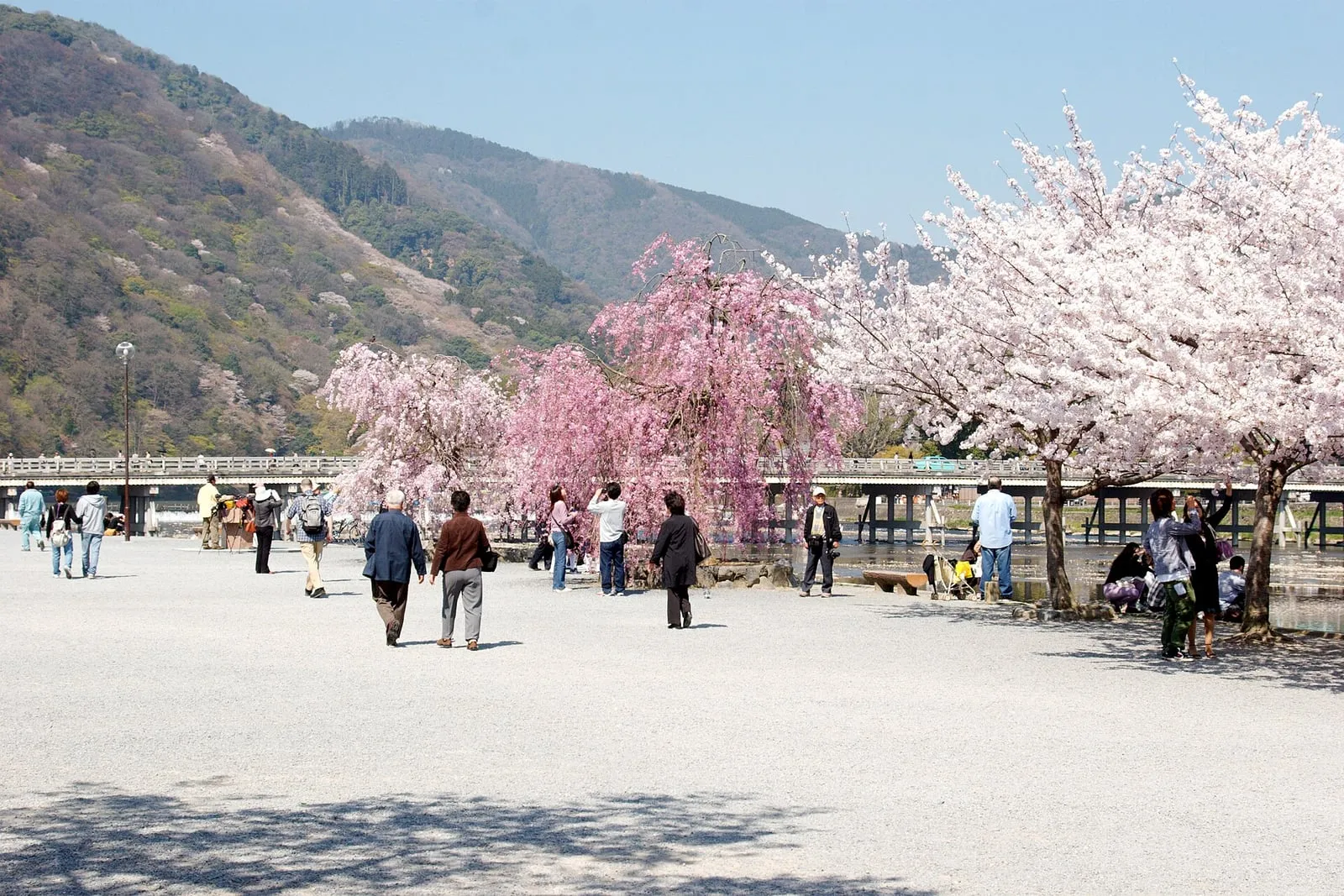
Cherry blossoms and Togetsukyo Bridge in Arashiyama, Kyoto. Photo: KimonBerlin, Wikimedia Commons, CC BY-SA 2.0.
A tight budget: Tokyo in peak blossom/autumn, Kyoto on sight entries
Comparing two paid headline sights per city, Kyoto is far cheaper at the gate: Kinkaku-ji (¥500) plus Kiyomizu-dera (¥500) total ¥1,000 cash (and Fushimi Inari is free), versus teamLab Planets (¥3,800) plus Shibuya Sky (¥2,700–¥3,400) at ¥6,500–¥7,200 in Tokyo. However, Kyoto’s accommodation tax (¥400 to ¥10,000 per person per night from 1 March 2026) and its surge in hotel rates during April cherry blossom and late-November maple weeks often make mid-range rooms dearer than in Tokyo’s vast hotel market. For cheap day trips, Kyoto wins easily: Uji is ¥240 each way, Osaka ¥580 and Nara ¥720–¥1,280.
Families and couples: Tokyo for kids and theme parks, Kyoto for couples
For families, Tokyo wins with Tokyo Disneyland and DisneySea, the Ghibli Museum, teamLab Planets, Ueno Zoo and step-free rail stations. In Kyoto, Toei Kyoto Studio Park (¥2,400 adult / ¥1,200 child) and the Kyoto Railway Museum entertain kids (Kyoto with kids), though crowds on city buses make pushchairs hard work.
For couples, Kyoto wins for staying in a wooden machiya townhouse or ryokan, walking Pontocho Alley at dusk, booking a private tea ceremony and catching temple evening illuminations in spring and autumn.
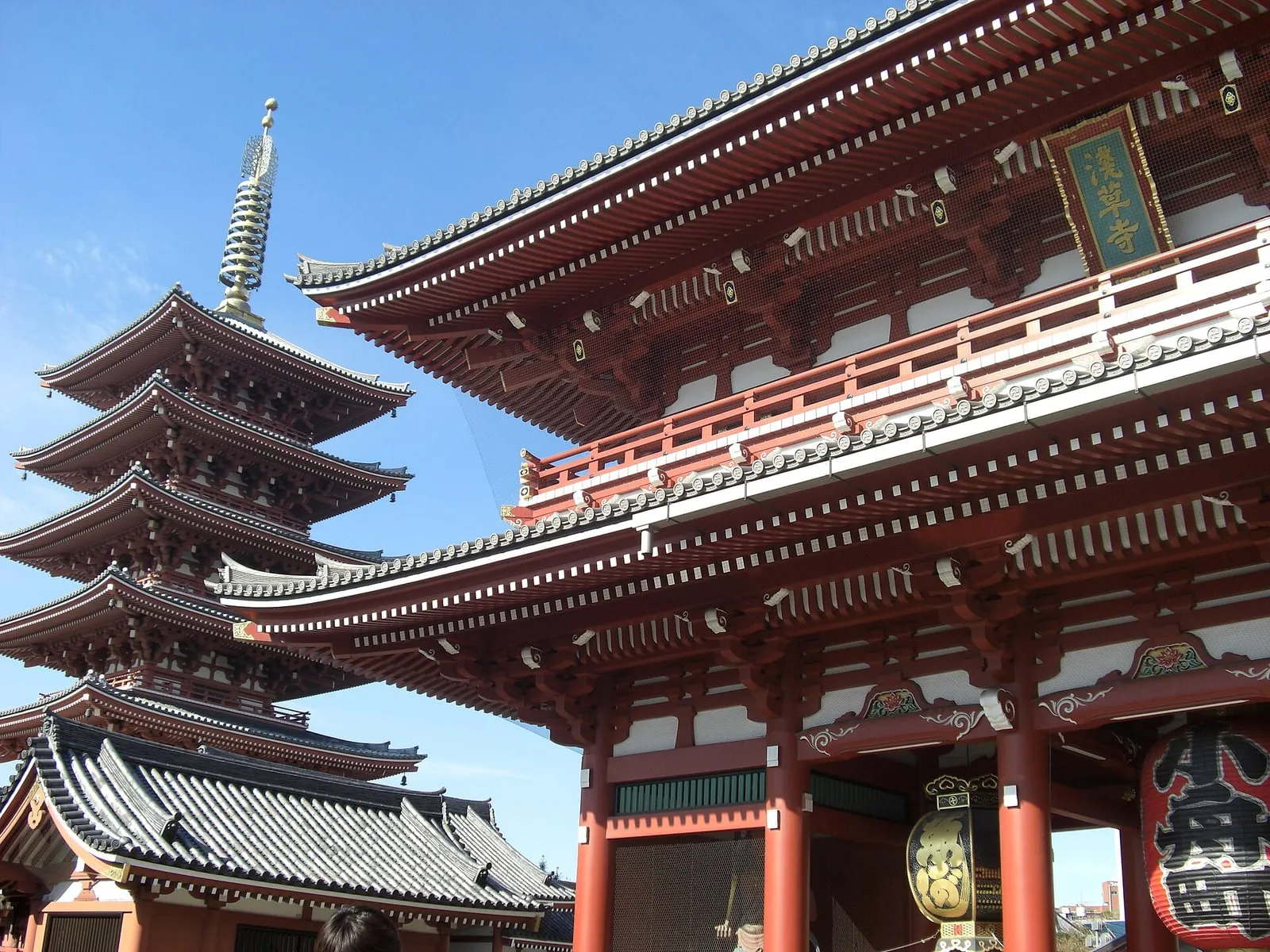
Senso-ji Temple in Asakusa, Tokyo. Photo: ja:利用者:Kanon und wikipedia, Wikimedia Commons, CC BY-SA 3.0.
Doing both: the Shinkansen, the order and where to stay
The Tokaido Shinkansen makes combining Tokyo and Kyoto effortless.
| Service | Route | Journey time | Fare & booking notes |
|---|---|---|---|
| Tokaido Shinkansen (Nozomi) | Tokyo / Shinagawa ↔ Kyoto Station | About 2 hours 15 minutes | Reserved ordinary seat ~¥14,170; opens 1 month ahead at 10:00 JST on SmartEX. Not covered by Japan Rail Pass without supplement |
| Tokaido Shinkansen (Hikari) | Tokyo / Shinagawa ↔ Kyoto Station | About 2 hours 40 minutes | Covered by Japan Rail Pass |
Reserve an oversized baggage seat when booking if your suitcase exceeds 160 cm in combined length, width and height, or ship large bags hotel-to-hotel via takkyubin courier so you avoid Kyoto’s bus suitcase ban altogether. Remember that seats sell out weeks ahead during Golden Week (29 April and 3 to 5 May in 2027) and peak New Year travel.
Which order: for 8 to 10 days, do Tokyo first (4 to 5 days), then Kyoto (3 to 4 days), flying into Haneda/Narita and out of Kansai Airport (KIX) on the 75-minute Haruka Express so you never pay for a return Shinkansen. Travel from Tokyo to Kyoto on a Monday: Tokyo’s Imperial Palace East Gardens, Shinjuku Gyoen and Tokyo National Museum are shut on Mondays, whereas Kyoto’s Fushimi Inari, Kiyomizu-dera, Kinkaku-ji and Arashiyama are all open.
Where to stay: in Tokyo, stay in Shinjuku or Shibuya for western nightlife and rail hubs, or near Tokyo Station/Shinagawa for an early Shinkansen (where to stay in Tokyo, Shinjuku or Shibuya). In Kyoto, stay downtown around Kawaramachi and Karasuma for evening dining and walking access to Gion, or beside Kyoto Station for effortless Shinkansen, Haruka and Nara Line transfers (where to stay in Kyoto).
For full booking tables, see Tokyo and Kyoto. Comparing other Asian pairs? Read Tokyo vs Osaka, Osaka vs Kyoto, Seoul vs Tokyo and best Asian cities for a first trip.
Common questions
Is Tokyo or Kyoto better for a first trip to Japan?
If you have a week or more, do both — they sit 2 hours 15 minutes apart on the Nozomi Shinkansen and show completely different sides of Japan. If you can visit only one, pick Tokyo for modern neighbourhoods, museums, food range and Mount Fuji/Kamakura day trips; pick Kyoto for 1,600 temples, traditional wooden machiya lanes, tea ceremonies and easy trains to Nara and Osaka.
How long is the Shinkansen from Tokyo to Kyoto, and how much does it cost?
The Nozomi Shinkansen takes about 2 hours 15 minutes from Tokyo Station to Kyoto Station, with frequent departures all day. Reserved ordinary seats cost around ¥14,170 (going on sale at 10:00 Japan time one month ahead on SmartEX and at JR stations). Note that the Japan Rail Pass does not cover the Nozomi without a separate supplement.
How much is Kyoto's accommodation tax compared with Tokyo's?
Kyoto's municipal accommodation tax is higher at every tier since 1 March 2026: ¥200 per person per night under ¥6,000, ¥400 for ¥6,000 to ¥20,000, ¥1,000 for ¥20,000 to ¥50,000, ¥4,000 for ¥50,000 to ¥100,000 and ¥10,000 above ¥100,000. Tokyo charges ¥100 for rooms of ¥10,000 to ¥14,999 and ¥200 for ¥15,000 and above.
Do you need cash in Tokyo and Kyoto?
Yes, especially in Kyoto. While convenience stores, train gates and department stores accept contactless cards and IC cards (Suica, Pasmo, ICOCA), most Kyoto temple admission gates (Kinkaku-ji ¥500, Kiyomizu-dera ¥500), calligraphy stamps (goshuin) and Nishiki Market stalls take cash only. Carry ¥10,000 to ¥15,000 in notes from Seven Bank or Japan Post ATMs.
How many days do you need in Tokyo and in Kyoto?
Plan four to five days in Tokyo and three days in Kyoto (four or five if you add Nara, Uji or Hiroshima as day trips). With eight to ten days in Japan, split them five in Tokyo and three to four in Kyoto.
What are the main etiquette and luggage traps in Kyoto?
Photography is banned on private alleys in Gion, with fines up to ¥10,000, and photographing geiko or maiko without consent is prohibited. On transport, Kyoto City Buses restrict suitcases over 160 cm total dimensions — use trains, subways or luggage forwarding (Hands-Free Kyoto) instead.