In this guide
💡 The Short Version: For most visitors a Suica or Pasmo card is the ticket: it pays for the metro, JR lines and buses at the ordinary fare, and for lockers, vending machines and convenience stores. A Suica has a ¥500 refundable deposit. The 72-hour Tokyo Subway Ticket is ¥2,000 and covers only Tokyo Metro and Toei, so buy it only if your three days stay on those lines and include no JR day trip. A contactless bank card now pays at Tokyo Metro, Toei and several private railways, but not on JR, the Skyliner or the Tokyo Monorail. Trains run from about 5:00 to 24:00. The Subway Ticket on GetYourGuidead is the face price, from ¥1,000.
Tickets and cards, compared
| Ticket | Price | Valid on | Who it suits |
|---|---|---|---|
| Suica | ¥500 refundable deposit, plus the balance you load | JR lines, the metro, private railways, buses; shops and lockers | Three days or more, with JR and metro mixed |
| Pasmo | Refundable deposit, plus the balance you load | The same network and shops | The same: bought at subway and private-railway stations |
| Mobile Suica or Pasmo | The balance you load | The same, by tapping the phone | A phone that runs the app |
| Contactless bank card | Ordinary fare, charged at the gate | Tokyo Metro, Toei and several private railways | Metro-only days, with no card to buy |
| Tokyo Subway Ticket, 24 hours | ¥1,000 | All Tokyo Metro and Toei lines | Heavy metro days, no JR |
| Tokyo Subway Ticket, 48 hours | ¥1,500 | The same | A weekend on the metro |
| Tokyo Subway Ticket, 72 hours | ¥2,000 | The same | Three days on the metro |
| Single paper ticket | Metro 180 to ¥330; Toei 180 to ¥430 | One company’s lines | Two or three rides in all |
Children aged 6 to 11 pay half on the Subway Ticket, at 500, 750 and ¥1,000. Tokyo Metro and Toei are separate companies, so a single paper ticket covers only one of them (GO TOKYO).
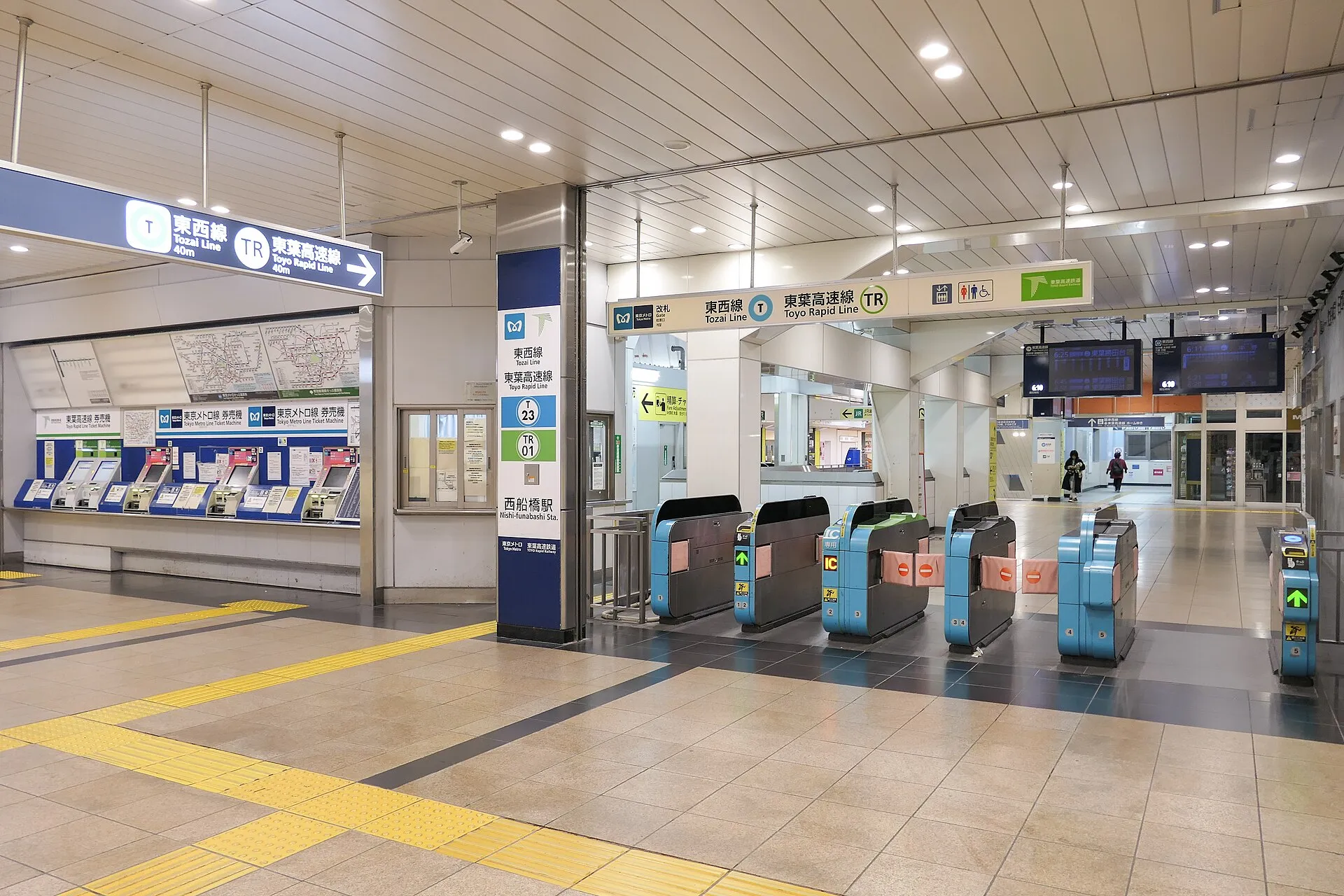
Ticket gates and fare machines at a Tokyo Metro station. Photo: Kakidai, Wikimedia Commons, CC BY-SA 4.0.
Which ticket for three days
- Arrive on the airport train, not a pass. From Haneda pay the Keikyu or monorail fare; from Narita buy a Skyliner, Narita Express or bus ticket. See Haneda and Narita. Do not buy the Subway Ticket at the airport unless you will use it that day: its clock starts at your first gate entry.
- Then a Suica or Pasmo for the days in town. It does the metro, JR, buses, lockers and shop payments with one card.
- The 72-hour Subway Ticket pays for itself at ten rides across three days at an average of ¥200, inside the 180 to ¥330 Tokyo Metro range. At five rides a day, which is typical for sightseeing, it saves about ¥1,000 against paying each fare.
- It is worse than an IC card if your days lean on JR: the Yamanote Line loop, a Kamakura or Nikko day trip, or Harajuku, which is a JR station.
| Your three days | Buy |
|---|---|
| A hotel in Asakusa, Ueno, Ginza or Roppongi, sights on the metro, no JR day trip | The 72-hour Subway Ticket, ¥2,000 |
| A hotel in Shinjuku, Shibuya or Tokyo Station, with the JR Yamanote Line in the plan | A Suica or Pasmo |
| A day trip by JR in the three days | A Suica or Pasmo |
| One or two metro rides a day | A contactless bank card, or a Suica |
⚠️ The Subway Ticket’s clock starts at your first gate entry. A 24-, 48- or 72-hour ticket runs the full period from that first use (Tokyo Metro). It covers Tokyo Metro and Toei only: not the JR lines, private railways, buses or the Tokyo Monorail, and not a Japan Rail Pass.
Tokyo Subway Ticket
1,000, 1,500 or ¥2,000 · 24, 48 or 72 hours · Tokyo Metro and Toei, 13 lines
The ticket gives unlimited rides on all Tokyo Metro and Toei subway lines. It is for overseas visitors, and for domestic visitors who live outside Tokyo, Kanagawa, Saitama, Chiba, Ibaraki, Tochigi, Gunma and Yamanashi (Tokyo Metro). Bring a passport: GO TOKYO says it is sold at Tokyo Metro pass offices, at tourist information counters in some stations, and at Bic Camera branches (GO TOKYO). It is also sold online, as a QR code or as a voucher to exchange.
- GetYourGuide sells it at the face price, from ¥1,000: the 24-, 48- or 72-hour Subway Ticketad (4.4 stars from 2,824 reviews).
- Klook and KKday sell the same ticket as a QR code or exchange voucher on Klookad and a voucher on KKdayad.
- Airport bundles: Keisei sells the Skyliner with a Subway Ticket, the ticket valid for six months from sale (keisei.co.jp). Tokyo Metro lists a Limousine and Subway Pass for both airports, and a One-Day Subway Pass from Haneda that Keikyu sells on the day, with a Keikyu return from Haneda to Sengakuji included (Tokyo Metro).
Suica and Pasmo
A Suica or Pasmo is a rechargeable IC card, one that stores a balance and works by tapping the gate reader. They are interchangeable on the network (GO TOKYO).
- Suica comes from the ticket machines at JR East stations, with a ¥500 deposit. Hand the card back at the end of your stay to reclaim it.
- Pasmo comes from the machines at private-railway and subway stations, also with a refundable deposit. At Tokyo Metro’s machines the first purchase is 1,000 to ¥10,000, including the deposit, and you can top up from ¥10 to ¥20,000 (Tokyo Metro).
- Where else it pays: most buses in the Tokyo area, some taxis, vending machines, coin lockers and convenience stores. It works across Japan, not only in Tokyo.
- On a phone: download the Suica or Pasmo app, load it, and tap in with the phone, topping up through the phone too.
Paying with a bank card
From 25 March 2026 you can tap a contactless bank card at the gates of Tokyo Metro, Toei, Odakyu, Keio, Keikyu and Tokyu, and at some Tobu and Seibu stations, in place of a ticket (Tokyo Metro).
- The fare is the ordinary ticket fare, in ¥10 steps.
- Adults only, one card per person. A card pays for one traveller.
- A transfer between Tokyo Metro and Toei is ¥70 cheaper, if you change outside the gates within 60 minutes.
- It does not work on JR lines, Keisei (the Skyliner) or the Tokyo Monorail (japan-guide.com). A Narita arrival by Skyliner or Narita Express still needs a ticket or an IC card.
When the trains run, and the rules
- Hours: trains run from about 5:00 to 24:00. The last train home is usually between 23:30 and 00:30 (GO TOKYO).
- Rush hour: about 7:30 to 9:30 and 17:30 to 19:30, and the mornings are worse.
- Women-only cars run on JR and private lines, usually the first or last car at rush hour. Children up to elementary school age, disabled passengers and their carers may also ride in them (GO TOKYO).
- On the train: queue at the marked spots and let people off first, do not eat, drink or take calls, carry a rucksack in front of you, and leave priority seats free.
Getting to the main sights
Station and exit as the operators give them.
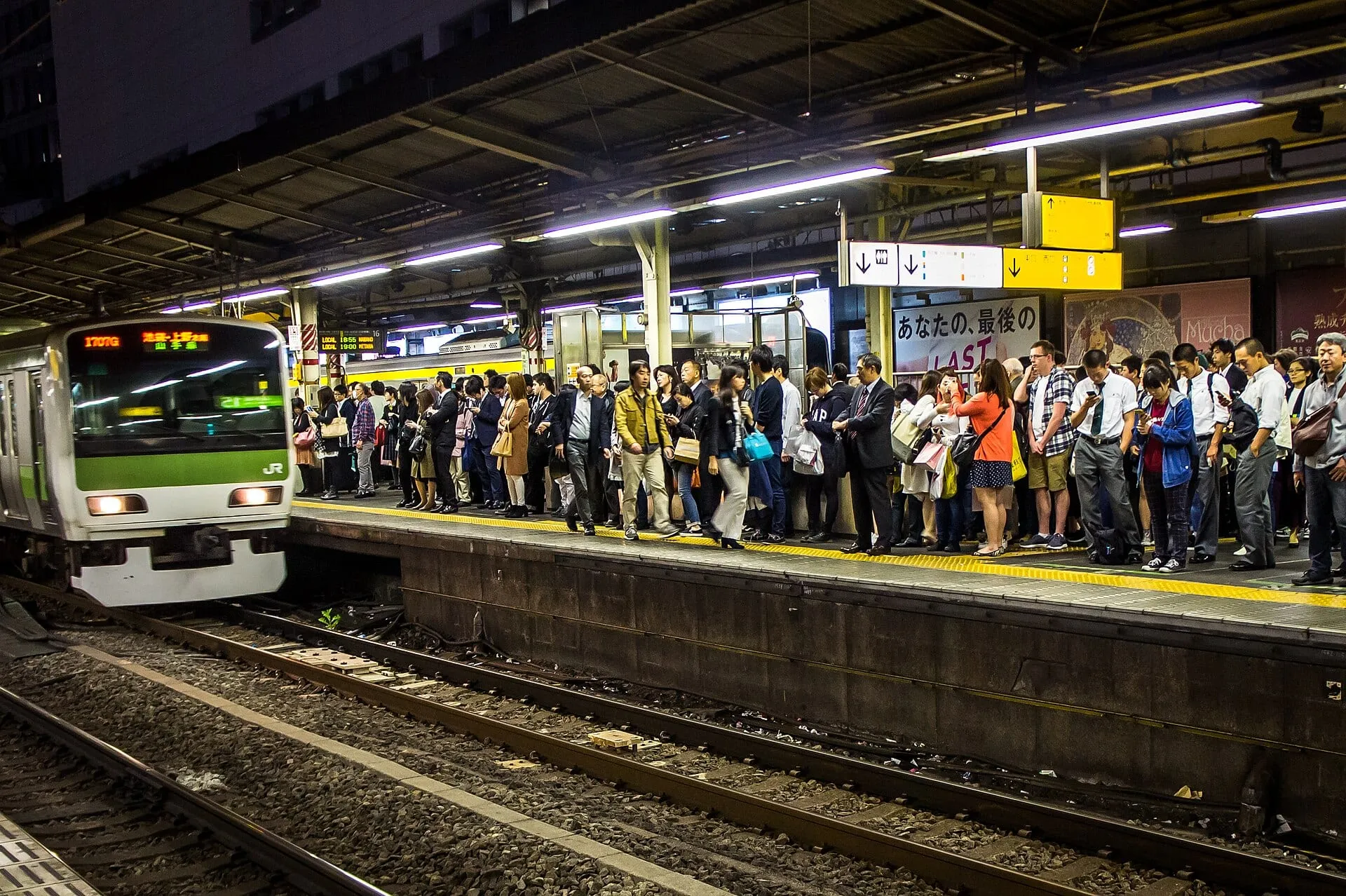
The Yamanote Line platform at Shinjuku. Photo: W & J from Earth, Wikimedia Commons, CC BY-SA 2.0.
| Sight | Nearest station |
|---|---|
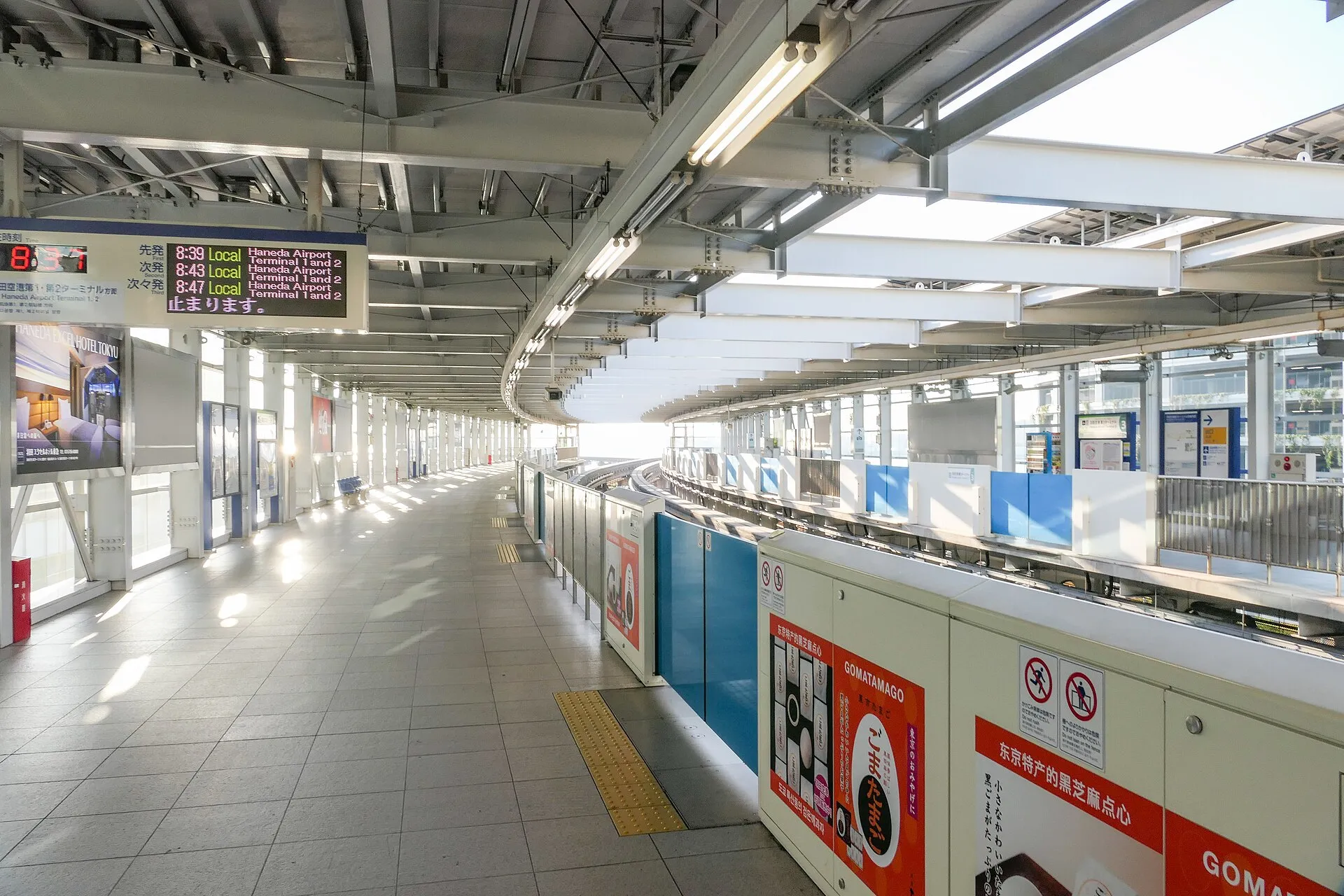
| teamLab Planets, Toyosu | Shin-Toyosu (Yurikamome), Exit 1A, 3 minutes; or Toyosu (Yurakucho Line), Exit 7, 10 minutes |
| teamLab Borderless, Azabudai Hills | Kamiyacho (Hibiya Line), Exit 5, 2 minutes by underground passage |
| Tokyo Tower | Akabanebashi (Oedo Line), 5 minutes; or Kamiyacho (Hibiya Line), Exit 1, 7 minutes |
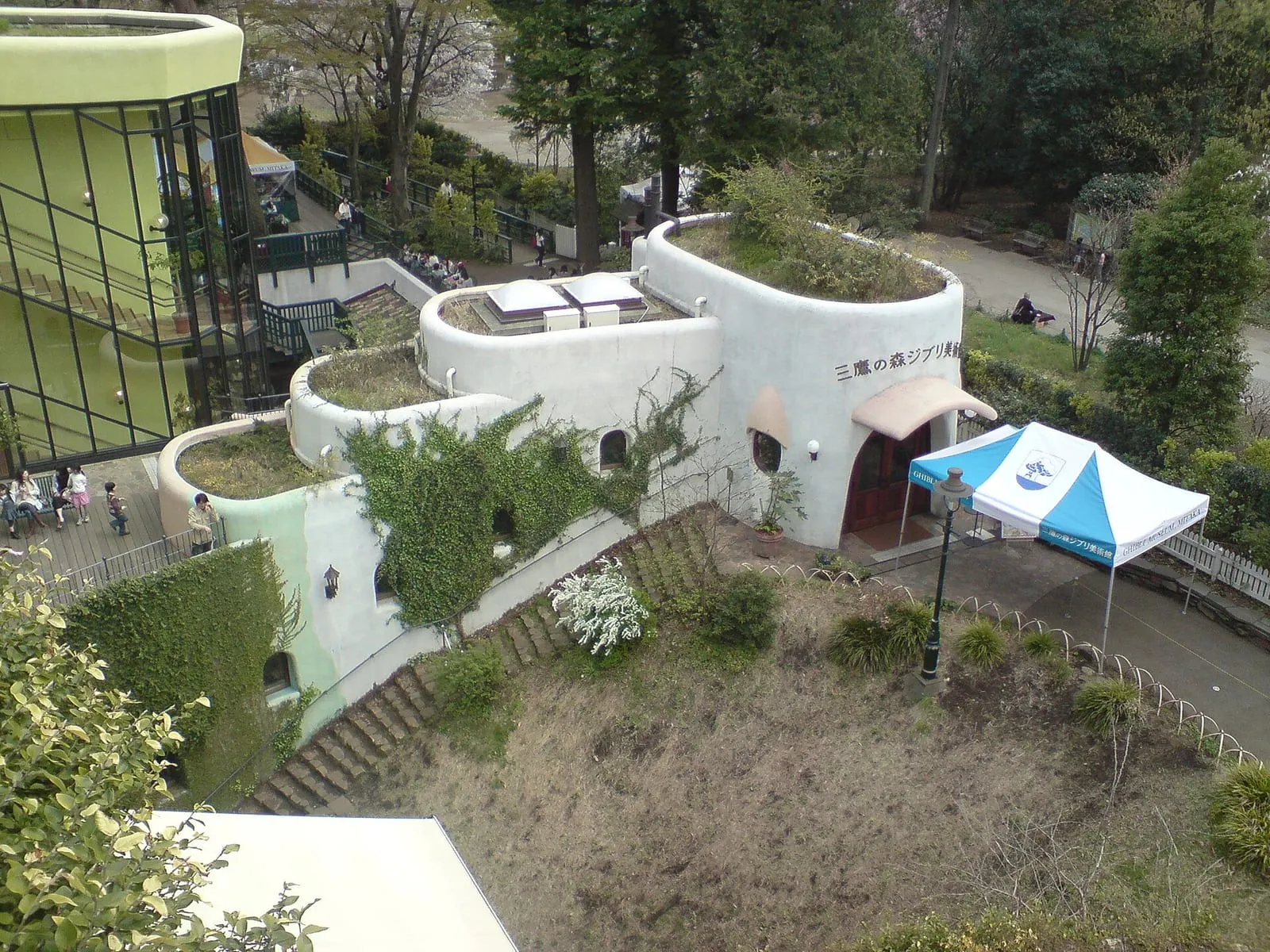
| Ghibli Museum | JR Mitaka, south exit, 15 minutes’ walk; a community bus from Mitaka runs every 15 minutes, ¥230. The JR Chuo Line takes about 20 minutes from Shinjuku |
| Edo-Tokyo Museum | Ryogoku: 3 minutes from the West Exit (JR Sobu Line), or 1 minute from Exit A3 or A4 (Oedo Line) |
| Shibuya Sky | Directly connected to Shibuya Station |
| Meiji Jingu | Harajuku (JR), Meiji-jingumae, Yoyogi or Sangubashi |
| Shinjuku Gyoen | Gates at Shinjuku, Okido and Sendagaya |
For the ticket, the hours and the closed day at each, see Tokyo: what to book before you go. The 3 days in Tokyo itinerary puts the ones it covers in an order that keeps the rides short.
Guided transit and city highlights tours
Navigating Tokyo’s multi-operator railway labyrinth can be daunting on your first visit. Joining a knowledgeable local guide helps you master the train systems, understand transfer passages, and explore major sights seamlessly.
Best of Tokyo: Guided Full-Day City Tour with a Local
From ¥20,248 · 4.6 stars from 250 reviews · 6 hours · Public transit tour
Best of Tokyo: Guided Full-Day City Tour with a Localad explores Tokyo using the subway and rail networks, covering Senso-ji, Meiji Jingu, the Imperial Palace, and Shibuya with an expert local host who handles ticket navigation and neighbourhood history.
Taxis, and sending your luggage ahead
Taxi fares start at ¥500, and the airports have fixed-fare taxis (GO TOKYO).
To send bags between an airport and your hotel, Yamato’s Airport TA-Q-BIN takes them to or from Narita and Haneda. Parcels over 30 kg are refused, send at least two days before your flight, and a ¥660 airport handling fee is added when you send a bag to the airport (Yamato).
Where next
Whether the Japan Rail Pass is worth it for a Tokyo trip is its own question: see is the Japan Rail Pass worth it. For a day out of the city, day trips from Tokyo compares the trains and the tours. Where to stay in Tokyo compares the areas by their stations, Tokyo etiquette covers the rules on the street, and money in Tokyo explains cash and cards. An eSIM for Japan keeps the map working.
Common questions
Which ticket should I buy for three days in Tokyo?
A Suica or Pasmo card for most visitors: it pays for the metro, JR lines and buses at the ordinary fare. Buy the 72-hour Tokyo Subway Ticket, ¥2,000, only if you stay on Tokyo Metro and Toei lines and take no JR day trip, because it does not cover JR.
Is the Tokyo Subway Ticket worth it?
At an average ride of about ¥200, ten rides pay for the 72-hour ticket, and five rides a day saves about ¥1,000 against paying each fare. It loses to a Suica or Pasmo if your days lean on the JR Yamanote Line, which it does not cover.
Can I pay for the Tokyo metro with a contactless bank card?
Yes, since 25 March 2026, at Tokyo Metro, Toei and several private railways including Keikyu, Odakyu, Keio and Tokyu. Adults only, one card per person. It does not work on JR lines, Keisei (the Skyliner) or the Tokyo Monorail.
How much is the deposit on a Suica card?
¥500, refundable when you hand the card back at the end of your stay. A Pasmo also carries a refundable deposit. At Tokyo Metro's machines a first purchase is 1,000 to ¥10,000, deposit included.
What time do trains stop in Tokyo?
They run from about 5:00 to 24:00, and the last train home is usually between 23:30 and 00:30. Rush hours are about 7:30 to 9:30 and 17:30 to 19:30, and the mornings are worse.