In this guide
💡 The Short Version: Autumn (mid-November to early December) offers the most reliable, comfortable weather in Kyoto, with crisp dry skies and brilliant scarlet Japanese maple foliage across temple gardens. Spring (late March to mid-April) delivers world-famous cherry blossoms, but brings peak crowds and elevated hotel rates. Winter (January to February) offers the best travel value, with peaceful rock gardens and uncrowded temples.
Because Kyoto sits inside a valley basin enclosed on three sides by the Kitayama, Higashiyama, and Nishiyama mountain ranges, its seasonal climate is pronounced. The surrounding hills trap summer heat and humidity, while winter winds channel down from the northern mountains.
Aligning your travel dates with Kyoto’s seasonal calendar fundamentally changes your trip. Whether your priority is photographing temple gardens during the maple foliage peak, witnessing ancient festival processions, or exploring quiet Zen corridors without tour groups, each season has clear operational advantages and trade-offs.
Kyoto through the four seasons
| Season | Months | Average temperatures | Rainfall | Crowd levels | Accommodation rates |
|---|---|---|---|---|---|
| Spring (Sakura) | Late March to May | High: 19°C / Low: 9°C | Moderate (120 mm/mo) | Extreme (peak sakura) | Highest of the year |
| Summer (Matsuri & Kawadoko) | June to August | High: 33°C / Low: 24°C | High (230 mm/mo) | Moderate | Moderate |
| Autumn (Koyo foliage) | October to early Dec | High: 18°C / Low: 9°C | Low to moderate (90 mm/mo) | Extreme (late Nov) | Very high |
| Winter (Quiet contemplation) | December to February | High: 9°C / Low: 1°C | Low (50 mm/mo) | Low | Lowest of the year |
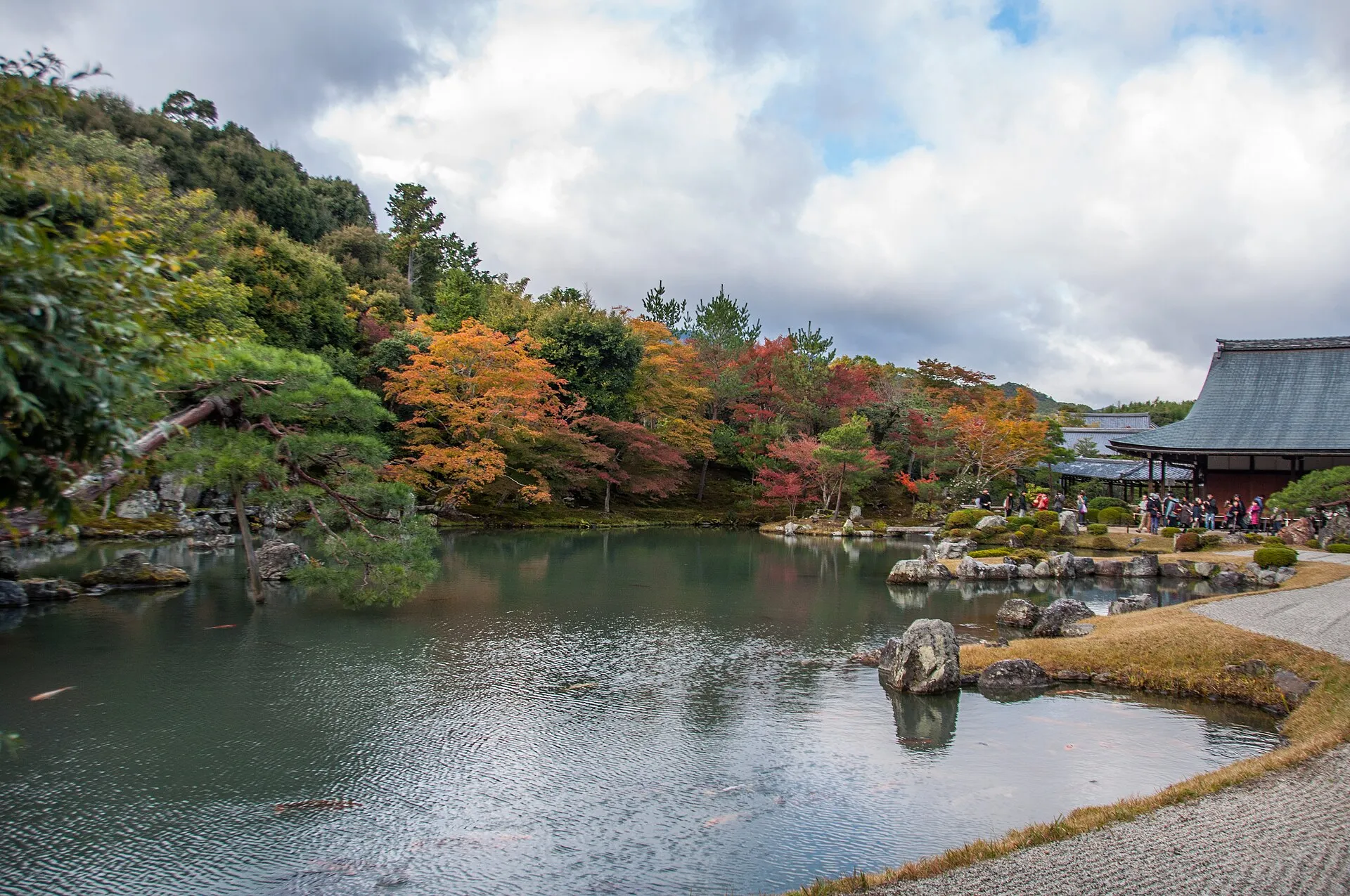 Autumn maples at a Kyoto Zen temple. Photo: chee.hong, Wikimedia Commons, CC BY 2.0.
1. Autumn (Mid-November to early December)
For many experienced travellers, autumn (Aki) represents Kyoto at its peak. The city’s thousands of cultivated Japanese maple trees (momiji) blaze into vivid shades of crimson, cinnabar, and gold from mid-November onwards, peaking between roughly 20 and 28 November.
Why visit in autumn
- Stable weather: October and November feature crisp, clear skies, low humidity, and pleasant daytime walking temperatures averaging 15°C to 18°C.
- Temple evening illuminations (Yakan-haikan): Major Buddhist temples open their gates after dark, illuminating illuminated maple canopies and rock gardens with floodlights:
- Eikan-do (Zenrin-ji): Known as the temple of maple leaves; daytime entry ¥1,000, evening light-up ¥600 (17:30 to 21:00).
- Kiyomizu-dera: Features a blue laser beam symbolising Buddhist compassion cutting across the illuminated maple canopy (¥500, 18:00 to 21:30).
- Kodai-ji: Celebrated for its illuminated bamboo grove and nighttime mirror pond reflections (¥600).
- Tofuku-ji Temple: The view from the wooden Tsutenkyo bridge over the sea of red maples filling the Sengokukan valley is the classic autumn view in Kyoto (autumn admission ¥1,000).
Key autumn festivals
- Jidai Matsuri (Festival of the Ages, 22 October): A grand historical pageant featuring over 2,000 participants dressed in authentic period costumes from every era of Kyoto’s 1,200-year history, processing from the Kyoto Imperial Palace to Heian Shrine.
- Kurama Fire Festival (22 October night): Held in the northern mountain village of Kurama, featuring hundreds of massive blazing pine torches carried through narrow village streets.
2. Spring (Late March to mid-April)
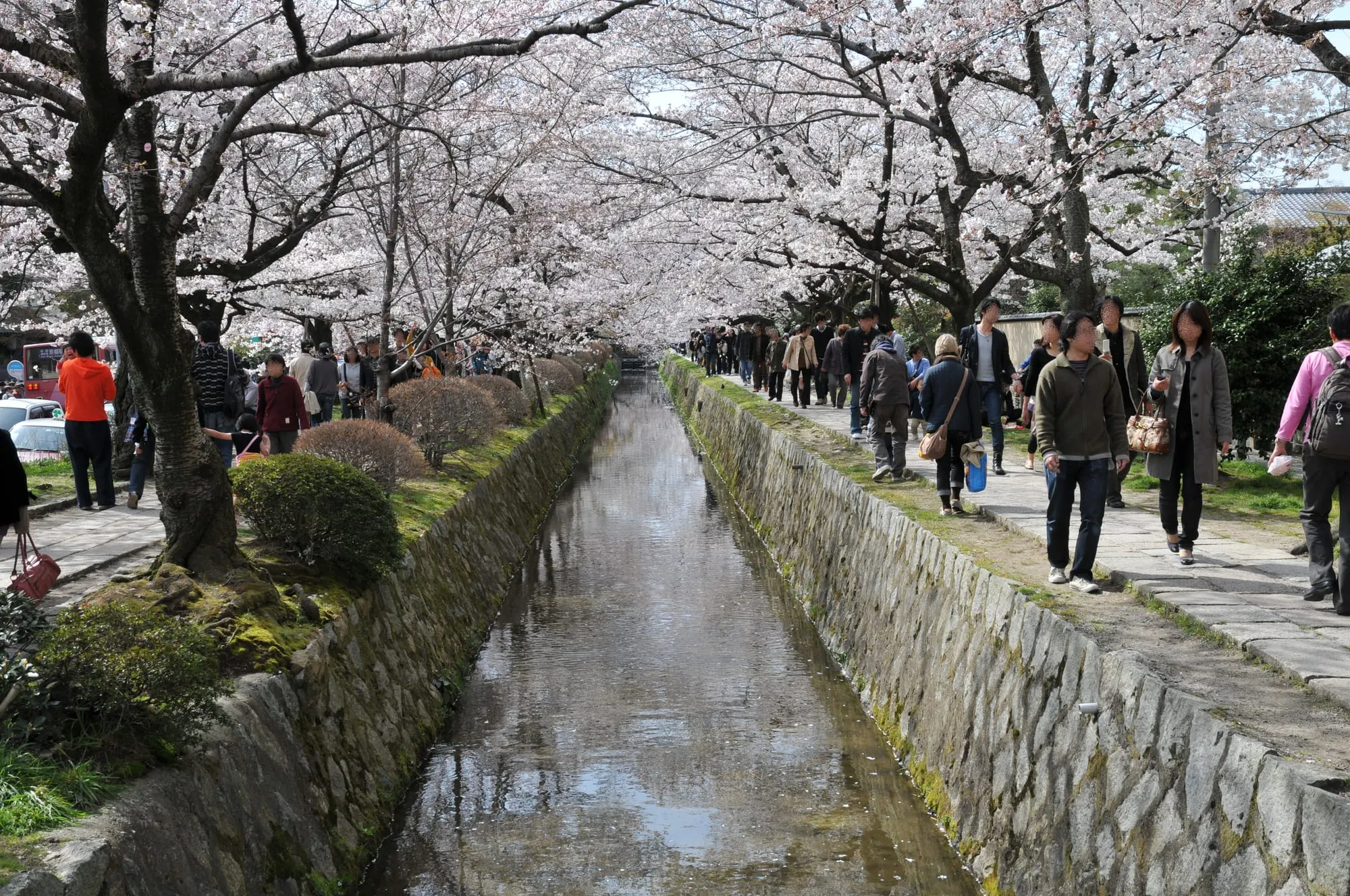
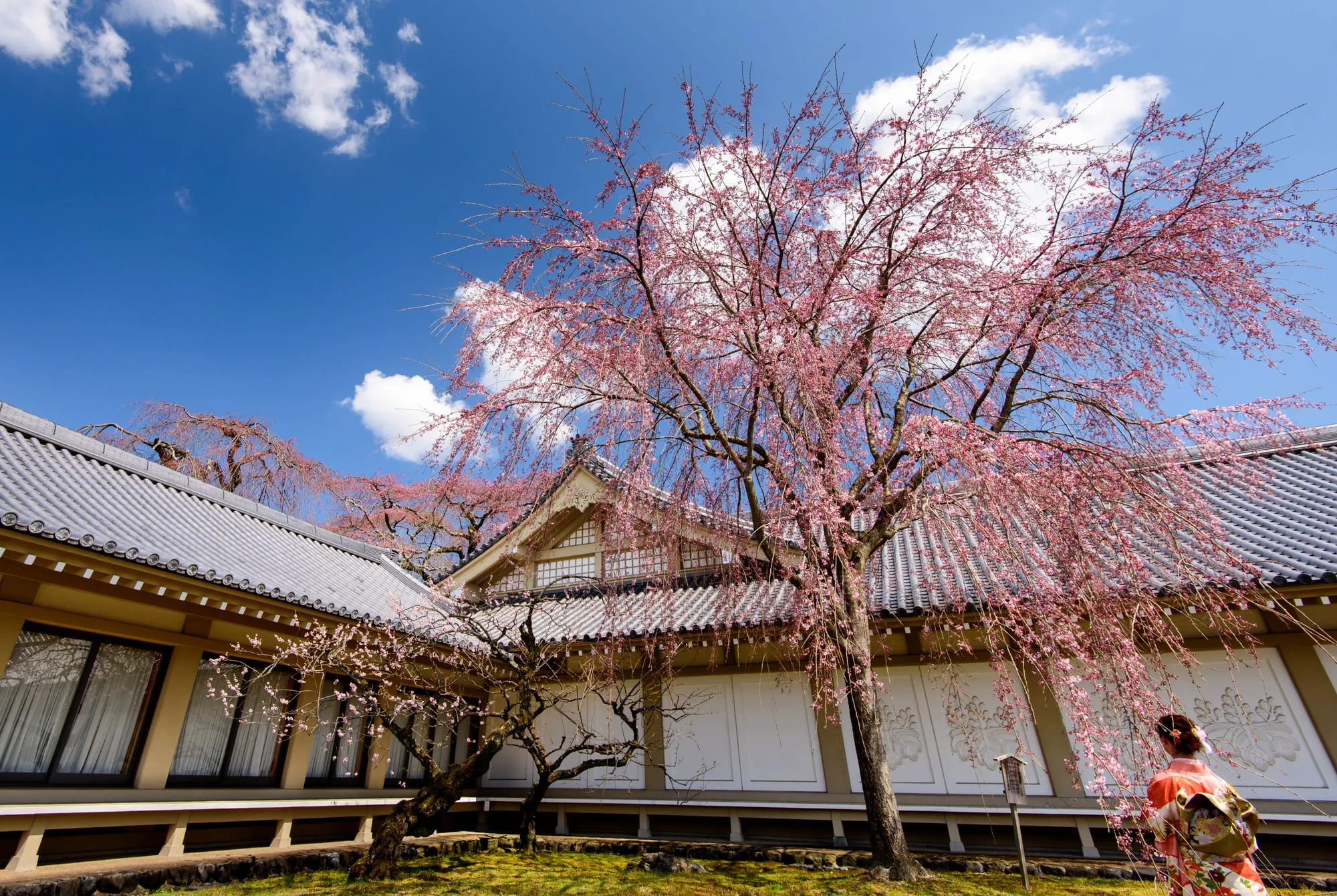
Spring in Kyoto is defined by the cherry blossom season (sakura). Clouds of delicate pale-pink Somei Yoshino blossoms open across temple grounds, stone canal embankments, and public parks.
Timing the bloom
- First bloom (Kaika): Typically occurs between 22 and 26 March.
- Full bloom (Mankai): The peak display occurs roughly five to eight days after first bloom, usually between 31 March and 7 April.
- Top blossom locations: The two-kilometre Philosopher’s Path, Maruyama Park’s historic weeping cherry tree (Gion Shidarezakura), the weeping cherry tunnels of Haradani-en garden, and the cherry-lined aqueduct at Keage Incline.
Operational tips for spring
Because spring brings record international and domestic visitors, hotel rooms across Central and Kyoto Station command peak prices and often book out four to six months in advance. To experience major sights like Fushimi Inari and Arashiyama comfortably, begin your sightseeing by 07:00 each morning.
- Aoi Matsuri (Hollyhock Festival, 15 May): Kyoto’s oldest festival, featuring an elegant Heian-period imperial court procession of 500 nobles and ox-drawn carriages travelling from the Imperial Palace to Shimogamo and Kamigamo shrines.
3. Summer (June to August)
Summer in Kyoto begins with the Tsuyu rainy season (early June to mid-July), characterised by frequent overcast days and warm drizzle that turns temple moss gardens brilliantly green. From mid-July through August, tropical high-pressure systems bring daytime temperatures regularly exceeding 35°C with intense humidity.
Summer cultural traditions
- Gion Matsuri (Entire month of July): Japan’s most famous festival, originated in 869 AD as a religious purification ritual against pestilence:
- Yoiyama street festivals (14 to 16 July and 21 to 23 July): Central streets close to vehicle traffic as paper lanterns illuminate monumental multi-storey wooden floats (yamaboko) standing up to 25 metres tall.
- Yamaboko Junko (17 July and 24 July): The grand procession where teams of men haul the massive multi-ton wooden floats through the central avenues of Kyoto.
- Gozan no Okuribi (Daimonji Fire Festival, 16 August): At 20:00, five giant bonfire characters—including the kanji Dai (great)—are simultaneously set ablaze across five mountains surrounding Kyoto to bid farewell to the spirits of ancestors during Obon.
- Kawadoko & Kawayuka dining: Restaurants construct open-air timber dining platforms elevated over the cooling rapids of the Kamo River in Pontocho and mountain streams in Kibune.
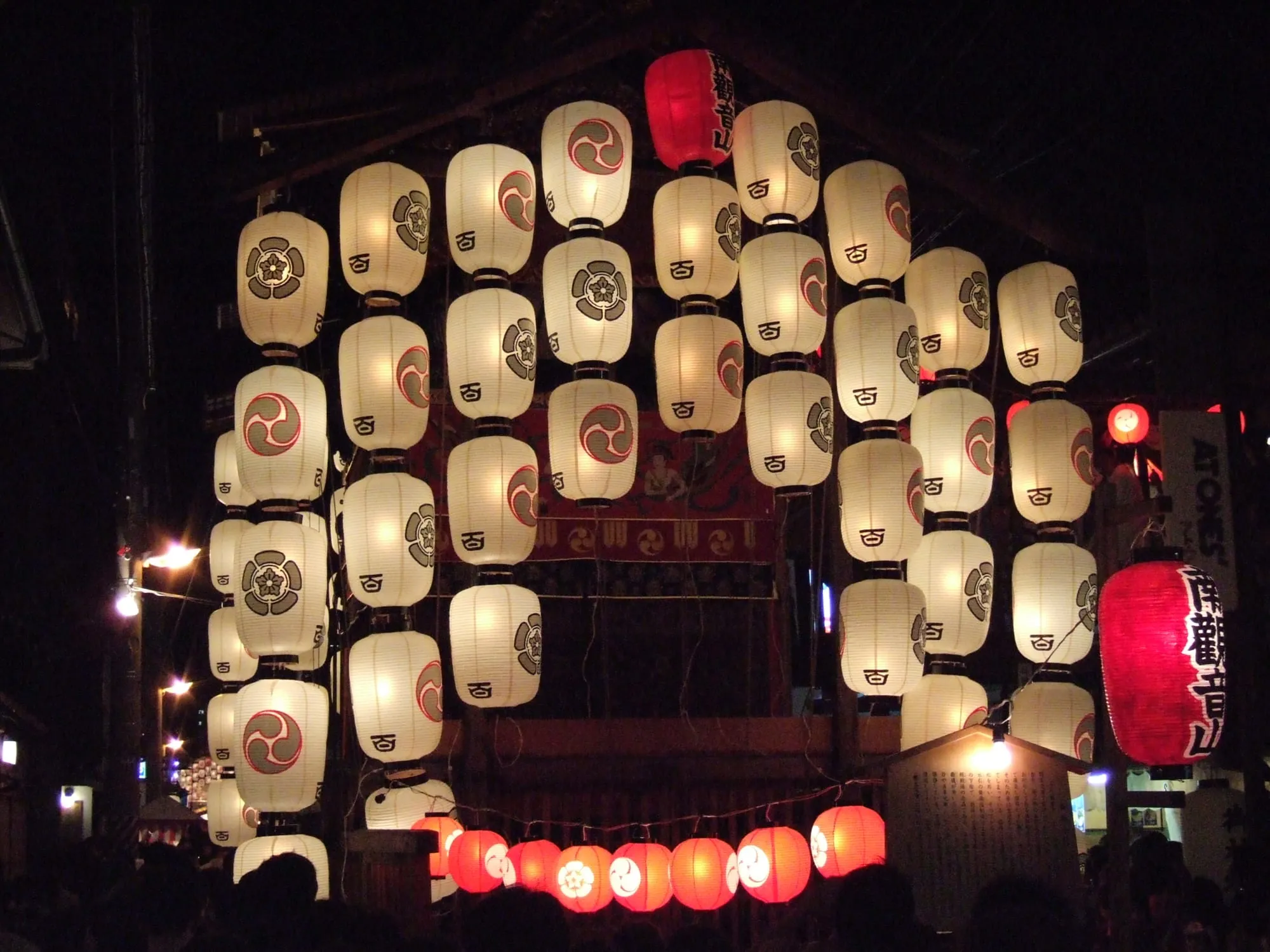
A Gion Matsuri float on the evening of Yoiyama. Photo: Sakurai Midori, Wikimedia Commons, CC BY-SA 3.0.
4. Winter (December to February)
Winter is the quiet season for travellers who want temples without crowds:
- Low crowds and best hotel rates: Visitor numbers hit their annual low in January and February. Luxury hotels and traditional ryokans drop prices by 30% to 50% compared to spring peaks.
- Atmospheric Zen gardens: World-renowned Zen rock gardens like Ryoan-ji, Daitoku-ji, and Kennin-ji can be contemplated in complete silence without tour group congestion.
- The Golden Pavilion in snow: While Kyoto receives only three to five light snowfalls per winter, viewing the gilded storeys of Kinkaku-ji crowned with fresh white powder is considered one of Japan’s most sublime sights.
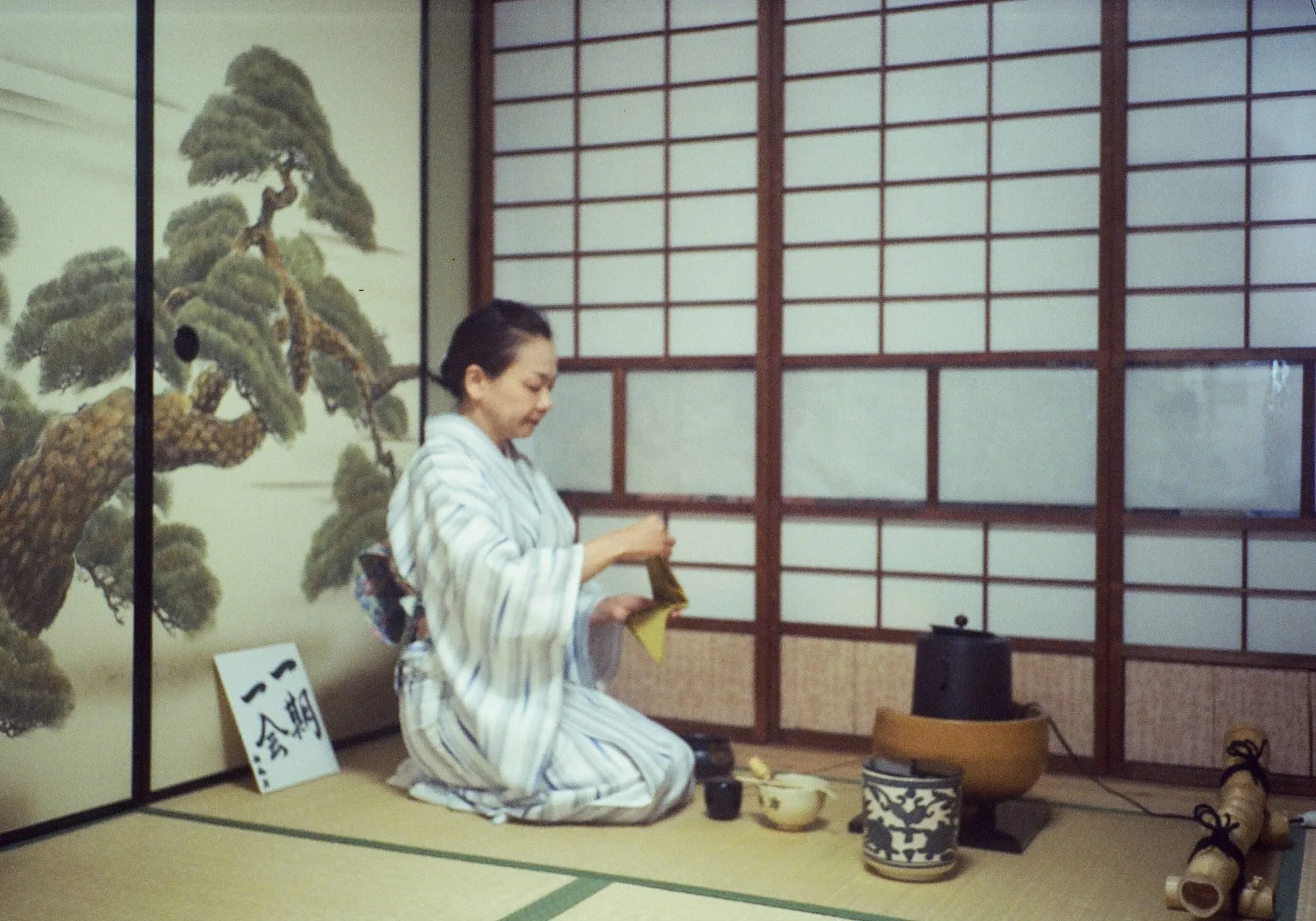
- Plum blossoms (Ume, late February): Kitano Tenmangu Shrine features an orchard of 1,500 fragrant red and white plum trees blooming from mid-February, hosting the annual Baika-sai outdoor tea ceremony on 25 February.
Plan your transport connections with our Kyoto public transport guide, or organise your daily schedule with our 3 days in Kyoto or 5 days in Kyoto itineraries.
Common questions
When do cherry blossoms bloom in Kyoto?
Cherry blossoms in Kyoto typically open in late March, reaching peak full bloom (mankai) between 31 March and 7 April, depending on spring temperatures.
When is autumn foliage at its best in Kyoto?
Autumn maple leaves (koyo) reach peak red and gold colour between mid-November and early December, generally peaking around 20 to 28 November.
Is Kyoto very hot in summer?
Yes. Kyoto sits in a mountain basin that traps heat and moisture. July and August regularly see temperatures above 35°C with heavy humidity.