In this guide
💡 The Short Version: Our judgement, not a ranking: pick Tokyo for four days or more, for the Senso-ji and Ueno east side, Meiji Jingu, Shibuya and Shinjuku in the west, teamLab Planets and a day trip to Mount Fuji, Hakone or Kamakura. Pick Osaka for two or three days, for Osaka Castle, Dotonbori and Shinsekai on foot, takoyaki from 500 yen for eight and Universal Studios Japan, with Kyoto 29 minutes away for 580 yen and Nara 35 minutes for 680 yen. With a week or more, do both: the Nozomi takes 2 hours 21 minutes and a reserved seat is 14,720 yen. What ruins a trip is the timed ticket you did not buy and the Monday you spent on a closed garden. Or book a tour: a guided Asakusa walk is from 2,000 yen in Tokyo and a food tour from 10,400 yen in Osaka.
⚠️ Book teamLab, the Ghibli Museum and Universal Studios Japan before you fly, and keep Monday for something else. teamLab Planets sells nothing at the venue, the Ghibli Museum sells each month’s tickets only on the 10th of the month before, and Universal Studios Japan takes only a dated Studio Pass. On Mondays Tokyo shuts the Imperial Palace East Gardens, Shinjuku Gyoen, the Tokyo National Museum and the Edo-Tokyo Museum, and Osaka shuts the National Museum of Art. From 28 December much of Tokyo closes, and in Golden Week the Shinkansen seats between the two cities sell out weeks ahead.
Tokyo and Osaka side by side
Prices are the operators’ adult rates in yen. Each row links to the city’s own guide for the detail.
| Tokyo | Osaka | |
|---|---|---|
| What to book | teamLab Planets from 3,800 yen, timed entry; Shibuya Sky 2,700 yen before 15:00 and 3,400 yen after, 20-minute slots on sale two weeks ahead; Ghibli Museum 1,000 yen, through Lawson Ticket only | Universal Studios Japan, a dated Studio Pass priced by date; Kaiyukan aquarium, 15-minute timed slots priced by date; Osaka Castle keep 1,200 yen, online or at the gate |
| Closed days | Mondays: Imperial Palace East Gardens (also Fridays), Shinjuku Gyoen, Tokyo National Museum, Edo-Tokyo Museum. Tuesdays: the Ghibli Museum, on most of them | Mondays: the National Museum of Art, which is also shut from 28 December to 4 January. The castle keep is shut 28 December to 1 January; Umeda Sky Building and Harukas 300 are open every day |
| Getting around | Suica or Pasmo card with a 500 yen refundable deposit; the 72-hour Subway Ticket is 2,000 yen and covers Tokyo Metro and Toei, not JR; a contactless bank card works at the metro gates but not on JR | ICOCA card 2,000 yen, of which 500 yen is a deposit; subway rides 190 to 390 yen; Enjoy Eco Card 820 yen on weekdays and 620 yen at weekends; Osaka Amazing Pass 3,500 yen for a day |
| Airport to the centre | Haneda: monorail to Hamamatsucho 520 yen, Shinagawa about 15 minutes on the Keikyu line. Narita: Skyliner to Keisei Ueno 41 minutes for 2,580 yen; Narita Express to Tokyo Station 3,140 yen | Kansai: Nankai Rapi:t to Namba 34 minutes for 1,490 yen with a reserved seat; JR Haruka to Osaka Station 47 minutes from 2,410 yen |
| Food | Ramen from 1,000 yen at Fuunji and 1,180 yen at Ichiran; a sushi counter such as Ginza Kyubey, lunch from 8,250 yen, is booked through a concierge | Takoyaki from 500 yen for eight; kushikatsu skewers at 120 to 150 yen; okonomiyaki pancakes at 1,000 to 1,880 yen. Stalls take cash only |
| How many days | Our judgement: four or five; the three-day plan is the east side, the west side, then the palace gardens and teamLab Planets | Our judgement: two or three; the three-day plan is the castle and Shinsekai, a day at Universal Studios Japan, then Kaiyukan and Umeda Sky |
| Day trips | Mount Fuji on a 7,800 yen tour, Hakone with the 7,100 yen Freepass, Kamakura 2,080 yen return by JR, Nikko | Kyoto 29 minutes for 580 yen (see 3 days in Kyoto), Nara 35 minutes for 680 yen, Kobe 22 minutes for 410 yen, Himeji 60 minutes for 1,520 yen |
| Sumo | Grand tournaments in January, May and September at the Ryogoku Kokugikan (sumo tickets) | The March tournament is in Osaka |
| Best season | Mild from March to May and in October and November; August is hottest at a 31.3 °C daily high; September and October are the wettest, at 225 and 235 mm; normal full cherry blossom is 31 March | Spring and autumn are the comfortable seasons; August is hottest at 33.7 °C; June is the wettest month at 185 mm; blossom peaks in the first week of April; Tenjin Matsuri is on 24 and 25 July |
December is the month to check before you choose. The Imperial Palace East Gardens in Tokyo are shut from 28 December to 3 January, and Osaka Castle’s keep from 28 December to 1 January, while Umeda Sky Building and Harukas 300 stay open; Tokyo’s Christmas lights and New Year in Tokyo have the rest.
Book a tour instead
A guided tour puts the guide and, where the row says so, the transport in one purchase. Prices are GetYourGuide’s lowest “from” prices for one adult.
| City | From | Tour |
|---|---|---|
| Tokyo | 2,000 yen | Asakusa and Senso-ji walking tourad, 2 hours |
| Tokyo | 13,200 yen | Shinjuku food tour, 13 dishes at 4 eateriesad, 3 hours |
| Tokyo | 7,800 yen | Mt Fuji day trip to Oishi Park and Oshino Hakkaiad, 10 hours, transport included |
| Osaka | 10,400 yen | Osaka food tour, 15 dishes and 3 drinksad, 3 hours |
| Osaka | 5,700 yen | Dotonbori walking tour with a river cruisead, 2 hours |
| Osaka | 8,125 yen | Nara and Arashiyama full-day bus tourad, 9 hours, from Osaka or Kyoto |
For a visit on your own, the trains cost less than the tours: Nara is 680 yen each way from Osaka-Namba, and Senso-ji is free to enter.
Which city for whom
Each pick below is our judgement, built on the figures in the table.
A first visit: Tokyo with four or five days
Tokyo is the bigger first visit because it makes you choose a side. The one-or-two-day plan puts Senso-ji at opening, the Tokyo National Museum and Skytree in the east, and Meiji Jingu, the Shibuya crossing and Shinjuku in the west, so two days cover both. The three-day plan adds the Imperial Palace East Gardens and teamLab Planets; five days adds the Ghibli Museum, if you win a slot, or a day trip. Plan the east side for a day that is not a Monday, because the Tokyo National Museum is shut then.
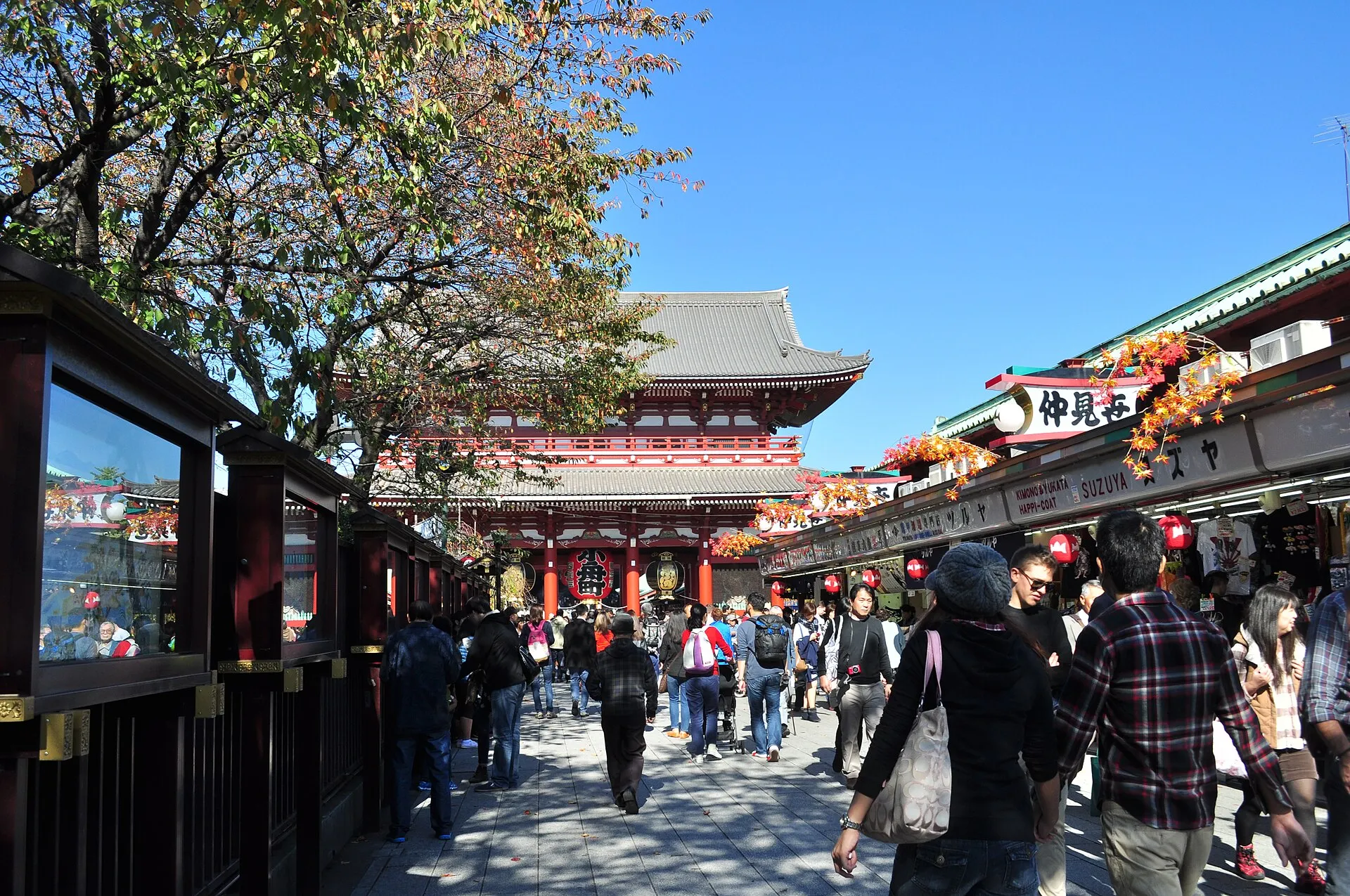
Nakamise-dori and the Hozomon gate at Senso-ji, Asakusa. Photo: Joe Mabel, Wikimedia Commons, CC BY-SA 3.0.
A short stay of two or three days: Osaka
Osaka fits a short stay because its sights sit close together. The one-or-two-day plan puts the castle keep (1,200 yen) in the morning, lunch at Kuromon Market, Shinsekai in the afternoon and takoyaki beside the Dotonbori canal in the evening, and a second day is either Kaiyukan with Umeda Sky or a full day at Universal Studios Japan. The third day goes to Kyoto or Nara. Umeda Sky and Harukas 300 are open every day, and the castle keep is shut only from 28 December to 1 January.
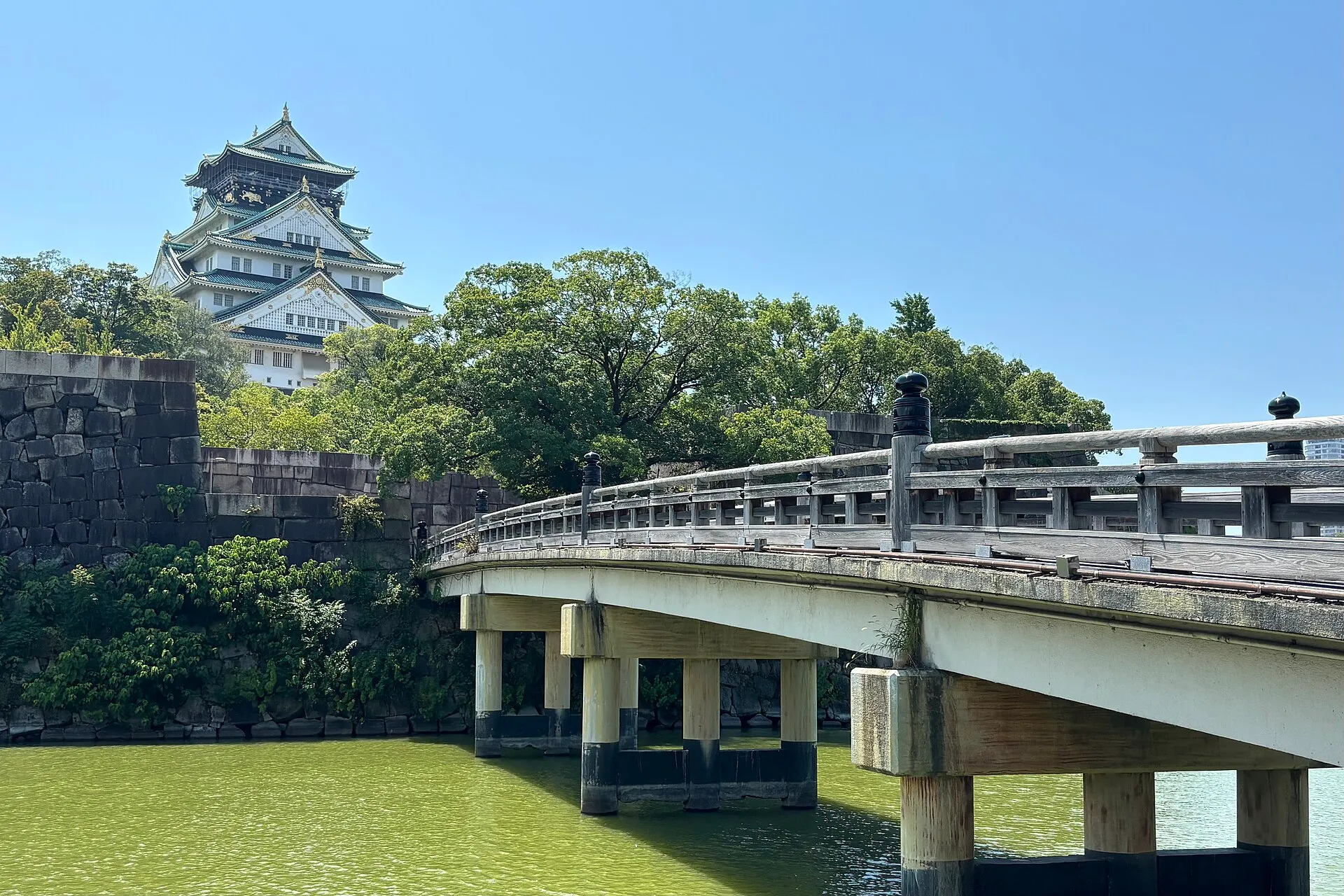
Osaka Castle’s keep above the moat, from the Gokurakubashi bridge. Photo: Sakai Yayoi, Wikimedia Commons, CC0.
Food: Osaka for the stall, Tokyo for the counter
Osaka’s food is eaten at the stall or the standing bar: takoyaki from 500 yen for eight, kushikatsu skewers at 120 to 150 yen and okonomiyaki pancakes cooked on a griddle at your table. Take cash, because the Dotonbori stalls, the Kuromon fishmongers and the Shinsekai standing bars take nothing else (money in Osaka). Tokyo’s best-known meals are booked: a sushi or tempura counter goes through a hotel concierge or a platform, and Ginza Kyubey charges 5,000 yen a head for a same-day lunch cancellation and 10,000 yen at dinner (omakase in Tokyo). Tokyo also has the queue-and-eat ramen shops, such as Fuunji at 1,000 yen, open every day (where to eat in Tokyo). Our judgement: Osaka if you want to graze for three days without a booking, Tokyo if you want one meal worth planning a day around. Best food city breaks sets Osaka against the other food cities.
Theme parks and families: both sell about two months ahead
Tokyo’s Disney ticket is for one park on one day, online only, from 14:00 Japan time exactly two months ahead (Tokyo Disney tickets). Universal Studios Japan sells a dated Studio Pass up to two months ahead, and Super Nintendo World needs a timed entry from an Express Pass or the park app (Universal Studios Japan tickets). Outside the parks, Tokyo has the Ghibli Museum and teamLab, and Osaka has Kaiyukan and the Tempozan Ferris wheel (Osaka with kids). Our judgement: whichever park your children want decides the city.
A tight budget: the trains to Kyoto and Nara
The sights cost about the same: Osaka’s castle keep and Tsutenkaku are 1,200 and 1,500 yen, Tokyo Tower 1,500 yen and Skytree from 1,800 yen online, and each city has free views, the observation decks of the Tokyo Metropolitan Government Building and Osaka Castle Park. The gap opens on day trips. From Osaka a return to Kyoto is 1,160 yen and a return to Nara 1,360 yen, where Tokyo’s Kamakura return is 2,080 yen and a Fuji tour 7,800 yen. Our judgement: Osaka for a short break that leans on day trips, Tokyo for one that stays inside the city.
Doing both: the Shinkansen, the days and where to stay
The Tokaido Shinkansen is the reason to do both. The Nozomi takes 2 hours 21 minutes from Tokyo to Shin-Osaka, stopping on the way at Shinagawa, Shin-Yokohama, Nagoya and Kyoto. A reserved ordinary seat is 14,720 yen. JR Central and JR West announced on 16 October 2026 that the reserved-seat charge rises by 700 yen, which makes the fare 15,420 yen for tickets bought from 1 July 2027; the charge for a non-reserved seat does not change. Reserved seats go on sale at 10:00 Japan time one month before the train, on SmartEX and at the stations (JR Central). In the peak periods JR Central publishes, every Nozomi seat is reserved and a non-reserved ticket buys only standing room. Seats between the two cities also sell out weeks ahead in Golden Week, which is 29 April and 3 to 5 May in 2027.
The Japan Rail Pass does not cover the Nozomi. A pass holder who wants it buys a special ticket for each journey, 4,960 yen from Tokyo to Shin-Osaka, on top of a 7-day pass at 50,000 yen (is the Japan Rail Pass worth it?). For a trip that is only these two cities the pass does not pay. Luggage over 160 cm in total length, width and height needs a seat with an oversized baggage area, reserved when you buy the ticket (JR Central). Anything smaller goes on the rack or in the deck space.
Our judgement for a week or more is four or five days in Tokyo, then two or three in Osaka with a day each for Kyoto and Nara. Move on a Monday, when Tokyo’s gardens and museums are shut and the castle keep, Umeda Sky Building and Harukas 300 in Osaka are open. Fly into one city and out of the other: from Haneda the Keikyu line reaches Shinagawa, a Shinkansen stop, in about 15 minutes, and from Shin-Osaka the JR Haruka takes 50 minutes to Kansai Airport for 2,600 yen. On escalators, stand on the left in Tokyo and on the right in Osaka (Osaka etiquette).
In Tokyo, stay in Shinjuku for a first visit, or by Tokyo Station for an early train: The Tokyo Station Hotelad (Hotels.comad) is inside the Marunouchi station building (where to stay in Tokyo, Shinjuku or Shibuya). In Osaka, Namba puts Dotonbori on the doorstep and has the 34-minute Nankai train from Kansai Airport: Cross Hotel Osakaad (Hotels.comad) is three minutes’ walk from the Dotonbori Glico sign. Umeda is the stop for Kyoto by JR. Shin-Osaka is an office district with little evening life, but it suits an early Shinkansen, and Remm Shin-Osakaad (Hotels.comad) is inside the station building (where to stay in Osaka).
Kyoto and Nara from Osaka
Osaka is the cheaper base for both. The JR Special Rapid leaves Osaka Station every 15 minutes and reaches Kyoto Station in 29 minutes for 580 yen; the Hankyu line from Umeda to Kawaramachi is 43 minutes for 410 yen, and the Keihan line to Fushimi-Inari is 40 minutes for 420 yen. For Nara, the Kintetsu Rapid Express runs from Osaka-Namba to Kintetsu-Nara in 35 minutes for 680 yen, five minutes’ walk from the deer park, and Todaiji is 800 yen (Nara day trip from Osaka). A tour joins them in one day: the Nara and Arashiyama bus tourad is from 8,125 yen for 9 hours.
The Nozomi from Tokyo stops at Kyoto, so one way to do both is to get off there, spend a night, and take the JR train 29 minutes on to Osaka. Day trips from Osaka compares Kyoto, Nara, Kobe, Himeji and Mount Koya by time and fare.
For what to book in each city, see Tokyo and Osaka; for the other Asian cities, see best Asian cities for a first trip; for the weather month by month, see where to go each month; for two other cities side by side, see Rome vs Florence.
Common questions
Is Tokyo or Osaka better for a first trip to Japan?
Our judgement: Tokyo if you have four days or more, because the east side (Senso-ji, Ueno, Skytree) and the west side (Meiji Jingu, Shibuya, Shinjuku) each fill a day and teamLab, the Ghibli Museum and a day trip add more. Osaka if you have two or three days, because the castle, Kuromon Market, Shinsekai and Dotonbori fit into one day and Kyoto and Nara are 29 and 35 minutes away by train. With a week or more, do both.
How long is the Shinkansen from Tokyo to Osaka, and how much is it?
The Nozomi takes 2 hours 21 minutes from Tokyo to Shin-Osaka. A reserved ordinary seat is 14,720 yen, and JR Central and JR West announced on 16 October 2026 that it rises to 15,420 yen for tickets bought from 1 July 2027. Reserved seats go on sale at 10:00 Japan time one month before the train.
Does the Japan Rail Pass cover the Nozomi between Tokyo and Osaka?
No. A pass holder who wants the Nozomi buys a special ticket for each journey, 4,960 yen from Tokyo to Shin-Osaka. A 7-day pass is 50,000 yen on the official site, so it pays only on a trip that loops through several cities.
How many days do you need in Tokyo and in Osaka?
Our judgement: four or five in Tokyo and two or three in Osaka, with a day each for Kyoto and Nara if you can spare them. Each city has a three-day plan on this site and a one-or-two-day plan for a short stop.
Can you fly into Tokyo and out of Osaka?
Yes, and it saves the trip back. From Haneda, the Keikyu line reaches Shinagawa, a Shinkansen stop, in about 15 minutes. From Shin-Osaka, the JR Haruka takes 50 minutes to Kansai Airport.