In this guide
💡 The Short Version: Day 1, east: Senso-ji in Asakusa at opening, the Tokyo National Museum in Ueno, and Tokyo Skytree at dusk. Day 2, west: Meiji Jingu shrine, Harajuku, Shibuya Crossing, Shibuya Sky at sunset, and Shinjuku in the evening. Day 3, central and bay: the Imperial Palace East Gardens, then teamLab Planets in Toyosu. Book three timed entries before departure: Shibuya Sky (from ¥2,700), teamLab Planets (from ¥3,800), and Tokyo Skytree (from ¥1,800 online). Mondays close major national museums and Imperial gardens; Fridays also close the East Gardens. Or book a tour: a full-day guided Tokyo highlights tourad covers Senso-ji, Meiji Jingu, and Shibuya from ¥16,000.
Before you go: what to book
Tokyo rewards rigorous advance planning. Several of the city’s premier observation decks and digital art installations sell out weeks ahead, particularly for late-afternoon sunset slots.
The following prices are sourced directly from each attraction’s official ticketing portal:
| Attraction | Booking window & rules | Official price | Weekly closure |
|---|---|---|---|
| Shibuya Sky | Official Webket site; released at midnight JST | ¥2,700 (entry before 15:00); ¥3,400 (from 15:00 onwards) | Open daily; rooftop closes in storm or high wind |
| teamLab Planets | Official DMM portal; sold in advance only | From ¥3,800 (dynamic pricing) | Closed on set days |
| Tokyo Skytree | Official Skytree site; advance timed tickets save ¥500 | Tembo Deck (350m) from ¥1,800; Combo ticket from ¥3,000 | Open daily |
| Ghibli Museum | Lawson Ticket; opens 10:00 JST on the 10th of the previous month | ¥1,000 adults; ¥700 youths (13–18); strictly timed | Tuesdays |
| Tokyo National Museum | TNM official site; purchase online or at gate kiosks | ¥1,000 adults; free for university students and under-18s | Mondays |
| Imperial Palace East Gardens | Imperial Household Agency; walk-in entry token at gates | Free admission | Mondays and Fridays |
Meiji Jingu and Senso-ji require no advance reservation and charge no admission fee. For urban transport, the Tokyo Subway Ticket costs ¥1,000 for 24 hours, ¥1,500 for 48 hours, or ¥2,000 for 72 hours, but it covers only Tokyo Metro and Toei Subway lines. Because this itinerary relies heavily on the JR Yamanote Line to link Harajuku, Shibuya, and Shinjuku, a contactless IC card (Suica or Pasmo) on your smartphone is the smoothest payment method.
Fitting the plan to your dates
Tokyo’s public institutions follow strict recurring closing days. Adjust the order of these three days based on your arrival day:
- If your trip includes a Monday: Schedule Day 2 (Meiji Jingu, Shibuya, and Shinjuku) on Monday. The Tokyo National Museum, Edo-Tokyo Museum, Shinjuku Gyoen, and Imperial Palace East Gardens are closed on Mondays, but Shinto shrines, observation decks, and commercial districts operate normally.
- If your trip includes a Friday: Do not place Day 3 on Friday. The Imperial Palace East Gardens close every Monday and Friday. If Friday is unavoidable, swap the East Gardens for the outer grounds around Nijubashi Bridge, or visit Hamarikyu Gardens (¥300 admission, open daily) instead.
- Winter operating hours: From November to February, the Imperial Palace East Gardens close early at 16:00 (last admission at 15:30), and Meiji Jingu locks its outer torii gates at sunset (16:10 in November, 16:00 in December). Start early to maximise daylight.
Or book tickets online
Booking tickets in advance avoids queueing at physical ticket booths and guarantees entry windows when official sites sell out.
Book the SHIBUYA SKY Admission Ticketad{rel=“sponsored nofollow noopener”} online to reserve your timed entry window and skip counter lines.
Day 1: Asakusa, Ueno, and Skytree
Day 1 focuses on Tokyo’s historic shitamachi (low city) in the northeast, transitioning from centuries-old temples to the tallest freestanding tower in the world.
Morning: Senso-ji and Nakamise-dori in Asakusa
Admission free · Main hall open 6:00 to 17:00 (from 6:30 October to March) · Grounds accessible 24/7
Begin at 8:00 at Senso-ji, Tokyo’s oldest temple, founded in 628 AD. Arriving before 9:00 allows you to experience the dramatic Kaminarimon (Thunder Gate) and its colossal 700-kilogram red lantern before tour coaches arrive. Stroll along Nakamise-dori, a 250-metre market street whose stalls have served pilgrims since the Edo period. Try freshly griddled ningyo-yaki (sponge cakes filled with sweet red bean paste) and rice crackers.
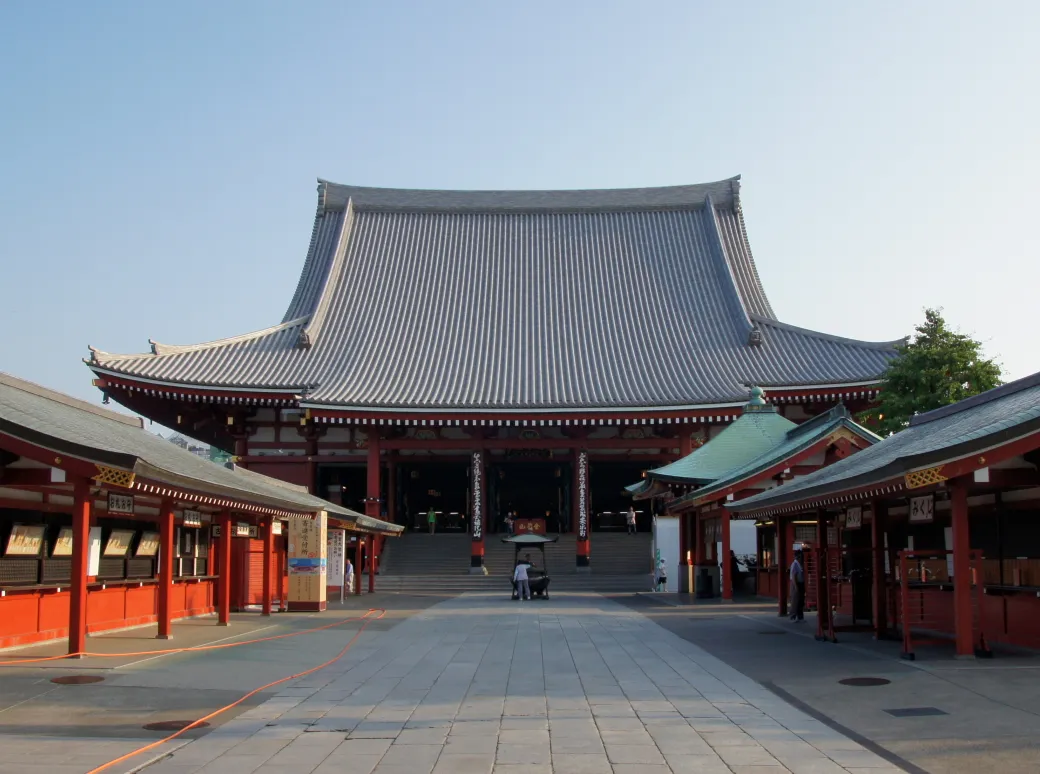
Sweeping hip-and-gable roof and red facade of the Hondo main hall at Senso-ji temple. Photo: kimmc, Wikimedia Commons, CC BY-SA 3.0.
Step inside the towering Hondo (Main Hall) to view the golden altar dedicated to Kannon Bosatsu. Draw an omikuji fortune paper for ¥100; if you draw a bad fortune, tie it to the iron wires provided so the bad luck stays behind. For detailed route notes and customs, read our comprehensive Senso-ji Asakusa guide.
Afternoon: Tokyo National Museum and Ueno Park
General admission ¥1,000 · Open 9:30 to 17:00 (last entry 16:30) · Closed Mondays
From Asakusa Station, take the Tokyo Metro Ginza Line three stops west to Ueno Station (¥180, 5 minutes). Cross through Ueno Park to the Tokyo National Museum (TNM), the oldest and largest museum in Japan. The Honkan (Japanese Gallery) displays samurais’ master-forged swords (katana), Edo-period ukiyo-e woodblock prints, intricate lacquerware, and National Treasure Buddhist statuary.
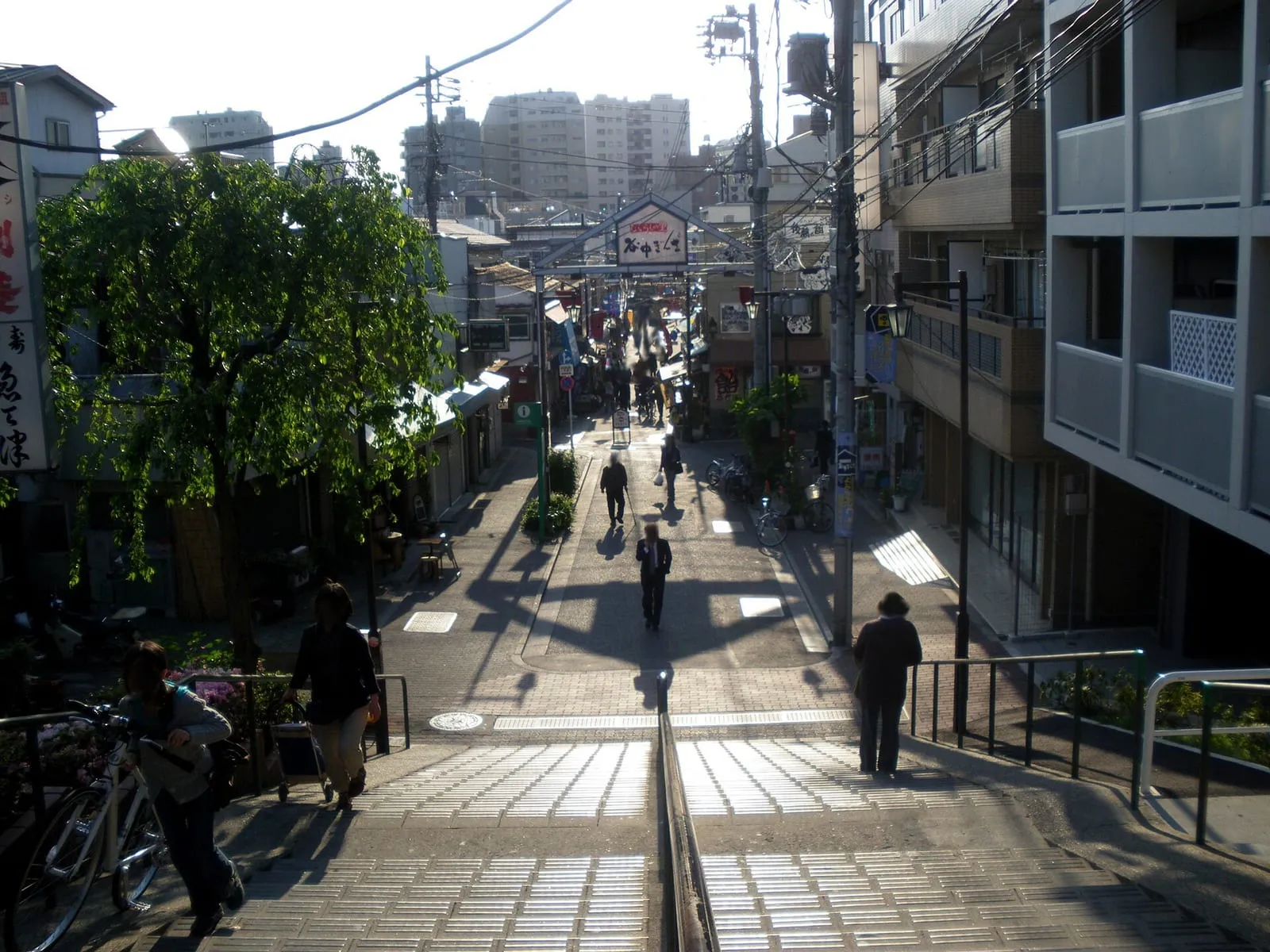
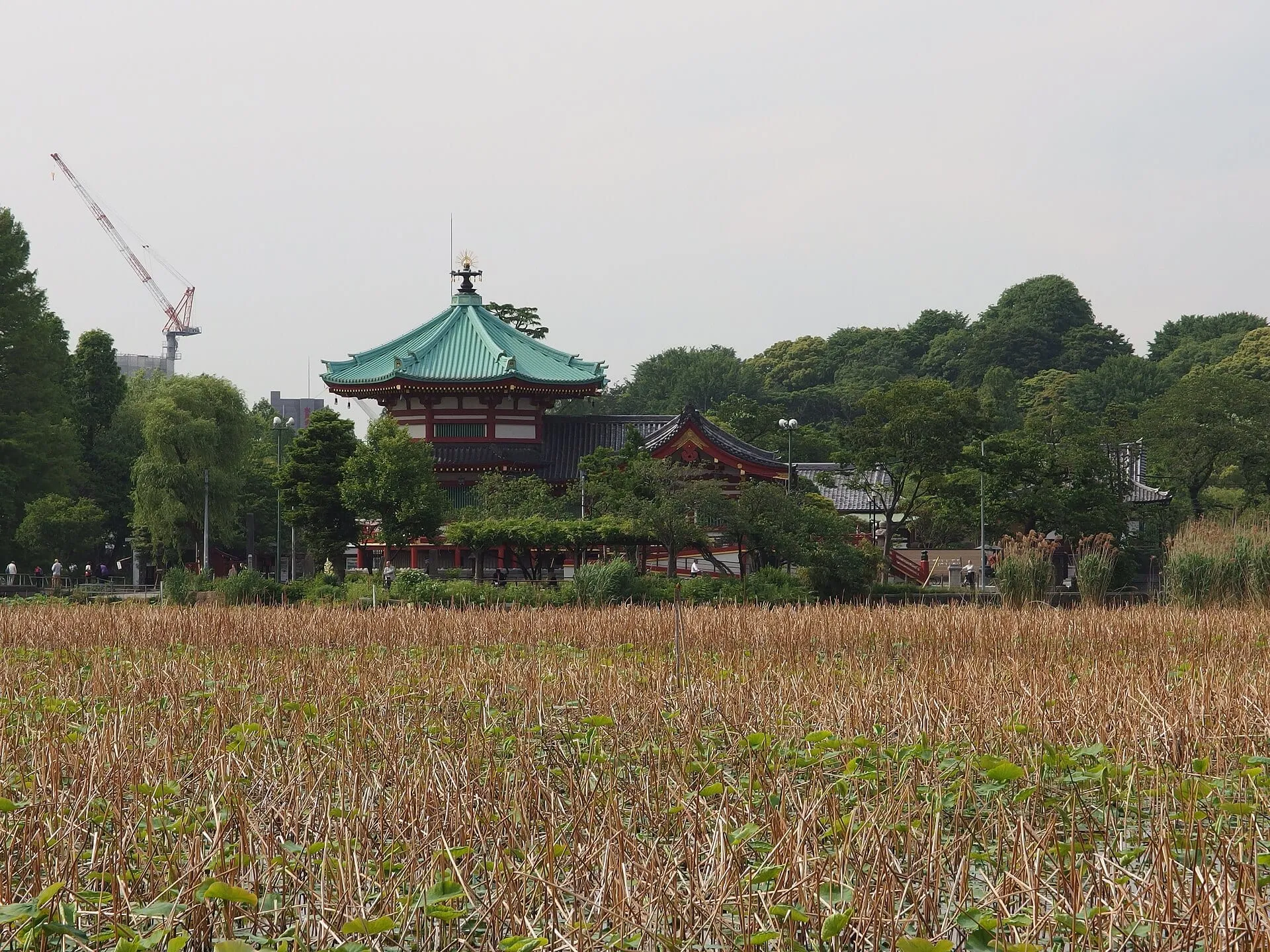
After touring the Honkan, wander through Ueno Park past Shinobazu Pond and Benten Hall. If time allows, stroll south through Ameyoko, a lively open-air market street sheltered beneath the elevated JR Yamanote railway tracks, known for fresh street food, spices, and discount trainers. For a walking itinerary connecting Asakusa and Ueno, consult our Asakusa, Ueno and Yanaka walk.
Dusk: Tokyo Skytree
Tembo Deck (350m) from ¥1,800 advance; Tembo Galleria (450m) combo from ¥3,000 · Open 9:00 to 22:00
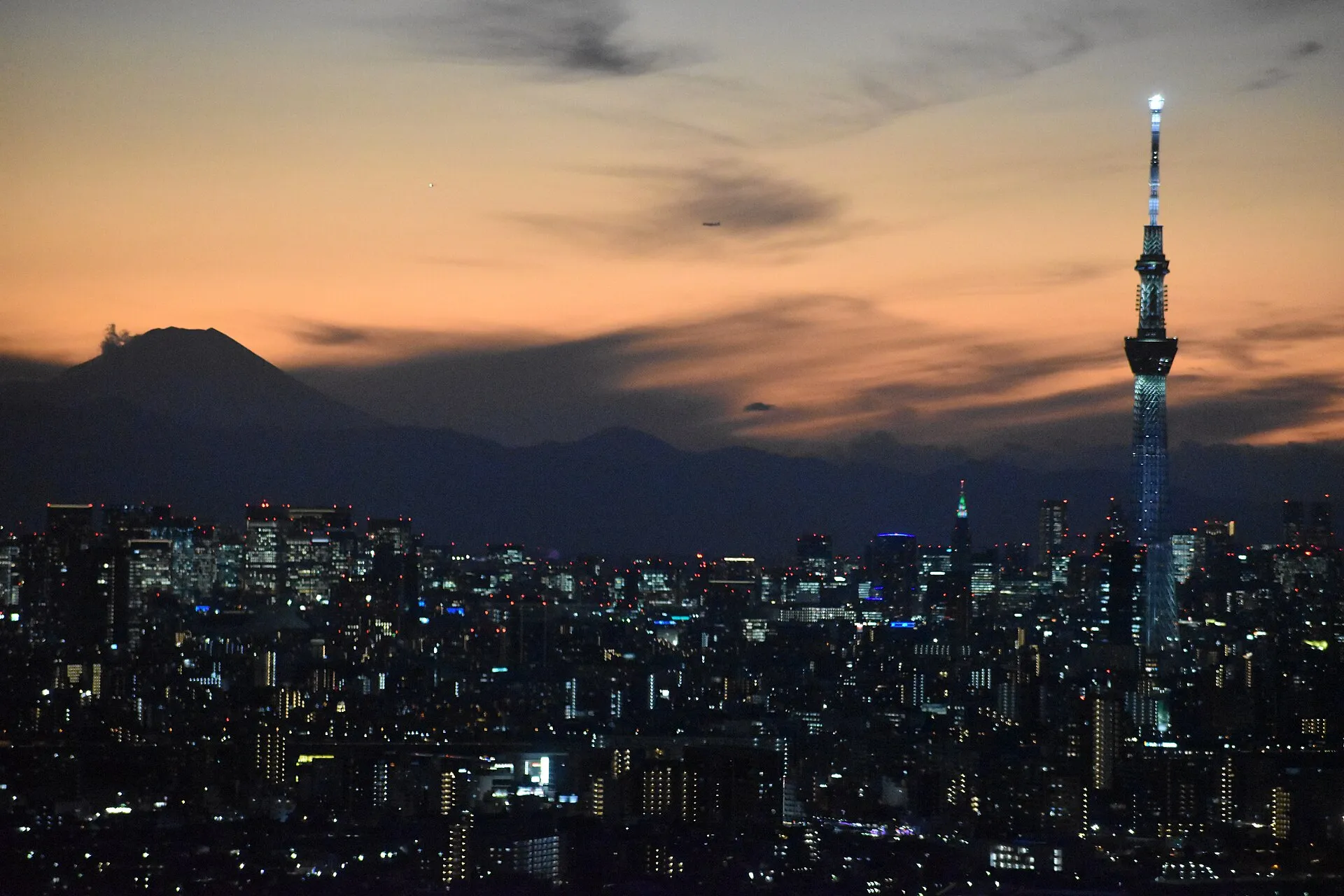
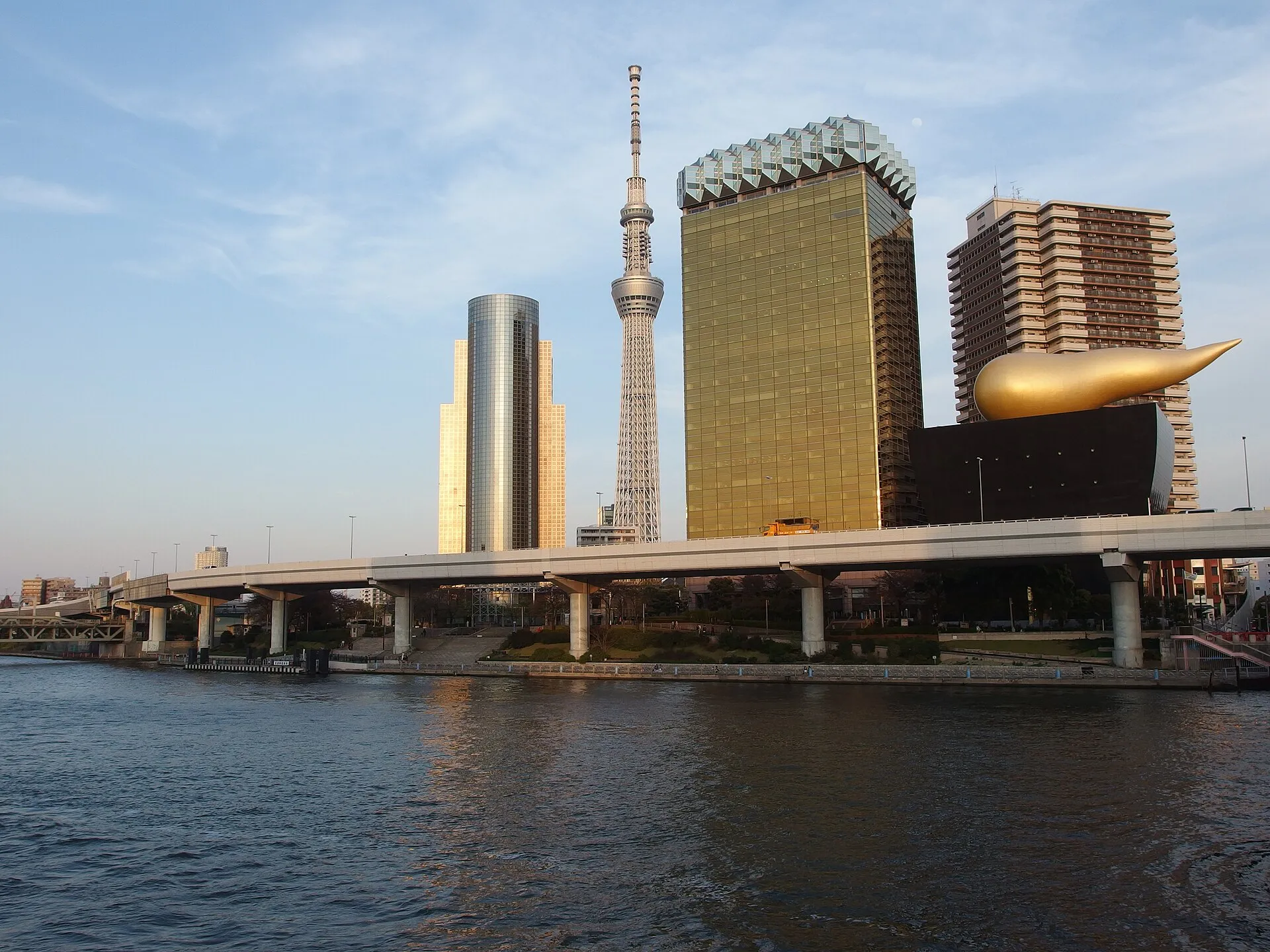
From Ueno, take the Tokyo Metro Ginza Line to Asakusa and transfer to the Tobu Skytree Line to Tokyo Skytree Station (¥160, 3 minutes), or take the Toei Asakusa Line directly to Oshiage Station. Ascend to the Tembo Deck at 350 metres roughly 45 minutes before sunset. On clear autumn and winter evenings, Mount Fuji’s triangular silhouette appears in sharp relief against the blazing orange horizon behind the Shinjuku skyline.
Continue upward via the spiral glass tube of the Tembo Galleria at 450 metres for panoramic views across the Kanto Plain. Afterwards, browse Tokyo Solamachi, the vast shopping and restaurant complex at the base of the tower, offering excellent dining options ranging from tonkatsu to conveyor-belt sushi. Our Skytree tickets guide compares deck tiers and ticketing strategies.
Day 2: Meiji Jingu, Shibuya, and Shinjuku
Day 2 shifts to Tokyo’s modern western hubs, charting a route from tranquil sacred forests to retail districts and high-altitude observation decks.
Morning: Meiji Jingu and Harajuku
Admission free · Open sunrise to sunset (approx. 5:00–18:00 in summer, 6:00–16:00 in winter)
Take the JR Yamanote Line to Harajuku Station. Step immediately through the monumental wooden torii gate into the dense, tranquil forest of Meiji Jingu. Dedicated to Emperor Meiji and Empress Shoken, this shrine stands within a 170-acre evergreen forest planted in 1920 with over 100,000 trees donated from across Japan. Walk along the broad gravel path past the wall of decorative sake barrels (kazaridaru) to the grand courtyard.
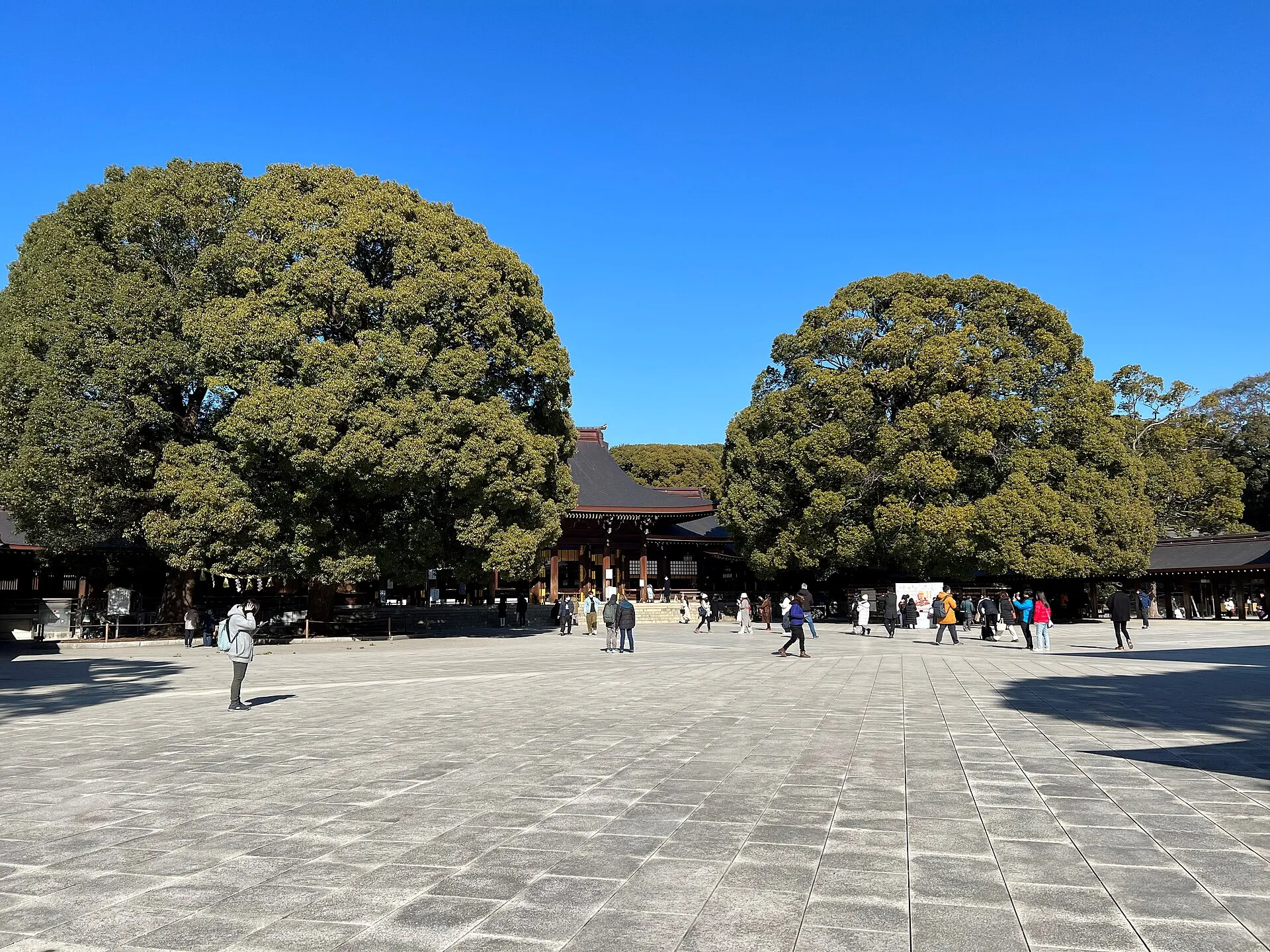
Courtyard and forested surroundings of the Meiji Jingu shrine complex. Photo: Kakidai, Wikimedia Commons, CC BY-SA 4.0.
Exit the forested precinct back toward Harajuku. Walk down Takeshita Street to witness Tokyo’s youthful street-fashion culture and crepe stalls, then stroll down tree-lined Omotesando Avenue, often referred to as Tokyo’s Champs-Elysees, admiring striking architecture designed by Tadao Ando and SANAA. Follow our step-by-step route in the Meiji Jingu, Harajuku and Shibuya walk.
Afternoon: Shibuya Crossing and Shibuya Sky
Crossing free · Shibuya Sky advance tickets ¥2,700 daytime, ¥3,400 from 15:00
Walk 15 minutes south along Meiji-dori or ride the JR Yamanote Line one stop from Harajuku to Shibuya Station. Exit via the Hachiko Exit to pay respects to the bronze statue of the loyal Akita dog before stepping out into the legendary Shibuya Crossing, where up to 3,000 pedestrians cross simultaneously on every green signal.
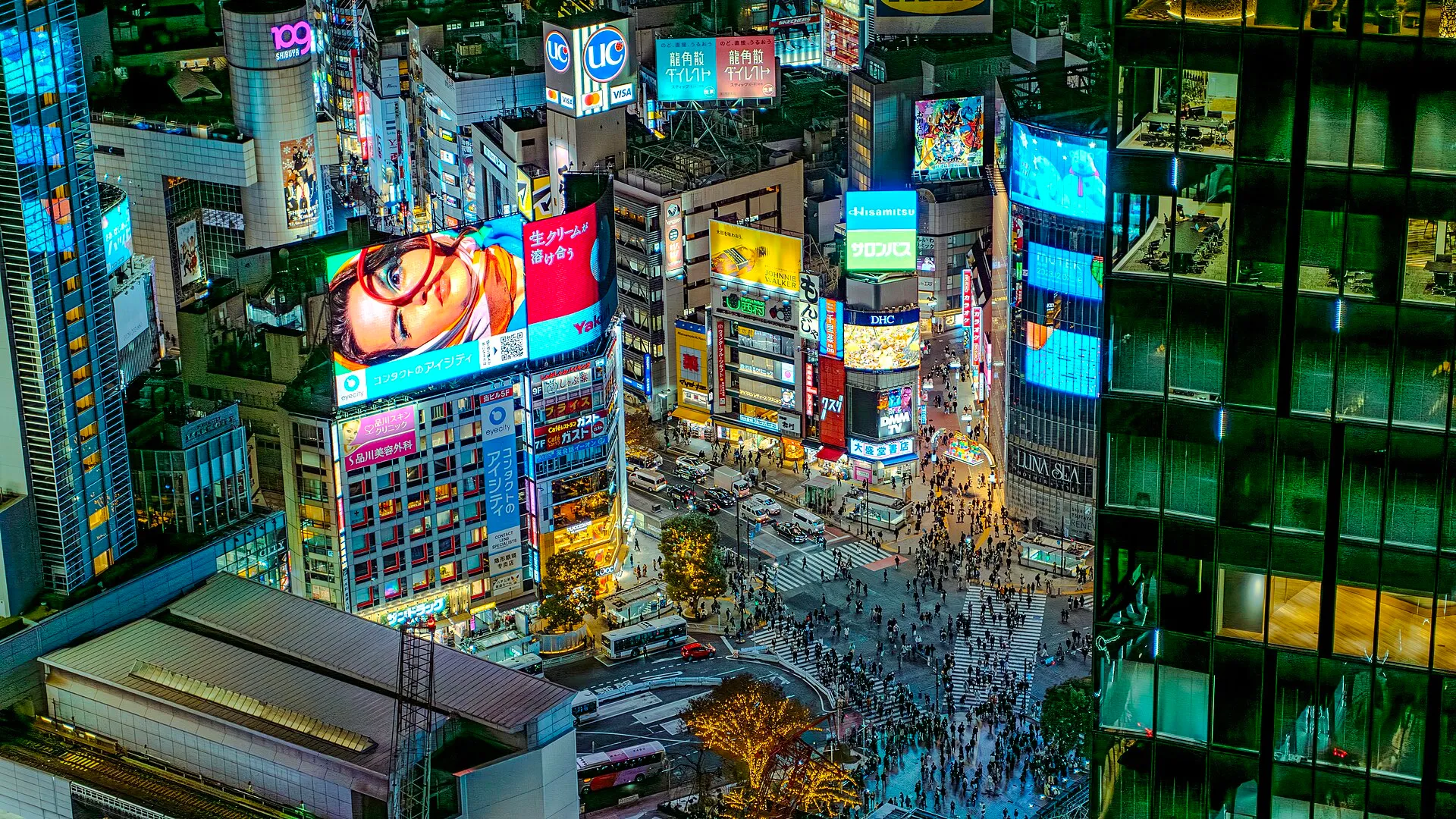
Billboards and the Shibuya Scramble seen from above. Photo: Kakidai, Wikimedia Commons, CC BY-SA 4.0.
Head into Shibuya Scramble Square tower for your booked timed entry to Shibuya Sky. The open-air 360-degree rooftop deck at 229 metres provides an unobstructed vantage point directly above the scramble crossing, with sightlines stretching to Roppongi Hills, Tokyo Tower, and Mount Fuji. Reserve the 16:20 to 17:00 entry slot in autumn or winter to catch the transformation from golden hour to neon twilight.
Evening: Shinjuku izakayas and Golden Gai
Golden Gai and Omoide Yokocho · 7 minutes on the JR Yamanote Line from Shibuya (¥170)
Board the JR Yamanote Line northbound to Shinjuku Station, the busiest railway station in the world. Start with dinner in Omoide Yokocho (“Memory Lane”), a cluster of narrow post-war alleys packed with smoky yakitori stalls grilling chicken skewers over binchotan charcoal.
After dinner, stroll through Kabukicho past the giant Godzilla head atop the Shinjuku Toho Building, then explore Shinjuku Golden Gai, a labyrinth of six narrow alleys housing over 200 tiny independent bars, each seating barely six to eight customers. Review our safety tips and etiquette notes in the Shinjuku night walk.
Day 3: Imperial Palace, teamLab Planets, and Ginza
Day 3 blends the seat of Japanese imperial history with modern art and renowned culinary markets.
Morning: Imperial Palace East Gardens
Admission free · Open 9:00 to 16:00 (winter) or 17:00 (summer) · Closed Mondays and Fridays
Arrive at Otemon Gate of the Imperial Palace East Gardens, a short walk from Tokyo Station or Otemachi subway station. The gardens occupy the historic core of Edo Castle, the power base of the Tokugawa shogunate for over 250 years. Walk up the massive granite stone base of the Tenshudai, the former main castle keep, which offers sweeping views over the expansive Honmaru lawn framed by modern Marunouchi skyscrapers.
Descend into the Ninomaru Garden, a classical Japanese stroll garden featuring a tranquil carp pond, stone lanterns, and carefully sculpted Japanese black pines. Admission is entirely free; visitors simply receive a plastic entry token at the gate, which is returned upon exit. Check monthly closing times and history in our Imperial Palace East Gardens guide.
Afternoon: teamLab Planets in Toyosu
Tickets from ¥3,800 · Open 9:00 to 22:00 daily · Timed advance tickets mandatory
From Otemachi or Tokyo Station, take the Tokyo Metro Yurakucho Line to Toyosu Station, then transfer to the Yurikamome elevated transit line to Shin-Toyosu Station (¥190, 2 minutes), exiting right beside teamLab Planets.
At teamLab Planets, visitors remove shoes and socks at the entrance to walk barefoot through interactive digital installations. Wade through warm, knee-deep water filled with projected koi fish that scatter into blooming flowers upon touch (Drawing on the Water Surface Created by the Dance of Koi and People), immerse yourself in the mirrored infinity room (The Infinite Crystal Universe), and wander through floating live orchids suspended in an mirrored chamber (Floating Flower Garden). Lockers and loaner shorts are provided free of charge. Compare this venue with Azabudai Hills in our teamLab Tokyo tickets guide.
Evening: Ginza and Tsukiji Outer Market dining
Take the Yurikamome back toward Shimbashi or the subway to Ginza. Browse the flagship department stores along Chuo-dori (such as Ginza Six and Wako) before sitting down for dinner. Ginza is Tokyo’s capital for refined tempura, tonkatsu, and high-end sushi; alternatively, visit the adjacent Tsukiji Outer Market area for casual evening dining and fresh seafood bowls (kaisendon). Read our restaurant tips in where to eat in Tokyo and omakase sushi in Tokyo.
Guided tours vs independent sightseeing
Navigating Tokyo’s extensive railway network and booking separate timed tickets independently is straightforward with a smartphone. However, a guided tour offers historical context, seamless transit logistics, and access to food stalls where menus are solely in Japanese.
| Experience | Independent DIY | Guided tour | Key advantage |
|---|---|---|---|
| Tokyo Full-Day Highlights | Pay as you go (subway ~¥800/day + sights); requires separate bookings | Best of Tokyo Full-Day Tourad from ¥16,000 | Expert local commentary, coordinated logistics, and zero transit confusion |
| Asakusa & Senso-ji Walk | Free admission; self-guided navigation through crowds | Guided Asakusa Walking Tourad from ¥2,000 | In-depth historical insights into Edo merchant culture and temple rituals |
| Shinjuku Food & Izakaya Crawl | Pay per dish (~¥3,000–¥5,000); language barrier ordering in tiny bars | Shinjuku Food Tourad from ¥13,200 | Guaranteed seating in hidden alleys, 13 curated dishes, and table fees included |
Best of Tokyo: Guided Full-Day City Tour with a Local
From ¥20,248 · 4.6 stars from 250 reviews · 6 hours · Small group
Best of Tokyo: Guided Full-Day City Tour with a Localad covers Senso-ji, Meiji Jingu, the Imperial Palace, and Shibuya Crossing in a single day, taking the stress out of subway navigation and ticket lines.
Tokyo: Asakusa and Sensoji Walking Tour
From ¥2,000 · 4.9 stars from 1,055 reviews · 2 hours · Budget-friendly walk
Tokyo: Asakusa and Sensoji Walking Tourad provides an affordable, engaging introduction to Senso-ji, guiding visitors through backstreets and historic confectioners that independent travellers easily overlook.
Tokyo: Shinjuku Food Tour (13 Dishes and 4 Eateries)
From ¥13,200 · 4.9 stars from 3,939 reviews · 3 hours · Evening food crawl
Tokyo: Shinjuku Food Tour (13 Dishes and 4 Eateries)ad introduces guests to four authentic culinary venues, handling food ordering, table charges, and bills with an English-speaking guide.
Connecting longer itineraries
- Extending your stay: If you have more time, follow our comprehensive 5 days in Tokyo itinerary, which incorporates side trips to Mount Fuji, Hakone, or Kamakura.
- Short visits: If you only have a transit layover or weekend stopover, consult Tokyo in one or two days for an efficient east-or-west district split.
- Where to base yourself: Pick the right base between the major transport hubs in Shinjuku or Shibuya and review all neighbourhood hotel options in where to stay in Tokyo.
- Arrival transit: Compare express trains and limousine buses from the airports in Narita Airport to Tokyo and Haneda Airport to Tokyo. Find ticket links for all 55 city sights on the Tokyo hub.
Common questions
Is 3 days enough for Tokyo?
Three days cover Tokyo's defining contrasts: historic Asakusa, Ueno and Tokyo Skytree on day one; forested Meiji Jingu, Shibuya Crossing and Shinjuku on day two; and the Imperial Palace East Gardens with teamLab Planets on day three. Day trips to Mount Fuji or Nikko require four or five days.
What should I book before flying to Tokyo?
Book three slots online before departure: a timed sunset entry for Shibuya Sky, timed entry for teamLab Planets in Toyosu, and an advance ticket for Tokyo Skytree's Tembo Deck to avoid counter surcharges.
Which days should I avoid for museums and gardens?
Avoid scheduling Ueno museums or the Imperial Palace East Gardens on Mondays, when they are closed. The East Gardens are also closed on Fridays. If your itinerary includes a Monday, assign it to the west side (Meiji Jingu, Shibuya, and Shinjuku), which remains fully open.
Should I buy the 72-hour Tokyo Subway Ticket for this 3-day itinerary?
Only if you travel exclusively on Tokyo Metro and Toei Subway lines. This itinerary uses the JR Yamanote Line between Harajuku, Shibuya, and Shinjuku, which the subway pass does not cover. A digital Suica or Welcome Suica card loaded on your phone is more practical.