In this guide
💡 The Short Version: Nishiki Market operates daily from roughly 10:00 to 18:00 along a 390-metre covered shopping arcade one block north of Shijo-dori. Arrive around 10:30 to beat the midday crowds. Strictly observe the tabearuki ban: consume all street food standing beside the stall where you bought it. Or book a tour: the Nishiki Market Brunch Walking Tourad pairs you with a local food expert who navigates the crowds and samples seven traditional regional delicacies.
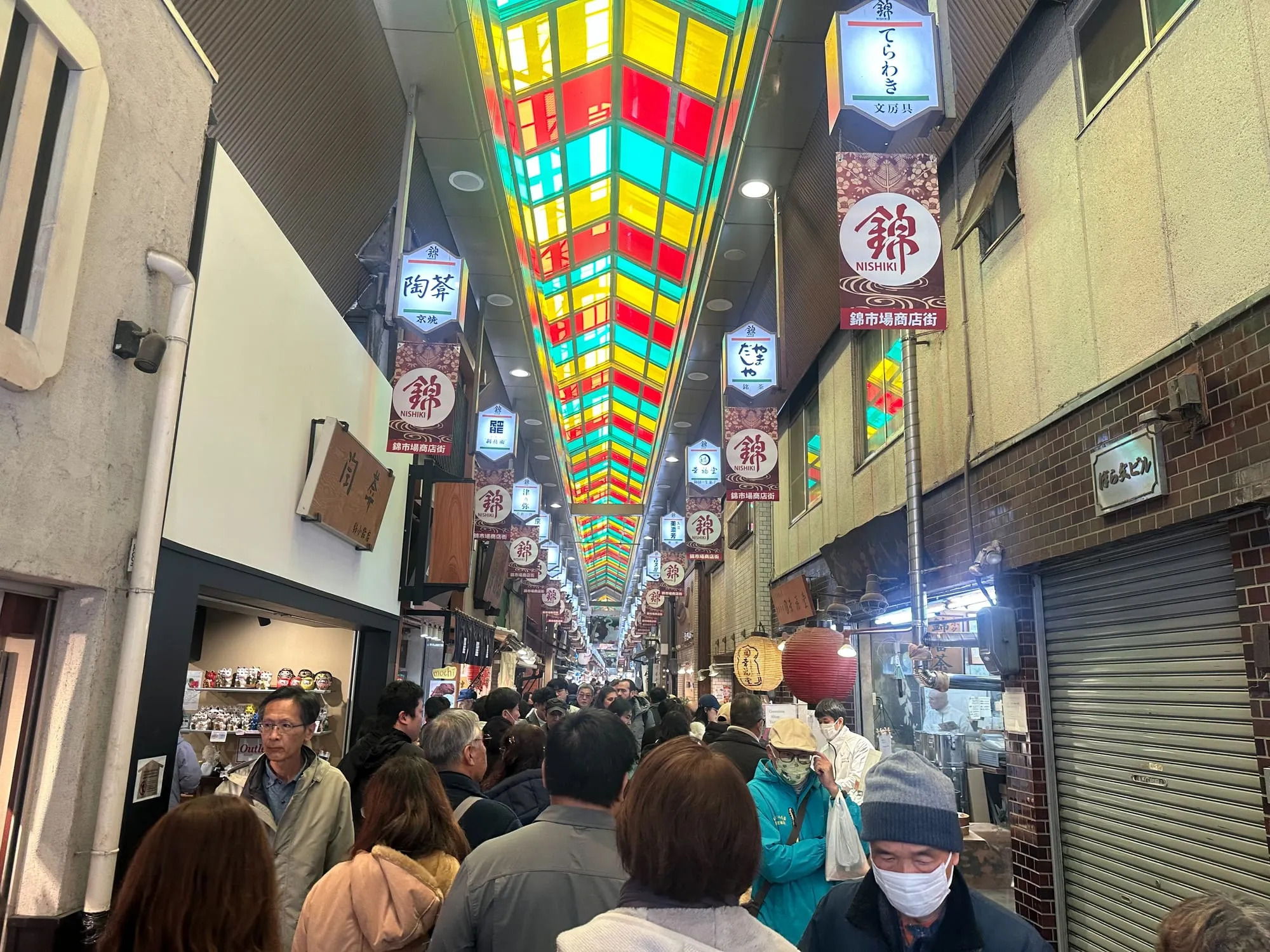
Known affectionately to locals as Kyoto no Daidokoro (“Kyoto’s Kitchen”), Nishiki Market (Nishiki Ichiba) is a narrow, five-block shopping street running east-west between Takakura-dori and Teramachi-dori. For over 400 years, the market has supplied Kyoto’s finest restaurants, temple kitchens, and homes with seasonal vegetables, seafood, preserved goods, and kitchenware.
The market owes its location to natural hydrology: deep underground wells of cold groundwater allowed early merchants in the 14th century to keep fish fresh without modern refrigeration. In 1615, the Tokugawa Shogunate formally granted Nishiki the official wholesale fish market licence for the imperial capital. Today, while tourism has shifted many stalls toward ready-to-eat snacks, the covered arcade still houses around 130 family-run purveyors of authentic culinary craft.
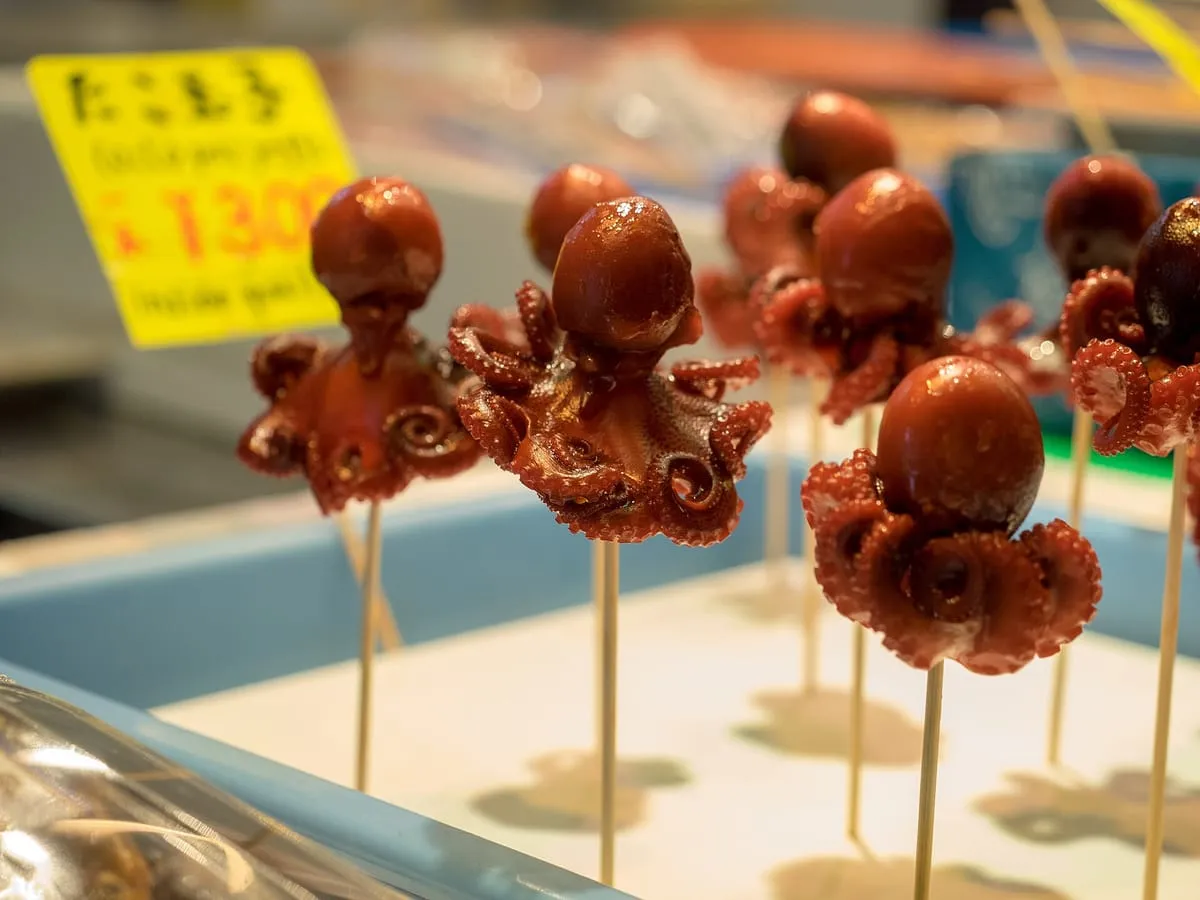 Skewered seafood and fresh market produce displayed at a street-facing vendor stall in Nishiki Market. Photo: Ajay Suresh from New York, NY, USA, Wikimedia Commons, CC BY 2.0.
Practical hours and timing
- Opening hours: Core trading hours are 10:00 to 18:00 daily. Some produce merchants open by 09:00, while cooked food stalls tend to start serving at 10:00. By 17:30, vendors begin discounting remaining prepared foods and closing shutters.
- Best time to visit: Arrive between 10:00 and 11:30 on weekdays. Between 12:30 and 15:30, the narrow three-metre aisle becomes heavily congested with tour groups.
- Closed days: There is no universal closing day for the arcade, but Wednesday is the traditional market holiday when historic seafood and poultry stalls take their rest. Sunday sees fewer wholesale tradesmen, but tourist-facing food stalls operate fully.
Tours
Nishiki Market Brunch Walking Tour: 7 Tastings + Brunch
From ¥10,300 · 4.8 stars from 270 reviews · 3 hours · Morning market tour Book on GetYourGuidead
An insightful morning culinary walk through Nishiki’s covered lanes. Includes seven curated tastings of seasonal pickles, savoury tamagoyaki omelettes, skewered delicacies, and a sit-down Japanese brunch at a market restaurant. The guide explains local food heritage and Japanese kitchen utensils.
Nishiki Market Food & Culture Tour with Izakaya Lunch
From ¥13,500 · 4.7 stars from 151 reviews · 3 hours · Small-group food walk Book on GetYourGuidead
Combines tastings directly from market stalls with an authentic sit-down izakaya lunch nearby. Your bilingual guide translates vendor ingredient labels, demonstrates proper tasting etiquette, and pairs regional dishes with local sake.
Insider Sake Brewery Tour with Sake and Food Pairing
From ¥14,000 · 4.9 stars from 881 reviews · 3 hours · Brewery & tasting tour Book on GetYourGuidead
An exceptional culinary excursion starting with market traditions before journeying to Kyoto’s historic Fushimi sake district for guided tastings across seven artisanal sake varieties paired with regional appetizers.
Nishiki Market Tea Ceremony with Koto Performance
From ¥7,700 · 4.9 stars from 342 reviews · 1 hour · Cultural experience Book on GetYourGuidead
Held in a quiet traditional studio steps from the bustle of the market arcade. Combines a whisked matcha tea ceremony with a live acoustic performance on the traditional 13-string Japanese koto harp.
Official market grazing vs guided tour: the prices side by side
| Option | Typical cost | Duration | What is included | Who it suits |
|---|---|---|---|---|
| Independent stall snacking | ¥1,500 to ¥3,000 | 1 to 1.5 hours | Pay-as-you-go snacks from 3 to 5 stalls | Independent travellers wanting a flexible, budget-friendly lunch |
| Guided Nishiki Brunch Tour | ¥10,300 | 3 hours | 7 food tastings, full brunch, market cultural commentary | Travellers wanting guided access to regional foods without language barriers |
| Food & Culture Izakaya Tour | ¥13,500 | 3 hours | Market walk, multiple tastings, seated izakaya lunch with sake | Food lovers looking for a relaxed, small-group lunchtime feast |
| Tea Ceremony & Koto recital | ¥7,700 | 1 hour | Whisked matcha, traditional sweet, live music recital | Culture enthusiasts wanting quiet contemplation right by the arcade |
Must-try foods and stalls
Nishiki Market is packed with traditional specialities unique to Kyoto’s food culture:
- Dashimaki Tamago (Rolled Dashi Omelette): Unlike sweet Tokyo-style rolled omelettes, Kyoto style is savoury, light, and infused with dashi broth made from kombu kelp and dried bonito flakes. The two premier institutions are Miki Keiran (founded 1928) and Tanaka Keiran, both serving freshly rolled, piping hot slices on small paper trays for ¥350 to ¥500.
- Tako Tamago (Glazed Baby Octopus Skewer): A Nishiki signature. A whole baby octopus, braised in a sweet soy mirin glaze, stuffed with a hard-boiled quail egg inside its head (¥500 to ¥600).
- Kyo-tsukemono (Kyoto Pickles): Kyoto’s pristine groundwater and temple traditions produced world-renowned vegetable pickling arts. Look for barrels of Senmaizuke (paper-thin slices of Shogoin turnip pickled with sweet vinegar, kombu, and red chilli) and Shibazuke (chopped aubergine and cucumber cured with red perilla leaves). Famous pickle shops like Nishiki Takakura offer free tasting samples.
- Yuba Skewers (Tofu Skin): Freshly lifted sheets of warm soy milk skin served with a dab of freshly grated wasabi and light soy sauce (¥400 to ¥500).
- Soy Milk Doughnuts at Konna Monja: Produced by Fujino Tofu, these bite-sized doughnuts are fried fresh in batches using 100% soybean milk. Light and airy, they cost ¥350 for a bag of six.
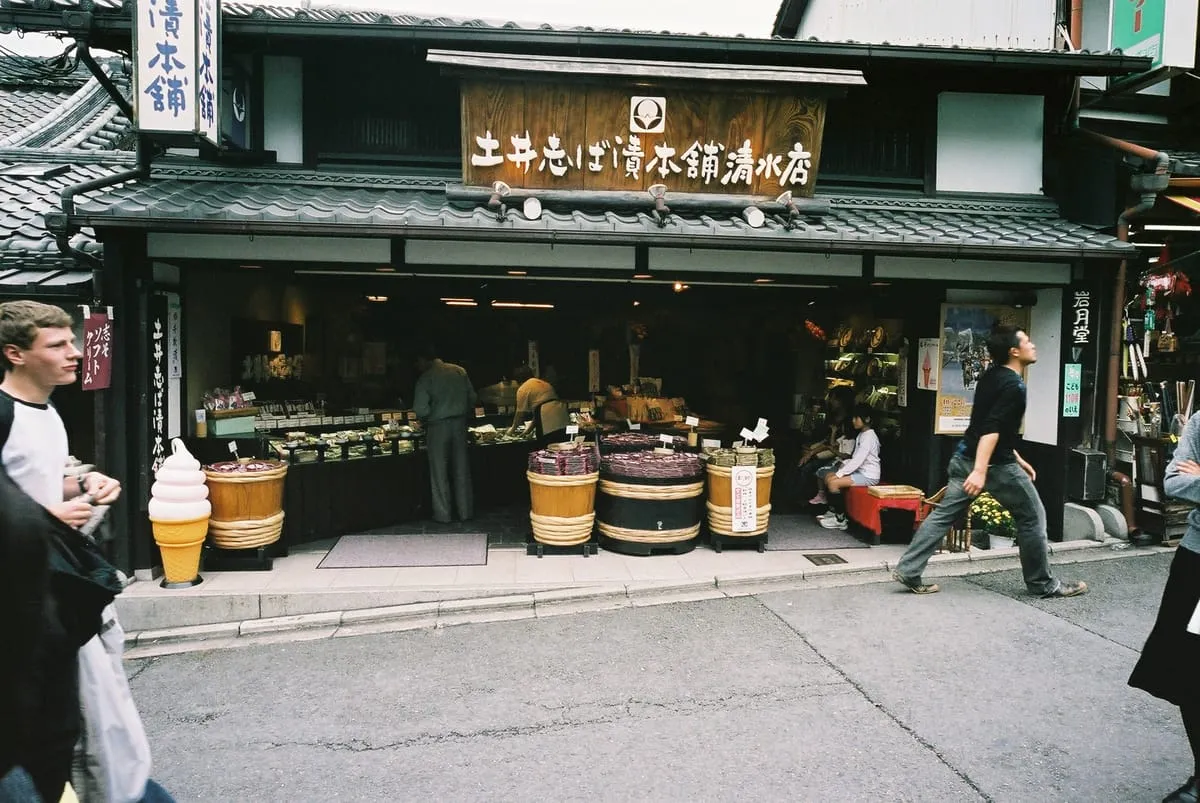 Ceramic tubs displaying traditional seasonal pickled Kyoto vegetables at a Nishiki preservation shop. Photo: 2REP from Kiyomizu, Higashiyama, Kyoto, Wikimedia Commons, CC BY 2.0.
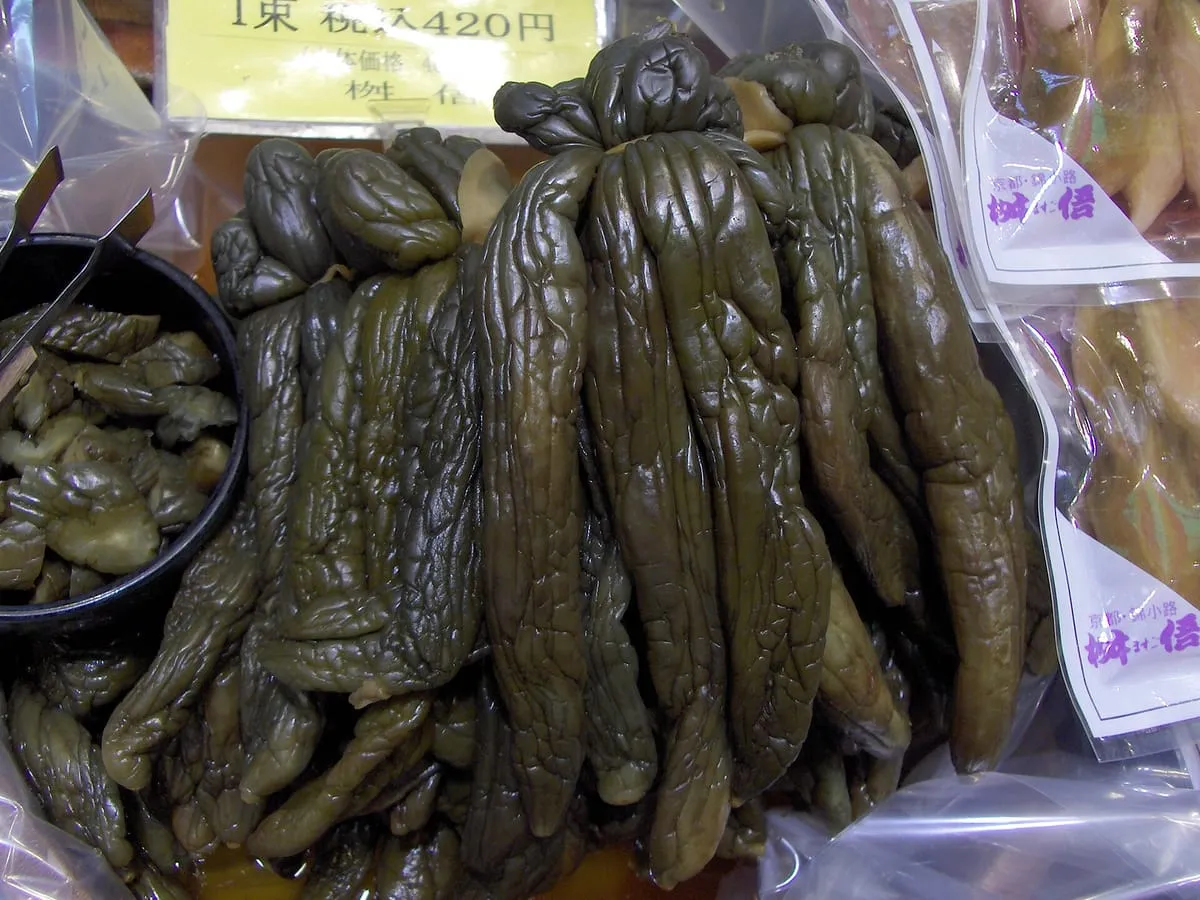 Wooden barrels of Kyo-tsukemono pickles and seasonal preserved vegetables outside an artisan vendor stall. Photo: wilbanks from Nishiki-ichiba, Kyoto, Wikimedia Commons, CC BY-SA 2.0.
Historic artisan knife shops
Beyond food, Nishiki Market is home to Aritsugu, one of Japan’s oldest cutlery and kitchenware manufacturers. Founded in 1560 by master swordsmith Fujiwara Aritsugu to forge weapons for the Imperial Court, the workshop transitioned into master kitchen knives when the samurai era ended.
Professional chefs from across the world visit the stall to purchase hand-forged Santoku, Deba, and Yanagiba carbon steel knives (starting from ¥12,000 to ¥35,000+). When you purchase a knife, the master craftsman will engrave your name in Japanese katakana or English letters directly onto the blade with a hammer and chisel free of charge, and show you how to hone the blade on a waterstone.
Market etiquette and the no-eating-while-walking rule
In 2019, the Nishiki Promotion Association enacted strict guidelines to manage crowds and protect traditional shopfronts:
- Strict Tabearuki Ban (No eating while walking): Walking through the narrow corridor while eating skewers or holding open drink cups is forbidden. Drips from sauces and juices frequently ruined clothing and merchandise. Instead, stand inside the vendor’s designated eating alcove or directly against the front counter to finish your food.
- Rubbish disposal: Public rubbish bins do not exist in the arcade. Hand your empty skewers, paper trays, and cups directly back to the vendor who sold you the item. They are legally required to provide recycling and waste bins for their customers.
- Keep to the left: Pedestrian traffic flows strictly on the left side of the aisle. Do not stop in the middle of the corridor to check mobile phones.
- Large luggage: Large suitcases and bulky backpacks are strongly discouraged due to crowd density; leave bags in lockers at Kyoto Station or Karasuma Station.
- Payment: While knife purveyors and modern sweet shops take credit cards, the vast majority of fresh seafood, skewer, and pickle stalls operate strictly on cash. Bring ¥1,000 notes and 100-yen coins.
How to get there
Nishiki Market runs parallel to Shijo-dori, just one block north:
- By Subway: Ride the Karasuma Subway Line to Shijo Station. Take Exit 1 or 2 and walk 3 minutes north.
- By Hankyu Railway: Ride to Karasuma Station (Exit 16 leads directly into the underground shopping link) or Kyoto-Kawaramachi Station (5-minute walk from Exit 9).
- By Kyoto City Bus: Board routes 5, 201, or 205 to Shijo Takakura or Shijo Kawaramachi bus stops (¥230 flat fare).
After your market visit, walk east through Teramachi shopping arcade to reach Pontocho Alley and the Kamo River, or head north to explore where to eat in Kyoto.
Common questions
What are the opening hours for Nishiki Market?
Most stalls operate between 09:30 or 10:00 and 18:00 daily. Wednesday is the traditional rest day for fishmongers, though many general stalls remain open.
Can you eat while walking in Nishiki Market?
No. Eating or drinking while walking through the market arcade is strictly prohibited to prevent sauce spills and congestion. Consume your food in front of the stall where purchased.
Do stalls in Nishiki Market accept credit cards?
Some modern souvenir shops take cards, but the majority of traditional food stalls and skewer vendors accept cash only.