In this guide
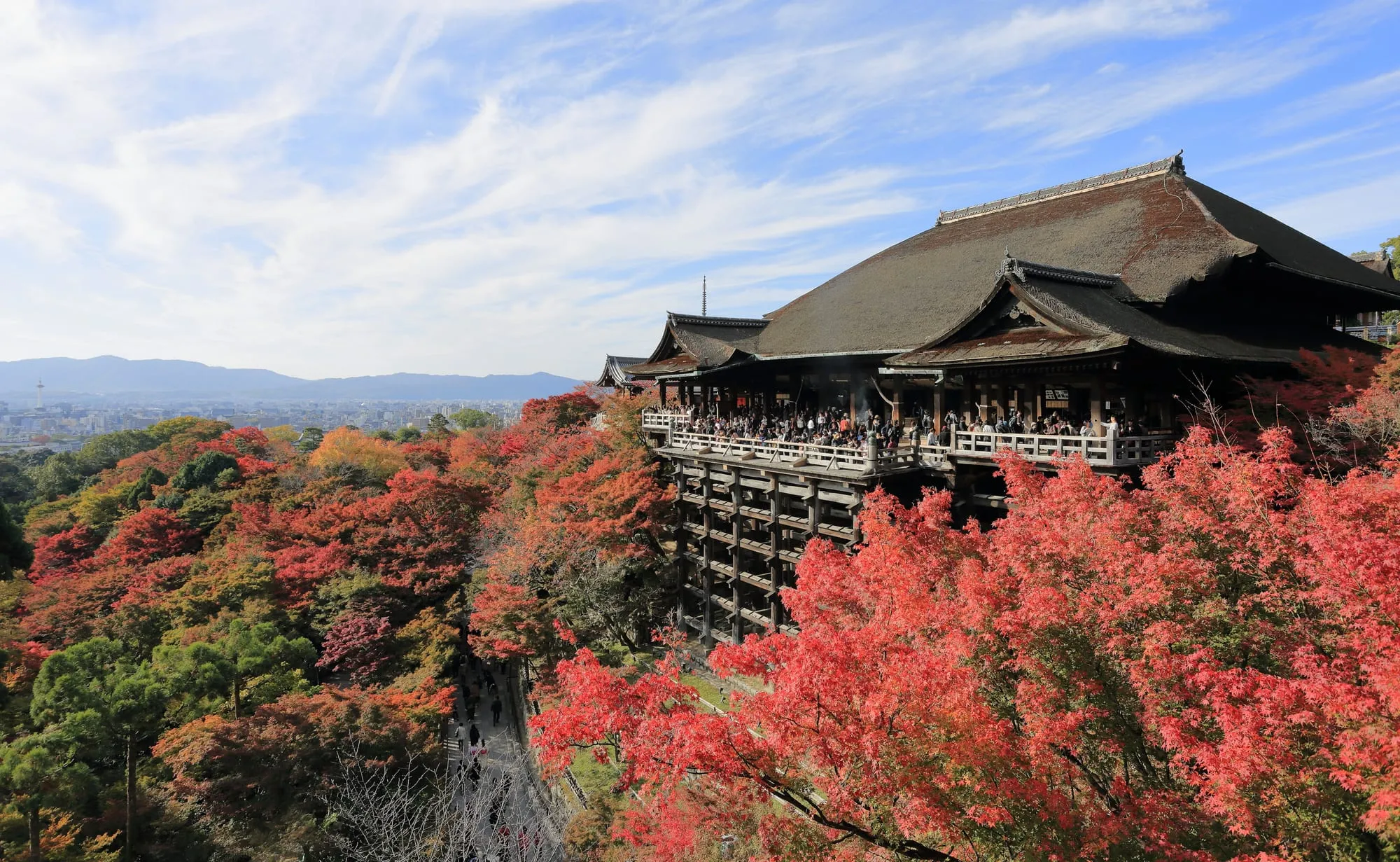
💡 The Short Version: Kiyomizu-dera opens daily at 06:00, and arriving before 07:30 gives you the 13-metre-high cantilevered wooden stage in morning stillness before tour groups arrive. Admission to the Main Hall (Hondo) and stage is ¥500 in cash at the gate (¥200 for junior high and primary pupils); the outer gates and pagoda grounds are free. Tickets are sold only on the day. After viewing the stage and Otowa Waterfall, walk down through the stone-paved lanes of Sannenzaka and Ninenzaka towards Gion. Or book a tour: when you want cultural context or to combine your visit with a traditional experience, the tea ceremony in a garden tea house near Kiyomizu-deraad (from ¥8,800, 4.8 stars from 4,638 reviews) sits just below the temple approach.
The official tickets
Official rates from the temple administration (kiyomizudera.or.jp). Kiyomizu-dera does not operate an online advance reservation system for individual visitors; buy your paper ticket at the entrance barrier leading into the Hondo.
| Ticket category | Price | Notes |
|---|---|---|
| Adult and high school pupils | ¥500 | Main Hall (Hondo), wooden stage and Otowa Waterfall |
| Junior high and primary pupils | ¥200 | Ages 6 to 15 |
| Children under 6 | Free | Accompanied by an adult |
| Special night illuminations | ¥500 | Spring (late March to early April) and autumn (mid-November to early December) |
| Outer precinct grounds | Free | Niomon gate, West gate, Sanjuno-to pagoda and Zuigu-do hall exterior |
- Cash only at the barrier: Neither credit cards nor IC travel cards (ICOCA, Suica) are accepted for temple admission. ATMs are available along Matsubara-dori below the entrance gate.
- Taisan-ji sub-temple: The Koyasu Pagoda across the valley south of the main stage is included in your standard entry ticket and provides the definitive postcard angle looking back at the stage hanging over the tree canopy.
- Zuigu-do darkness experience (Taimai-meguri): A small sub-temple on the approach offers a symbolic walk through total pitch blackness beneath the hall representing the womb of Daizuigu Bosatsu (additional ¥100 cash entry).
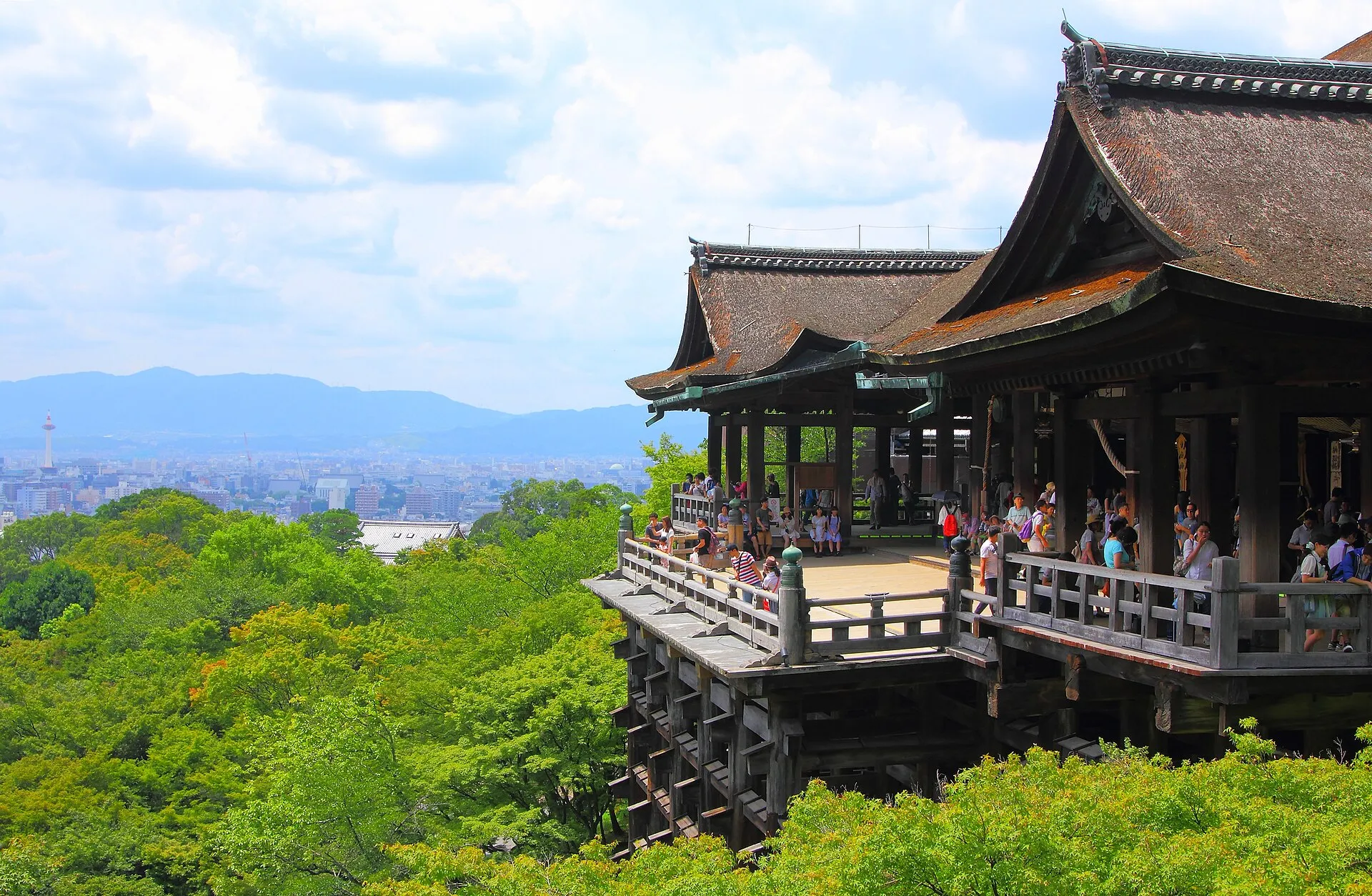
The wooden stage of the main hall above Mount Otowa. Photo: JordyMeow, Wikimedia Commons, CC BY-SA 3.0.
Tours and guided walks
While independent visits are simple, the temple’s deep Buddhist history and the maze of surrounding preservation districts benefit significantly from a local guide. Tours also solve luggage and transit friction when moving between sights.
Tea ceremony in a historic garden tea house
From ¥8,800 · 4.8 stars from 4,638 reviews · 50 minutes · traditional tearoom
Kyoto: Tea Ceremony in a Garden Tea House near Kiyomizu-deraad: located in a tranquil traditional garden just a 5-minute walk down from Kiyomizu-dera. An experienced tea master guides you through preparing and whisking your own bowl of high-grade Uji matcha alongside seasonal wagashi sweets, explaining the Zen origins of the ritual.
Kiyomizu-dera and Higashiyama discovery walk
From ¥5,500 · 4.8 stars from 185 reviews · 2½ hours · small group
Kyoto: Kiyomizudera, Higashiyama, and Yasaka Discovery Tourad: meets at the base of Gojo-zaka, walking through Kiyomizu-dera, the sacred Otowa spring, and down the flagged slopes of Sannenzaka and Ninenzaka to Yasaka Shrine in Gion, highlighting hidden shrines and architectural details missed by independent walkers.
Tea ceremony with full-day kimono rental
From ¥9,900 · 4.9 stars from 342 reviews · 1 hour ceremony + day rental · kimono styling
Kyoto: Tea Ceremony & Full-Day Kimono near Kiyomizu-deraad: offers professional kimono dressing, styling, and zori sandals at a specialist rental salon beside the temple, followed by a formal tea ceremony and the freedom to explore Higashiyama in traditional attire until 17:30.
Four headline sights coach excursion
From ¥10,000 · 4.5 stars from 751 reviews · 9 to 9½ hours · coach transport
From Osaka/Kyoto: 4 Iconic Kyoto Sights Full-Day Bus Tourad: connects Kiyomizu-dera with Kinkaku-ji, Arashiyama and Fushimi Inari on dedicated coach transport, bypassing municipal bus queues entirely.
Official ticket or tour: the prices side by side
Comparing independent gate admission against guided Higashiyama walks and cultural experiences.
| Option | Official gate price | Tour price | What it covers |
|---|---|---|---|
| Kiyomizu-dera standard admission | ¥500 | — | Main Hall, stage, Otowa Waterfall, Koyasu Pagoda |
| Higashiyama walking tour with guide | — | From ¥5,500 | Guided walk through Kiyomizu-dera, Sannenzaka, Ninenzaka, Gion |
| Garden tea ceremony experience | — | From ¥8,800 | 50-minute traditional tea ceremony in Japanese garden beside temple |
| Kimono rental + tea ceremony | — | From ¥9,900 | Full-day authentic kimono dressing, hair styling, tea ritual |
| 4-sight Kyoto coach tour | — | From ¥10,000 | Kiyomizu-dera, Kinkaku-ji, Arashiyama, Fushimi Inari, return coach |
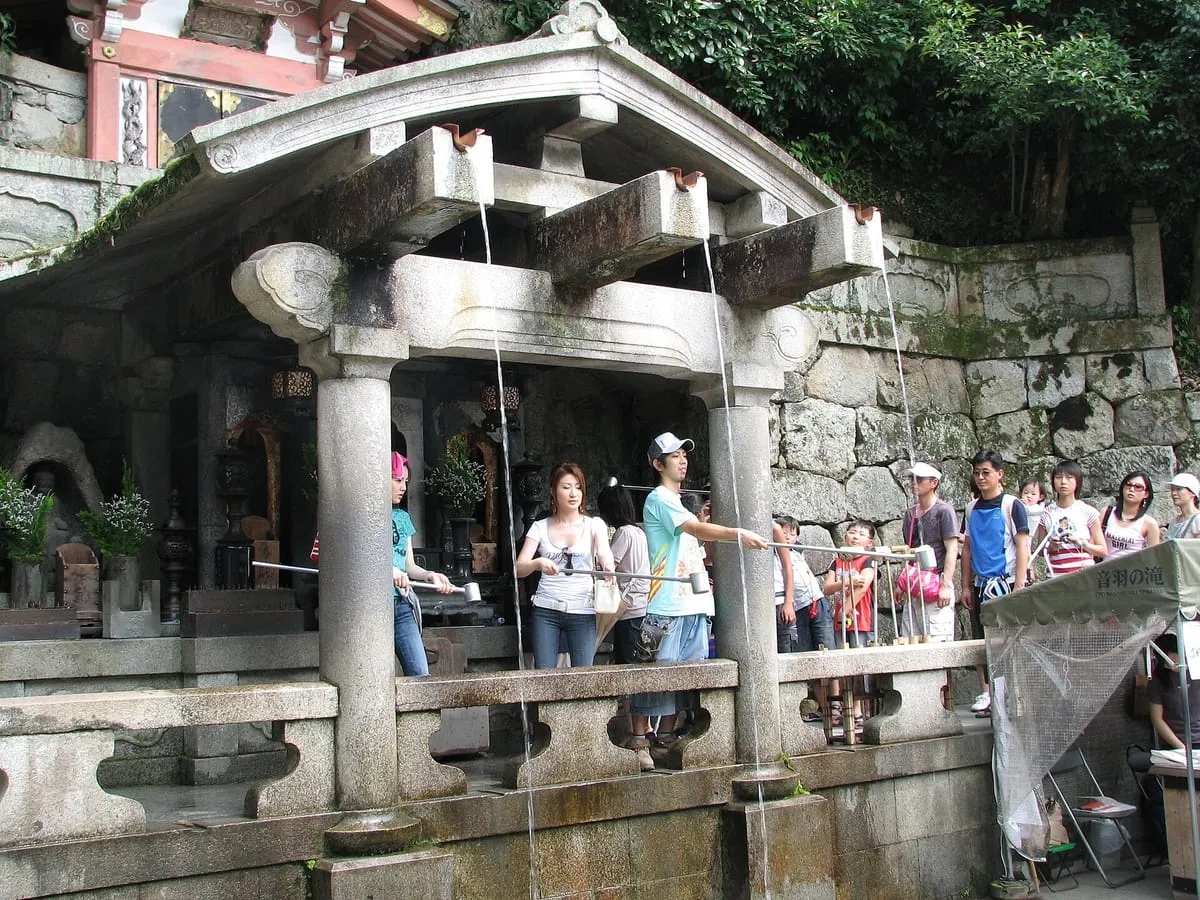
Otowa Waterfall and its three streams of mountain spring water. Photo: Ray in Manila, Wikimedia Commons, CC BY 2.0.
What to see across the temple complex
Kiyomizu-dera (“Pure Water Temple”) was established in 778 by the Buddhist monk Enchin and general Sakanoue no Tamuramaro, preceding Kyoto’s status as imperial capital. The existing buildings date from 1633, reconstructed by the third Tokugawa shogun, Iemitsu.
- The Main Stage (Kiyomizu no Butai): Extending outwards from the Main Hall (Hondo), the veranda stands 13 metres above the hillside gorge. It was built using ancient Japanese carpentry (kigumi) without a single iron nail; instead, 18 massive keyaki timber columns lock together to absorb seismic shock. The Japanese phrase “to jump off the stage at Kiyomizu” (Kiyomizu no butai kara tobioriru) is the linguistic equivalent of taking a courageous, irreversible life decision.
- Otowa Waterfall (Otowa no Taki): Located directly below the stage terrace, three channels siphon cold mountain spring runoff into a stone basin. Worshippers use communal long-handled aluminium cups to drink from the streams, each traditionally associated with health, academic success, or romantic fortune. Buddhist modesty dictates sipping from only one stream; taking water from all three is considered greedy.
- Niomon and Sanjuno-to: The entrance esplanade features the imposing two-storey Niomon gate (Deva Gate), guarding two wrathful Kongo Rikishi statues, and the 31-metre Sanjuno-to, one of Japan’s tallest three-storey pagodas, painted in striking lead-free cinnabar red.
- Jishu Shrine status: The matchmaking Shinto shrine situated immediately behind the main hall closed in 2022 for a multi-year reconstruction of its National Treasure pavilions and remains closed into 2026.
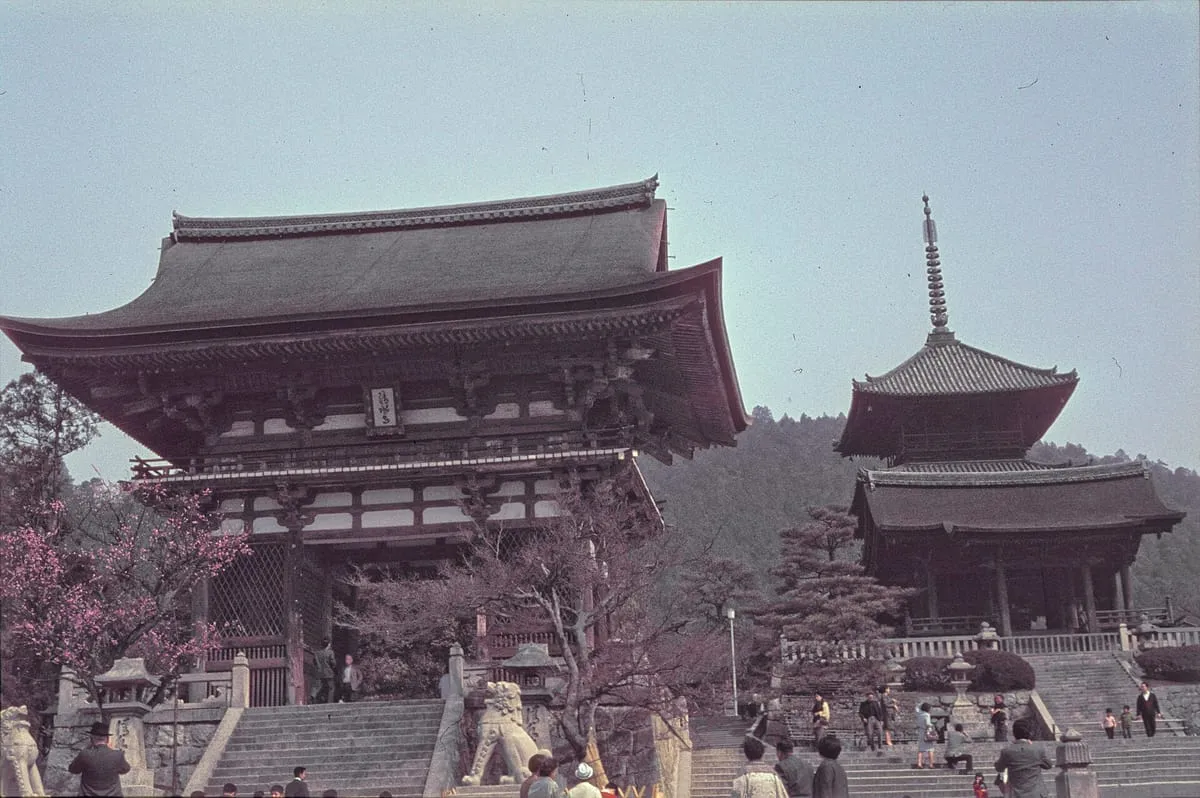
The Niomon entrance gate and Sanjuno-to pagoda. Photo: hg, Wikimedia Commons, CC BY-SA 3.0.
Practical visiting strategy and transport
- The 06:00 opening advantage: Very few travellers take advantage of the 06:00 gate opening. Arriving between 06:00 and 07:30 allows you to experience the morning chanting of Buddhist monks, uninterrupted mountain breezes, and an empty stage veranda. Coach tours and large crowds begin flooding the approach road by 08:30.
- How to get there:
- By train: Take the Keihan Main Line to Kiyomizu-Gojo Station (Exit 4), followed by a 20-minute uphill walk east along Gojo-dori. This route bypasses road congestion entirely.
- By bus: From Kyoto Station Bus Terminal (Platforms D1/D2), take City Bus 206 or 86 to Gojo-zaka or Kiyomizu-michi (approx. 15 minutes, ¥230 flat fare). From either stop, the pedestrian walk climbs steeply for 10 minutes (approx. 800 metres) along Matsubara-dori.
- Footwear rules: You do not need to take off your shoes to walk across the open-air wooden stage. However, socks are required if entering designated inner sanctuary areas or the Zuigu-do hall.
The downhill walking route: Sannenzaka to Gion
Do not retrace your steps down Gojo-zaka after leaving Kiyomizu-dera. Instead, follow the historical stone-flagged pilgrimage route north towards central Kyoto:
- Sannenzaka (San-neizaka): Branch off Matsubara-dori onto this pedestrian stone stairway lined with Edo and Meiji-period wooden machiya merchant houses, preserved pottery shops, and yatsuhashi confectionery stores.
- Ninenzaka (Ni-neizaka): Continue down into Ninenzaka, home to traditional teahouses, paper umbrella shops, and the famous tatami-seated Starbucks housed inside a 100-year-old traditional townhouse.
- Yasaka Pagoda (Hokan-ji): Diverge slightly west towards the 46-metre five-storey wooden pagoda of Hokan-ji, framing one of Kyoto’s most photographed streetscapes.
- Maruyama Park and Yasaka Shrine: Continue north past the stone walls of Kodai-ji Temple into Maruyama Park, exiting through the grand vermilion gates of Yasaka Shrine directly into the heart of Gion and Pontocho Alley.
Common questions
How much is entry to Kiyomizu-dera?
Admission to the main hall and wooden stage costs ¥500 for adults and high school students, and ¥200 for junior high and primary school children, payable in cash at the gate. The outer grounds, Niomon gate and pagoda are free to view.
What is special about the wooden stage at Kiyomizu-dera?
The main hall's wooden veranda juts out over a hillside 13 metres above the valley floor, built entirely using traditional interlocking joinery without a single metal nail, supported by 18 keyaki (Japanese zelkova) pillars.
What are the opening hours for Kiyomizu-dera?
The temple gates open daily at 06:00 and close at 18:00 (extended to 18:30 on summer weekends). Special floodlit night viewings run from 18:00 to 21:30 during peak spring cherry blossom and autumn foliage.
Can you drink from the Otowa Waterfall?
Yes. Visitors queue at the base of the main hall to catch falling mountain spring water using long-handled metal cups sterilised by ultraviolet light. Tradition suggests choosing only one of the three streams to remain humble.