In this guide
💡 The Short Version: Pick Kyoto for temples and shrines: the city counts more than 1,600 Buddhist temples, 400 Shinto shrines and seventeen UNESCO World Heritage monuments, among them Kinkaku-ji, Kiyomizu-dera and the torii tunnels of Fushimi Inari, plus the Gion geisha district and the bamboo grove at Arashiyama. Pick Osaka for food, the neon of the Dotonbori canal, late nights, Osaka Castle and Universal Studios Japan. Or do both: JR Special Rapid trains link Osaka Station and Kyoto Station in 29 minutes for ¥580, every 15 minutes. Or book a tour: the Kyoto early-morning tour of Fushimi Inari, Arashiyama and Kinkaku-jiad is from ¥11,775 and covers the three sights in one day, and the Osaka walking tour of Dotonbori, Kuromon Market and street foodad is from ¥3,500 for two and a half hours, with the food paid for as you go (GetYourGuide).
⚠️ Kyoto’s sights keep daytime hours. Kinkaku-ji is open 09:00 to 17:00, with last entry at 16:40, and Kiyomizu-dera 06:00 to 18:00; only Fushimi Inari’s mountain paths are open 24 hours. Plan Kyoto sightseeing for the morning and keep the evening for Gion, Pontocho or a train back to Osaka.
The cities side by side
Prices are in yen, from each city’s own guides and the tax authorities.
| Osaka | Kyoto | Deciding factor | |
|---|---|---|---|
| Main sights | Osaka Castle, Shitenno-ji, Dotonbori | Fushimi Inari, Kinkaku-ji (¥500 cash), Kiyomizu-dera | Kyoto has seventeen UNESCO World Heritage monuments |
| Food | Takoyaki, okonomiyaki, kushikatsu (fried skewers) | Kaiseki, yudofu, matcha sweets | Osaka for street food; Kyoto for set meals |
| Accommodation tax, a person a night | None under ¥5,000; ¥200 for ¥5,000 to ¥15,000; ¥400 for ¥15,000 to ¥20,000; ¥500 above (Osaka Prefecture) | From 1 March 2026: ¥200 under ¥6,000; ¥400 for ¥6,000 to ¥20,000; ¥1,000 for ¥20,000 to ¥50,000; ¥4,000 for ¥50,000 to ¥100,000; ¥10,000 above (Kyoto City) | Kyoto’s tax is higher at every room price |
| Theme park | Universal Studios Japan, priced by date | Toei Kyoto Studio Park, ¥2,400 | USJ is the bigger draw for families |
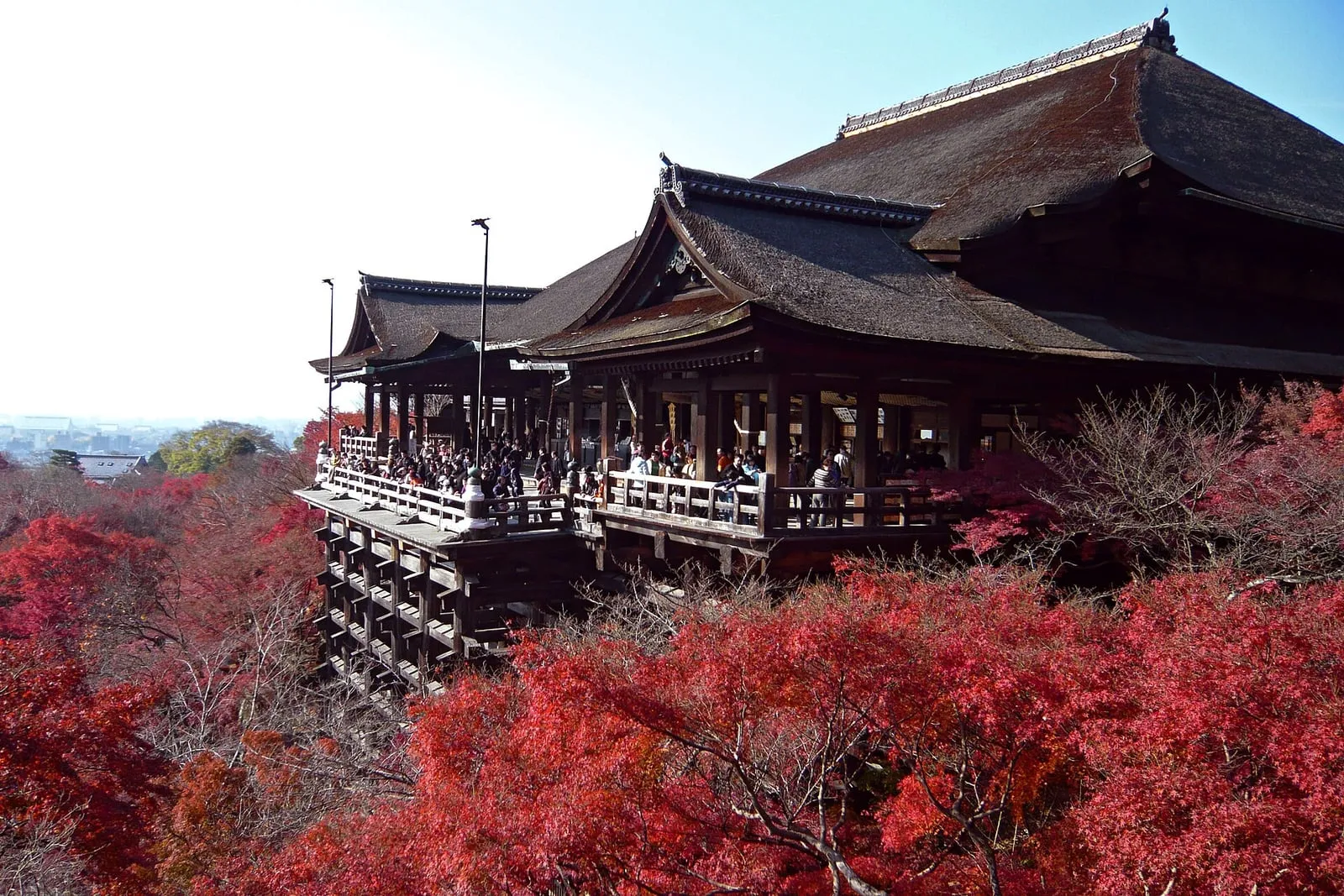
| Viewpoint | Harukas 300, ¥2,200 on the day, ¥1,980 online | Kiyomizu-dera’s wooden stage | Osaka’s view is from a tower; Kyoto’s from a temple |
Culture: temples and a merchant city
Kyoto was Japan’s imperial capital from 794 until the Meiji Restoration of 1868, and it was largely spared bombing in the Second World War. The gold-leafed Kinkaku-ji stands over its pond, Kiyomizu-dera has a wooden stage on the hillside, and the paths at Fushimi Inari-taisha climb Mount Inari through tunnels of vermilion torii. In Gion and Pontocho, narrow lanes are lined with dark timber machiya townhouses, where geiko and maiko, Kyoto’s geisha and apprentice geisha, still work (Gion).
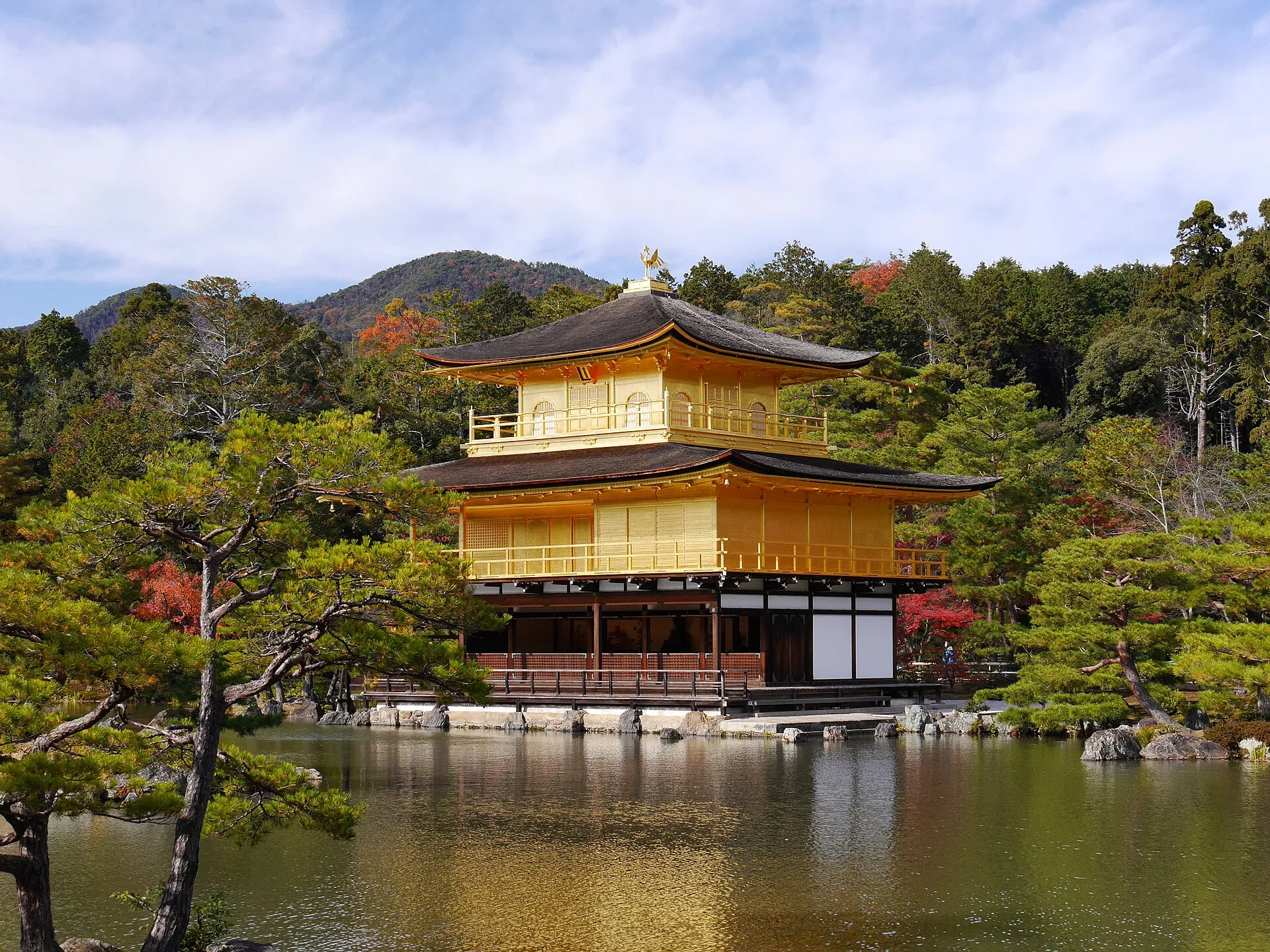 Kinkaku-ji, Kyoto. Photo: Raymond Spekking, Wikimedia Commons, CC BY-SA 4.0.
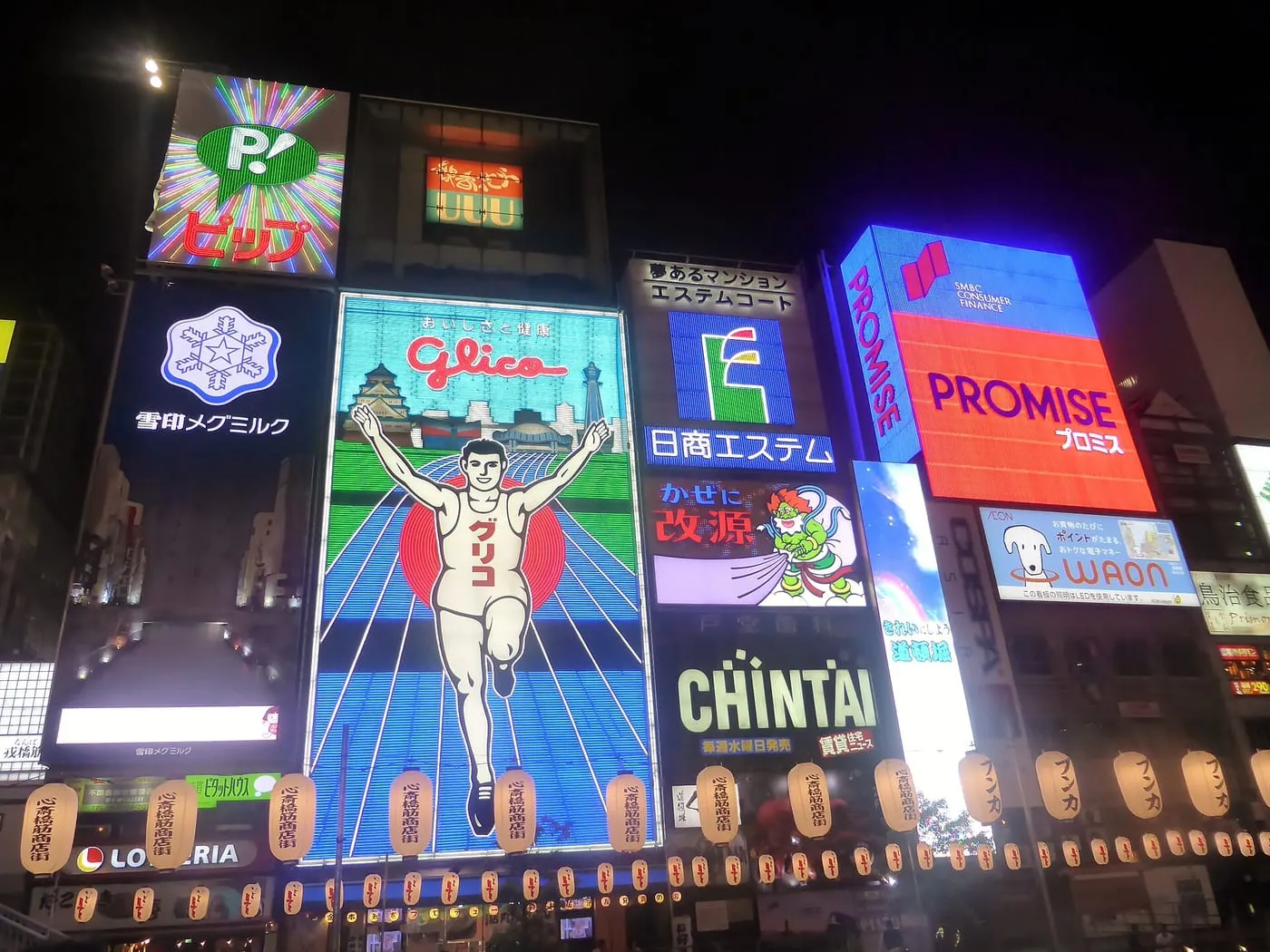
Osaka calls itself tenka no daidokoro, the nation’s kitchen. Osaka Castle stands inside stone walls and moats in a park planted with plum and cherry trees. On Dotonbori, a giant mechanical crab and the Glico running man sign hang over the canal bridges.
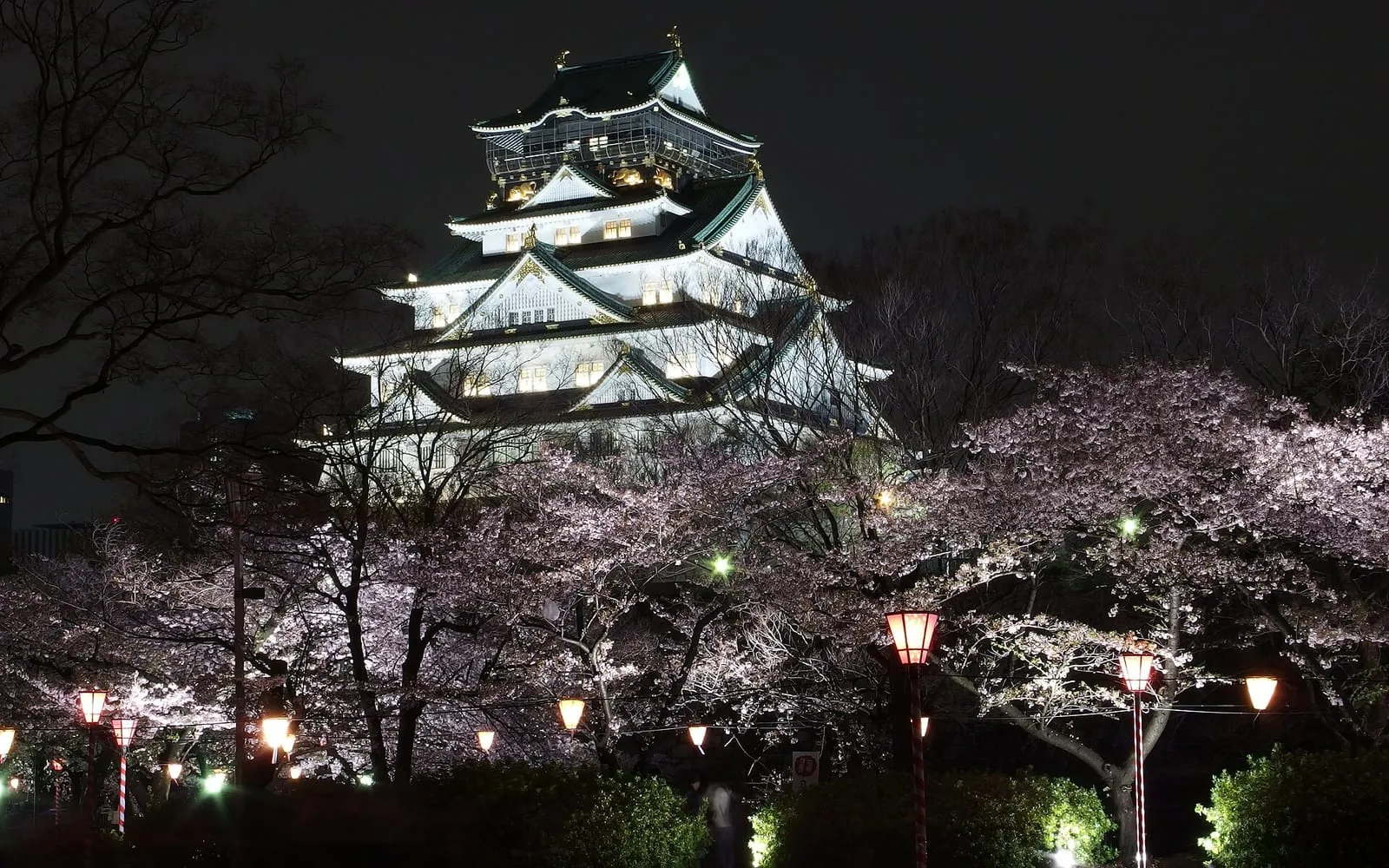 Osaka Castle. Photo: 663highland, Wikimedia Commons, CC BY 2.5.
Food: kuidaore and kaiseki
- In Osaka: the motto is kuidaore, “eat until you go bankrupt”. Stalls in Dotonbori sell takoyaki, batter balls with octopus inside, topped with sauce and bonito flakes, from ¥500 for eight, and okonomiyaki, a griddled cabbage pancake; a modan-yaki, with yakisoba noodles inside, is about ¥1,000. In Shinsekai, kushikatsu counters serve breaded, deep-fried skewers with a shared pot of sauce: dip once only (where to eat in Osaka, takoyaki and okonomiyaki).
- In Kyoto: kaiseki-ryori is a multi-course dinner built on the season; shojin-ryori is Buddhist temple food with no meat or fish; and yudofu, tofu simmered in kelp broth, is the dish of the Nanzen-ji temple district. Uji, south of the city, is the matcha town (where to eat in Kyoto, Uji day trip).
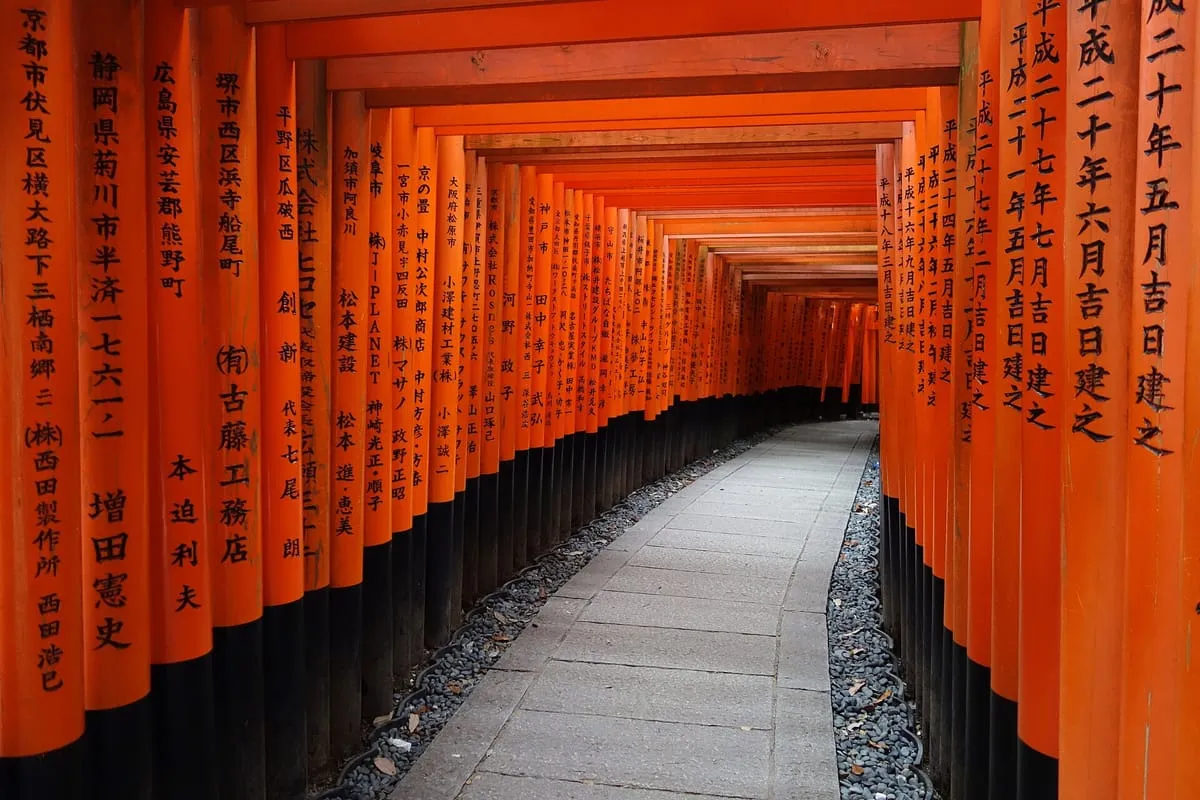 Senbon Torii, Fushimi Inari, Kyoto. Photo: Basile Morin, Wikimedia Commons, CC BY-SA 4.0.
How to travel between them
| Line | From and to | Journey | Fare |
|---|---|---|---|
| JR Special Rapid | Osaka Station (Umeda) to Kyoto Station, every 15 minutes | 29 minutes | ¥580, covered by the Japan Rail Pass |
| Hankyu Kyoto Line | Osaka-Umeda to Kyoto-Kawaramachi, downtown by Gion | 43 minutes | ¥410 |
| Keihan Main Line | Yodoyabashi or Kyobashi to Gion-Shijo, via Fushimi-Inari | 48 minutes | ¥430 |
The Tokaido Shinkansen also links Shin-Osaka and Kyoto Station, but Shin-Osaka is north of central Osaka and needs a Shinkansen ticket.
Which city suits whom?
- Temples and early starts: Kyoto. Reach Fushimi Inari by 07:00 for the torii tunnels before the coach tours, which fill them from about 09:00.
- Food, nightlife and families: Osaka, for street food, the shopping arcades and Universal Studios Japan.
- A base for Kansai: either. Nara is 35 minutes from Osaka-Namba by Kintetsu Rapid Express (¥680) and 35 minutes from Kyoto by Kintetsu Limited Express (¥1,280, reserved seat) (Nara from Osaka, Nara from Kyoto).
Where to stay
- In Osaka: Namba and Shinsaibashi to walk to Dotonbori, or Umeda and Osaka Station for the trains. See where to stay in Osaka.
- In Kyoto: downtown around Kawaramachi and Karasuma for restaurants and transport, or near Kyoto Station for the Shinkansen. See where to stay in Kyoto.
Common questions
Should you stay in Osaka or Kyoto?
Our judgement: stay in Kyoto to reach the temples at opening time, before the coach tours, and for a night in a *machiya* townhouse; stay in Osaka for late dinners and bars around Dotonbori. Kyoto's accommodation tax is higher: from 1 March 2026 it is 400 yen a person a night on a room of 6,000 to 20,000 yen, against 200 yen in Osaka on a room of 5,000 to 15,000 yen.
How fast is the train between Osaka and Kyoto?
JR Special Rapid trains leave Osaka Station every 15 minutes and reach Kyoto Station in 29 minutes for ¥580. The Hankyu Kyoto Line runs from Osaka-Umeda to Kyoto-Kawaramachi, downtown, in 43 minutes for ¥410, and the Keihan Main Line from Yodoyabashi to Gion-Shijo in 48 minutes for ¥430.
Which city is cheaper for food, Osaka or Kyoto?
Osaka's street food is cheap: takoyaki at Dotonbori stalls costs from ¥500 for eight, and a *modan-yaki* okonomiyaki about ¥1,000. Kyoto is known for *kaiseki*, multi-course seasonal dinners, and *yudofu*, tofu simmered in kelp broth, around Nanzen-ji.