In this guide
💡 The Short Version: Yokohama is Tokyo’s quickest coastal getaway, reached in just 25 minutes from Shibuya on the Tokyu Toyoko Line for ¥310 (board limited express or express trains), or 15 to 20 minutes from Tokyo Station or Shinagawa on the JR Tokaido Line (¥490). The compact port city centers on Yokohama Chinatown (Japan’s largest, with over 500 eateries), the interactive Cup Noodles Museum (¥500, closed Tuesdays), the seaside promenades of Minato Mirai 21, and the classical architecture of Sankeien Garden (¥700). Note that the Landmark Tower Sky Garden is temporarily closed for major repairs until 2028 or later. Or book a tour: travellers wanting structured port heritage and neighborhood commentary can join the Yokohama: City Highlights Guided Tourad (from ¥15,000, 4 hours). All prices are in Japanese yen (¥).
Travel routes and train connections
Yokohama is Japan’s second-largest municipality (population 3.7 million), situated 30 kilometres south of Tokyo along the western shore of Tokyo Bay in Kanagawa Prefecture.
| Route | Departure terminal | Destination station | Travel time | Single adult fare | Pass validity |
|---|---|---|---|---|---|
| Tokyu Toyoko Line (Limited Express) | Shibuya Station | Yokohama / Motomachi-Chukagai | 25–30 minutes | ¥310 (Yokohama) / ¥500 (Chinatown) | Not covered by JR Pass; pay via IC card |
| JR Tokaido Line (Local/Rapid) | Tokyo Station or Shinagawa | Yokohama Station | 17–25 minutes | ¥490 (Tokyo) / ¥310 (Shinagawa) | Covered by Japan Rail Pass |
| JR Shonan-Shinjuku Line | Shinjuku or Shibuya | Yokohama Station | 30–33 minutes | ¥570 (Shinjuku) | Covered by Japan Rail Pass |
| JR Keihin-Tohoku Line | Akihabara / Ueno / Tokyo | Yokohama Station / Kannai | 35–45 minutes | ¥410–¥570 | Covered by JR Pass; all-stations service |
- Tokyu Toyoko Line from Shibuya: The most popular route from western Tokyo. Limited express (Tokkyu) and express (Kyuko) trains require no surcharge—they cost the same ¥310 as local trains while skipping minor suburban stops. At Yokohama Station, Toyoko Line trains continue directly onto the underground Minatomirai Line, carrying passengers seamlessly to Minatomirai Station (for the waterfront) and Motomachi-Chukagai Station (for Chinatown) without a transfer.
- JR Lines from Tokyo & Shinagawa: The JR Tokaido Line is the fastest rail link, reaching Yokohama in just 17 minutes from Shinagawa. For Chinatown and Yamashita Park, transfer at Yokohama Station to the JR Negishi Line for Ishikawacho Station (7 minutes, ¥170).
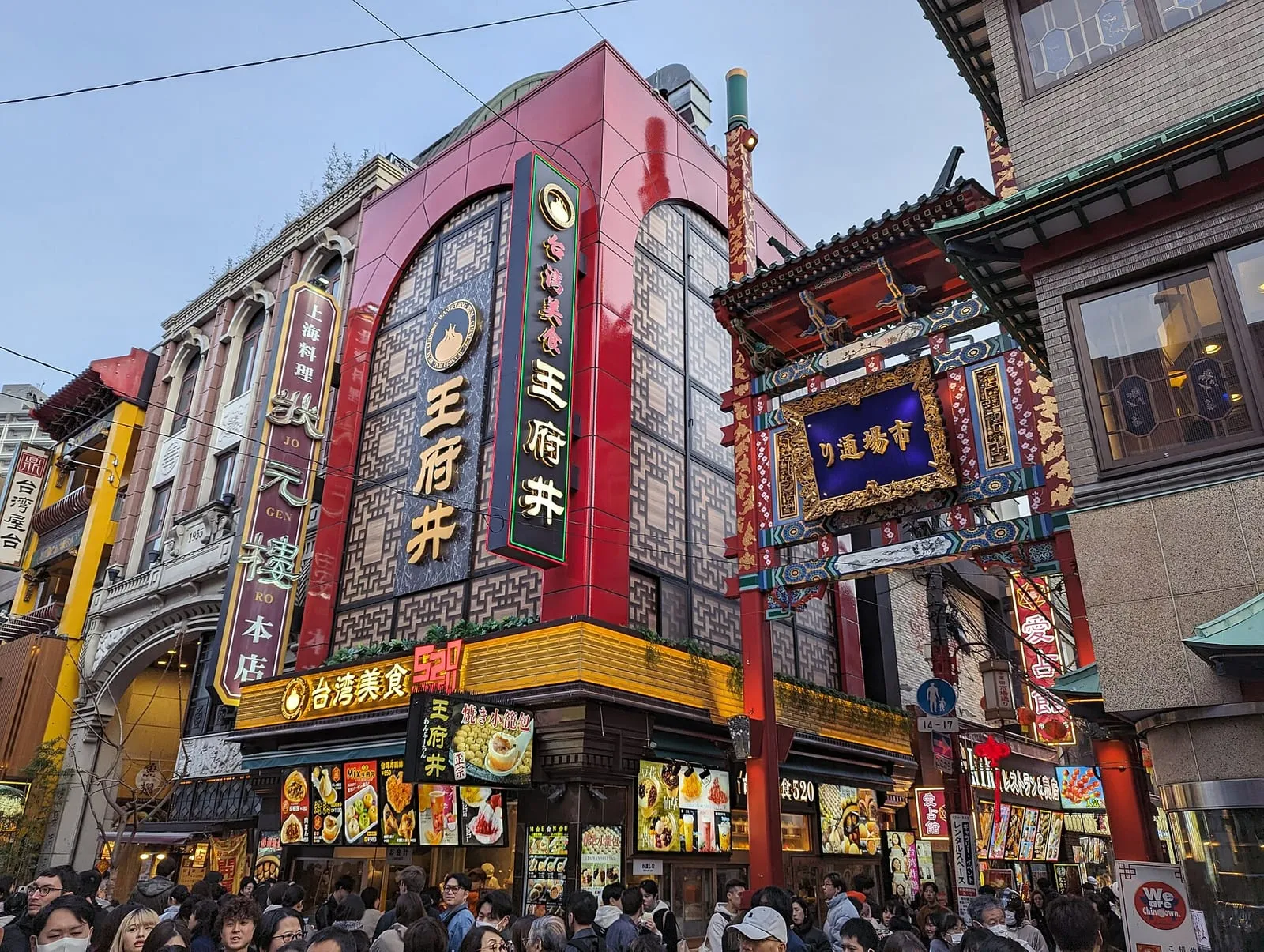
The ornate Paifang entrance gate and illuminated restaurants of Yokohama Chinatown. Photo: Syced, Wikimedia Commons, CC0.
Top sights and districts in Yokohama
When Japan ended over two centuries of national isolation (sakoku) following the arrival of Commodore Perry’s Black Ships, Yokohama was designated one of five open treaty ports in 1859. The city grew rapidly as an international trading crossroads, creating a distinctive blend of Western colonial, Chinese merchant, and traditional Japanese architecture.
1. Yokohama Chinatown (Chukagai)
Spanning ten city blocks in central Naka Ward, Yokohama Chinatown is the largest Chinatown in East Asia, home to approximately 500 restaurants, herbal pharmacies, and food purveyors.
- The Four Gates (Paifang): Ten decorative gates guard the district, including four primary ceremonial gates built according to feng shui principles facing the cardinal directions: the blue Genbumon (north), the white Seiryumon (east), the red Suzakumon (south), and the white Byakkumon (west).
- Kanteibyo Temple: Founded in 1862 and rebuilt in magnificent southern Chinese style, this temple is dedicated to Guan Yu, the deified 3rd-century Chinese general revered by merchants as the god of commerce and integrity.
- Street food specialties: The narrow streets are famous for freshly griddled soup dumplings (shengjianbao), steamed barbecued pork buns (char siu bao), sesame seed dumplings (jian dui), and sweet egg tarts.
2. The Cup Noodles Museum (Momofuku Ando Instant Ramen Museum)
Situated along the Minato Mirai waterfront, the Cup Noodles Museum is an interactive museum dedicated to food scientist Momofuku Ando, who revolutionized global food supply by inventing instant chicken ramen in 1958 and Cup Noodles in 1971.
- My CUPNOODLES Factory: An interactive workshop where visitors design and draw on their own paper cup, select from four soup bases, and choose four custom toppings from twelve ingredients (yielding 5,460 potential flavour combinations), which is then vacuum-sealed into an airtight souvenir pouch (¥500 per cup).
- Chicken Ramen Factory: A hands-on kitchen where visitors knead, roll, steam, and flash-fry their own fresh ramen noodles from raw wheat flour (¥1,000 for adults; advance booking required).
- The Instant Noodles History Cube: A gallery exhibiting over 3,000 historical instant noodle packages spanning six decades, tracing the global evolution of instant food culture.
- Hours & Admission: Open 10:00 to 18:00 (last entry 17:00). Closed on Tuesdays (or the following day if Tuesday is a national holiday). Admission is ¥500 for adults, free for high school students and children.
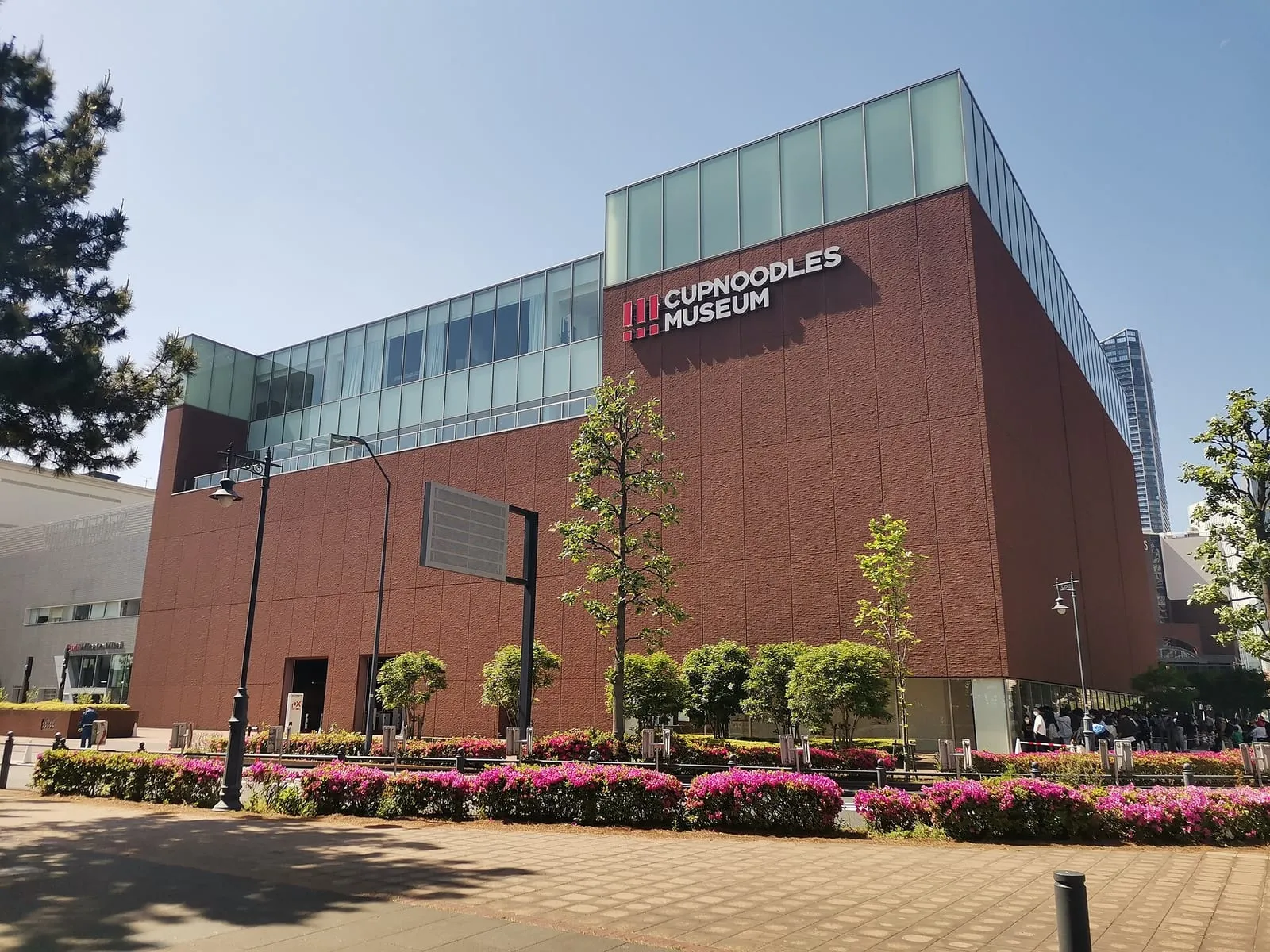
The brick facade of the Cup Noodles Museum in Minato Mirai, Yokohama. Photo: Keeezawa, Wikimedia Commons, CC0.
3. Sankeien Garden
Located in southern Yokohama and accessible via local bus from Yokohama or Sakuragicho Station (Bus 8 or 148, 35 minutes), Sankeien Garden is an expansive 175,000-square-metre traditional Japanese landscape park created by wealthy silk merchant Tomitaro Hara (Sankei Hara).
- Relocated historic architecture: The garden features 17 historic timber structures gathered from across Japan, including ten designated National Important Cultural Properties. Highlights include a 1457 three-storey Buddhist pagoda relocated from Kyoto’s abandoned Tomyoji temple, the Yanohara family thatched farmhouse from Shirakawa-go, and the Rinshunkaku feudal summer villa built in 1649 for the Tokugawa clan of Kishu.
- Seasonal blooms: The garden is renowned for seasonal botanicals: weeping plum blossoms in February, cherry blossoms around the central pond in late March, water lilies in summer, and Japanese maples in November. Admission is ¥700 for adults (open 09:00 to 17:00 daily).
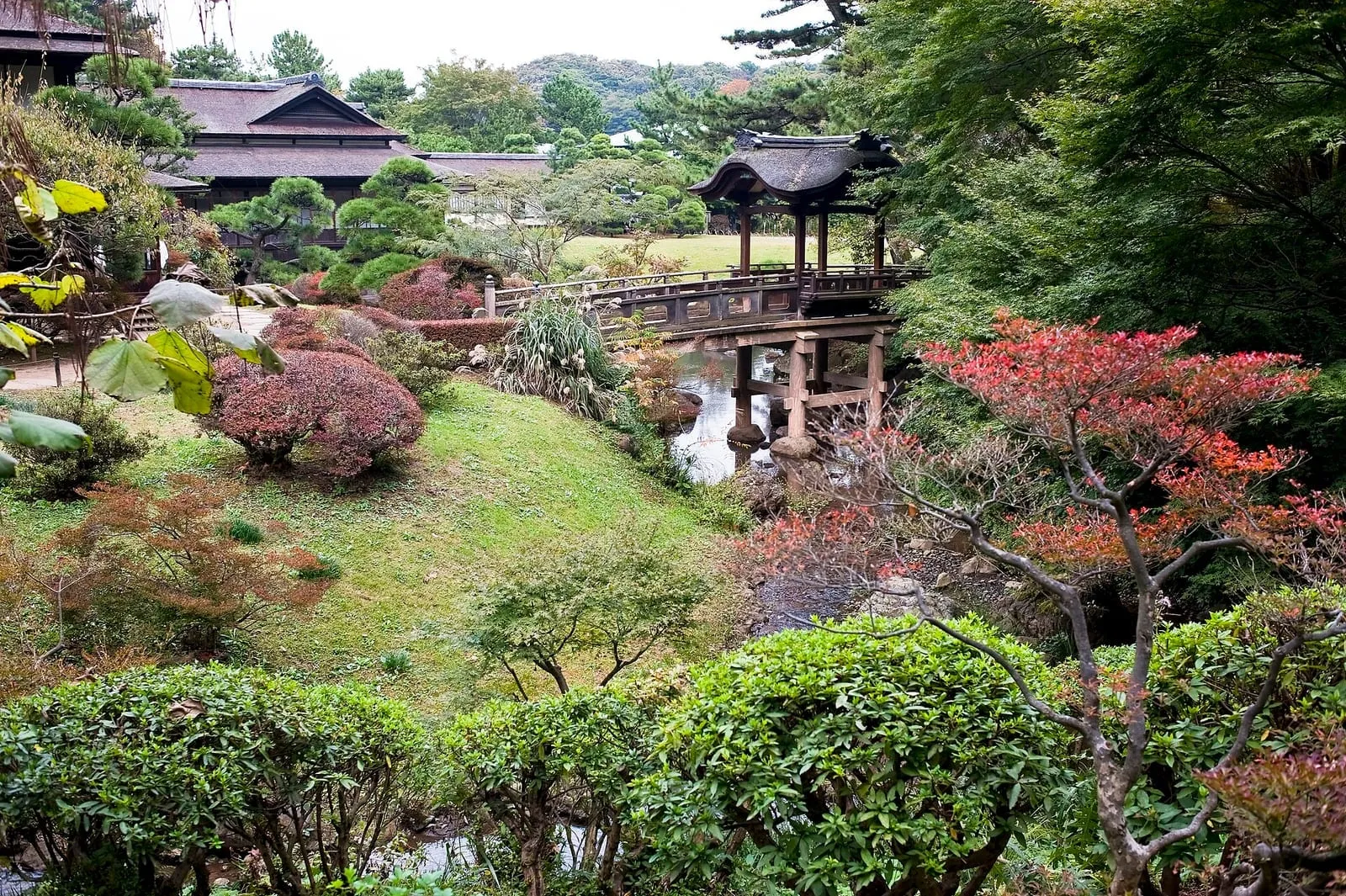
Historic wooden pavilions and landscape ponds at Sankeien Garden. Photo: Urashimataro, Wikimedia Commons, Public domain.
4. Minato Mirai 21 and the Red Brick Warehouses
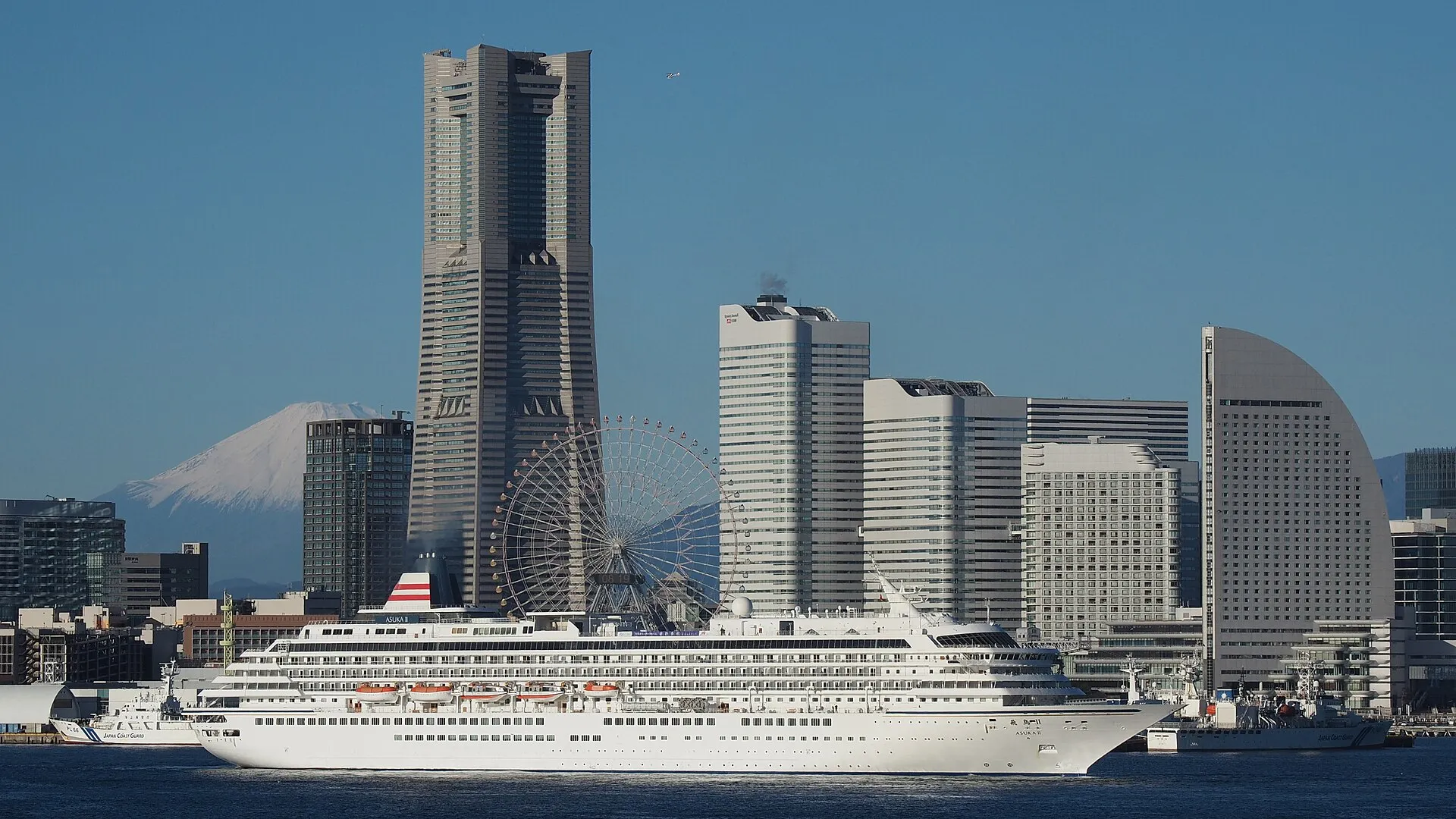
The waterfront district of Minato Mirai 21 (“Harbour of the Future”) features bayside attractions connected by scenic promenades:
- Yokohama Air Cabin: Japan’s first urban ropeway, opened in 2021. The glass gondolas soar across the harbour waters between JR Sakuragicho Station and Shinko Island in five minutes, providing panoramic views of the bay (¥1,000 one-way for adults).
- Yokohama Red Brick Warehouses (Akarenga Soko): Two massive brick customs warehouses completed in 1911 and 1913, preserved and repurposed as cultural shopping pavilions housing craft galleries, lifestyle boutiques, waterfront cafes, and seasonal outdoor beer festivals.
- Landmark Tower closure notice: The 69th-floor Sky Garden observation deck (273 metres) inside the Yokohama Landmark Tower is currently closed for comprehensive building upgrades and seismic retrofitting, with reopening planned for 2028 or later.
Guided excursions and walking tours
Booking a guided walking excursion provides architectural context on Yokohama’s transformation from a rural fishing village into an international treaty port.
Yokohama: City Highlights Guided Tour
From ¥15,000 · 5.0 stars from 1 review · 4 hours
The Yokohama: City Highlights Guided Tourad is a comprehensive half-day exploration of Yokohama’s primary districts. An experienced local guide leads your party through the winding alleys of Chinatown, explains the colonial architecture of the Yamate bluff, and traverses the waterfront paths of Minato Mirai and the Red Brick Warehouses.
Yokohama: Yamate District & Port History Walking Tour
From ¥8,000 · 3.3 stars from 4 reviews · 2.5 hours
The Yokohama: Yamate District Port History Walking Tourad focuses on the hilltop diplomatic quarter of Yamate (The Bluff). The walking route visits preserved foreign merchant houses, Harbour View Park overlooking the bay shipping channels, and the Foreign General Cemetery.
Yokohama: Tour with Air Cabin & Cupnoodles Museum Tickets
From ¥24,000 · 4.5 stars · 4 hours
The Yokohama: Tour with Air Cabin & Cupnoodles Museum Ticketsad bundles admission passes for the Yokohama Air Cabin aerial ropeway and the Cup Noodles Museum, pairing them with an afternoon food tasting walk through Chinatown.
Where to go next
Because Yokohama is situated on the direct rail line between Tokyo and Kamakura, many travellers combine morning visits to the temples of Kamakura and Enoshima with an evening dinner outing in Yokohama Chinatown.
To compare Yokohama with other regional excursions, consult our comprehensive guide to day trips from Tokyo. If you prefer mountain nature and temples, explore our guides to Mount Takao and Nikko. For regional rail passes and subway cards, read Tokyo public transport, explore dining recommendations in where to eat in Tokyo, and discover all essential capital bookings on the Tokyo hub.
Common questions
How do you travel from Tokyo to Yokohama?
From Shibuya, the Tokyu Toyoko Line takes approximately 25 minutes on limited express or express services for ¥310 one-way. From Tokyo Station or Shinagawa, JR Tokaido Line trains reach Yokohama Station in 15 to 20 minutes (¥490). From Shinjuku, the JR Shonan-Shinjuku Line takes roughly 30 minutes (¥570). All lines accept Pasmo and Suica IC cards.
Is Yokohama worth a day trip from Tokyo?
Yes. Located directly south of Tokyo along the bay, Yokohama offers Japan's largest Chinatown, the interactive Cup Noodles Museum, the 1911 Red Brick Warehouses, the Yokohama Air Cabin urban ropeway, and the historic landscape architecture of Sankeien Garden. It can easily be explored in a half-day or combined with Kamakura.
How much are tickets to the Cup Noodles Museum in Yokohama?
Adult admission costs ¥500, while high school students and children enter free. The museum is open from 10:00 to 18:00 (final entry 17:00) and is closed on Tuesdays. Making your own personalized noodle cup at the My CUPNOODLES Factory costs an additional ¥500 on-site.
Is the Yokohama Landmark Tower Sky Garden open?
No. The 69th-floor Sky Garden observation deck inside Yokohama Landmark Tower is temporarily closed for comprehensive structural renovations and seismic upgrades, with reopening scheduled for 2028 or later.
What is GREEN x EXPO 2027 in Yokohama?
GREEN x EXPO 2027 is the official International Horticultural Exhibition hosted at the former Kamiseya military communications facility in western Yokohama from 19 March to 26 September 2027, featuring botanical displays, eco-technology pavilions, and themed cultural gardens.