In this guide
💡 The Short Version: Navigating Kyoto is seamless with a contactless IC transit card, but avoiding city bus gridlock is crucial. Use the municipal subway and private rail lines for cross-town journeys, and rely on buses only for the final short leg. Or book online: the pre-loaded ICOCA IC Cardad{rel=“sponsored nofollow noopener”} can be collected at Kansai Airport, ready to tap at station turnstiles and bus readers.
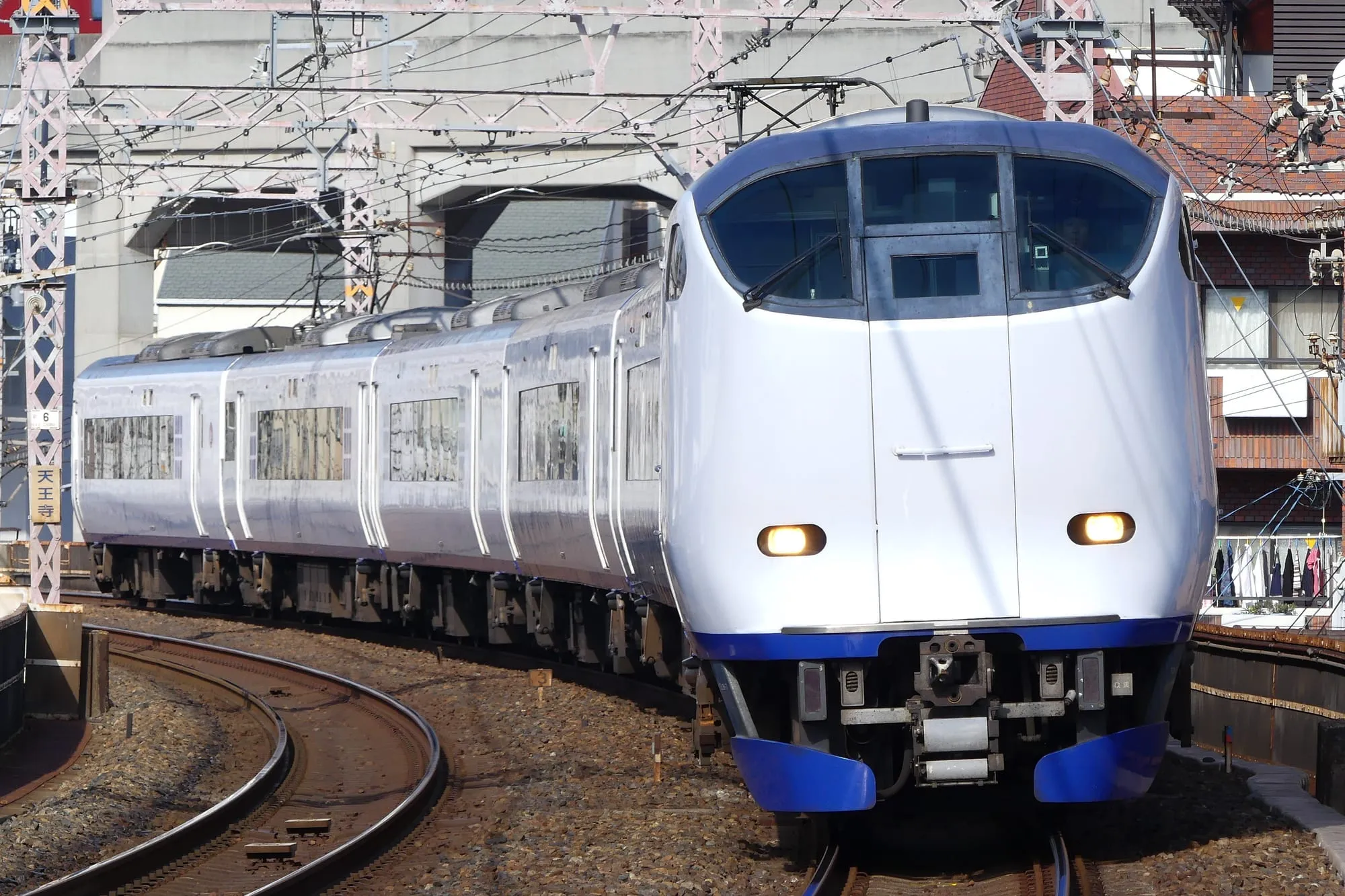
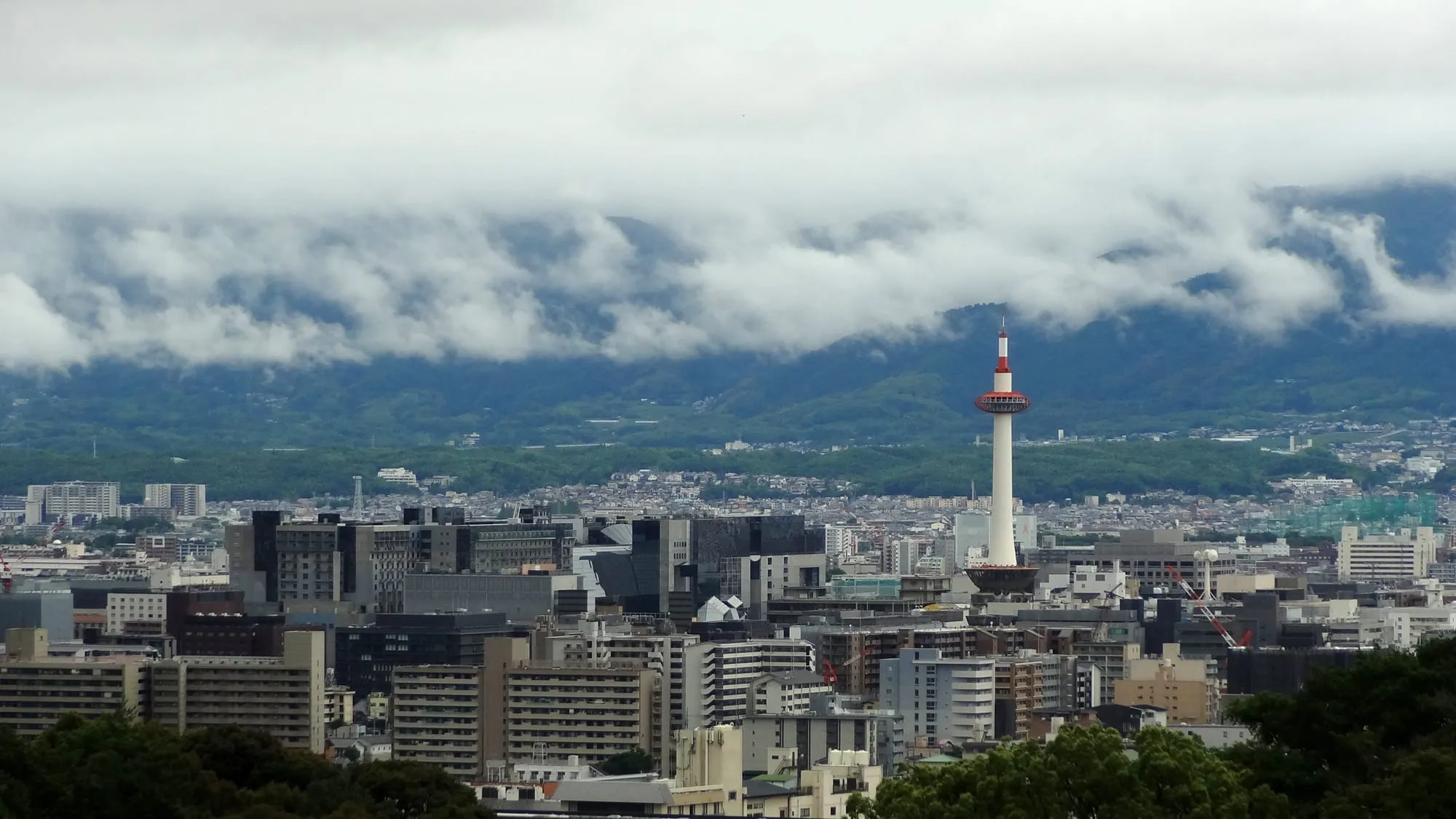
Unlike Tokyo’s dense web of overlapping above-ground rail loops, Kyoto sits in a natural mountain basin served by a combination of two underground municipal subway lines, several private rail operators, a historic street tram, and an extensive municipal bus network.
Because central Kyoto’s narrow streets were laid out in a grid during the 8th century, city buses travelling along major corridors like Shijo-dori and Higashiyama-dori suffer severe traffic gridlock during mid-morning and late-afternoon hours. The secret to smooth travel in Kyoto is using trains and subways for the main trunk of your journey, walking where possible through historic preservation quarters, and taking buses only when no rail line reaches your destination.
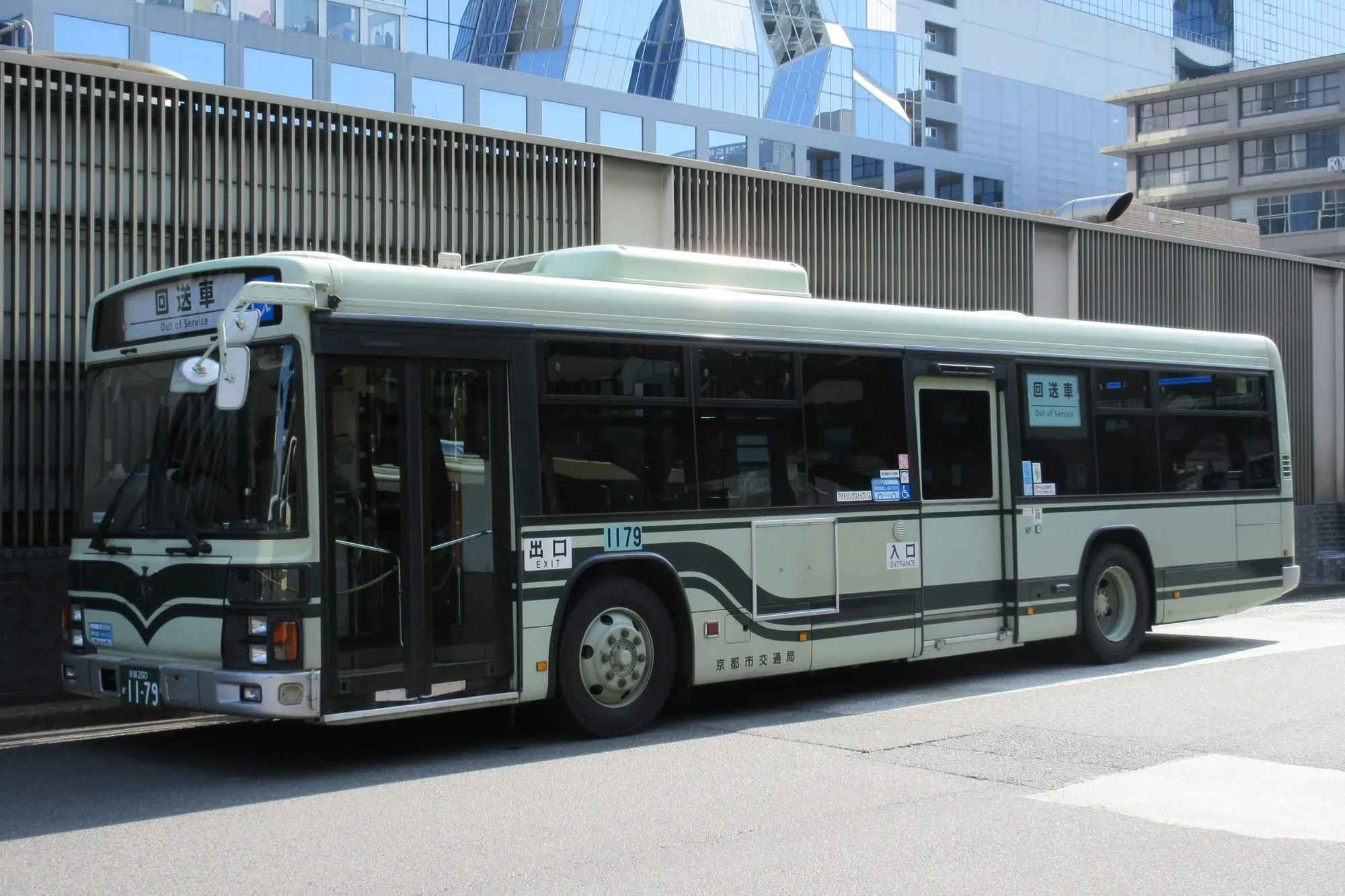
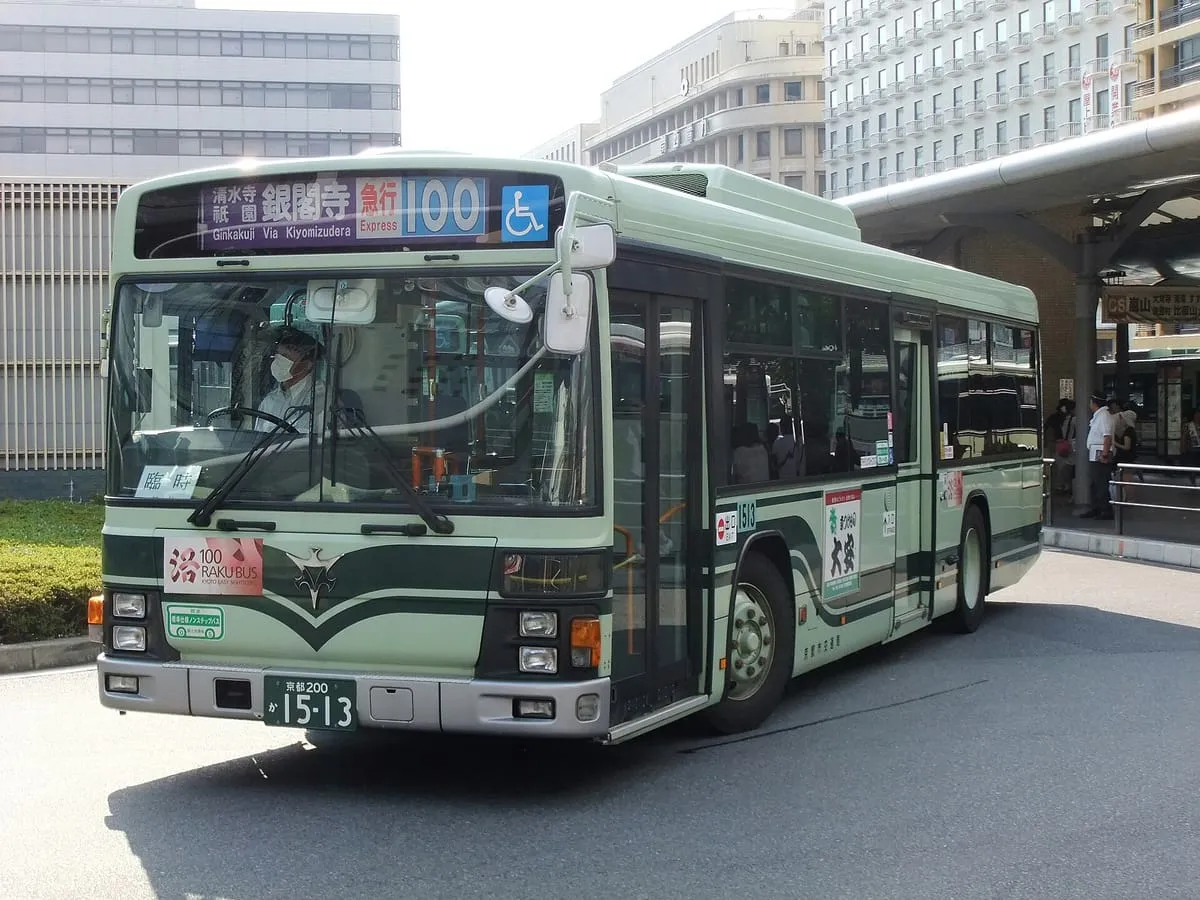 A green-and-white Kyoto City Bus picking up passengers at a roadside stop. Photo: Mj-bird, Wikimedia Commons, CC BY-SA 3.0.
Kyoto transport network comparison
| Transit network | Coverage area | Fare structure | Best for | Key limitation |
|---|---|---|---|---|
| Kyoto Municipal Subway | Central north-south and east-west cross | ¥220 to ¥360 (distance-based) | Kyoto Station to central Kyoto, Nijo Castle, Higashiyama | Only 2 lines; does not reach outer northwest/west |
| JR Lines (JR West) | South to Fushimi Inari, west to Arashiyama | ¥150 to ¥240 (local) | Fast transit to Arashiyama (17 min) and Inari (5 min) | Does not enter central Gion or Kawaramachi |
| Keihan Railway | Eastern riverbank north-south axis | ¥170 to ¥280 | Gion-Shijo to Fushimi Inari, Uji, Demachiyanagi | Runs parallel to river; requires walking east for hills |
| Hankyu Railway | Underground along Shijo-dori to West | ¥170 to ¥240 | Fast transit between Central Kawaramachi and Katsura | Connects to Arashiyama via transfer at Katsura |
| Randen Tram (Keifuku) | Northwest Kyoto tram | Flat ¥250 | Scenic street-level transit to Arashiyama & Kitano | Slower speed; low passenger capacity |
| Kyoto City Buses | Comprehensive city-wide network | Flat ¥230 (central zone) | Reaching Kinkaku-ji, Ginkaku-ji, Daitoku-ji | Heavy traffic jams; luggage restrictions |
1. Kyoto Municipal Subway
The Kyoto City Subway consists of two clean, punctual underground lines that intersect in the centre of the city at Karasuma Oike Station:
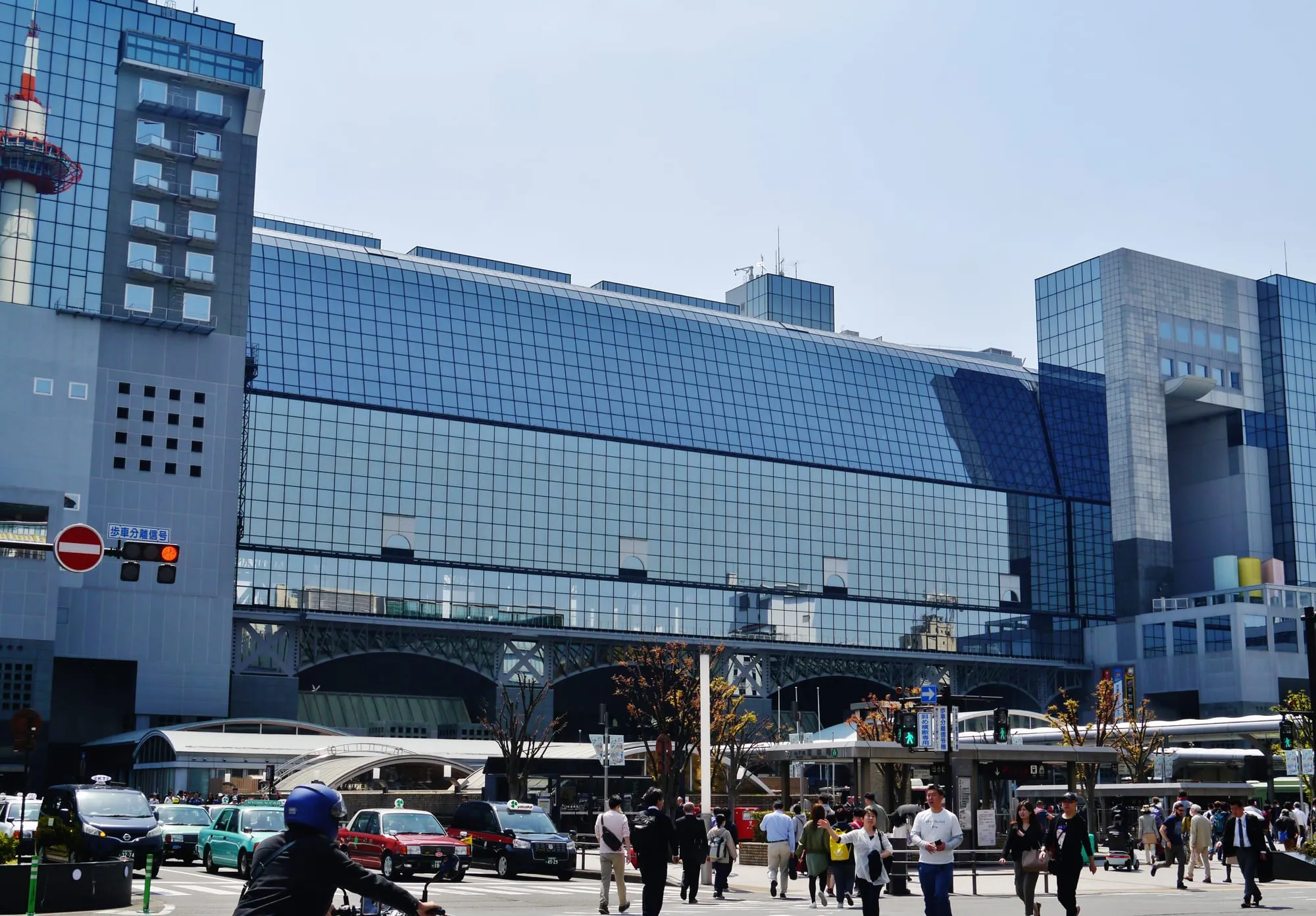
- Karasuma Line (Green): Runs north-south through the spine of the city. Key stops include Kyoto Station (rail interchange), Shijo (the central commercial area), Karasuma Oike (transfer station), and Kitaoji (bus terminal for northern temples).
- Tozai Line (Red): Runs east-west. Key stops include Uzumasa-Tenjingawa (western terminus connecting to the Randen tram), Nijojo-mae (directly outside Nijo Castle), Karasuma Oike, Kyoto Shiyakusho-mae (City Hall), and Sanjo-Keihan (interchange with Keihan Railway).
- Subway 1-Day Pass: Costs ¥800 for adults (¥400 for children) and provides unlimited rides on both subway lines for one calendar day. If you take four or more subway rides in a day, this pass pays for itself.
2. Private Railway Networks
Four private railway operators offer faster, cheaper alternatives to buses for key sightseeing corridors:
- Keihan Main Line: The premier route along Kyoto’s eastern corridor. Trains run north-south underground along the Kamo River. Board at Sanjo or Gion-Shijo to reach Tofuku-ji (6 minutes, ¥170) and Fushimi Inari (8 minutes, ¥220), or continue south into Osaka.
- Hankyu Kyoto Line: Runs beneath Shijo-dori from Kyoto-Kawaramachi Station westward through Karasuma and out toward Osaka Umeda. Transfer at Katsura Station to the Hankyu Arashiyama Line to arrive steps from the Togetsukyo Bridge.
- Randen (Keifuku Electric Railroad): Kyoto’s last remaining tram system, operating retro single-carriage trams since 1910. The Arashiyama Main Line runs from Shijo-Omiya to Arashiyama; the Kitano Line branches off to Kitano-Hakubaicho near Kinkaku-ji. Fares are a flat ¥250 for adults (¥120 for children).
- Eizan Electric Railway (Eiden): Departs from Demachiyanagi Station into the northern mountains, splitting into branches toward Kurama (for the Kurama to Kibune hike) and Mount Hiei.
3. Kyoto City Buses and the new luggage rules
Kyoto’s green-and-white city buses provide essential access to northern and eastern hillside attractions not served by train stations:
- Flat fare system: Within the designated central flat-fare zone, rides cost a flat ¥230 for adults and ¥120 for children (ages 6 to 11). If you travel outside the flat zone (such as into northern Ohara or Takao), take a numbered white paper slip (seiriken) from the machine at the rear door when boarding; the electronic screen at the front displays your corresponding fare based on your stop number when exiting.
- Boarding and paying: Board through the rear doors and exit through the front doors beside the driver. If using an IC card, tap the reader on your way out (or tap both boarding and exiting if on a numbered fare route). If paying cash, deposit exact coins into the fare box when leaving. The driver’s fare box has an automated change machine that breaks 1,000-yen notes and 500, 100, and 50-yen coins, but cannot accept 5,000 or 10,000-yen notes.
- Suitcase ban on city buses: To combat severe passenger overcrowding, the Kyoto City Transportation Bureau strictly restricts large luggage on municipal buses. Passengers carrying large suitcases (bags whose combined length, width, and height exceed 160 cm) or bulky rollaboard baggage are prohibited from boarding crowded city buses. Travellers with luggage are required to use the subway, JR trains, taxis, or door-to-door luggage forwarding services (Hands-Free Kyoto).
- Passes: The Bus 1-Day Pass stopped selling on 30 September 2023 (Kyoto City Transportation Bureau). The Subway & Bus 1-Day Pass costs ¥1,100 for adults and ¥550 for children and covers both subway lines and the municipal buses (pass details).
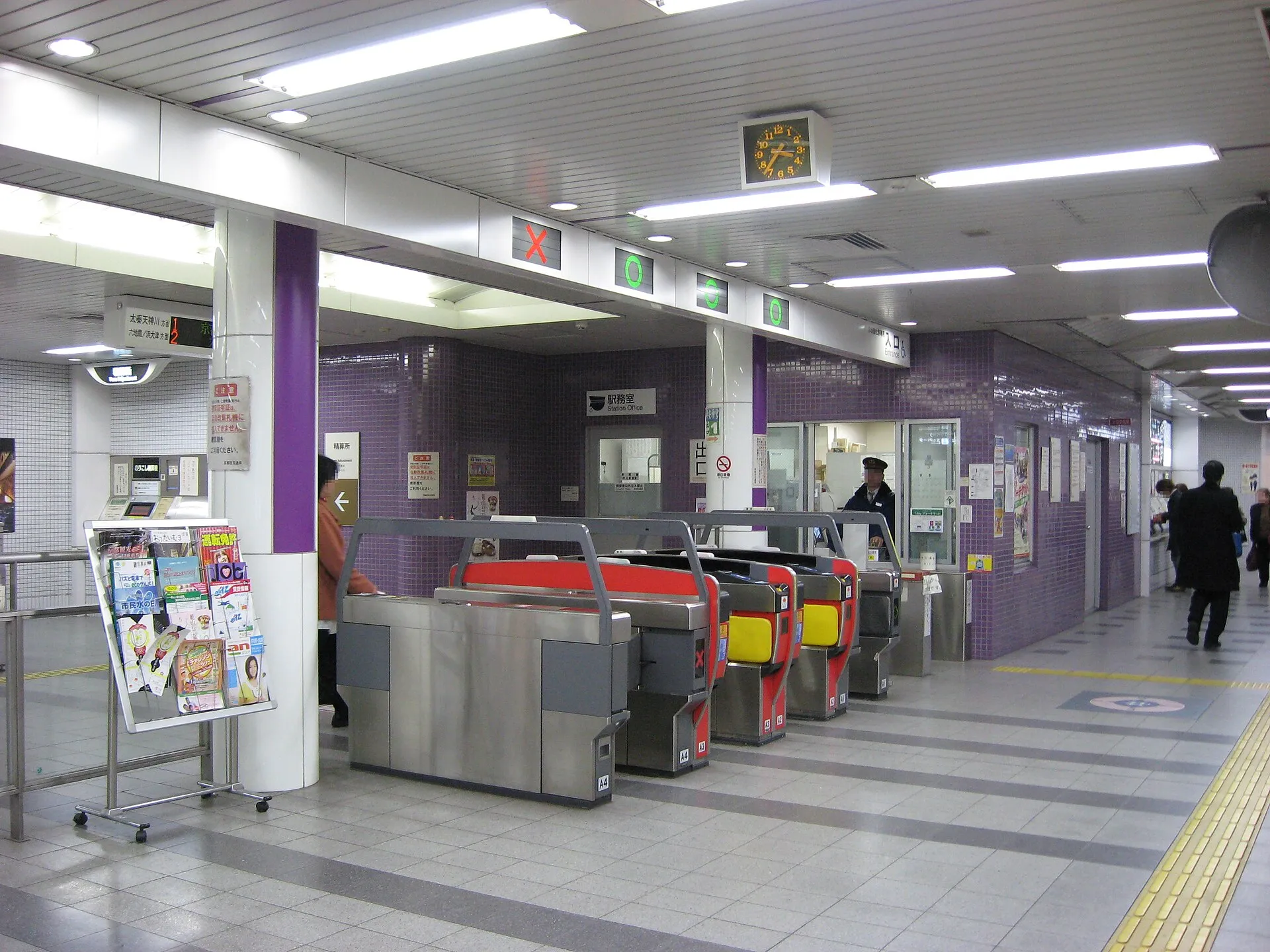 Contactless IC card ticket wickets at a Kyoto Municipal Subway station. Photo: Haruno Akiha, Wikimedia Commons, CC BY-SA 3.0.
Contactless IC cards: ICOCA, Suica and Pasmo
The rechargeable contactless ICOCA card is the essential transit accessory for getting around Kyoto. Issued by JR West, it eliminates the need to queue at ticket vending machines or fumble for exact change on buses:
- Interoperability: Japan’s ten major transit IC cards—including Tokyo’s Suica and Pasmo, Nagoya’s Manaca, and Kyushu’s Sugoca—are 100% interoperable in Kyoto. If you already have a physical Suica or Apple Wallet digital Suica on your smartphone, it works instantly on all Kyoto subways, buses, and trains.
- Where to buy: Pick up a physical ICOCA IC Cardad{rel=“sponsored nofollow noopener”} at Kansai Airport, where Klook’s version is collected, or at JR West ticket machines. Cards require a ¥500 refundable deposit and come loaded with transit credit.
- Recharging: Top up your IC card with cash at automated ticket vending machines inside any subway or train station, or at the cash registers of convenience stores (7-Eleven, Lawson, FamilyMart). Ticket machines accept cash only; credit cards cannot be used to top up physical IC cards.
- Alternative uses: Beyond transit turnstiles, IC cards can be tapped to pay for lockers at train stations, vending machines, taxis, and convenience store purchases.
Taxis in Kyoto
When travelling with three or four people, or when crossing between northern sights like Kinkaku-ji and eastern Higashiyama, Kyoto taxis are fast, efficient, and surprisingly economical:
- Fares: Flag-fall rate begins at approximately ¥500 for the first 1.2 kilometres, increasing by ¥80 to ¥100 for every subsequent 250 to 300 metres. A 15-minute cross-town ride typically costs between ¥1,800 and ¥2,800.
- Hailing: Green lights on the dashboard signify an empty taxi (kusha); red lights indicate an occupied vehicle. You can hail taxis from official taxi ranks outside Kyoto Station or along major avenues. The ride-hailing apps GO and Uber operate widely throughout the city.
- Automatic doors: Taxi rear doors are operated mechanically by the driver. Never attempt to open or pull the passenger door shut yourself.
- Payment: Virtually all Kyoto taxis accept credit cards and IC cards (ICOCA, Suica), though small cash notes are appreciated for short journeys.
Plan your sightseeing schedule using our curated 3 days in Kyoto or Kyoto in one or two days express guides, or review airport transfer options in our airport to Kyoto guide.
Common questions
What is an ICOCA card and do I need one in Kyoto?
ICOCA is the regional rechargeable contactless IC transit card for the Kansai region. It works on Kyoto subway lines, city buses, JR trains, and private railways, as well as at vending machines and convenience stores.
Can I use Tokyo's Suica or Pasmo cards in Kyoto?
Yes. Major Japanese IC cards (Suica, Pasmo, ICOCA, TOICA, Manaca, Nimoca) are fully interoperable nationwide on trains and buses in Kyoto.
How do you pay on Kyoto city buses?
Board through the rear door. Exit through the front door. Tap your IC card against the sensor reader by the driver when exiting, or drop exact cash (flat fare 230 yen) into the fare box.