In this guide
💡 The Short Version: Days 1 to 3 follow our core central route: historic Asakusa and Tokyo Skytree on day one; forested Meiji Jingu, Harajuku, Shibuya Sky, and Shinjuku on day two; the Imperial Palace East Gardens and teamLab Planets on day three. Day 4 delves into cultural traditions: Ryogoku for sumo stables and the Edo-Tokyo precinct, or the Ghibli Museum in Mitaka. Day 5 escapes the metropolis on a day trip to Mount Fuji, Hakone, Nikko, or Kamakura. Book ahead: Shibuya Sky (from ¥2,700), teamLab Planets (from ¥3,800), and Tokyo Skytree (from ¥1,800). Remember that national museums and Imperial gardens close on Mondays. Or book a tour: a guided Mount Fuji and Lake Ashi day tripad with bullet train return starts from ¥14,800.
Before you go: what to book
A five-day visit to Tokyo combines intense urban exploration with regional travel into the surrounding mountains or coastline. Because international demand for Tokyo’s signature sights is exceptionally high, secure these timed reservations in advance:
| Attraction / Excursion | Booking portal & release window | Official price | Weekly closure |
|---|---|---|---|
| Shibuya Sky | Official Webket site; released at 00:00 JST | ¥2,700 (entry before 15:00); ¥3,400 (from 15:00) | Open daily; rooftop closes in severe weather |
| teamLab Planets | Official DMM portal; sold in advance only | From ¥3,800 (dynamic pricing) | Closed on set days |
| Tokyo Skytree | Official Skytree site; save ¥500 vs walk-up counter | Tembo Deck from ¥1,800; Combo ticket from ¥3,000 | Open daily |
| Ghibli Museum | Lawson Ticket; 10:00 JST on the 10th of prior month | ¥1,000 adults; strictly timed | Tuesdays |
| Grand Sumo Tournament | Ticket Oosumo; sales open 4–5 weeks before basho | Chair seats from ¥3,500; Masu-seki boxes from ¥40,000 | Tournaments only in January, May, September |
| Mount Fuji Guided Tour | Online coach tour reservation | From ¥7,800 | Operates daily year-round |
| Hakone Freepass | Odakyu Electric Railway; purchase online or at Shinjuku | ¥7,100 (2-day pass from Shinjuku) | Open daily |
For urban rail transport within the city, use a digital Suica or Pasmo IC card loaded onto your Apple Wallet or smartphone. For days that involve regional rail travel, dedicated rail passes provide substantial savings over individual sector tickets.
The five days at a glance
Structuring five days by geographic quadrants avoids unnecessary subway transfers across Tokyo’s vast footprint:
| Day | Quadrant & Theme | Key Highlights | Advance Booking Required |
|---|---|---|---|
| Day 1 | East / Historic Shitamachi | Senso-ji, Nakamise-dori, Ueno Park, Tokyo Skytree | Skytree timed ticket |
| Day 2 | West / Youth Culture & Neon | Meiji Jingu, Takeshita-dori, Shibuya Crossing, Shibuya Sky, Shinjuku | Shibuya Sky sunset slot |
| Day 3 | Central & Bay / Imperial & Digital | Imperial Palace East Gardens, Ginza shopping, teamLab Planets | teamLab Planets timed slot |
| Day 4 | East / Traditional Arts & Sumo | Ryogoku Kokugikan, Sumo Museum, Fukagawa, or Ghibli Museum | Ghibli or Sumo tournament seats |
| Day 5 | Regional / Nature & Heritage | Day trip to Mount Fuji, Hakone, Nikko, or Kamakura | Day tour or scenic train seat |
Detailed itineraries for Days 1 through 3 are documented in our 3 days in Tokyo guide. Below, we examine Day 4 and Day 5 in detail.
Day 4: Ryogoku sumo culture, or the Ghibli Museum
Day 4 offers two contrasting excursions: an immersion in Tokyo’s sumo heritage in Ryogoku, or a journey into animated fantasy at the Ghibli Museum in Mitaka.
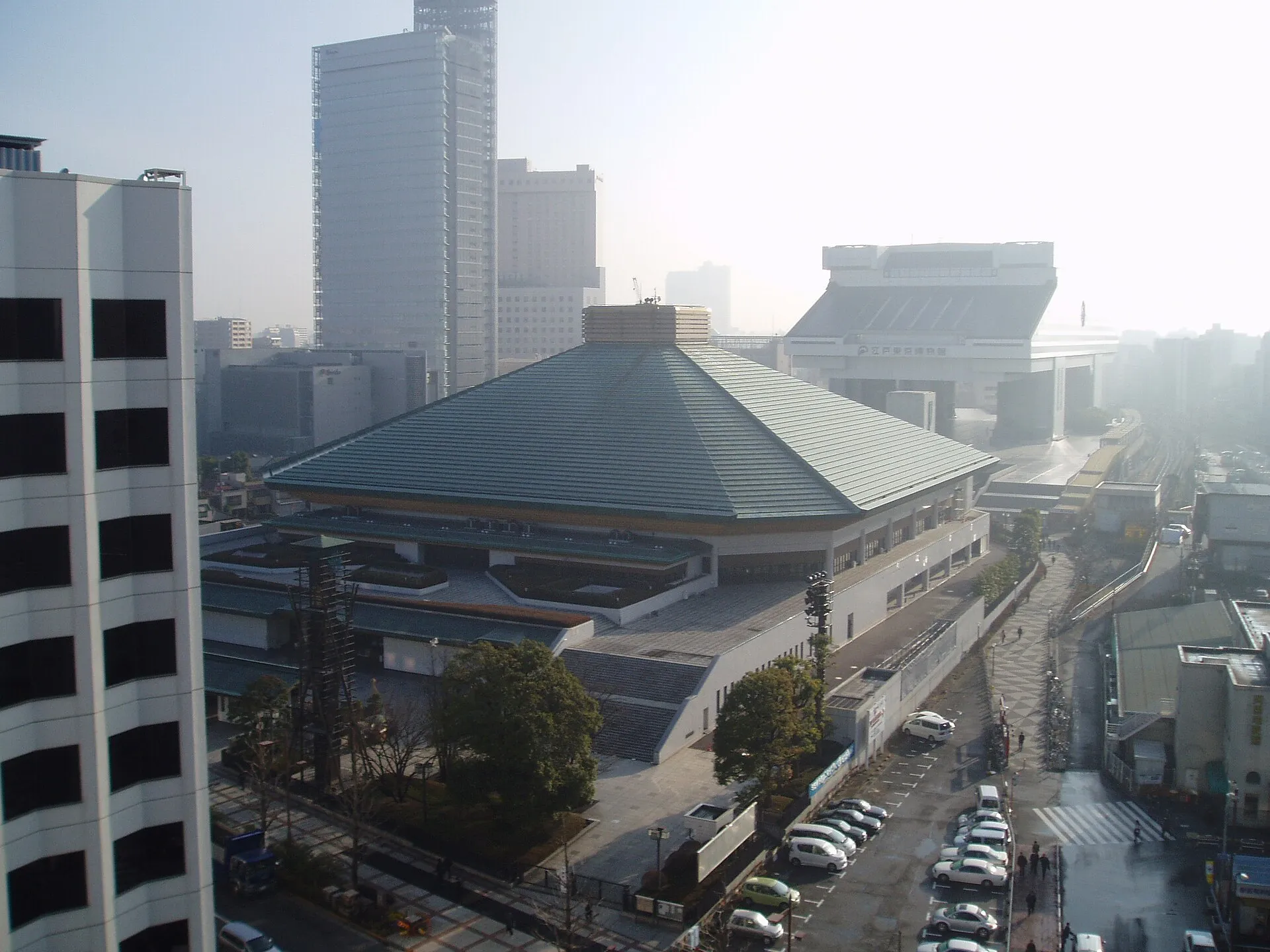
Exterior facade of Ryogoku Kokugikan, Tokyo’s premier grand sumo arena. Photo: Kakidai, Wikimedia Commons, CC BY-SA 4.0.
Option A: Ryogoku, sumo wrestling, and Fukagawa
Ryogoku Kokugikan · 2 minutes from JR Ryogoku Station (Sobu Line) or Toei Oedo Line
Ryogoku has been the spiritual heart of professional sumo wrestling since the Edo period. Begin your morning exploring the district’s backstreets, where many active sumo stables (heya) are located. You can frequently observe towering wrestlers (rikishi) cycling in traditional yukata cotton robes.
- Ryogoku Kokugikan & Sumo Museum: When a grand tournament is in session (January, May, and September), the arena hums with energy from 8:30 until 18:00 as bouts progress from junior apprentice divisions to the grand makuuchi division. The on-site Sumo Museum is free to enter during non-tournament periods, showcasing historic woodblock prints and ceremonial silk aprons (kesho-mawashi).
- Chanko Nabe lunch: Feast on chanko nabe, the high-protein stew consumed daily by sumo wrestlers, simmered with chicken, pork, dashi, tofu, and seasonal greens. Classic local restaurants such as Chanko Tomoegata and Kappo Yoshiba (which features an authentic full-sized sumo ring inside the dining hall) serve generous lunch hot pots from ¥1,800 to ¥3,500.
- Sumo morning practice and shows: Outside official tournament months, book a guided morning stable visit to watch junior wrestlers slam into the clay ring, or attend the popular Shinjuku Sumo Showad (from ¥7,700, 1.5 hours) for live exhibition bouts and a chicken hot-pot meal.
Option B: The Ghibli Museum in Mitaka
Admission ¥1,000 · Open 10:00 to 18:00 · Strictly timed tickets · Closed most Tuesdays
For fans of Hayao Miyazaki and Studio Ghibli, the Ghibli Museum in western Mitaka is an unmissable pilgrimage. From Shinjuku Station, ride the JR Chuo Line Special Rapid 15 minutes to Mitaka Station (¥230). From Mitaka South Exit, walk 15 minutes through leafy Inokashira Park or ride the yellow Ghibli community bus (¥210 one-way, IC card accepted).
Designed by Miyazaki himself, the museum feels like a whimsical storybook mansion, featuring spiral staircases, stained-glass windows depicting characters from My Neighbour Totoro, an exclusive short animated film screened only in the Saturn Theatre, and a colossal bronze Robot Soldier from Laputa: Castle in the Sky standing guard in the rooftop garden. Remember that photography is strictly prohibited inside the exhibition rooms. Read our complete purchasing guide in Ghibli Museum tickets.
Afternoon: Shinjuku Gyoen National Garden
General admission ¥500 · Open 9:00 to 16:30 (winter) or 18:00 (summer) · Closed Mondays
Returning from Mitaka or Ryogoku in the afternoon, spend two tranquil hours exploring Shinjuku Gyoen National Garden, one of Tokyo’s most sprawling and refined imperial green spaces.
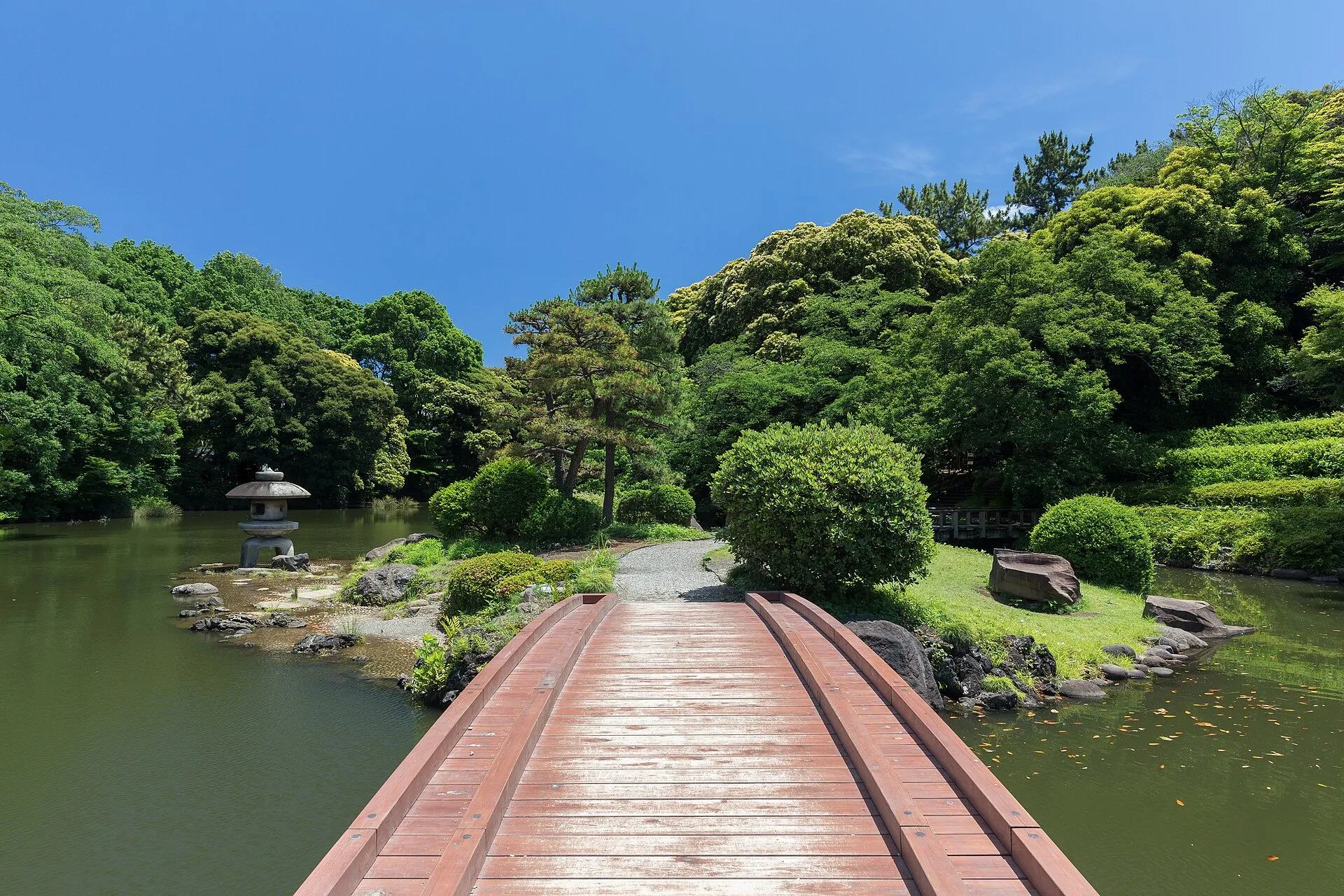
Landscape garden and tranquil ponds at Shinjuku Gyoen National Garden. Photo: Kakidai, Wikimedia Commons, CC BY-SA 4.0.
Spanning 144 acres across Shinjuku and Shibuya wards, the park incorporates three distinct landscape styles: a formal French garden, an expansive English landscape lawn, and a traditional Japanese stroll garden featuring tranquil ponds, wooden bridges, and the historic Taiwan Pavilion built in 1927. In autumn, the maple trees around the ponds blaze crimson; in spring, over 1,000 cherry trees bloom in succession.
Evening: Odaiba waterfront and Rainbow Bridge
Take the Yurikamome automated monorail line across the dramatic span of Rainbow Bridge to the futuristic waterfront district of Odaiba.
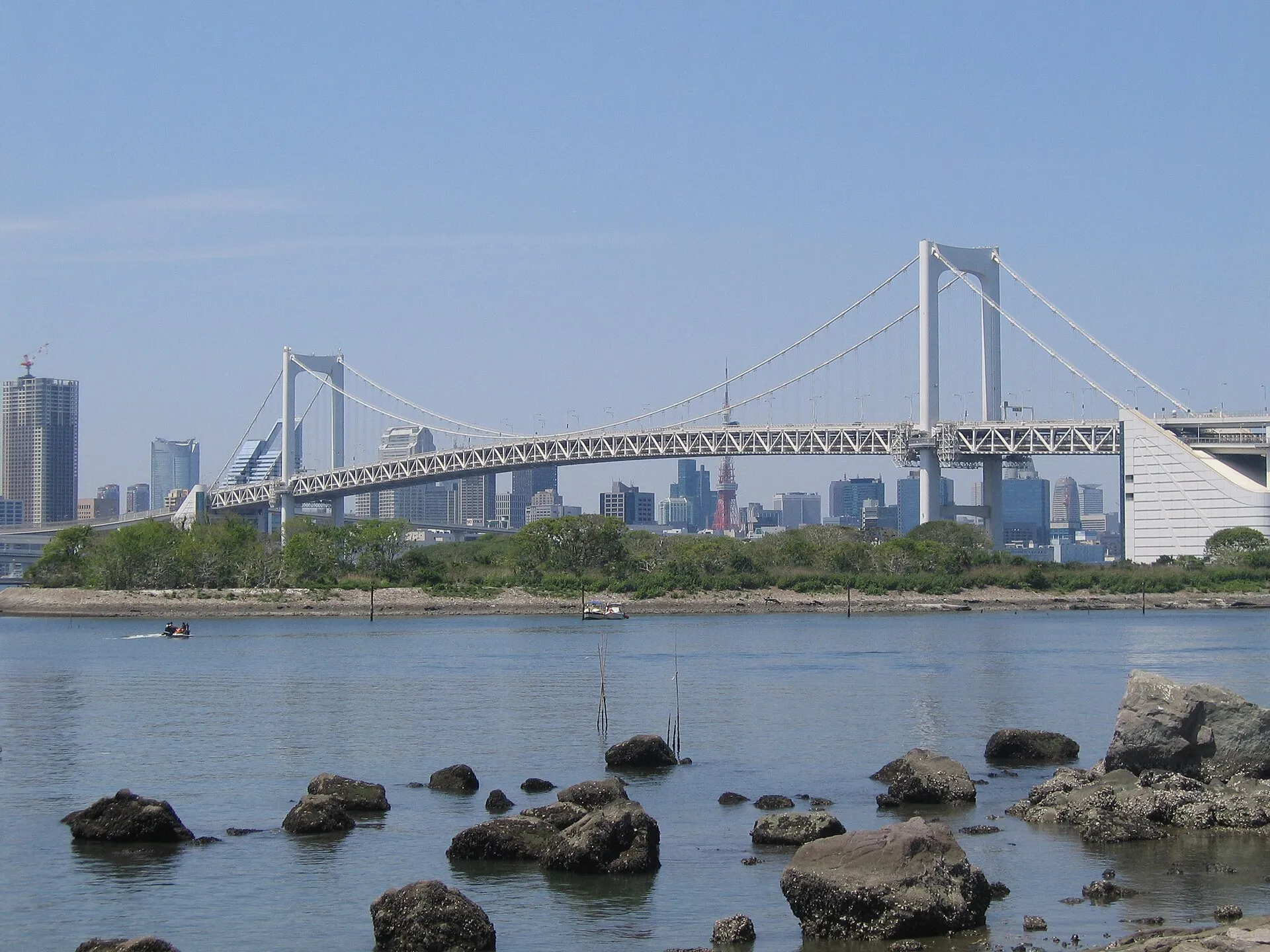
Tokyo waterfront panorama of Rainbow Bridge and Odaiba across Tokyo Bay. Photo: Kakidai, Wikimedia Commons, CC BY-SA 4.0.
Stroll along the Odaiba Seaside Park boardwalk for panoramic night views of the Tokyo skyline and Tokyo Tower illuminated across the bay. Check out the full-scale Unicorn Gundam statue outside DiverCity Tokyo Plaza, which performs scheduled transformation light shows every evening. Finish with a scenic dinner at Aqua City overlooking the illuminated harbour.
Day 5: Choosing your day trip
Day 5 leaves Tokyo’s dense urban grid behind to explore Japan’s natural scenery, historic shrines, or seaside towns. All four options are achievable in a single day returning to Tokyo by nightfall.
| Destination | Travel time from Tokyo | Transit method & passes | Best suited for |
|---|---|---|---|
| Mount Fuji & Lake Kawaguchiko | 2 hours by express train or coach | JR Fuji Excursion train (¥4,130 one-way) or guided day tourad | Alpine lake vistas, Chureito Pagoda, and volcanic views |
| Hakone National Park | 75 to 85 minutes from Shinjuku | Odakyu Romancecar (¥2,470) + Hakone Freepass (¥7,100) | Hot springs (onsen), Lake Ashi pirate boat, and ropeways |
| Nikko World Heritage | 1 hour 50 minutes from Asakusa | Tobu Spacia X express train + Nikko World Heritage Pass | Ornate Toshogu Shrine, Kegon Falls, and forested cedar groves |
| Kamakura & Enoshima | 55 minutes from Tokyo or Shinjuku | JR Yokosuka Line (¥950 one-way, IC card) + Enoshima Electric Railway | The Great Buddha (Daibutsu), coastal beaches, and temples |
Option 1: Mount Fuji and Lake Kawaguchiko
Lake Kawaguchiko offers the most reliable lakeside vantage points of Mount Fuji’s snow-dusted cone. Climb the 398 stone steps to Chureito Pagoda in Arakurayama Sengen Park to capture Japan’s most celebrated postcard view, where the five-storey vermilion pagoda frames the volcanic peak. Continue to Oishi Park on Kawaguchiko’s northern shore to stroll through seasonal flower fields along the water’s edge.
Organising the logistics independently requires navigating train-to-bus transfers that often experience highway delays. A Mount Fuji and Hakone bus tourad provides seamless round-trip transport, including Lake Ashi cruises and high-speed Shinkansen returns. Read our complete transport breakdown in the Mount Fuji day trip guide.
Option 2: Hakone onsen and mountain railway
Hakone is Japan’s premier hot spring resort area, situated within the Fuji-Hakone-Izu National Park. The standard “Hakone Loop” itinerary is an extraordinary circuit combining multiple mountain transport modes: ride the Odakyu Romancecar to Hakone-Yumoto, climb through steep gorges on the zigzagging Hakone Tozan switchback railway, ascend via the Hakone Ropeway over volcanic sulfur vents at Owakudani, cruise across Lake Ashi on a replica pirate ship, and return via mountain bus. The Odakyu Hakone Freepass covers every leg of this circuit. See our practical itinerary in the Hakone day trip guide.
Option 3: Nikko shrines and waterfalls
Located in the mountains of Tochigi Prefecture north of Tokyo, Nikko was the sacred retirement haven and mausoleum of Tokugawa Ieyasu, the founder of the Tokugawa shogunate. Toshogu Shrine boasts over 5,000 intricate polychrome woodcarvings, including the famed “Three Wise Monkeys” (hear no evil, speak no evil, see no evil) and the gold-leaf Yomeimon Gate. Deepen the excursion by ascending the winding Irohazaka slopes to view Lake Chuzenji and Kegon Falls, an awe-inspiring 97-metre mountain cataract. See our full transit route in the Nikko day trip guide.
Option 4: Kamakura ancient capital and Enoshima
Just under an hour south of Tokyo on the Pacific coast, Kamakura served as the political capital of Japan during the Kamakura shogunate (1185–1333). Marvel at the colossal bronze Great Buddha (Kamakura Daibutsu) at Kotoku-in temple, which has stood exposed to the elements since a 15th-century tsunami swept away its wooden hall. Stroll through the cliffside bamboo gardens of Hokoku-ji, climb the grand stone staircase of Tsurugaoka Hachimangu shrine, and ride the vintage Enoden coastal tram to the offshore island of Enoshima. Consult our full guide in Kamakura day trip from Tokyo.
Guided tours vs independent travel for 5 days
Deciding whether to take guided excursions or manage your five-day itinerary independently depends largely on transit complexity and language preference:
| Sight / Tour | Independent DIY route | Guided tour option | Key advantage |
|---|---|---|---|
| Mount Fuji & Lake Ashi | Express train + local buses (approx. ¥7,500+ round trip); strict transfer schedules | From Tokyo: Mt Fuji & Hakone Tourad from ¥14,800 | Direct coach transport, Lake Ashi cruise tickets, and bullet train return |
| Nikko World Heritage | Tobu Spacia train + local mountain buses (approx. ¥6,000+); multi-leg transfers | Nikko World Heritage Day Tripad from ¥12,367 | Direct hotel area coach pick-up, guided Toshogu entry, and Kegon Falls stops |
| Kamakura & Enoshima | JR Yokosuka Line + Enoden tram (~¥2,500 round trip); self-guided temple walks | Kamakura & Enoshima Day Tripad from ¥9,200 | All temple tickets included, curated coastal route, and bilingual guide |
From Tokyo: Mt Fuji, Hakone Lake Ashi Cruise and Bullet Train
From ¥7,800 · 4.8 stars from 6,302 reviews · 10 hours · Coach & shinkansen
From Tokyo: Mt Fuji, Hakone Lake Ashi Cruise and Bullet Trainad combines Mount Fuji 5th Station, an Owakudani ropeway ride, a pirate ship cruise on Lake Ashi, and a Shinkansen bullet train return to Tokyo Station.
Nikko World Heritage Day Trip with Kegon Falls & Lake Chuzenji
From ¥12,437 · 4.6 stars from 2,536 reviews · 10.5 hours · UNESCO heritage
Nikko World Heritage Day Trip with Kegon Falls & Lake Chuzenjiad provides an effortless excursion to Tochigi Prefecture, covering the ornate Toshogu Shrine, Tamozawa Imperial Villa grounds, and the roaring Kegon Falls.
Tokyo: Kamakura & Enoshima Day Trip including Temple Tickets
From ¥9,200 · 4.6 stars from 1,785 reviews · 9.5 hours · Coastal shrines
Tokyo: Kamakura & Enoshima Day Trip including Temple Ticketsad provides an easy introduction to the Kamakura Daibutsu, Hase-dera temple, and Enoshima island, with all admission tickets handled on your behalf.
Fitting the plan to your dates
- Mondays: The Tokyo National Museum, Edo-Tokyo Museum, Shinjuku Gyoen, and Imperial Palace East Gardens are closed. Schedule your west-side day (Day 2) or your regional day trip (Day 5) on Monday to avoid closed sights.
- Tuesdays: The Ghibli Museum is closed on most Tuesdays. If your Day 4 falls on a Tuesday, choose the Ryogoku sumo option or swap Day 4 with Day 3.
- Fridays: The Imperial Palace East Gardens close every Friday. Move your central gardens visit to another day of your stay.
- Winter daylight: In December and January, sunset arrives before 16:30. Start morning activities by 8:30 to enjoy gardens and mountain viewpoints in daylight.
Connecting longer itineraries
- Hotel neighbourhood selection: Review our comprehensive hotel breakdown in where to stay in Tokyo and compare the main transit hubs in Shinjuku or Shibuya.
- Airport arrivals: Choose between the Narita Express, Keisei Skyliner, and limousine buses in Narita Airport to Tokyo, or compare monorail and subway routes in Haneda Airport to Tokyo.
- Connectivity and payments: Set up your mobile data in advance with our eSIM for Japan guide and learn how to withdraw cash and tap digital transit cards in money in Tokyo.
- Attraction overview: Browse ticket links and booking opening dates for all 55 city destinations on the Tokyo hub.
Common questions
Is 5 days enough for Tokyo?
Five days is the ideal duration for a first visit to Tokyo. Days one through three cover central highlights: historic Asakusa, Ueno museums, Shibuya Crossing, Meiji Jingu, the Imperial Palace East Gardens, and teamLab Planets. Day four explores Ryogoku's sumo culture or the Ghibli Museum, while day five provides a full-day excursion to Mount Fuji, Hakone, Nikko, or Kamakura.
What must be booked before flying to Tokyo for 5 days?
Reserve four essential slots online before departure: sunset admission at Shibuya Sky, timed entry at teamLab Planets in Toyosu, advance tickets for Tokyo Skytree, and Ghibli Museum entry (on sale via Lawson Ticket on the 10th of the preceding month). If visiting during a grand sumo tournament in January, May, or September, purchase arena tickets roughly one month in advance.
Can I use a rail pass for day trips from Tokyo?
The nationwide Japan Rail Pass is not economical for a Tokyo base. Instead, use destination-specific regional passes: the Odakyu Hakone Freepass (¥7,100 for 2 days from Shinjuku) covers Hakone transport, the Tobu Nikko Pass covers Nikko, and a standard contactless IC card (Suica or Pasmo) pays for Kamakura or Yokohama train fares.
When do the grand sumo tournaments take place in Tokyo?
Official Tokyo basho tournaments occur thrice annually at Ryogoku Kokugikan: the New Year Basho in January, the Summer Basho in May, and the Autumn Basho in September. Official ticket sales open roughly 4 to 5 weeks before the opening bout.