In this guide
💡 The Short Version: An authentic omakase sushi or tempura meal is booked through a hotel concierge, an English reservation platform (TableCheck, Omakase.in), or a dedicated concierge booking agent (My Concierge Japan, Pocket Concierge), rather than by direct telephone. Ginza Kyubey offers accessible lunch courses from ¥8,250, Tempura Kondo (two Michelin stars) offers lunch seatings from ¥13,200, and contemporary counters like Udatsu Sushi book via Omakase.in from ¥16,000 at lunch and ¥30,000 at dinner. Counter etiquette is strict: wear zero perfume, arrive 10 minutes early, and never cancel at short notice, as same-day cancellations incur a 100% penalty. Or book a tour: an evening food tour starting from ¥13,200 gives you multi-dish guided dining without reservation stress.
What omakase means
Omakase (omakase ryori) translates directly from Japanese as “I entrust it to you”, derived from the verb makaseru (“to leave to someone else”). In culinary practice, it represents the highest expression of Japanese chef-patron trust.
Rather than selecting items from a printed menu, diners place the direction of their meal entirely in the hands of the itamae (master chef). The chef constructs a harmonious sequence based on that morning’s auction purchases from Toyosu Fish Market, the micro-seasonality (shun) of seafood and produce, and the pacing of the dining room.
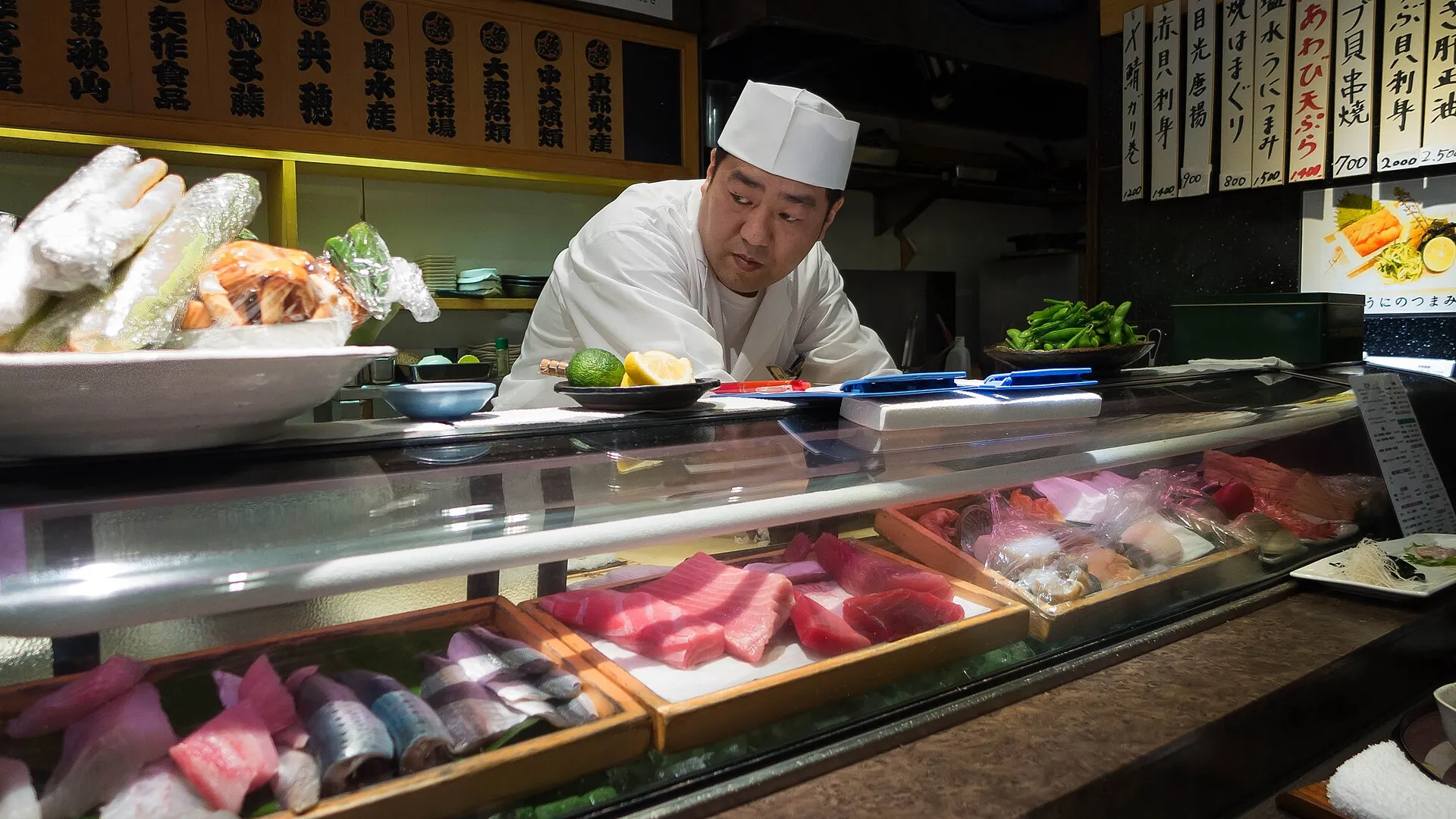
You sit directly at an intimate timber counter—traditionally crafted from unlacquered Japanese cypress (hinoki)—accommodating only six to twelve guests. The chef shapes and seasons each morsel individually, presenting it directly onto a stone or ceramic platter immediately in front of you.
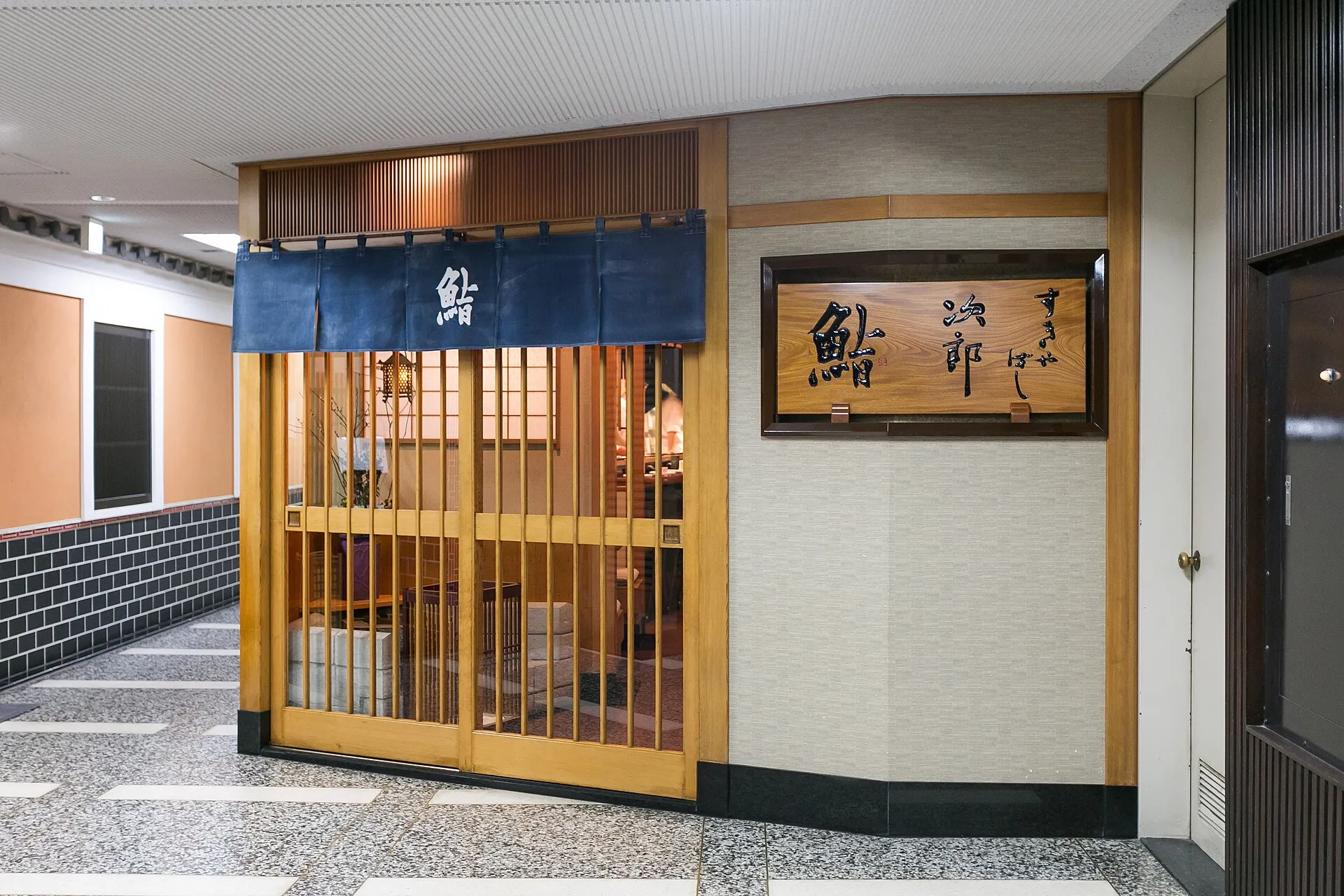
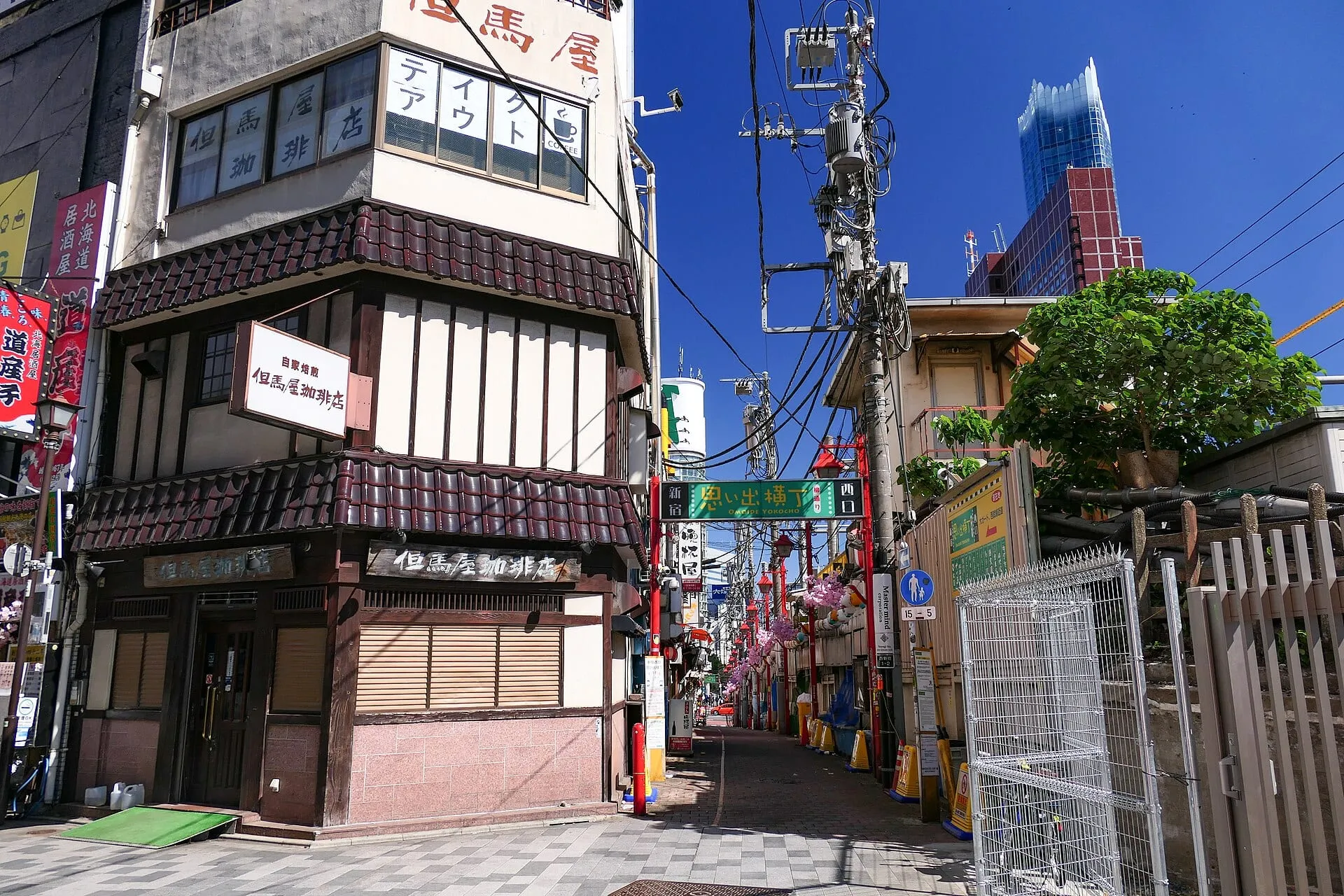
The entrance to Sukiyabashi Jiro in Ginza. Photo: City Foodsters, Wikimedia Commons, CC BY 2.0.
Types of omakase counters
While foreign travellers most frequently associate omakase with sushi, Tokyo boasts specialised counter dining across several classical Japanese culinary disciplines:
- Edomae Sushi: The defining Tokyo style, originating in 19th-century Edo. Seafood is cured in salt, marinated in soy sauce, simmered in broth, or aged to enhance umami before being paired with seasoned sushi rice (shari) flavoured with red vinegar (akazu). A standard service comprises 4 to 8 small appetizers (tsumami), followed by 10 to 15 nigiri pieces, tamagoyaki omelette, and miso soup.
- Counter Tempura: Specialists like Tempura Kondo fry seasonal seafood and vegetables in pure sesame and camellia oil in front of diners. Items are transferred piping hot directly from the copper kettle onto absorbent washi paper.
- Kaiseki & Kappo: Multi-course seasonal haute cuisine celebrating regional vegetables, sashimi, grilled meats, and claypot rice (donabe).
- Artisanal Yakitori: High-end poultry counters that roast heirloom chicken breeds (jidori) over white binchotan charcoal, serving distinct cuts from neck skin to heart.
How to book: platforms and concierge routes
Securing counter seats at Tokyo’s top restaurants requires navigating specific reservation windows and platforms:
| Booking route | Platform fee | How it operates | Recommended venues |
|---|---|---|---|
| Hotel Concierge | Usually free for hotel guests | Your hotel front desk books directly via phone or email | Palace Hotel, Aman, Park Hyatt, Mandarin Oriental |
| TableCheck | Free (card hold) | Direct bilingual booking interface with live calendar availability | Midori Sushi, Ginza Hachigou, Tempura Fukamachi |
| Omakase.in | Small booking fee per seat (¥300–¥500) | Premier Japanese culinary booking platform used by Michelin venues | Udatsu Sushi, Sushi Namba, Hashida Tokyo |
| My Concierge Japan | Agency handling fee | Dedicated English booking concierge bridging non-English restaurants | Ginza Kyubey, Tempura Kondo |
| Pocket Concierge | Booking fee included in course price | American Express-backed multilingual platform with prepaid dining | Michelin-starred kaiseki and sushi across Ginza |
1. Hotel concierges
If you are staying at a 4- or 5-star hotel in Tokyo (such as the Palace Hotel Tokyo, Aman Tokyo, The Capitol Hotel Tokyu, or Mandarin Oriental), contact the concierge team four to eight weeks before your arrival. Luxury concierges have established relationships with elite sushi counters and can often secure seats that appear inaccessible to independent international travellers. Most concierges require your room reservation confirmation number before processing dining requests.
2. TableCheck and Omakase.in
For independent bookings, TableCheck is the cleanest English-language portal. You select your party size, date, and preferred course, providing a credit card to secure the booking without upfront agency fees.
Omakase.in is the domestic platform used by Tokyo’s highest-rated chefs. Many prestigious venues open their booking calendars on the first calendar day of each month at 00:00 JST for the following month. Create an account, register your international payment card, and be prepared to reserve within seconds of slots opening.
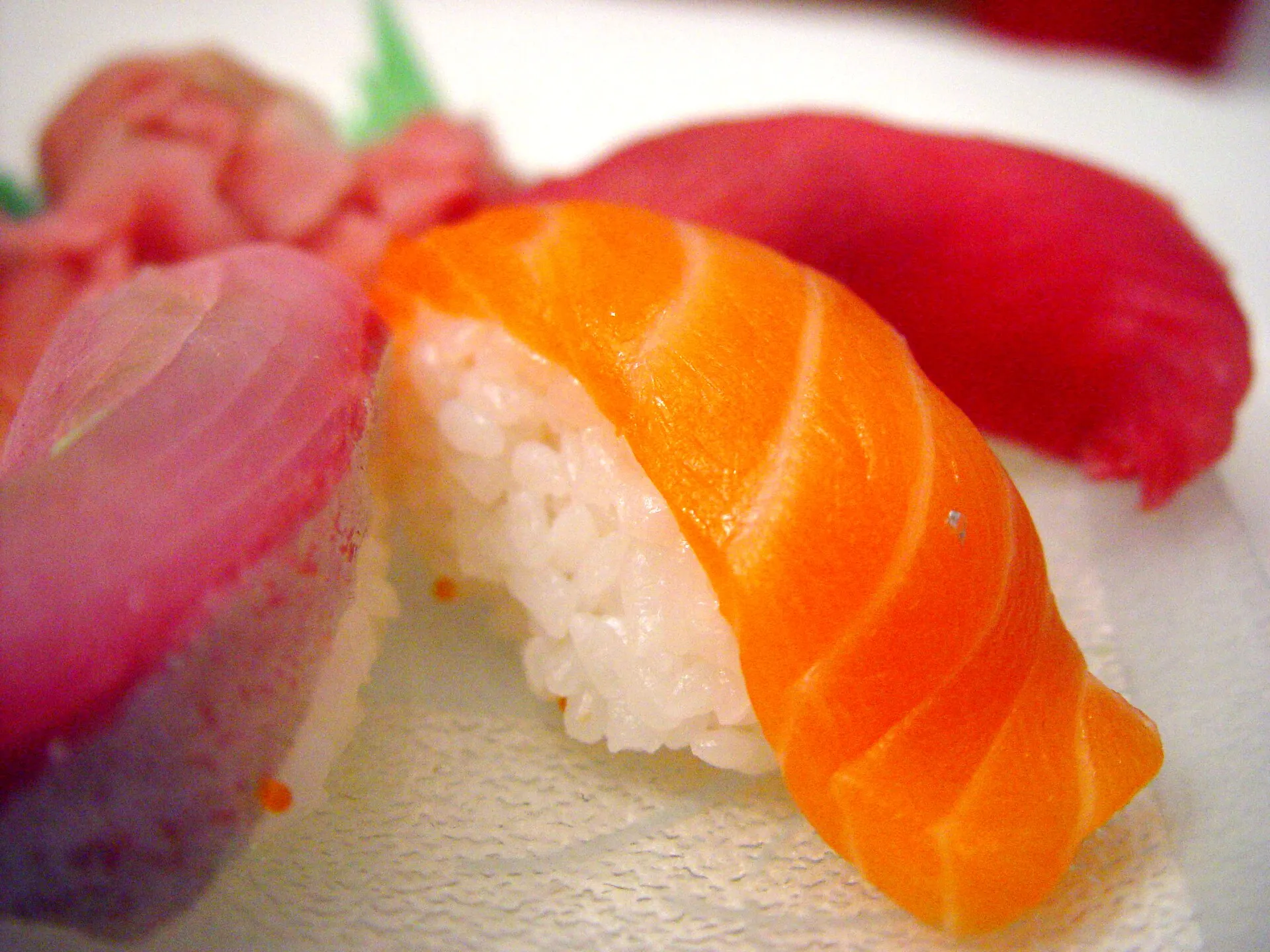
Salmon and tuna nigiri. Photo: Think Draw from Dubai, UAE, Wikimedia Commons, CC BY 2.0.
Three landmark counters costed
1. Ginza Kyubey
Founded in 1935 in the heart of Ginza, Kyubey (Ginza Kyubey Main Store, 7-6 Ginza 8-chome) is an historic institution credited with inventing gunkan-maki (warship roll wrapped in nori, used for sea urchin and salmon roe). Unlike secretive members-only establishments, Kyubey warmly accommodates international visitors.
- Opening hours: Lunch 11:30 to 14:00; dinner 17:00 to 22:00. Closed Sundays and Mondays.
- Lunch courses: Oribe (¥8,250), Karatsu (¥11,000), and Kyubey Course (¥16,500).
- Dinner courses: Nigiri courses start at ¥16,500 (+10% service charge); full sushi kaiseki banquets range from ¥25,300 to ¥44,000.
- Booking: Book via hotel concierge or the official My Concierge Japan Kyubey booking portal. Credit cards are accepted; transport IC cards are not. Same-day cancellation incurs a strict fee of ¥5,000 per person at lunch and ¥10,000 at dinner. Check details on the Kyubey official site.
2. Tempura Kondo
Awarded two Michelin stars, Tempura Kondo (Sakaguchi Building 9F, 5-5-13 Ginza) revolutionized Tokyo tempura under master chef Fumio Kondo. Departing from heavy seafood-dominated menus, Kondo introduced exquisite, lightly battered seasonal vegetables—including his signature julienned sweet potato cylinder (satsumaimo) and paper-thin carrot ribbons.
- Opening hours: Seatings at 11:30 and 13:30 for lunch; 17:00 and 19:30 for dinner. Closed Sundays and public holiday Mondays.
- Lunch courses: ¥13,200 (Fuji course) and ¥16,500 (Sumire course), tax included.
- Dinner courses: ¥22,000, ¥27,500, and ¥33,000.
- Booking: Overseas travellers book via the My Concierge Japan Tempura Kondo reservation form (Tempura Kondo). Phone reservations are handled in Japanese only.
3. Udatsu Sushi (Nakameguro)
Located in trendy Nakameguro (2-48-10 Kamimeguro), Udatsu Sushi pairs traditional Edomae craftsmanship with contemporary art gallery aesthetics. Chef Hisashi Udatsu sources sustainably caught fish from Tokyo Bay and serves nigiri on pesticide-free rice seasoned with aged red vinegar.
- Opening hours: Lunch seatings at 12:00; dinner seatings at 18:00 and 20:30. Closed Sundays.
- Course prices: Lunch omakase from approximately ¥16,000; dinner omakase ranges from ¥30,000 to ¥40,000 (+10% service charge).
- Booking: Bookings open monthly via the Omakase platform link on Michelin Guide. Strict policies apply: credit cards only, no strong perfume, and children under 7 are accommodated only in private rooms.
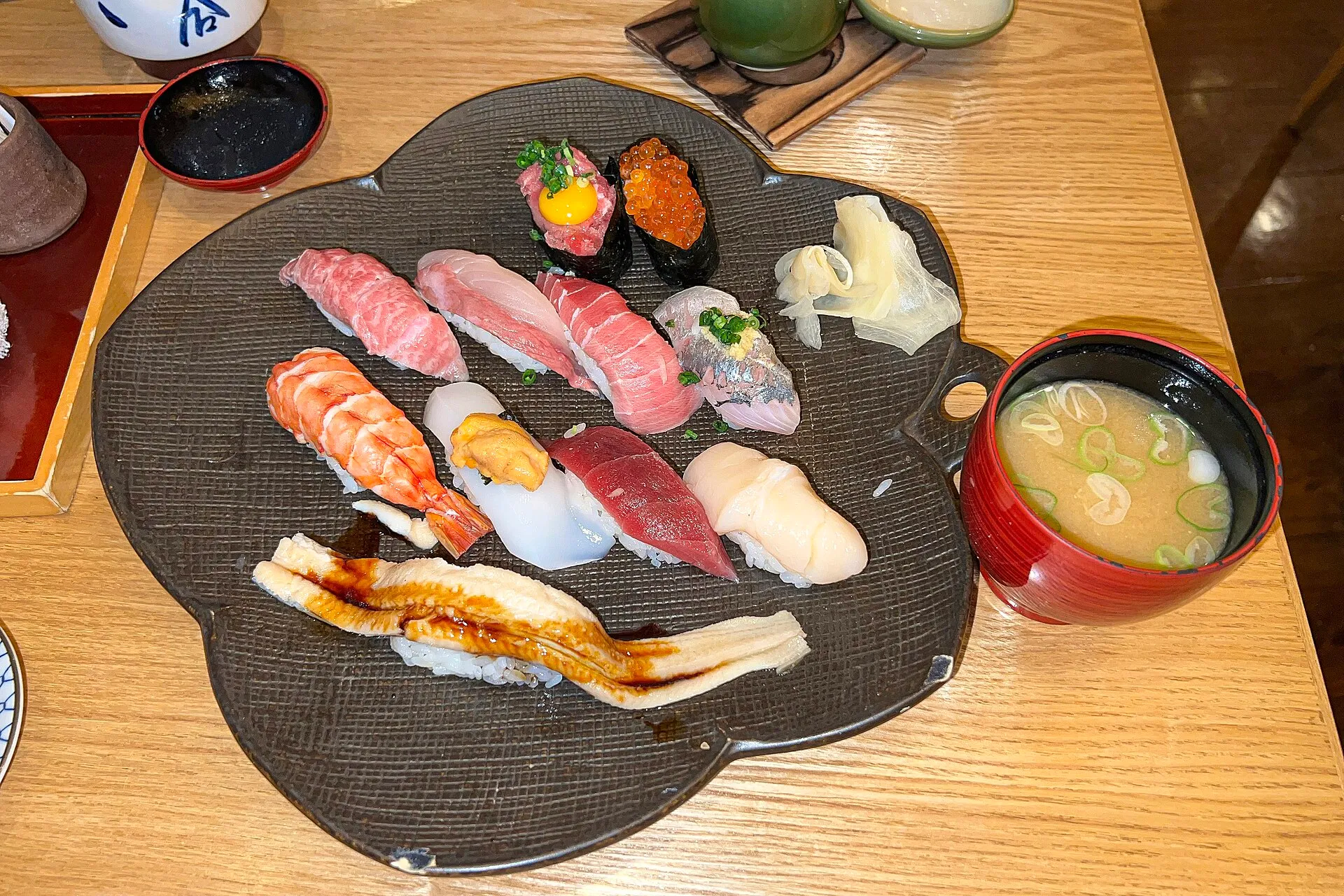
Assorted seasonal Edomae nigiri sushi pieces. Photo: N509FZ, Wikimedia Commons, CC BY-SA 4.0.
Essential omakase counter etiquette
Dining at an intimate sushi counter carries ceremonial customs that foreign diners should observe:
- Zero strong perfume or cologne: This is Tokyo’s most rigid dining rule. Vinegared rice, raw fish, and delicate dashi broths have subtle natural scents that are easily overwhelmed by synthetic fragrances. Chefs reserve the right to deny entry to perfumed patrons without refund.
- Arrive 10 minutes before your seating: Omakase meals start simultaneously for all seated diners. If you arrive 15 minutes late, you disrupt the entire kitchen pacing. Tardy arrivals are routinely turned away with 100% cancellation charges.
- Eat with fingers or chopsticks: In authentic Edomae sushi culture, eating nigiri with your hands is traditional and polite. It prevents the delicate, lightly packed rice cylinder from breaking apart. Pick up the nigiri between thumb, index, and middle finger, and place it in your mouth in a single bite.
- Do not dip the rice in soy sauce: The chef brushes each piece with nikiri (a house blend of simmered soy sauce, sake, and mirin) or sprinkles sea salt before serving. Dipping the rice into soy sauce dissolves the grains and insults the chef’s seasoning.
- Eat each piece immediately: Do not let a freshly served nigiri sit on your stone plate while chatting or editing mobile photos. Warm sushi rice is calibrated to specific body temperatures; consume each piece within ten seconds of service.
- Photography etiquette: Always ask permission before taking pictures (shashin o totte mo ii desu ka?). Turn off camera shutter sounds and flash. Photograph only your own plate; never photograph the chef’s face, the prep kitchen, or fellow diners.
Excellent walk-in sushi alternatives
If you prefer to avoid the rigidity and expense of advance omakase reservations, these casual Tokyo counters provide top-quality sushi on a walk-in basis:
- Midori Sushi (Shibuya Mark City): Outstanding value Edomae sushi. Take a numbered queue ticket from the electronic terminal at the entrance (starts dispensing at 10:00). A deluxe tokujo set featuring 11 generous pieces of fatty tuna, sea urchin, anago eel, and sweet botan shrimp costs roughly ¥2,860; see where to eat in Tokyo.
- Sushi Zanmai Main Store (Tsukiji): Open 24 hours a day, seven days a week at 4-11-9 Tsukiji. Offers reliable walk-in counter seating with clear per-piece pricing (lean tuna from ¥382, fatty tuna from ¥657).
- Nemuro Hanamaru (KITTE Marunouchi): Premier Hokkaido-style conveyor sushi counter opposite Tokyo Station. Draw a digital ticket and enjoy fresh scallops, salmon roe, and king crab.
Guided food tours vs omakase counters
| Category | Omakase counter | Guided food tour |
|---|---|---|
| Pricing | ¥8,250 to ¥40,000+ per person | ¥6,000 to ¥15,000 per person (all-inclusive) |
| Atmosphere | Formal, quiet, reverent | Lively, social, educational |
| Variety | Focused intensely on single craft (sushi or tempura) | Wide variety across 4 to 13 dishes (yakitori, gyoza, ramen, wagyu) |
| Booking advance | Weeks to months in advance with cancellation penalties | Book online several days or weeks ahead |
| Best suited for | Serious food enthusiasts and celebratory dinners | First-time visitors and social travellers |
Guided dining experiences
If you want to experience Tokyo’s culinary culture with guaranteed seating and zero language hurdles, consider these curated culinary tours:
Shinjuku Food Tour (13 Dishes and 4 Eateries)
From ¥13,200 · 4.9 stars from 3,939 reviews · 3 hours · Small group
Tokyo: Shinjuku Food Tour (13 Dishes and 4 Eateries)ad introduces diners to four authentic venues, sampling A4 Wagyu beef, handmade gyoza, seasonal sushi, and izakaya specialities with an English-speaking guide.
Tsukiji Fish Market Food Walking Tour with 5 Tastings
From ¥15,000 · 4.7 stars from 825 reviews · 3 hours · Morning seafood crawl
Tokyo: Tsukiji Fish Market Food Walking Tour with 5 Tastingsad takes you behind the scenes of Tokyo’s seafood trade, exploring outer market stalls, sampling sashimi, and concluding with a seated sushi lunch.
Hands-on Sushi Making Class in Asakusa
From ¥9,100 · 4.9 stars from 2,307 reviews · 1 hour 40 min · Cooking workshop
Tokyo: Sushi Making Class in Asakusaad provides hands-on instruction from a professional chef, teaching how to season vinegared rice and shape authentic nigiri and maki rolls.
Connecting culinary experiences
- Restaurant Directory: Browse our complete dining guide covering ramen, tonkatsu, soba, and tempura counters in where to eat in Tokyo.
- Food Tours Overview: Compare guided tasting circuits across Shinjuku, Shibuya, and Tsukiji in Tokyo food tours compared.
- Market Exploration: Learn about wholesale tuna auctions and outer market shopping in our Tsukiji and Toyosu markets guide.
- City Itineraries: Omakase dinners and food tours are scheduled into evening programmes across our 3 days in Tokyo and 5 days in Tokyo guides. Find transport routes on the Tokyo hub.
Common questions
What does omakase mean?
Omakase translates literally as 'I entrust it to you'. Instead of ordering à la carte from a menu, diners entrust the entire meal sequence to the chef, who serves a curated succession of seasonal courses piece-by-piece across the counter.
How does a foreign tourist book omakase in Tokyo?
Through a luxury hotel concierge, bilingual online booking platforms like TableCheck and Omakase.in, official restaurant reservation forms, or concierge services like My Concierge Japan and Pocket Concierge. High-end venues rarely take international phone reservations.
How much does an omakase meal cost in Tokyo?
Lunch omakase typically ranges from ¥8,000 to ¥16,000 per person. Dinner courses at renowned Michelin-starred or top-tier counters generally range from ¥20,000 to ¥45,000 per person, excluding drinks and service charges.
What happens if I cancel or arrive late to an omakase booking?
Japanese counters enforce strict cancellation penalties. Cancelling within 48 to 72 hours incurs 50% to 100% of the course cost. Because seatings start simultaneously for all guests, arriving more than 10 to 15 minutes late is treated as a no-show with full forfeiture.
Can I experience counter sushi in Tokyo without booking weeks in advance?
Yes. Walk-in institutions like Midori Sushi in Shibuya operate digital ticketing machines at the door, and Sushi Zanmai in Tsukiji offers 24-hour counter dining with transparent per-piece pricing.