In this guide
💡 The Short Version: Kamakura is Tokyo’s easiest seaside cultural day trip, reached by direct JR train from Tokyo Station or Shinjuku in under an hour for ¥1,040 each way (fully covered by the Japan Rail Pass). The monumental open-air Great Buddha at Kotoku-in (¥300) and the coastal garden temple of Hasedera (¥400) are located beside Hase Station on the historic Enoden coastal tram, three stops west of Kamakura Station. Odakyu’s Enoshima-Kamakura Freepass (¥1,640 from Shinjuku) covers round-trip Odakyu trains plus unlimited Enoden rides, though the rail journey takes roughly twenty minutes longer than JR. Or book a tour: travellers wanting seamless transport between temples and the coastal island can book the Tokyo: Kamakura & Enoshima Day Trip including Temple Ticketsad (from ¥9,200, 4.6 stars from 1,785 reviews) with pre-paid admissions and coach travel. All prices are in Japanese yen (¥).
Travel routes: JR trains vs Odakyu Freepass
Kamakura lies 50 kilometres south of Tokyo on the coast of Sagami Bay in Kanagawa Prefecture. Surrounded on three sides by forested hills and fronting the ocean to the south, it served as the military capital of Japan during the Kamakura shogunate (1185–1333) under Minamoto no Yoritomo.
| Travel option | Departure point | Travel time | Return fare | Enoden tram included? | Best for |
|---|---|---|---|---|---|
| JR Yokosuka Line | Tokyo Station or Shinagawa | 50–55 minutes | ¥1,900–¥2,080 | No (¥200–¥260/ride or IC card) | Fastest route from eastern Tokyo; covered by JR Pass |
| JR Shonan-Shinjuku Line | Shinjuku or Shibuya | 55–60 minutes | ¥2,080 | No (pay as you go) | Fastest route from western Tokyo; take direct Zushi-bound trains |
| Odakyu Enoshima-Kamakura Freepass | Odakyu Shinjuku Station | ~75–85 minutes | ¥1,640 (flat pass) | Yes (unlimited rides) | Budget travellers planning to ride the Enoden multiple times |
| Organized Coach Day Tour | Central Tokyo pickup | 9–10 hours | From ¥9,200 | Included with temple entries | Travellers wanting guided history and door-to-door transit |
- JR Yokosuka Line: Direct trains depart Tokyo Station and Shinagawa every 10 to 15 minutes. Intermediate stops include Yokohama and Kita-Kamakura (convenient for visiting the northern Zen temples Engaku-ji and Kencho-ji before reaching the town center).
- JR Shonan-Shinjuku Line: Look for departures displaying “Zushi” as the final destination to travel directly to Kamakura without changing trains. If you board an “Odawara” or “Hiratsuka” train, you must change to the Yokosuka Line at Totsuka or Ofuna Station.
- Odakyu Freepass logistics: Purchase the Enoshima-Kamakura Freepass at Odakyu automated ticket machines at Shinjuku Station. You take the Odakyu Line down to Fujisawa Station, where you transfer to the Enoden tram to travel along the coast into Kamakura. You can add a reserved seat on the Odakyu Romancecar to Katase-Enoshima for a ¥750 supplement.
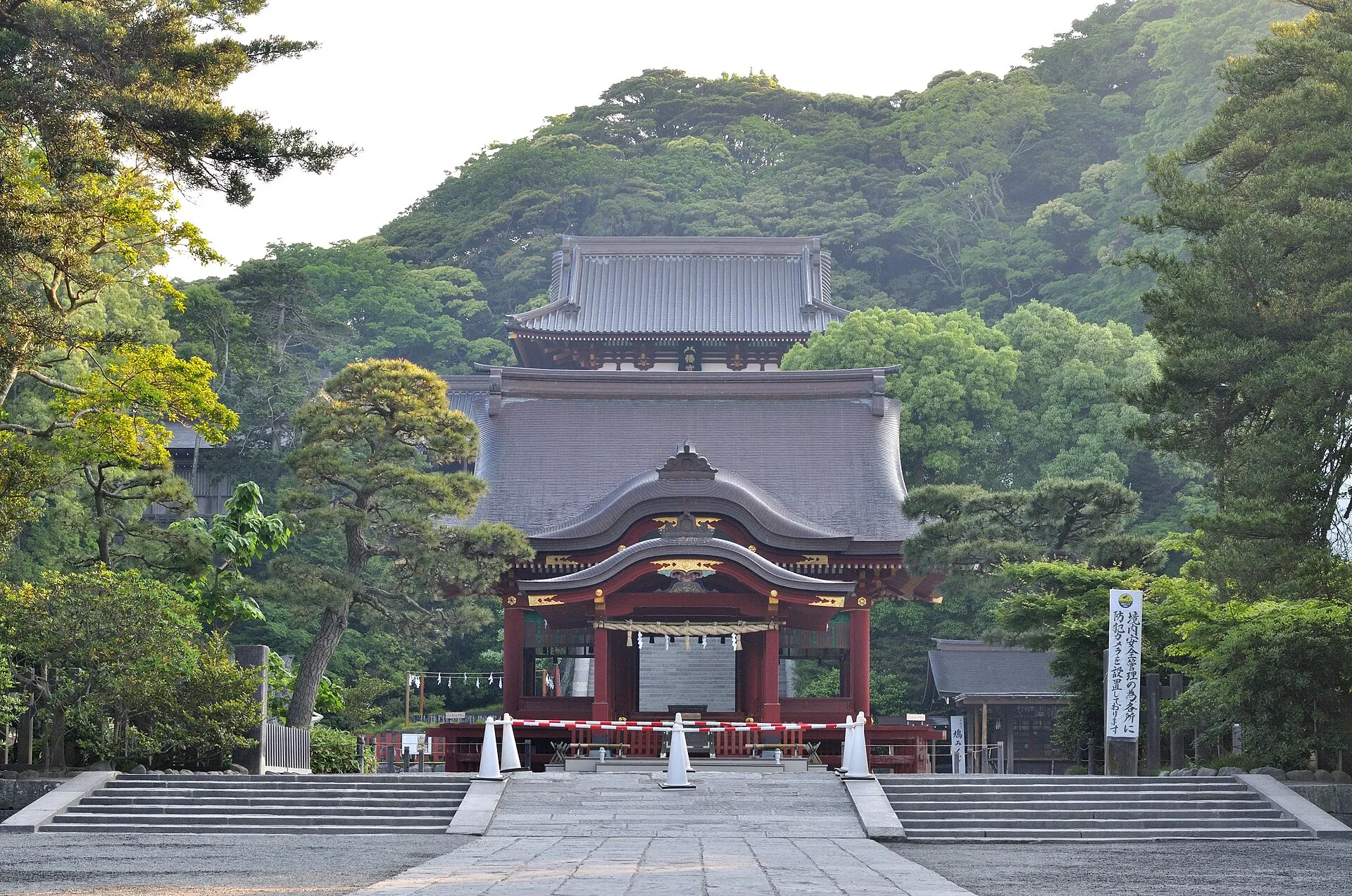
Stone stairs ascending to the main hall of Tsurugaoka Hachimangu in Kamakura. Photo: Ocdp, Wikimedia Commons, CC0.
Top sights and walking routes in Kamakura
Kamakura’s cultural attractions cluster into three distinct geographic zones: the historic shrine district around Kamakura Station, the coastal temples of Hase, and the sacred island of Enoshima.
1. Tsurugaoka Hachimangu and Komachi-dori
Located ten minutes’ walk north of Kamakura Station, Tsurugaoka Hachimangu is the spiritual heart of Kamakura, established in 1063 and moved to its present commanding position in 1180 by shogun Minamoto no Yoritomo.
- The approach (Dankazura): The shrine is approached along Wakamiya Oji avenue via an elevated pedestrian path flanked by stone lanterns and hundreds of cherry trees, passing beneath three monumental vermilion torii gates.
- The Shrine Grounds: The complex features the Maiden stage, two lotus ponds (Genpei ponds) representing the rival Minamoto and Taira samurai clans, and a dramatic stone stairway leading to the Senior Shrine hall (Jogu). Admission to the shrine grounds is free.
- Komachi-dori: Running parallel to the main approach avenue, this pedestrian shopping lane is packed with artisanal snack stalls, tea houses, and craft boutiques selling local sweet potato croquettes, whitebait rice crackers (senbei), and Kamakura-bori lacquerware.
2. The Great Buddha at Kotoku-in
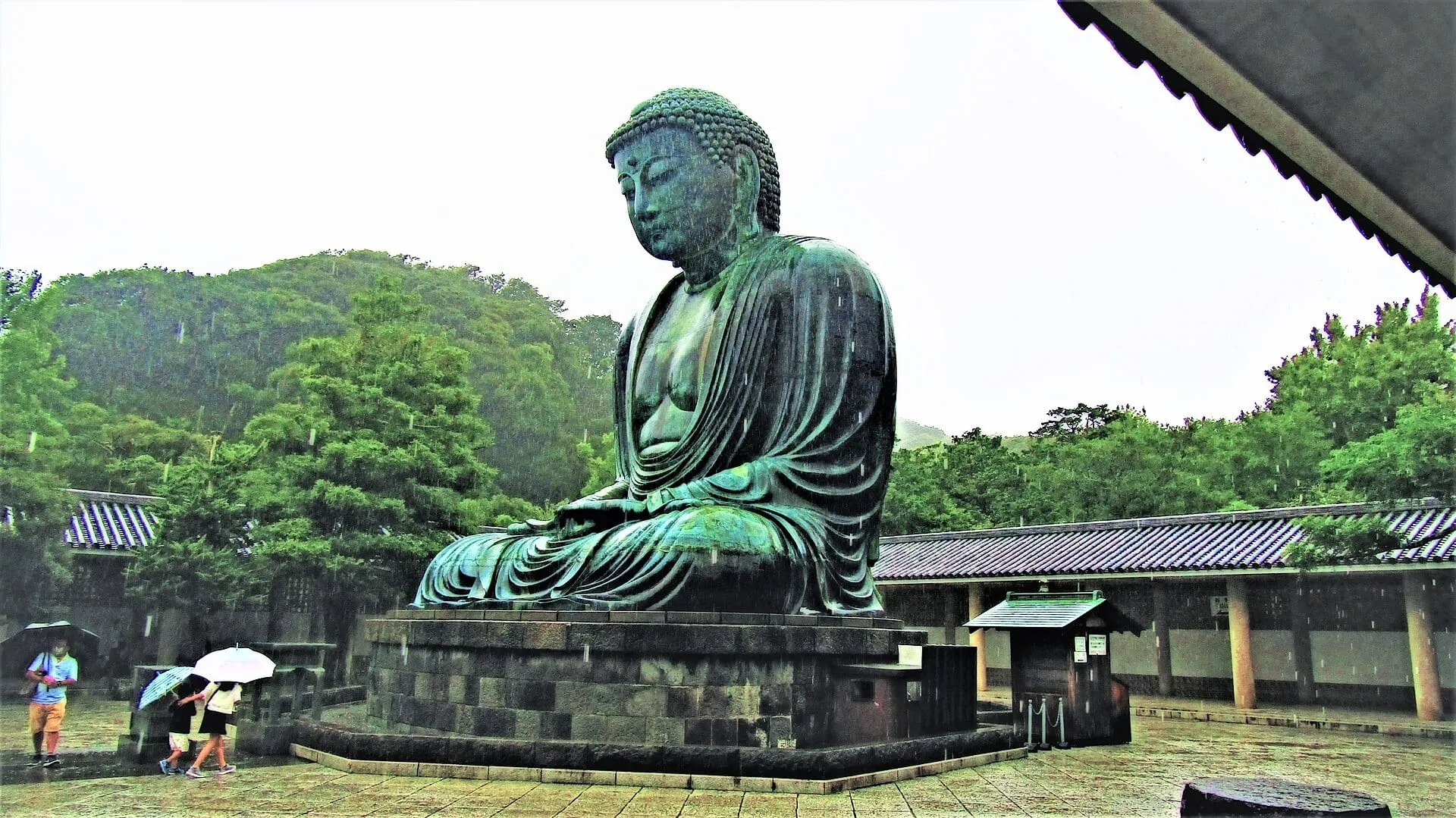
The Kamakura Daibutsu at Kotoku-in temple is one of Japan’s most celebrated cultural monuments.
- The Monument: Cast in bronze in 1252, the monumental Amida Buddha stands 11.3 metres tall (13.35 metres including the stone pedestal) and weighs approximately 121 tonnes. Traces of original gold leaf still cling to the cheeks.
- Open-air setting: The statue was originally housed inside a massive wooden temple hall. However, successive typhoons and a devastating tsunami in 1498 washed the wooden structures away, and the bronze colossus has sat exposed to the open air amidst forested hills ever since.
- Entering the interior: Visitors can pay a small ¥50 supplement at the side entrance to step inside the hollow interior cavity of the bronze statue to examine the medieval copper casting joints and structural bracing.
- Hours and access: Open 08:00 to 17:30 (April to September) and 08:00 to 17:00 (October to March). Admission is ¥300 for adults. Located a 7-minute walk from Hase Station on the Enoden tram.
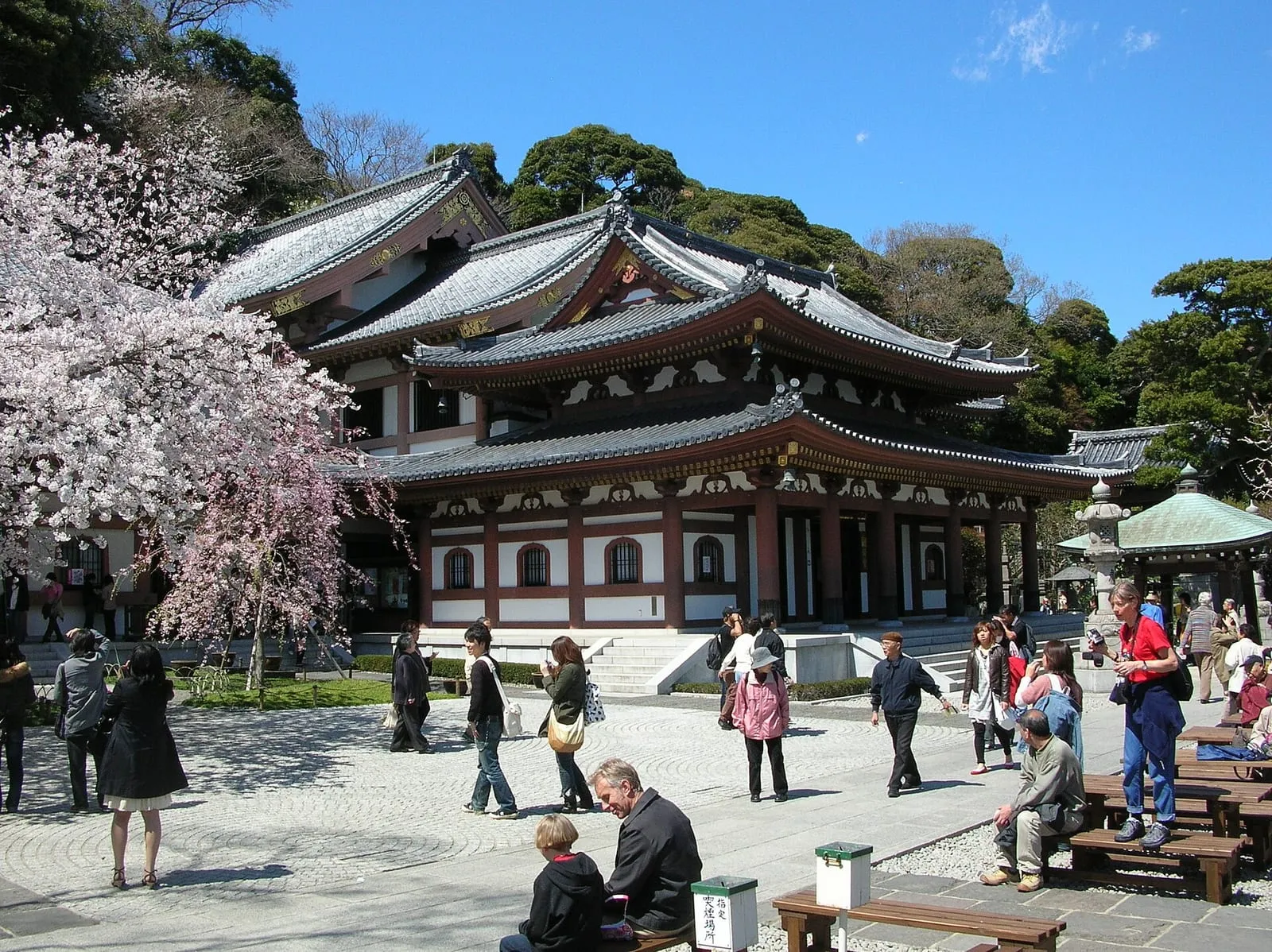
The main hall and blooming weeping cherry trees at Hasedera temple. Photo: Bernard Gagnon, Wikimedia Commons, CC BY-SA 3.0.
3. Hasedera Temple
Situated just a five-minute walk south of the Great Buddha, Hasedera is an ancient Buddhist temple of the Jodo sect, founded in 736 AD on the coastal hillside.
- The Eleven-Headed Kannon: The main hall houses a magnificent 9.18-metre gold-gilded camphor wood statue of Kannon, the goddess of mercy, adorned with eleven distinct faces representing compassion toward human suffering.
- Garden terraces and sea views: The temple grounds cascade across wooded hillside terraces filled with hundreds of miniature Jizo stone statues (Jizo-do), carp-filled landscape ponds, a natural cave carved with Benzaiten carvings (Benten-kutsu), and an upper viewing terrace providing sweeping views across Yuigahama beach and Sagami Bay.
- Hydrangea season (Ajisai): In June and early July, the temple’s upper hillside path (Ajisai Path) bursts into over 2,500 blooming hydrangea bushes, drawing visitors from across Japan. Admission is ¥400 for adults (08:00 to 17:00 daily).
4. The Enoden Coastal Tram
The Enoshima Electric Railway (Enoden) is a charming 10-kilometre single-track railway connecting Kamakura Station to Fujisawa Station. Operating distinctive green-and-cream retro carriages since 1902, the train threads narrowly between traditional wooden residential houses before bursting onto the coastal seawall overlooking the Pacific surf.
- Kamakurakokomae Station: This small coastal stop has become an international pilgrimage site for fans of the basketball anime Slam Dunk, whose opening sequence depicts the green train passing the level crossing against the ocean backdrop.
- Fares: Standard single fares range from ¥200 to ¥260 (payable via Suica or Pasmo cards). An unlimited one-day Enoden pass (Noriorikun) costs ¥800.
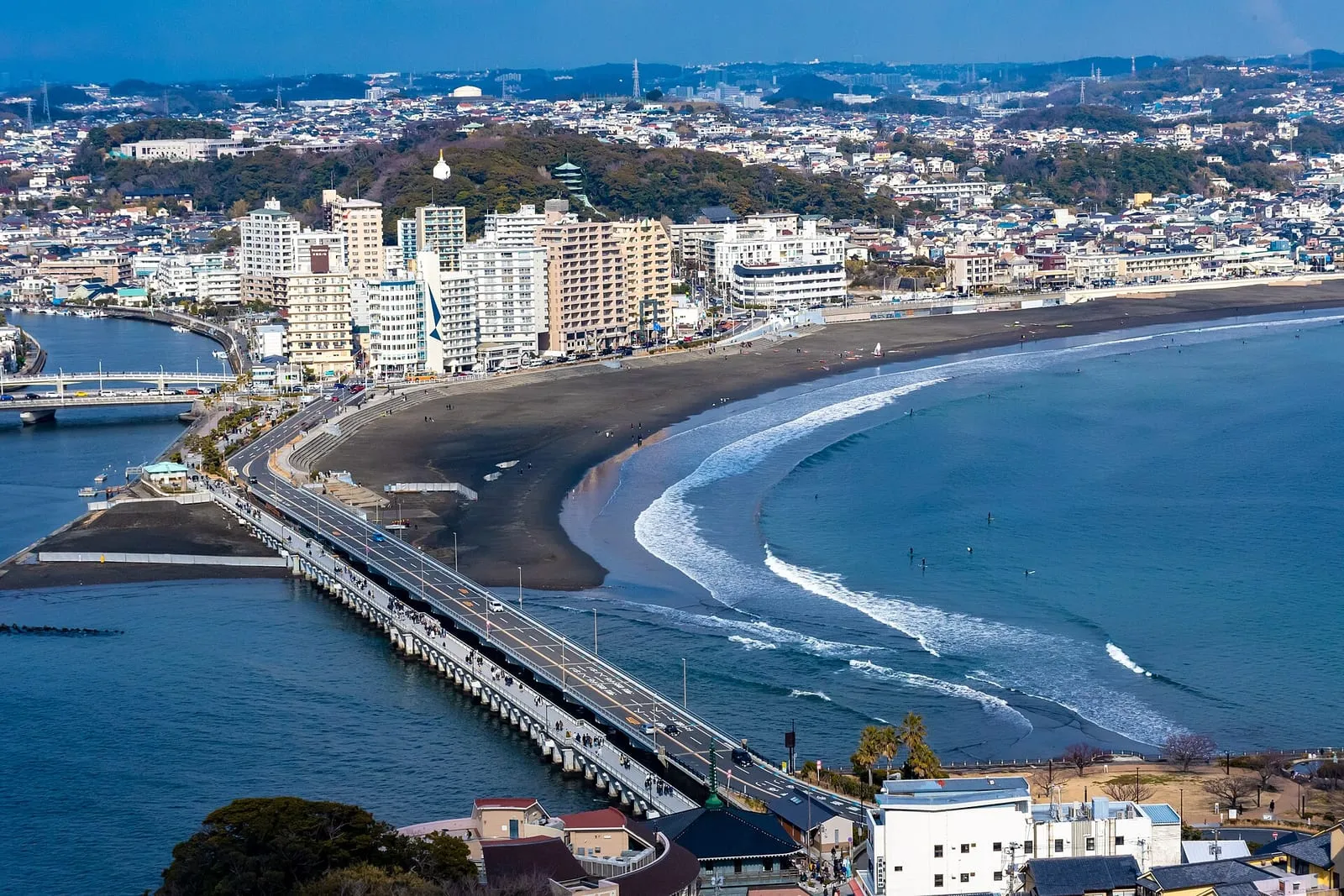
The Enoshima Benten Bridge curving toward the coastal shrine island. Photo: SuFlyer, Wikimedia Commons, CC0.
5. Enoshima Island
Located at the western end of the bay and reached by alighting at Enoshima Station on the Enoden, Enoshima is a sacred offshore island linked to the mainland by the 400-metre Enoshima Benten Bridge.
- Enoshima Shrine: A network of three shrine pavilions dedicated to Benzaiten, the Buddhist-Shinto goddess of music, fortune, and water.
- Enoshima Sea Candle: A 60-metre observation and transmission tower standing within the Samuel Cocking Garden at the summit of the island. The open-air observation deck offers 360-degree views across Sagami Bay and, on clear winter evenings, Mount Fuji silhouetted behind the ocean.
- Iwaya Caves: Two natural sea caves on the southern cliffs formed by ocean erosion over thousands of years, historically used by Buddhist ascetics for meditation.
- Local dining: Enoshima is renowned for shirasu-don (bowls of fresh or boiled whitebait fish caught in the local bay) and giant freshly pressed octopus rice crackers (tako senbei).
Popular guided day excursions
Organized tours bundle return coach transport, licensed guide commentary, and pre-arranged admissions across Kamakura and Enoshima.
Tokyo: Kamakura & Enoshima Day Trip including Temple Tickets
From ¥9,200 · 4.6 stars from 1,785 reviews · 9 to 9.5 hours
The Tokyo: Kamakura & Enoshima Day Trip including Temple Ticketsad is the most booked Kamakura tour from Tokyo. Departing by coach from Shinjuku, the itinerary includes guided admission to Kotoku-in for the Great Buddha, exploration of Tsurugaoka Hachimangu and Komachi-dori, a scenic ride on the Enoden coastal tram, and walking time across the Enoshima causeway before returning to central Tokyo.
Tokyo: Kamakura, Enoshima Trip With Train Ride, Great Buddha
From ¥9,259 · 4.6 stars from 560 reviews · 10 hours
The Tokyo: Kamakura, Enoshima Trip With Train Ride, Great Buddhaad covers the same historical circuit with dedicated stops at the famous anime crossing at Kamakurakokomae Station, providing structured free time for photography along Sagami Bay.
Tokyo: Kamakura & Enoshima Bus Group Day Trip with Train Ride
From ¥9,333 · 4.4 stars from 101 reviews · 10 hours
The Tokyo: Kamakura & Enoshima Group Day Trip by Bus with Train Ridead provides small-group coach transport between central Tokyo hotels and Kanagawa Prefecture, ensuring personalized attention from the bilingual guide throughout the temple visits.
Where to go next
Because Kamakura is located on the JR Yokosuka Line south of Tokyo, it pairs naturally with an afternoon or evening stop in Yokohama on the return journey to explore Chinatown and Minato Mirai.
To compare Kamakura with other regional excursions, consult our overview of day trips from Tokyo. If you prefer mountain shrines and waterfalls, read our Nikko day trip guide, or explore hot springs in our Hakone day trip guide.
For rail pass coverage rules, read Japan Rail Pass worth it and Tokyo public transport, and discover all essential capital bookings on the Tokyo hub.
Common questions
How do you travel from Tokyo to Kamakura?
The fastest route is by JR train: either the JR Yokosuka Line from Tokyo Station or Shinagawa (55 minutes, ¥950 to ¥1,040 one-way) or the JR Shonan-Shinjuku Line from Shinjuku or Shibuya (55 to 60 minutes, direct on Zushi-bound departures, ¥1,040). Both are fully covered by the Japan Rail Pass and payable with standard IC cards.
What is the Enoshima-Kamakura Freepass?
The Enoshima-Kamakura Freepass is a discount day pass issued by Odakyu Electric Railway costing ¥1,640 for adults and ¥430 for children from Shinjuku. It covers round-trip travel on the Odakyu Line between Shinjuku and Fujisawa/Katase-Enoshima, plus unlimited rides on the historic Enoden coastal tram between Fujisawa and Kamakura.
How much are tickets to the Great Buddha at Kamakura?
Admission to Kotoku-in temple to view the outdoor bronze Great Buddha costs ¥300 for adults (junior high and older) and ¥150 for primary school children. Visitors can also pay an extra ¥50 on-site to walk inside the hollow interior of the bronze statue. No advance reservations are required.
How much does Hasedera Temple cost?
Admission to Hasedera costs ¥400 for adults and ¥200 for children (ages 6 to 11). The temple is open daily from 08:00 to 17:00 (closing at 17:30 from April to June). Final admission is 30 minutes before closing.
Is an organized day tour to Kamakura worth it?
Because Kamakura is less than an hour from Tokyo by direct train for just ¥2,080 return, independent travel is straightforward. However, an organized day tour (from ¥9,200) provides direct air-conditioned coach transit connecting Kamakura, the Great Buddha, and Enoshima Island without walking between transit stops or navigating tram crowds on busy weekends.