In this guide
💡 The Short Version: Tokyo stages three 15-day Grand Sumo tournaments each year at Ryogoku Kokugikan: January (tickets release early December), May (tickets release early April), and September (tickets release early August). Second-floor stadium chair seats cost from ¥3,500 to ¥9,500, while traditional ground-floor four-person tatami boxes cost ¥34,000 to ¥42,000. Official tickets are sold through TICKET OOSUMO, the international booking portal of the Japan Sumo Association. Or book a show: if your travel dates do not coincide with the three tournament fortnights, year-round interactive sumo experiences such as the Tokyo: Shinjuku Sumo Show & Experience with a Photoad (from ¥6,000, 4.9 stars from 9,980 reviews) run daily demonstrations and chanko meals. All prices are in Japanese yen (¥).
The official tournament calendar
Grand Sumo (Ozumo) is governed by the Japan Sumo Association. The professional sport consists of six annual 15-day tournaments (honbasho), running from Sunday to Sunday across odd-numbered months. Tokyo hosts the three odd-month tournaments held in eastern Japan:
| Tournament | Venue | 2027 Dates | Ticket lottery opens | General ticket release |
|---|---|---|---|---|
| Hatsu Basho (New Year) | Ryogoku Kokugikan, Tokyo | 10 to 24 January 2027 | Mid-November 2026 | 5 December 2026 |
| Haru Basho (Spring) | Edion Arena, Osaka | 14 to 28 March 2027 | Early February 2027 | 6 February 2027 |
| Natsu Basho (Summer) | Ryogoku Kokugikan, Tokyo | 9 to 23 May 2027 | Late March 2027 | 10 April 2027 |
| Nagoya Basho (July) | Dolphins Arena, Nagoya | 11 to 25 July 2027 | Late May 2027 | 12 June 2027 |
| Aki Basho (Autumn) | Ryogoku Kokugikan, Tokyo | 12 to 26 September 2027 | Late July 2027 | 7 August 2027 |
| Kyushu Basho (November) | Fukuoka Kokusai Center, Fukuoka | 14 to 28 November 2027 | Late September 2027 | 9 October 2027 |
The opening Sunday (shonichi), the middle weekend, and the championship final Sunday (senshuraku) sell out almost instantaneously upon release. Midweek sessions (Tuesdays through Thursdays) offer the best prospect of securing general seats.
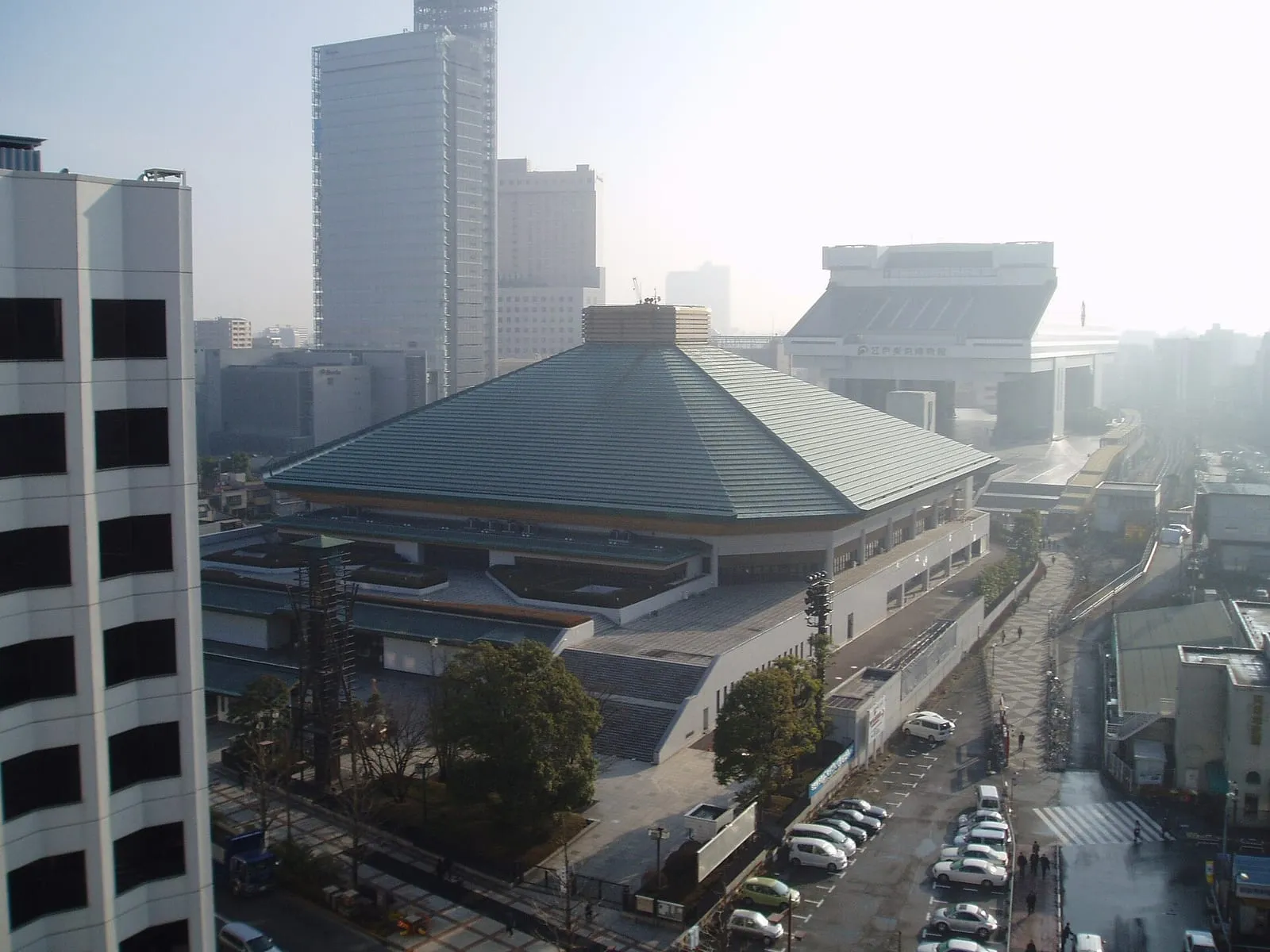
Ryogoku Kokugikan arena roof and surrounding district from above. Photo: Steve Cadman, Wikimedia Commons, CC BY-SA 2.0.
Seating tiers and ticket prices at Ryogoku Kokugikan
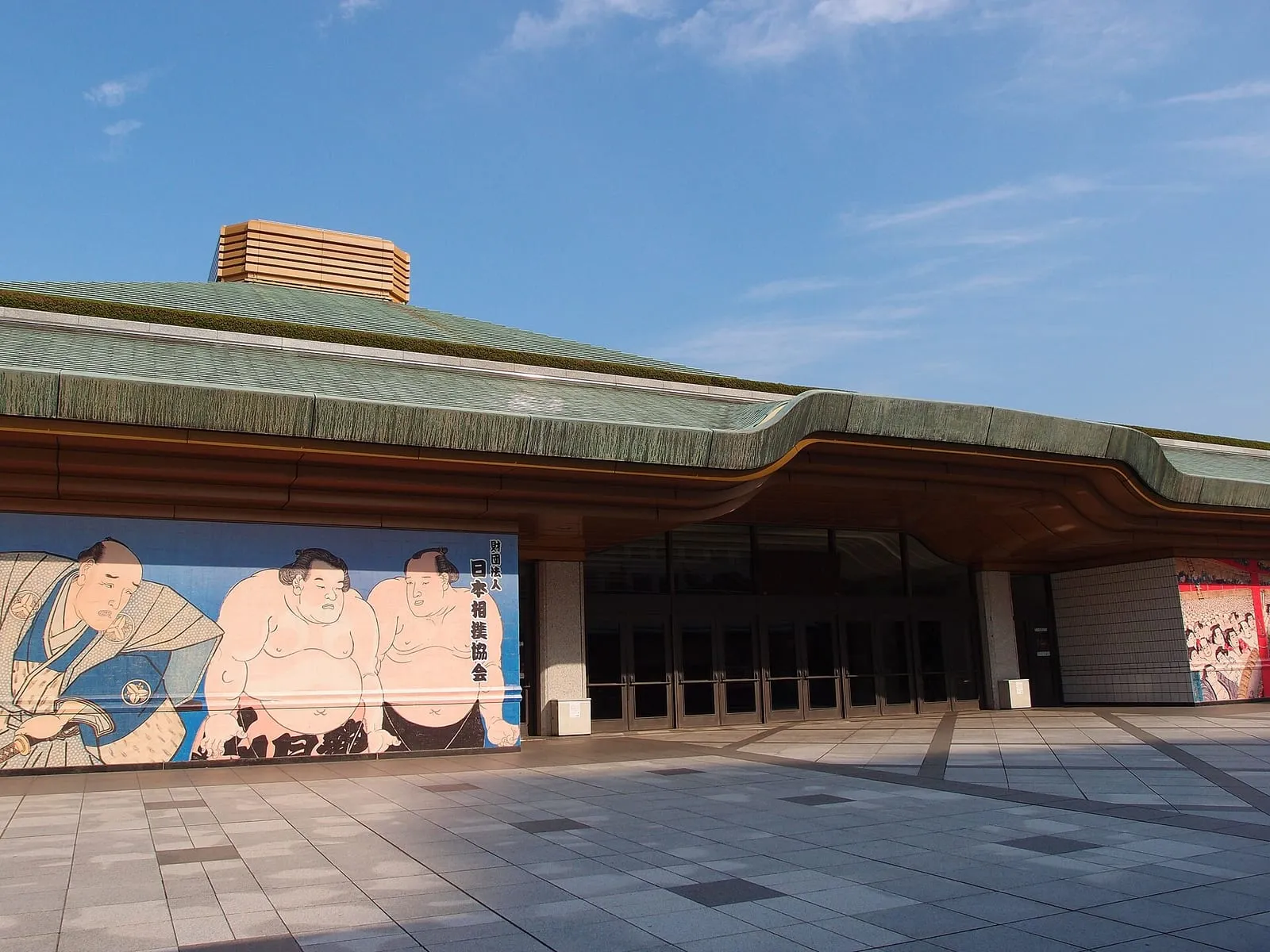
The Ryogoku Kokugikan arena accommodates over 11,000 spectators across three concentric viewing levels surrounding the central clay ring (dohyo).
Official tournament ticket prices established by the Japan Sumo Association vary by seat category and weekday versus weekend:
| Seating category | Floor level | Weekday price | Weekend & holiday price | Seating style |
|---|---|---|---|---|
| Ringside Seats (Tamari-seki) | 1st Floor (Rows 1–8) | ¥20,000 | ¥20,000 | Floor cushions right at ring edge. No food, drink, or cameras allowed |
| Box Seats A (Masu-seki A) | 1st Floor (Front rows) | ¥48,000 | ¥52,000 | Square tatami box for 4 people (¥12,000–¥13,000/person) |
| Box Seats B (Masu-seki B) | 1st Floor (Middle rows) | ¥40,000 | ¥42,000 | Square tatami box for 4 people (¥10,000–¥10,500/person) |
| Box Seats C (Masu-seki C) | 1st Floor (Rear rows) | ¥34,000 | ¥38,000 | Square tatami box for 4 people (¥8,500–¥9,500/person) |
| Chair Seats A | 2nd Floor (Front rows) | ¥8,500 | ¥9,500 | Western stadium tip-up seats with clear ring view |
| Chair Seats B | 2nd Floor (Middle rows) | ¥5,000 | ¥5,500 | Standard stadium seating |
| Chair Seats C | 2nd Floor (Upper rows) | ¥3,500 | ¥4,000 | Highest numbered rows; binoculars recommended |
| Same-Day Balcony (Jiyuseki) | 2nd Floor (Top perimeter) | ¥2,200 | ¥2,200 | Unreserved bench seating; sold morning of match |
- Understanding Box Seats (Masu-seki): Box seats are traditional partitioned enclosures floored with tatami matting. Each box measures roughly 1.3 metres square and contains four flat seat cushions (zabuton). Shoes must be removed before stepping into the box. Even if your party has only two people, you must purchase the entire four-person box. For travellers unaccustomed to sitting cross-legged on the floor for four hours, second-floor western chair seats are considerably more comfortable.
- Ringside caution: Ringside seats (tamari-seki) put spectators within arm’s reach of the clay platform. Heavyweight wrestlers weighing 150 to 190 kilograms frequently hurtle off the edge into the crowd during hard finishes. Eating, drinking, taking photographs, and holding mobile phones are strictly forbidden in this section.
- Purchasing official tickets: Foreign visitors should purchase through TICKET OOSUMO, the Association’s English web service operated by Pia. Payment is made by credit card, and vouchers are redeemed for physical tickets at automated 7-Eleven convenience store terminals in Japan using an issue slip number.
- Same-day unreserved tickets: Approximately 300 unreserved general admission tickets are retained for walk-up sale at the Kokugikan box office at 07:45 every morning of the tournament. During high-profile tournaments, queues form outside the stadium as early as 05:00.
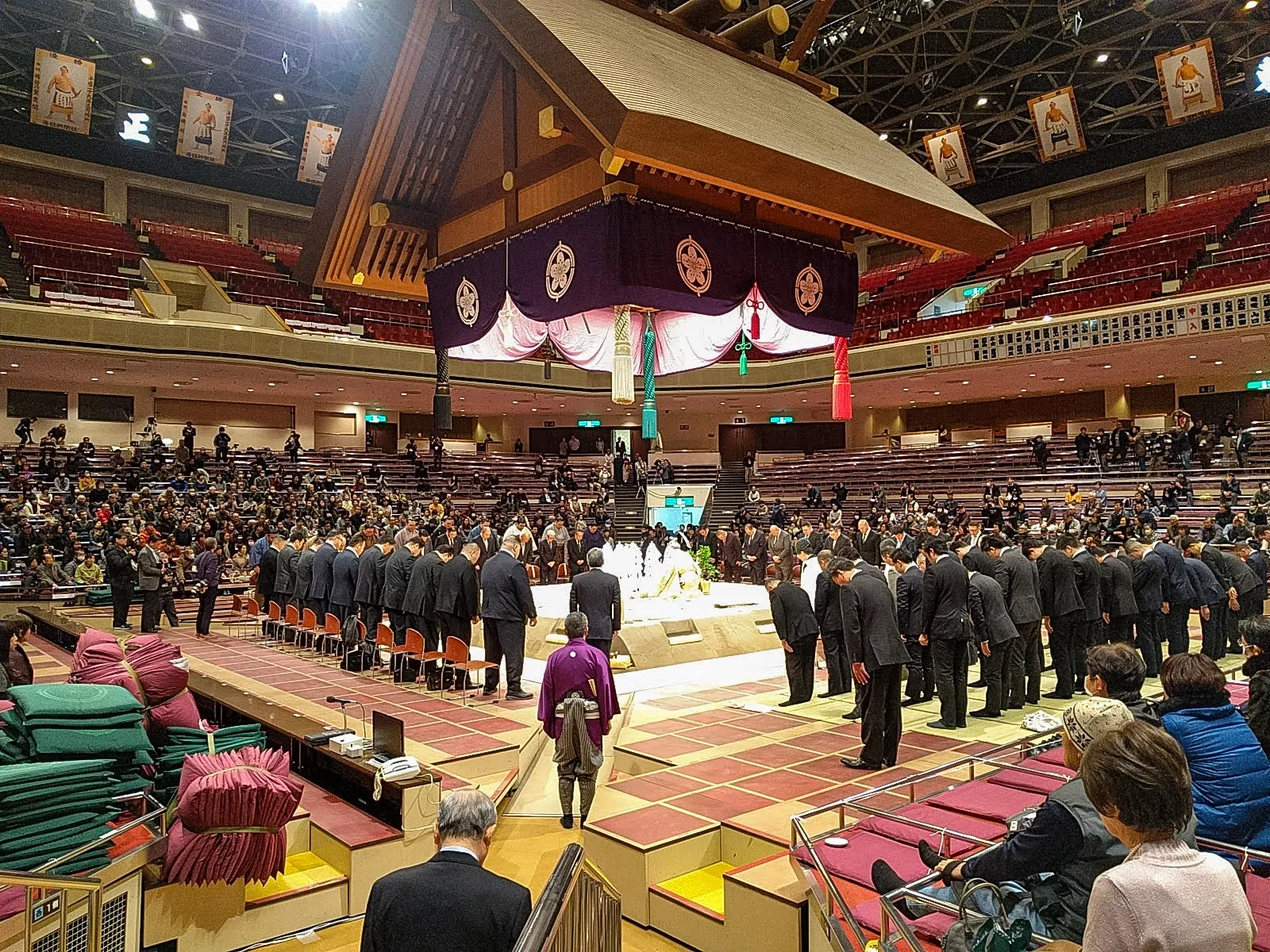
The traditional clay dohyo ring under its Shinto roof canopy at Ryogoku Kokugikan. Photo: KQuhen, Wikimedia Commons, CC BY-SA 4.0.
How a tournament day unfolds
A ticket grants admission for the entire day from 08:30 to 18:00, but spectators are free to arrive and leave whenever they wish:
- 08:30–14:15 (Junior Divisions): The day begins with bouts between apprentices in the lowest divisions: Jonokuchi, Jonidan, Sandanme, and Makushita. The arena is calm, allowing you to walk freely down to the ringside rails and watch upcoming wrestlers hone their craft without crowds.
- 14:15–15:40 (Juryo Division): The second-tier professional wrestlers (Juryo) enter the arena. The atmosphere builds as experienced contenders fight to regain entry to the top flight.
- 15:40 (Makuuchi Ring-Entering Ceremony): The grand ceremonial highlight of the day. The premier division (Makuuchi) wrestlers parade around the dohyo wearing elaborate silk ceremonial aprons (kesho-mawashi) hand-embroidered with gold thread.
- 15:55 (Yokozuna Dohyo-Iri): The reigning Grand Champion (Yokozuna) performs a solemn purification ritual, clapping hands to draw the attention of the gods and stamping legs (shiko) to drive evil spirits from the clay ring.
- 16:10–18:00 (Makuuchi Bouts): The headline bouts between grand champions, champions (Ozeki), and top-ranked competitors. Bouts are preceded by psychological face-offs, salt-throwing rituals, and sponsorship banners paraded around the ring.
- 18:00 (Bow-Twirling Ceremony): Following the final bout, a specially designated wrestler performs the yumitori-shiki, twirling a long bamboo bow in a ritual dance of thanksgiving.
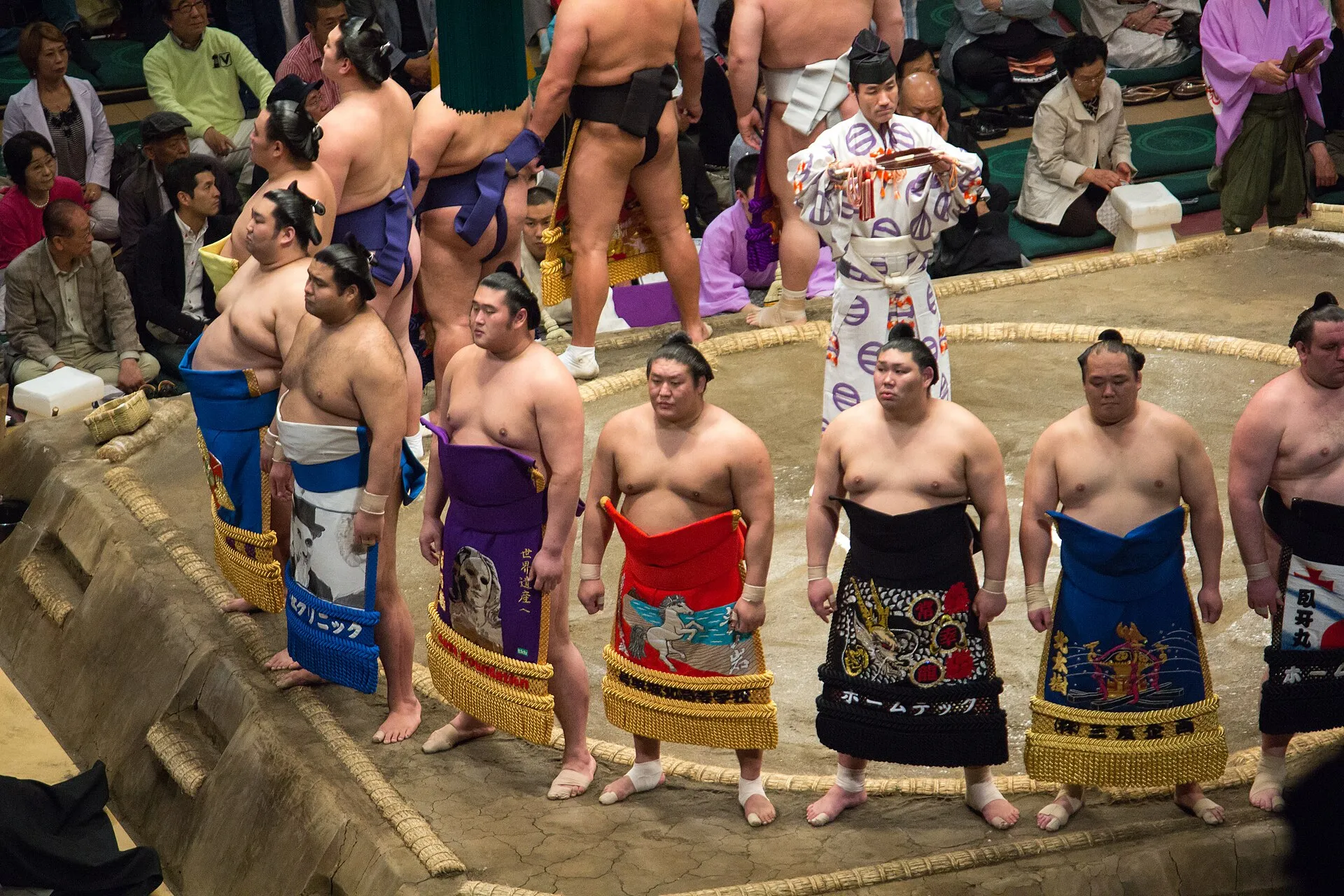
Makuuchi division wrestlers wearing embroidered silk keshomawashi aprons during the ring-entering ceremony. Photo: Simon Q, Wikimedia Commons, CC BY 2.0.
Comparing tournament tickets and interactive sumo shows
If your visit does not align with the tournament schedule, alternative sumo experiences allow you to engage with the sport year-round:
| Experience type | Timing | Cost | What you experience | Best for |
|---|---|---|---|---|
| Grand Sumo Tournament | Jan, May, Sep (15 days each) | ¥3,500–¥12,000/person | Authentic professional championship bouts at Kokugikan | Sports purists and travellers visiting during official dates |
| Morning Stable Practice (Keiko) | Year-round (except post-tournaments) | From ¥10,000–¥15,000 | Silent observation of active wrestlers training at their stable | Cultural observers seeking an intimate, solemn view of sumo life |
| Sumo Show & Demonstration | Year-round (daily) | From ¥6,000 | Performance, referee rules, photo in ring, interactive comedy | Families, evening travellers, and anyone visiting outside tournament months |
| Sumo Dinner with Chanko Nabe | Year-round (evenings) | From ¥16,000 | Full sumo show, geisha performance, and traditional wrestler hot pot | Complete evening cultural entertainment and dining |
Interactive sumo shows and entertainment
Sumo entertainment venues in Tokyo provide an accessible window into the sport’s traditions outside tournament seasons.
Tokyo: Shinjuku Sumo Show & Experience with a Photo
From ¥6,000 · 4.9 stars from 9,980 reviews · 1.5 hours
The Tokyo: Shinjuku Sumo Show & Experience with a Photoad is Tokyo’s most popular year-round sumo experience. Staged in a purpose-built theatre in central Shinjuku, the presentation features retired professional rikishi who demonstrate basic stances (shiko and suriashi), demonstrate forbidden moves (kinjite), and walk spectators through the 82 winning techniques (kimarite). Audience members are invited to put on padded suits and challenge the wrestlers inside the ring, followed by individual photo sessions with the athletes.
Tokyo: Shibuya Sumo Show with Experience & Photo
From ¥6,000 · 4.9 stars from 3,439 reviews · 75 minutes
The Tokyo: Shibuya Sumo Show with Experience & Photoad brings the same demonstration format to Shibuya. The programme explains the Shinto origins of the sport, demonstrates actual grappling techniques with full contact, and includes bilingual commentary explaining the strict daily regimen of stable life.
Tokyo: Sumo Entertainment Show with Chicken Hot Pot & Geisha
From ¥16,000 · 4.8 stars from 8,752 reviews · 2 hours
The Tokyo: Sumo Entertainment Show with Chicken Hot Pot & Geishaad pairs wrestling demonstrations with classic culinary traditions. Guests are served authentic chicken chanko nabe, the hearty protein stew cooked daily in sumo stables, accompanied by live performances from traditional geisha dancers and musicians.
How to get to Ryogoku Kokugikan
The Ryogoku Kokugikan is located at 1-3-28 Yokoami, Sumida Ward, positioned immediately adjacent to the railway lines:
- JR Sobu Line: Ryogoku Station (West Exit). Step out of the station turnstiles and the green roof of the Kokugikan is visible less than two minutes’ walk ahead.
- Toei Oedo Subway Line: Ryogoku Station (Exit A3 or A4), approximately five minutes’ walk east of the arena.
- Sumo Museum: Located on the first floor inside the Kokugikan arena. During official tournaments, admission is restricted to tournament ticket holders; on non-tournament weekdays, it is frequently open to the general public with free admission.
Where to go next
Ryogoku is the historic heart of Tokyo’s sumo culture. After visiting the arena, explore the surrounding streets lined with sumo stables, the memorial to the Forty-Seven Ronin at Kira’s residence, and historic chanko nabe eateries detailed in our guide to where to eat in Tokyo.
Just across the Sumida River lies Asakusa, easily reachable on foot or via a short subway hop; pair your sumo outing with our Asakusa, Ueno and Yanaka walk or our complete guide to Senso-ji Temple. A dedicated day exploring Ryogoku and Tokyo’s cultural heritage forms Day Four of our 5-day Tokyo itinerary.
If you are coordinating event dates with regional trips, consult our guides to Tokyo public transport for train connections, Tokyo in summer for seasonal festivals, and the Tokyo hub for all other attraction bookings across the capital.
Common questions
When are the grand sumo tournaments held in Tokyo?
Tokyo hosts three official 15-day Grand Sumo tournaments (*honbasho*) each year at the Ryogoku Kokugikan: the New Year Tournament in January (10 to 24 January 2027), the Summer Tournament in May (9 to 23 May 2027), and the Autumn Tournament in September (12 to 26 September 2027). The other three tournaments take place in Osaka (March), Nagoya (July), and Fukuoka (November).
When do Tokyo sumo tournament tickets go on sale?
Official tickets go on general sale roughly one month before each tournament commences: 5 December 2026 for January 2027, 10 April 2027 for May 2027, and 7 August 2027 for September 2027. An advance ticket lottery opens two to three weeks prior to the general sale.
How much are grand sumo tickets at Ryogoku Kokugikan?
Second-floor stadium chair seats cost between ¥3,500 and ¥9,500 per person depending on the row tier. Four-person ground-floor tatami box seats (*masu-seki*) cost between ¥34,000 and ¥42,000 per box. Floor-level ringside cushion seats cost around ¥20,000 per seat, but are allocated almost entirely through club lotteries.
Can you see sumo in Tokyo outside tournament months?
Yes. Year-round sumo entertainment shows operate daily in Shinjuku, Shibuya, and Asakusa. These feature retired professional wrestlers performing technique demonstrations, comic sumo sketches (*shokkiri*), audience ring challenges, and chanko nabe hot pot meals. Alternatively, visitors can book morning stable practice (*keiko*) viewings in Ryogoku.
What is the daily schedule during a grand sumo tournament?
Doors open at 08:30 with junior division matches. Second-tier Juryo division matches begin at 14:15. The top-tier Makuuchi division ring-entering ceremony and Yokozuna grand champion ritual take place around 15:45, with the headline bouts running from 16:10 until 18:00.