In this guide
💡 The Short Version: Kyoto’s dining spans from centuries-old multi-course kaiseki banquets to steaming bowls of herring soba noodles and hearty ramen. Book high-end kaiseki and river terrace dinners in Pontocho and Gion weeks ahead through TableCheck or Omakase, or queue for walk-in ramen and noodle counters central. Or book a tour: the Gion & Pontocho Food Tourad pairs you with a local guide to sample thirteen seasonal dishes and izakaya specialities across historic dining quarters.
Kyoto’s food culture was nurtured over twelve centuries as the imperial capital of Japan, the seat of the Shogunate’s cultural elite, and the spiritual home of Zen Buddhism and the tea ceremony. Unlike the bold, saucy street food scene of nearby Osaka, traditional Kyoto cooking (Kyo-ryori) is defined by subtle flavours, pristine underground spring water, seasonal mountain vegetables (Kyo-yasai), and meticulous ceramic presentation.
From Michelin-starred kaiseki counters seating just eight guests to ramen shops near Kyoto Station where broth has simmered since dawn, dining in Kyoto rewards travellers who understand where to reserve and where to walk in.
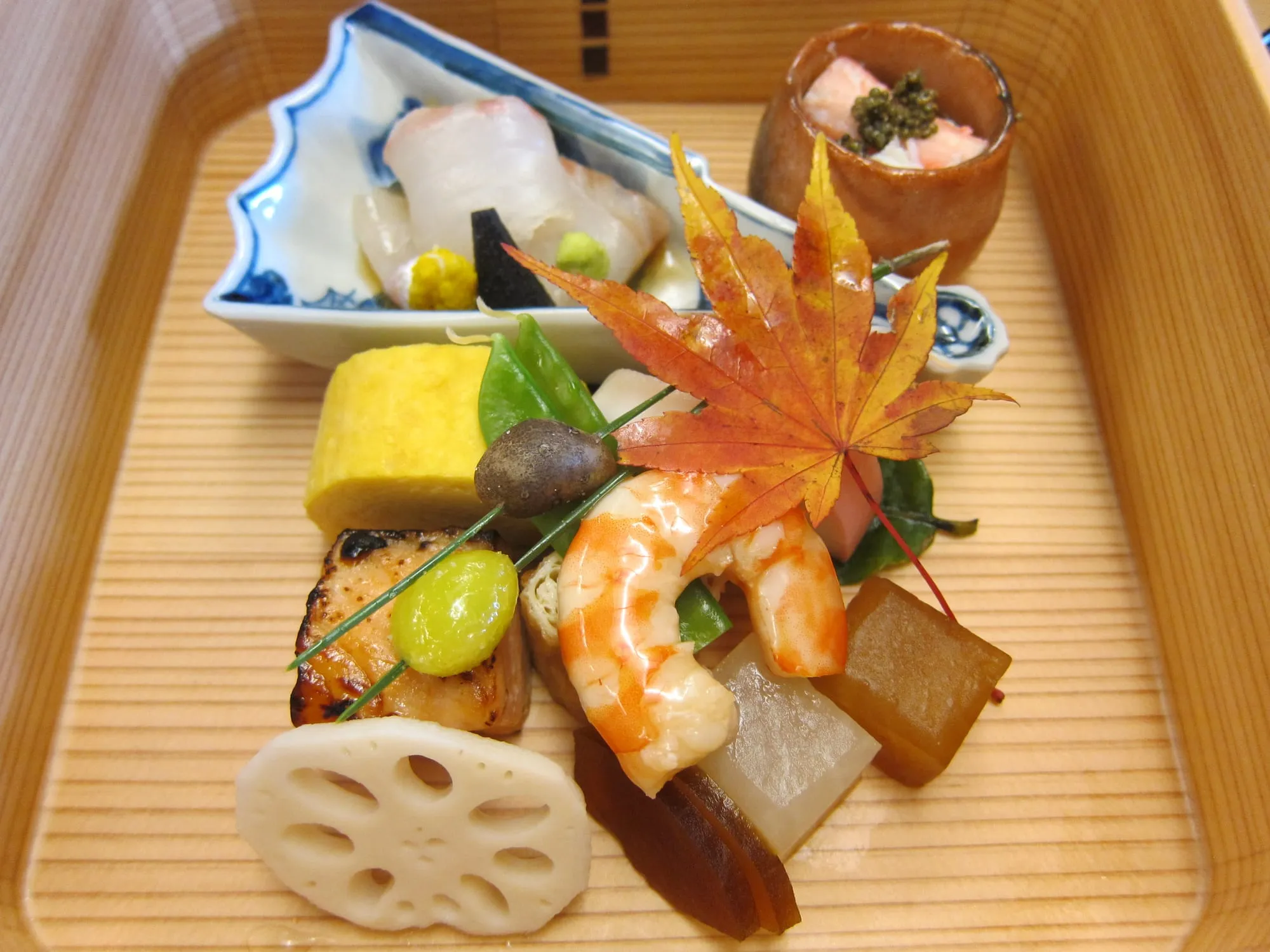
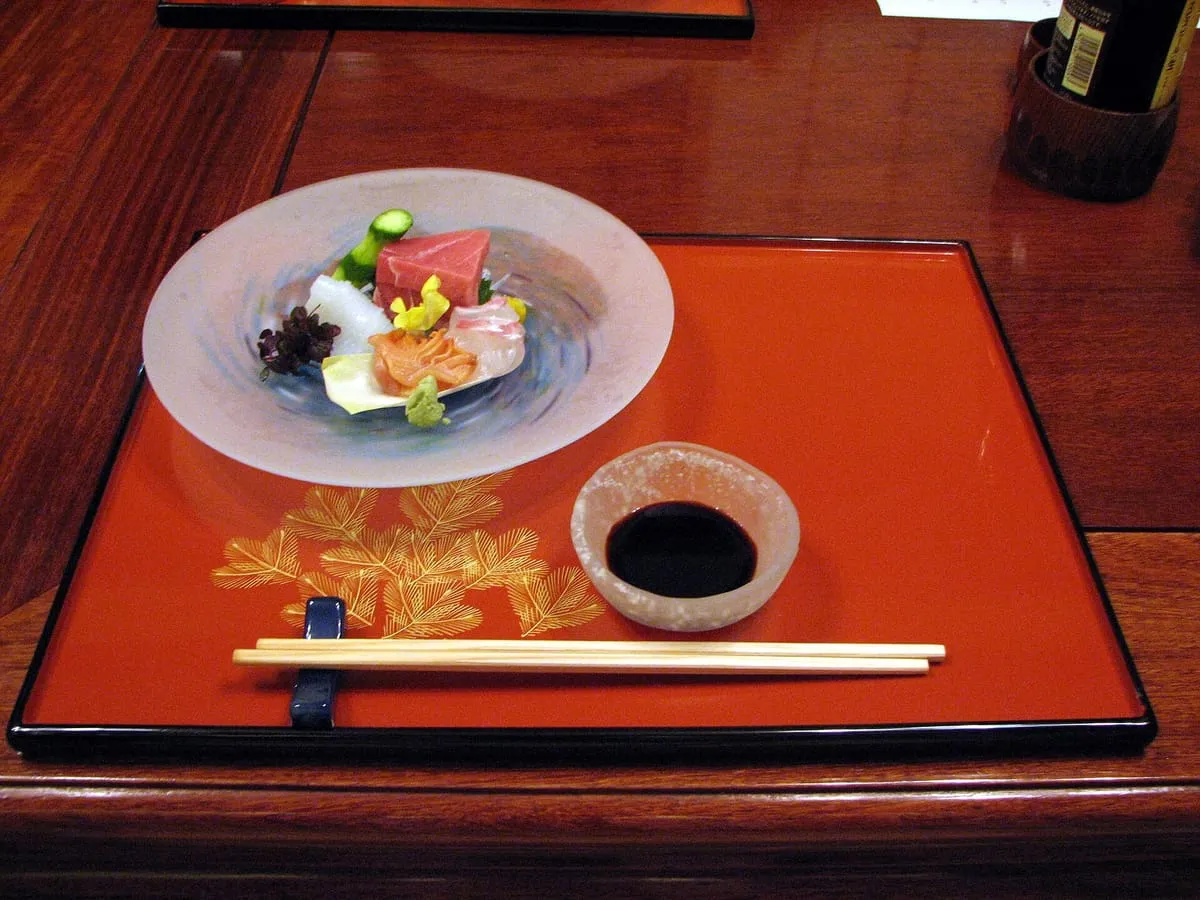 A multi-course kaiseki banquet featuring seasonal grilled fish, sashimi, and simmered vegetables. Photo: Wikimedia Commons contributor, Wikimedia Commons, CC BY-SA 3.0.
Core culinary styles and where to find them
1. Kaiseki Ryori (Haute Cuisine)
Kaiseki is the pinnacle of Japanese culinary art, consisting of eight to twelve artistic courses served sequentially. Developed originally as cha-kaiseki—the light meal served before a formal tea ceremony to prevent the strong green tea from upsetting an empty stomach—it evolved into opulent banquets served to aristocrats and warlords.
A standard kaiseki sequence includes:
- Sakizuke: A small seasonal appetiser served with an aperitif.
- Hassun: The centrepiece seasonal course, visually expressing the seasonal calendar using ingredients, flowers, and antique lacquerware.
- Mukozuke: Seasonal sashimi served with freshly grated wasabi and house soy sauce.
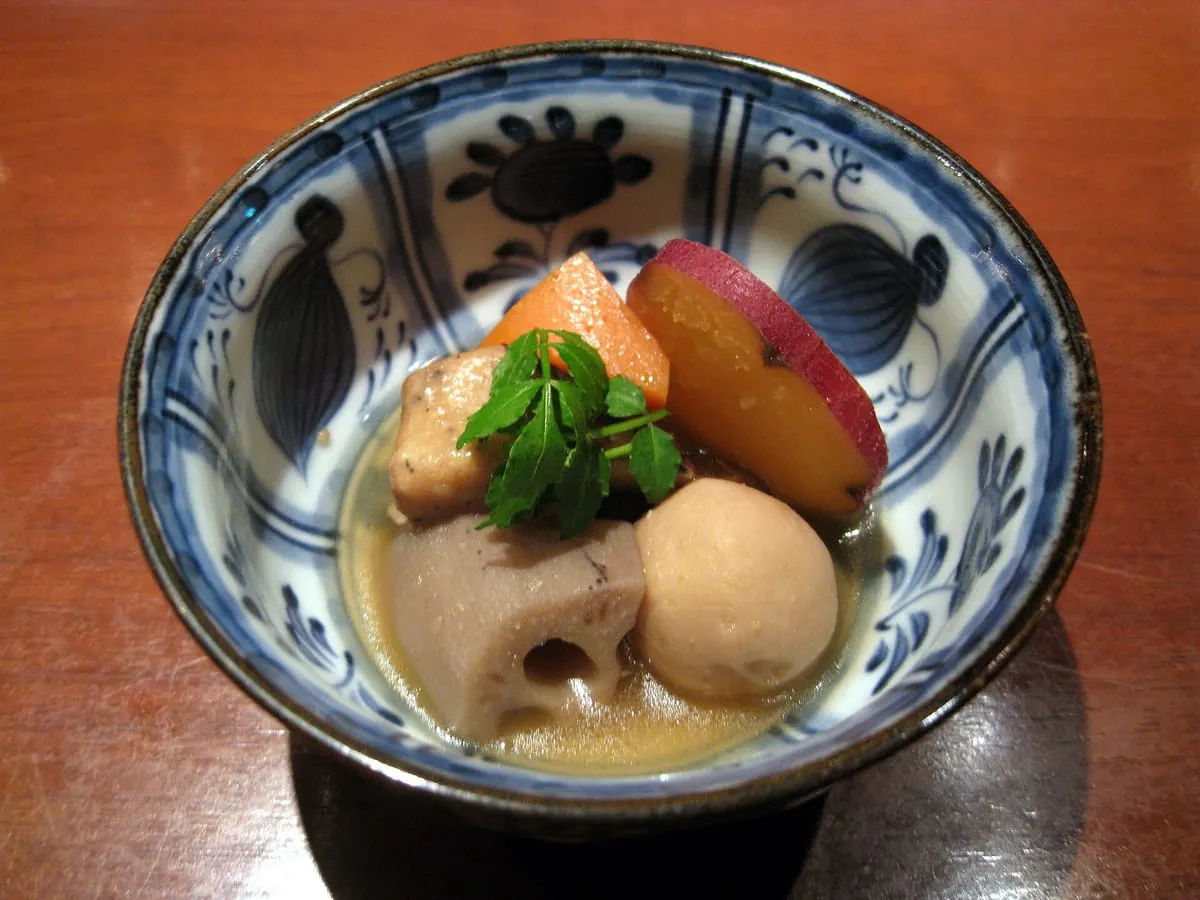
- Futamono: A lidded ceramic bowl containing simmered vegetables, fish, or duck in fragrant dashi broth.
- Yakimono: Flame-grilled seasonal fish (such as sweetfish ayu in summer or tilefish amadai in winter).
- Gohan, Tomewan & Tsukemono: Rice cooked with seasonal ingredients (such as bamboo shoots in spring or chestnuts in autumn), served with dashi-based miso soup and house pickles.
- Mizumono: Seasonal fruit or delicate matcha confection.
High-end kaiseki at renowned establishments like Kikunoi, Hyotei (operating for over 400 years near Nanzen-ji), or Gion Sasaki costs from ¥20,000 to ¥45,000+ per person for dinner. Booking 1 to 2 months in advance via platforms like TableCheck, Omakase, or hotel concierges is essential. Lunch services at top houses offer an accessible entry point, typically ranging from ¥8,000 to ¥15,000.
2. Obanzai (Kyoto Home Cooking)
Obanzai refers to traditional, seasonal home-style cooking native to Kyoto households. By local convention, at least half the ingredients must be locally grown Kyoto heirloom vegetables (Kyo-yasai) such as Kamo aubergine, Manganji sweet peppers, and Kujo scallions.
Obanzai izakayas are recognisable by rows of large earthenware bowls displayed along the wooden counter. Guests point to dishes they want to sample, such as simmered pumpkin (kabocha no nimono), grilled aubergine with sweet red miso (nasu dengaku), or soy-simmered dried daikon (kiriboshi daikon). A meal of multiple obanzai plates with beer or sake typically costs ¥3,000 to ¥5,500 per person. Popular central spots include Menami in Pontocho and Obanzai Menami near Sanjo.
 Earthenware bowls of Kyoto obanzai dishes displayed along the counter of a traditional eatery. Photo: Takoradee, Wikimedia Commons, CC BY-SA 3.0.
3. Yudofu and Shojin Ryori (Tofu and Temple Food)
Kyoto’s pristine, low-mineral soft groundwater has made it Japan’s centre for tofu production. The defining dish is Yudofu: blocks of silken or firm tofu gently simmered in a hot pot of clear kombu kelp dashi at your table, lifted with a bamboo slotted spoon, and dipped into soy sauce seasoned with scallions, grated ginger, and yuzu citrus.
The historic heart of yudofu dining is the Nanzen-ji temple district in eastern Kyoto:
- Okutan Nanzen-ji: Founded in 1635 as a vegetarian teahouse, serving set yudofu menus on tatami mats overlooking a stroll garden for roughly ¥3,500 to ¥4,500.
- Junsei: Housed in a historic 1839 villa near Nanzen-ji’s gate, offering yudofu and yuba courses from ¥3,500 to ¥6,000.
- Shigetsu (inside Tenryu-ji, Arashiyama): Serves formal Zen Buddhist vegetarian cuisine (shojin ryori) with sweeping views of the temple garden. Fixed menus cost ¥3,500, ¥5,500, or ¥8,000 (advance booking required).
4. Soba and Udon Noodles
Buckwheat soba and thick udon noodles are lunchtime staples throughout Kyoto:
- Nishin Soba at Matsuba: Kyoto’s signature noodle dish was invented in 1861 at Matsuba, located next to the Minamiza Kabuki Theatre in Gion. A fillet of dried Pacific herring (migaki-nishin), simmered for days in sweet soy, sake, and sugar, rests atop steaming buckwheat noodles in delicate dashi broth (¥1,600).
- Kitsune Udon: Thick wheat noodles topped with a large square of sweet braised fried bean curd (aburaage), priced from ¥800 to ¥1,100 at casual neighbourhood shops.
5. Kyoto Ramen
While Kyoto cuisine is celebrated for delicacy, its ramen is famously rich and concentrated:
- Honke Daiichi-Asahi: Located five minutes south of Kyoto Station, this institution has served classic Shoyu (soy sauce) ramen since 1947. Its rich pork-bone broth is topped with thin slices of domestic chashu pork and mounds of fresh Kujo scallions (¥900 to ¥1,200). Open from 06:00 to 01:00; morning queues form before 07:00.
- Kyoto Ramen Koji (Ramen Street): Located on the 10th floor of the Kyoto Station building, gathering eight regional ramen styles from across Japan. Order via multi-language ticket vending machines at the entrance of each shop (¥900 to ¥1,500).
Tours
Gion & Pontocho Evening Food Tour with Up to 13 Dishes
From ¥14,400 · 4.8 stars from 667 reviews · 3 hours · Multi-stop izakaya dinner Book on GetYourGuidead
A guided evening walk winding through Gion and Pontocho. Your guide secures counter seating at authentic local izakayas, serving up to thirteen dishes including seasonal obanzai, fresh sashimi, wagyu beef, and regional craft beer or sake.
Nishiki Market Brunch Walking Tour: 7 Tastings + Brunch
From ¥10,300 · 4.8 stars from 270 reviews · 3 hours · Morning market tour Book on GetYourGuidead
An insightful morning culinary walk through Nishiki Market. Includes seven curated tastings of seasonal pickles, savoury tamagoyaki omelettes, skewered delicacies, and a sit-down Japanese brunch at a market restaurant.
Gion Food Tour: 13 Dishes and 4 Local Eateries
From ¥11,200 · 4.8 stars from 278 reviews · 3 hours · Small-group dinner tour Book on GetYourGuidead
Visits four distinct food venues around Gion and Pontocho, sampling traditional savoury pancakes, local yakitori, sake, and dessert. Offers a relaxed small-group environment ideal for curious food lovers.
Insider Sake Brewery Tour with Sake and Food Pairing
From ¥14,000 · 4.9 stars from 881 reviews · 3 hours · Brewery tour & tasting Book on GetYourGuidead
An exceptional culinary excursion starting with market traditions before journeying to Kyoto’s historic Fushimi sake district for guided tastings across seven artisanal sake varieties paired with regional appetizers.
Dining styles in Kyoto: the prices and booking rules side by side
| Dining style | Typical price per person | When to book | Reservation method | Best area |
|---|---|---|---|---|
| High-end Kaiseki | ¥15,000 to ¥45,000+ | 1 to 2 months ahead | TableCheck, Omakase, hotel concierge | Gion, Higashiyama |
| Lunch Kaiseki / Bento | ¥6,000 to ¥12,000 | 2 to 4 weeks ahead | Official website, TableCheck | Gion, Nanzen-ji |
| Yudofu (Simmered Tofu) | ¥3,500 to ¥6,000 | 1 to 2 weeks ahead | Phone, TableCheck, or early walk-in | Nanzen-ji, Arashiyama |
| Obanzai Izakaya | ¥3,000 to ¥6,000 | 2 to 7 days ahead (or walk-in early) | Hot Pepper, TableCheck, walk-in | Pontocho, Kiyamachi |
| Ramen / Soba noodles | ¥900 to ¥1,600 | No reservations (walk-in queue) | First-come ticket vending machine | Kyoto Station, Central |
| Guided Evening Food Tour | ¥11,200 to ¥14,400 | 1 to 3 weeks ahead | Online via GetYourGuide | Gion & Pontocho |
Restaurant manners and booking rules
- Punctuality is absolute: If you hold a reservation at a kaiseki or sushi counter, arrive 5 to 10 minutes early. Japanese kitchens prepare stocks and cook courses timed to the minute of your arrival; showing up 15 minutes late can forfeit your table and trigger 100% cancellation fees.
- Cancellation penalties: Top restaurants purchase expensive fish and seasonal produce specifically for your booking. Cancellation fees of 50% to 100% within 48 to 72 hours of dining are strictly charged to your credit card.
- Table cover charge (Otoshi): In traditional izakayas and bars, a tiny dish of seasoned vegetables or seafood is placed before you alongside your first drink. This serves as a seat fee (¥300 to ¥800 per person) and is standard Japanese practice.
- No tipping: Tipping is never accepted. Service staff will politely chase you down the street to return any cash left on a bill tray.
- Shoe removal: Always wear clean, neat socks without holes. If entering an establishment with tatami matting or sunken hearth seating (horigotatsu), leave your shoes in the entryway cubbies.
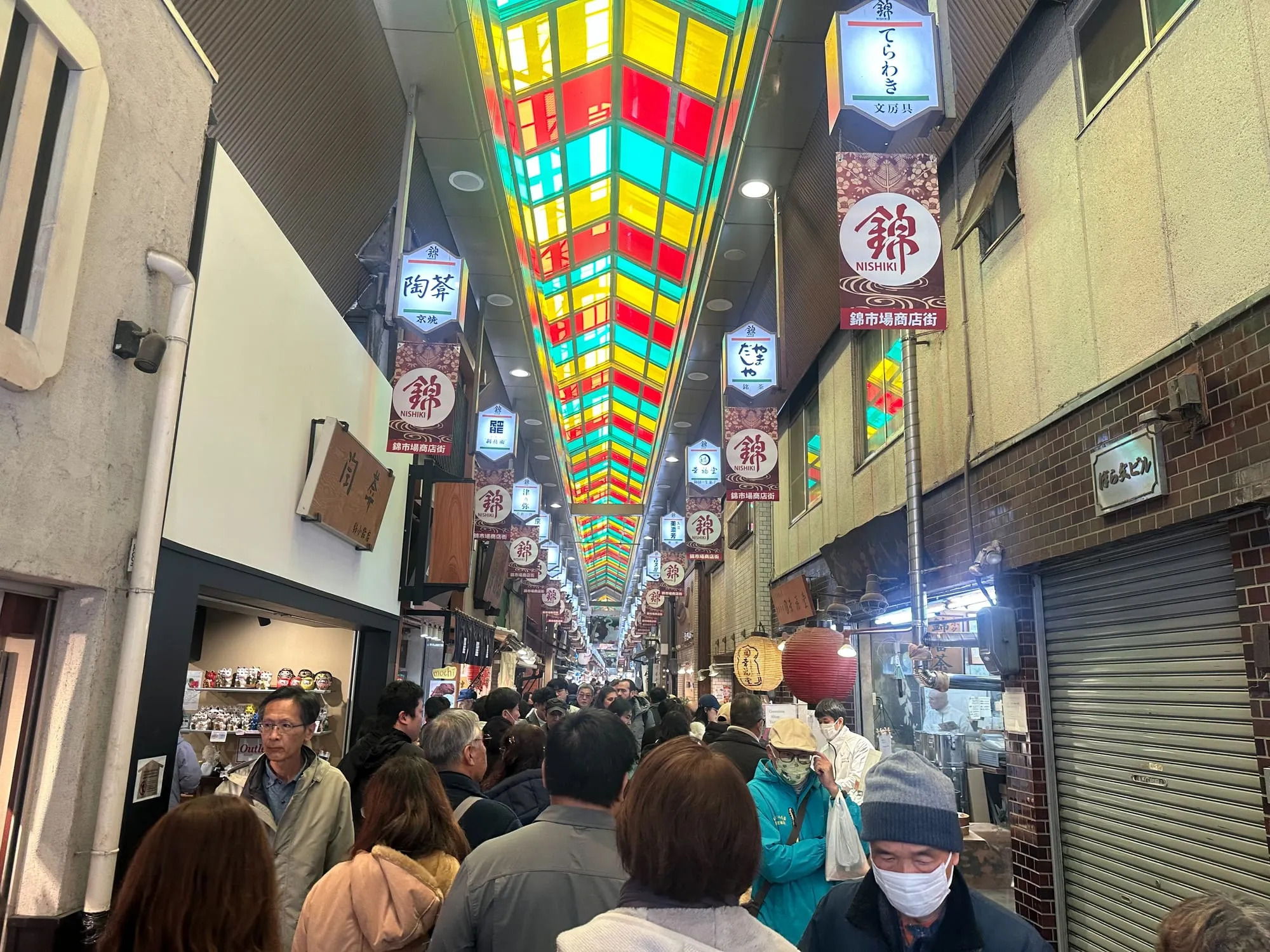
Combine your dinners with market exploration on a Kyoto food tour or browse the street snacks in our Nishiki Market guide.
Common questions
What is the defining food of Kyoto?
Kyoto's culinary identity revolves around kaiseki multi-course dining, obanzai seasonal home-style cooking, tofu and yuba dishes, and regional soba noodles.
Do I need reservations for dinner in Kyoto?
Kaiseki restaurants and popular izakayas in Pontocho and Gion require reservations weeks in advance. Casual ramen, udon, and tendon shops operate on first-come queueing.
Is tipping expected in Kyoto restaurants?
No. Tipping is not practised anywhere in Japan. Some sit-down izakayas charge a small per-person table cover fee (otoshi), which includes a small starter snack.