In this guide
💡 The Short Version: Plan your three days by geographic clusters to eliminate wasted transit across the city. Spend Day 1 in eastern Higashiyama and southern Fushimi Inari starting at sunrise. Dedicate Day 2 to western Arashiyama and northern Kinkaku-ji, and spend Day 3 exploring Nijo Castle and Nishiki Market. Or book a tour: the Kyoto Full-Day Best Highlights Tourad covers Kinkaku-ji, Arashiyama, and Fushimi Inari by coach with an English guide and Japanese lunch.
With seventeen UNESCO World Heritage Sites and more than two thousand Buddhist temples and Shinto shrines, Kyoto cannot be seen in a weekend. However, three full days are ideal for a first-time visitor to experience the city’s greatest treasures without burning out.
The secret to a successful Kyoto itinerary is twofold: clustering sights geographically (Eastern, Western, and Central) and exploiting early morning openings. While commercial shops and castle gates open at 09:00, shrines like Fushimi Inari have no gates and are open 24/7, and Kiyomizu-dera welcomes visitors at 06:00. Arriving at headline sights before 08:00 guarantees you experience spiritual serenity rather than coach tours.
Itinerary at a glance
| Day | Focus zone | Morning | Midday | Evening |
|---|---|---|---|---|
| Day 1 | South & East | Fushimi Inari Taisha (07:00) | Kiyomizu-dera, Sannenzaka & Ninenzaka | Yasaka Shrine, Gion & Pontocho Alley |
| Day 2 | West & North | Arashiyama Bamboo Grove & Tenryu-ji | Sagano Romantic Train & Hozu River | Kinkaku-ji (Golden Pavilion) & Daitoku-ji |
| Day 3 | Central Kyoto | Nijo Castle (Ninomaru Palace) | Nishiki Market street food grazing | Traditional Tea Ceremony & Kamogawa walk |
Tours
Kyoto Full-Day Best Highlights Tour with Lunch
From ¥17,800 · 4.8 stars from 1,225 reviews · 8 hours · Coach day tour Book on GetYourGuidead
Kyoto’s top-rated comprehensive day tour. Travels by air-conditioned coach between Kiyomizu-dera, the Golden Pavilion (Kinkaku-ji), Arashiyama bamboo forest, and Fushimi Inari. Includes an authentic Japanese buffet lunch, all entrance fees, and expert English narration, removing the stress of navigating crowded municipal buses.
Kyoto: Highlights Day Trip with Kiyomizu-dera & Fushimi Inari
From ¥8,800 · 4.6 stars from 1,720 reviews · 9 hours · Budget highlights tour Book on GetYourGuidead
An economical small-group coach excursion covering Kyoto’s essential cultural trinity: Fushimi Inari’s vermilion gates, Kiyomizu-dera’s cliffside stage, and Kinkaku-ji’s gilded architecture. Suits travellers wanting door-to-door transit between distant quadrants on a budget.
Kyoto and Nara 1-Day Bus Tour
From ¥13,500 · 4.6 stars from 7,725 reviews · 9–10 hours · Day trip coach Book on GetYourGuidead
Combines morning highlights in Kyoto (Kinkaku-ji and Arashiyama) with an afternoon excursion across prefectural lines to Nara Park to see the Giant Buddha at Todai-ji and the free-roaming sika deer.
Gion Magical Night Walking Tour & Geisha Culture
From ¥4,032 · 4.9 stars from 5,349 reviews · 100 minutes · Evening guided walk Book on GetYourGuidead
The perfect evening complement to your independent daytime sightseeing. Weaves through the lantern-lit preservation lanes of Gion, introducing tea houses, geiko customs, and private alley etiquette rules.
3-Day Kyoto cost breakdown: Independent vs guided options
| Travel style | Estimated cost per person | What is included | Who it suits |
|---|---|---|---|
| Independent travel (transit card + tickets) | ¥7,500 to ¥10,000 | Trains, subways, buses, entrance fees to 4 temples/castles | Self-reliant travellers comfortable using Google Maps and trains |
| Independent + 1 guided walking tour | ¥11,500 to ¥14,500 | Independent transit, entry fees, plus evening Gion walking tour | Travellers wanting freedom during the day with evening context |
| Full-Day guided highlights coach | ¥17,800 | Coach transport, all admissions, Japanese lunch, guide | First-timers short on time who want seamless transit |
| Guided coach + private tea ceremony | ¥23,000 to ¥26,000 | Coach highlights tour, tea ceremony, market tastings | Visitors seeking complete cultural immersion without booking hassles |
Day 1: Southern shrines and Eastern Higashiyama
07:00 – Fushimi Inari Taisha
Start your trip at sunrise at Fushimi Inari Taisha. Board the JR Nara Line from Kyoto Station to JR Inari Station (5 minutes, ¥150). The shrine is completely free and open 24 hours daily.
At 07:00, the morning sun slants through the tightly packed vermilion pillars of the Senbon Torii (thousands of torii gates), creating dramatic shadows along the flagstone paths. Walk through the main twin tunnels up to the Yotsutsuji intersection (30 to 45 minutes). Here, an open stone lookout offers sweeping views west across Kyoto. If you have energy, continue around the summit loop (2 hours round trip); otherwise, descend via the quiet backwoods trail past hidden moss-covered shrines.
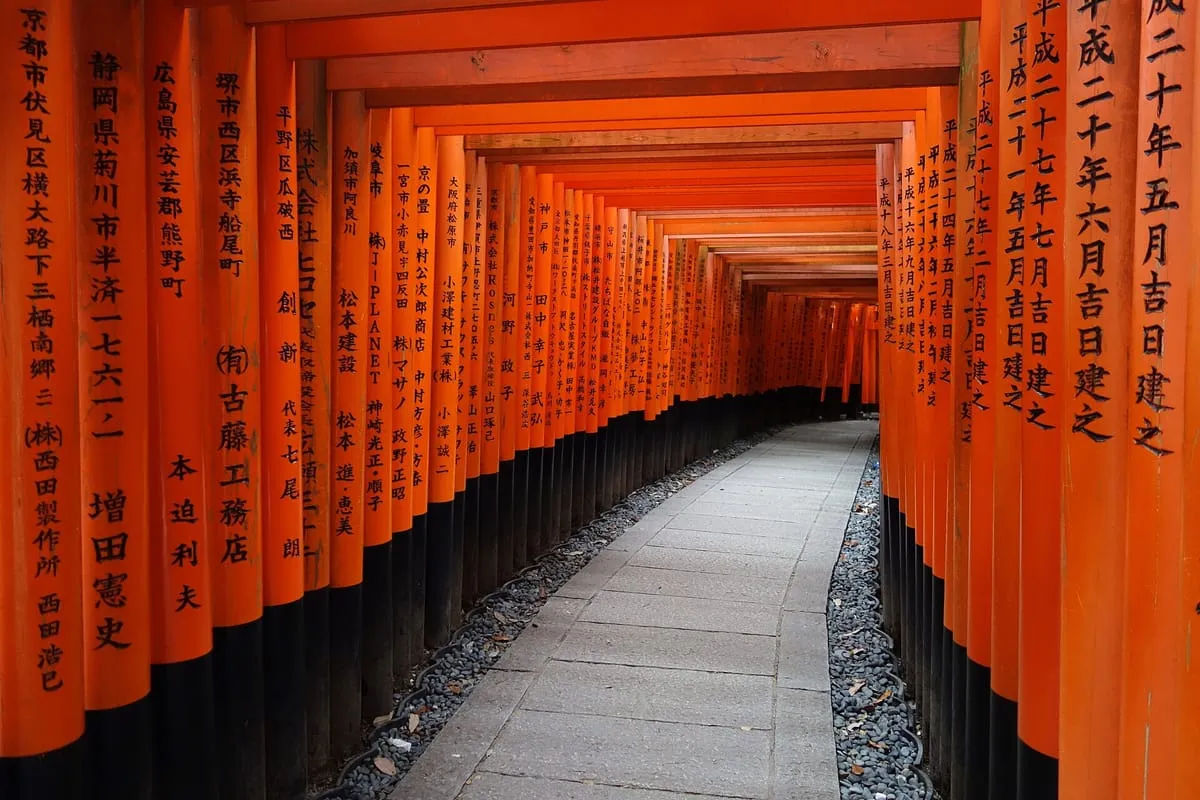 The endless corridor of vermilion torii gates winding up Mount Inari. Photo: Luka Peternel, Wikimedia Commons, CC BY-SA 4.0.
09:30 – Kiyomizu-dera Temple
From Fushimi-Inari Station, take the Keihan Main Line north to Kiyomizu-Gojo Station (8 minutes, ¥220). Walk 15 to 20 minutes east up Gojo-zaka hill to the entrance of Kiyomizu-dera (admission ¥500 cash; opens daily at 06:00).
Cross the dramatic wooden stage of the Hondo (Main Hall), cantilevered 13 metres above the valley floor using interlocking Japanese zelkova timbers without a single nail. Descend the stone staircase to drink from the sacred streams of the Otowa Waterfall (Otowa no Taki), using long-handled metallic cups to catch water believed to grant health, academic success, or love.
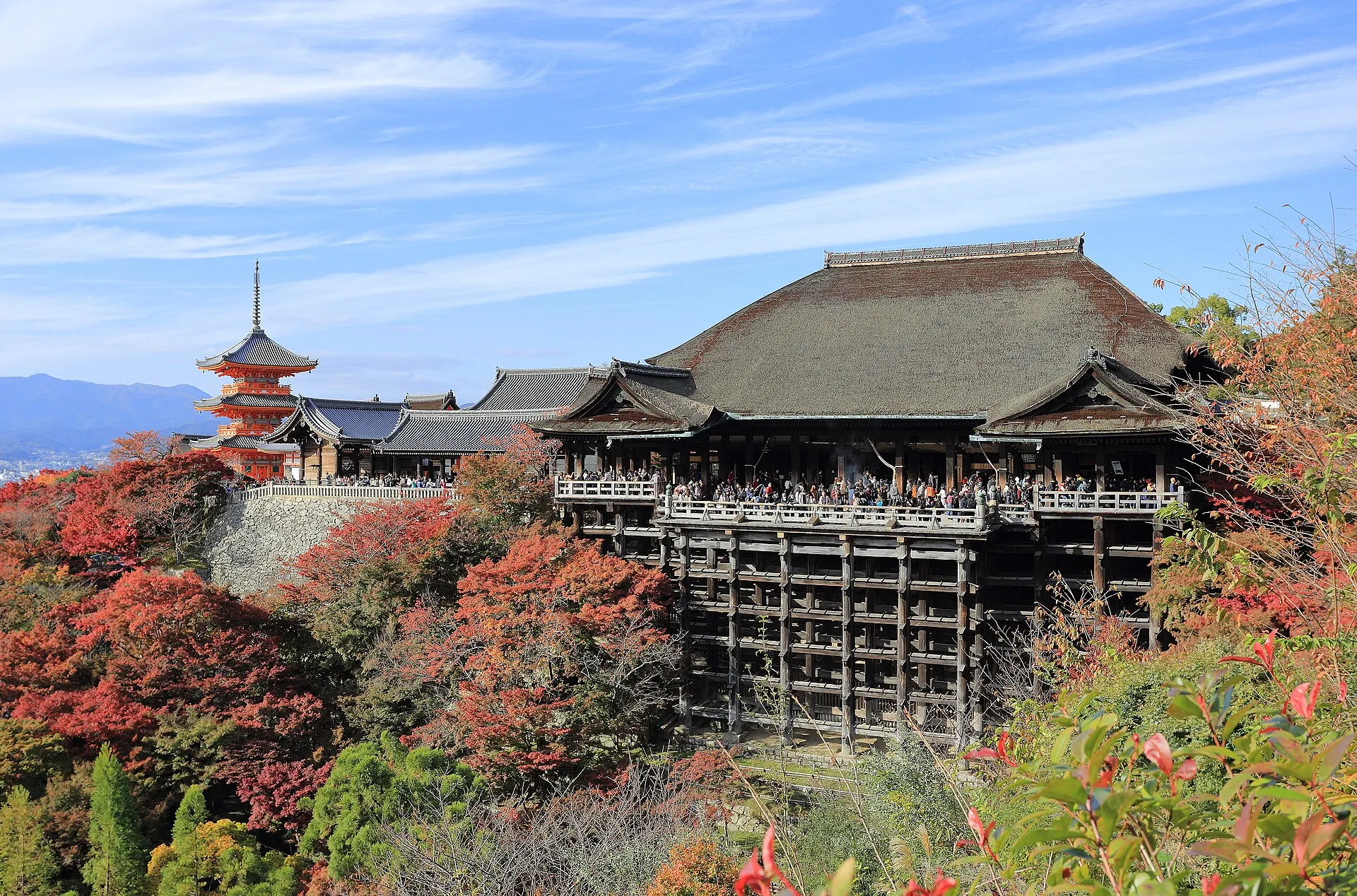 The massive wooden stage of Kiyomizu-dera cantilevered over the wooded Higashiyama hillside. Photo: Martin Falbisoner, Wikimedia Commons, CC BY-SA 4.0.
11:30 – Sannenzaka, Ninenzaka, and lunch
Leave Kiyomizu-dera through the preserved historic pedestrian quarters of Matsubara-dori, Sannenzaka, and Ninenzaka. These stone-flagged steps are lined with restored two-storey wooden machiya housing Kiyomizu-yaki ceramic workshops, incense purveyors, and teahouses.
Stop for a lunch of handmade buckwheat noodles or yuba (tofu skin) soup at a traditional noodle shop along Sannenzaka. Continue past Kodai-ji Temple along the willow-lined stone lane of Nene-no-Michi into Maruyama Park.
15:30 – Yasaka Shrine, Gion, and Pontocho Alley
Emerge from Maruyama Park into the courtyard of Yasaka Shrine. Admire the lantern-hung central dance stage before stepping through the vermilion West Gate onto Shijo-dori into Gion.
Wander southern Hanami-koji down to Kennin-ji Zen temple (admission ¥600), Kyoto’s oldest Zen monastery. Around dusk (17:30 to 18:30), stroll along the weeping willows of the Shirakawa canal. Cross the Shijo Bridge over the Kamo River to conclude your evening with dinner along lantern-lit Pontocho Alley.
Day 2: Western Arashiyama and northern temples
07:30 – Arashiyama Bamboo Grove and Tenryu-ji
Take the JR San-in (Sagano) Line from Kyoto Station to Saga-Arashiyama Station (17 minutes, ¥240). Walk 10 minutes west to enter the Arashiyama Bamboo Grove. Arriving by 07:30 allows you to experience the soaring emerald culms swaying in the breeze without tourist congestion.
At 08:30, enter the northern gate of Tenryu-ji Temple (admission ¥500 for gardens, ¥300 extra for palace buildings). Stroll around Sogenchi Garden, a 14th-century pond garden designed by Zen master Muso Soseki that incorporates the surrounding forested Arashiyama mountains as “borrowed scenery” (shakkei).
10:00 – Sagano Romantic Train or Monkey Park
From Tenryu-ji, you have two morning options:
- Sagano Scenic Railway: Board the Sagano Romantic Trainad{rel=“sponsored nofollow noopener”} from Torokko Saga Station to Torokko Kameoka Station (25 minutes, ¥880). The retro diesel train winds through the steep gorges of the Hozu River. Return by JR train from JR Umahori Station to Saga-Arashiyama (¥200).
- Iwatayama Monkey Park: Cross the historic timber Togetsukyo Bridge and hike 20 minutes up Mount Arashiyama (admission ¥600) to observe over one hundred wild Japanese macaques and enjoy views over Kyoto.
13:30 – Kinkaku-ji (The Golden Pavilion)
From Arashiyama, take the Keifuku Electric Railroad (Randen tram) from Arashiyama Station to Katabiranotsuji, transfer to the Kitano Line, and ride to the terminal at Kitano-Hakubaicho (20 minutes, ¥250). From there, take City Bus 204 or 205 for 7 minutes to the Kinkakuji-michi stop (¥230).
Enter Kinkaku-ji (admission ¥500 cash; open daily 09:00 to 17:00). The top two floors of the Shariden pavilion are covered in pure gold leaf, reflected symmetrically across the Kyoko-chi (Mirror Pond). Follow the circular garden path past the An-mintaku pond and the Sekkatei teahouse.
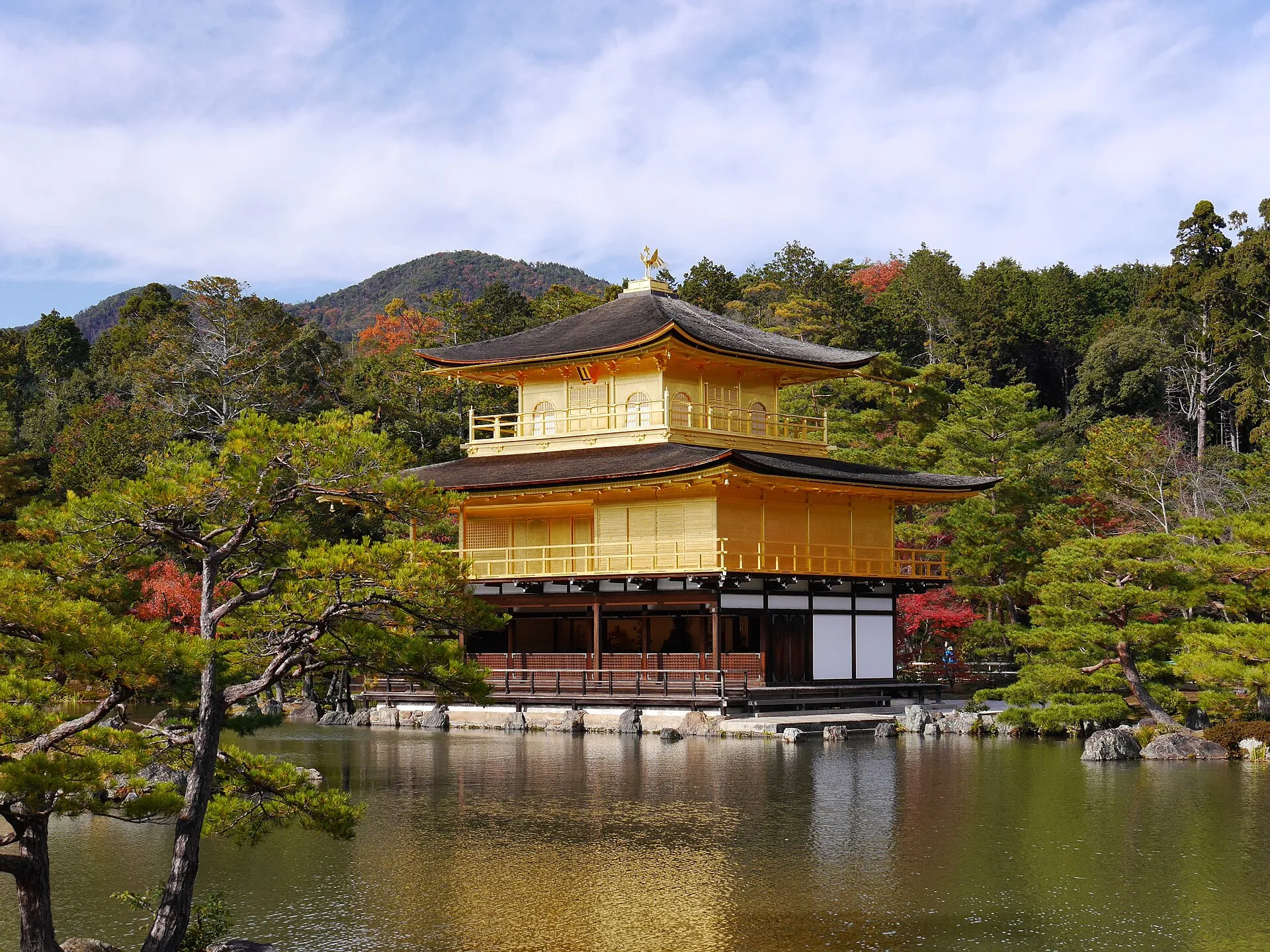 The top two gold-leaf storeys of Kinkaku-ji reflected in the waters of the Mirror Pond. Photo: Jaycangel, Wikimedia Commons, CC BY-SA 3.0.
15:30 – Daitoku-ji Zen Sub-temples
Take City Bus 205 east for 10 minutes to Daitoku-ji-mae. Daitoku-ji is a walled city of Zen temples covering several blocks. Visit Daisen-in (admission ¥400), renowned for its dry rock landscape garden created in 1509 representing the river of human life, or Ryogen-in (¥350), featuring Japan’s smallest stone garden (Totekiko).
Day 3: Central Kyoto, markets and culinary arts
09:00 – Nijo Castle
Take the Tozai Subway Line to Nijojo-mae Station. Enter Nijo Castle (admission ¥800 for grounds, ¥1,300 including Ninomaru Palace; open 08:45 to 17:00). You can reserve your Nijo Castle ticketad{rel=“sponsored nofollow noopener”} online to bypass ticket queues.
Enter the Ninomaru Palace through the gold-adorned Karamon Gate. Walk through the 33-room palace across the famous uguisubari (nightingale floors), engineered to chirp underfoot like birds as a security measure against ninja assassins. Admire the painted cedar sliding screens (fusuma) by the Kano School depicting prowling tigers and ancient pines.
11:30 – Nishiki Market food graze
From Nijo Castle, take the Tozai Subway Line to Karasuma-Oike, transfer to the Karasuma Line, and ride one stop south to Shijo Station (¥220). Walk 3 minutes east into Nishiki Market, Kyoto’s five-block food arcade.
Graze on street-side delicacies: dashi-rolled omelettes (dashimaki tamago) at Tanaka Keiran (¥350), sweet baby octopus skewers with quail eggs (¥500), fresh yuba skin (¥400), and warm soy milk doughnuts at Konna Monja (¥350 for 6). Remember the market’s strict tabearuki rule: eat your snack standing beside the stall before moving on.
14:00 – Kyoto Imperial Palace or Museum
Walk north up Karasuma-dori to the Kyoto Imperial Palace (Kyoto Gyoen). Entrance to the historic walled palace is completely free (open until 16:30, closed Mondays). Stroll through the gravel courtyards and admire the classical Heian-style architecture of the Shishinden ceremonial hall.
16:30 – Traditional Tea Ceremony
End your stay with an authentic Kyoto tea ceremony experience. Learn the meditative Zen choreography established by Sen no Rikyu, sample a handcrafted seasonal wagashi confection, and whisk your own bowl of frothy matcha green tea.
Have more time in the Kansai region? Expand your trip with our 5 days in Kyoto itinerary or plan easy day excursions using our guide to day trips from Kyoto.
Common questions
Is 3 days enough for a first trip to Kyoto?
Three full days cover Kyoto's headline sights comfortably: the southern shrines, eastern Higashiyama temples, western Arashiyama bamboo groves, and central castles and markets.
What should I do on day one in Kyoto?
Start at Fushimi Inari Taisha before 07:30 to walk the torii tunnels crowd-free, continue to Kiyomizu-dera, walk down Ninenzaka and Sannenzaka, and finish the evening exploring Gion and Pontocho Alley.
How do I travel between sights during the 3 days?
Use an ICOCA transit card on JR trains, the Karasuma and Tozai subway lines, Keihan Railway, and city buses. Avoid using buses during peak afternoon traffic when trains run faster.