In this guide
💡 The Short Version: Travel from Asakusa to Tobu-Nikko on Tobu’s Spacia or Spacia X limited express (1 hour 50 minutes). For independent day trips, buy the Nikko Pass World Heritage Area (¥3,000 for 2 days), which covers return train travel from Asakusa and local shrine loop buses, and buy your Spacia limited express seat separately (from ¥1,470 each way). If you wish to reach Lake Chuzenji and Kegon Falls, buy the Nikko Pass All Area (¥8,000 for 4 days), but note that autumn traffic jams in October and November can delay mountain buses by over two hours. Or book a tour: an organized day excursion like Nikko: Kegon Falls, Lake Chuzenji & Toshogu Templead (from ¥12,437, 4.6 stars from 2,536 reviews) bundles coach transport, shrine admission, and lunch without rural bus transfers. All prices are in Japanese yen (¥).
Comparing travel options: independent train vs guided tour
Deciding between independent train travel and an organized coach tour depends largely on whether you intend to visit only the historic town shrines or explore the high mountain lakes and waterfalls.
| Travel method | Cost per adult | Sights covered | Transit logistics | Best for |
|---|---|---|---|---|
| Tobu Train + World Heritage Pass | ¥5,940 (Pass ¥3,000 + ¥2,940 Spacia seats) + ¥1,600 Toshogu | Toshogu, Rinnoji, Futarasan, Shinkyo Bridge | 1h50 train each way + 10-minute local bus | Travellers focusing purely on UNESCO shrines and architecture |
| Tobu Train + All Area Pass | ¥10,940 (Pass ¥8,000 + ¥2,940 Spacia seats) + ¥1,600 Toshogu | Shrines + Lake Chuzenji + Kegon Falls | Train + mountain switchback bus (vulnerable to autumn traffic) | Multi-day travellers or off-peak day trips wanting mountain scenery |
| Guided Coach Tour from Tokyo | From ¥12,438–¥14,400 | Toshogu, Kegon Falls, Lake Chuzenji | Direct door-to-door coach from Tokyo; bilingual guide | Hassle-free day trip covering both town and alpine waterfalls |
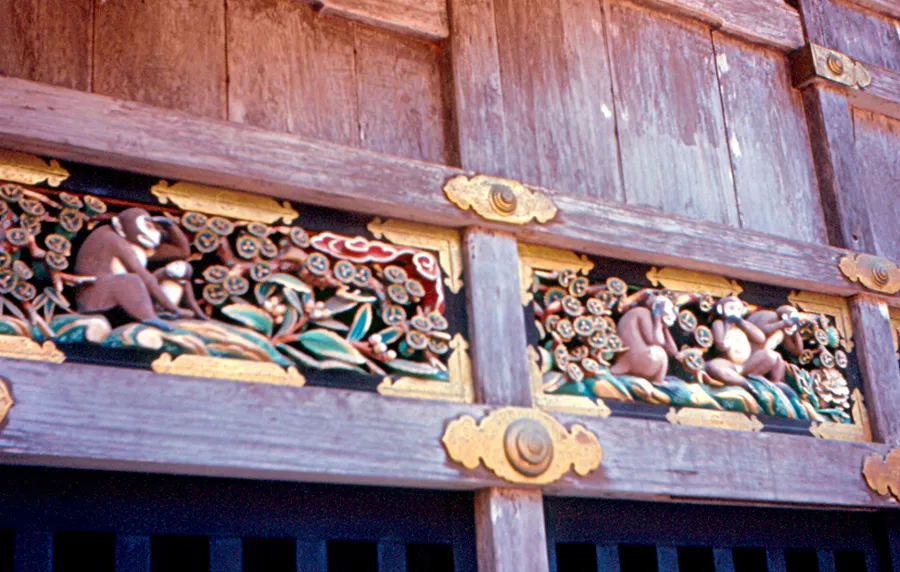
The Three Wise Monkeys wood carving on the Sacred Stable at Toshogu Shrine. Photo: Roger W from Sarasota, Florida, U.S.A., Wikimedia Commons, CC BY-SA 2.0.
Exploring Nikko’s UNESCO World Heritage shrines
Situated two hours north of Tokyo in Tochigi Prefecture, Nikko has been a sacred center of mountain Shinto and Buddhist asceticism since the 8th century. In 1617, it was chosen as the final resting place of Tokugawa Ieyasu, the founder of the Edo shogunate.
The “Shrines and Temples of Nikko” complex was designated a UNESCO World Heritage site in 1999, comprising 103 religious structures across three primary institutions:
1. Toshogu Shrine
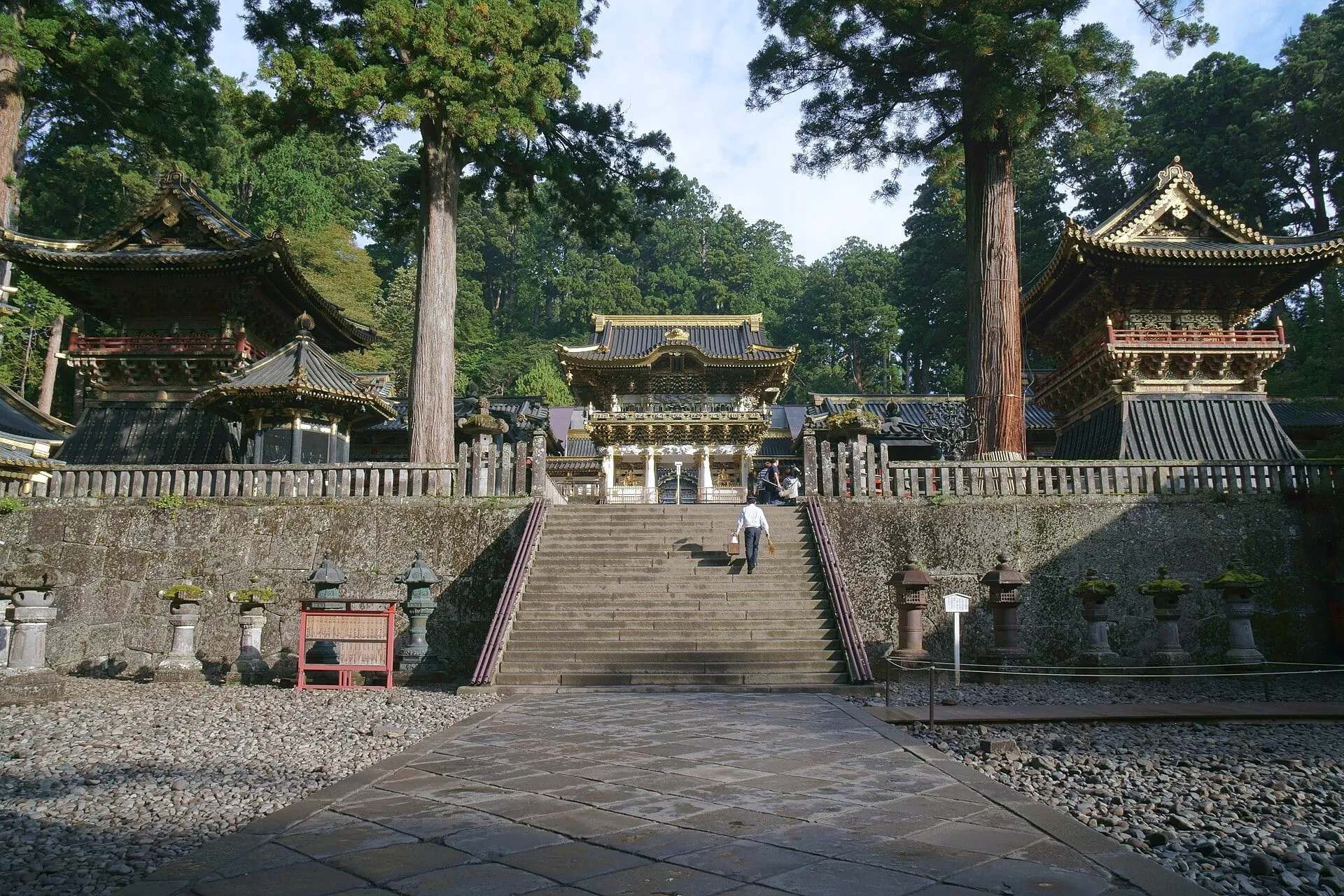
Unlike the austere, unpainted timber typical of Japanese Shinto shrines, Toshogu is a riot of colour, gold leaf, and intricate polychrome wood carvings reflecting late Momoyama and early Edo architectural exuberance.
- Yomeimon Gate: Known as the “Twilight Gate” because onlookers could gaze at its details until sunset without tiring, Yomeimon contains over 500 carvings of mythical dragons, Chinese sages, children at play, and auspicious beasts.
- The Sacred Stables (Shinkyusha): Features eight sequential relief panels depicting the stages of human life allegorized through monkeys, including the world-famous trio: Mizaru (see no evil), Kikazaru (hear no evil), and Iwazaru (speak no evil).
- Nemuri-neko (Sleeping Cat): A small wood carving over the gateway leading to Ieyasu’s hilltop mausoleum. Carved by master sculptor Hidari Jingoro, the cat sleeps peacefully while sparrows play on the reverse side, symbolizing the dawn of lasting peace under the Pax Tokugawa.
- Admission: ¥1,600 for adults, ¥450 for children. Open 09:00 to 17:00 (closes at 16:00 between November and March). Last entry 30 minutes before closing.
2. Rinnoji Temple
Founded by the Buddhist monk Shodo Shonin in 766 AD, Rinnoji is Nikko’s most significant Tendai Buddhist temple. Its main hall, the Sanbutsudo (Three Buddha Hall), is one of eastern Japan’s largest wooden structures, housing monumental eight-metre gold-lacquered statues of Amida Buddha, Senju Kannon (Thousand-Armed Kannon), and Bato Kannon (Horse-Headed Kannon).
3. Futarasan Shrine and the Shinkyo Bridge
Dedicated to the Shinto deities of Mount Nantai, Futarasan Shrine is the oldest religious compound in Nikko. At the entrance to the holy mountains stands the sacred Shinkyo Bridge, an arched vermilion wooden bridge built across the roaring turquoise torrent of the Daiya River. Crossing the bridge costs ¥300, though photographing it from the adjacent road bridge is free.
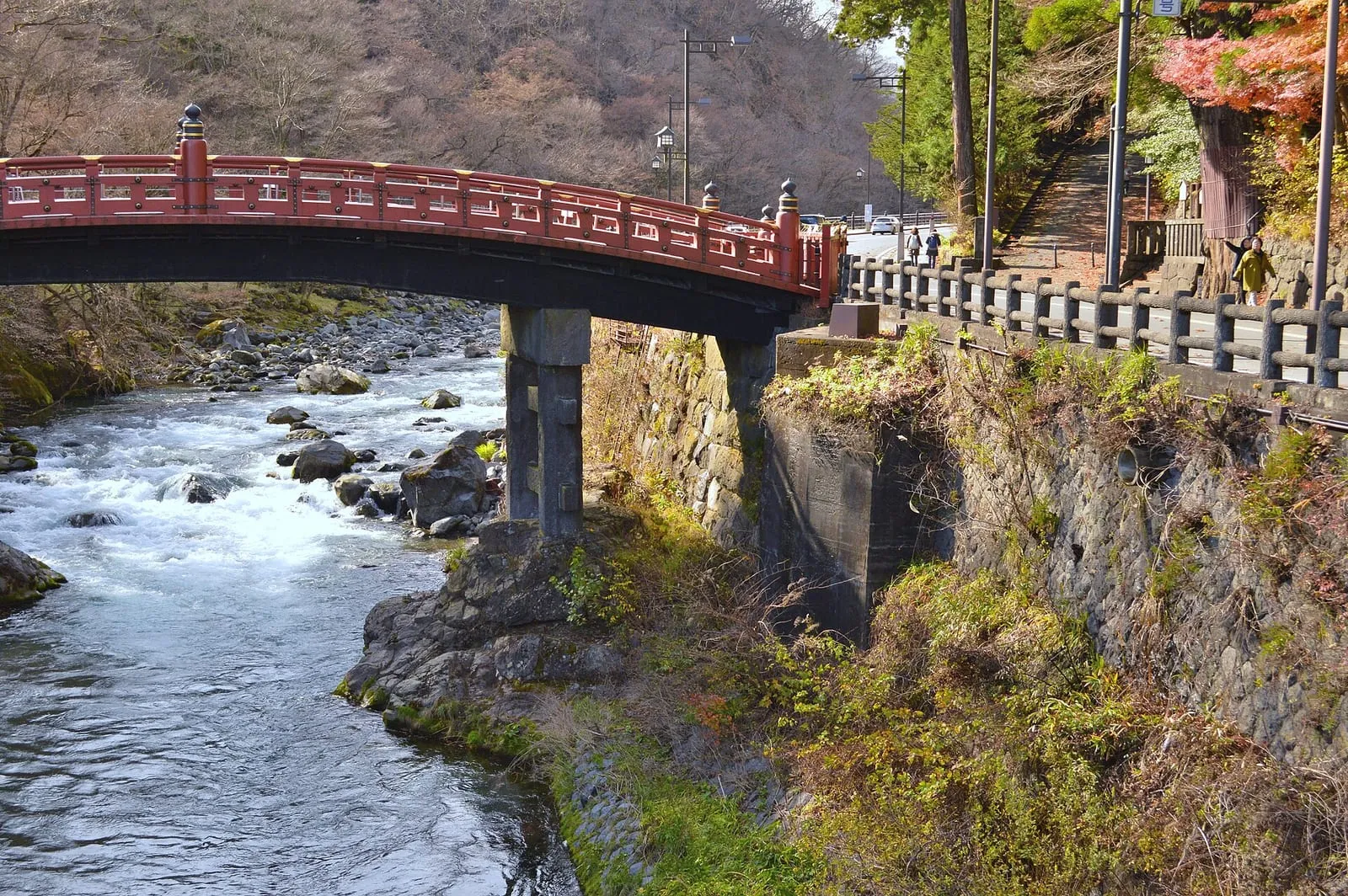
The sacred vermilion Shinkyo Bridge over the Daiya River in Nikko. Photo: Saigen Jiro, Wikimedia Commons, CC0.
Okunikko: waterfalls and alpine lakes
Higher into the mountains lies the Okunikko region of Nikko National Park:
- Kegon Falls (Kegon no Taki): The outlet of Lake Chuzenji plunges nearly 100 metres straight down a sheer lava cliff, making it one of Japan’s three celebrated waterfalls. While an upper viewing platform is free, an elevator carved through solid rock descends 100 metres to a lower observation deck (¥570 for adults) right at the base of the plunging pool.
- Lake Chuzenji (Chuzenjiko): A natural dammed volcanic caldera lake 1,269 metres above sea level at the foot of Mount Nantai. Sightseeing pleasure boats cruise the lake between mid-April and 30 November (covered by the Nikko Pass All Area).
- Akechidaira Ropeway suspension notice: The cable car ascending to the panoramic Akechidaira plateau lookout is officially suspended for extensive technical renewal from 16 January 2026 until 31 August 2027.
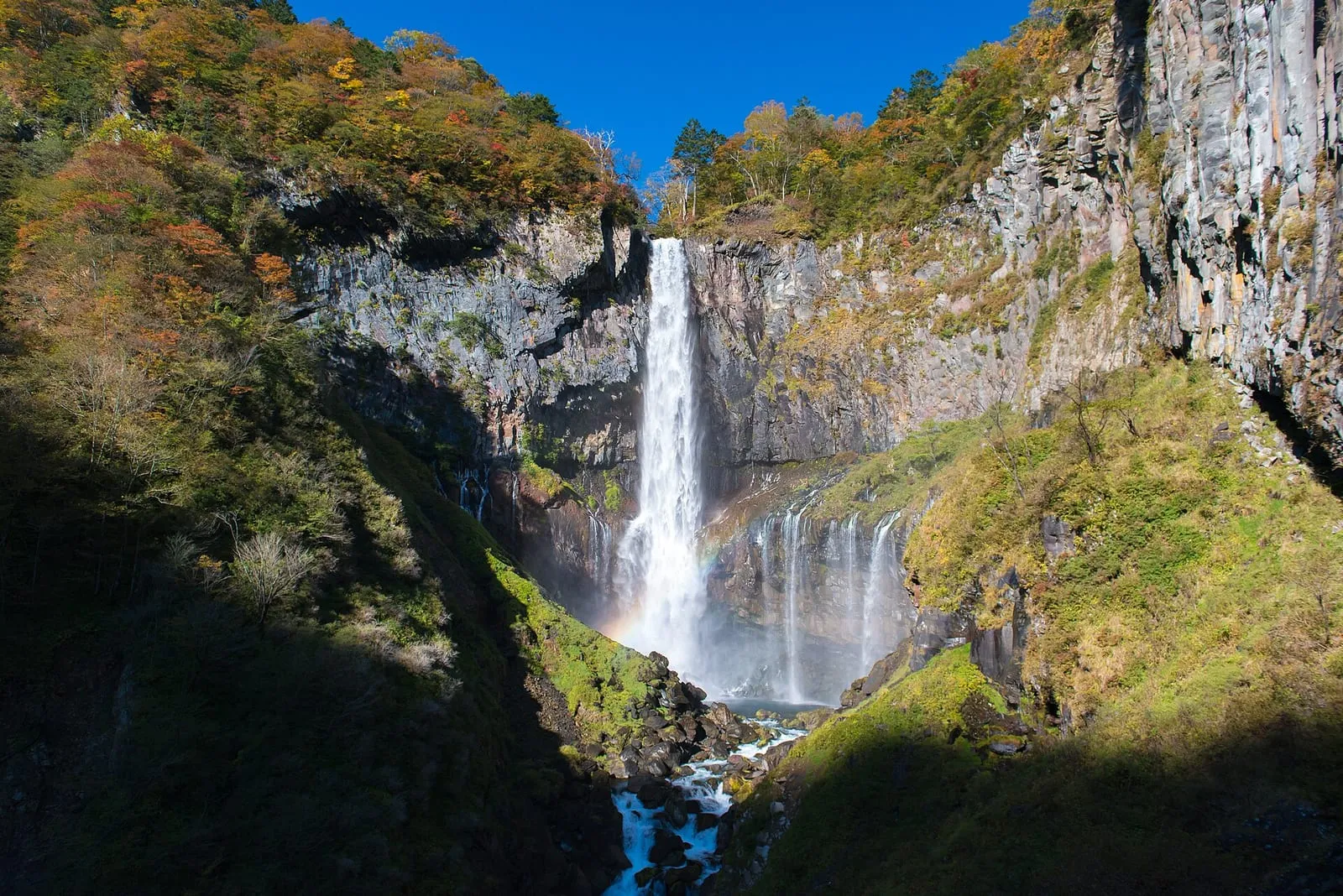
Kegon Falls dropping 97 metres into the canyon amid autumn foliage. Photo: Jordy Meow, Wikimedia Commons, CC BY-SA 3.0.
Transport passes and train options
Tobu Railway from Asakusa
The private Tobu Railway is the standard rail operator serving Nikko:
- Spacia & Spacia X Trains: Direct limited express trains depart from Tobu Asakusa Station, reaching Tobu-Nikko Station in 1 hour 50 minutes. The futuristic Spacia X (Series N100) features luxury seating configurations including cockpit suites, premium lounge seats, and an artisanal craft beer and coffee cafe.
- Nikko Pass World Heritage Area: Costs ¥3,000 for adults (¥1,500 children). Valid for 2 days. Covers standard train travel between Asakusa and Shimo-Imaichi, connection to Tobu-Nikko, and local World Heritage loop buses connecting Tobu-Nikko Station, JR Nikko Station, Shinkyo Bridge, and Toshogu.
- Nikko Pass All Area: Costs ¥8,000 for adults (¥4,000 children). Valid for 4 days. Covers everything in the World Heritage pass plus all regional Tobu buses through Okunikko (up to Lake Chuzenji, Ryuzu Falls, and Yumoto Onsen), the Lake Chuzenji cruise boat, and regional trains to Kinugawa Onsen.
- Where to buy: Purchase digital passes via Tobu Japan Trip Tickets, or physical passes at the Tobu Tourist Information Center at Asakusa Station. Passes are reserved exclusively for overseas tourists.
JR East limited express from Shinjuku
For holders of the JR Tokyo Wide Pass (¥16,000), direct Spacia Nikko trains depart from Shinjuku and Ikebukuro stations, using JR track to Kurihashi before switching over onto Tobu metals to reach Tobu-Nikko in 2 hours. Note that standard nationwide Japan Rail Passes do not fully cover this joint route unless a surcharge is paid for the Tobu segment.
Popular guided Nikko day excursions
Organized tours eliminate the stress of local bus connections and provide guided historical context on the samurai shogunate.
Nikko: Kegon Falls, Lake Chuzenji & Toshogu Temple
From ¥12,437 · 4.6 stars from 2,536 reviews · 10.5 hours
The Nikko: Kegon Falls, Lake Chuzenji & Toshogu Templead is the benchmark full-day Nikko excursion from Tokyo. Departing by coach from central Tokyo, the tour includes guided entrance to Toshogu Shrine, a scenic drive up the Irohazaka highway, an authentic Japanese lunch, and viewing stops at Lake Chuzenji and Kegon Falls.
Tokyo: Nikko Toshogu Shrine and Kegon Waterfall Tour
From ¥13,946 · 4.5 stars from 1,598 reviews · 10.5 hours
The Tokyo: Nikko Toshogu Shrine and Kegon Waterfall Tourad is a verified bestseller covering the same comprehensive circuit, with morning pickup options across primary Tokyo hotel hubs and dedicated bilingual tour leaders.
From Tokyo: Guided Day Trip to Nikko World Heritage Sites
From ¥14,400 · 4.7 stars from 82 reviews · 10 hours
The From Tokyo: Guided Day Trip to Nikko World Heritage Sitesad focuses primarily on the cultural and spiritual depth of the shrine and temple complex, allocating extensive time to examine Toshogu’s architectural craftsmanship, Rinnoji’s halls, and Futarasan’s cedar groves.
Where to go next
Nikko is one of the most culturally rewarding day excursions from Tokyo. To compare it with other excursions, read our complete guide to day trips from Tokyo. If you prefer coastal samurai shrines and beaches, consult our Kamakura day trip guide. For volcano landscapes and onsen, see Hakone day trip and Mount Fuji day trip.
If you are departing from Asakusa, combine your journey with our self-guided Asakusa, Ueno and Yanaka walk or visit Senso-ji Temple. For transit pass rules, read Japan Rail Pass worth it and Tokyo public transport, and explore all top capital attractions on the Tokyo hub.
Common questions
How do you travel from Tokyo to Nikko?
Take Tobu Railway's Spacia or Spacia X limited express from Asakusa Station directly to Tobu-Nikko Station in approximately 1 hour 50 minutes. Alternatively, joint JR-Tobu limited express trains depart from Shinjuku and Ikebukuro in about 2 hours, though these require JR ticketing and are not covered by Tobu's tourist passes.
How much is the Tobu Nikko Pass?
The Nikko Pass All Area costs ¥8,000 for adults and ¥4,000 for children (valid for 4 days), covering trains from Asakusa and all Tobu buses across the national park up to Lake Chuzenji and Yumoto Onsen. The Nikko Pass World Heritage Area costs ¥3,000 for adults and ¥1,500 for children (valid for 2 days), covering trains and local buses within the heritage shrine district.
Do the Nikko Passes include the limited express seat surcharge?
No. The Nikko Passes cover the base train fare. To ride the Spacia or Spacia X limited express, passengers must purchase a separate reserved-seat express ticket (roughly ¥1,470 to ¥1,940 one-way).
How much are tickets to Nikko Toshogu Shrine?
Admission to Toshogu Shrine costs ¥1,600 for adults (high school and above) and ¥450 for primary and junior high school students. A combination ticket including the Toshogu Treasure Museum costs ¥2,400 for adults and ¥1,000 for children. The shrine is open 365 days a year from 09:00 to 17:00 (closing at 16:00 from November to March).
Why are there major bus delays in Nikko during autumn?
During the peak autumn foliage season (mid-October through November), vehicular traffic along the winding Irohazaka switchback highway between Nikko town and Lake Chuzenji causes severe bottlenecks. Bus journeys that normally take 45 minutes can experience delays exceeding two hours.