In this guide
💡 The Short Version: Kinkaku-ji is open daily from 09:00 to 17:00 (last entry 16:40), costing ¥500 in cash at the gate (¥300 for junior high and primary pupils). There are no advance tickets online; your ticket is an inscribed paper protective talisman (ofuda). You cannot go inside the pavilion, but the circular path round Mirror Pond (Kyoko-chi) gives clear views of the gilded upper storeys. To avoid bus queues from Kyoto Station, take the Karasuma Subway to Kitaoji first. Or book a tour: when you want to see western and southern Kyoto without juggling city bus connections, the early morning tour of Fushimi Inari, Arashiyama and Kinkakujiad (from ¥11,775, 4.9 stars from 1,793 reviews) covers the headline sights by coach before peak crowds.
The official tickets
Official admission prices from the temple administration (shokoku-ji.jp/kinkakuji). Individual tickets are sold exclusively in cash at the entrance gate ticket booths.
| Ticket category | Price | Notes |
|---|---|---|
| Adult and high school students | ¥500 | Includes paper talisman (ofuda) entry pass |
| Junior high and primary pupils | ¥300 | Valid for ages 6 to 15 |
| Children under 6 | Free | Accompanied by an adult |
| Official garden guidebook | ¥1,000 | Available at the main temple kiosk |
- Cash only: Credit cards, IC cards (Suica, ICOCA), and digital mobile wallets are not accepted at the ticket counter. Prepare exact change or small denomination notes before queueing.
- Ticket talisman: The entrance ticket is printed with black calligraphy and vermilion seals as an auspicious talisman (ofuda) meant to bring safety and prosperity; visitors keep it as a memento.
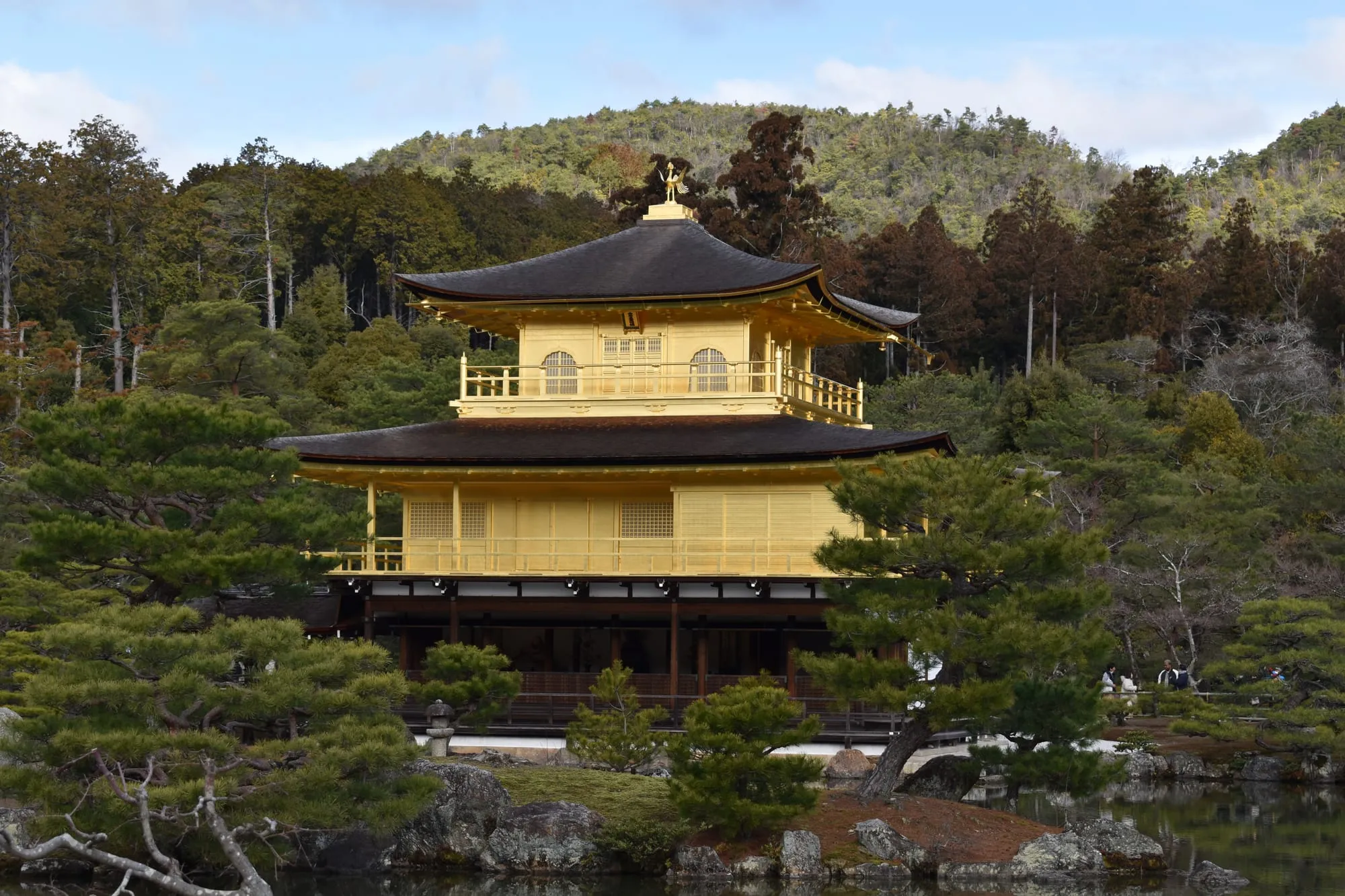
- Interior access: The interior of the Golden Pavilion (Shariden) is strictly closed to the general public. Visitors walk along a paved, barrier-free one-way garden circuit that frames the pavilion from several angles.
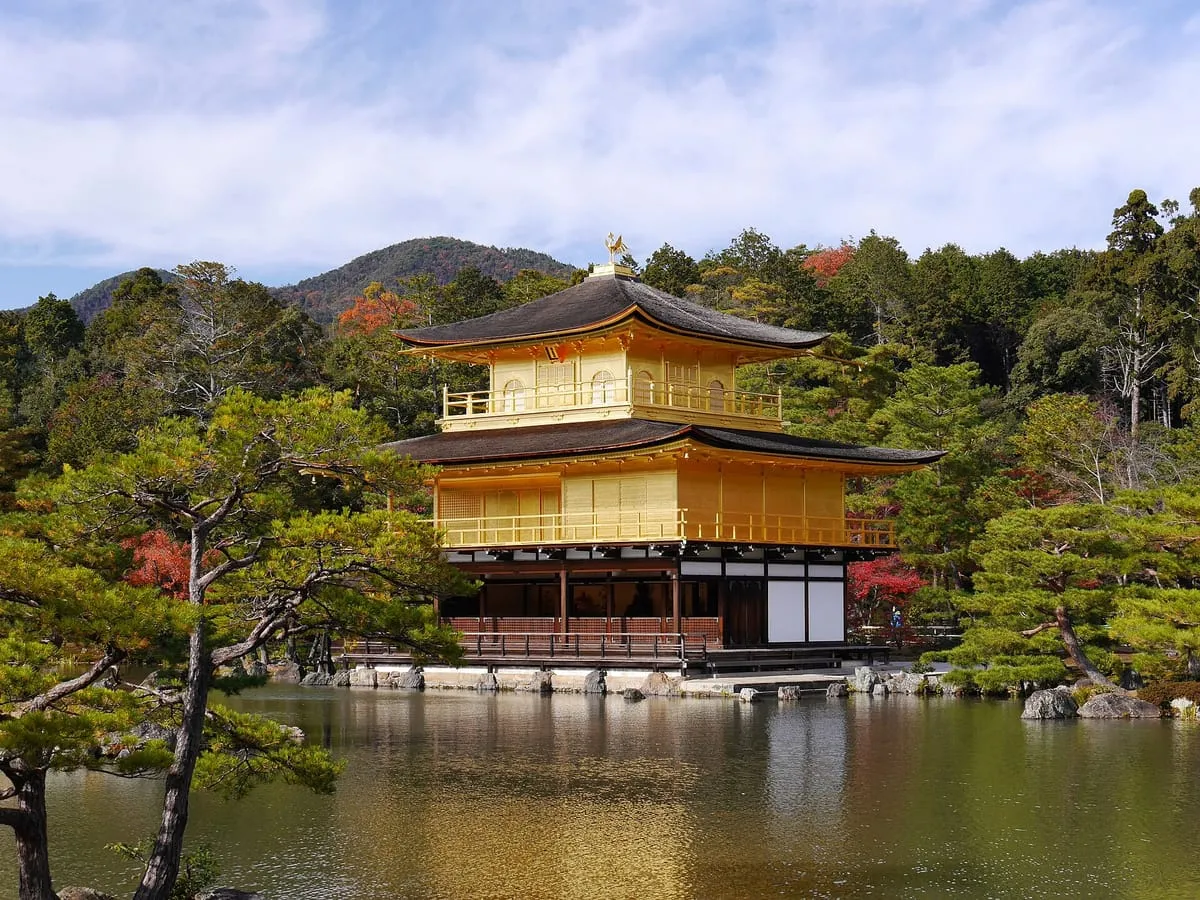
The Golden Pavilion across Mirror Pond. Photo: Ray in Manila, Wikimedia Commons, CC BY 2.0.
Tours and combined visits
Independent travel to Kinkaku-ji is straightforward by bus, but Kyoto’s public buses can get congested in spring and autumn. Organised coach tours link Kinkaku-ji with distant sights like Arashiyama and Fushimi Inari on dedicated transport.
Early morning Kyoto headline tour
From ¥11,775 · 4.9 stars from 1,793 reviews · 6 hours · coach transport
Kyoto: Early Morning Tour of Fushimi Inari, Arashiyama and Kinkakujiad: meets early near Kyoto Station to reach Fushimi Inari and the Arashiyama bamboo path before standard day-trip crowds arrive, arriving at Kinkaku-ji as mid-morning light strikes the gold facade. Transport is by air-conditioned coach with a live English-speaking guide.
Four headline sights full-day bus tour
From ¥10,000 · 4.5 stars from 751 reviews · 9 to 9½ hours · air-conditioned bus
From Osaka/Kyoto: 4 Iconic Kyoto Sights Full-Day Bus Tourad: joins at Kyoto Station or Osaka, taking in Kinkaku-ji, Arashiyama, Kiyomizu-dera and Fushimi Inari in a single day. All temple admissions are arranged in advance, saving time at individual ticket booths.
Full-day highlights tour with lunch
From ¥19,000 · 4.8 stars from 5,465 reviews · 8½ to 9 hours · lunch included
Kyoto: Fushimi Inari, Kinkakuji, Bamboo Grove 1-Day Bus Tourad: the most-reviewed full-day Kyoto excursion on GetYourGuide, combining guided commentary with a traditional Japanese buffet or set lunch in Arashiyama.
Combined Kyoto and Nara day tour
From ¥9,200 · 4.3 stars from 1,876 reviews · 9 to 10 hours · coach transport
Osaka/Kyoto: Kinkaku-ji, Arashiyama, Fushimi Inari & Naraad: links Kinkaku-ji and western Kyoto directly to Todai-ji and the sacred deer of Nara Park, ideal for travellers on a tight schedule who want both ancient capitals without changing trains.
Official ticket or tour: the prices side by side
Comparison between independent temple visits and guided coach excursions.
| What you choose | Official price | Tour price | What it covers |
|---|---|---|---|
| Kinkaku-ji entry only | ¥500 | — | Garden stroll path and Mirror Pond view |
| Independent day (3 temples + subway/bus) | Approx. ¥2,800 | — | Kinkaku-ji (¥500), Kiyomizu-dera (¥500), Subway-Bus Day Pass (¥1,100), transit time |
| Early morning 3-sight tour | — | From ¥11,775 | Kinkaku-ji, Fushimi Inari, Arashiyama, coach and guide |
| Full-day bus tour with lunch | — | From ¥19,000 | Kinkaku-ji, Arashiyama, Fushimi Inari, buffet lunch and coach |
| Kyoto & Nara combo tour | — | From ¥9,200 | Kinkaku-ji, Arashiyama, Fushimi Inari, Todai-ji and Nara Park deer |
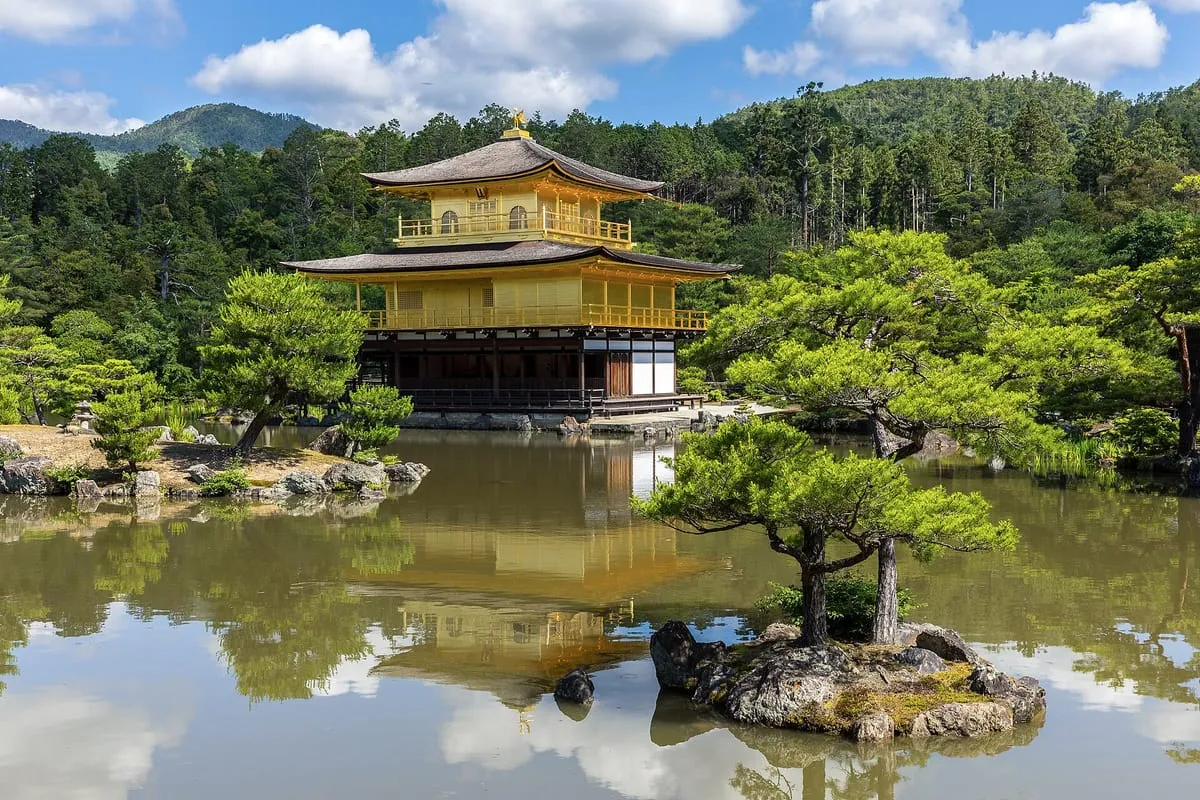
The landscaped stroll garden and islands. Photo: Bernard Gagnon, Wikimedia Commons, CC BY-SA 3.0.
Architectural design and garden path
The pavilion incorporates three distinct architectural styles across its three levels:
- First floor (Hosui-in / Chamber of Dharma Waters): Built in the shinden-zukuri palace style of the 11th-century Heian nobility, featuring unpainted cedar wood pillars and white plaster walls.
- Second floor (Cho-on-do / Tower of Sound Waves): Built in the buke-zukuri warrior style of the Kamakura samurai class, featuring gold-plated exterior walls and housing a seated statue of Kannon Bodhisattva surrounded by the Four Heavenly Kings.
- Third floor (Kukkyo-cho / Cupola of the Ultimate): Built in the traditional Zen temple style (zenshu-butsuden), coated in pure gold leaf both inside and out, capped with a golden bronze Chinese phoenix (hoo) perched on the pyramid roof ridge.
Visitors follow a designated one-way circular path around Kyoko-chi (Mirror Pond), which contains ten small islands landscaped with pine trees and stones donated by provincial lords during the Muromachi shogunate. The trail winds past the Anmintaku Pond and the Sekkatei Teahouse, a rustic thatched tea cottage built in the Edo period for the tea master Kanamori Sowa, before exiting past the Fudo-do hall and temple souvenir stalls.
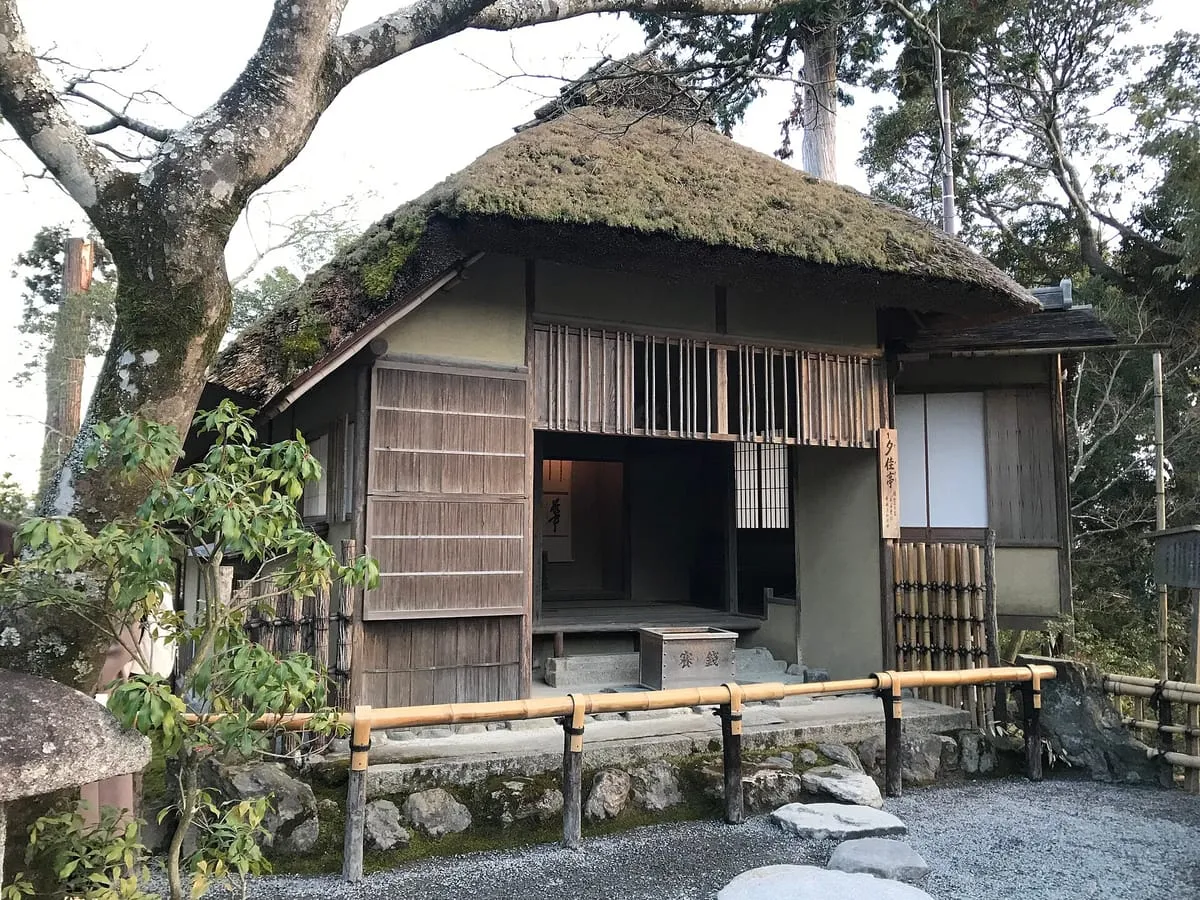
The Sekkatei teahouse in the upper garden. Photo: 663highland, Wikimedia Commons, CC BY-SA 3.0.
Practical tips and how to get there
- Avoid the bus traffic bottleneck: Direct Kyoto City Bus 205 runs from Kyoto Station to Kinkakuji-michi (approx. 40 minutes, ¥230 flat fare), but during peak travel months (April, May, October, November) road traffic can stretch this ride to over 70 minutes. Instead, take the Karasuma Subway Line north to Kitaoji Station (13 minutes, ¥260), then transfer to City Bus 101, 102, 204 or 205 at the Kitaoji Bus Terminal for the final 10-minute hop.
- Best photo lighting: The front facade of the Golden Pavilion faces south across Mirror Pond. On sunny mornings, the structure can be partly backlit; the golden reflection is strongest between 14:30 and 16:30 when the lower sun lights the facade directly.
- Crowd management: Arrive at 08:45 to be among the first through the gate at 09:00, or visit after 16:00 when major tour coaches have departed. Last admission is strictly at 16:40.
- Baggage and umbrellas: Large luggage and rucksacks cannot be brought along the narrow gravel garden paths, and there are no coin lockers at the temple gates. Leave heavy bags at Kyoto Station. On rainy days, long umbrellas must be carried point-down; open umbrellas are prohibited on crowded viewing platforms to avoid eye injuries.
Combining Kinkaku-ji with other sights
Make the most of your journey to northwestern Kyoto by walking along the “Kinukake-no-Michi” (Road of Silk) to nearby UNESCO landmarks:
- Ryoan-ji Temple: A 15-minute walk west, home to Japan’s most celebrated Zen dry-landscape rock garden (admission ¥600).
- Ninna-ji Temple: A further 10-minute walk west, famous for its historic palace buildings (Goten admission ¥800) and low-growing Omuro cherry trees.
- Connecting with Arashiyama: From Ninna-ji, hop on the charming Keifuku Electric Railroad (Randen tram) at Omuro-Ninnaji Station to Arashiyama in 20 minutes (¥250 flat fare). For a complete morning-to-evening route, consult our 3 days in Kyoto plan or Kyoto in one or two days.
Common questions
How much are tickets to Kinkaku-ji?
Admission is ¥500 for adults and high school students, and ¥300 for primary and junior high students, payable in cash at the gate. The ticket is an inscribed paper protective amulet (ofuda).
Can you go inside the Golden Pavilion?
No. Visitors cannot enter the interior of the pavilion. The building is viewed from marked walking paths around the surrounding pond and landscape garden.
What is the best time of day to see the Golden Pavilion?
Visit either right at the 09:00 opening before coach tour crowds arrive, or between 15:30 and 16:30 when the afternoon sun illuminates the gold leaf facade across the pond.
Can you buy tickets online in advance?
No. The temple does not sell advance individual tickets online. You buy them at the ticket booth upon arrival with cash. Guided tours booked online include admission and transport.