In this guide
💡 The Short Version: Our judgement, because it depends on what you want from a first trip. Easiest overall, Singapore: English is an official language, the MRT and buses take a contactless bank card at S$1.28 to S$2.57 a journey, and the only paperwork is the free SG Arrival Card. For food, Osaka: the yamaimo-yaki pancake at Mizuno is 1,700 yen, cash only, with Bangkok the alternative. For culture shock, Hanoi: the Temple of Literature is 70,000 VND and the Old Quarter’s traffic is crossed at a steady walk. For a tight budget, Kuala Lumpur: a MyCity Pass is RM10 a day and Batu Caves is free. For families, Osaka: the Osaka Castle keep is 1,200 yen and free under 15, and Universal Studios Japan has a Child Switch ride system. Also: Tokyo for teamLab Planets (from 3,800 yen), Seoul for the Huwon Secret Garden (5,000 KRW), Hong Kong for the Peak Tram (116 HKD return) and Bangkok for the Grand Palace (500 THB). The thing that ruins a first trip is an arrival card or an entry rule missed before the flight. Or book: the Asakusa and Senso-ji walking tour in Tokyoad is from 2,000 yen and the Beyond Michelin hawker tour in Singaporead is S$60 (GetYourGuide).
⚠️ Check the arrival card and the entry rule before you book the flights. Singapore, Thailand, South Korea and Malaysia each want a free online arrival card, submitted within 3 days before you land; Japan and Hong Kong want none. Vietnam needs an e-visa for US, Canadian, Australian and Irish passports. Singapore, Thailand, Malaysia and Vietnam want a passport valid for six months after you arrive. South Korea’s K-ETA waiver for UK, US, Canadian and Australian passports ends on 31 December 2026, so check k-eta.go.kr for a 2027 trip. Then the weather: Bangkok reaches 37 to 40°C in April, Hong Kong’s typhoon season runs from May to September, and Hanoi is 35 to 40°C in summer. Then money: small shops and street stalls in Japan, Bangkok and Hanoi take cash only, and Seoul’s transit cards are topped up with cash.
Prices are each operator’s own, in local currency. The comparisons are our judgement.
The cities side by side
The cities are in the order of the entries below. Each is a link to the city’s own guide. Entry rules are for UK, US, Canadian, Australian and EU citizens on a tourist stay.
Getting in and paying
| City | Entry rule | Cash or cards | Transit, in local currency |
|---|---|---|---|
| Singapore | No visa; free SG Arrival Card within 3 days before landing; passport valid 6 months | Cards and phone wallets, including on buses and the MRT | S$1.28 to S$2.57 a journey by card; Tourist Pass S$17 for a day |
| Hong Kong | No visa: 180 days on a UK passport, 90 on the others; no arrival card | Cards in malls and hotels; cash for markets and minibuses | MTR 4.80 to 15 HKD a journey; Tourist Day Pass 65 HKD; tram 3.00 HKD |
| Tokyo | No visa, 90 days; no arrival card | Largely cash-based; small shops and restaurants take cash only | Suica or Pasmo pays per ride; 72-hour Subway Ticket 2,000 yen |
| Seoul | No visa, 90 days (180 for Canadians); free e-Arrival Card within 3 days; K-ETA waived to 31 December 2026 | Cards widely; transit-card top-ups and market stalls cash only | Climate Card from 5,000 KRW a day; subway ride from 1,550 KRW |
| Osaka | No visa, 90 days; no arrival card | Cards at hotels and department stores; street food stalls cash only | Enjoy Eco Card 820 yen on weekdays, 620 yen at weekends |
| Bangkok | No visa, 30 days; free Thailand Digital Arrival Card within 3 days; passport valid 6 months | Cash for stalls, markets and river boats; ATM fee 250 to 350 THB a withdrawal at Krungsri | MRT 17 to 44 THB a ride; Chao Phraya Express boat 19 THB |
| Kuala Lumpur | No visa, 90 days; free MDAC within 3 days; passport valid 6 months | Cards in malls and hotels; cash for hawker stalls and Touch ‘n Go top-ups | MyCity Pass RM10 for a day, RM25 for three; ride RM1.20 to RM4.50 |
| Hanoi | UK and most EU passports: 45 days visa-free; US, Canadian, Australian and Irish passports: e-visa, US$25 | Cards in hotels and restaurants; cash for street food, markets and cyclos | Metro 8,000 to 15,000 VND; bus 7,000 to 9,000 VND |
Getting around, language and when to go
| City | Getting around (our judgement) | Language | Best months | Deciding factor |
|---|---|---|---|---|
| Singapore | Easy: one contactless card for MRT and bus | English is one of four official languages | 31 to 32°C all year; February driest (105 mm), December wettest (332 mm) | Rules: vapes are banned, and eating or drinking on a bus is a fine of up to S$500 |
| Hong Kong | Easy: Octopus card pays train, tram, ferry, bus and shops | Chinese and English are the official languages | Mid-October to December | A Typhoon Signal No. 8 suspends ferries, theme parks and shops |
| Tokyo | Easy once you hold a Suica or Pasmo; trains run about 5:00 to 24:00 | Japanese; the Japan Helpline, 0570-000-911, answers in English around the clock | March to May and October to November | The big bookings: teamLab, the Ghibli Museum and Shibuya Sky |
| Seoul | Easy: subway signs and announcements are in English | Korean; Naver Map has an English version | September to November and March to May | Google Maps gives no turn-by-turn walking directions |
| Osaka | Easy: the Midosuji Line runs through the centre | Japanese; the same Japan Helpline in English | Late March to May and October to November | Street food and many stalls are cash only |
| Bangkok | Moderate: BTS, MRT and river boats, with taxis that need the meter | Thai; many street menus are Thai only | November to February; December and January best | The Grand Palace dress code and tuk-tuk drivers who say a sight is closed |
| Kuala Lumpur | Moderate: MRT, LRT and Monorail, with Grab for the rest | Malay; some hawker stalls have no English sign | June to August, the drier stretch | Cash for hawkers, and modest dress at Batu Caves |
| Hanoi | Hardest: walkable, but crossing the traffic takes nerve | Vietnamese; Grab translates in its app | September to November | The e-visa for US, Canadian, Australian and Irish passports |
For the easiest first trip
This grouping is our judgement. In both cities the transit pays on a contactless card or one stored-value card, the language is not a barrier and the paperwork is short.
Singapore
MRT and bus by card, S$1.28 to S$2.57 · Flower Dome and Cloud Forest S$46 · free SG Arrival Card
English is one of Singapore’s four official languages, and the MRT and the buses take a contactless bank card or phone, so there is nothing to buy at the gate. The Supertree Grove and the Garden Rhapsody light show (19:45 and 20:45 nightly) at Gardens by the Bay are free; the two glasshouses, the Flower Dome and the Cloud Forest, are S$46 together, and each shuts for one whole day a month (Gardens by the Bay tickets). Universal Studios Singapore is a dated ticket from S$76 on non-peak dates.
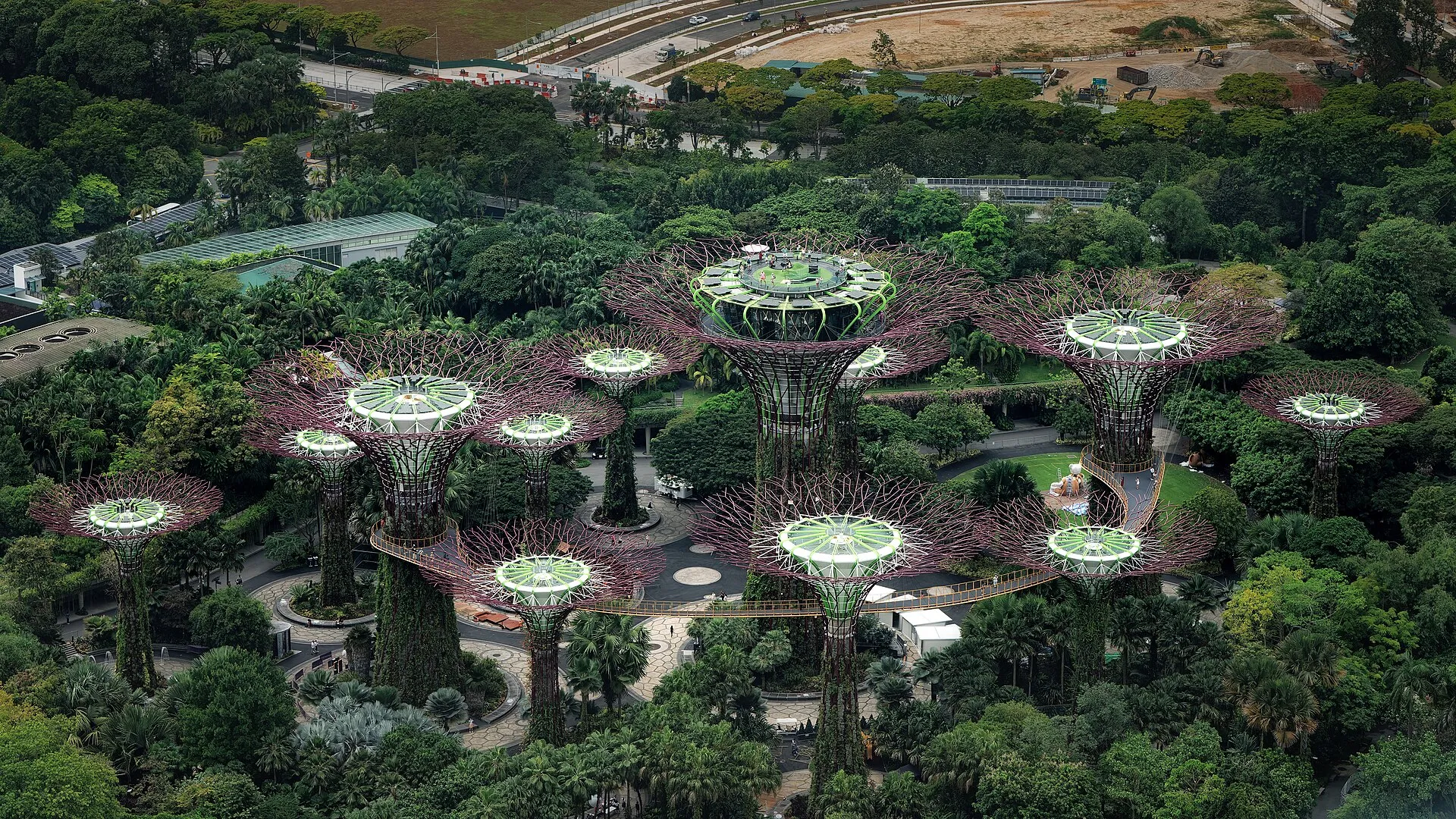
The Supertree Grove, Gardens by the Bay. Photo: Mustang Joe, Wikimedia Commons, CC0 1.0.
Submit the free SG Arrival Card within 3 days before you land, which gives you the e-Pass by email. From Changi the MRT to the city is about S$2.30 until 25 December 2026, changing at Tanah Merah or Expo; the last train connecting west leaves at 23:18 (Changi to the city). What catches newcomers out: a menu price marked ++ is before a 10 per cent service charge and 9 per cent GST, so S$100 of food comes to S$119.90; vapes are banned, even for personal use; and foreign Visa and Mastercard cards pay a S$0.60 admin fee for each day of use on public transport (the rules and fines). Allow three days: 3 days in Singapore runs Chinatown and Marina Bay, Kampong Glam and Little India, then Sentosa. Stay at The Fullerton Hotel Singapore, 400 rooms in a National Monument on Fullerton Square (Hotels.comad). Singapore has the rest.
Hong Kong
Octopus card 39 HKD · Peak Tram 116 HKD return · no arrival card
Chinese and English are Hong Kong’s official languages, and an Octopus card pays the MTR, the Ding Ding trams (3.00 HKD flat), the Star Ferry (5.00 to 6.50 HKD on the upper deck), buses and convenience stores. A tourist Octopus is 39 HKD with no deposit, topped up with cash at MTR kiosks (Octopus card guide). Entry is 180 days on a UK passport and 90 on the others, with no arrival card, only a small landing slip to keep in your passport.
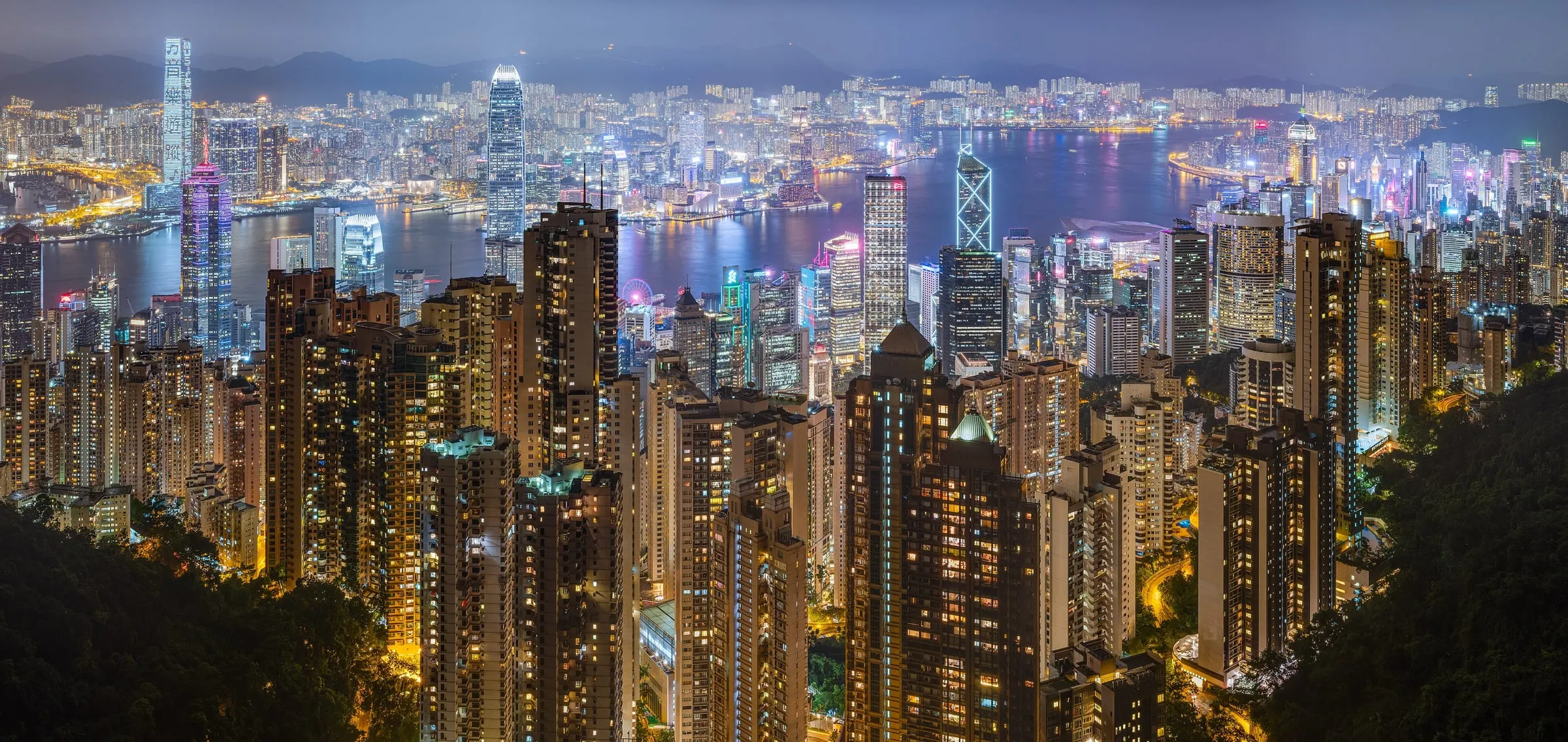
Book the Peak Tram online: 116 HKD return, or 182 HKD with the Sky Terrace 428, and the turnstiles do not take Octopus. Queues reach 60 to 90 minutes on weekend afternoons from 16:00 to 19:30, so go on a weekday before 10:30 (Peak Tram tickets). The Airport Express takes 24 minutes to Central for 115 HKD (airport to the city). What catches newcomers out: a Typhoon Signal No. 8 suspends ferries, theme parks, above-ground trains and shops, and the season runs from May to September (weather and typhoons); eating or drinking on the MTR is a 5,000 HKD fine; and taxis must use the meter. Allow three days (3 days in Hong Kong); Macau is a day trip (Macau from Hong Kong). Stay at The Peninsula Hong Kong, 300 rooms on Salisbury Road, 2 minutes from East Tsim Sha Tsui Exit L3 (Hotels.comad). Hong Kong has the rest.
For the big-city culture of Japan and Korea
This grouping is our judgement. Both cities have a palace or a museum that sells timed tickets, a transit card that pays on everything and a street map that needs an app.
Tokyo
teamLab Planets from 3,800 yen · Suica or Pasmo card · no visa, 90 days
Trains run from about 5:00 to 24:00, and a Suica or Pasmo card pays the metro, the JR lines and buses, as well as lockers, vending machines and convenience stores; a contactless bank card pays on Tokyo Metro and Toei, but not on JR (Tokyo public transport). There is no arrival card. Book teamLab Planets in Toyosu, from 3,800 yen for a timed entry, with nothing sold at the door; Borderless in Azabudai Hills is from 3,400 yen. The Ghibli Museum is 1,000 yen, and its tickets for a month are released through Lawson Ticket at 10:00 Japan time on the 10th of the month before (Ghibli Museum tickets).
From Narita, the Keisei Skyliner takes 36 minutes to Nippori for 2,580 yen, and the Narita Express runs to Tokyo Station for 3,140 yen (Narita to Tokyo). What catches newcomers out: Tokyo is still largely cash-based, so carry yen and use a Seven Bank ATM in a 7-Eleven; the Imperial Palace East Gardens, Shinjuku Gyoen and the Tokyo National Museum are shut on Mondays; the police can ask for your passport, so carry it (money in Tokyo, is Tokyo safe?). Allow three days, or five to add the Ghibli Museum and sumo (3 days in Tokyo, 5 days in Tokyo). Stay at Hotel Gracery Shinjuku, 970 rooms 5 minutes from the JR Shinjuku East Exit (Hotels.comad). Tokyo has the rest.
Seoul
Huwon Secret Garden 5,000 KRW · Climate Card from 5,000 KRW a day · AREX train 43 minutes
The subway has English signs and announcements, and a T-money card pays on every train, bus and taxi in the country; the Climate Card is a flat 5,000 KRW a day (plus 3,000 KRW for the card) on Seoul’s own subway lines and buses (Seoul public transport). Gyeongbokgung is 3,000 KRW, or free in a hanbok, and the changing of the guard at 10:00 and 14:00 is free. The booking that sells out is the Huwon Secret Garden at Changdeokgung: 5,000 KRW plus 3,000 KRW for the palace, a timed guided tour released exactly 6 days ahead at 10:00 Korean time, with the English tours gone in minutes (Changdeokgung and the Secret Garden).
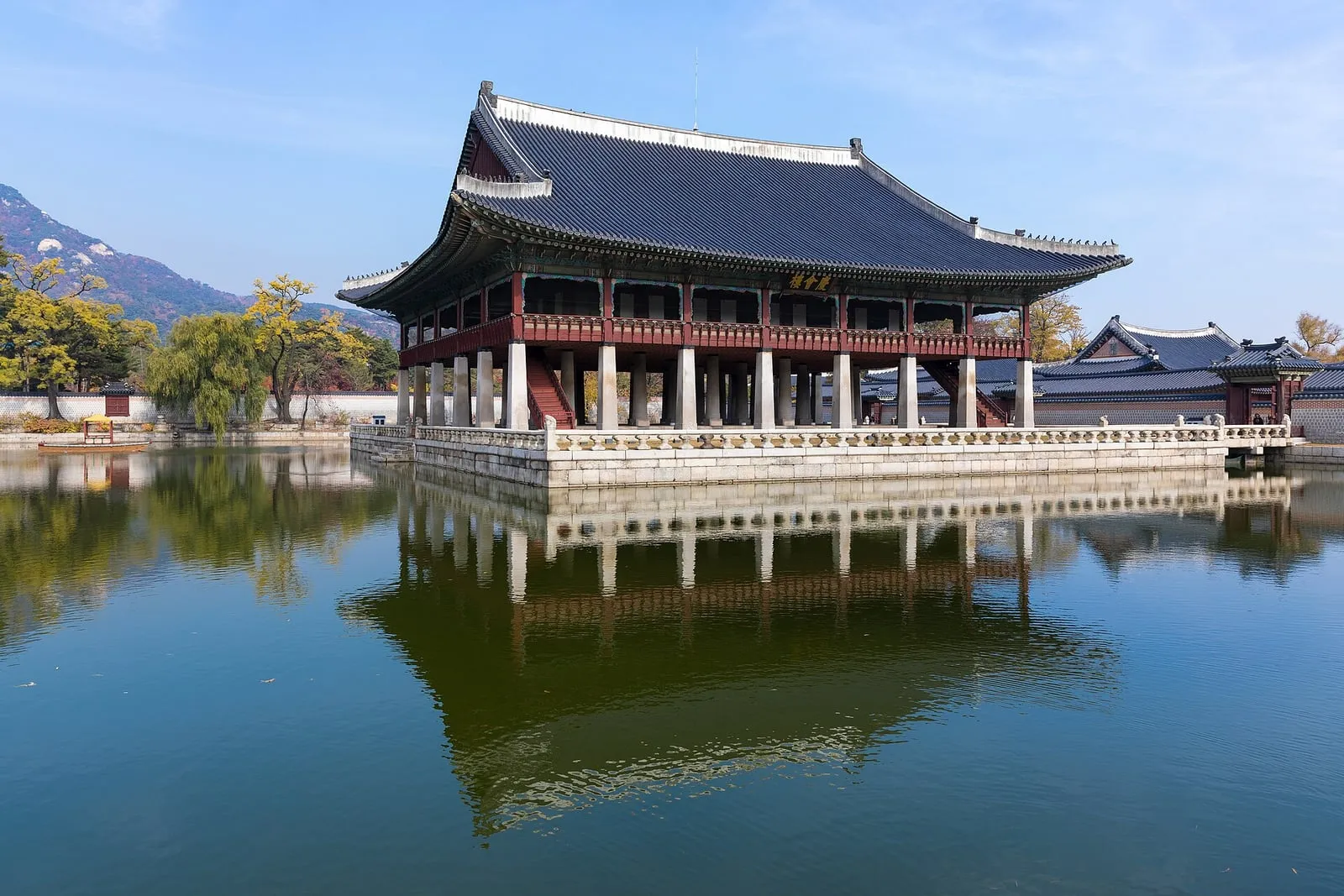
Gyeongbokgung Palace, Seoul. Photo: Frank Schulenburg, Wikimedia Commons, CC BY-SA 4.0.
Submit the free e-Arrival Card at e-arrivalcard.go.kr within 3 days before you land. The AREX Express runs non-stop from Incheon to Seoul Station in 43 minutes for 13,000 KRW, and the all-stop train takes 59 minutes for 4,750 KRW from Terminal 1 (airport to the city). What catches newcomers out: Google Maps gives no turn-by-turn walking directions in South Korea, so use Naver Map or KakaoMap; the machines that top up transit cards take cash only; and Gyeongbokgung is shut on Tuesdays while Changdeokgung, Deoksugung and Changgyeonggung are shut on Mondays. Allow three days (3 days in Seoul). Stay at Lotte Hotel Seoul, by Euljiro 1-ga and City Hall (Hotels.comad). Seoul has the rest.
For food and families
This grouping is our judgement. Both cities are built round eating, and both put the big ticket in one place.
Osaka
Osaka Castle keep 1,200 yen · Universal Studios Japan, dated pass · Enjoy Eco Card 820 yen
Osaka is a compact city on one subway spine, the Midosuji Line, and an ICOCA card or a mobile Suica from Tokyo pays on the subway, JR and private railways; the Enjoy Eco Card is 820 yen on weekdays and 620 yen at weekends (Osaka public transport). For food, Mizuno in Dotonbori serves its yamaimo-yaki, a pancake made with grated mountain yam instead of flour, for 1,700 yen, cash only, open daily 11:00 to 21:30. For a family, the Osaka Castle keep is 1,200 yen and free under 15, and Universal Studios Japan needs a dated Studio Pass bought up to two months ahead, with its price set by date; a Child Switch lets two adults queue once for a ride a child is too small for (Osaka with kids).
From Kansai Airport, the Nankai Rapi:t takes 34 minutes to Namba for 1,490 yen with a reserved seat, and the JR Haruka takes 47 to 50 minutes to Tennoji, Osaka Station or Shin-Osaka for 1,800 to 2,600 yen (airport to the city). What catches newcomers out: the Dotonbori street food stalls, the Kuromon Market fishmongers and the Shinsekai standing bars take cash only, and public museums are shut on Mondays. Allow three days (3 days in Osaka), with Nara and Kyoto as day trips (day trips from Osaka). Stay at Swissotel Nankai Osaka, directly above Nankai Namba Station, where the Rapi:t arrives (Hotels.comad). Osaka has the rest.
Bangkok
Grand Palace 500 THB · Chao Phraya Express boat 19 THB · free Thailand Digital Arrival Card
Bangkok pairs the BTS Skytrain and the MRT with the Chao Phraya Express boat, a flat 19 THB between Sathorn pier and the old temples, and the MRT takes contactless bank cards at the gate. For a first stop, the Grand Palace is 500 THB, bought at the gate or online up to a month ahead, open 08:30 to 15:30; it refuses sleeveless tops, shorts, tight trousers and mini skirts. For food, where to eat in Bangkok names the Bib Gourmand stalls, most of which take cash only.
Complete the free Thailand Digital Arrival Card at tdac.immigration.go.th within 3 days before you land; the stay is 30 days, and immigration can ask for 20,000 THB in cash or equivalent and a ticket out. From Suvarnabhumi the Airport Rail Link costs 15 to 45 THB, and from Don Mueang the SRT Dark Red Line is 33 THB to Krung Thep Aphiwat (airport to the city). What catches newcomers out: tuk-tuk drivers outside a temple gate who say it is closed for a ceremony are steering you to a commission shop; ATMs charge 250 to 350 THB a withdrawal on a foreign card at Krungsri; vapes are illegal; and the rainy season runs from May to October (is Bangkok safe?, money in Bangkok). Allow three days (3 days in Bangkok). Stay at Hyatt Regency Bangkok Sukhumvit, 2 minutes from BTS Nana by skybridge (Hotels.comad). Bangkok has the rest.
For a tight budget and a culture shock
This grouping is our judgement. Our judgement on a tight budget rests on the transit and entry prices each guide prints, not on flights or beds, and each is in its own currency, so check the exchange rate before comparing.
Kuala Lumpur
MyCity Pass RM10 a day · Petronas Towers RM127 on a weekday · KLIA Ekspres RM55
A visitor’s MyCity Pass is RM10 for a day or RM25 for three, loaded on a Touch ‘n Go card, with unlimited rides on the MRT, LRT and Monorail; a single ride is RM1.20 to RM4.50 (Kuala Lumpur public transport). Batu Caves is free, reached by KTM Komuter train for RM2.60 (Batu Caves guide). Book the Petronas Twin Towers 1 to 2 weeks ahead: RM127 on a weekday and RM137 at a weekend for a 45-minute slot covering the Level 41 Skybridge and the Level 86 deck. It is open Tuesday to Sunday, and shut on the 1st and 3rd Monday of the month.
Submit the free Malaysia Digital Arrival Card, the MDAC, within 3 days before you land. The KLIA Ekspres reaches KL Sentral in 28 minutes for RM55, rising to RM65 from 1 January 2027, and the airport bus is RM12 to RM15 in 60 to 75 minutes (airport to the city). What catches newcomers out: Batu Caves, the National Mosque and Thean Hou Temple need covered shoulders and knees; motorbike bag-snatching is the main street crime, so carry a bag on the side away from the road; hotels charge foreign guests a RM10 tourist tax per room per night; and hawker stalls and Jalan Alor are cash only (is Kuala Lumpur safe?). It is 31 to 33°C all year with afternoon downpours. Allow three days (3 days in Kuala Lumpur). Stay at Grand Hyatt Kuala Lumpur, on the south edge of KLCC Park with a sky lobby on the 38th floor (Hotels.comad). Kuala Lumpur has the rest.
Hanoi
Sapa sleeper train 650,000 to 1,200,000 VND · Express Bus 86 45,000 VND · e-visa US$25 for some passports
The Old Quarter and the Hoan Kiem Lake loop are walkable, though pavements hold parked motorbikes and plastic stools. To cross a street, step out and walk at a steady pace; riders steer round you, so never stop or step back. The Temple of Literature is 70,000 VND at the gate, and the Thang Long Water Puppet Theatre runs a 50-minute show beside the lake. The long bookings are the Sapa sleeper train, 8 hours to Lao Cai for 650,000 to 1,200,000 VND, 1 to 3 weeks ahead, and an overnight Ha Long Bay cruise, 2 to 6 weeks ahead.
UK passports and those of Germany, France, Italy, Spain and the other countries on Vietnam’s list enter visa-free for 45 days; US, Canadian, Australian and Irish passports need an e-visa from evisa.gov.vn before flying, US$25 for a single entry, and the passport must be valid for six months. Express Bus 86 from Noi Bai Airport is 45,000 VND a person, paid in cash, and a Grab car is 250,000 to 350,000 VND plus a 10,000 to 15,000 VND toll (airport to the city). What catches newcomers out: the 20,000 and 500,000 VND notes are both blue and one is worth 25 times the other; drinks can contain methanol, so buy from licensed bars; winter air quality is poor from October to March; and the emergency numbers are answered in Vietnamese only (money in Hanoi, is Hanoi safe?). Allow three days (3 days in Hanoi). Stay at the Sofitel Legend Metropole Hanoi, open since 1901 (Hotels.comad). Hanoi has the rest.
How long to allow and how to combine cities
Our judgement: three days a city, because every guide above has a three-day itinerary. A first trip to Asia is easier as one city, or two cities in one country, than as a chain of countries, because each country has its own transit card, currency and arrival rule.
- Tokyo and Osaka: the Tokaido Shinkansen runs between Tokyo and Shin-Osaka, and its seats can be reserved on SmartEX up to a month before departure. A 7-day Japan Rail Pass is 50,000 yen and does not cover the Nozomi; for Tokyo and day trips it rarely pays (is the Japan Rail Pass worth it?). Tokyo vs Osaka has the Nozomi’s 2 hour 21 minute journey and fare.
- Singapore and Kuala Lumpur: KL Sentral to JB Sentral alone is 4 hours 20 minutes on the KTM ETS train, so the two cities are a flight or an overnight apart; from JB the KTM Shuttle Tebrau reaches Woodlands in about 5 minutes for S$5 (why not Kuala Lumpur from Singapore). Each country has its own arrival card.
- Hong Kong and Macau: Macau is a day trip, not a second base (Macau from Hong Kong).
What to book before you go
| What | How far ahead | Where |
|---|---|---|
| SG Arrival Card, Singapore | Within 3 days before landing; free | ICA |
| Thailand Digital Arrival Card | Within 3 days before landing; free | tdac.immigration.go.th |
| e-Arrival Card, South Korea | Within 3 days before landing; free | e-arrivalcard.go.kr |
| MDAC, Malaysia | Within 3 days before landing; free | Immigration Department |
| e-visa, Vietnam (US, Canadian, Australian and Irish passports) | Before you fly; US$25 for one entry | evisa.gov.vn |
| Ghibli Museum, Tokyo | The 10th of the month, 10:00 Japan time, for the following month | Ghibli Museum tickets |
| teamLab Planets, Tokyo | Timed entry; nothing sold at the venue | teamLab tickets |
| Universal Studios Japan, Osaka | Up to 2 months ahead | USJ tickets |
| Huwon Secret Garden, Seoul | Exactly 6 days ahead at 10:00 Korean time | Changdeokgung tickets |
| Sapa sleeper train, Hanoi | 1 to 3 weeks ahead | Sapa from Hanoi |
| Ha Long Bay overnight cruise, Hanoi | 2 to 6 weeks ahead | Ha Long Bay cruises |
| Petronas Twin Towers, Kuala Lumpur | 1 to 2 weeks ahead | Petronas tickets |
| Peak Tram, Hong Kong | Online, 1 to 7 days ahead | Peak Tram tickets |
| Grand Palace, Bangkok | At the gate, or online up to a month ahead | Grand Palace tickets |
Avoiding the heat and the rain
- Bangkok: April is the hottest month, at 37 to 40°C, with Songkran on 13 to 15 April 2027; the rainy season runs from May to October, and September and October bring flash floods (when to visit Bangkok).
- Hong Kong: May to September is hot and wet and is typhoon season; mid-October to December is the dry, sunny window (when to visit Hong Kong).
- Seoul: July and August bring the monsoon rains, and December to February is -10°C to 0°C (when to visit Seoul).
- Tokyo and Osaka: Golden Week (29 April and 3 to 5 May 2027) fills the sights in Tokyo, and typhoon season runs from June to December (when to visit Tokyo, when to visit Osaka).
- Hanoi: May to August is 35 to 40°C with monsoon downpours, and Tet in early February 2027 empties the Old Quarter (when to visit Hanoi).
- Singapore and Kuala Lumpur: both are 31 to 33°C all year, so choose by rain: Singapore’s driest month is February and its wettest December, and Kuala Lumpur’s drier stretch is June to August (when to visit Singapore, when to visit Kuala Lumpur).
Where to stay
Each hotel above links to Hotels.com for your dates. Each city’s stay guide compares the areas: Singapore, Hong Kong, Tokyo, Seoul, Osaka, Bangkok, Kuala Lumpur and Hanoi.
Other cities and other trips
For a trip with young children, see best city breaks with kids, and for the weather and what else is on in each month, see where to go each month. For the rest of the cities, see Compare cities.
Common questions
Which Asian city is best for a first trip?
Our judgement, because it depends on the trip. Singapore is the easiest: English is an official language, buses and the MRT take a contactless bank card at S$1.28 to S$2.57 a journey, and the only paperwork is the free SG Arrival Card. Hong Kong is the alternative if you want no arrival card at all and an Octopus card that also pays in shops. Tokyo is the pick for a first look at Japan, but it is largely cash-based.
Which Asian countries need an arrival card before you fly?
Singapore (the SG Arrival Card), Thailand (the Thailand Digital Arrival Card), South Korea (the e-Arrival Card) and Malaysia (the Malaysia Digital Arrival Card). Each is free and is submitted online within 3 days before you land. Japan and Hong Kong have no arrival card, and Vietnam needs an e-visa for US, Canadian, Australian and Irish passports.
Do I need a visa for Japan, Singapore, Thailand, South Korea, Hong Kong or Malaysia?
Not as a UK, US, Canadian, Australian or EU citizen for a tourist stay: Japan allows 90 days, Thailand 30 days, South Korea 90 days (180 for Canadians), Hong Kong 180 days for UK passports and 90 for the rest, and Malaysia 90 days. Singapore's immigration officer sets the length of stay. South Korea waives its K-ETA pre-travel authorisation for UK, US, Canadian and Australian passports until 31 December 2026.
Which Asian city is cheapest for a first trip?
Our judgement is Kuala Lumpur and Hanoi, from the prices each guide prints: a MyCity Pass is RM10 a day in Kuala Lumpur, Batu Caves is free, and in Hanoi the Temple of Literature is 70,000 VND and a city bus 7,000 to 9,000 VND. Each city's prices are in its own currency, so check the current exchange rate before comparing.
How many days does a first trip to an Asian city need?
Our judgement is three days a city: each of the eight guides has a three-day itinerary, and Tokyo and Singapore also have five-day ones. Two cities in one country, such as Tokyo and Osaka, are easier than two countries, because each country has its own card, currency and arrival rule.
When is the best time to visit Asia for a first trip?
It depends on the city. October to November suits Tokyo, Osaka, Seoul and Hanoi, mid-October to December suits Hong Kong, November to February suits Bangkok, and June to August is the drier stretch in Kuala Lumpur. Singapore is 31 to 32°C all year, and February is its driest month.