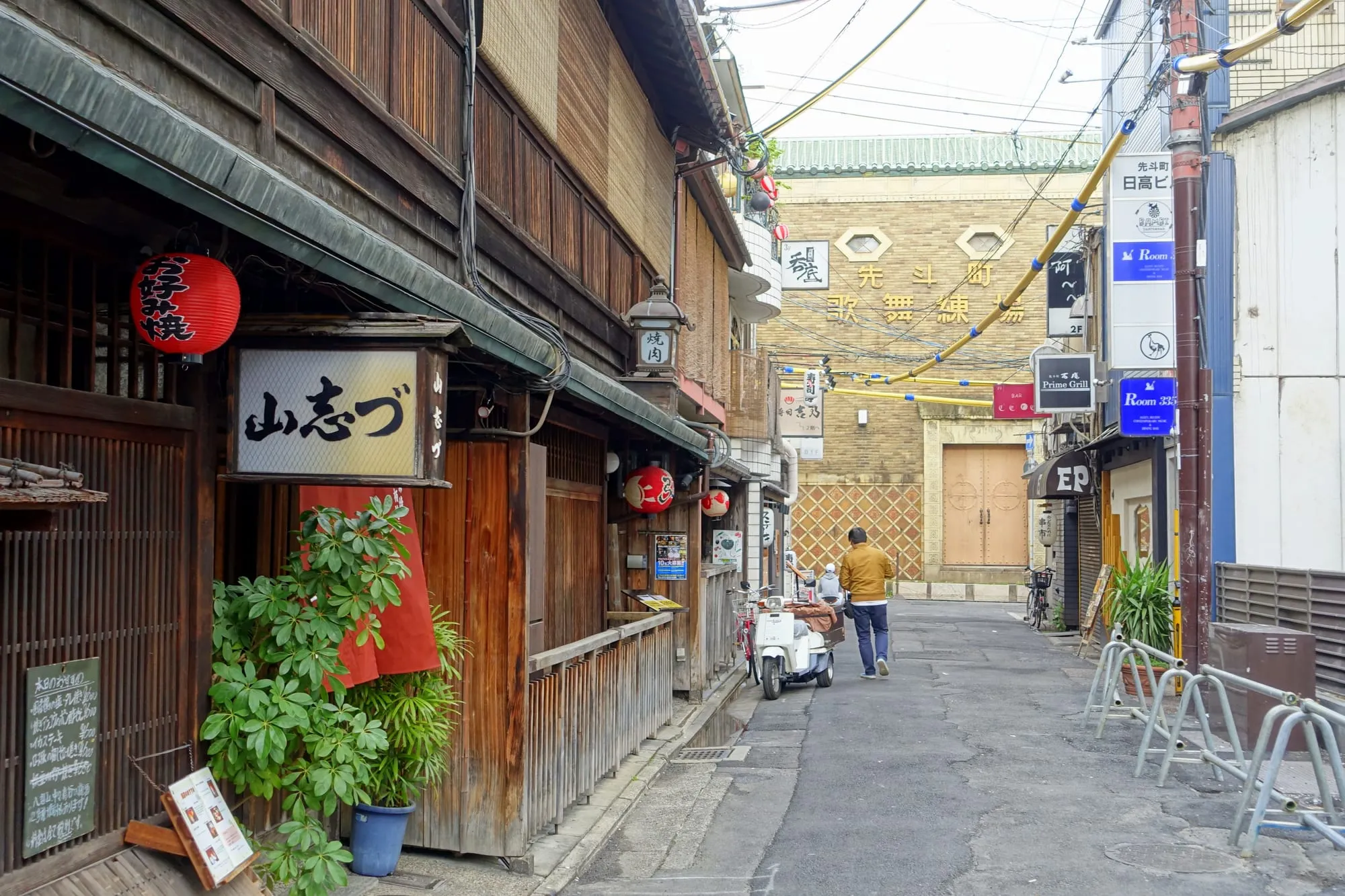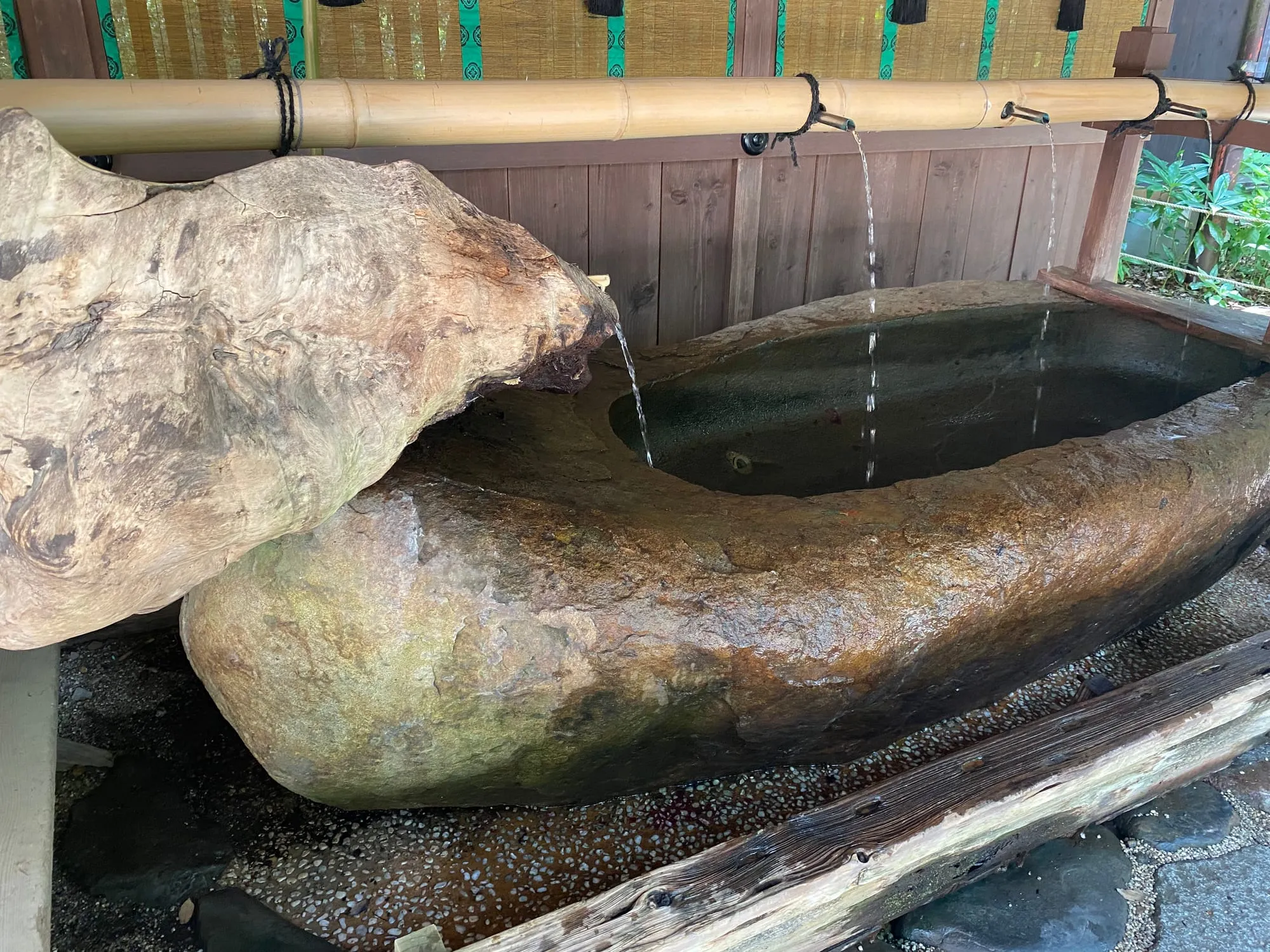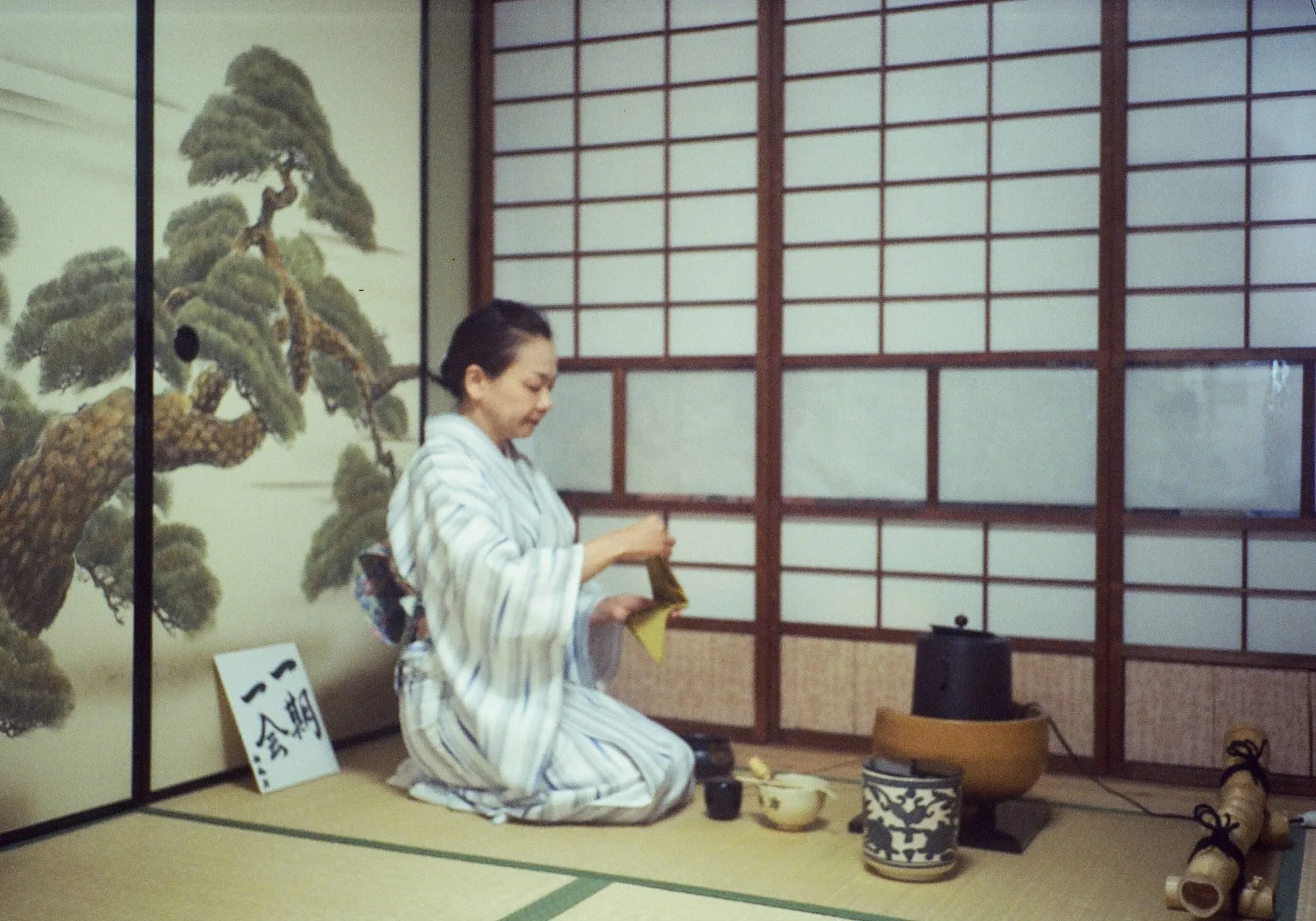
One of 2 self-guided walks in Kyoto. See every walk.
In this guide
💡 The Short Version: Gion is Kyoto’s historic entertainment quarter, best explored at dusk as lanterns flicker outside preserved wooden merchant houses (machiya). Walk along southern Hanami-koji to Kennin-ji Temple and stroll beneath weeping willows by the Shirakawa canal. Respect the photography ban on all private residential alleys (punishable by a ¥10,000 fine). Or book a tour: the Gion Magical Night Walking Tourad guides you through the district with an expert storyteller who explains geiko customs and etiquette rules.
Spanning the historic quarter between the Kamo River and Yasaka Shrine, Gion originated in the Middle Ages to provide lodging, refreshments, and entertainment for pilgrims journeying to the shrine. Over the centuries, it evolved into Kyoto’s most prestigious hanamachi (“flower town”)—the district where geiko (Kyoto’s term for geisha) and maiko (apprentice geiko) practice traditional Japanese performing arts including the shamisen, koto, classical dance, and the tea ceremony.
Today, Gion is divided into two primary geiko communities: Gion Kobu, which occupies the historic streets south of Shijo-dori, and Gion Higashi to the northeast. While the district welcomes visitors, it remains an active residential and working neighbourhood where centuries-old social customs dictate daily life.
Highlights of the district
Hanami-koji Street
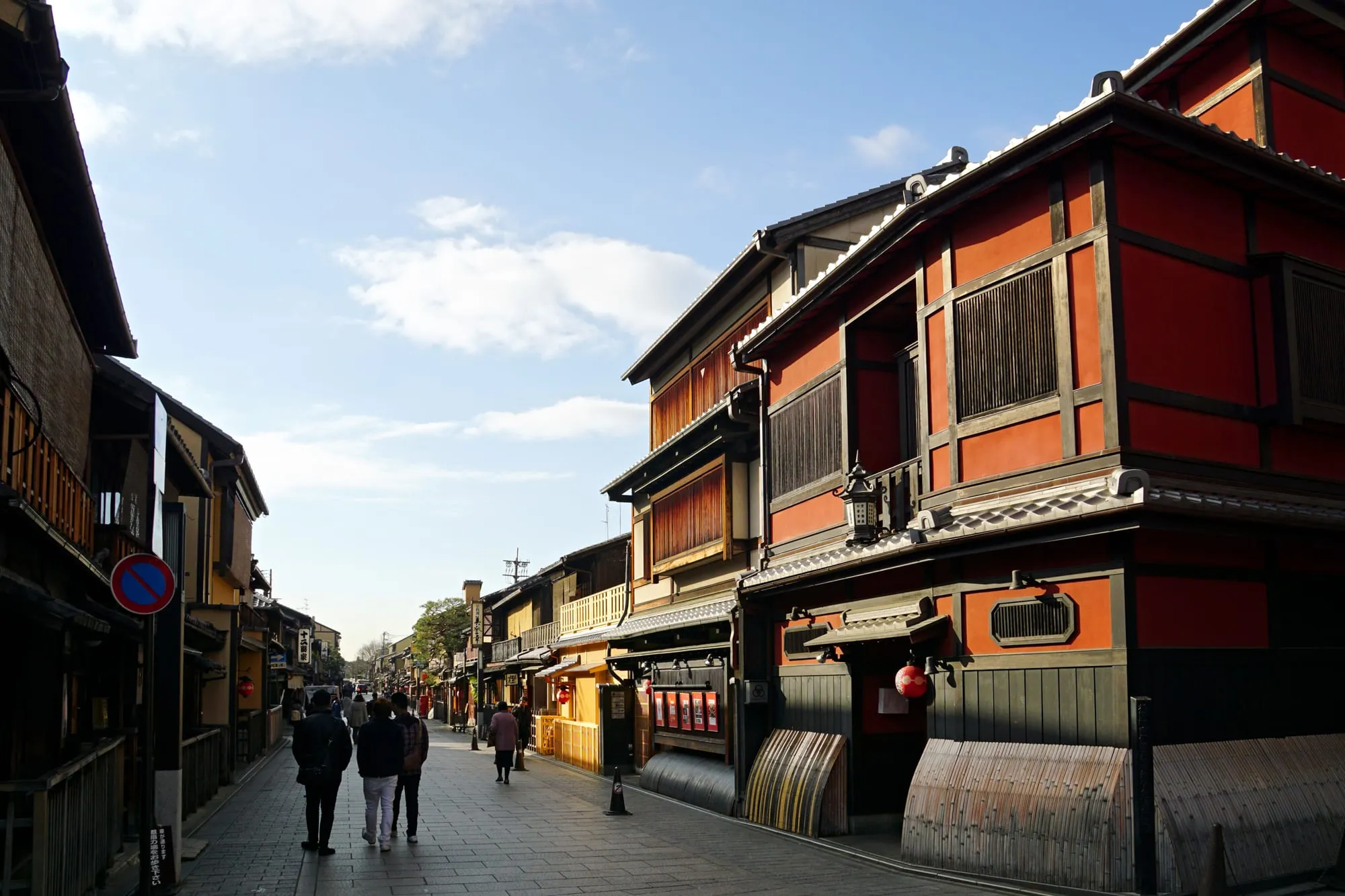
Hanami-koji (“Flower Viewing Lane”) is Gion’s primary north-south boulevard. The southern half, stretching from Shijo-dori down to the entrance gate of Kennin-ji Temple, represents one of Japan’s best-preserved urban streetscapes. The lane is paved with dark granite flagstones and bordered by 17th- and 18th-century timber machiya merchant townhouses, recognisable by their fine cedar latticework (koshi), bamboo skirt guards (inuyarai) designed to protect walls from splashing mud, and small hanging red lanterns (chochin) inscribed with the crest of Gion Kobu.
Behind these discrete wooden facades operate Kyoto’s elite ochaya (tea houses), exclusive banquet venues where geiko entertain high-profile guests. Ochaya operate strictly on an ichigensan okotowari basis: first-time customers cannot enter without a personal introduction from an established patron.
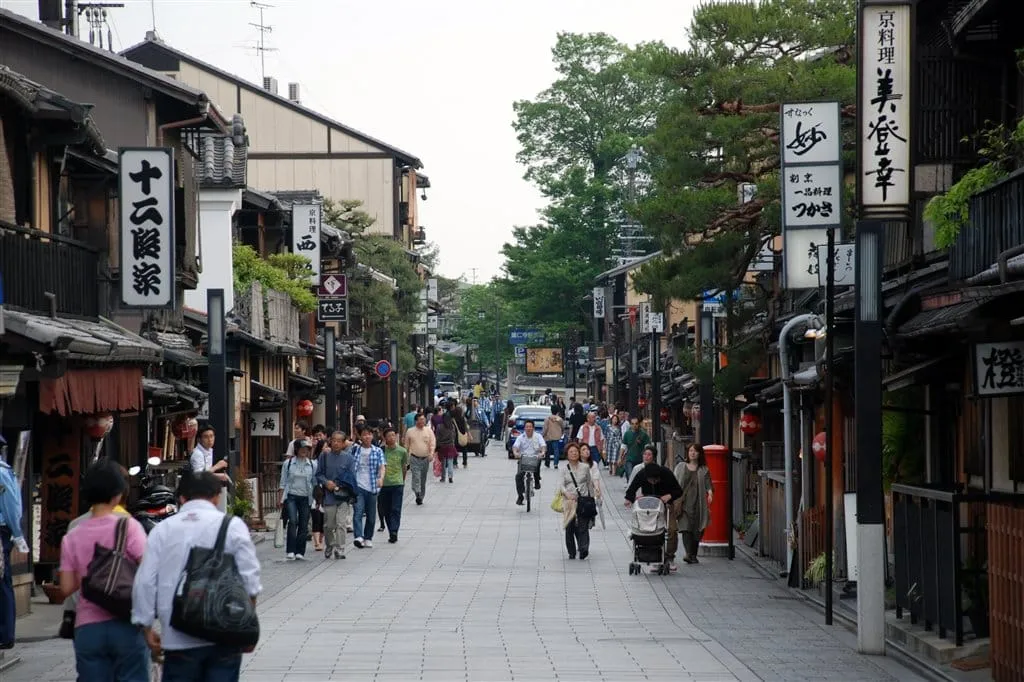 Lattice-fronted wooden machiya teahouses and ochaya entertainment houses along historic Hanami-koji. Photo: xiquinhosilva, Wikimedia Commons, CC BY 2.0.
Shirakawa Canal Area
North of Shijo-dori lies the Shirakawa canal district, an area noticeably quieter and more intimate than Hanami-koji. A stone-flagged walking path borders the gentle waters of the canal, shaded by weeping willow trees and Japanese flowering cherries.
At the western end of the canal sits Tatsumi Bridge (Tatsumi-bashi), an arched wooden crossing that overlooks Tatsumi Daimyojin, a miniature Shinto shrine where geiko and maiko pray for skill and artistic accomplishment. The wooden establishments bordering the north bank of the canal feature dining rooms with picture windows cantilevered directly over the water.
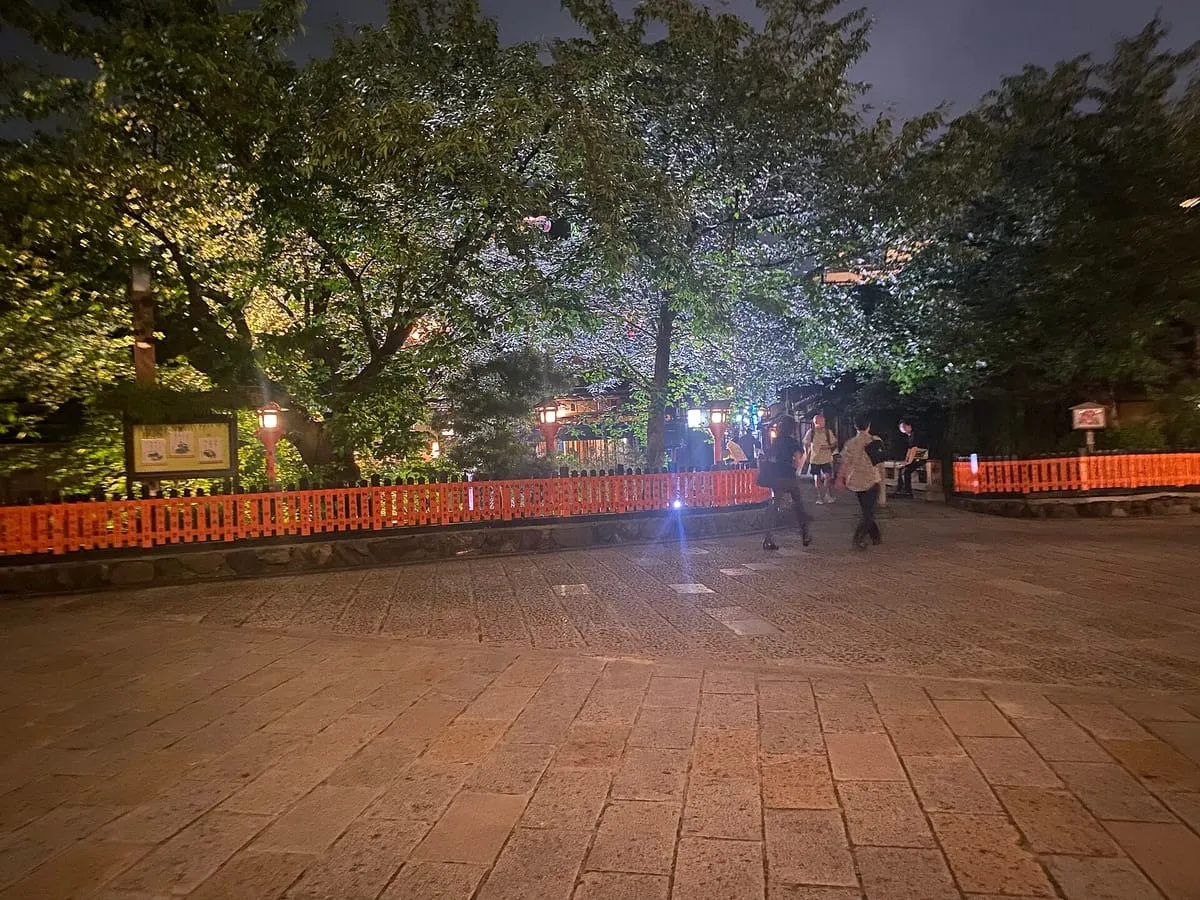 The Tatsumi Bridge spanning the quiet waters of the Shirakawa canal in Gion. Photo: Immanuelle, Wikimedia Commons, CC BY 4.0.
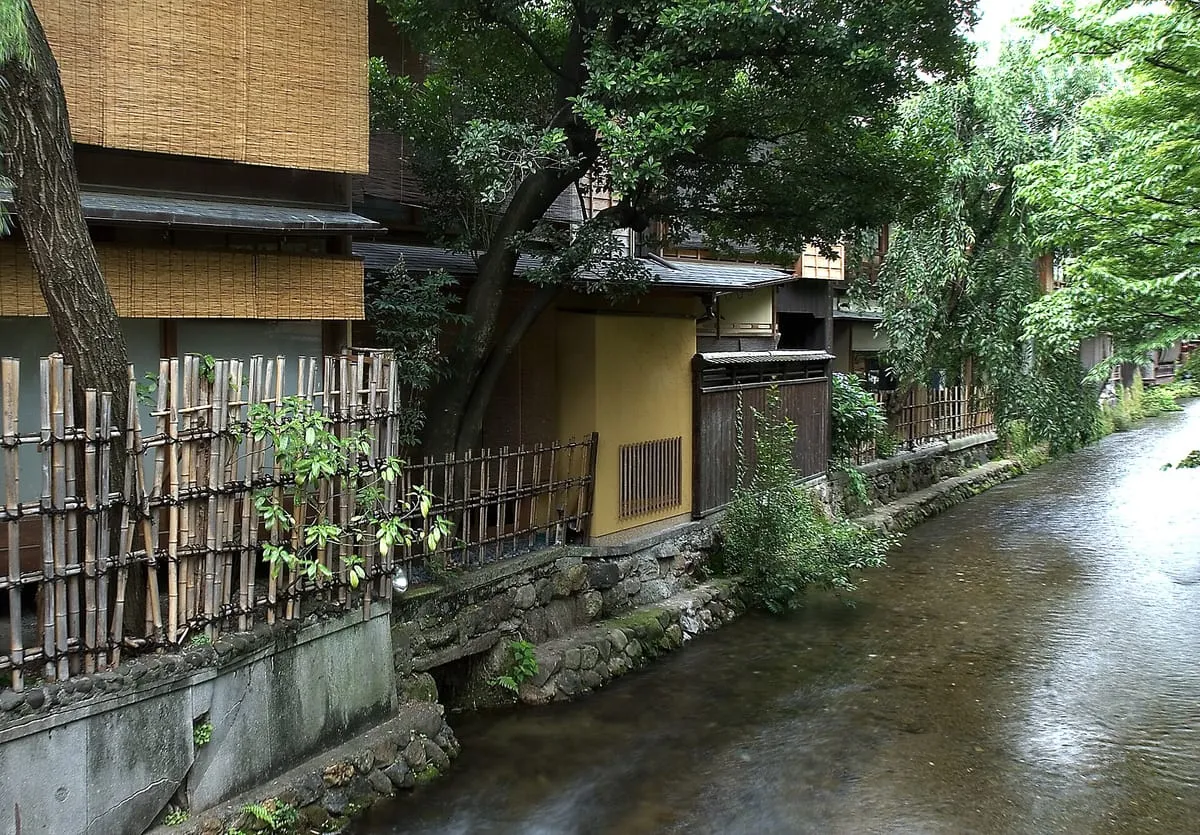 Stone-paved lane along the Shirakawa canal bordered by timber machiya and willow branches. Photo: MichaelMaggs, Wikimedia Commons, CC BY-SA 2.5.
Kennin-ji Temple
Anchor of southern Hanami-koji, Kennin-ji is the oldest Zen Buddhist temple in Kyoto, founded in 1202 by the monk Eisai, who introduced Zen teachings and tea cultivation from China. Unlike Gion’s crowded commercial thoroughfares, Kennin-ji’s temple grounds offer tranquil raked sand Zen gardens, covered wooden corridors, and a Dharma Hall ceiling painted with twin dragons.
Highlights inside the main temple complex include:
- Twin Dragons ceiling painting: An ink-and-wash masterwork painted across the cedar ceiling of the Hatto (Dharma Hall) by artist Koizumi Junsaku in 2002 to commemorate the temple’s 800th anniversary.
- Wind and Thunder Gods screens: A replica of the famous 17th-century gilded folding screen masterwork by Tawaraya Sotatsu (the original is preserved in the Kyoto National Museum).
- Admission and hours: The temple grounds are free to walk through 24/7. Entry to the interior halls and Zen gardens costs ¥600 for adults (¥300 for children) and opens daily from 10:00 to 17:00 (last entry 16:30).
Yasaka Shrine
Dominating the eastern terminal of Shijo-dori, Yasaka Shrine dates back to 656 AD. Its vermilion two-storey western gate (Nishi-romon) faces directly down the shopping avenue. In the central courtyard stands the Buden dance pavilion, hung with hundreds of large white paper lanterns donated by local restaurants and Gion geiko houses, which are illuminated after sunset.
The shrine grounds remain open 24 hours a day with free admission, making it a peaceful night walk destination after dinner in Gion or nearby Pontocho Alley.
Tours
Gion Magical Night Walking Tour & Geisha Culture
From ¥4,032 · 4.9 stars from 5,349 reviews · 100 minutes · Small-group evening walk Book on GetYourGuidead
Kyoto’s highest-rated evening walking tour. A knowledgeable local guide navigates the lantern-lit backstreets of Gion, explaining the strict hierarchy between geiko and maiko, the training houses (okiya), and the architecture of machiya townhouses. Excellent for understanding etiquette rules and avoiding restricted private lanes.
Gion Geisha District & Hidden Gems Walking Tour
From ¥3,600 · 4.7 stars from 4,794 reviews · 2 hours · Guided historical tour Book on GetYourGuidead
An engaging exploration covering both public lanes of southern Gion and the peaceful willow-lined Shirakawa canal. Includes detailed storytelling on local religion at Yasaka Shrine and the traditions that have shaped Kyoto’s entertainment quarter for over 300 years.
Gion & Pontocho Evening Food Tour
From ¥14,400 · 4.8 stars from 667 reviews · 3 hours · Food & culture walk Book on GetYourGuidead
Combines cultural storytelling through Gion’s alleys with multi-stop dining across the Kamo River in Pontocho. Includes tastings of Kyoto specialities, seasonal obanzai dishes, and sake pairings at traditional eateries where independent English bookings are difficult.
Kimono Tea Ceremony at Orizuruya Gion
From ¥7,700 · 4.9 stars from 2,064 reviews · 1.5 - 2 hours · Cultural workshop Book on GetYourGuidead
Located right within Gion, this experience dresses guests in authentic silk kimonos before introducing the fundamentals of the Urasenke tea ceremony in a historic tatami tearoom. Suits travellers seeking hands-on immersion in traditional arts.
Walking tour vs independent exploration: the prices side by side
| Option | Cost per person | Duration | What is included | Who it suits |
|---|---|---|---|---|
| Independent walk | Free | 1 to 2 hours | Self-guided stroll along public streets and Yasaka Shrine | Independent budget travellers comfortable navigating street signage |
| Guided Gion night tour | ¥3,600 to ¥4,032 | 1.5 to 2 hours | Local guide, historical storytelling, etiquette navigation | First-time visitors wanting cultural depth without breaching local rules |
| Gion & Pontocho food tour | ¥14,400 | 3 hours | Guided walk, up to 13 dish tastings, drinks, izakaya reservations | Food lovers wanting dinner paired with neighbourhood history |
| Gion Corner cultural show | ¥5,500 | 50 minutes | Live performance of 7 arts including maiko dance and tea ceremony | Travellers wanting to watch authentic performing arts on stage |
Etiquette rules and photography bans
Because Gion is both an international tourist attraction and a quiet private community, strict etiquette rules are enforced by the local residents’ council (Gion South Side District Council) and Kyoto City authorities:
- Strict photography bans on private streets: Photography is permitted only on public thoroughfares such as Shijo-dori and the main stone roadway of southern Hanami-koji. Taking photos or videos on private side streets and residential alleyways is strictly prohibited and carries a fine of up to ¥10,000. Warning signs with red camera-prohibition pictograms are posted at the entrance of every restricted lane.
- Never touch or obstruct working artists: If you encounter a geiko or maiko walking to or from an appointment (ozashiki), step aside to keep the pathway clear. Never touch their expensive hand-woven silk kimonos, never block their path for selfies, and do not shout or run after them.
- No eating while walking: Eating snacks or drinking while walking down the historic street is considered disrespectful. Consume food and beverages directly at the counter where you purchased them.
- Do not lean on timber latticework: The delicate wooden lattice screens (koshi) on traditional townhouses are historic and fragile. Never lean your back or luggage against private residences or sit on stone doorsteps.
- No smoking: Street smoking is strictly prohibited throughout central Kyoto except inside designated enclosed smoking booths, with on-the-spot fines of ¥1,000.
Cultural performances at Gion Corner
Travellers wishing to see authentic maiko performances without an invitation to an exclusive teahouse can attend a performance at Gion Corner, located inside Yasaka Hall (Yasaka Kaikan) at the southern end of Hanami-koji.
The one-hour showcase presents seven traditional performing arts: Kyo-mai dance performed by a maiko, koto harp music, flower arrangement (ikebana), gagaku court music, kyogen comedic theatre, bunraku puppetry, and the tea ceremony.
- Showtimes: Daily at 18:00 and 19:00.
- Admission: ¥5,500 for adults; ¥3,300 for students and children aged 7–15.
- Booking: Tickets can be reserved through the Gion Corner official website or purchased at the door if seats remain.
How to get there
Gion is conveniently accessible from anywhere in Kyoto via train or bus:
- By Keihan Railway: Ride to Gion-Shijo Station. Exit 6 brings you directly to Shijo-dori, just a 2-minute walk from Hanami-koji and the Shirakawa canal.
- By Hankyu Railway: Ride to Kyoto-Kawaramachi Station. Walk 5 minutes east across the Shijo Bridge over the Kamo River.
- By Kyoto City Bus: Take bus routes 86, 106, or 206 from Kyoto Station directly to the Gion bus stop outside Yasaka Shrine (20 minutes, ¥230 flat fare).
Combine your evening visit with dinner along Pontocho Alley across the river, or sample local delicacies on a dedicated Kyoto food tour.
Common questions
What is the difference between geisha, geiko and maiko?
In Kyoto, fully qualified artists are called geiko (meaning 'woman of art'). A maiko is an apprentice geiko, typically aged 15 to 20, recognisable by colourful long-sleeved kimonos and elaborate seasonal hair ornaments.
Where can I take photos in Gion?
Photography is permitted only on public streets like Shijo-dori and the main stone-paved section of Hanami-koji. Photography is strictly prohibited on private side streets and alleys, with fines up to 10,000 yen.
When is the best time to walk through Gion?
Dusk (between 17:30 and 19:00) is the most atmospheric time, as paper lanterns are lit outside traditional machiya and geiko or maiko may be seen walking between banquet appointments.