In this guide
💡 The Short Version: The Japanese tea ceremony (Chado or Sado) is a meditative cultural art refined in Kyoto by 16th-century tea master Sen no Rikyu. Sessions take place in historic tatami rooms and include eating a sweet wagashi before sipping bitter whisked matcha. Or book a tour: the Tea Ceremony in a Garden Tea Housead near Kiyomizu-dera lets you observe a master demonstration and whisk your own bowl of matcha in an authentic Japanese garden setting.
Kyoto is the spiritual birthplace and living headquarters of Chado (“The Way of Tea”). Refined in the late 16th century by Sen no Rikyu (1522–1591), tea master to warlords Oda Nobunaga and Toyotomi Hideyoshi, the practice transformed a beverage into a profound philosophical discipline known as wabi-cha. Wabi-cha rejected ostentatious Chinese gold utensils in favour of rustic, locally fired ceramic bowls, embodying four foundational Zen virtues: harmony (wa), respect (kei), purity (sei), and tranquility (jaku).
Today, Kyoto remains the world capital of tea culture. The three great familial tea lineages founded by Rikyu’s great-grandsons—Urasenke, Omotesenke, and Mushakojisenke, collectively known as the San-Senke—all maintain their ancestral headquarters and private training grounds in northern Kyoto. For international visitors, participating in a tea ceremony provides direct, meditative access to Japanese aesthetics and hospitality (omotenashi).
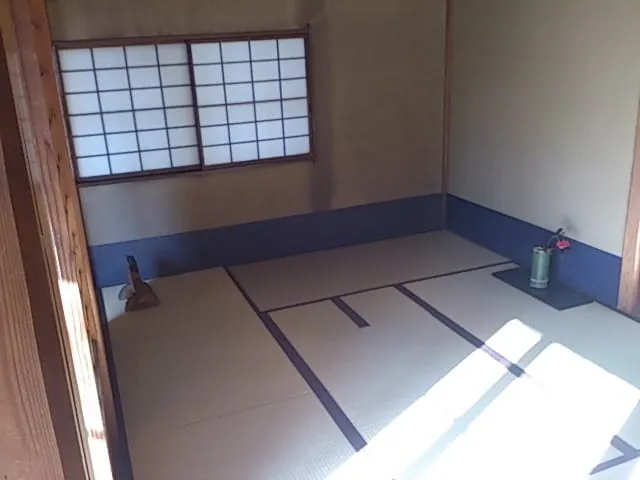 A traditional Japanese tatami tearoom interior with a seasonal flower arrangement and hanging scroll. Photo: Akaniji, Wikimedia Commons, CC BY-SA 3.0.
Architecture and philosophy of the tearoom
Traditional Japanese tearooms (chashitsu) are deliberately understated architectural spaces designed to remove guests from worldly concerns:
- The 4.5-tatami standard: Sen no Rikyu standardised the classic tearoom at four and a half tatami mats (roughly 2.7 metres square). The compact footprint brings host and guests into close physical and spiritual proximity.
- The crawl-in entrance (Nijiriguchi): Measuring barely 65 centimetres high and wide, this miniature sliding doorway requires every guest to kneel down, bow their head, and crawl into the room. In feudal Japan, samurai were forced to leave their long swords on an exterior rack before crawling through, signifying that social rank and martial power did not exist inside the tearoom.
- The alcove (Tokonoma): The spiritual focal point of the room. It features a hanging calligraphy scroll (kakejiku) displaying a Zen brushwork proverb chosen specifically for the season or the day’s guests, accompanied by a single seasonal wild flower (chabana) arranged in a simple ceramic or bamboo vase.
The ritual steps of the ceremony
A formal tea ceremony experience follows five carefully choreographed movements:
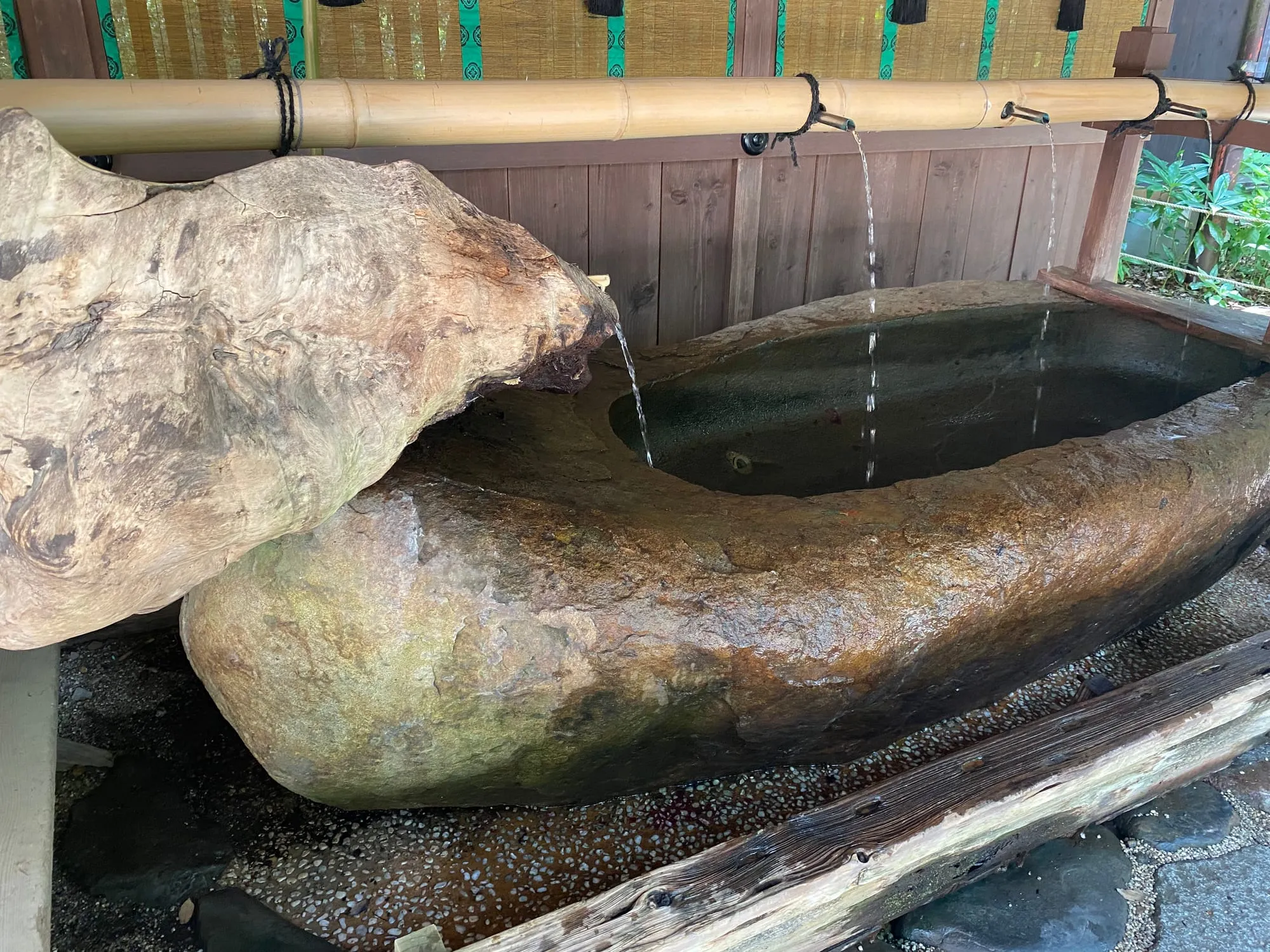
- Purification and entry: Guests clean their hands and mouth at an exterior stone water basin (tsukubai), remove their shoes, and crawl through the entrance onto the fragrant woven rush tatami mats.
- Contemplating the tokonoma: Each guest kneels quietly before the decorative alcove to read the scroll’s message, admire the flower, and appreciate the charcoal kettle (chagama) gently boiling water.
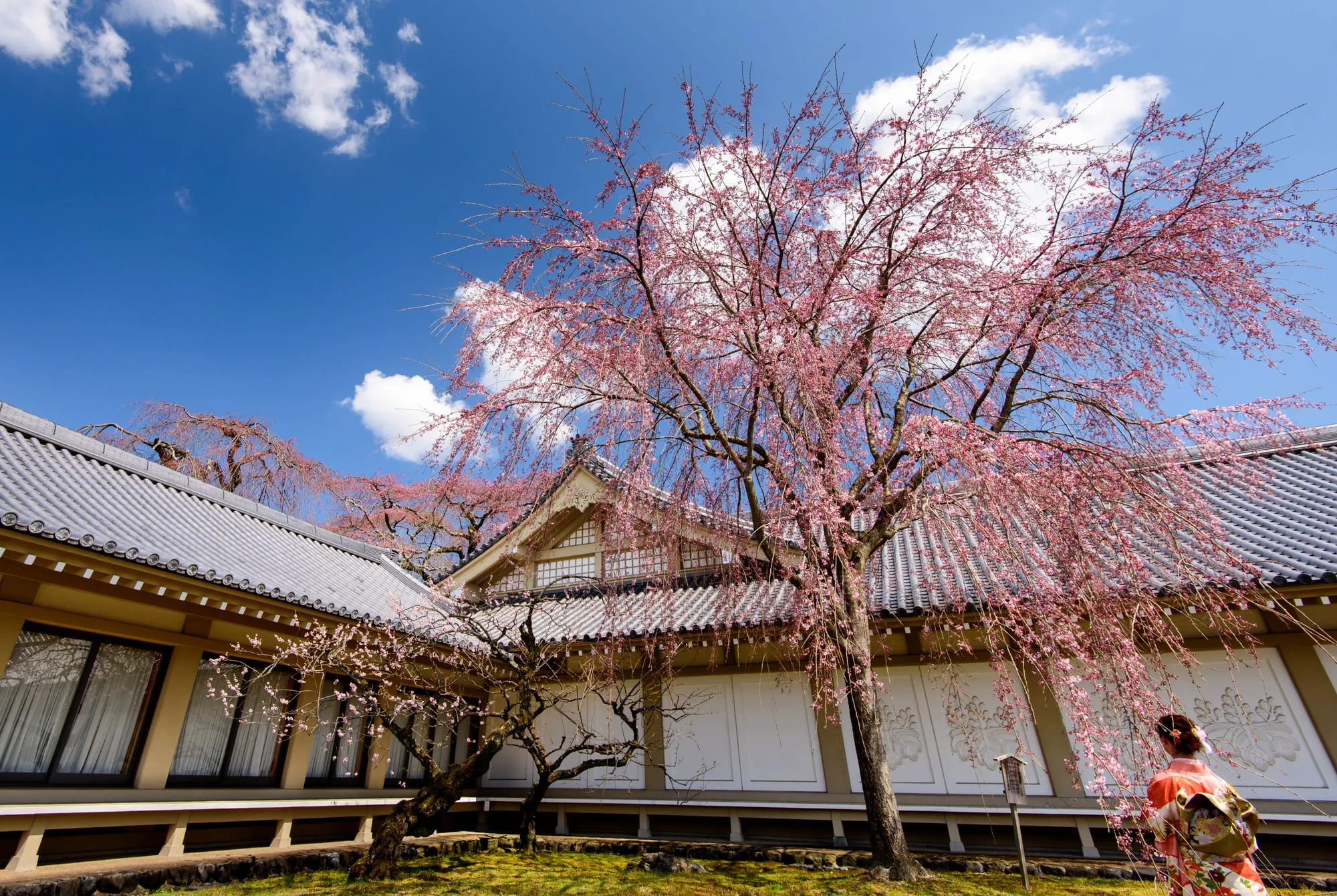
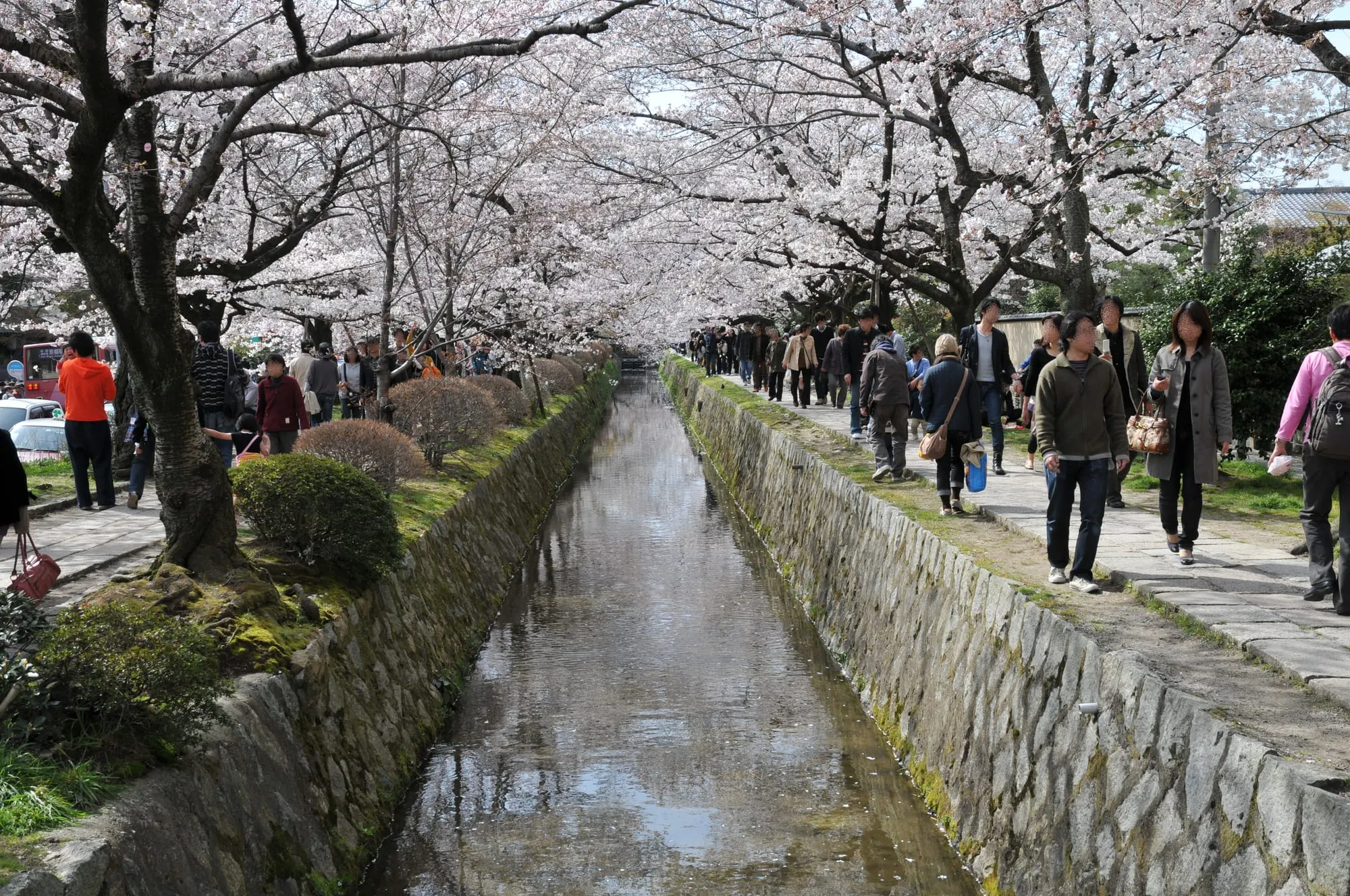
- Eating the Wagashi sweet: Before the matcha is prepared, the host presents a seasonal confection (wagashi). These handcrafted sweets are shaped like seasonal motifs—cherry blossoms in spring, water ripples in summer, maple leaves in autumn, or camellias in winter. Eating the sweet coats the tongue with delicate sweetness, balancing the astringent bitterness of the powdered green tea that follows.
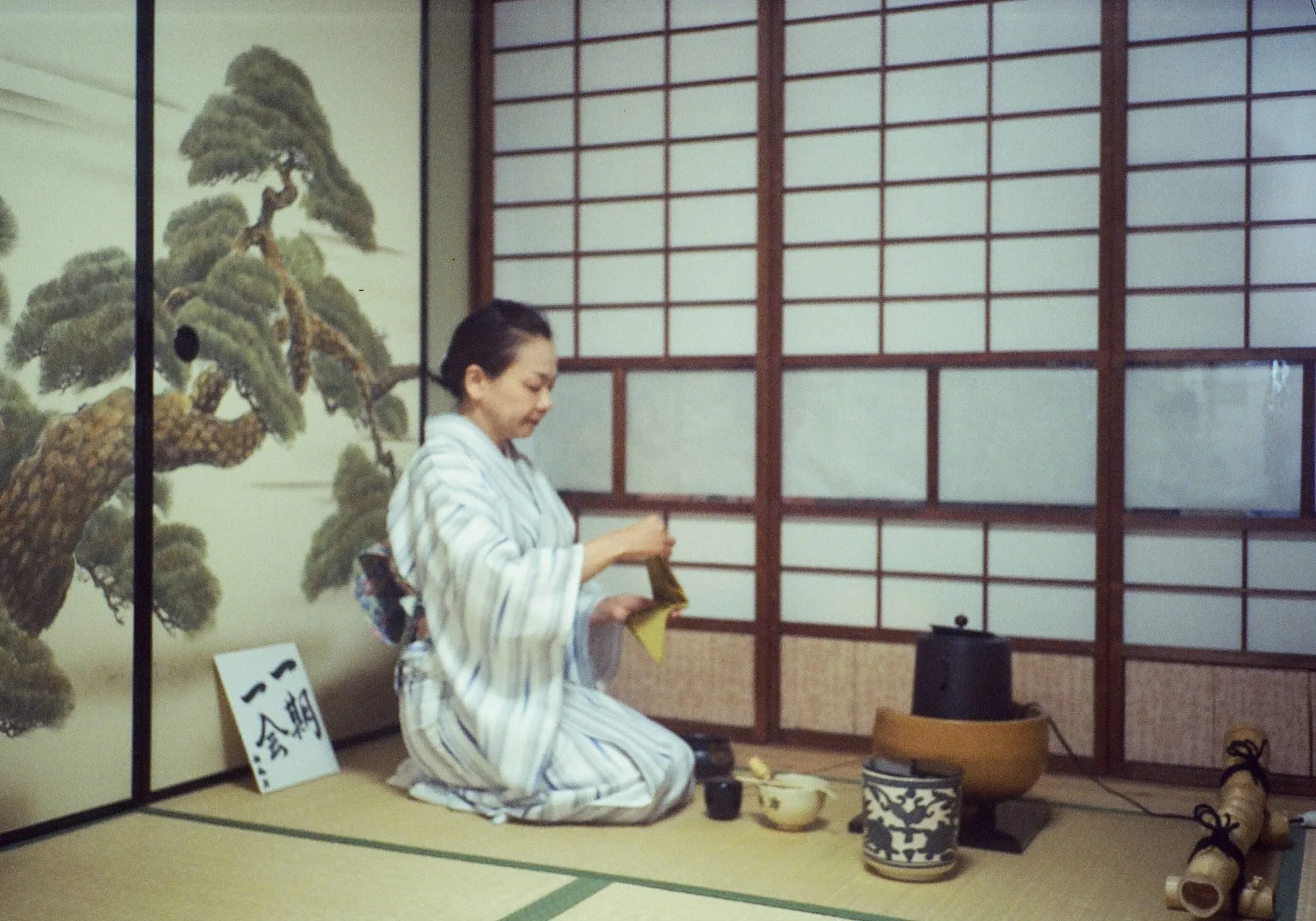
- The Host’s Preparation (Temae): The tea master uses a bamboo scoop (chashaku) to transfer fine jade-green matcha powder from a lacquer caddy (natsume) into a ceramic tea bowl (chawan). Hot water is ladled into the bowl, and the master whisks it into a frothy emerald foam using a finely split bamboo whisk (chasen).
- Drinking and admiring the bowl: The guest receives the bowl, rotates it to avoid placing their mouth directly against the front design, drinks the tea, and cleans the rim before placing it down to examine the glaze and firing.
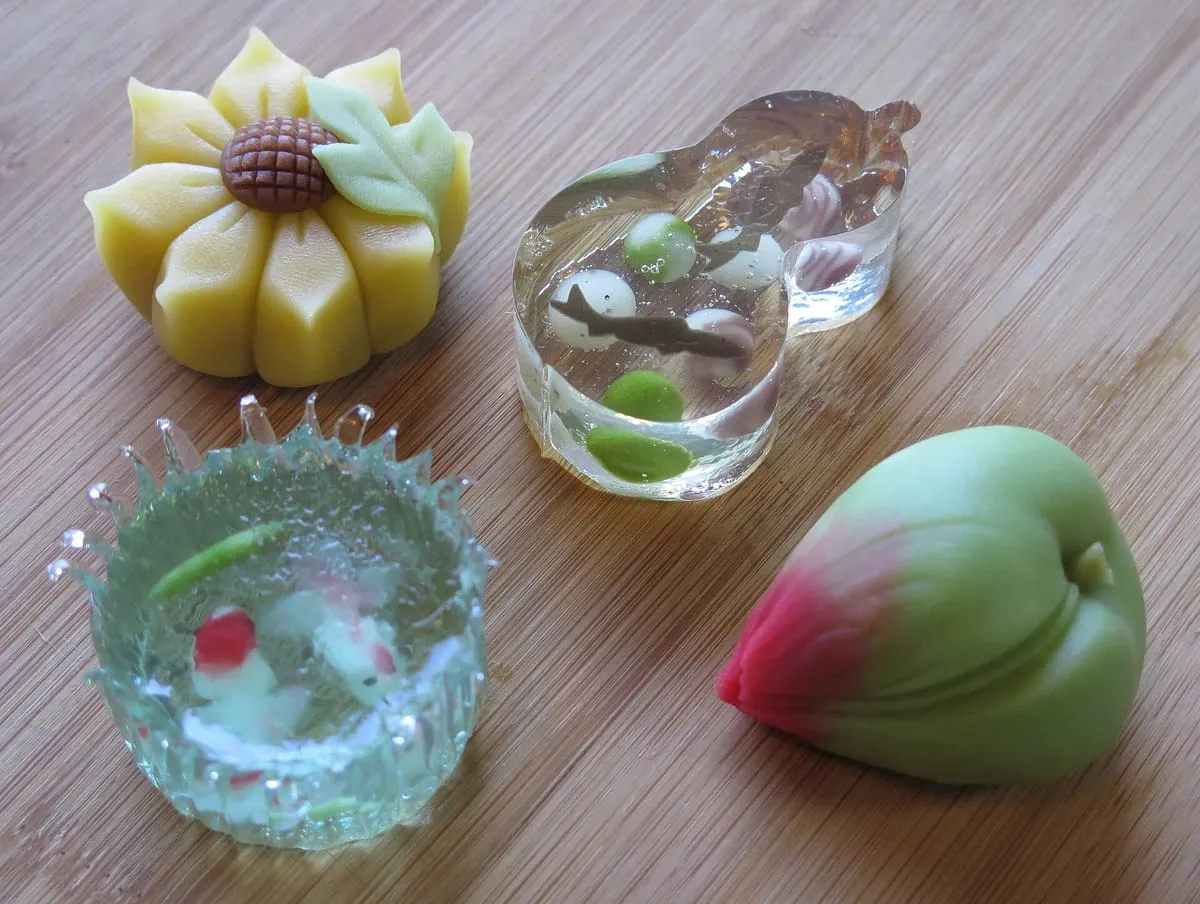 Delicate handmade wagashi tea sweets served alongside matcha green tea. Photo: Douglas Perkins, Wikimedia Commons, CC0.
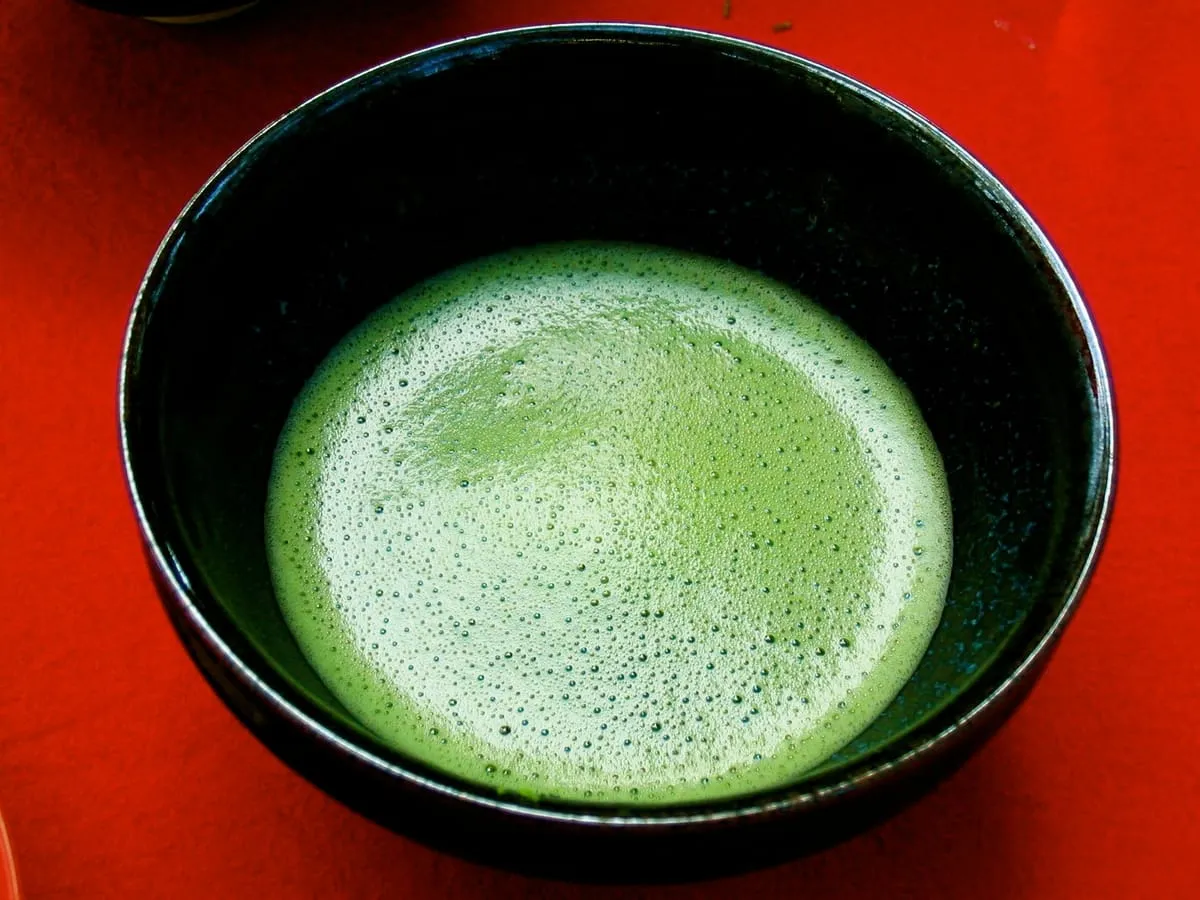 A bamboo chasen whisk frothing matcha powder in a traditional ceramic tea bowl. Photo: rumpleteaser from Nagoya, Japan, Wikimedia Commons, CC BY 2.0.
Tours
Tea Ceremony in a Garden Tea House near Kiyomizu-dera
From ¥8,800 · 4.8 stars from 4,638 reviews · 50 minutes · Authentic garden teahouse Book on GetYourGuidead
Kyoto’s most popular tea ceremony experience, set in a historic wooden teahouse surrounded by a moss garden within walking distance of Kiyomizu-dera. A licensed tea master explains the philosophy of wabi-sabi, serves seasonal wagashi, demonstrates the traditional preparation, and coaches guests in whisking their own bowl.
45-Minute Tea Ceremony Lesson Experience
From ¥3,500 · 4.3 stars from 2,537 reviews · 45 minutes · Introductory lesson Book on GetYourGuidead
An affordable and accessible introduction to the basics of Japanese tea preparation. Held in central Kyoto, this fast-paced session covers tearoom manners, the history of matcha, and hands-on whisking practice.
Kimono Tea Ceremony at Orizuruya Gion
From ¥7,700 · 4.9 stars from 2,064 reviews · 1.5 - 2 hours · Kimono dressing & tea Book on GetYourGuidead
Combines professional kimono dressing and hair styling with a traditional tea ceremony inside a historic machiya in Gion. Guests choose their silk kimono before stepping into the tatami room for a photo-worthy cultural immersion.
Tea Ceremony in 100-Year-Old Kyo-Machiya Townhouse
From ¥5,198 · 4.8 stars from 995 reviews · 50 minutes · Historic townhouse Book on GetYourGuidead
Conducted inside an authentic century-old wooden merchant townhouse (machiya). Guests sit on tatami in a peaceful inner room, learning the ritual gestures of the Urasenke tradition with bilingual commentary.
Tea ceremony formats and ticket options: the prices side by side
| Experience style | Price per person | Duration | What is included | Who it suits |
|---|---|---|---|---|
| Basic introductory lesson | ¥3,500 | 45 minutes | Tea master demonstration, 1 bowl of matcha, sweet | Budget travellers and curious first-timers on tight schedules |
| Machiya townhouse ceremony | ¥5,198 | 50 minutes | 100-year-old preserved room, tea master lesson, wagashi | Visitors wanting authentic period architecture |
| Garden teahouse experience | ¥8,800 | 50 minutes | Scenic garden teahouse setting, premium matcha, wagashi | Travellers seeking tranquility near historic temples |
| Kimono dressing + tea ceremony | ¥7,700 to ¥9,900 | 1.5 to 2 hours | Full kimono rental, hair styling, tea ceremony, photos | Couples and photography lovers wanting complete cultural dress |
| Private tearoom session | ¥18,000 to ¥30,000 | 60 to 90 minutes | Private room, personal tea master, custom wagashi | Families with young children or small private groups |
Essential tearoom etiquette
To show proper respect to your host and the tea utensils (dogu), observe these fundamental guidelines:
- Socks are strictly mandatory: Bare feet or bare legs touching tatami mats is a major cultural transgression. Wear or carry a clean pair of white socks to put on immediately after removing your outdoor footwear.
- Remove jewellery and watches: Metal rings, watches, and bracelets can scratch delicate lacquerware tea caddies and antique ceramic tea bowls, many of which are historic heirlooms.
- Avoid strong fragrances: Perfumes, colognes, and strong lotions overwhelm the subtle scent of tatami rush and natural incense (ko) burned inside the charcoal hearth.
- The bowl rotation gesture:
- Receive the bowl with your right hand and place it onto the flat palm of your left hand.
- Steady the side of the bowl with your right fingers and bow slightly to your host in gratitude.
- The most beautiful painted face of the bowl (shomen) is presented toward you. To avoid drinking directly from this decorative face, gently rotate the bowl clockwise twice by roughly 45 degrees.
- Sip the tea in three or four draughts. On the final sip, make an audible slurp; this signals to the host that you have thoroughly enjoyed every drop.
- Wipe the rim where your lips touched using your right thumb and forefinger, wipe your fingers on a provided tissue (kaishi), turn the bowl counter-clockwise twice to return the front face to its original orientation, and place it gently back onto the mat.
- Seating posture (Seiza): The formal sitting posture requires kneeling with tops of feet flat on the tatami and resting your buttocks on your heels. If seiza becomes uncomfortable after several minutes, shifting your legs slightly to the side is completely acceptable for foreign guests. Many teahouses also provide low wooden stools upon request.
Combine your tea ceremony with an exploration of nearby temples in Higashiyama or an afternoon stroll through Gion.
Common questions
Do I need to book a tea ceremony in Kyoto in advance?
Yes. Authentic tea ceremony experiences are held in intimate tearooms with limited seating (often 4 to 8 guests per session) to ensure a personal, tranquil environment.
What should I wear to a Japanese tea ceremony?
Wear clean, modest clothing. You must wear clean white socks (or bring a pair) to step onto the tatami mats. Avoid wearing strong perfumes or watches and rings that could scratch delicate tea bowls.
How long does a tea ceremony session last?
An introductory cultural tea ceremony for international visitors typically lasts between 45 and 90 minutes, including history, demonstration, and hands-on whisking.