In this guide
💡 The Short Version: The most comfortable periods for exploring Tokyo on foot are spring (late March to May) and autumn (October to November). January is the coldest and sunniest month (daily maximum 9.8 °C, only 4.5 rain days); August is the hottest (daily maximum 31.3 °C with severe humidity); and September and October are the wettest (225 mm and 235 mm rainfall from seasonal typhoons). Cherry blossoms generally achieve full bloom around 31 March, autumn leaves peak in late November, and Golden Week (29 April and 3 to 5 May in 2027) brings heavy domestic travel. All weather figures reflect thirty-year official averages from the Japan Meteorological Agency. Or book a tour: a full-day guided Tokyo highlights tourad with a local guide starts from ¥16,000.
Weather month by month in Tokyo
Tokyo features a humid subtropical climate characterised by warm, wet summers and sunny, crisp winters. The figures below are official thirty-year baseline climatological normals (1991–2020) recorded by the Japan Meteorological Agency at its central Tokyo monitoring observatory. A rain day is formally recorded when precipitation reaches or exceeds 1.0 mm.
| Month | Daily High | Daily Low | Mean Temp | Rainfall | Rain Days | Typical Weather Conditions |
|---|---|---|---|---|---|---|
| January | 9.8 °C | 1.2 °C | 5.4 °C | 59.7 mm | 4.5 | Cold, crisp, and exceptionally sunny; crystal-clear skies offer the year’s best views of Mount Fuji. Snow falls on 2.8 days on average. |
| February | 10.9 °C | 2.1 °C | 6.1 °C | 56.5 mm | 5.2 | Late winter chill; plum blossoms (ume) bloom in shrine gardens; occasional dusting of light snow (average 3.5 snow days). |
| March | 14.2 °C | 5.0 °C | 9.4 °C | 116.0 mm | 9.2 | Gradual warming with variable spring rains; cherry blossoms begin opening in the final week of the month. |
| April | 19.4 °C | 9.8 °C | 14.3 °C | 133.7 mm | 9.5 | Mild, pleasant spring conditions; cherry blossoms reach full bloom early in the month, followed by lush green growth. |
| May | 23.6 °C | 14.6 °C | 18.8 °C | 139.7 mm | 10.1 | Comfortable, warm outdoor weather; azalea festivals and grand spring sumo in Ryogoku; Golden Week crowd surges early in the month. |
| June | 26.1 °C | 18.5 °C | 21.9 °C | 167.8 mm | 11.6 | Start of the tsuyu (plum rain) rainy season; overcast skies, frequent drizzle, and peak hydrangeas (ajisai) in temple gardens. |
| July | 29.9 °C | 22.4 °C | 25.7 °C | 156.2 mm | 10.5 | Intense summer heat and high relative humidity (averaging 76 per cent); evening firework festivals (hanabi) along Tokyo waterways. |
| August | 31.3 °C | 23.5 °C | 26.9 °C | 154.7 mm | 7.9 | The hottest month of the year; high temperatures frequently exceed 35 °C; cicadas buzz in parks; Obon holiday travel in mid-August. |
| September | 27.5 °C | 20.3 °C | 23.8 °C | 224.9 mm | 11.0 | Humid late summer weather transitioning to autumn; high rainfall driven by Pacific typhoon tracks passing offshore. |
| October | 22.0 °C | 14.8 °C | 18.0 °C | 234.8 mm | 10.5 | The wettest month by volume due to late-season typhoons, but interspersed with crisp, refreshingly clear autumn days. |
| November | 16.7 °C | 8.8 °C | 12.5 °C | 96.3 mm | 7.4 | Cool, dry, and exceptionally stable weather; golden ginkgo trees and fiery red Japanese maples peak in city gardens late in the month. |
| December | 12.0 °C | 3.8 °C | 7.7 °C | 57.9 mm | 5.2 | Cold, dry winter air; citywide architectural Christmas illuminations; major shrine preparations for New Year (Hatsumode). |
The UK Foreign, Commonwealth & Development Office notes in its Japan travel guidance that Japan’s tropical cyclone season extends from June to December, with peak activity between July and September. Modern building infrastructure in Tokyo handles typhoon winds easily, but storm tracks can halt surface trains, subways, and bullet trains (shinkansen) for safety checks lasting several hours.
Season by season: what to expect
Spring (March to May): cherry blossoms and mild warmth
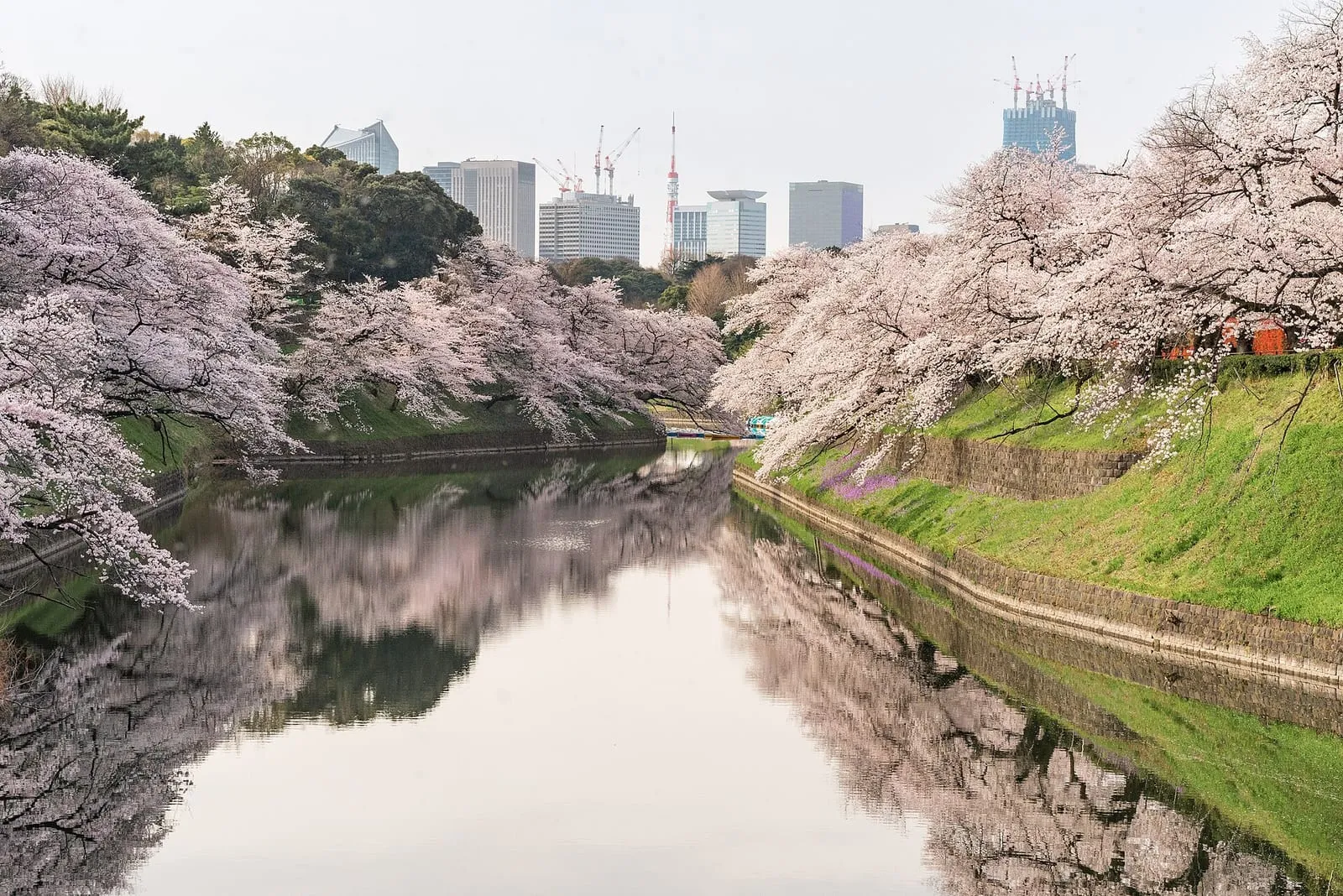
Spring is Tokyo’s most celebrated travel window. Early March remains cool, but by late March, the city’s parks erupt into delicate pale pink canopies of Yoshino cherry blossoms (sakura).
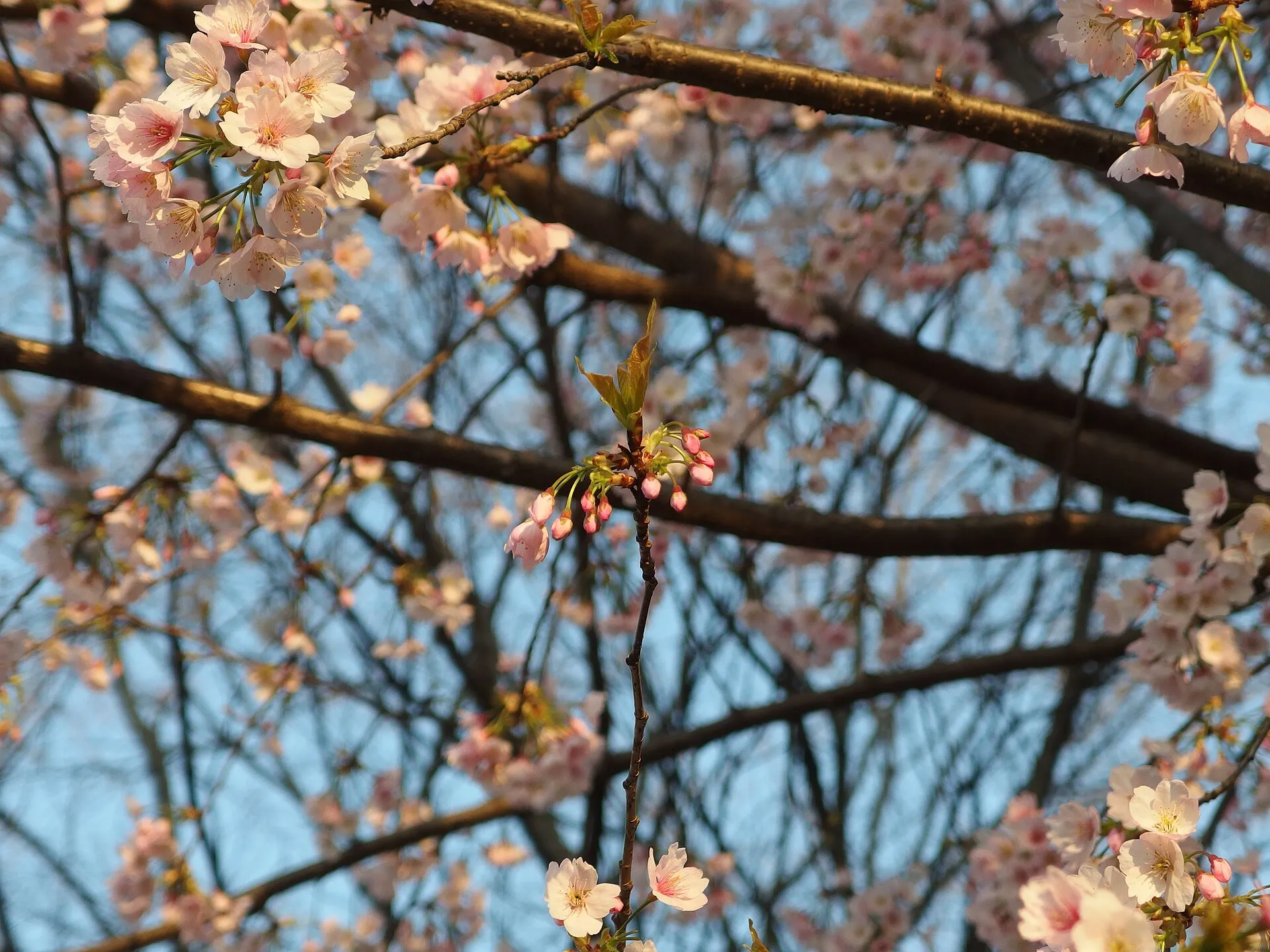
Cherry blossom in Ueno Park. Photo: Kakidai, Wikimedia Commons, CC BY-SA 4.0.
According to thirty-year data from the Japan Meteorological Agency, the normal first bloom (kaika) in Tokyo is 24 March, and normal full bloom (mankai) arrives on 31 March. The flowering window is fleeting: petals remain at their peak for only seven to ten days before falling like snow (sakura fubuki).
Major cherry blossom viewing spots include Ueno Park, Shinjuku Gyoen (which features early- and late-blooming cultivars that extend the season well into April), the Meguro River canal, and Chidorigafuchi moat. Read our dedicated spot guide in cherry blossom in Tokyo.
Late April and May deliver some of the finest weather of the year, with daytime temperatures hovering comfortably around 20–24 °C. However, the period between 29 April and 5 May coincides with Golden Week, one of Japan’s three major domestic holiday windows. During Golden Week, intercity bullet trains book out weeks ahead, hotel room rates climb, and major family attractions (such as Tokyo Disneyland and teamLab) experience peak attendance.
Summer (June to August): festivals, fireworks, and humidity
Summer brings a dramatic contrast between the early rainy season and the intense heat of midsummer.
- June (The Rainy Season): The seasonal rain front known as tsuyu arrives in early June and lasts roughly four to five weeks. Expect overcast skies and frequent rainfall. June is not cold (average high 26.1 °C), but it requires a reliable compact umbrella and water-resistant footwear. Temple gardens featuring hydrangeas (ajisai), such as Hakusan Shrine in Bunkyo, are at peak bloom during June.
- July and August (Midsummer Heat): Once the rainy front dissipates in early July, Tokyo transitions into hot, humid summer conditions. Daily temperatures frequently surpass 33 °C, and nocturnal temperatures rarely drop below 24 °C. Tokyo residents beat the heat with iced matcha, cold zaru soba noodles, portable electric fans, and cooling neck towels.
- Summer Festivals (Matsuri): Summer is the prime season for traditional community festivals. The Sumida River Fireworks Festival (Sumidagawa Hanabi Taikai) takes place on the last Saturday of July, attracting over 900,000 spectators wearing lightweight cotton yukata. Major neighbourhood shrine festivals, such as the Sanja Matsuri in Asakusa and Fukagawa Hachiman Matsuri in Koto, feature dozens of portable shrines (mikoshi) hoisted through the streets. Consult our festival guide in Tokyo in summer.
Autumn (September to November): foliage and pleasant trekking
Autumn is regarded by seasoned travellers as the most comfortable time to explore Tokyo.
- September: Early September retains lingering summer heat and humidity, along with elevated rainfall from Pacific typhoons. By late September, cooler evening breezes arrive.
- October: Although statistically Tokyo’s wettest month due to autumn low-pressure systems, the storms pass swiftly, leaving behind bright, crisp days with afternoon temperatures around 22 °C. It is an outstanding month for outdoor walking tours and exploring culinary markets.
- November: November provides the most stable, dry, and sunny weather of the entire autumn. Relative humidity drops, rainfall falls below 100 mm, and morning lows average a brisk 8.8 °C.
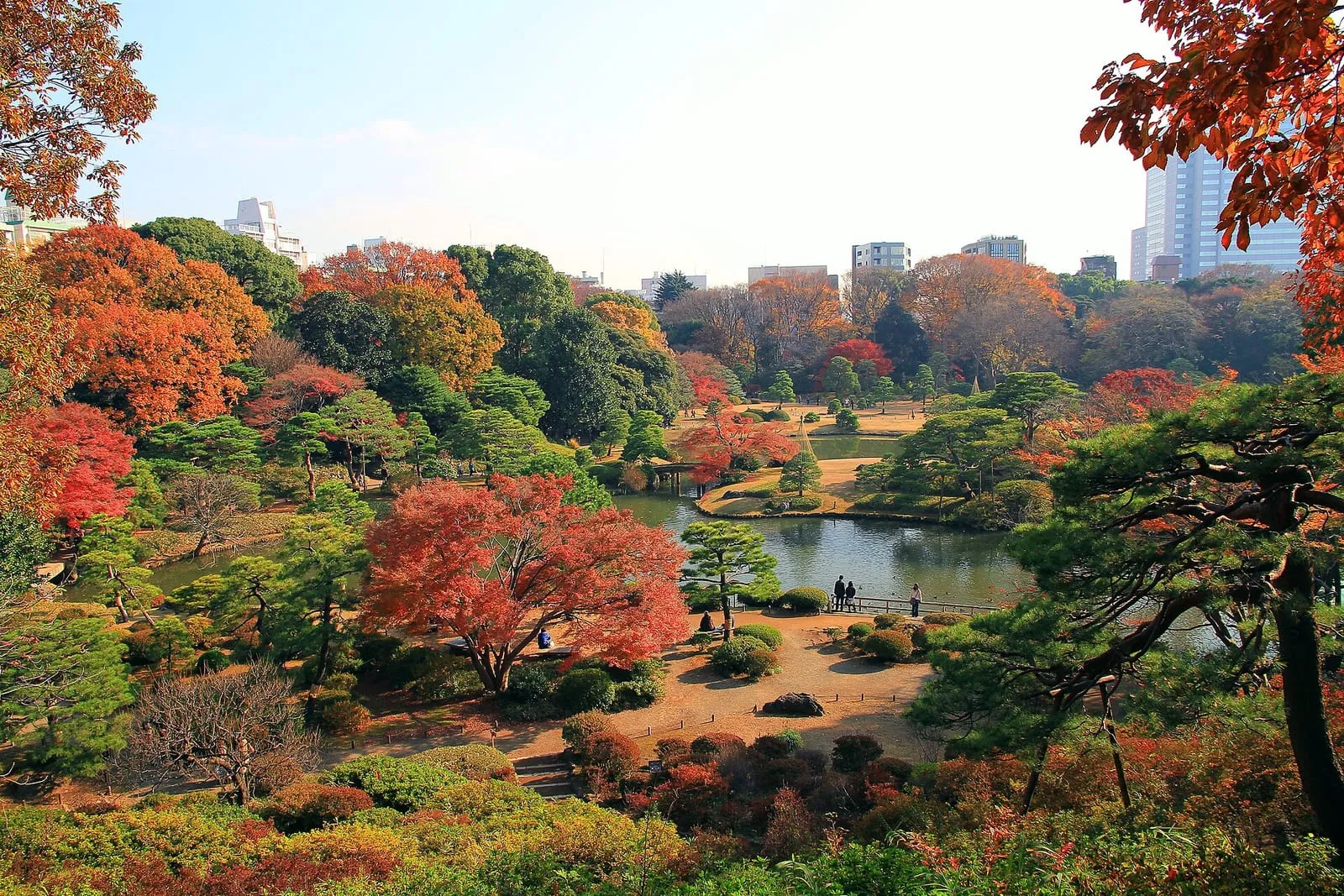
Autumn foliage (koyo) arrives later in Tokyo than in northern Japan. The city’s famous ginkgo trees turn brilliant gold from mid-November to early December along the celebrated Icho Namiki avenue at Meiji Jingu Gaien. Japanese maples (momiji) blaze crimson around the landscaped ponds of Rikugien and Koishikawa Korakuen throughout late November. For locations and illuminated night strolls, see our autumn leaves in Tokyo guide.
Winter (December to February): crisp blue skies and Mount Fuji views
Winter in Tokyo is far milder and sunnier than in northern European or northeastern North American cities. Central Tokyo experiences very little precipitation (December and January average fewer than five rain days each), and significant snowfall is rare, averaging only two or three light snow flurries per winter.
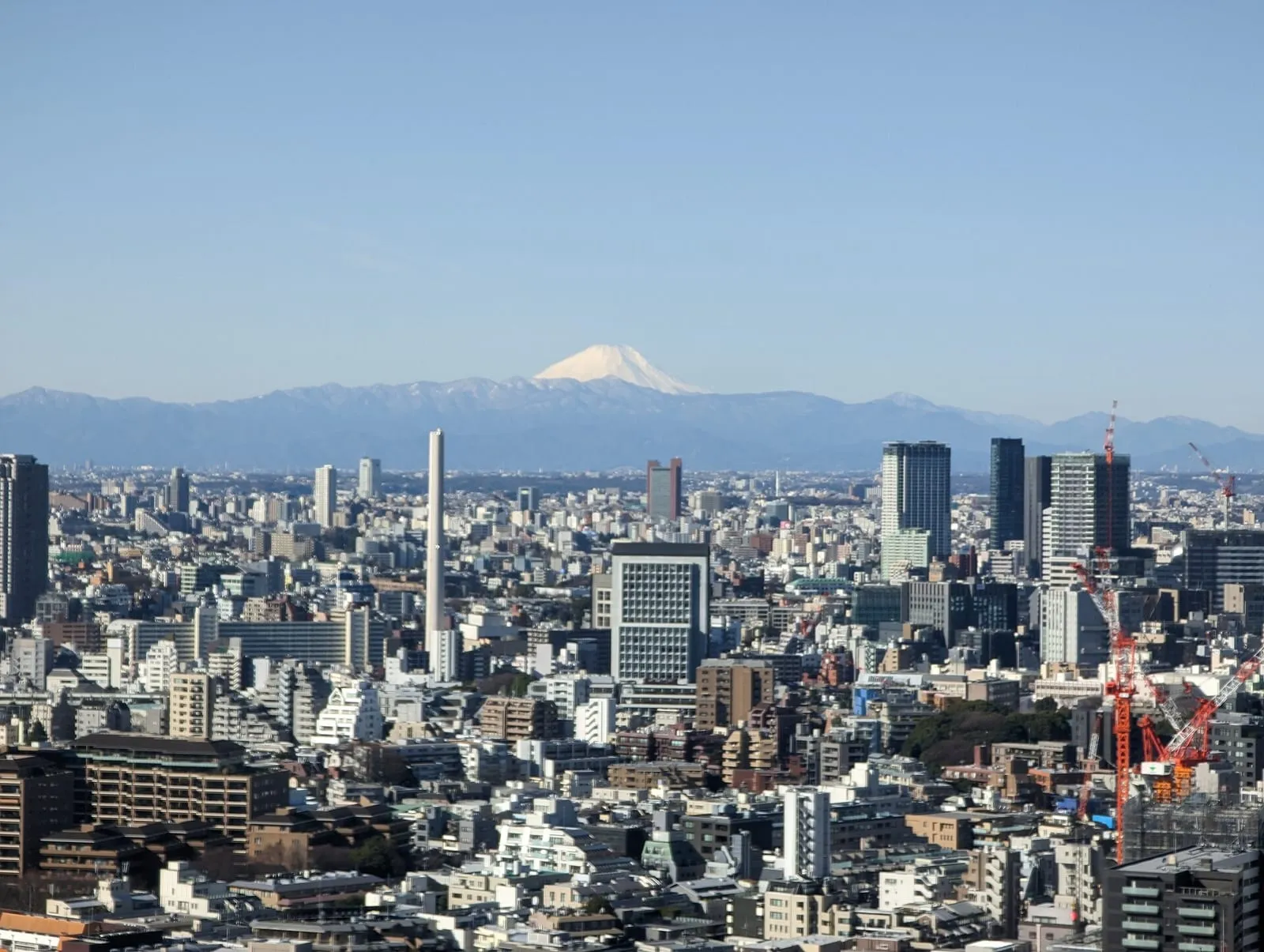
Daytime temperatures reach 10–12 °C under brilliant blue skies, though biting northerly winds (karakkaze) make warm coats, gloves, and thermal layers necessary for evening sightseeing. Because cold winter air contains minimal moisture, atmospheric visibility peaks between December and February. Viewing decks like Shibuya Sky, Tokyo Skytree, and Roppongi Hills Mori Tower offer sharp, uninterrupted panoramas of snow-covered Mount Fuji on more than 60 per cent of winter mornings.
Winter is also renowned for elaborate architectural LED illuminations across commercial districts like Roppongi Hills, Tokyo Midtown, Marunouchi, and Caretta Shiodome (see Tokyo Christmas lights). However, travellers visiting around the New Year must prepare for significant citywide holiday shutdowns between 29 December and 3 January (detailed in New Year in Tokyo).
Public holidays in Japan: 2026 and 2027
Japan observes 16 official national public holidays established by the Cabinet Office. Understanding how these holidays operate is essential for museum and garden planning:
⚠️ The substitute holiday rule (Furikae Kyujitsu): If a national public holiday falls on a Sunday, the following Monday automatically becomes an official substitute public holiday. When public institutions like the Tokyo National Museum, Shinjuku Gyoen, and the Imperial Palace East Gardens stay open during a public holiday that falls on their normal Monday closing day, they close on the immediate following Tuesday instead.
Official public holidays in 2027
- 1 January (Friday): New Year’s Day (Ganjitsu) – Nearly all businesses, banks, and museums closed.
- 11 January (Monday): Coming of Age Day (Seijin no Hi) – Colourful kimonos at Meiji Jingu.
- 11 February (Thursday): National Foundation Day (Kenkoku Kinen no Hi).
- 23 February (Tuesday): Emperor’s Birthday (Tenno Tanjobi).
- 21 March (Sunday): Vernal Equinox Day (Shunbun no Hi).
- 22 March (Monday): Substitute Public Holiday.
- 29 April (Thursday): Showa Day (Showa no Hi) – Beginning of Golden Week.
- 3 May (Monday): Constitution Memorial Day (Kenpo Kinenbi).
- 4 May (Tuesday): Greenery Day (Midori no Hi).
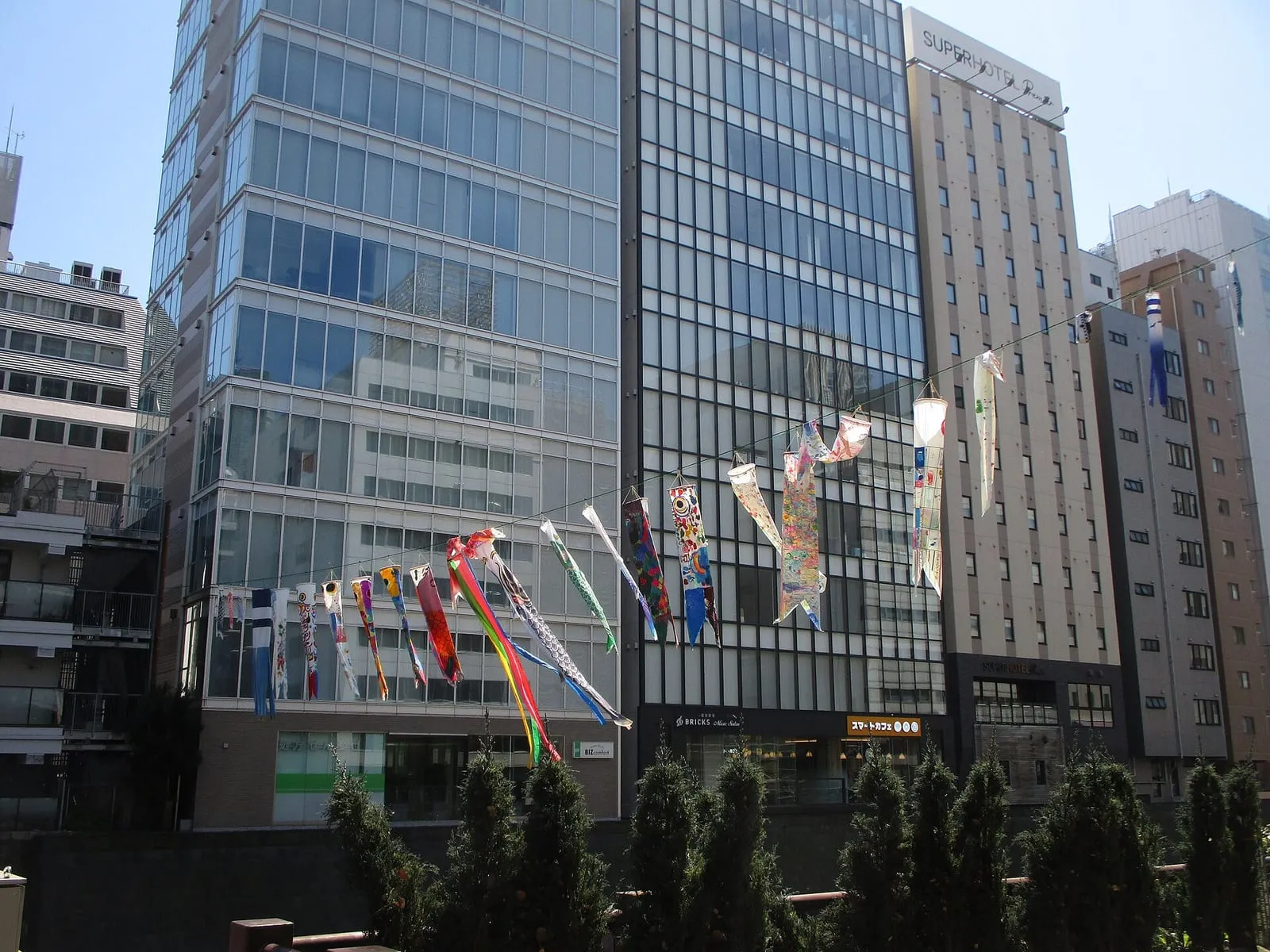
- 5 May (Wednesday): Children’s Day (Kodomo no Hi) – Colorful carp streamers fly.
- 19 July (Monday): Marine Day (Umi no Hi).
- 11 August (Wednesday): Mountain Day (Yama no Hi).
- 20 September (Monday): Respect for the Aged Day (Keiro no Hi).
- 23 September (Thursday): Autumnal Equinox Day (Shubun no Hi).
- 11 October (Monday): Sports Day (Supotsu no Hi).
- 3 November (Wednesday): Culture Day (Bunka no Hi) – Many national museums offer free admission.
- 23 November (Tuesday): Labor Thanksgiving Day (Kinro Kansha no Hi).
Note on Obon: Obon (mid-August, typically 13 to 16 August) is not a statutory public holiday, but many Japanese corporate offices and family businesses close for ancestral grave-visiting trips, resulting in crowded intercity express trains.
Guided city tours for every season
Whether navigating summer heat or winter chills, joining a guided city tour with private air-conditioned coach transit simplifies logistics and provides fascinating historical context.
| Tour | Duration & Transit | Best Season | What makes it worthwhile |
|---|---|---|---|
| Best of Tokyo Full-Day Tourad | 6 hours; small group walking / transit | Spring & Autumn | Comprehensive orientation covering Senso-ji, Meiji Jingu, and Shibuya with a knowledgeable local |
| Shinjuku Evening Food Crawlad | 3 hours; evening izakaya walk | Year-round; exceptional in Winter | Warm up with smoky yakitori, craft beers, and seasonal hot pots in atmospheric alleyways |
| Mount Fuji & Lake Ashi Day Tripad | 10 hours; coach + bullet train return | Autumn & Winter | Unbeatable clear views of snow-dusted Fuji, Lake Ashi cruise, and high-speed Shinkansen return |
Best of Tokyo: Guided Full-Day City Tour with a Local
From ¥20,248 · 4.6 stars from 250 reviews · 6 hours · Small group
Best of Tokyo: Guided Full-Day City Tour with a Localad delivers an outstanding full-day overview of the Japanese capital, seamlessly connecting the historic temple grounds of Asakusa with the tranquil shrines of Harajuku and the energetic pedestrian crossings of Shibuya.
Tokyo: Shinjuku Food Tour (13 Dishes and 4 Eateries)
From ¥13,200 · 4.9 stars from 3,939 reviews · 3 hours · Evening food crawl
Tokyo: Shinjuku Food Tour (13 Dishes and 4 Eateries)ad introduces travellers to hidden culinary gems across Shinjuku’s neon alleyways, sampling seasonal dishes and regional specialities without language obstacles.
From Tokyo: Mt Fuji, Hakone Lake Ashi Cruise and Bullet Train
From ¥7,800 · 4.8 stars from 6,302 reviews · 10 hours · Coach & shinkansen
From Tokyo: Mt Fuji, Hakone Lake Ashi Cruise and Bullet Trainad provides a magnificent escape into the countryside, ascending to Mount Fuji’s 5th Station and cruising Lake Ashi before whisking guests back to Tokyo on the Tokaido Shinkansen bullet train.
Summary: choosing your travel dates
- For cherry blossoms: Target the period from 26 March to 5 April. Book hotels six to eight months in advance, as rooms sell out swiftly. See our cherry blossom in Tokyo guide.
- For golden autumn foliage and mild walks: Target 15 November to 5 December. Expect stable dry skies and comfortable temperatures. See autumn leaves in Tokyo.
- For clear Mount Fuji views and smaller crowds: Travel between mid-January and late February. Bundle up in layers and enjoy crisp winter sunshine.
- For high-energy summer festivals: Visit in late July for the Sumida River Fireworks or mid-August for summer matsuri, packing breathable linen and staying hydrated.
Plan your daily sightseeing around booking windows and weekly museum closures on our Tokyo hub, or structure your trip with our step-by-step 3 days in Tokyo and 5 days in Tokyo itineraries.
Common questions
What is the best month to visit Tokyo?
October, November, and April are the finest months to visit Tokyo. October and November provide pleasant temperatures (17–22 °C), low humidity, and autumn foliage. April delivers comfortable spring weather following the late-March cherry blossom rush.
What is the rainiest month in Tokyo?
October is Tokyo's wettest month, averaging 234.8 mm of precipitation, closely followed by September with 224.9 mm, primarily due to autumn typhoon systems. June has the highest frequency of rainy days (11.6 days on average) during the seasonal tsuyu rainy season.
How hot does Tokyo get in summer?
August is the hottest month, with an average daily maximum of 31.3 °C and a mean temperature of 26.9 °C. High relative humidity (averaging 76 per cent in July and August) creates high heat indices, making lightweight, breathable fabrics and constant hydration essential.
When is typhoon season in Tokyo?
The Japan Meteorological Agency and the UK Foreign Office identify Japan's tropical cyclone season between June and December, peaking between July and September. While typhoons rarely cause structural damage in central Tokyo, they can halt high-speed bullet trains and cancel domestic flights for 12 to 24 hours.