One of 2 self-guided walks in Kyoto. See every walk.
In this guide
💡 The Short Version: Pontocho Alley is Kyoto’s most atmospheric evening dining street, running 500 metres parallel to the Kamo River between Shijo and Sanjo bridges. Between 1 May and 30 September, restaurants construct open-air timber dining platforms (kawayuka) cantilevered above the riverbank. Or book a tour: the Gion & Pontocho Evening Food Tourad takes you into hidden alley izakayas with a bilingual guide, sampling local specialities without language or reservation barriers.
Running one block west of the Kamo River from Shijo-dori north to Sanjo-dori, Pontocho is a stone-flagged pedestrian corridor barely two metres across. By day, the alley is quiet and shuttered, but at dusk it transforms into Kyoto’s premier nightlife corridor. Warm incandescent light glows from red and white paper lanterns (chochin) bearing the neighbourhood’s stylised plover bird crest (chidori), casting reflections across wet stone paving and dark cedar timber facades.
Along with Gion, Pontocho is one of Kyoto’s five historic hanamachi (flower towns). Dating back to 1670, when the western banks of the Kamo River were reinforced with stone embankments to protect the city from flooding, the corridor developed as an entertainment quarter filled with tea houses, theatres, and courtesan parlours. Today, it remains an active entertainment quarter where geiko and maiko still walk to private banquets in traditional ochaya teahouses.
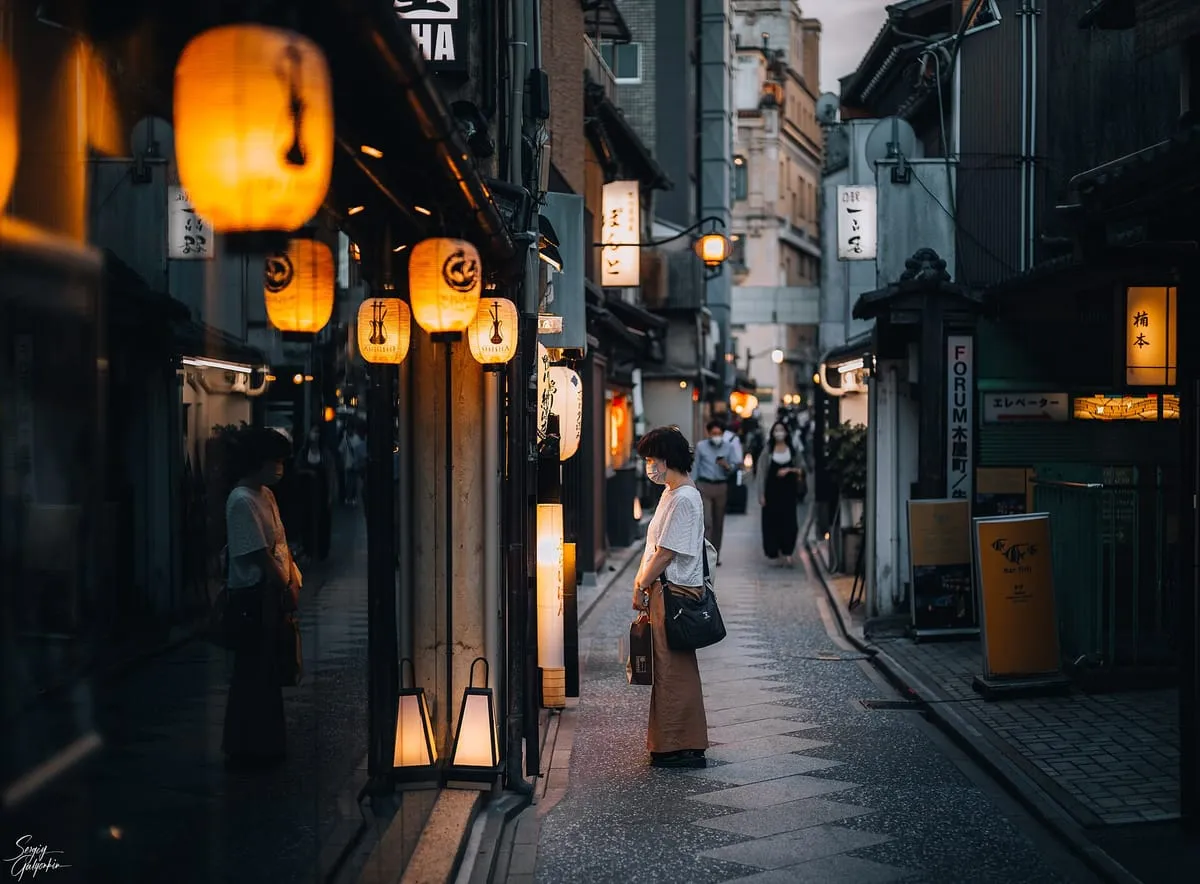 Lantern-lit stone alleyway of Pontocho with traditional wooden restaurant facades at night. Photo: Sergiy Galyonkin from Raleigh, USA, Wikimedia Commons, CC BY-SA 2.0.
Dining layout and atmosphere
Pontocho’s layout is split between its two sides:
- The eastern (river) side: Establishments backing onto the river command the finest views. In summer, they open out onto timber river terraces; in winter, floor-to-ceiling glass windows look out over the illuminated bridges of the Kamo River toward the silhouettes of the Higashiyama hills. These venues primarily serve multi-course kaiseki banquets, Kyoto beef sukiyaki and shabu-shabu, seasonal tofu dishes, and high-end sushi.
- The western (inland) side and narrow side cuts (roji): This side houses intimate eating and drinking dens, including yakitori counters grilling skewered chicken over binchotan white charcoal, hearty ramen parlours, craft beer bars, and compact cocktail lounges seating no more than six to eight patrons.
At the northern terminus of the alley near Sanjo-dori stands the Pontocho Kaburenjo Theatre, a landmark 1927 brick building. Every May, geiko and maiko of Pontocho take to its stage for the celebrated Kamogawa Odori (Kamo River Dance), presenting classical theatrical dances to the public. Tickets typically range from ¥3,500 for general seating to ¥5,500 for reserved floor seats including a commemorative tea ceremony service.
Tours
Gion & Pontocho Evening Food Tour with Up to 13 Dishes
From ¥14,400 · 4.8 stars from 667 reviews · 3 hours · Multi-stop dinner walk Book on GetYourGuidead
An evening culinary walk through Gion’s backstreets and Pontocho’s hidden izakayas. An English-speaking food specialist guides you into authentic spots often missed by international visitors, including tastings of seasonal obanzai, fresh seafood skewers, wagyu dishes, and craft sake. Suits travellers wanting a complete dinner paired with cultural insight.
Gion Magical Night Walking Tour & Geisha Culture
From ¥4,032 · 4.9 stars from 5,349 reviews · 100 minutes · Guided evening walk Book on GetYourGuidead
A comprehensive evening walk linking Pontocho’s historic riverbanks with the atmospheric preservation lanes of Gion across the river. Perfect for visitors wanting to understand the history, architecture, and etiquette of Kyoto’s entertainment quarters before dining independently.
Gion Food Tour: 13 Dishes and 4 Local Eateries
From ¥11,200 · 4.8 stars from 278 reviews · 3 hours · Small-group food tour Book on GetYourGuidead
Visits four distinct food venues around Gion and Pontocho, sampling traditional savoury pancakes, local yakitori, sake, and dessert. Offers a relaxed small-group environment ideal for curious food lovers.
Dining styles and guided tour: the prices side by side
| Dining option | Typical cost per person | Setting | Reservation needed? | Who it suits |
|---|---|---|---|---|
| Casual izakaya or yakitori counter | ¥2,500 to ¥5,000 | Western side counter / side alley | Walk-ins possible (go before 18:30) | Budget diners wanting grilled skewers, beer, and casual atmosphere |
| Summer Kawayuka river terrace | ¥6,000 to ¥15,000 | Open-air wooden deck above riverbank | Essential on weekends (May to Sept) | Couples and celebratory diners wanting river breezes and scenic views |
| Fine dining Kaiseki / Kyoto beef | ¥12,000 to ¥25,000+ | Private tatami room or river-facing table | 2 to 4 weeks in advance via TableCheck | Food connoisseurs seeking formal multi-course seasonal cuisine |
| Guided Gion & Pontocho food tour | ¥14,400 | 3 to 4 curated eateries + guided walk | Advance booking required | Solo travellers or first-time visitors wanting guaranteed seats and context |
Summer Kawayuka river dining
Between 1 May and 30 September, roughly ninety restaurants in Pontocho participate in Kyoto’s seasonal tradition of kawayuka (often called kawadoko). Sturdy timber platforms built on timber trestles extend outward over the dry gravel flats of the Kamo River.
Dining inches above the running water catches the natural downward draught from the northern mountains, lowering temperatures by several degrees compared to the humid city streets.
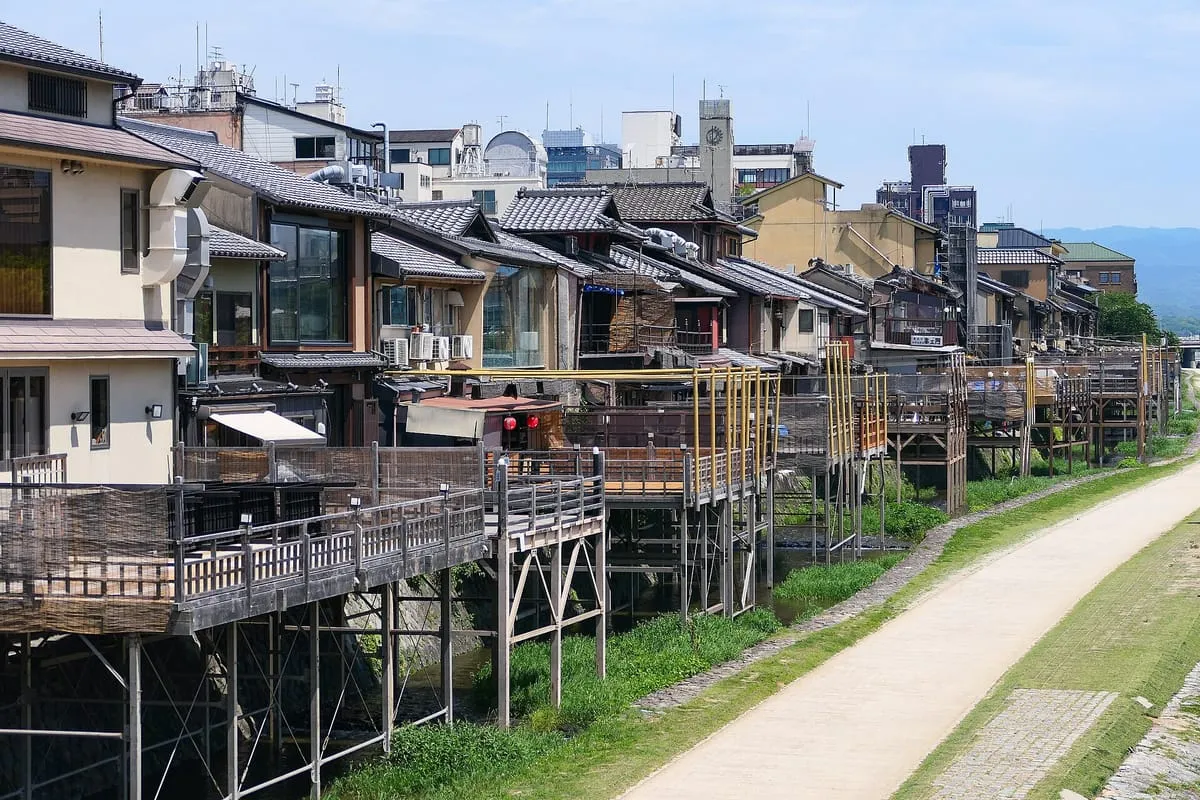 Elevated wooden kawadoko dining terraces extending out over the flowing waters of the Kamo River. Photo: MaedaAkihiko, Wikimedia Commons, CC0.
Key facts for kawayuka dining:
- Terrace seating charge (Sekiryo): Most restaurants assess an outdoor seating fee of ¥500 to ¥1,000 per person in addition to food and drinks.
- Lunch vs dinner: While lunch on the platforms is offered during May and September (costing roughly ¥3,000 to ¥5,000), daytime terrace service is suspended during July and August due to midday summer heat and food safety standards. Dinner is served nightly throughout the season.
- Weather contingency: If sudden rain occurs, restaurants move diners indoors to their main dining rooms or private tatami rooms.
Strolling the Kamo Riverbank (Kamogawa)
Running directly parallel to Pontocho is the wide pedestrian promenade and grass-lined floodway of the Kamo River (Kamogawa). It serves as central Kyoto’s civic living room.
A beloved local phenomenon observed here on warm evenings is known as Kamogawa to-kankaku (the equal-interval rule): couples, groups of friends, and solo readers sit along the concrete embankment facing the water, naturally spacing themselves at strikingly regular distances of roughly two to three metres apart.
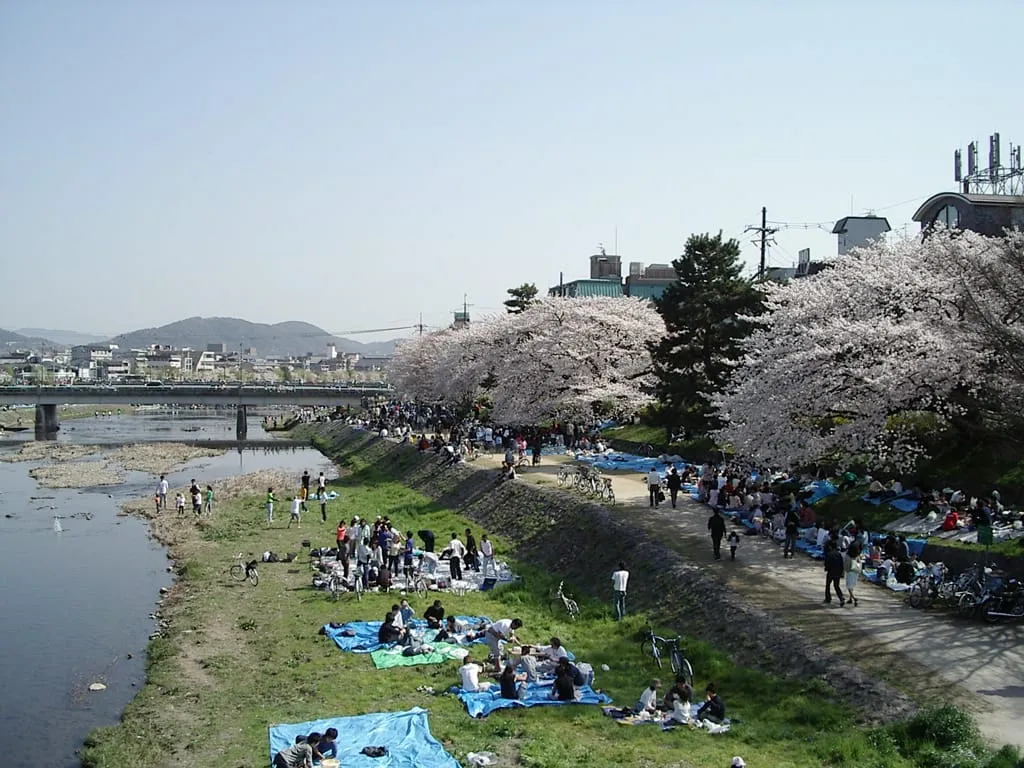 Stone promenade and grassy embankment along the Kamo River in central Kyoto. Photo: Wikimedia Commons contributor, Wikimedia Commons, CC BY-SA 3.0.
The riverbank is completely free and accessible 24/7. Buying a craft beer or iced tea from a nearby convenience store and sitting by the river at sunset is one of the most delightful free things to do in Kyoto.
Practical dining etiquette in Pontocho
- Cover charge (Otoshi): Almost all izakayas and bars in Pontocho serve an unprompted small dish (otoshi or tsukidashi) alongside your first drink order. This acts as a table cover charge (typically ¥300 to ¥800 per person) and is a standard Japanese dining custom.
- English menus: Restaurants welcoming walk-in foreign guests display photo menu boards with prices in Japanese yen outside their front entry. If an establishment shows no menu and has a tightly closed wooden sliding door with an ichigensan okotowari notice, it is a private members-only establishment.
- Shoe etiquette: If entering a venue with tatami flooring or raised sunken hearth (horigotatsu) seating, remove your shoes at the genkan foyer and place them in the provided wooden cubbies. Always wear clean, neat socks without holes.
- Cash and cards: While major kawayuka restaurants accept credit cards, smaller side-alley yakitori stalls and standing bars remain cash-only. Keep ¥10,000 in cash on hand for spontaneous bar-hopping.
How to get there
Pontocho is situated in the centre of Kyoto, easily reached on foot or public transport:
- From Kyoto-Kawaramachi Station (Hankyu Railway): Take Exit 1A and walk 1 minute east across the Shijo Bridge intersection.
- From Gion-Shijo Station (Keihan Railway): Cross the Kamo River via the Shijo Bridge (3-minute walk).
- From Sanjo Station (Keihan / Tozai Subway Line): Walk 2 minutes west across the Sanjo Bridge to enter Pontocho from its northern end.
- From Kyoto Station: Take Kyoto City Bus routes 4, 17, or 205 to the Shijo Kawaramachi bus stop (15 minutes, ¥230 flat fare).
Common questions
What is Pontocho Alley in Kyoto?
Pontocho is a narrow, 500-metre stone-paved pedestrian alley running between Shijo-dori and Sanjo-dori along the Kamo River, packed with traditional restaurants and bars.
What is kawadoko dining in Pontocho?
Kawadoko (or kawayuka) refers to temporary wooden dining platforms constructed over the flowing waters of the Kamo River from May to September, offering open-air dining.
Is Pontocho Alley expensive to eat at?
Pontocho features a mix: riverside terrace seating and kaiseki venues command premium prices, while casual yakitori, ramen, and standing bars tucked along side alleys offer affordable meals.