In this guide
💡 The Short Version: Tokyo is one of the safest cities on earth for violent crime, with exceptionally low rates of mugging, theft, or assault. The notable exception is nightlife entertainment quarters—principally Kabukicho (Shinjuku), Roppongi, and Shibuya—where the UK Foreign Office and Japanese police warn of drink spiking, extortionate bar bills, and card fraud orchestrated by aggressive street touts (kyakuhiki). Never follow street touts into backstreet venues. Crucially, always carry your original passport, as police conduct random checks and Japanese law allows detention without charge for up to 23 days. Japan sits in an active earthquake zone; monitor local news and save the 24-hour Japan Visitor Hotline (+81 50 3816 2787). Or book a tour: a guided evening food tour with a vetted local host starts from ¥6,000.
Overview: how safe is Tokyo?
Tokyo consistently ranks at the pinnacle of the Economist Intelligence Unit’s Global Safe Cities Index, frequently taking first place for personal and digital security. Unlike major European or American transit hubs where pickpocketing and luggage theft require constant vigilance, Tokyo operates on a high degree of mutual trust:
- People routinely leave smartphones, wallets, and laptops unattended on cafe tables while ordering at the counter.
- Bicycles are frequently parked outside stations with minimal locks.
- Public transportation is orderly, clean, and free of physical intimidation.
- Solo female travellers can comfortably navigate suburban streets, residential alleys, and metro lines late at night.
However, tourists can fall into false senses of security. Two distinct areas require careful vigilance: nightlife entertainment scams and strict Japanese legal regulations.
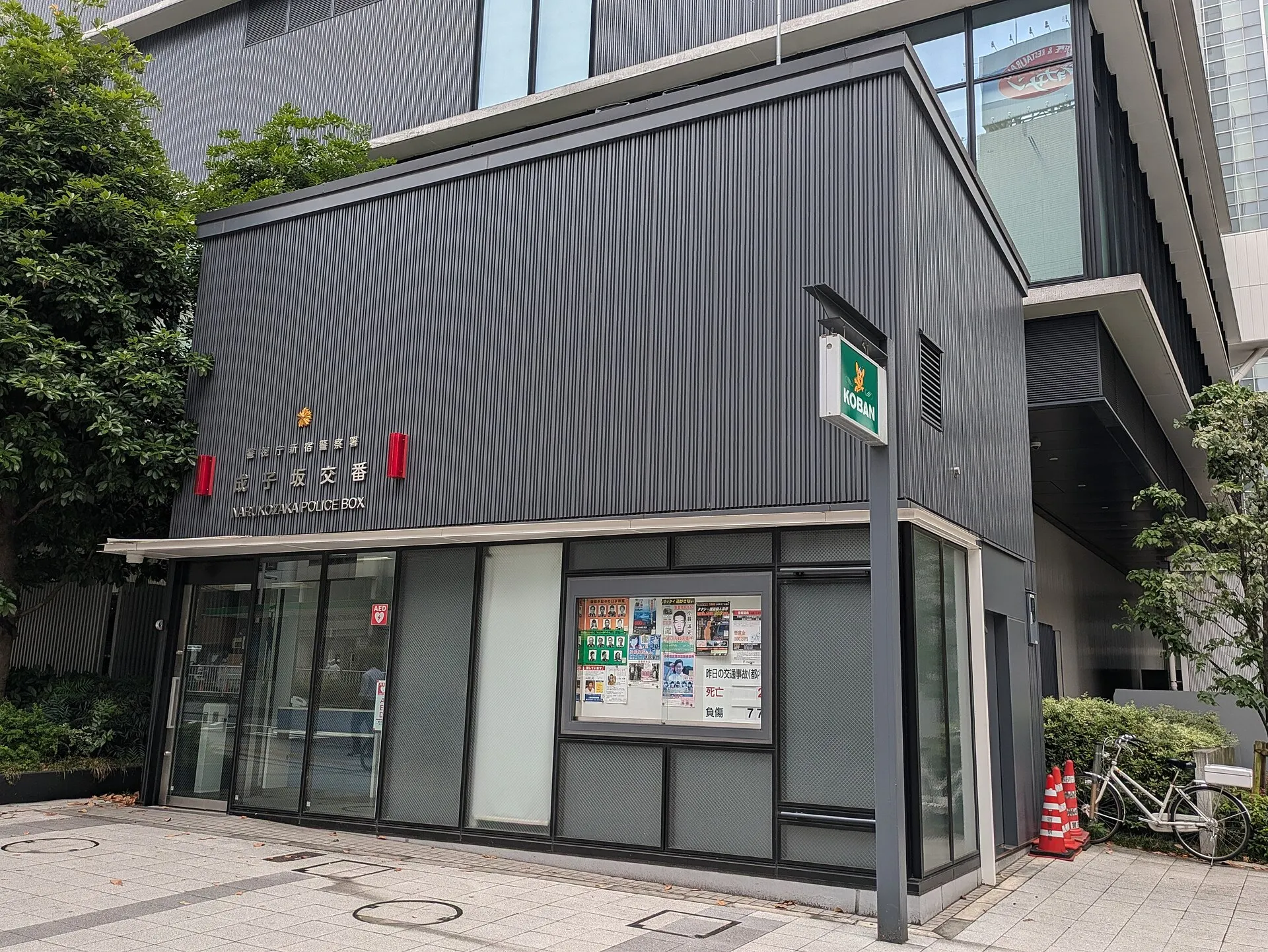
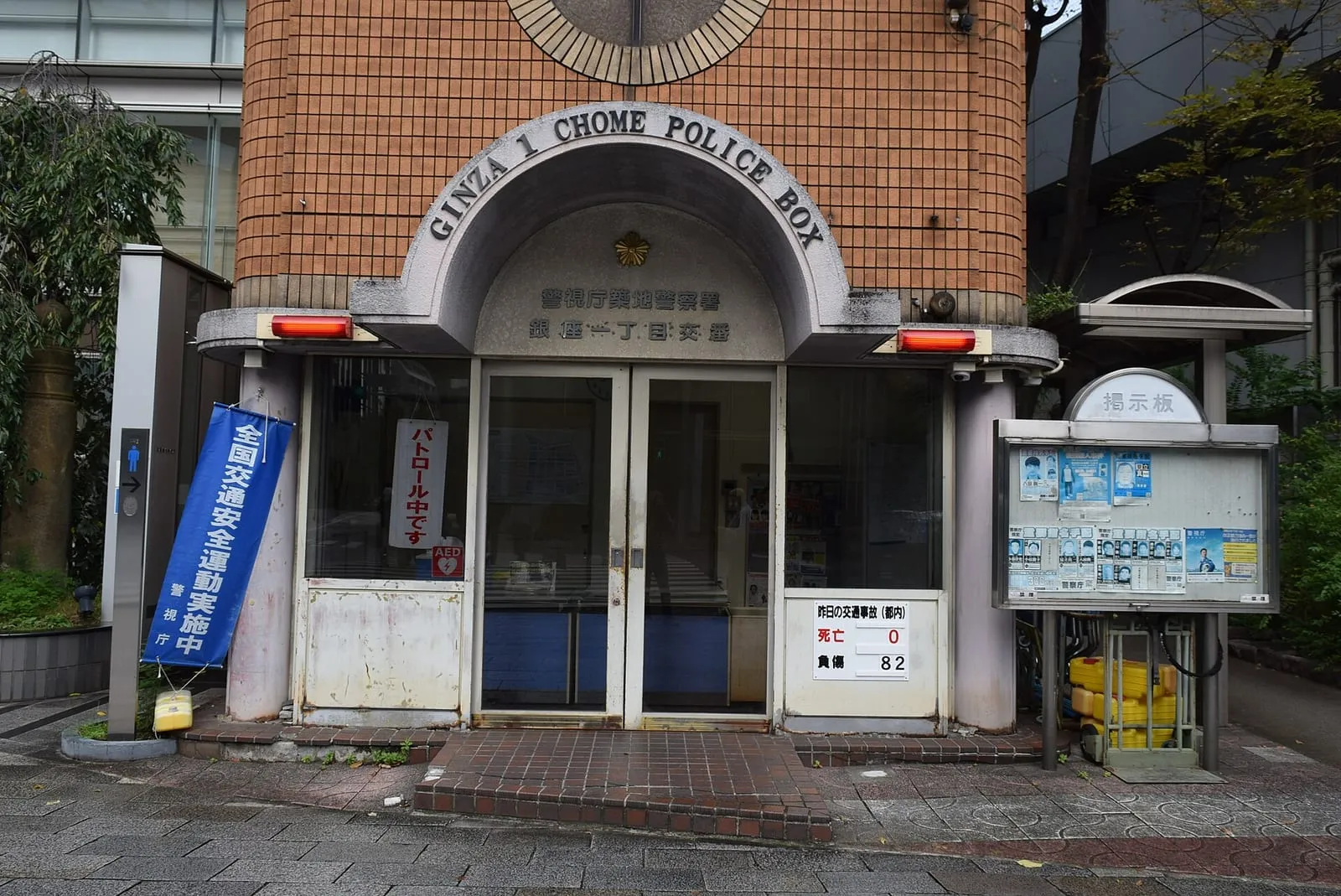
A neighbourhood koban police box building on a Tokyo street corner. Photo: Suikotei, Wikimedia Commons, CC BY 4.0.
Nightlife scams and entertainment districts
While violent crime is negligible, financial crime targeting foreign visitors is concentrated heavily in four Tokyo entertainment districts:
- Kabukicho (Shinjuku) — Tokyo’s largest adult entertainment zone.
- Roppongi (Minato Ward) — historic nightclub and expat bar hub.
- Center-Gai & Dogenzaka (Shibuya) — youth nightlife corridors.
- Ikebukuro (Toshima Ward) — north and west exit entertainment strips.
How drink spiking and extortion operate
The UK Foreign, Commonwealth & Development Office (FCDO) Japan advisory and the US State Department Japan travel advisory highlight identical warnings regarding predatory nightlife scams:
- The street tout (kyakuhiki): Solicitations begin on the pavement. Men (frequently fluent in English) approach tourists claiming to represent “cheap izakayas”, “all-you-can-drink bars for ¥2,000”, or “exclusive hostess lounges with free entry”.
- The walk-up venue: Victims are escorted into upper-floor or basement bars with tinted windows and heavy doors.
- Drink tampering: Once inside, complimentary drinks are served that have been laced with prescription sedatives, liquid sleep aids, or industrial alcohol.
- The extortionate bill: Victims lose consciousness or become severely disoriented. Upon awakening hours later—frequently in a street alley or hotel room with no memory of events—they discover credit card transaction slips or mobile banking notifications showing multiple charges ranging from ¥200,000 to over ¥1,500,000 for fictitious “bottle service” or “hourly table fees”.
- Physical intimidation: If a victim remains conscious and disputes a fraudulent bill, muscular security personnel block the doorway, demand payment under threat of violence, and escort the patron directly to a nearby 7-Eleven ATM to withdraw cash.
Core nightlife safety rules
- Never follow street touts: Under Tokyo Metropolitan Government public safety ordinances, soliciting customers on public streets (kyakuhiki) is illegal. Any establishment employing street barkers is already violating municipal regulations.
- Verify pricing before crossing the threshold: Legitimate Japanese bars and izakayas display a clear, printed price list at the ground-floor door specifying cover charges (otoshi), drink prices, and seating time limits.
- Keep drinks in your hand: Never accept open beverages from friendly strangers in nightlife districts, and never leave your glass unattended while using the restroom.
- Card transaction discipline: When paying by credit card, ensure the terminal is brought to your table or pay at the register where you can watch the amount entered on the digital display before inserting your card.
- Report to the Koban immediately: If you are threatened with inflated charges or suspect your drink was tampered with, leave the venue immediately and proceed directly to the nearest Police Box (koban). The Shinjuku Kabukicho Koban is situated at 1-10-1 Kabukicho near Godzilla Road.
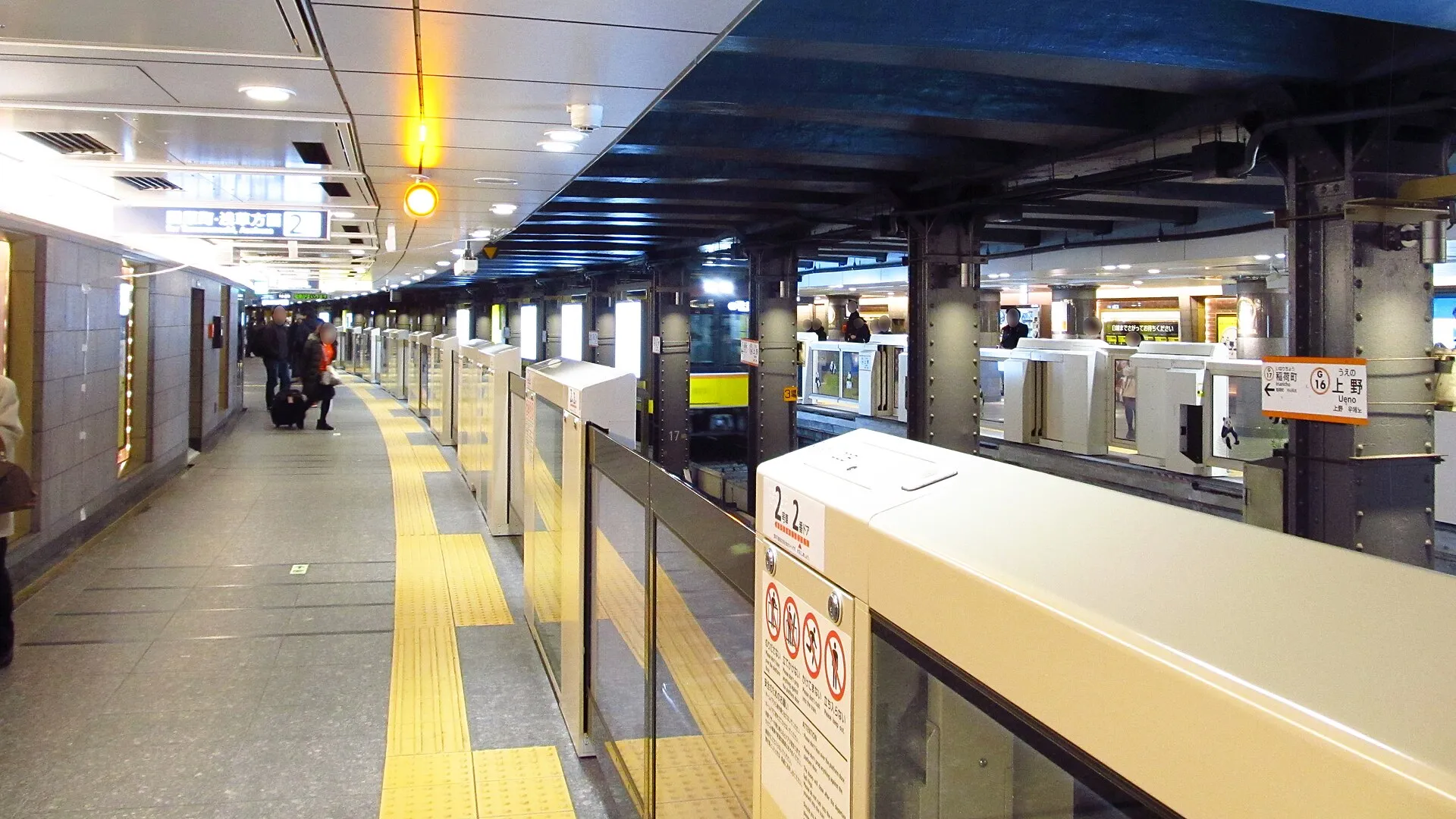
Automatic safety screen doors installed along a Tokyo Metro subway platform. Photo: LERK, Wikimedia Commons, CC BY-SA 4.0.
Japanese laws that catch foreign tourists
Japan’s legal code contains strict mandates that surprise foreign visitors. Infractions that might be treated as civil matters or minor fines in Western nations can result in immediate arrest and deportation in Japan:
1. Mandatory passport carriage
Under Japan’s Immigration Control and Refugee Recognition Act (Article 23), all foreign tourists must carry their original physical passport bearing their valid Temporary Visitor entry stamp on their person at all times.
Police officers have broad legal authority to stop foreign nationals in public and request identification. A photocopy, mobile photo, or driving licence is legally invalid. Failing to present your physical passport is a statutory violation carrying potential arrest or fines up to ¥100,000.
2. Pre-trial detention for up to 23 days
If you are arrested in Japan, the police can legally detain you in a police holding cell (daiyo kangoku) for up to 23 days without formal indictment or bail, during which you are subjected to repeated interrogations. Suspects have no constitutional right to have an attorney present during questioning. Japan’s criminal prosecution conviction rate exceeds 99%.
3. Absolute zero tolerance for drugs
Japan enforces zero-tolerance drug legislation with harsh mandatory penalties:
- Possessing, importing, or using cannabis (marijuana), cocaine, MDMA, or synthetic cannabinoids results in immediate arrest, pre-trial detention, prison sentences with hard labour, and permanent deportation.
- Testing positive for cannabis in a blood or urine test is classified as consumption under Japanese narcotics laws, leading to criminal prosecution.
- CBD products are only legal if certified 100% THC-free; bringing standard foreign CBD oils containing even trace quantities of THC into Japan is treated as illegal cannabis importation.
4. Illegal over-the-counter and prescription medicines
Japan strictly regulates anti-stimulant and pain medications:
- Pseudoephedrine: Over-the-counter cold and sinus decongestants commonly sold in the UK and US—such as Sudafed, NyQuil, and Vicks VapoInhalers—contain pseudoephedrine or diphenhydramine and are strictly prohibited narcotics.
- Codeine: Strong cough syrups or painkillers containing codeine are illegal without advance authorization.
- ADHD Medications: Stimulant medications containing amphetamine or dexamphetamine (such as Adderall or Dexedrine) are illegal and cannot be brought into Japan under any circumstances.
- To legally import permitted prescription medications exceeding a one-month supply, you must apply in advance for an official import certificate (Yakkan Shoumei / Yunyu Kakunin-sho) from the Ministry of Health, Labour and Welfare.
5. Public smoking and street drinking restrictions
- Street smoking bans: Smoking on public streets, sidewalks, and parks is illegal across central Tokyo wards (including Chiyoda, Chuo, Minato, Shibuya, and Shinjuku). Violators are issued on-the-spot cash fines of ¥2,000 to ¥20,000 by municipal enforcement officers. Smoke only inside marked public smoking enclosures (kitsuenjo).
- Nighttime street alcohol bans: In Shibuya and Shinjuku, drinking alcohol on public streets, plazas, and parks within designated station perimeters is legally prohibited daily between 18:00 and 5:00.
Train safety and women-only cars
Tokyo’s public rail system is among the safest in the world, equipped with platform screen doors, automated train stop systems, and emergency stop buttons.
However, during peak weekday morning rush hours (7:30 to 9:30 AM), severe passenger overcrowding on lines like the JR Yamanote, Saikyo, and Tokyo Metro Tozai lines has historically enabled covert physical harassment (chikan / groping) and upskirting photography.
To provide safe passage, Japanese railways operate Women-Only Passenger Cars (Josei Senyo Sharyo):
- Designated by bright pink platform floor decals and window stickers.
- Active primarily on the first or last carriage during weekday morning rush hours.
- Open to all female passengers, female primary school children, and male passengers with physical disabilities.
- If you experience harassment on a train, shouting “Chikan!” (“Groper!”) or alerting station attendants will trigger immediate passenger assistance and police intervention.
Earthquakes, typhoons and natural disasters
Japan is situated along the Pacific Ring of Fire, experiencing roughly 1,500 seismic tremors annually. Tokyo’s building stock is engineered under some of the world’s most stringent seismic building codes (taishin, seishin, and menshin base-isolation technology).
What to do during an earthquake
- Inside a building/hotel: Drop to your knees, take cover under a sturdy table, desk, or door frame, and protect your head with a pillow or jacket. Stay inside; do not run into the street where shattering glass and exterior signs can fall.
- On a train/subway platform: Crouch down, hold onto handrails or pillars, and follow the loudspeaker instructions of train drivers and station staff. Subways automatically halt power when early earthquake warning sensors (Kinkyu Jishin Sokuho) trigger.
- On a city street: Move away from glass curtain walls, brick facades, and overhead electrical cables into an open plaza.
- Emergency information: Switch on television channel 1 (NHK General) for immediate multilingual emergency broadcasts. The Japan Meteorological Agency (JMA) provides live seismic and tsunami tracking.
Typhoons (July to October)
Peak typhoon season runs from midsummer through early autumn. Severe tropical storms bring torrential rains and gale-force winds that can prompt railway operators to enact “planned transit suspensions” (keikaku unkyu). Check train operator mobile sites before venturing out during storm alerts.
24/7 Emergency numbers in Tokyo
- Police (Emergency): 110 (English-speaking dispatchers available)
- Fire and Ambulance (Medical emergency): 119
- Japan Visitor Hotline (JNTO): +81 50 3816 2787 — 24/7 multilingual support for tourist assistance, health advice, and natural disaster guidance.
Safe nightlife exploration with local guides
Joining a vetted, small-group walking tour ensures you enjoy Tokyo’s evening dining culture without falling prey to touts or hidden charges:
Shinjuku Local Bar & Izakaya Crawl Tour
From ¥6,000 · 4.9 stars from 2,966 reviews · 3 hours · Small group
Tokyo: Shinjuku Local Bar & Izakaya Crawl Tourad steers you safely through the historic alleyways of Omoide Yokocho and Golden Gai, introducing guests to welcoming venues with transparent billing.
Shinjuku Food Tour (13 Dishes and 4 Eateries)
From ¥13,200 · 4.9 stars from 3,939 reviews · 3 hours · Comprehensive food crawl
Tokyo: Shinjuku Food Tour (13 Dishes and 4 Eateries)ad includes reserved seating, seasonal sushi, Wagyu beef, and gyoza across four vetted eateries with a professional bilingual guide.
Best of Tokyo: Guided Full-Day City Tour with a Local
From ¥20,248 · 4.6 stars from 250 reviews · 6 hours · Small group
Best of Tokyo: Guided Full-Day City Tour with a Localad provides comprehensive daytime orientation, teaching you how to use train systems, navigate neighbourhoods, and understand local customs.
Connecting safety resources
- Nightlife Walking Routes: Retrace safe routes through Golden Gai and Kabukicho in our Shinjuku night walk guide.
- Etiquette & Manners: Master shoe removal, temple purification, and quiet train customs in our Tokyo etiquette guide.
- Neighbourhood Accommodations: Review safe, central lodging options in where to stay in Tokyo and Shinjuku or Shibuya.
- Citywide Itineraries: Practical safety advice is integrated throughout our 3 days in Tokyo and 5 days in Tokyo itineraries. Find all booking details on the Tokyo hub.
Common questions
Is Tokyo safe for tourists and solo female travellers?
Yes. Statistically, Tokyo is consistently ranked among the safest megacities in the world. Violent street crime, physical muggings, and petty pickpocketing are extraordinarily rare. Solo travellers, including women walking alone at night, routinely report feeling exceptionally secure.
Which areas in Tokyo carry higher crime risks?
The Tokyo Metropolitan Police Department and international travel advisories highlight nightlife entertainment districts: Kabukicho in Shinjuku, Roppongi in Minato, Center-Gai in Shibuya, and Ikebukuro. In these areas, foreign visitors have been targeted for drink spiking, fraudulent credit card billing, and extortion by unlicensed street touts.
Do tourists need to carry their passports at all times in Japan?
Yes. Under Japanese immigration law, all foreign nationals must carry their physical passport (bearing a valid entry stamp) or residence card at all times. Police officers have legal authority to conduct random street checks, and failing to produce a passport can result in detention.
Can you bring common over-the-counter medicines into Japan?
Not all. Japan enforces strict anti-stimulant and narcotics legislation. Common Western medications containing pseudoephedrine (such as Sudafed and certain sinus relief decongestants), codeine, or ADHD medications (like Adderall) are strictly illegal to import without prior government permission.
What should you do during an earthquake in Tokyo?
Drop to the floor, take cover under a sturdy table or desk, and hold on until shaking stops. Modern Tokyo buildings are engineered with world-leading seismic shock absorption. Follow the instructions of station staff or hotel personnel, and tune in to NHK World for English emergency broadcasts.