In this guide
The Short Version: Set high in the Hoang Lien Son mountain range 315 km northwest of Hanoi, Sapa offers cool alpine air, dramatic terraced rice paddies, and Black Hmong and Red Dao ethnic hill-tribe culture. Transit options centre on overnight sleeper trains to Lao Cai (8 hours, 650,000 to 1,200,000 VND) or direct daytime limousine sleeper buses via expressway (5.5 hours, 250,000 to 450,000 VND). Highlights include the world-record Fansipan Legend cable car to the 3,143-metre “Roof of Indochina” (850,000 VND), guided valley treks through Lao Chai and Ta Van, and wooden homestays overlooking cascading valleys. While day trips exist, an overnight stay of at least two days is strongly recommended. For shorter single-day excursions, compare our master day trips from Hanoi guide. A two-day trekking tour can be booked below instead.
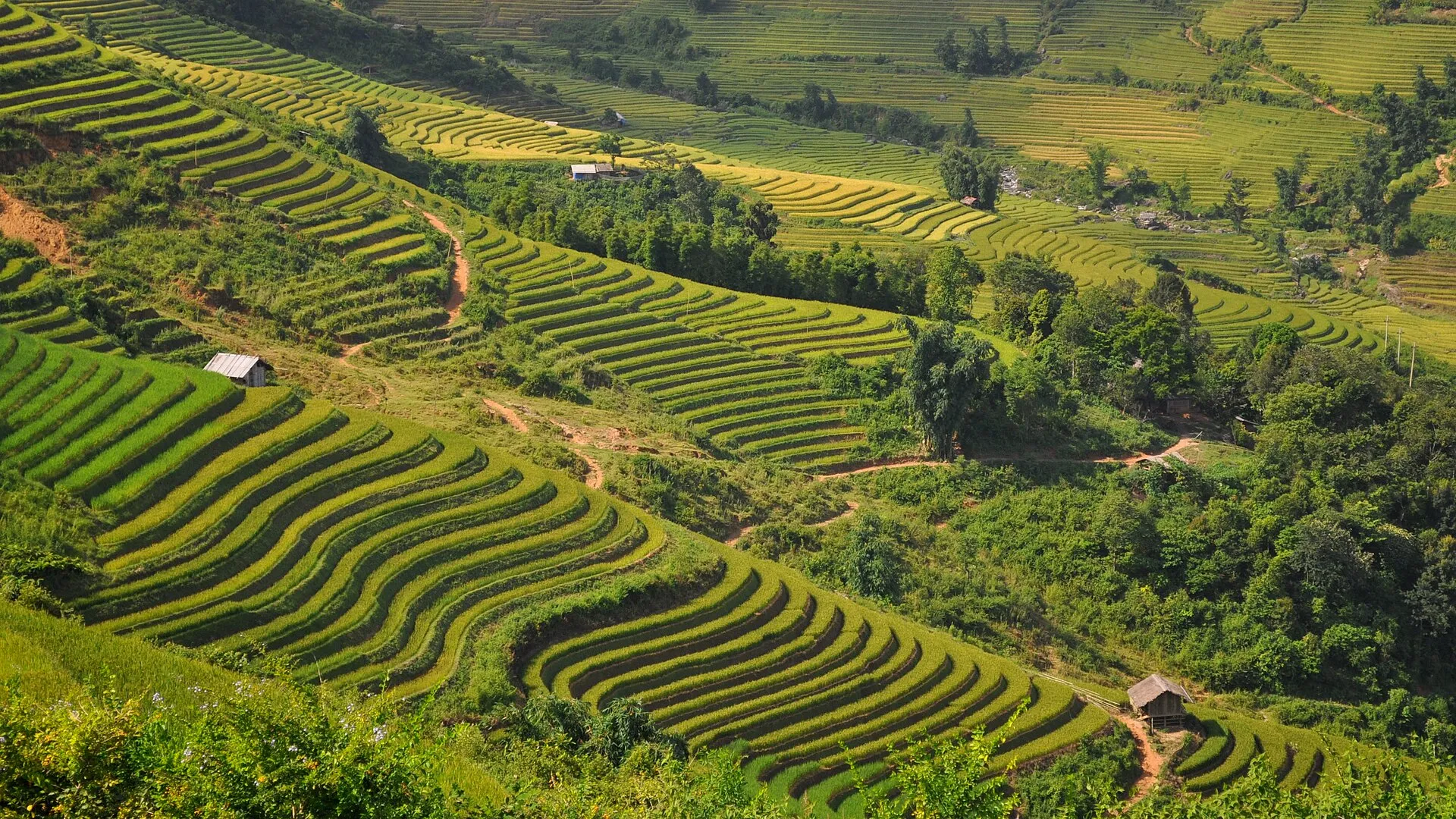
Perched at an elevation of 1,500 metres above sea level, Sapa was established as an alpine hill station by French colonial administrators in 1922 to escape the oppressive summer heat of the Red River Delta. Today, Sapa remains the trekking capital of northern Vietnam, framed by the jagged crest of Mount Fansipan and deep river valleys carved with thousands of sculptural rice terraces.
Getting from Hanoi to Sapa: train vs bus
The opening of the four-lane Noi Bai-Lao Cai Expressway (CT05) modernised mountain travel, creating a clear choice between fast road transit and romantic railway travel.
| Transit option | Fare range (one way) | Duration | Practical considerations |
|---|---|---|---|
| Luxury cabin sleeper train (e.g. Chapa, Victoria) | 650,000–1,200,000 VND | 8 hours train + 50 min van | Departs Hanoi Central at ~22:00; arrives Lao Cai at 06:00. Requires mountain shuttle van transfer up to Sapa town. |
| Premium limousine bus (9-seater DCar) | 380,000–450,000 VND | 5.5 hours | Door-to-door from Hanoi Old Quarter direct to Sapa town centre; spacious leather reclining seats. |
| Sleeper coach (“cabin bus”) | 250,000–350,000 VND | 5.5–6 hours | Individual private curtained sleeping pods with flat-reclining beds, onboard Wi-Fi, and USB ports. |
| Private car or SUV | 2,800,000–3,600,000 VND per vehicle | 5 hours | Complete departure schedule flexibility, stops on demand at scenic mountain viewpoints. |
Overnight trains (Ga Ha Noi to Ga Lao Cai)
Taking the overnight train is a classic Vietnamese railway journey:
- Departure: Trains depart from Hanoi Central Railway Station (Ga Ha Noi) on Le Duan Street around 21:40 to 22:00 nightly.
- The carriages: While the engine and rail cars are operated by Vietnam Railways, private hospitality companies (such as Chapa Express, Laman Express, King Express, and Victoria Express) lease and manage luxury wood-panelled sleeper carriages. Four-berth shared cabins and two-berth private VIP cabins feature clean linens, reading lights, mineral water, snacks, and air conditioning.
- Lao Cai to Sapa connection: The train arrives at Lao Cai railway station on the Chinese border around 05:45 to 06:15. Outside the terminal, public minibuses and pre-arranged hotel shuttle vans await to transport passengers 35 km up the winding switchbacks of Highway 4D to Sapa town (50,000 to 70,000 VND per seat, 50 minutes).
Express buses and cabin coaches
Direct buses depart throughout the morning (06:30 to 07:30) and evening (22:00 to 23:00) from Hanoi:
- Cabin buses (Interbuslines, Fansipan Express, Sapa Group Bus): Feature double-deck sleeping pods styled like individual capsules with curtains, mattress pads, charging plugs, and panoramic windows.
- Advantage: These buses run directly into Sapa town bus station near the lake, saving the transfer hassle at Lao Cai.
Book a tour instead
Book the Hanoi: Premium 2-Day Sapa Adventure with DCar Limousinead{rel=“sponsored nofollow noopener”} to include luxury limousine transfers, guided Muong Hoa Valley trekking, homestay lodging, and all regional meals.
Fansipan Legend: ascending the “Roof of Indochina”
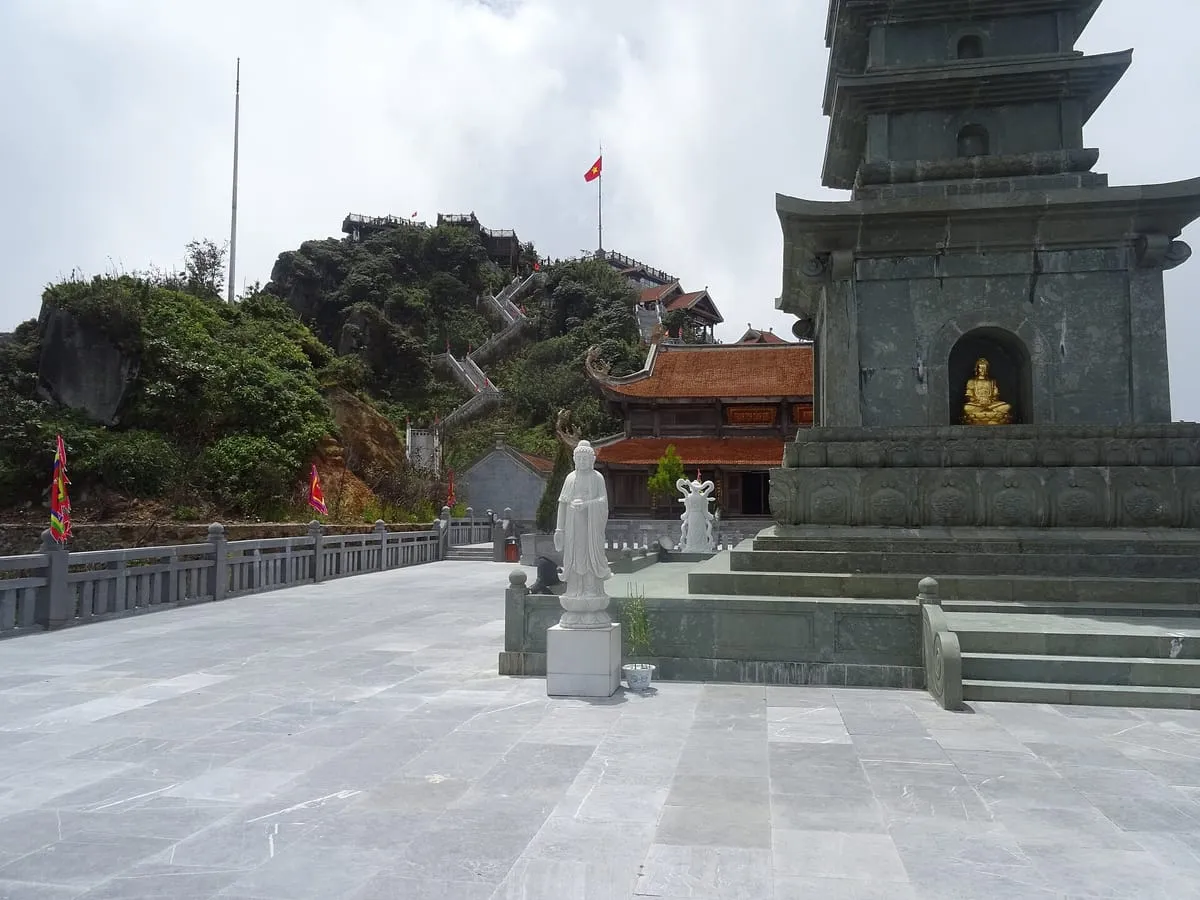
At 3,143 metres, Mount Fansipan is the highest peak in the Indochinese Peninsula (Vietnam, Laos, and Cambodia). Where ascending the peak once required an arduous three-day mountaineering trek, the Sun World Fansipan Legend cable car now whisks visitors to the clouds in 15 minutes.
The journey to the summit
- Muong Hoa Mountain Train: Board the yellow funicular train at the Sun Plaza station in central Sapa town. The train glides across viaducts spanning the Muong Hoa Valley for 2 km, arriving at the cable car departure station (180,000 VND return).
- The 3-Rope Cable Car: Spans 6,292 metres across the deep ravine, carrying passengers over terraced hillsides, pine forests, and tumbling waterfalls. The system holds the Guinness World Record for the greatest elevation difference between departure and arrival stations for a three-rope cable car (1,410 metres). Return tickets cost 850,000 VND for adults and 550,000 VND for children.
- The Summit Pagoda Complex: From the cable car arrival station, visitors encounter an awe-inspiring complex of Mahayana Buddhist shrines, stone stairways, and the 21.5-metre-tall Great Buddha of Fansipan, forged from 50 tonnes of bronze.
- Reaching the Peak: To reach the metal peak marker at 3,143 metres, either climb 600 stone stairs through mountain bamboo or board the peak funicular rail car (150,000 VND ascending).
Tip: Check the live webcam monitor at Sun Plaza ticket desk before purchasing tickets. If the peak is shrouded in dense rain or heavy fog, visibility will be limited at the summit.
Trekking routes through the Muong Hoa Valley
The Muong Hoa Valley is a glacial-carved mountain canyon south of Sapa town, threaded by the Muong Hoa River and dotted with traditional ethnic hamlets.
Route 1: Cat Cat Village (Gentle walk, 3–4 hours)
Located just 2 km down a steep hill from Sapa town centre:
- Admission: 150,000 VND per adult.
- The walk: A paved stone pedestrian pathway descends past souvenir stalls and water-powered grain mills to the Cat Cat waterfall and French hydropower station. While commercialised with photo installations and costume rental shops, the lower dirt trails leading into the valley offer scenic views of traditional Black Hmong wooden houses.
Route 2: Y Linh Ho – Lao Chai – Ta Van (Classic trek, 12–15 km)
The definitive day-trekking route through northern Vietnam:
- Terrain: Dirt footpaths, rice paddy bunds, and bamboo groves running parallel to the river.
- The journey: Trekkers depart Sapa town, descending into Y Linh Ho village along quiet mountain tracks. You walk directly across earth dikes separating flooded rice terraces, crossing suspension footbridges over the river to reach Lao Chai, an ancient settlement of the Black Hmong people wearing indigo-dyed hemp jackets.
- Ta Van village: The trail concludes in Ta Van, home to the Giay ethnic minority. Many trekkers stop here for a lunch of hot noodle soup and stir-fried wild greens at a riverside eatery, returning to Sapa by shared taxi (150,000 to 200,000 VND).
Route 3: Ta Phin Village (Red Dao culture, 10 km)
Situated 12 km northeast of Sapa town:
- Cultural focus: Ta Phin is home to the Red Dao people, famous for their crimson headscarves, intricate geometric embroidery, and traditional herbal medicinal baths.
- Herbal baths: Wooden barrel soaks filled with steaming water infused with over 30 indigenous forest herbs cost roughly 100,000 to 150,000 VND per soak, providing soothing relaxation after hiking.
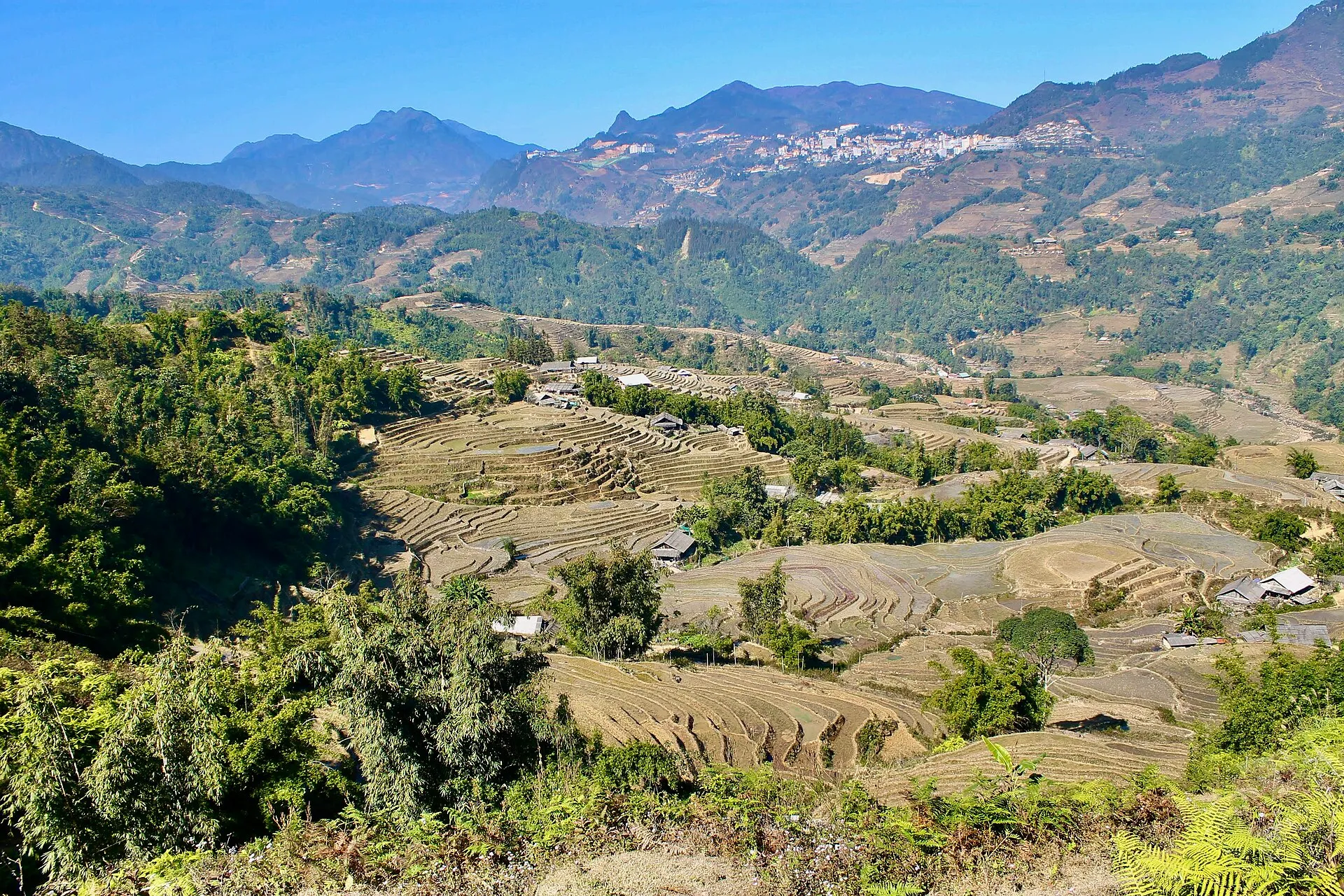
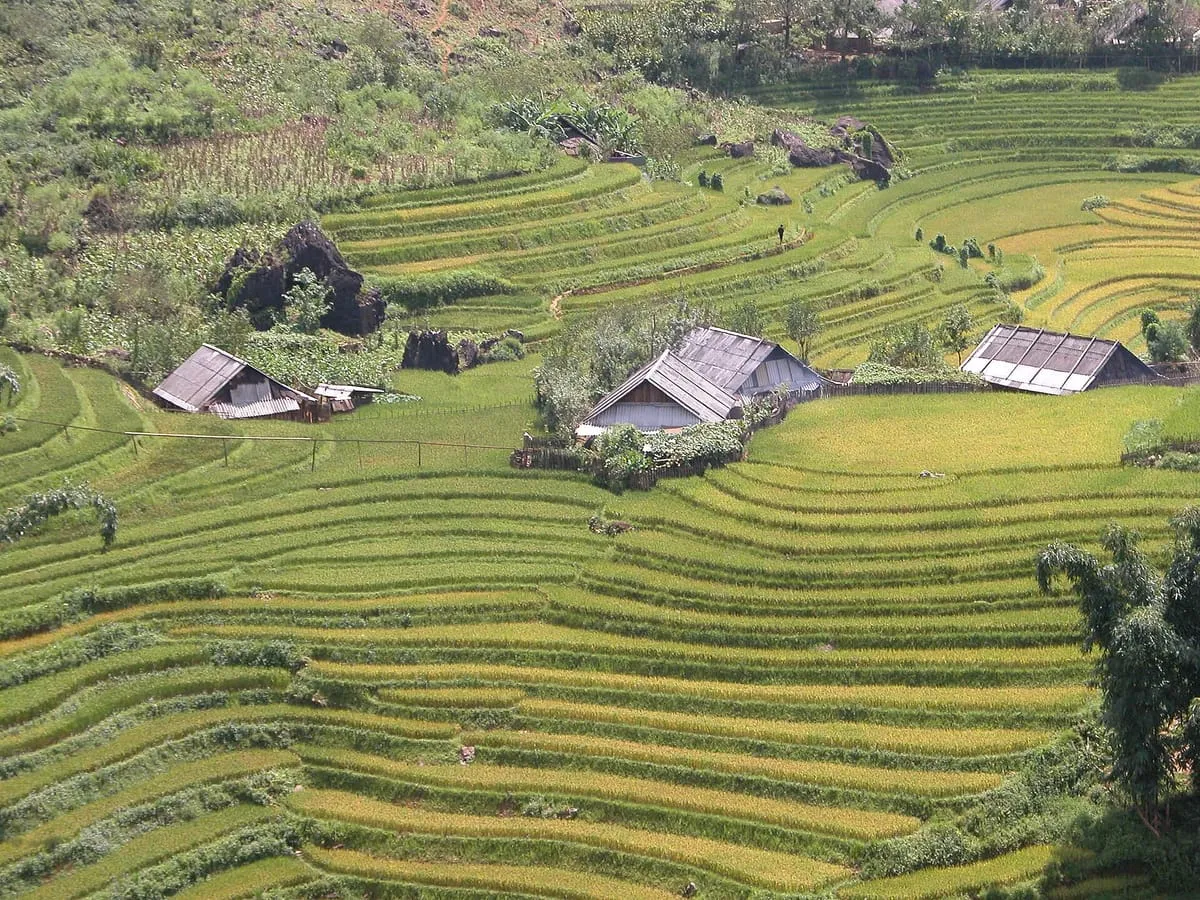
Cascading green rice terraces in the Muong Hoa Valley near Sapa. Photo: Eerin25, Wikimedia Commons, CC0.
Rice terrace seasonal calendar
The visual character of Sapa’s hillsides transforms dramatically through four distinct agricultural phases:
| Season | Agricultural phase | Visual landscape |
|---|---|---|
| April to May | “Water-pouring” / Mirror season | Farmers divert mountain spring water into newly ploughed paddies; terraces reflect sky and clouds like stepped mirrors. |
| June to July | Growing season | Young rice plants shoot up; the entire valley glows with intense, velvety emerald green. |
| Late August to Early October | Golden harvest season | Paddies ripen into rich gold and amber; local families harvest fields by hand using traditional sickles. |
| November to March | Fallow and winter season | Cool and misty; occasional frost or snowfall on Fansipan. Atmospheric mountain scenery, but bare brown terraces. |
Recommended Sapa trekking and multi-day packages
Organised multi-day excursions to Sapa include express transport, guided trekking through tribal villages, homestays, and meals:
From Hanoi: 3-Day Sapa Trekking & Homestay Adventure
From VND 2,617,600 · 4.6 stars from 340 reviews · 3 days · Authentic village experience
Book the 3-Day Sapa Trekking Adventuread to trek through Y Linh Ho, Lao Chai, and Ta Van villages with a local Black Hmong guide. Includes round-trip sleeper bus or limousine transport from Hanoi, overnight village homestay, local home-cooked meals, and breathtaking valley vistas.
From Hanoi: 3-Day Sapa Trekking Tour with Hotel & Homestay
From VND 3,300,000 · 4.4 stars from 69 reviews · 3 days · Balanced comfort & culture
Book the 3-Day Trekking with Hotel & Homestayad to combine one night in a comfortable Sapa town hotel with one night in a rural ethnic minority homestay, exploring waterfalls and bamboo forests.
From Hanoi: Sapa 3-Day Medium Trek and Limousine Trip
From VND 4,848,000 · 4.5 stars from 64 reviews · 3 days · Premium transfers
Book the 3-Day Medium Trek and Limousine Tripad for small-group comfort featuring executive limousine highway transport, premium boutique mountain lodging, and scenic hikes through terraced valleys.
Ethnic homestays vs mountain eco-lodges
Where you stay defines your experience in Sapa:
- Village Homestays (Ta Van, Sin Chai, Ban Ho): Run by Hmong, Red Dao, or Giay families in traditional timber and stilt houses. Guests enjoy family-style communal dinners around low tables with stir-fried pork, garden vegetables, and homemade rice wine (ruou). Stays cost roughly 250,000 to 500,000 VND per night including meals.
- Mountain Eco-Lodges (Topas Ecolodge, Sapa Jade Hill): Perched on isolated hilltops outside town, offering private stone bungalows with heated infinity pools, spa treatments, and vistas across the national park (2,500,000 to 7,000,000 VND per night).
After your mountain trek, return to Hanoi to browse more northern excursions in our guide to day trips from Hanoi or discover the top things to do in Hanoi.
Common questions
Is the overnight train or sleeper bus better to get to Sapa?
Sleeper buses and limousine vans travel direct from central Hanoi to Sapa town in 5.5 hours via the Noi Bai-Lao Cai Expressway for 250,000 to 450,000 VND. Overnight trains (such as Chapa Express) offer smoother sleeping in romantic private berths (650,000 to 1,200,000 VND), but terminate at Lao Cai station, requiring an additional 50-minute mountain minibus ride up to Sapa.
How much is the Fansipan cable car ticket?
The Sun World Fansipan Legend cable car ticket costs 850,000 VND for adults (return) and 550,000 VND for children. The Muong Hoa mountain funicular train from Sun Plaza in Sapa town costs an additional 180,000 VND return, and the peak funicular to the 3,143-metre summit costs 150,000 VND ascending.
When is the golden rice harvest season in Sapa?
The golden season occurs from late August through early October, when the terraced paddies turn brilliant amber-yellow before harvesting. May to August brings lush emerald-green fields, while April and May feature the water-pouring season ('mirror season'), when flooded terraces reflect the sky.
Can you do a Sapa trekking trip independently without a guide?
Short walks to Cat Cat village (entry fee 150,000 VND) can easily be done independently. For full-day trekking through the Muong Hoa Valley to Lao Chai and Ta Van, hiring a local Black Hmong or Red Dao female guide (roughly 400,000 to 600,000 VND per day) ensures you follow unpaved footpaths through bamboo forests rather than walking along the dusty concrete road.
Can Sapa really be visited as a day trip from Hanoi?
While daytime tours exist, the 11-hour round-trip road journey leaves only 3 to 4 hours in the mountains. We recommend spending at least two days and one night (or three days) in Sapa to hike the valley trails, stay in a village homestay, and ride the cable car.