In this guide
The Short Version: Osaka is an all-year city break, but spring and autumn deliver the most comfortable weather and natural scenery. Spring (late March to May) is headlined by cherry blossoms, with peak bloom typically occurring in early April across Osaka Castle Park and Kema Sakuranomiya Park. Autumn (October to November) brings crisp, clear days and red maple foliage in Minoh Park, making it the ideal walking season. Summer (July and August) is hot and humid, punctuated by the massive Tenjin Matsuri river festival on 24 and 25 July. Winter (December to February) is cold and dry, offering the lowest tourist crowds and luminous winter illuminations along Midosuji Boulevard. Prices are in yen.
Osaka month-by-month weather and seasons
Data represents official multi-decade climatic averages recorded by the Japan Meteorological Agency for central Osaka.
| Month | Average high | Average low | Monthly rain | Seasonal conditions & events |
|---|---|---|---|---|
| January | 9.7 °C | 3.0 °C | 47 mm | Cold, clear, crisp days; lowest tourist numbers; New Year closures 1-3 Jan |
| February | 10.5 °C | 3.2 °C | 61 mm | Chilly; plum blossoms bloom mid-month in Osaka Castle Plum Grove |
| March | 14.2 °C | 6.0 °C | 108 mm | Warming weather; sakura buds appear; Grand Sumo Tournament in Namba |
| April | 20.0 °C | 10.9 °C | 109 mm | Peak cherry blossom bloom early April; pleasant temperatures; busy season |
| May | 24.7 °C | 15.8 °C | 146 mm | Mild and sunny; Golden Week crowds early in the month; rose gardens bloom |
| June | 28.0 °C | 20.3 °C | 185 mm | Warm; rainy season (tsuyu) begins mid-June with frequent overcast days |
| July | 31.8 °C | 24.6 °C | 175 mm | Hot and humid; Tenjin Matsuri festival (24-25 July); evening river fireworks |
| August | 33.7 °C | 25.8 °C | 101 mm | Peak summer heat; high humidity; Obon festival mid-month brings domestic travel |
| September | 29.5 °C | 22.0 °C | 171 mm | Lingering summer heat early; typhoon risk increases; autumn weather begins |
| October | 23.6 °C | 15.9 °C | 165 mm | Excellent mild weather; low humidity; comfortable sightseeing conditions |
| November | 17.8 °C | 10.2 °C | 69 mm | Peak autumn foliage (koyo); dry and sunny; Midosuji Illuminations begin |
| December | 12.3 °C | 5.3 °C | 48 mm | Crisp winter temperatures; Christmas light displays; year-end shutdowns from 28 Dec |
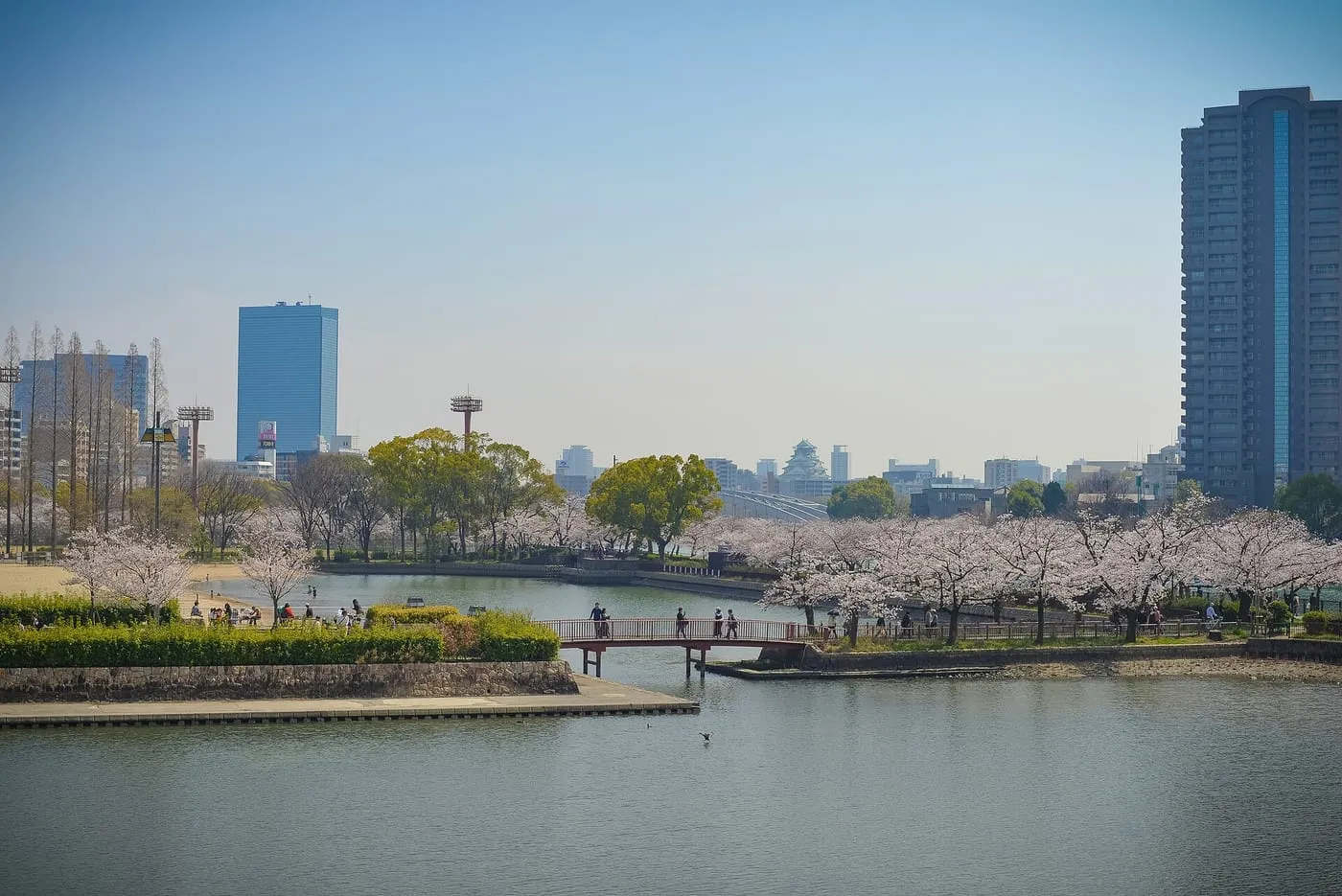
Cherry blossoms along the Okawa River. Photo: m-louis .®, Wikimedia Commons, CC BY-SA 2.0.
Spring in Osaka: March to May
Spring is Osaka’s most celebrated travel window. Temperatures rise steadily from a cool 14 °C in March to a warm 25 °C by late May, accompanied by blossoming trees.
Cherry blossom season (late March to early April)
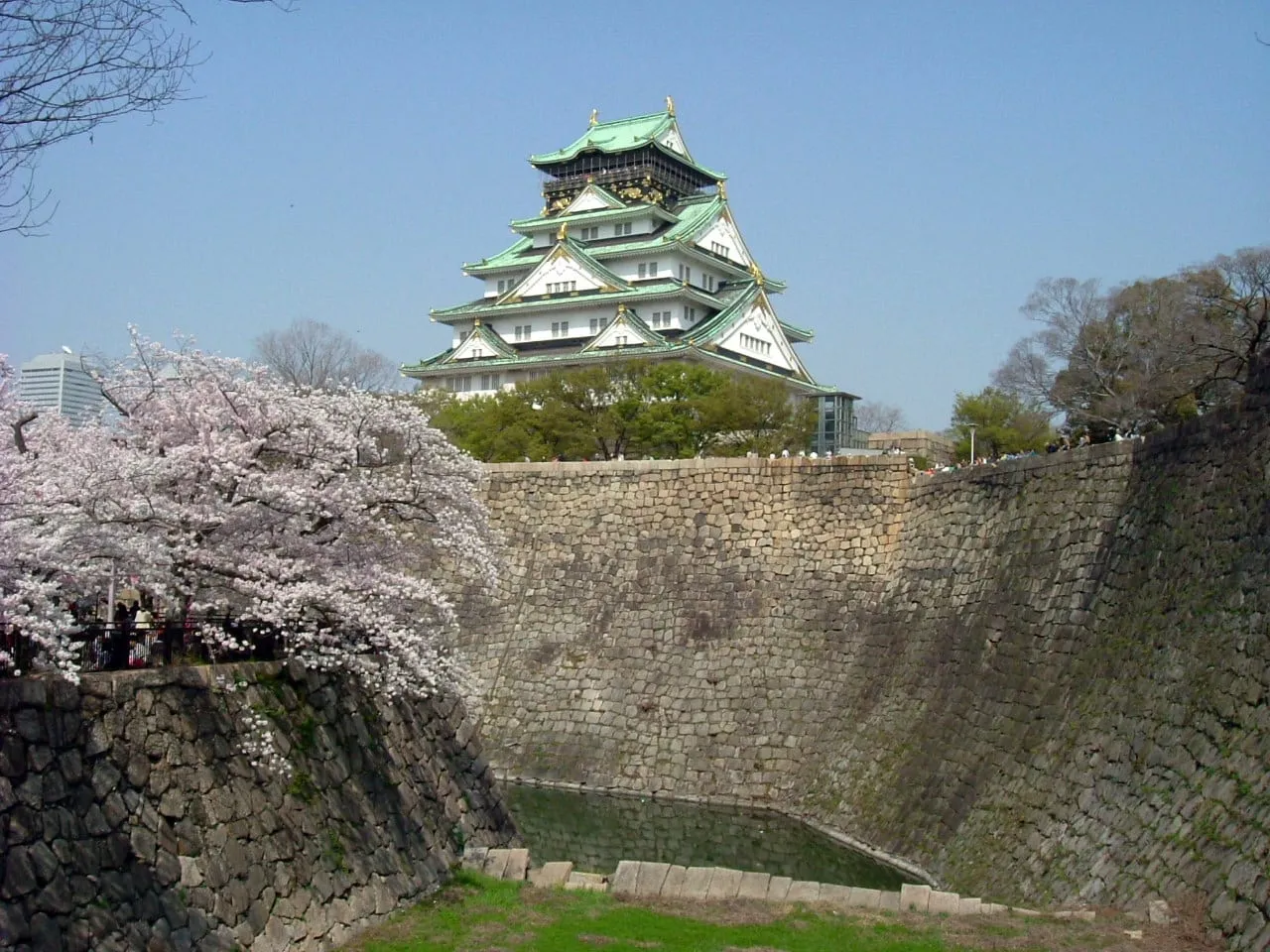
The Japanese cherry blossom (sakura) season transforms the city’s parks into open-air festival grounds. Full bloom (mankai) in Osaka typically occurs during the first week of April. Locals spread blue tarpaulins beneath the trees for hanami picnics with bento boxes, beer, and sake.
Top cherry blossom viewing spots:
- Osaka Castle Park: Over 3,000 cherry trees frame the ancient stone ramparts, moat waters, and five-storey main keep. The Nishinomaru Garden (admission 200 yen) hosts evening light-ups illuminating 300 Somei Yoshino trees against the white castle tower.
- Kema Sakuranomiya Park: Approximately 4,800 cherry trees stretch along both banks of the Okawa River for over four kilometres. Board an open-top river cruise or stroll the riverside paths under pink flower canopies.
- Japan Mint Cherry Blossom Tunnel (Osaka Mint Bureau): For one week each April, the grounds of the Japan Mint in Kita ward open to the public for its famous Tori-nuke walk. Visitors walk along a 560-metre lane lined with over 300 trees of more than 130 rare, late-blooming varieties. Entry is free, but advance online reservation is mandatory via the Mint’s official portal.
Golden Week warning: Golden Week runs from 29 April through 5 May. Four national holidays fall within seven days, producing immense domestic travel movements. Theme parks like Universal Studios Japan reach capacity, and bullet train seats between Osaka and Tokyo sell out weeks in advance. If visiting during Golden Week, secure Studio Passes and hotel reservations months ahead.
Autumn in Osaka: September to November
Many experienced travellers consider autumn the ideal season to explore Osaka. September can still feel like summer with lingering humidity and occasional Pacific typhoons, but by mid-October, the weather becomes dry, sunny, and pleasantly brisk.
November is characterized by clear blue skies, daily highs around 17 °C, and comfortable walking temperatures. Deciduous trees turn vivid shades of red, orange, and amber:
- Minoh Park: A forested valley located 30 minutes north of central Osaka. In November, Japanese maples (momiji) blaze scarlet along the 2.8 km paved river path leading to the 33-metre waterfall. Try traditional deep-fried maple leaf cookies (momiji tempura).
- Osaka Castle Park: The ginkgo avenues along the castle moats turn bright golden-yellow, contrasting with red maples surrounding the Otemon Gate.
- Midosuji Illuminations: From early November through late December, the four-kilometre length of Midosuji Boulevard from Umeda to Namba is bathed in millions of LED lights draped through roadside ginkgo trees.
Summer in Osaka: June to August
Summers in Osaka are intense, marked by high heat, dense humidity, and seasonal rainfall.
The East Asian rainy season (tsuyu) spans from roughly mid-June to mid-July, bringing overcast days and humid drizzle. Following the rainy season, July and August turn into an urban steam bath, with daytime temperatures routinely reaching 33 °C to 36 °C.
To cope with summer heat:
- Do outdoor sightseeing (such as temple walks and castle grounds) between 07:00 and 10:00.
- Spend the hottest afternoon hours in air-conditioned indoor sights like Osaka Aquarium Kaiyukan or department store shopping corridors.
- Stay hydrated with cold Pocari Sweat and green tea from street vending machines (130 yen to 180 yen per bottle).
Tenjin Matsuri (24 and 25 July)
Osaka’s cultural highlight of the summer is the Tenjin Matsuri, organized by the Osaka Temmangu Shrine. Ranked alongside Kyoto’s Gion Matsuri and Tokyo’s Kanda Matsuri as one of Japan’s three greatest festivals, it dates back over 1,000 years. On 25 July, a land procession of 3,000 costumed participants carrying portable shrines (mikoshi) marches through the streets, followed by a dramatic river procession of 100 illuminated boats on the Okawa River and a two-hour fireworks spectacular.
Winter in Osaka: December to February
Winter in Osaka is cold, bright, and predominantly dry. Temperatures range from overnight lows around 3 °C to daytime highs of 10 °C to 12 °C. Snow is rare in central Osaka, usually amounting to brief flurries that melt immediately.
Benefits of winter travel:
- Minimal crowds: Queue times at Universal Studios Japan and Kaiyukan Aquarium are significantly shorter outside the Christmas and New Year windows.
- Comfortable food crawl weather: Cold winter evenings are perfect for warming street-side takoyaki, hot okonomiyaki straight off the iron teppan, and bubbling udon-suki hot pots.
- Winter light festivals: The Osaka Festival of the Lights illuminates Nakanoshima Park and central boulevards with elaborate light projection mapping displays.
New Year closures (29 December to 3 January): As in Tokyo, the New Year period (Shogatsu) is Japan’s most important family holiday. Civic museums, historic castles, and independent shops shut down from 28 December to 3 January. Major shopping centres and private observation decks like Umeda Sky Building and Harukas 300 remain open. Massive crowds visit Shinto shrines like Sumiyoshi Taisha on 1 to 3 January for Hatsumode (the first shrine visit of the year).
Seasonal planning guide
- Planning a full three-day stay? See our structured 3 days in Osaka itinerary.
- For quick 24- or 48-hour layovers, consult Osaka in one or two days.
- Check how Osaka compares with eastern Japan in our best time to visit Tokyo guide.
- For overall entry rules and hotel booking information, visit our central Osaka city guide.
Common questions
When is the absolute best month to visit Osaka?
November and April are the most rewarding months. November offers dry, sunny weather with daytime highs around 17 °C and red autumn leaves in Minoh Park. April brings pleasant temperatures (around 19 °C) and the cherry blossom bloom across Osaka Castle Park.
When is cherry blossom season in Osaka?
Cherry blossoms (*sakura*) in Osaka typically begin opening in late March, reaching full bloom (*mankai*) between 1 April and 8 April. Peak viewing lasts about seven to ten days, depending on spring temperatures and rainfall.
How hot does Osaka get in summer?
Osaka experiences high heat and intense humidity in July and August, with daytime temperatures frequently exceeding 33 °C to 35 °C and overnight lows staying above 25 °C. Late June to mid-July also brings Japan's rainy season (*tsuyu*).
What dates should travellers avoid due to heavy crowds in Osaka?
Golden Week (29 April to 5 May) and the New Year holiday period (29 December to 3 January) produce immense domestic travel crowds, booked-out bullet trains, and long hotel waiting lists. Many museums and small restaurants close during New Year.