In this guide
💡 The Short Version: Seoul experiences four distinct seasons. **Autumn (September to November), documented with climate averages on the Korea Meteorological Administration portal, is the peak travel period, bringing crisp sunny skies (15°C–22°C) and fiery crimson and gold foliage across palace gardens. Spring (March to May) offers mild temperatures and cherry blossoms blooming in early-to-mid April, though spring requires monitoring yellow dust (Hwangsa) with KF94 masks. Summer (July to August) brings torrential monsoon rains (Jangma) and heavy humidity. Winter (December to February) brings biting Siberian winds (-10°C to 0°C), heated ondol floors, and outdoor ice skating at Seoul Plaza.
12-month climate and event overview
Seoul’s continental climate produces marked variations between the dry, freezing winter and the subtropical monsoon summer. The data below reflects long-term climatological averages from the Korea Meteorological Administration.
| Month | High (°C) | Low (°C) | Rain (mm) | Humidity (%) | Seasonal weather and events |
|---|---|---|---|---|---|
| January | 2 | -6 | 21 | 64 | Freezing Siberian winds, dry crisp skies, outdoor ice rinks, and Seollal holiday quiet |
| February | 5 | -3 | 24 | 61 | Late winter thaw, occasional light snowfall, crisp walking weather, and end-of-winter shopping sales |
| March | 11 | 2 | 47 | 57 | Spring transition, thawing mountain trails, early plum blossoms, and periodic yellow dust alerts |
| April | 18 | 8 | 65 | 56 | Peak cherry blossom bloom across Yeouido and Seokchon Lake; comfortable light-jacket weather |
| May | 23 | 13 | 106 | 63 | Lush greenery, pleasant outdoor cafe weather, royal palace night openings, and Lotus Lantern Festival |
| June | 27 | 18 | 133 | 68 | Warm summer temperatures, rising humidity, evening picnicking along the Han River before the rains |
| July | 29 | 22 | 395 | 80 | Peak monsoon (Jangma) season, heavy tropical downpours, high humidity, indoor museum retreats |
| August | 30 | 23 | 364 | 79 | Hottest month, intense midday heat, muggy tropical nights (yeoldaeya), and summer river waterparks |
| September | 26 | 15 | 169 | 71 | Rapid drop in humidity, crisp blue skies, comfortable outdoor dining, and Chuseok harvest festival |
| October | 20 | 9 | 52 | 64 | Ideal weather, peak autumn foliage in Gyeongbokgung and Bukhansan, clear photography light |
| November | 12 | 3 | 53 | 63 | Golden ginkgo leaf fall along Deoksugung stonewall walkway, Kimchi-making season, evening lanterns |
| December | 4 | -3 | 22 | 64 | Start of sub-zero winter freeze, Seoul Lantern Festival on Cheonggyecheon, and festive illumination |
The four seasons in detail
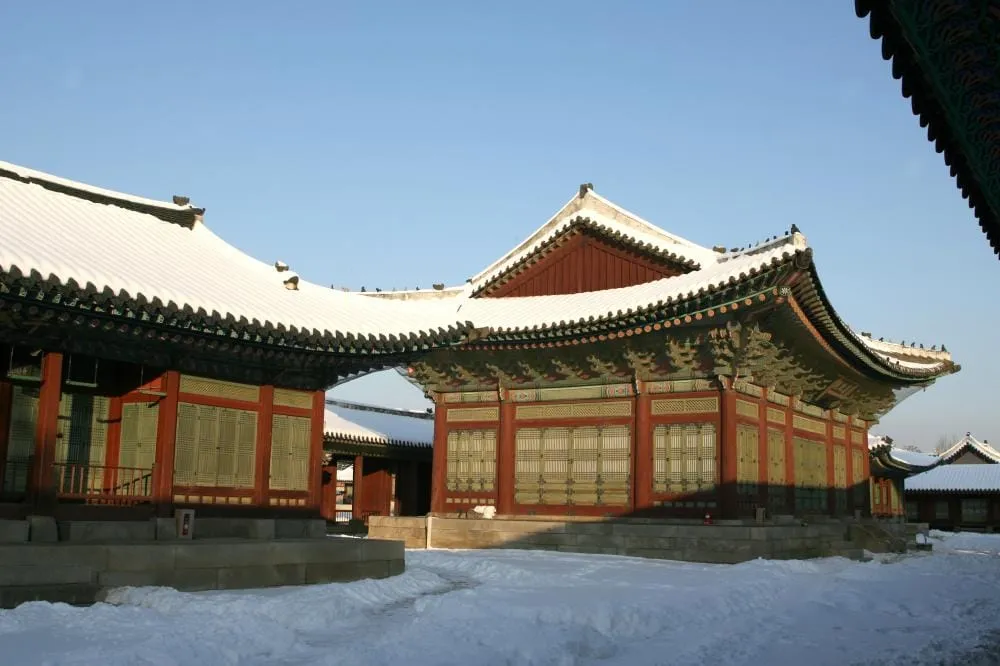
1. Autumn (September to November): the golden season
Autumn is widely celebrated as the most pleasant window to travel to Seoul. Following the departure of the summer monsoons, continental high-pressure systems bring weeks of unbroken dry sunshine, cobalt skies, and low humidity.
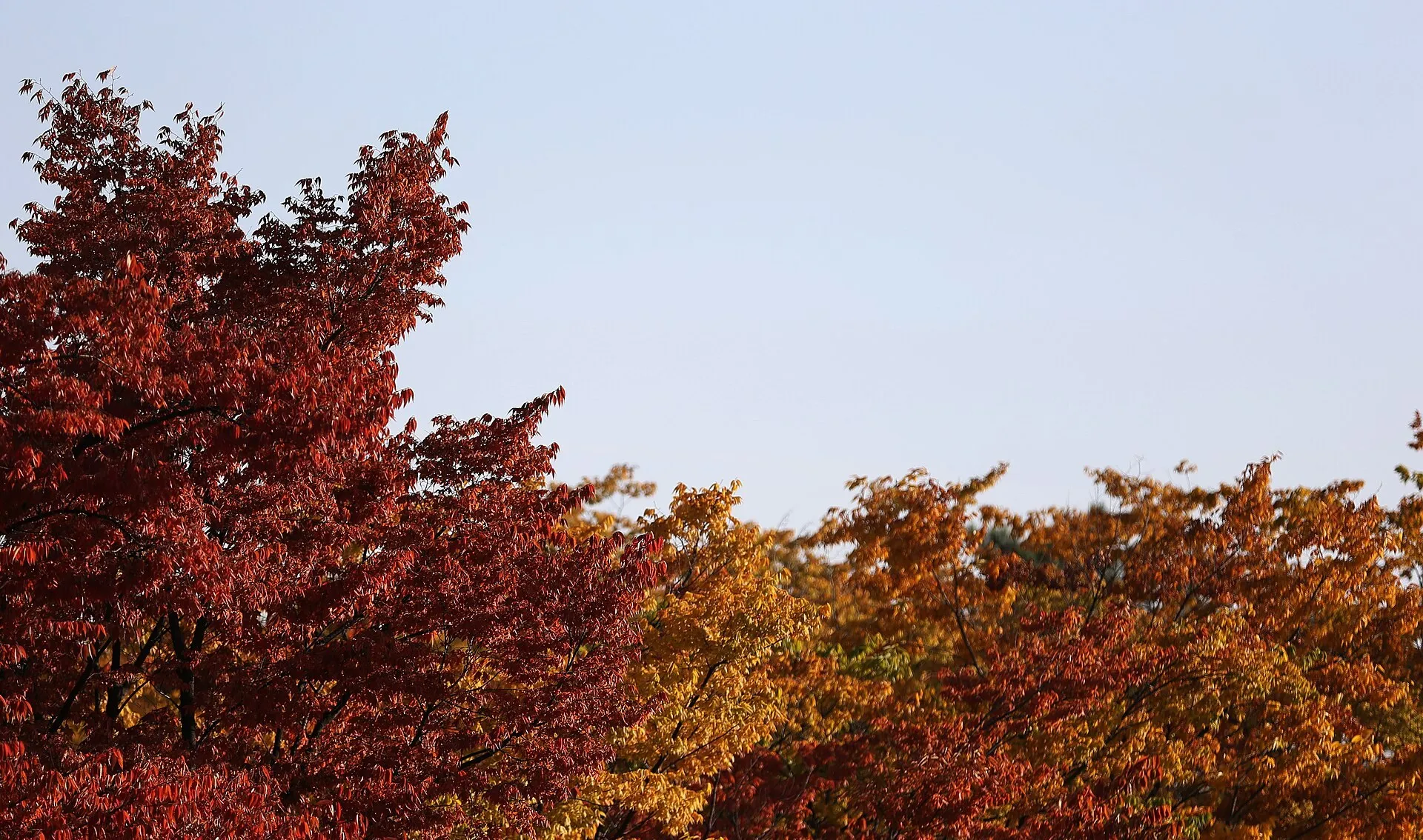
- Foliage timeline: Ginkgo leaves (eunhaeng) turn luminous bright yellow across city boulevards in mid-October. Maples (danpung) in the mountains of Bukhansan National Park and royal palace gardens achieve peak crimson intensity between 20 October and 10 November.
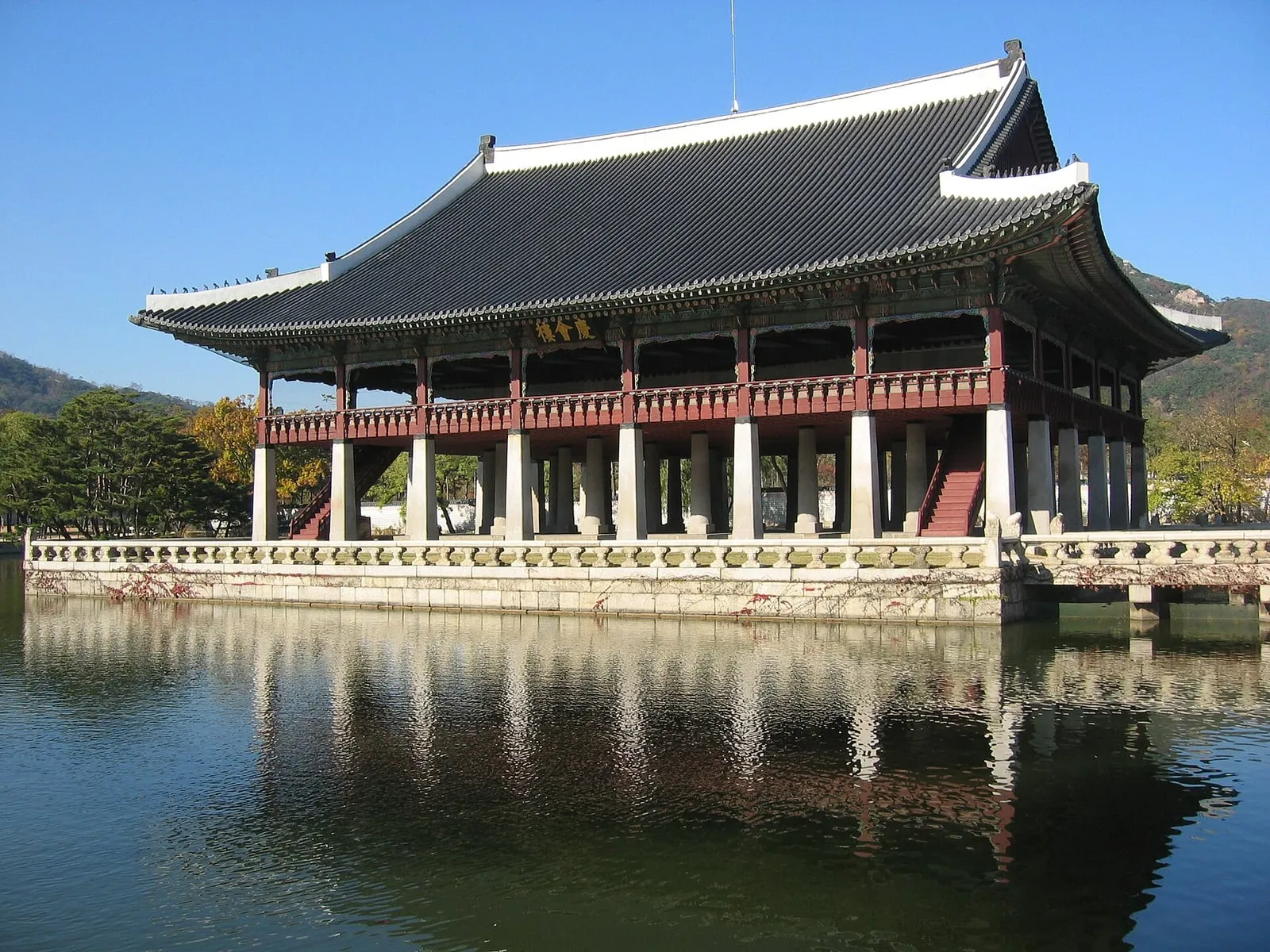
- Top sights: Stroll the golden ginkgo avenue along the stone perimeter wall of Deoksugung Palace, explore the landscaped ponds of the Secret Garden at Changdeokgung Palace, or hike the granite ridge trail of the Seoul City Wall and Naksan Park under clear skies.
- What to pack: Layers are essential. Daytime temperatures reach a comfortable 18°C to 22°C, but fall rapidly after dusk to 8°C to 10°C, requiring a light wool coat, sweater, or fleece jacket.
2. Spring (March to May): cherry blossoms and revival
Spring represents a season of reawakening across the capital as outdoor life resumes along the Han River and city parks.
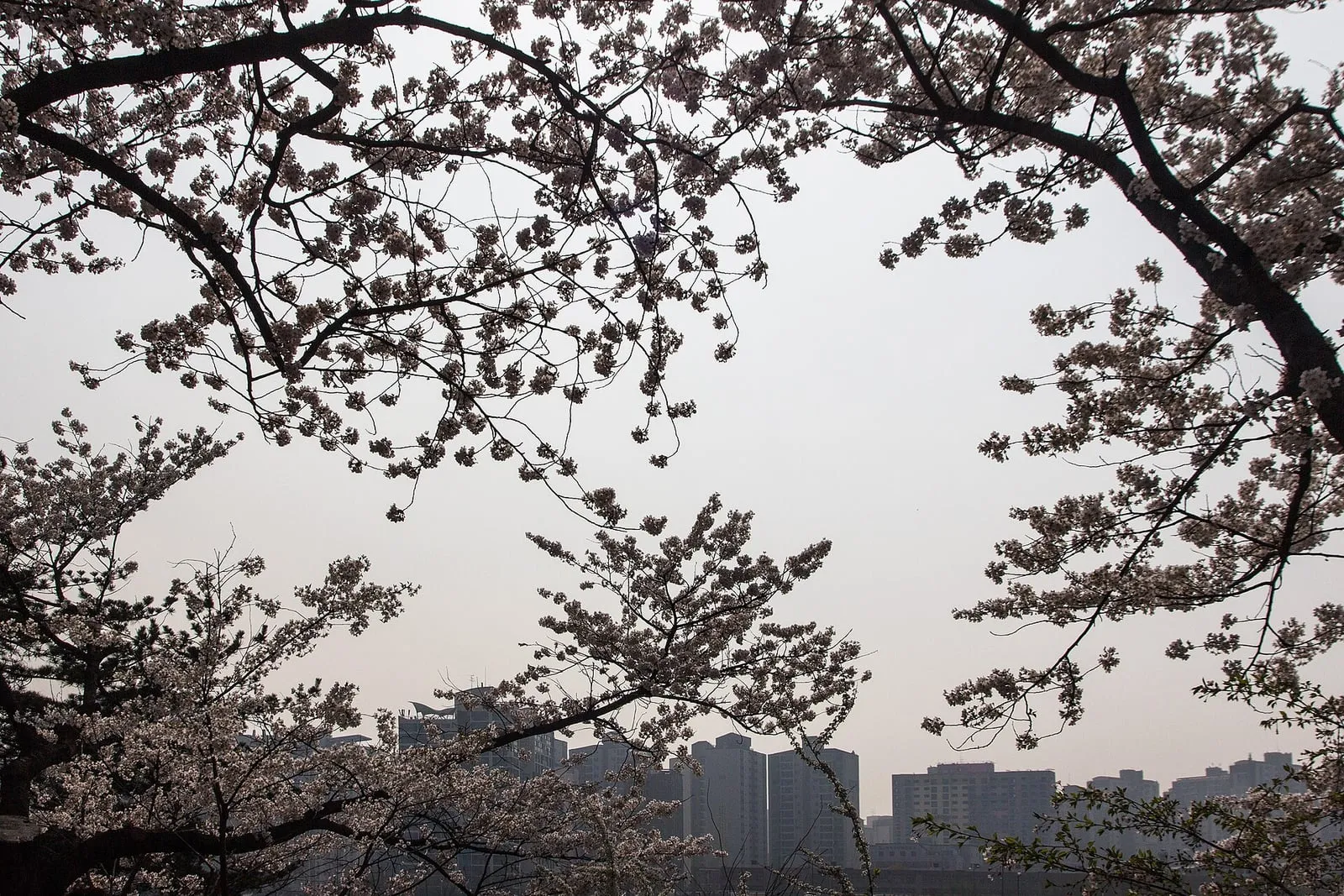
- Cherry blossoms (Beotkkot): The cherry blossom bloom sweeps north across the Korean peninsula, typically arriving in Seoul between 1 April and 10 April. The city celebrates with major outdoor festivals, including the Yeouido Spring Flower Festival along the Han River and the lakeside loop around Seokchon Lake. For dates and viewing strategies, read our detailed guide to cherry blossoms in Seoul 2027.
- Cultural festivities: May hosts the spectacular Yeondeunghoe (Lotus Lantern Festival), commemorating Buddha’s Birthday with an evening procession of 100,000 illuminated paper lanterns winding down Jongno boulevard to Jogyesa Temple.
3. Monsoon Summer (June to August): heat and downpours
Summer in Seoul is characterised by the East Asian monsoon, locally called Jangma. From late June through late July, stationary weather fronts stall over the peninsula, unleashing intense downpours that can dump 100 millimetres of rain in a single afternoon.
- Humidity and heat: July and August bring sticky relative humidity levels of 80% to 90%, paired with temperatures hovering around 30°C to 35°C. At night, temperatures often stay above 25°C, a phenomenon Koreans refer to as yeoldaeya (tropical nights), driving locals to night markets and riverside parks for evening breezes.
- Navigating the monsoon: Plan flexible itineraries. Pair wet mornings with extensive indoor underground networks—such as the massive COEX Mall and Starfield Library, the National Museum of Korea, or indoor theme park fun at Lotte World. Carry a compact wind-resistant umbrella and footwear suitable for wet pavements.
4. Winter (December to February): sub-zero Siberian freeze
Winter transforms Seoul into a crisp, icy landscape. Prevailing northwesterly winds blow down from Siberia, delivering biting sub-zero temperatures.
- The three-cold, four-warm cycle (Sampo Saon): Seoul winter weather adheres to a meteorological pattern of three consecutive bitter, freezing days (-10°C or colder) followed by four milder days (-2°C to 4°C) as pressure systems cycle.
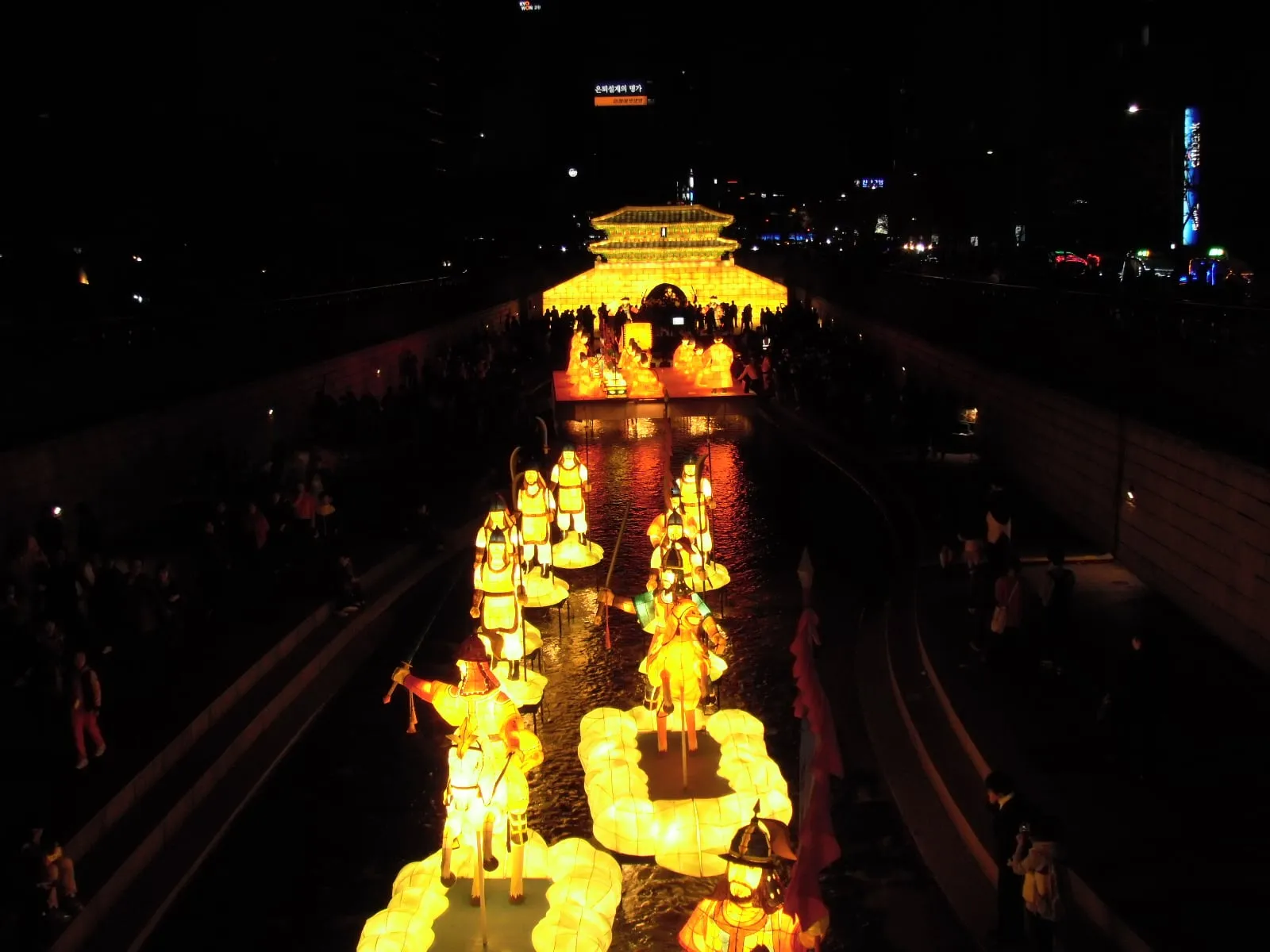
- Winter comfort: The freeze is offset by clear blue skies, brilliant sunshine, and traditional heating technology. Korean interiors are warmed by ancient underfloor heating (ondol), making hotel and hanok floorboards delightfully toasty. Outdoor ice rinks open in front of Seoul City Hall at Seoul Plaza (skate hire ₩1,000), and winter illuminations glow across the city during the Seoul Lantern Festival 2026.
- What to pack: A knee-length down parka (locals call this essential garment long padding), thermal base layers, woollen beanie, scarf, gloves, and sturdy treaded boots. Adhesive chemical heat packs (hot-paek) are sold at every convenience store for ₩1,000 and keep coat pockets warm for 12 hours.
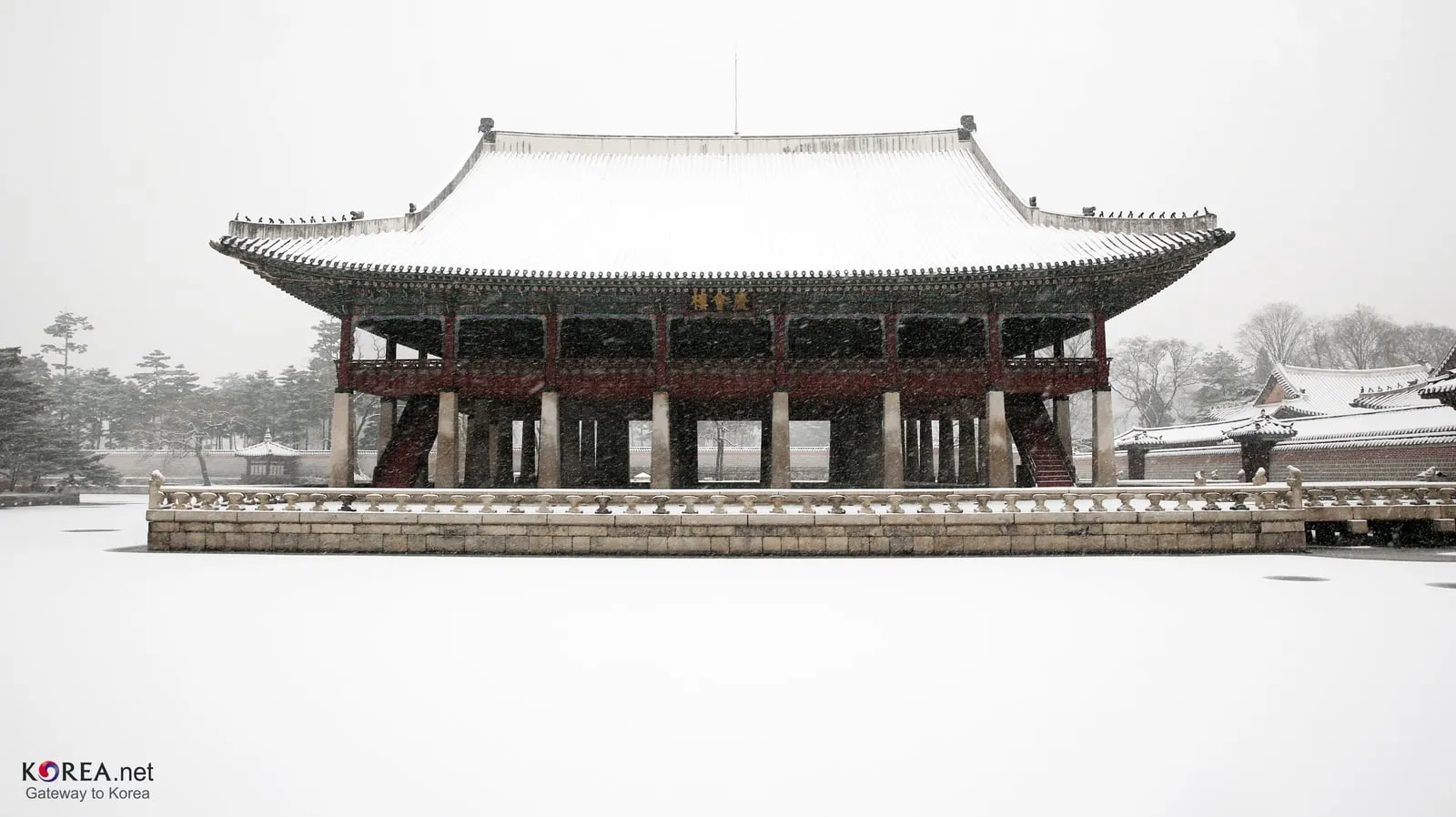
A Gyeongbokgung pavilion under winter snow. Photo: Korea.net / Korean Culture and Information Service, Wikimedia Commons, CC BY-SA 2.0.
Fine dust (Mise-meonji) and yellow dust (Hwangsa)
Air quality is an important practical consideration when visiting Seoul, particularly during spring and late winter.
What causes poor air quality?
- Yellow Dust (Hwangsa): Occurs primarily between March and May. Strong spring winds lift fine sand and soil from the dry desert plains of Mongolia and the Gobi Desert, blowing them eastward across the Yellow Sea to coat Seoul in a dull ochre haze.
- Fine Particulate Matter (PM2.5 and PM10): Spikes occur intermittently between December and April when stagnant atmospheric anticyclones trap domestic emissions and airborne pollutants over the Seoul metropolitan basin.
Practical air quality precautions:
- Check daily levels: Download reliable air monitoring apps like AirVisual (IQAir) or check local Korean forecasts on Naver. Pay attention to the PM2.5 index:
- 0–15 µg/m³: Good (Blue)
- 16–35 µg/m³: Moderate (Green)
- 36–75 µg/m³: Unhealthy for sensitive groups (Yellow/Orange)
- 76+ µg/m³: Very Unhealthy (Red)
- Wear KF94 masks: On days with high fine dust readings, standard surgical or cloth masks are ineffective. Purchase KF94 masks (Korea Filter 94, filtering 94% of micro-particles 0.4 microns in size) from any convenience store or pharmacy for ₩1,000 to ₩1,500. They fit tightly around the nose and jaw while allowing comfortable breathing.
- Adjust your schedule: On red-alert days, reschedule mountain hikes (such as Bukhansan National Park) to museum days or shopping arcade visits.
Public holidays and travel disruptions
South Korea celebrates two major multi-day national holiday periods when city patterns shift dramatically:
1. Seollal (Lunar New Year)
- When: Late January or February (dates follow the lunar calendar).
- Impact: Over 30 million Koreans travel across the country to visit ancestral family hometowns (Gwi-seong). Motorways experience epic traffic jams, and intercity KTX bullet trains sell out months in advance.
- In Seoul: The capital empties of vehicular traffic, creating peaceful streets. While independent shops, markets, and family-owned restaurants close for two to three days, royal palaces (Gyeongbokgung, Changdeokgung) remain open and often offer free admission alongside folk music performances and traditional kite flying.
2. Chuseok (Korean Harvest Thanksgiving)
- When: September or early October (three consecutive days).
- Impact: Similar to Seollal, residents depart for provincial family reunions. Avoid attempting regional day trips by road during Chuseok weekend. In the city, major department stores close for one or two days, but public parks, palaces, and major tourist hubs stay open.
For ideas on structuring your days around seasonal weather, see our 3-day Seoul itinerary and master guide to where to stay in Seoul.
Common questions
Which month is best to visit Seoul?
October is considered the premier month to explore Seoul. The weather is dry, crisp, and sunny with comfortable daytime temperatures averaging 18°C, minimal rainfall, low humidity, and brilliant crimson maple and golden ginkgo foliage across palace grounds.
When does the monsoon season hit Seoul?
The East Asian summer monsoon (known locally as Jangma) occurs from late June through July into early August. During this period, Seoul experiences torrential downpours, high relative humidity exceeding 80%, and daytime temperatures reaching 30°C to 35°C.
What is yellow dust (Hwangsa) and when does it occur?
Yellow dust consists of dry sand and mineral dust particles carried from the Gobi Desert and Inner Mongolia by prevailing westerly winds. It primarily impacts Seoul between March and May, often combining with industrial fine particulate matter (PM2.5).
How cold does it get during a Seoul winter?
Winter in Seoul (December to February) brings freezing Siberian continental winds, with daytime temperatures hovering between -5°C and 2°C, and night-time lows frequently plunging to -10°C or -15°C. Crisp, clear skies predominate.
How do major Korean holidays affect tourists?
During Seollal (Lunar New Year in January or February) and Chuseok (Korean Thanksgiving in September or October), millions of Seoul residents travel to hometown provinces. Independent shops and small restaurants close for three days, though royal palaces, major museums, and department store complexes host traditional festive celebrations.