In this guide
💡 The Short Version: Tokyo remains a cash-conscious society. Major credit cards (Visa, Mastercard, American Express) are widely accepted at department stores and convenience chains, but cash is non-negotiable at ramen ticket machines, market food stalls, temple shrines, and neighbourhood sentos. Carry at least ¥10,000 to ¥20,000 in physical cash in your wallet at all times. Seven Bank ATMs inside 7-Eleven and Japan Post Bank ATMs accept foreign bank cards 24 hours daily. Never tip in Japan—service is included, and tipping causes confusion. Or book a tour: an orientation city tour with transit navigation starts from ¥16,000.
Cash vs cards in Tokyo: what you need to know
Over the past decade, and particularly following municipal preparations for the 2020 Tokyo Olympics, the Japanese government heavily promoted cashless payments (kyasshuresu). Today, international credit cards, mobile contactless payments (Apple Pay, Google Pay), and transit IC cards are accepted across major commercial sectors.
However, Tokyo has not eliminated cash in the manner of London, Stockholm, or Seoul. Thousands of small, independent establishments continue to operate entirely in paper yen and metal coins.
| Category | Credit & debit cards accepted? | Digital IC cards (Suica/Pasmo) accepted? | Cash required? | Practical guidance |
|---|---|---|---|---|
| Hotels & Ryokans | Yes (Visa, Mastercard, Amex, JCB) | Rarely | No | Major international cards accepted at check-in |
| Department stores & malls | Yes | Yes | No | Ginza, Shinjuku, and Shibuya retail complexes |
| Convenience stores (7-Eleven, Lawson) | Yes | Yes | No | Tap card or mobile phone on the self-checkout register |
| Casual ramen & tonkatsu shops | Rarely | Occasionally | Yes (Mandatory) | Order via push-button vending machines (kenbaiki) accepting ¥1,000 notes and coins |
| Izakayas & neighbourhood bars | 50/50 | Rarely | Yes | Many micro-bars in Golden Gai and Omoide Yokocho are strictly cash-only |
| Temples & Shinto shrines | No | No | Yes (Mandatory) | Admission gates, paper fortunes (omikuji), and amulets require cash |
| Sento (Public bathhouses) | Rarely | Rarely | Yes (Mandatory) | The standard ¥550 admission fee is collected in coins or cash at the bandai desk |
| Taxis | Yes | Yes | No | Almost all Tokyo taxis accept credit cards and IC cards; check rear door window decals |
| Train station coin lockers | Rarely | Yes | Yes | Older lockers accept ¥100 coins; modern lockers accept Suica/Pasmo |
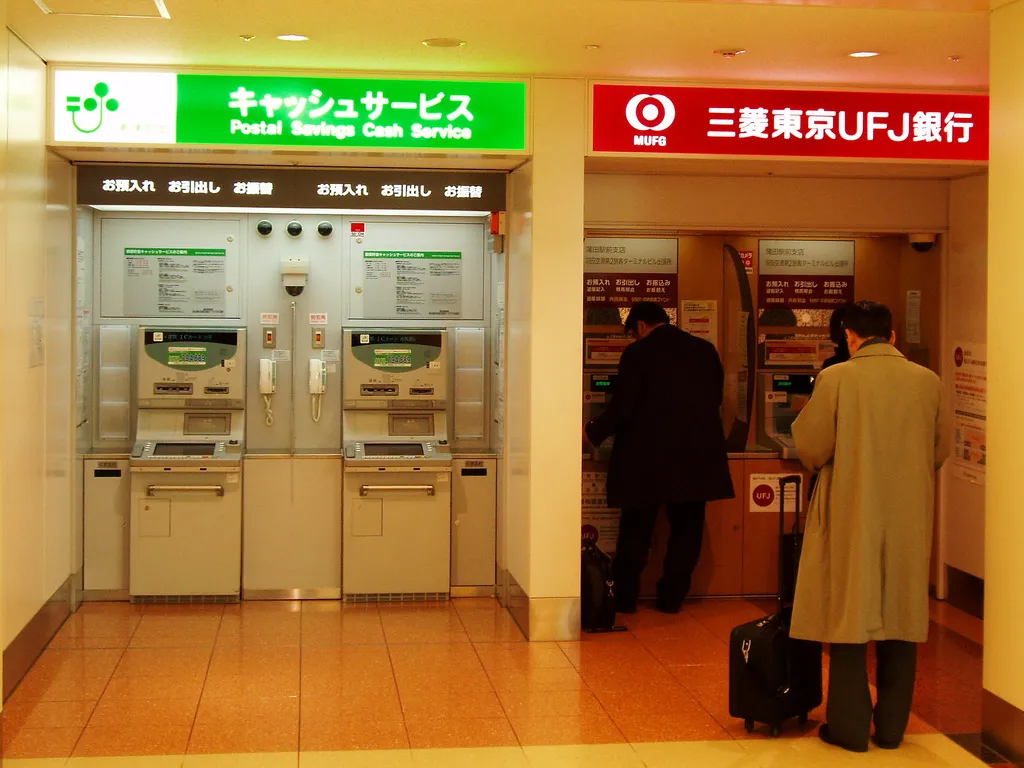
Green Japan Post Bank automated teller machine accepting international cards. Photo: Katamakura, Wikimedia Commons, CC BY-SA 3.0.
Japanese currency: banknotes and coins
The Japanese yen (JPY, symbolised as ¥) is issued by the Bank of Japan in four banknote denominations and six coins:
Banknotes
- ¥10,000 note: The largest denomination. Unlike in Europe or North America, where carrying large bills is discouraged, the ¥10,000 note is universally used in Japan. Cashiers at convenience stores, cafes, and taxis will happily break a ¥10,000 note for a purchase under ¥500 without hesitation.
- ¥5,000 note: Mid-value purple-toned banknote.
- ¥2,000 note: Commemorative note issued for the 2000 Okinawa G8 Summit. Extremely rare in domestic circulation; if you receive one, keep it as a souvenir.
- ¥1,000 note: The workhorse bill of Japan, used constantly in vending machines, ticket terminals, and casual dining.
Coins and the need for a coin purse
Because Japan has no paper bills smaller than ¥1,000, daily change accumulates rapidly in metal coins:
- ¥500 coin: Large bi-colour nickel-brass coin. Highly valuable in purchasing power; easily covers a convenience store breakfast or coffee.
- ¥100 coin: Silver-coloured coin used for vending machines, gachapon capsule toy dispensers, laundromats, and station luggage lockers.
- ¥50 coin: Features a distinctive central hole to distinguish it from the ¥100 coin by touch.
- ¥10 coin: Heavy bronze coin.
- ¥5 coin: Brass coin with a central hole. The Japanese word for five yen (go-en) is a homophone for “good fate” or “favourable connections” (ご縁). It is the traditional coin tossed into Shinto shrine offertory boxes (saisen-bako) when praying for blessings.
- ¥1 coin: Lightweight pure aluminium coin that floats on water. Cannot be inserted into automated ticket vending machines.
[!TIP] Buy a coin purse (kozenire): Within 24 hours of landing in Tokyo, your pockets will be weighed down with dozens of coins. Purchase an inexpensive zippered coin pouch from a 100-yen shop (such as Daiso or Can Do) or use a dedicated compartment in your travel daypack.
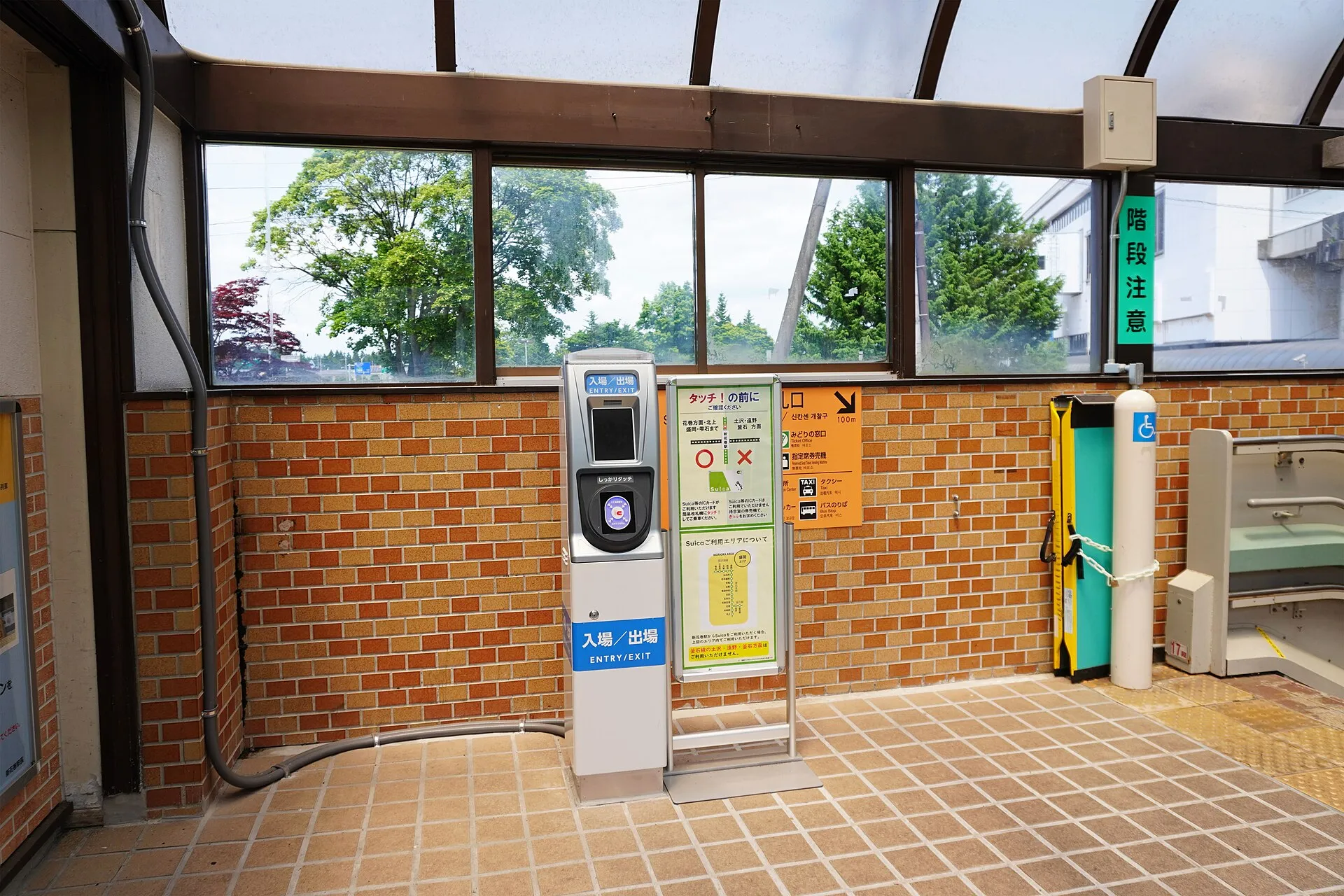
Contactless Suica card reader panel mounted on a railway station turnstile. Photo: Mister0124, Wikimedia Commons, CC BY-SA 4.0.
Where to withdraw cash: international ATMs
Do not exchange large amounts of foreign currency at airport exchange booths, where wide foreign exchange spreads typically cost you 3% to 7%. The most economical way to obtain Japanese yen is withdrawing cash directly from an automated teller machine (ATM) using a low-fee travel debit card (such as Wise, Revolut, Monzo, or Charles Schwab).
1. Seven Bank ATMs (7-Eleven)
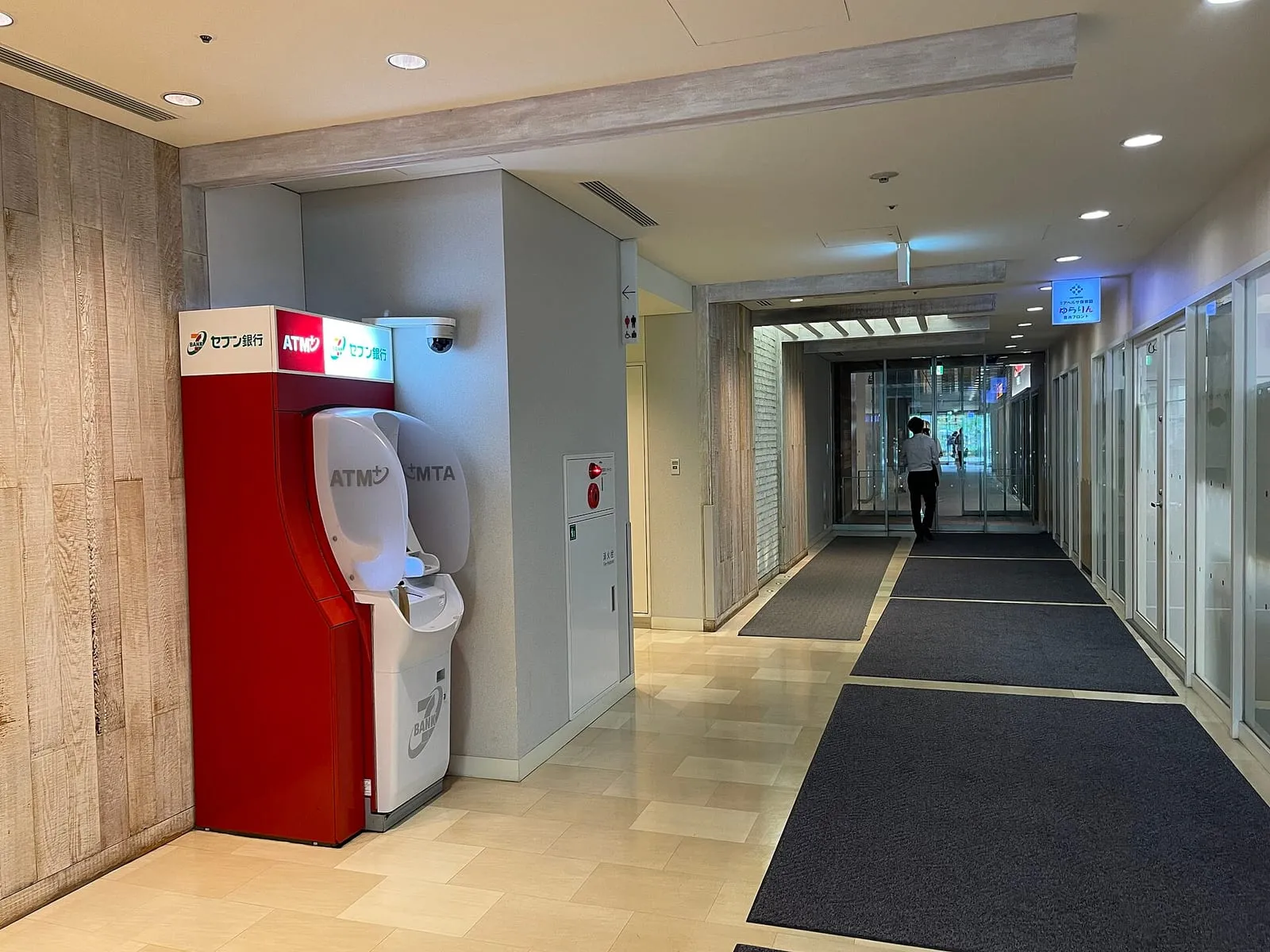
The undisputed gold standard for foreign travellers. There are over 27,000 Seven Bank ATMs operating nationwide, found inside every 7-Eleven convenience store on virtually every street corner in Tokyo.
- Card compatibility: Accepts international Visa, Plus, Mastercard, Maestro, Cirrus, American Express, JCB, Discover, and UnionPay cards.
- Hours: Available 24 hours a day, 365 days a year.
- Languages: Touchscreen menu offers 12 languages, including English.
- ATM usage fee: Domestic machine fee is ¥110 during standard daytime hours (7:00 to 19:00) and ¥220 at night and weekends. Check network locations on the Seven Bank official ATM directory.
2. Japan Post Bank ATMs (Yucho Ginko)
Located inside Japan Post branch offices and major railway stations.
- Card compatibility: Accepts international Visa, Mastercard, and Cirrus networks.
- Hours: Open during post office business hours, typically 8:00 to 21:00 on weekdays, with shortened hours on weekends.
Beware the Dynamic Currency Conversion (DCC) trap
When withdrawing cash at Japanese ATMs or paying at retail card terminals, the machine screen may present a choice:
- “Charge in your home currency” (GBP, USD, EUR)
- “Charge in Japanese Yen (JPY / ¥)”
Always choose Japanese Yen (JPY). If you select your home currency, the ATM operator applies Dynamic Currency Conversion (DCC), converting the funds using an inflated exchange rate that imposes an invisible 4% to 8% markup. Choosing JPY ensures your own bank handles the conversion at the true interbank exchange rate.
Transit IC cards as digital cash
Prepaid contactless RFID transit cards—primarily Suica (issued by JR East) and Pasmo (issued by Tokyo Metro and private railways)—function as universal electronic money across Tokyo.
In addition to tapping through train turnstiles and boarding municipal buses, an IC card can pay for:
- All major convenience store purchases (7-Eleven, Lawson, FamilyMart).
- Drink vending machines throughout the city (tap your card on the glowing reader after pressing your drink selection).
- Coin-operated luggage lockers at train stations.
- Fast food and casual counter chains (Matsuya, Yoshinoya, Coco Ichibanya).
- Drugstores and electronics megastores.
Adding digital Suica to Apple Wallet
While physical plastic Suica and Pasmo cards have faced periodic sales restrictions due to global semiconductor chip shortages, iPhone users can bypass physical cards completely:
- Open the Apple Wallet app on your iPhone.
- Tap the ”+” icon in the upper right corner.
- Select Transit Card, search for “Suica” or “Pasmo”, and follow the prompts to load funds using an existing card in Apple Pay.
- Set the card to Express Transit Mode. You do not need to wake your phone, unlock Face ID, or open an app—simply tap the top of your iPhone against the station turnstile or convenience store register.
Tipping culture in Tokyo: why you should never tip
Tipping (chippu) does not exist in Japanese society. The concept of rewarding service with an discretionary cash gratuity is completely alien to traditional Japanese hospitality (omotenashi), which holds that exceptional care and pride in one’s craft should be delivered unconditionally to every customer.
If you attempt to leave a cash tip on a restaurant table, bar counter, or in a taxi:
- The server will assume you accidentally forgot your change.
- Staff members will frequently sprint out of the restaurant and pursue you down the street to return your coins.
- In formal settings, pressing cash into a host’s hand can cause acute social embarrassment, implying that their employer does not pay fair wages or that the relationship is transactional rather than based on mutual respect.
Table charges (Otoshi) and service charges
While you never tip individual servers, you will encounter two formal service billings:
- Otoshi (Seating charge in Izakayas): When you sit down at an izakaya or casual drinking tavern, the server will place a small, unprompted appetiser on your table—such as marinated edamame, pickled cabbage, or braised beef tendon. This dish is called otoshi (or tsukidashi), and it serves as the establishment’s customary table seating fee, typically itemised at ¥300 to ¥600 per person on the final bill.
- Formal Service Charges: Upscale hotel restaurants, traditional ryokans, and high-end sushi or kaiseki counters automatically append an official 10% to 15% service charge to the printed check. This is standard practice and requires no additional gratuity.
Guided city tours with transit orientation
If you want an experienced local guide to teach you how to use Japanese ATMs, load digital IC cards, navigate vending machines, and explore historic neighbourhoods, consider a small-group orientation tour:
Best of Tokyo: Guided Full-Day City Tour with a Local
From ¥20,248 · 4.6 stars from 250 reviews · 6 hours · Small group
Best of Tokyo: Guided Full-Day City Tour with a Localad navigates Tokyo’s rail turnstiles, subway transfers, and historic districts—including Senso-ji, Meiji Jingu, and Shibuya—with a bilingual guide who explains ticket purchases and local customs.
Tokyo: Shinjuku Food Tour (13 Dishes and 4 Eateries)
From ¥13,200 · 4.9 stars from 3,939 reviews · 3 hours · Dinner crawl
Tokyo: Shinjuku Food Tour (13 Dishes and 4 Eateries)ad introduces guests to four authentic culinary venues, handling all food ordering, table charges, and bills with an English-speaking guide.
From Tokyo: Mt Fuji Day Trip to Oishi Park & Oshino Hakkai
From ¥7,800 · 4.8 stars from 6,302 reviews · 10 hours · Guided coach tour
From Tokyo: Mt Fuji Day Trip to Oishi Park & Oshino Hakkaiad provides seamless round-trip transport to Lake Kawaguchiko, Oshino Hakkai, and Chureito Pagoda.
Connecting financial and practical guides
- Tax-Free Shopping: Learn how foreign tourists claim 10% consumption tax refunds at department stores and pharmacies in our tax-free shopping in Japan guide.
- Etiquette & Manners: Review bowing, shoe removal, and train behaviour in our comprehensive Tokyo etiquette guide.
- Public Transport: Master train fares, IC cards, and unlimited subway passes in our Tokyo public transport guide.
- Itinerary Planning: Money logistics and ATM stops are mapped throughout our 3 days in Tokyo and 5 days in Tokyo itineraries. Find all booking details on the Tokyo hub.
Common questions
Can you pay by credit card everywhere in Tokyo?
No. While credit cards are accepted at hotels, department stores, and convenience stores, Tokyo remains substantially cash-based. Traditional ramen shops, ticket machines, temple donation boxes, neighbourhood sento bathhouses, and market food stalls require physical Japanese yen.
Which ATMs in Tokyo accept international bank cards?
Seven Bank ATMs (located inside every 7-Eleven store across Tokyo) and Japan Post Bank ATMs (inside post offices and train stations) reliably accept foreign-issued Visa, Mastercard, Plus, Cirrus, and American Express cards with English-language touchscreen menus.
Do you tip in restaurants or taxis in Tokyo?
No. Tipping is completely absent from Japanese culture and is considered awkward or offensive. Excellent service is considered the baseline standard and is built into the bill. Leaving coins behind will result in staff chasing you down the street to return your forgotten money.
Can a Suica or Pasmo IC card be used to pay for shopping?
Yes. In addition to paying train and subway fares, contactless Suica and Pasmo cards are accepted at convenience stores, vending machines, station kiosks, luggage lockers, and chain restaurants throughout Tokyo.
What should I do if an ATM asks to charge me in my home currency?
Always decline the conversion and choose to be billed in Japanese Yen (JPY / ¥). Choosing your home currency triggers Dynamic Currency Conversion (DCC), which adds hidden foreign exchange markups of 4% to 8%.