In this guide
The Short Version: A day trip to Nara is one of the easiest and most memorable excursions in Japan. Located just 35 kilometres east of Osaka, the ancient capital is home to over 1,000 free-roaming sacred sika deer and the monumental Great Bronze Buddha inside Todaiji Temple. Take the Kintetsu Nara Line Rapid Express from Osaka-Namba Station directly to Kintetsu-Nara Station (35 minutes, 680 yen), which drops you just 5 minutes on foot from Nara Park. Tapping an ICOCA or Suica IC card (Osaka public transport) covers the journey without paper tickets. A guided day trip from Osaka that combines Nara with Kyoto can be booked instead (see the tour section below). Pair this with our wider regional overview in day trips from Osaka.
Train options compared: Kintetsu vs JR
| Route | Departure Station | Arrival Station | Journey Time | Fare in Yen | Walk to Nara Park |
|---|---|---|---|---|---|
| Kintetsu Rapid Express (Recommended) | Osaka-Namba | Kintetsu-Nara | 35 mins | 680 yen | 5 minutes |
| Kintetsu Limited Express | Osaka-Namba | Kintetsu-Nara | 30 mins | 1,200 yen (incl. reserved seat) | 5 minutes |
| JR Yamatoji Line Rapid | JR Namba or Tennoji | JR Nara | 35 to 45 mins | 580 yen | 20 minutes |
| JR Yamatoji Line from Osaka Station | Osaka Station (Loop Line) | JR Nara | 50 mins | 820 yen | 20 minutes |
Book a guided Nara and Kyoto day instead
The train to Nara is simple, so a tour earns its place when you want to add Kyoto’s Kiyomizudera to the same day. Book the From Osaka: Nara Deer and Kyoto Kiyomizudera Sightseeing Tourad{rel=“sponsored nofollow noopener”} to cover the deer park and Kiyomizudera with return coach transport from central Osaka.
Step-by-step Nara day trip itinerary
Stop 1: Kofukuji Temple (09:30)
From Kintetsu-Nara Station Exit 2, walk 5 minutes east along Noborioji-dori. You will immediately encounter your first glimpse of free-roaming deer on the lawns of Kofukuji Temple.
- Five-Storey Pagoda (Goju-no-to): Standing 50 metres tall, this is Japan’s second-tallest wooden pagoda, first constructed in 730 AD and rebuilt in 1426.
- Central Golden Hall (Chukondo): Rebuilt using traditional timber joinery methods. Entry to the interior is 500 yen.
Stop 2: Nara Park and the sacred sika deer (10:15)
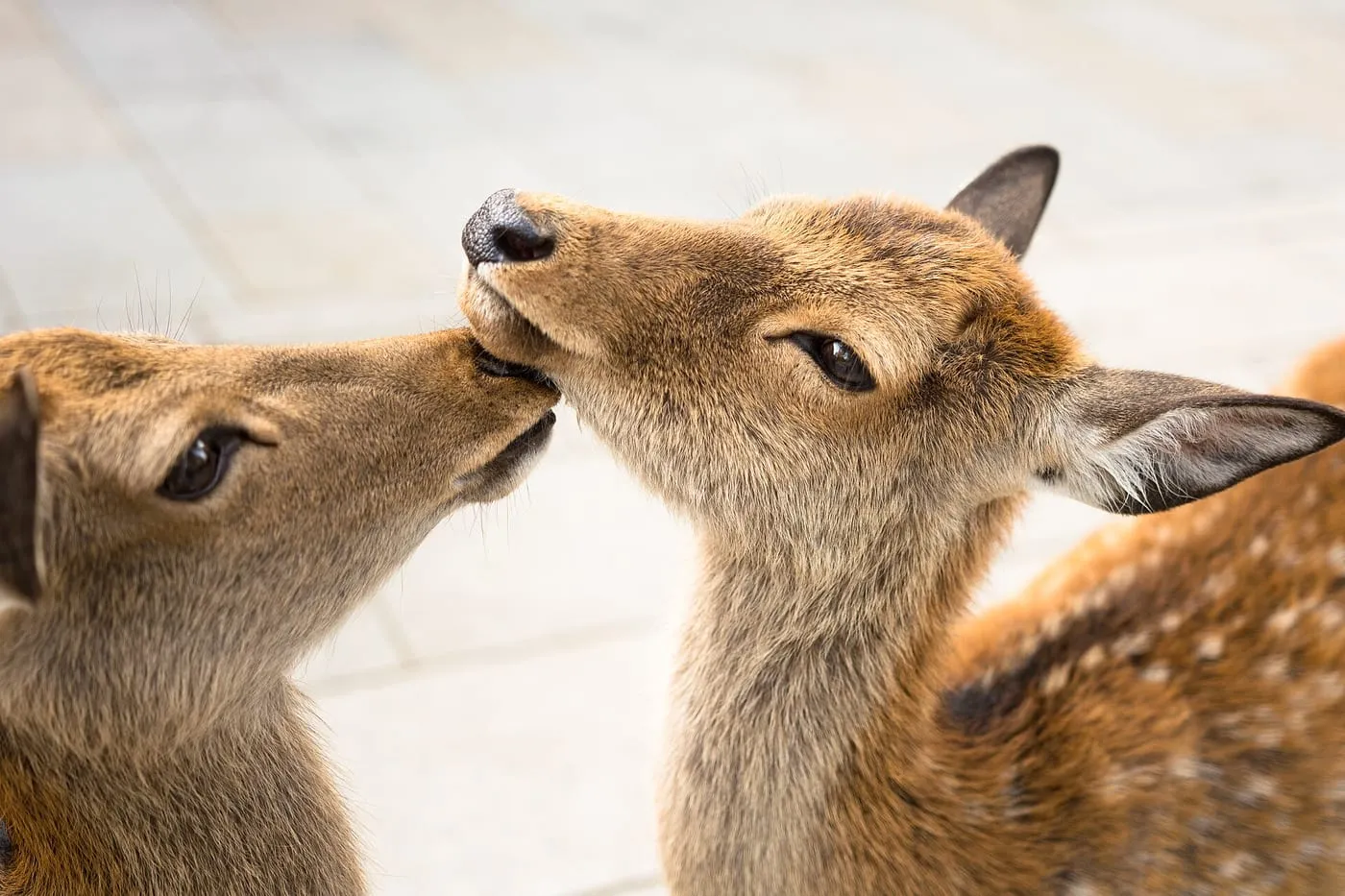
Nara Park covers over 500 hectares of grassy lawns and old-growth forest beneath Mount Wakakusa. In local Shinto belief, deer are divine messengers of Kasuga Taisha’s deity, who was said to have arrived riding a white deer in 768 AD. Today they are designated as protected national natural monuments.
- Deer Crackers (Shika Senbei): Licensed vendors sell stacks of roasted wheat and rice-bran crackers wrapped in paper bands for 200 yen.
- How to interact: Hold a cracker above your head, and many deer will politely bow their heads before you offer the food. Once your crackers are gone, show your open, empty palms to signal that feeding time has finished, and they will calmly wander away.
Stop 3: Todaiji Temple and the Great Buddha (11:00)
Walking north through the park brings you to Todaiji’s colossal southern gate (Nandaimon), guarded by two fierce 8-metre-tall wooden Nio guardian statues carved by master sculptor Unkei in 1203.
- The Daibutsuden (Great Buddha Hall): Enter the world’s largest historic wooden structure, which houses the Daibutsu—a 15-metre-tall bronze statue of the Cosmic Buddha (Vairocana) cast in 752 AD, composed of over 400 tonnes of bronze.
- The Pillar Hole: Behind the statue stands a massive wooden support pillar with an opening through its base matching the size of the Buddha’s nostril. Children and flexible adults crawl through it, which tradition says brings good luck and enlightenment.
- Admission: 800 yen (cash only, as noted in our guide to money in Osaka).
Stop 4: Nigatsudo Hall and mountain views (12:30)
Walk up the hillside path behind Todaiji to Nigatsudo Hall. Perched on stilts on the slopes of Mount Wakakusa, its elevated wooden deck provides panoramic views across the tiled roofs of Todaiji and the Nara valley. Entry to the balcony is free.
Stop 5: Kasuga Taisha Shrine (13:30)
Follow the forested stone pathways south to Kasuga Taisha. The winding gravel approaches are flanked by roughly 2,000 moss-covered stone lanterns (ishidoro), and hundreds more bronze hanging lanterns dangle from the vermilion-lacquered eaves of the inner shrine. The surrounding virgin forest has remained protected and untouched for over a thousand years.
- Admission: Free in outer grounds; 500 yen to enter the inner sanctum and treasure hall.
Stop 6: Naramachi historic merchant quarter (15:00)
Walk back towards Kintetsu Station through Naramachi, Nara’s preserved former merchant district. Narrow alleys are lined with traditional dark-timber machiya townhouses, sake breweries, craft workshops, and quiet tea cafes.
- Nakatanidou: Watch the lightning-fast, rhythmic mochi-pounding show at this famous confectionery shop near the Sanjo-dori arcade. Pick up a freshly pounded, warm yomogi (mugwort) rice cake dusted with sweet roasted soybean powder (kinako) for 180 yen.
Returning to Osaka
From Kintetsu-Nara Station, Rapid Express trains depart back to Osaka-Namba every 15 minutes until late evening. The 35-minute return journey costs 680 yen. You will arrive back in Namba just in time for an evening food crawl through Dotonbori (Osaka food tours).
For more regional transit details, see our guide on where to stay in Osaka and compare this route with day trips from Tokyo.
Common questions
Which train is better from Osaka to Nara: Kintetsu or JR?
The Kintetsu Railway is significantly better for sightseeing. The Kintetsu Rapid Express runs from Osaka-Namba to Kintetsu-Nara Station in 35 minutes for 680 yen, arriving just 5 minutes from Nara Park. JR Yamatoji Line trains take 45 minutes from JR Namba to JR Nara Station (580 yen), which sits a 20-minute uphill walk from the park.
How much are tickets to Todaiji Temple and the Great Buddha?
Admission to Todaiji Temple's Daibutsuden (Great Buddha Hall) is 800 yen for adults and 400 yen for children. Combined tickets including the Todaiji Museum cost 1,200 yen.
What do you feed the deer in Nara Park?
Feed them only official shika senbei (deer crackers), sold at green wooden kiosks throughout Nara Park for 200 yen per stack. Never feed deer human snacks, bread, or packaging, which can make them sick.
How long should you spend in Nara on a day trip?
Allow five to six hours to comfortably see Nara Park, Todaiji Temple, Kasuga Taisha Shrine, and stroll through the historic Naramachi merchant quarter before returning to Osaka for dinner.