In this guide
The Short Version: Osaka is warmer, louder, and more informal than Tokyo, but several everyday social rules require attention. The most famous regional quirk: stand on the RIGHT side of escalators in Osaka and Kansai, leaving the left lane clear for walking (the exact opposite of Tokyo!). In dining, never leave cash tips, use the damp oshibori towel only for your hands, and never stick chopsticks upright in rice. Because public street bins do not exist, always carry your rubbish with you until you return to your hotel or locate convenience store bins. On subways, silence your phone and carry backpacks on your chest to keep carriage aisles clear (Osaka public transport).
Essential Osaka etiquette rules
| Situation | Osaka Custom | Common Tourist Mistake |
|---|---|---|
| Escalators | Stand on the RIGHT; walk on the LEFT | Standing on the left (Tokyo style) and blocking commuters |
| Dining & Bars | Strictly no tipping; pay at the front cash register | Leaving coins on tables or attempting to tip waitstaff |
| Street Snacking | Eat standing beside the vendor stall | Walking down crowded sidewalks while eating street food |
| Rubbish & Trash | Carry litter in your daypack; sort bottles at vending machines | Leaving drink cups on street corners or electrical boxes |
| Train & Subway | Keep phones on silent mode; avoid phone calls | Talking loudly on calls or wearing bulky rucksacks on backs |
| Chopsticks | Rest chopsticks on the ceramic rest (hashioki) | Sticking chopsticks vertically into bowls of white rice |
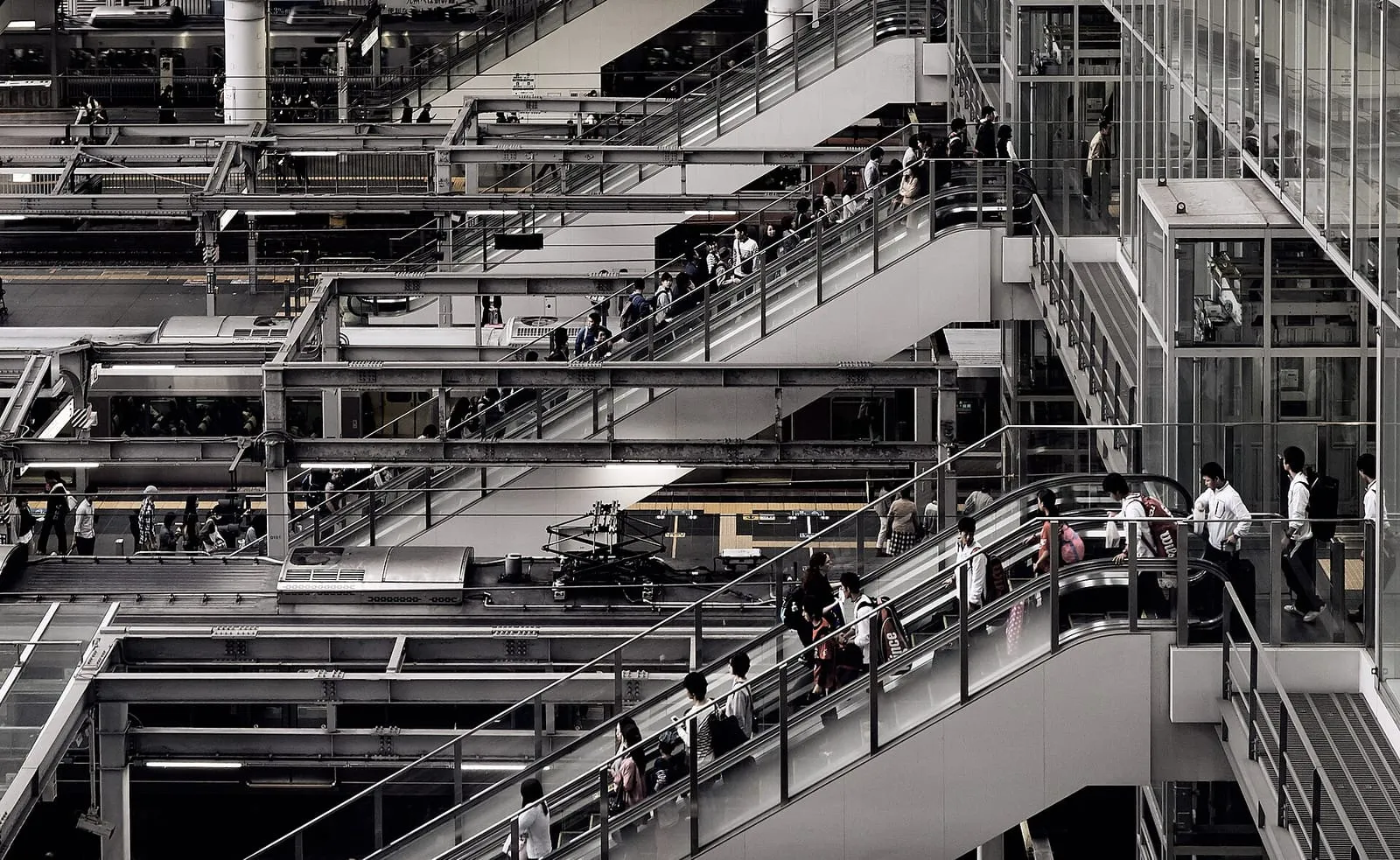
Commuters on the escalators at Osaka Station. Photo: Pedro Szekely, Wikimedia Commons, CC BY-SA 2.0.
1. The escalator rule: standing on the right
The most noticeable difference between Western Japan (Kansai) and Eastern Japan (Kanto/Tokyo) happens the moment you step onto an escalator in a train station:
- In Osaka, Kyoto, and Kobe: Stand on the RIGHT side, keeping the left side open for those in a hurry.
- In Tokyo and Yokohama: Commuters stand on the LEFT side, leaving the right side clear.
This regional distinction dates back to 1970, when Osaka hosted Expo ‘70. Hankyu Railway broadcast escalator announcements advising visitors to stand on the right in accordance with British and European standards, matching the flow of right-handed pedestrians. The convention stuck throughout Kansai. If you are travelling between Tokyo and Osaka, remember to switch sides when changing stations.
2. Dining and drinking manners
Osaka’s cultural motto is kuidaore—“eat until you go bankrupt.” While food culture here is convivial and unpretentious (Osaka food tours), core table manners remain essential:
- The Oshibori Towel: When you sit down, waitstaff hand you a rolled, moist hand towel (oshibori), warm in winter and chilled in summer. Use it thoroughly to wipe your hands before eating. Do not use it as a facial napkin or to mop tables.
- Table Greetings: Saying itadakimasu (literally “I humbly receive”) before eating shows gratitude to the chef and ingredients. When finished, say gochisousama deshita (“thank you for the feast”) to the host or cashier.
- Chopstick Rules (Hashi):
- Never stick your chopsticks vertically upright into a bowl of rice (tsukitate-bashi). This mimics incense sticks used at Buddhist funeral rites and is considered deeply unlucky.
- Never pass food directly from your chopsticks to someone else’s chopsticks (hashi-watashi), another gesture associated with funeral bone-picking ceremonies. Place the food on their plate instead.
- Use the ceramic chopstick rest (hashioki) when taking a drink.
- Slurping Noodles: Slurping ramen, udon, and soba noodles is completely acceptable and encouraged. Drawing in air cools the broth and enhances aroma.
- Kushikatsu Rules: In traditional deep-fried skewer shops in Shinsekai, never double-dip a bitten skewer into the communal sauce tub. If you need more sauce, scoop it onto your plate using a fresh wedge of raw cabbage.
3. Rubbish and litter etiquette
One of the first surprises for visitors in Japanese cities is the near-total absence of public street bins, a policy introduced in the late 1990s for public security and urban cleanliness. Despite this, Japanese streets remain pristine.
- Carry your trash: Always pack a small plastic bag in your pocket or backpack to store empty snack wrappers, wipes, and tissues until you return to your hotel room.
- Vending machine bins are for drinks only: The small circular bins placed beside street drink vending machines are strictly for plastic PET bottles and aluminium drink cans. Do not shove coffee cups, food cartons, or plastic bags into them.
- Eat where you buy: In Dotonbori and Kuromon Market, eat your takoyaki or grilled skewers right beside the vendor’s stall, and hand the disposable bamboo sticks and cardboard trays back to the vendor when finished.
4. Public transit etiquette
Public transport in Osaka is punctual, clean, and quiet:
- Silent Mode (Manner Mode): Switch your mobile phone to silent upon boarding subways, trains, and buses. Phone conversations are strictly prohibited on carriages.
- Backpack Etiquette: On crowded trains (especially the Midosuji Line), take off your backpack and hold it in front of your chest or place it on the overhead luggage rack so you do not bump other passengers.
- Priority Seats: Coloured priority seating at the ends of cars is designated for elderly passengers, pregnant women, and people with disabilities. Yield your seat promptly if someone in need boards.
5. Tipping and paying
Tipping does not exist in Osaka. If you leave 500 yen on a table, the waiter will chase you out onto the street to return the money you forgot.
- When paying your bill, take your itemised receipt up to the cashier counter at the exit.
- Place cash or your credit card onto the small rectangular money tray (tsurisen-torei) on the counter rather than handing notes directly to the cashier’s hands.
- Check our comprehensive guide to money in Osaka for international ATM guidance.
For emergency contacts, police box advice, and solo travel security, read our guide on is Osaka safe. To prepare for your journey, explore where to stay in Osaka and compare regional cultural customs with Tokyo etiquette.
Common questions
Which side of the escalator do you stand on in Osaka?
In Osaka and the wider Kansai region, commuters stand on the RIGHT side of the escalator and leave the left side open for people walking. This is the exact opposite of Tokyo and Eastern Japan, where everyone stands on the left.
Why do people in Osaka stand on the right of escalators?
The custom originated during the 1970 Japan World Exposition (Expo '70) held in Osaka, when Hankyu Railway introduced international etiquette standards to accommodate European and global visitors. The practice became ingrained across Kansai, while Tokyo retained the samurai tradition of keeping to the left.
Where do you throw away rubbish in Osaka?
Public street rubbish bins are rare across Japanese cities. Always carry a small plastic bag in your pocket or daypack to collect your litter. You can dispose of empty drink bottles and cans in the recycling receptacles positioned directly beside beverage vending machines, or hand food wrappers back to the stall vendor where you purchased them.
Is tipping expected in Osaka restaurants?
No. Tipping is not practiced in Japan. Good hospitality and attentive service are standard duties included in the bill. Leaving extra cash will result in staff politely pursuing you to return forgotten money.