In this guide
💡 The Short Version: Our judgement, not a ranking: pick Lisbon for three to four days of wide riverfront squares, tiled hills, Belém’s monuments and easy rail day trips to Sintra and Cascais. Pick Porto for a tighter two- to three-day break built around the Dom Luís I Bridge, Vila Nova de Gaia’s port cellars, azulejo-lined stations and the Douro Valley. Both share Portugal’s low Eurostat index of 75.5 (EU average 100), so food and wine stay good value in either, while Porto costs less on tourist tax (€3 vs €4 a night) and paid entries. With six or seven nights, do both: the CP Alfa Pendular links them in 2 hours 39 minutes (€35.70 single, €64.50 return). Or book a tour: in Lisbon, the Sintra small-group tour with ticketsad is from €68 and the Belém guided tour with Jerónimos ticketsad from €44; in Porto, the Douro Valley tour with boat, tasting and lunchad is from €50 and the 3-hour old-town walking tourad from €22.
⚠️ Closed funiculars, suspended passes and strict timed slots affect both cities. In Lisbon, the Glória, Bica and Lavra funiculars and the Santa Justa Lift are closed (only the Graça funicular runs), Jerónimos Monastery and Belém Tower close on Mondays, and Pena Palace turns away late arrivals with no refund—allow 30 minutes from the park gate to the palace door. In Porto, the Porto Card cannot be bought (unavailable since July 2026), the Guindais funicular is closed, Livraria Lello requires a €15.95 timed voucher for every visitor, and Torre dos Clérigos refuses entry after a 5-minute grace window and bans all backpacks.
Lisbon and Porto side by side
All entry fares are operators’ adult rates in euros. Each link leads to the city’s dedicated guide on this site.
| Lisbon | Porto | |
|---|---|---|
| What to book & advance window | Pena Palace (fixed date/time, no leeway: €20 Essential, €45 Complete); Jerónimos Monastery €18; Belém Tower €15 (reopened May 2026 with timed slots); Quinta da Regaleira €20; São Jorge Castle €17; Oceanário €25.50–€29.90 | Livraria Lello €15.95 voucher (valid 60 mins after slot); Torre dos Clérigos €10 (timed slot, 5-min tolerance, no bags); Palácio da Bolsa €14 (30-min guided tour only); Port wine cellars from €16 (Graham’s & Cockburn’s reservation-only); Serralves €24; World of Wine €35 |
| Closed days | Monday: Jerónimos Monastery, Belém Tower, Cascais museums (five national museums including the Tile Museum also closed for restoration). 13 June: Lisbon’s Santos Populares holiday shuts Belém sights | Monday: Museu Nacional Soares dos Reis, municipal Museu do Porto sites, World of Discoveries. Sunday: Mercado do Bolhão and Café Majestic. 24 June (São João): Livraria Lello & Soares dos Reis shut |
| City pass verdict | Lisboa Card €31 (24h), €51 (48h), €62 (72h). Covers transport including Sintra/Cascais trains, but excludes Pena Palace and requires reserving a physical-card slot for Belém Tower and Jerónimos only after redeeming the voucher in Lisbon | Porto Card unavailable since July 2026 while restructured (avoid unofficial sites selling it). Use Andante Tour transport tickets (€7.75 24h / €16.55 72h) and separate museum tickets (municipal museums free on Sundays) |
| Public transport | Carris/Metro single €1.90 on €0.50 Navegante card (€1.92 contactless on Metro); 24h Carris/Metro €7.25 (€11.40 with Sintra/Cascais CP trains). Only Graça funicular runs; Tram 28 runs daily | Andante 2-zone single €1.40 on €0.60 Andante Azul card; 24h Andante Tour €7.75; 72h €16.55; contactless pilot €2.30 (capped €7.75/day). Historic trams €6 single on board; Guindais funicular shut |
| Airport to centre | Metro Red Line €1.90 (+ €0.50 card) with one change to Baixa/Rossio; fixed Askme Lisboa taxi voucher €16 day / €19.20 night & weekends | Metro Line E (violet) €2.30 (+ €0.60 card) every 20–30 mins to Trindade; STCP buses 601/602 €2.50 on board; metered taxi or Uber |
| Tourist tax | €4 per person per night (up to 7 nights, max €28), ages 13+ | €3 per person per night in Porto (ages 13+) and Vila Nova de Gaia (ages 16+, up to 7 nights, max €21); €2 in Matosinhos |
| Price level & fixed costs | Portugal Eurostat 2024 restaurants & hotels index 75.5 (EU = 100). Three flagship entries cost €53 (Jerónimos €18, Belém Tower €15, Pena Essential €20) | Same national index (75.5), with lower tourist tax (€3 vs €4), cheaper three flagship entries (€39.95 for Livraria Lello €15.95, Torre dos Clérigos €10, Palácio da Bolsa €14) and free signature sights (Dom Luís I Bridge, São Bento hall, viewpoints) |
| How many days | 3 to 4 days (3 days in Lisbon, Lisbon in one day) | 2 to 3 days (Porto in 2 days) |
| Best day trips | Sintra (40 mins, €5.10 return), Cascais (38–40 mins, €5.10 return), Évora, Óbidos and Nazaré, Fátima | Douro Valley (rail replacement buses 3 Nov 2026–24 Mar 2027), Guimarães (1h 15m), Braga and Bom Jesus (1h 10m), Aveiro (1h 5m), Coimbra (1h) |
| Best season & weather | May and September (highs 23–27°C, 4–6 wet days); Jun–Aug dry (26–29°C); Oct–Jan wet (104–134 mm/month). Avoid Web Summit (9–12 Nov 2026) when hotel prices jump | June to September (highs 22.7–24.8°C, 79.6 mm across Jun–Aug); cooler and noticeably wetter than Lisbon from Oct to Jan (November averages 165.9 mm). São João is 23–24 June |
Note the practical difference in winter weather: Lisbon stays drier and 3 to 4°C warmer than Porto between November and March, which tilts a winter-sun trip firmly towards the capital (winter sun city breaks). Conversely, Porto stays fresher in July and August, averaging 24.8°C against Lisbon’s 28–29°C.
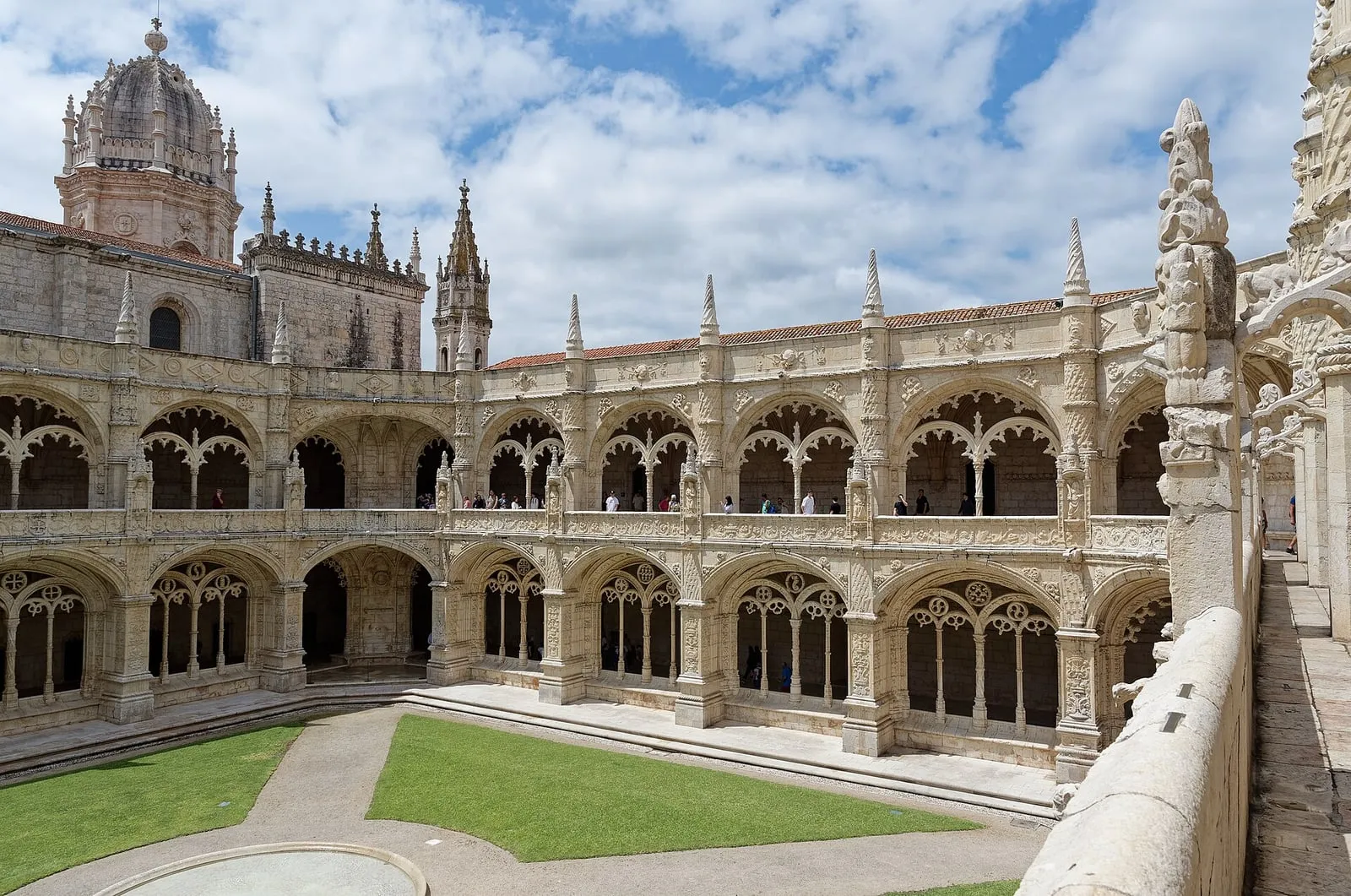
The cloister of Jerónimos Monastery, Lisbon. Photo: Jakub Hałun, Wikimedia Commons, CC BY 4.0.
Book a tour instead
Official tickets are cheaper for standalone monuments in both cities, but tours earn their fee on Sintra (where transport between palaces is slow) and the Douro Valley (especially during the winter rail engineering works). Prices are GetYourGuide’s lowest adult “from” fares in euros.
| City | From | Tour |
|---|---|---|
| Lisbon | €68 | Sintra small-group day trip with Pena Palace ticketsad ( from ) |
| Lisbon | €44 | Belém guided tour with Jerónimos Monastery ticketsad ( from ) |
| Lisbon | €20 | Best of Lisbon walking tour: Rossio, Chiado and Alfamaad ( from ), 3 hours |
| Lisbon | €15 | Fado show with winead ( from ) in central Lisbon |
| Porto | €50 | Douro Valley day trip with river cruise, tasting and lunchad ( from ) |
| Porto | €22 | 3-hour Porto old-town guided walking tourad ( from ) |
| Porto | €18 | Douro River Six Bridges Cruisead ( from ), 50 minutes |
| Porto | €31 | Braga and Guimarães full-day tourad ( from ), 6–9 hours |
In Porto, standalone tickets for Torre dos Clérigos (€10), Serralves (€24), World of Wine (€35) and the Six Bridges Cruise (€18) cost the same on GetYourGuide as at the official ticket office; for Livraria Lello (€15.95) and Palácio da Bolsa (€14), buy direct.
Which city for whom
Each pick below builds on the costs, closed days and walking routes in each city.
A first visit: Lisbon with four days, Porto with two or three
Lisbon for a first trip of four days or longer. It offers wider neighbourhood contrast—the Moorish alleys of Alfama (Alfama walk), the grid of Baixa and Chiado (Baixa and Chiado walk), the maritime monasteries of Belém—and puts Sintra’s palaces and Cascais’s Atlantic beaches 40 minutes away by suburban train. Pick Porto if you have only two or three nights and want a city whose historic core, river gorge and wine cellars fit into two tight days on foot (Porto in 2 days) without long transit legs.
A long weekend (2 to 3 days): Porto
Porto. From São Bento station, Torre dos Clérigos is 340 m away, Livraria Lello 390 m and the Ribeira riverfront 570 m; walking across the upper deck of the Dom Luís I Bridge puts you straight at the Gaia port lodges and Jardim do Morro (Ribeira to Gaia walk). A Friday-to-Sunday break in Porto avoids Monday museum closures (just visit Bolhão market on Friday or Saturday, as it closes on Sundays). In Lisbon, a two-day trip forces an awkward choice between Belém and Sintra, and a Monday stay shuts both Jerónimos Monastery and Belém Tower.
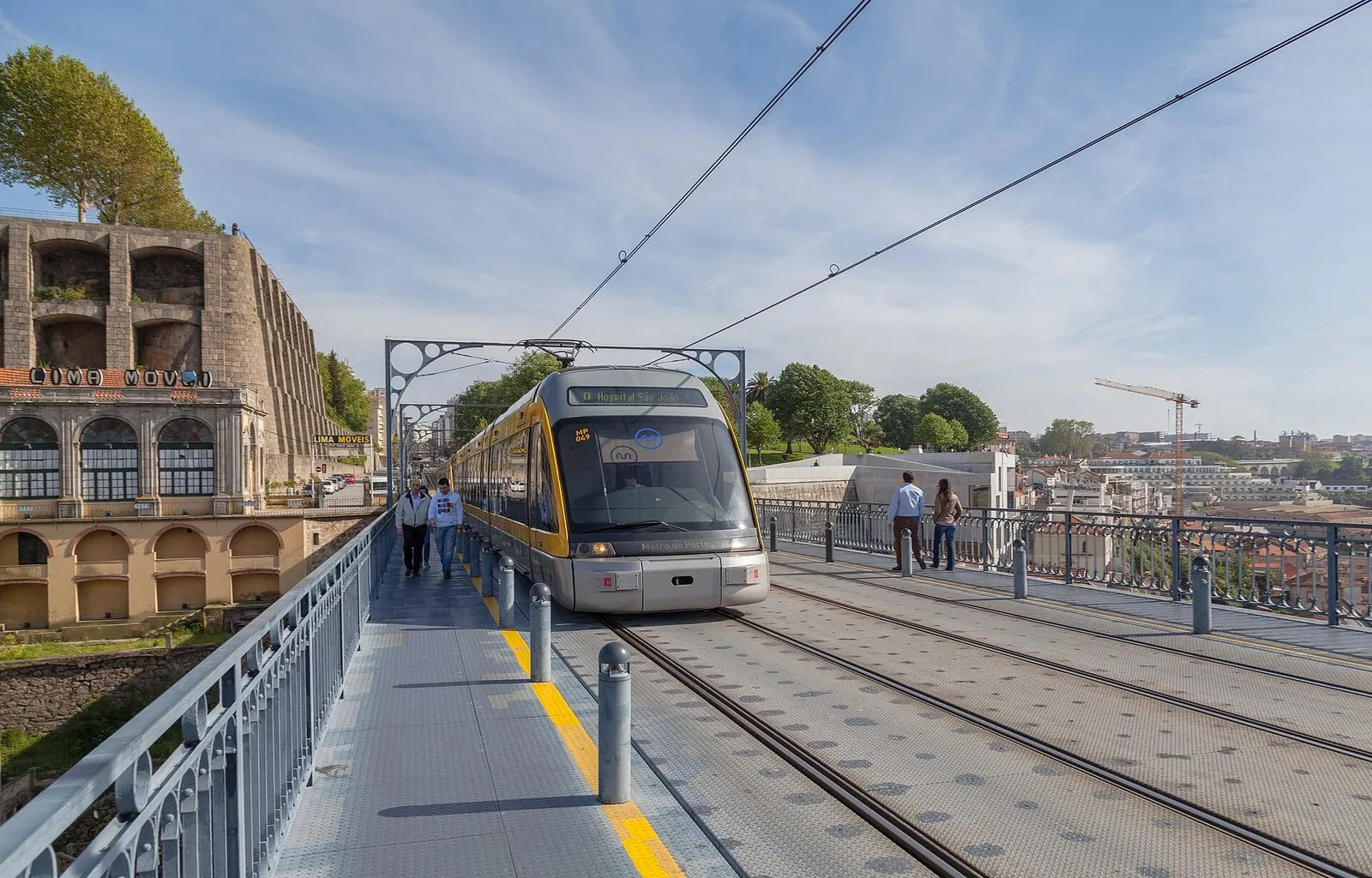
Metro do Porto tram on the upper deck of the Dom Luís I Bridge. Photo: Diego Delso, Wikimedia Commons, CC BY-SA 3.0.
Food and drink: Porto for port and hearty classics, Lisbon for seafood and pastry
Porto wins for wine drinkers and hearty northern cooking: port tastings in Gaia (from €16 at the lodges; port wine cellars), bifanas and pork sandwiches at Casa Guedes, hot dogs at Gazela, francesinha at Café Santiago, grilled fish in Matosinhos and market stalls at Bolhão (where to eat in Porto). Lisbon wins for pastry and shellfish fans: Pastéis de Belém and Manteigaria for pastéis de nata, shellfish platters at Cervejaria Ramiro, contemporary neighbourhood bistros like Canalha, and fado dinners (where to eat in Lisbon, Lisbon food tours).
Art, history and sights: Lisbon for monuments, Porto for tiles and bridges
Lisbon has bigger individual monuments—Jerónimos Monastery, Belém Tower, São Jorge Castle and the palaces of Sintra—though five of its national museums (including the National Tile Museum and National Museum of Ancient Art) are closed for restoration. Porto wins on open-air architectural drama and free tiled interiors: São Bento station’s 20,000 azulejos, the Carmo church facade (azulejos in Porto), the gilded interior of Igreja de São Francisco, the Dom Luís I Bridge and Serralves’s contemporary art park (Porto’s museums).
A tight budget: Porto
Porto, by a modest but consistent margin. Both cities sit in Portugal’s 75.5 Eurostat price bracket (cheap city breaks in Europe), so coffee, beer and tasca lunches cost much the same, but Porto’s signature views—the Dom Luís I Bridge, São Bento station, Vitória viewpoint and Jardim do Morro—are free (free things to do in Porto). You also save €1 per person per night on tourist tax (€3 vs €4), pay less on flagship entries, and skip the €5.10 Sintra train plus palace bus fares.
Families and couples: Lisbon for families, Porto for couples
For families, Lisbon is easier to programme: the Oceanário, the flat promenade in Belém, easy trains to the sandy beaches of Cascais and the colours of Sintra keep younger travellers engaged, though broken funiculars mean planning around hills. For couples, Porto wins for a short break—river views from Gaia at sunset, cellar tastings, a Six Bridges cruise and a day in the Douro Valley give a slower rhythm than the capital.
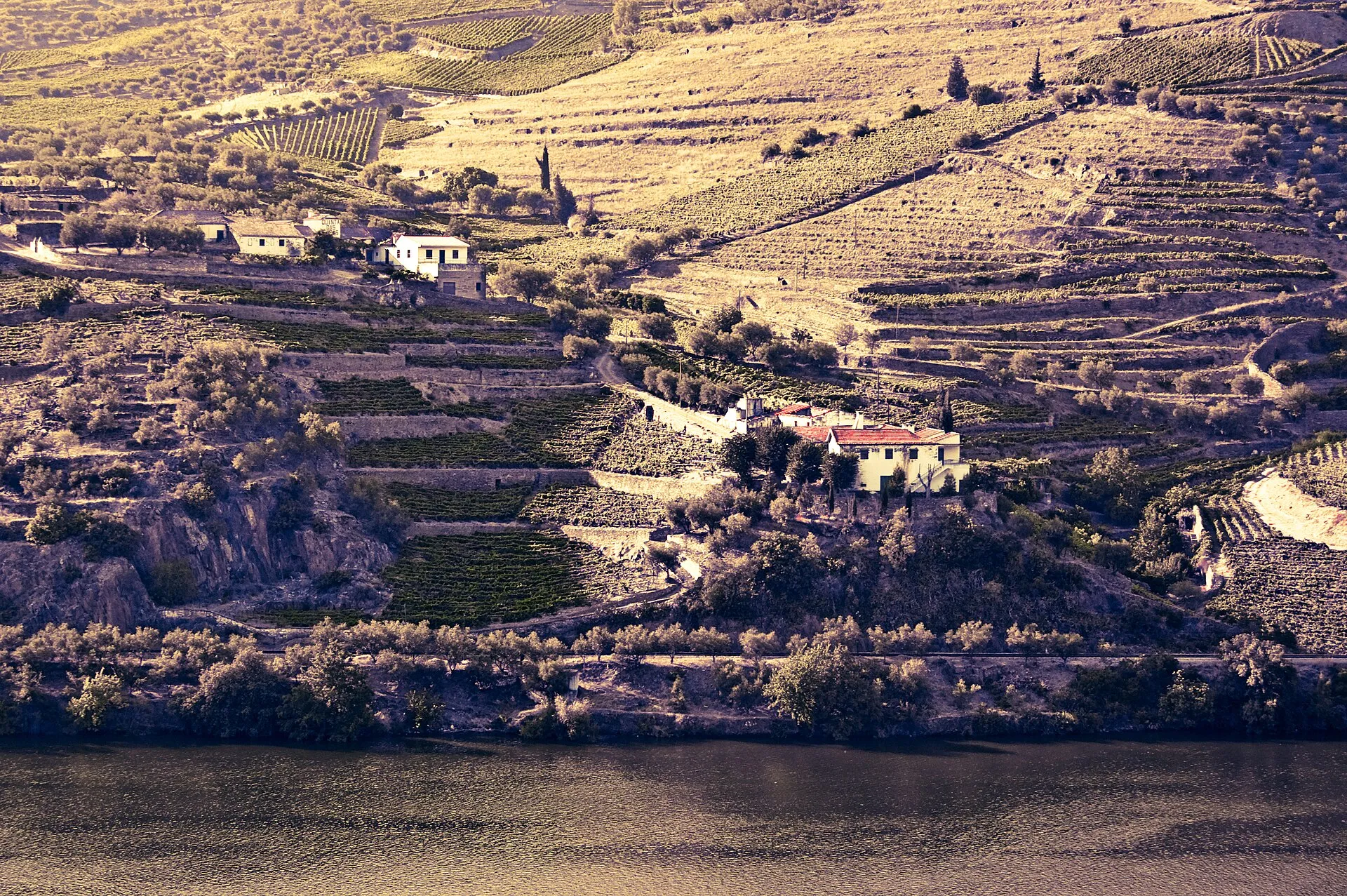
Terraced vineyards above the Douro River. Photo: Feliciano Guimarães, Wikimedia Commons, CC BY 2.0.
Doing both: the train, order and where to stay
Combining Lisbon and Porto is one of Europe’s easiest two-city trips. The CP Alfa Pendular high-speed train runs from Lisboa Oriente (or Santa Apolónia) to Porto Campanhã in 2 hours 39 minutes northbound, priced at €35.70 single or €64.50 return in second class, with Intercidades services slightly cheaper and around 3 hours 15 minutes (Porto from Lisbon). Note that roadworks around Porto’s São Bento continue while the new Pink Metro Line undergoes test running towards a planned March 2027 opening; from Campanhã, urban trains or Metro Lines A, B, C, E and F connect straight into central Porto.
- Which city first: Fly into Lisbon and out of Porto (or vice versa) on an open-jaw ticket so you only ride the train once. Starting in Lisbon for three or four nights and finishing with two or three slower nights in Porto builds from big-city sightseeing to river views and wine country.
- Best transfer day: Travel between them on a Monday. Monday shuts Jerónimos Monastery and Belém Tower in Lisbon as well as Porto’s municipal museums and Soares dos Reis, whereas Livraria Lello, Torre dos Clérigos, the Sé, Igreja de São Francisco and the Gaia port cellars stay open for an afternoon arrival in Porto.
- Do not do Porto as a day trip from Lisbon if you can spare a night: over five hours on trains leaves less than nine hours in Porto, and staying overnight keeps the exact same rail fare while unlocking sunset over the Douro.
Where to stay: In Lisbon, stay in flat Baixa for the Green and Blue Metro lines to the airport and Rossio station for Sintra, or in Chiado and Alfama if you do not mind climbs (where to stay in Lisbon, hotels near Belém). In Porto, stay in Baixa and Aliados near São Bento station and Avenida dos Aliados to keep Clérigos, Lello and the Ribeira within 600 m (where to stay in Porto, hotels near Ribeira). Remember that a 14-year-old pays the €3 tourist tax in Porto proper, whereas Vila Nova de Gaia exempts guests under 16.
For full booking rules, see Lisbon and Porto; for beach-and-city pairings in Iberia, see Barcelona vs Lisbon and Barcelona vs Madrid.
Common questions
Is Lisbon or Porto better for a first visit to Portugal?
Pick Lisbon for four days or more, because it pairs a full capital's museums and tram-lined hills with Sintra's palaces and Cascais's coast 40 minutes away by train. Pick Porto for a two- or three-day break, because the Ribeira, São Bento station, the Dom Luís I Bridge and Vila Nova de Gaia's port cellars sit within a compact, walkable steep gorge.
Is Lisbon or Porto cheaper?
Both share Portugal's Eurostat price level of 75.5 for restaurants and hotels (EU average 100), so everyday meals are similarly affordable, but Porto is slightly cheaper on fixed visitor costs: its tourist tax is €3 a night against €4 in Lisbon, and its main paid sights cost less.
Can I buy the Porto Card or ride the funiculars in Lisbon and Porto?
No on both counts, with one exception. The Porto Card has been unavailable since July 2026 while it is restructured, and Porto's Guindais funicular has been closed since 18 July 2026. In Lisbon, the Glória, Bica and Lavra funiculars and the Santa Justa Lift remain shut following the September 2025 accident; only the Graça funicular runs (€4.30 for two trips).
How long is the train between Lisbon and Porto?
The CP Alfa Pendular takes 2 hours 39 minutes northbound from Lisboa Oriente to Porto Campanhã, with second-class fares at €35.70 single or €64.50 return. Intercidades trains are slightly slower and cheaper. Always check CP's engineering notices before booking.
Which city has better day trips: Lisbon or Porto?
Lisbon wins for variety at short range: Sintra (€5.10 return, 40 minutes) and Cascais (38–40 minutes) need no tour, with Évora and Óbidos beyond. Porto wins for wine country and northern heritage: the Douro Valley, Guimarães (1h 15m), Braga (1h 10m) and Aveiro (1h 5m) cost €3.60 to €7.20 each way by CP train, though Douro rail works from 3 November 2026 to 24 March 2027 replace trains with buses between Marco de Canaveses and Régua.
How many days do you need in Lisbon and Porto?
Three to four days in Lisbon (two in the city plus Sintra and Belém) and two to three days in Porto (two in Porto and Gaia plus a Douro Valley or Braga/Guimarães day trip). With six or seven nights, combine both by train.