In this guide
💡 The Short Version: The best-known tiles cost nothing: the São Bento station hall (6:30 to 1:00, about 20,000 tiles by Jorge Colaço) and the façades of the Igreja de Santo Ildefonso and the Capela das Almas. Paid: the Igreja do Carmo (€8 for the church and visitor route; its tiled side wall is free to see) and the Sé cloister (the cathedral’s seven Song of Songs panels; open 9:00 to 18:30 in summer and 17:30 in winter, closed at Christmas and Easter). Or book a tour: a two-hour tile-painting workshopad with port wine and snacks is from €35 (GetYourGuide), and you take your tile home.
Where to see them
Hours are from each site’s own page where one exists, and from Visit Porto, the city’s tourism site, where not.
| Site | Cost | Open | The catch |
|---|---|---|---|
| São Bento station hall | Free | 6:30 to 1:00, every day | A working station; roadworks round the square until the Pink Line opens |
| Igreja de Santo Ildefonso | Façade free | Façade always; interior in morning and afternoon blocks | Closed between the blocks |
| Capela das Almas | Wall free | Wall always visible | The tiles are on the outside |
| Igreja do Carmo | Side wall free; church and route €8 | 9:30 to 18:00 April to October, to 17:00 November to March | Mass at 9:00 |
| Sé do Porto | Charged | 9:00 to 18:30 summer, to 17:30 winter | Closed at Christmas and Easter |
A walking order from north to south: the Capela das Almas, the Igreja do Carmo, Santo Ildefonso, São Bento station, then the Sé.
Tours worth paying for
A tour adds the stories; a workshop adds a tile to take home. Prices are GetYourGuide’s lowest “from” prices, per person.
Tile painting with port wine
From €35 · 2 hours · 4.9 stars from 2,192 reviews
Porto: Tile Painting Workshop with Port Winead is run by Domus Arte, in English. After a short history of azulejos you paint a white ceramic tile from a selection of patterns copied from Porto’s streets, or from your own design, with snacks, port wine, juice and coffee included. It needs no experience, and children under 3 are not suitable. A box to carry the tile is included. Free cancellation up to 24 hours ahead.
Tile painting with cocktails
From €35 · 2 hours · 4.9 stars from 1,002 reviews
Porto: Tile Painting and Cocktails in Porto City Centread is run by Boiler Studio, in English. It opens with the history of tiles in Portugal, then you paint a ceramic tile with acrylics and have a cocktail; the tile is ready to collect straight after. The studio is wheelchair-accessible. Free cancellation up to 24 hours ahead.
Design your own azulejo
From €32 · 2 hours · 4.9 stars from 150 reviews
Porto: Design Your Own Portuguese Azulejoad is run by Porto Alchemy, in English or Portuguese. You choose one of its patterns or make your own design on a glazed Portuguese tile, with porcelain paints and an instructor beside you. Free cancellation up to 24 hours ahead.
Three-hour guided walking tour
From €22 · 3 hours · 4.8 stars from 3,063 reviews
Porto: 3-Hour Guided City Highlights Walking Tourad is run by Bluedragon City Tours and passes the cathedral, Aliados avenue, the Clérigos church and the Bolhão market. Booking in advance is mandatory. Free cancellation up to 24 hours ahead.
Estação de São Bento
Praça de Almeida Garrett · free · 6:30 to 1:00, every day
The station was built at the start of the 20th century on the site of the São Bento de Ave-Maria convent, with an iron-and-glass structure by the architect Marques da Silva. The vestibule holds about 20,000 tiles painted by Jorge Colaço, showing the evolution of transport and events from Portuguese history and life. It is a working station, so stand clear of the ticket queues. Roadworks round the square continue until the Pink Line (Linha Rosa) opens, which the metro company puts at the end of March 2027.
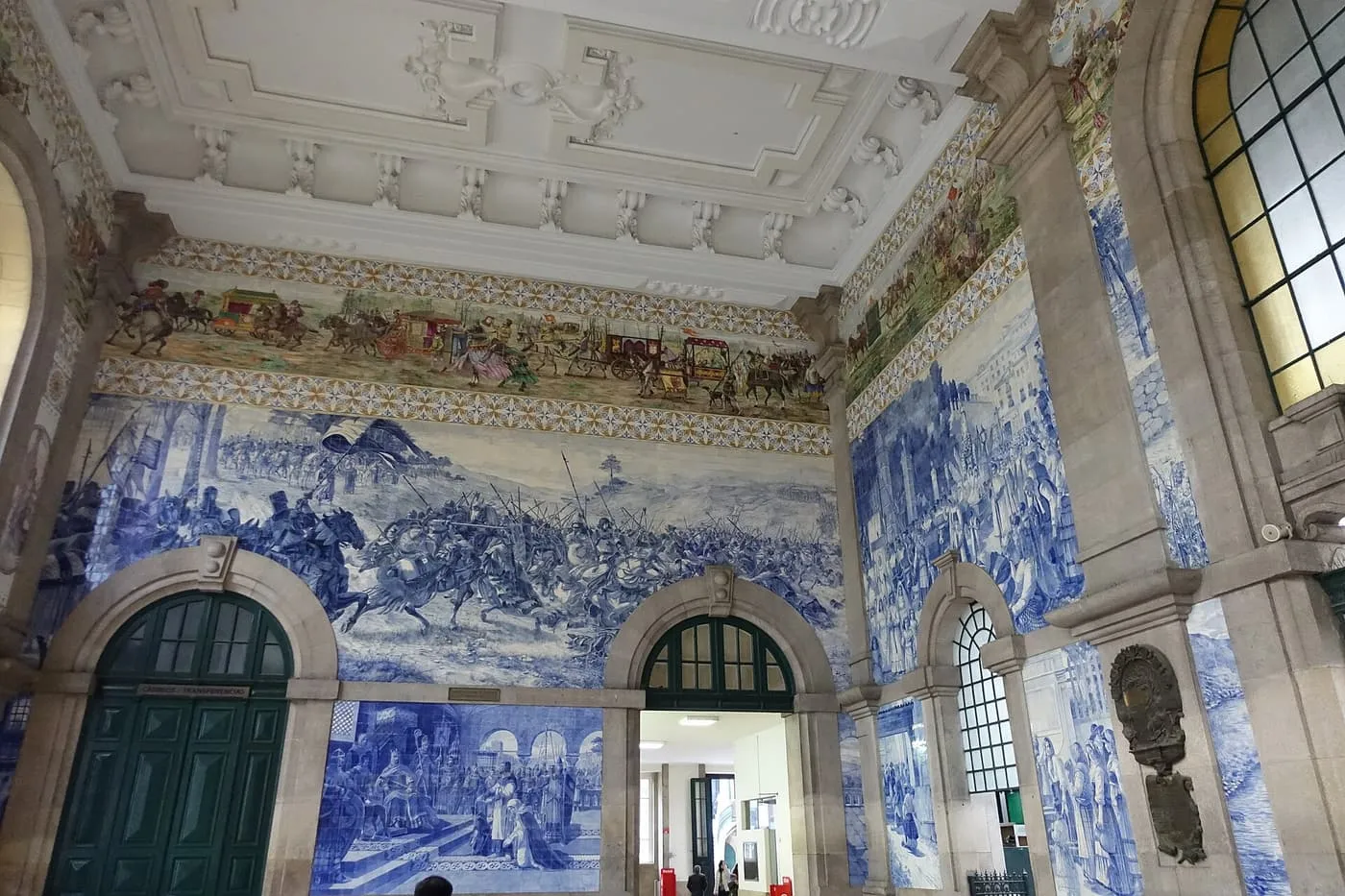
The vestibule of São Bento station, with the blue-and-white panels above the doors. Photo: Joseolgon, Wikimedia Commons, CC BY-SA 4.0.
Igreja de Santo Ildefonso
Praça da Batalha · façade free
The church was built between 1709 and 1739. Jorge Colaço tiled the façade in 1932 with scenes from the life of St Ildefonso and allegories of the Eucharist. Inside, a Baroque and Rococo altarpiece from the first half of the 18th century was planned by Nicolau Nasoni. Visit Porto lists the interior in separate blocks, mostly one in the morning and one in the afternoon, so the façade is the part to plan around.
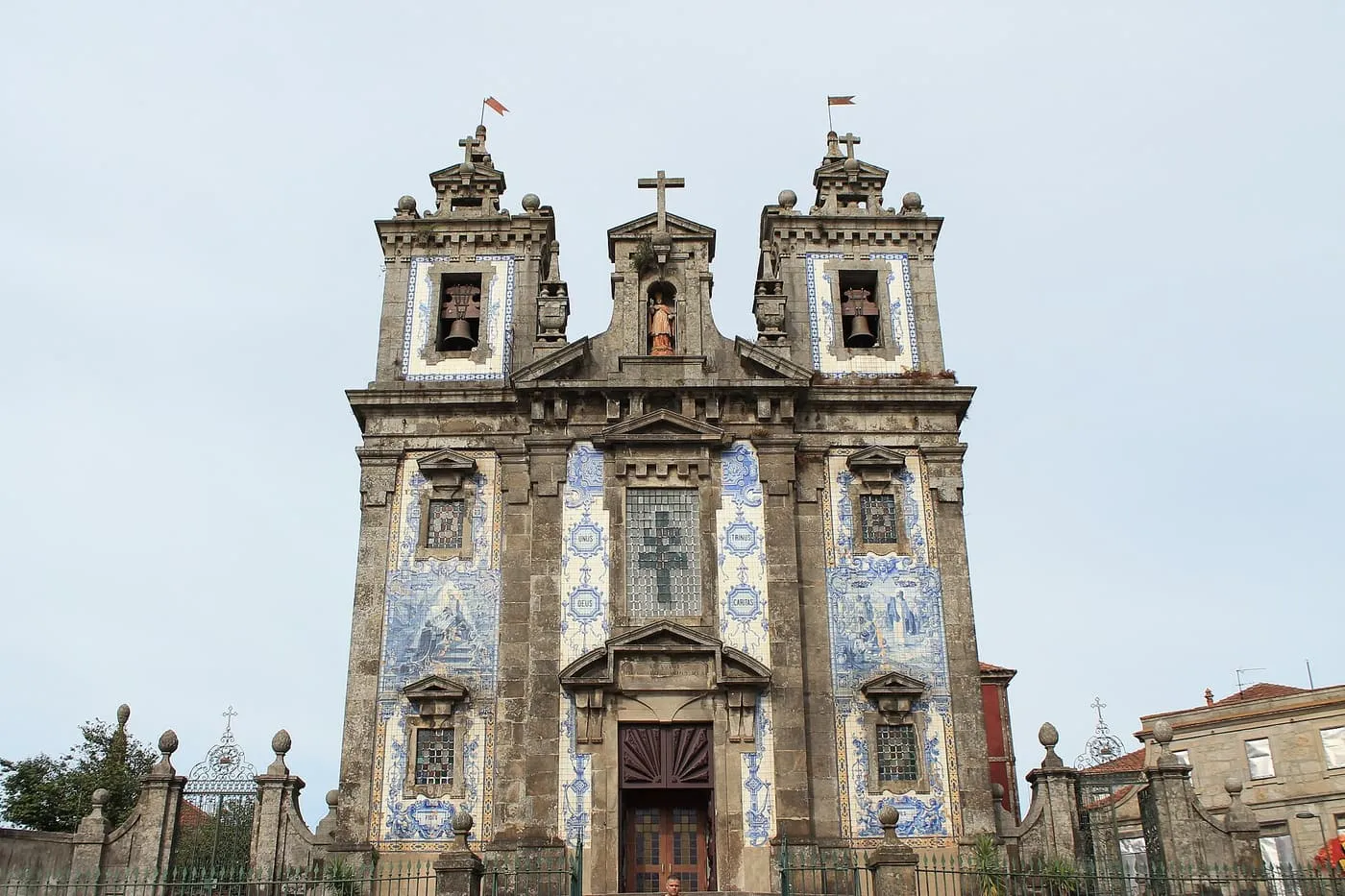
The tiled front of the Igreja de Santo Ildefonso. Photo: John Samuel, Wikimedia Commons, CC BY-SA 4.0.
Capela das Almas
Rua de Santa Catarina · wall free
The chapel dates from the early 18th century. In 1929 the whole exterior was covered in tiles showing scenes from the lives of St Francis of Assisi and St Catherine, and the panels were restored in 1982. The tiled wall faces the street and is always visible.
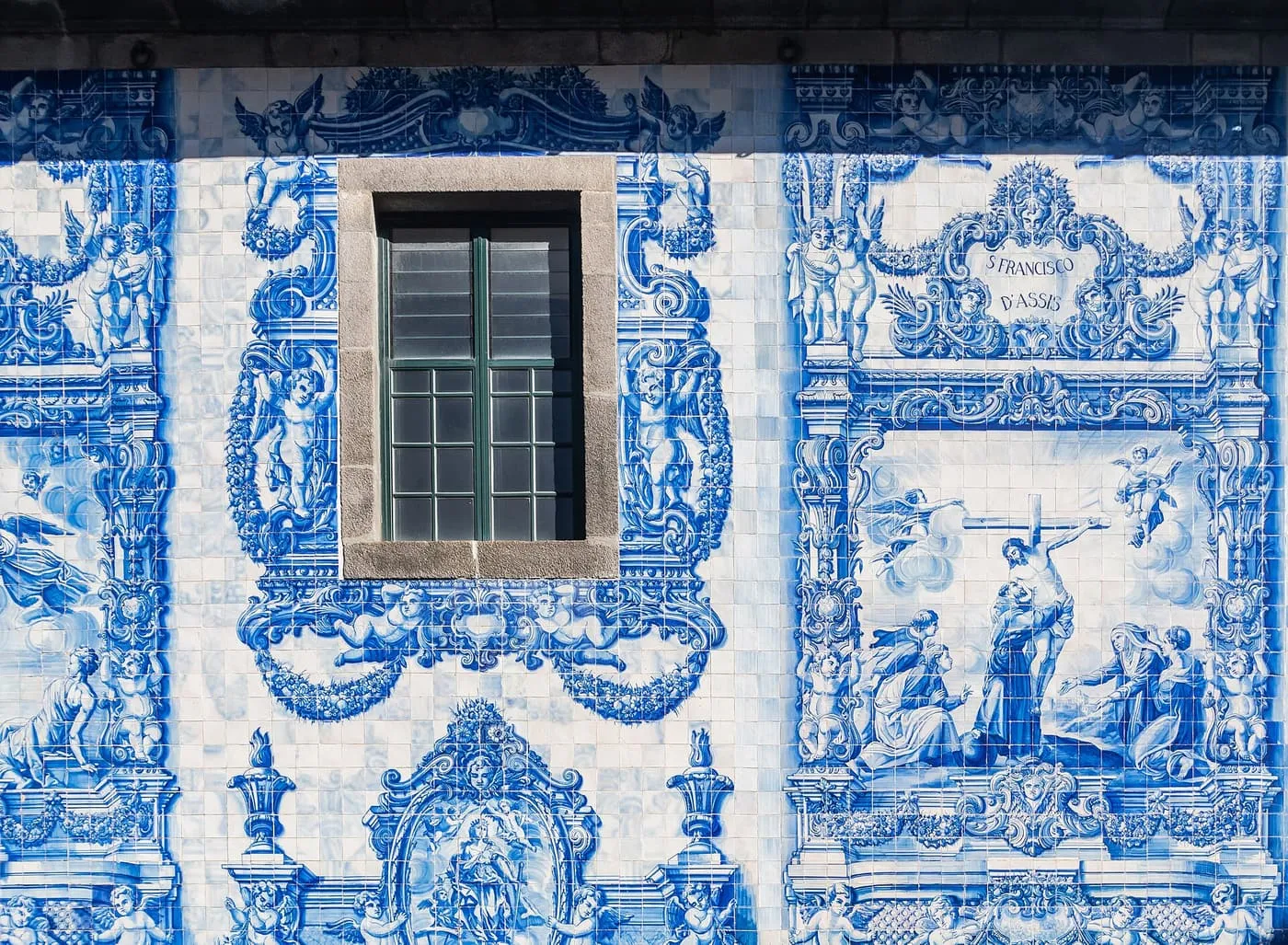
The tiled wall of the Capela das Almas on Rua de Santa Catarina. Photo: Krzysztof Golik, Wikimedia Commons, CC BY-SA 4.0.
Igreja do Carmo and the Carmelitas
Praça Carlos Alberto 20 · church and visitor route €8 · 9:30 to 18:00 April to October, 9:30 to 17:00 November to March
The side wall of the Igreja do Carmo is tiled with scenes from the foundation of the Carmelite Order on Mount Carmel, and can be seen from the street. The visitor route covers the church, the Hidden House built between the Carmo and Carmelitas churches, the sacristy, the historic rooms and the catacombs, and takes 30 to 45 minutes. Tickets are sold on site and online at the Order’s own site, ordemdocarmo.pt. Mass is at 9:00 every day. The neighbouring Igreja das Carmelitas is a 17th-century church with a classical façade of the 1850s, and its design is attributed to Nasoni.
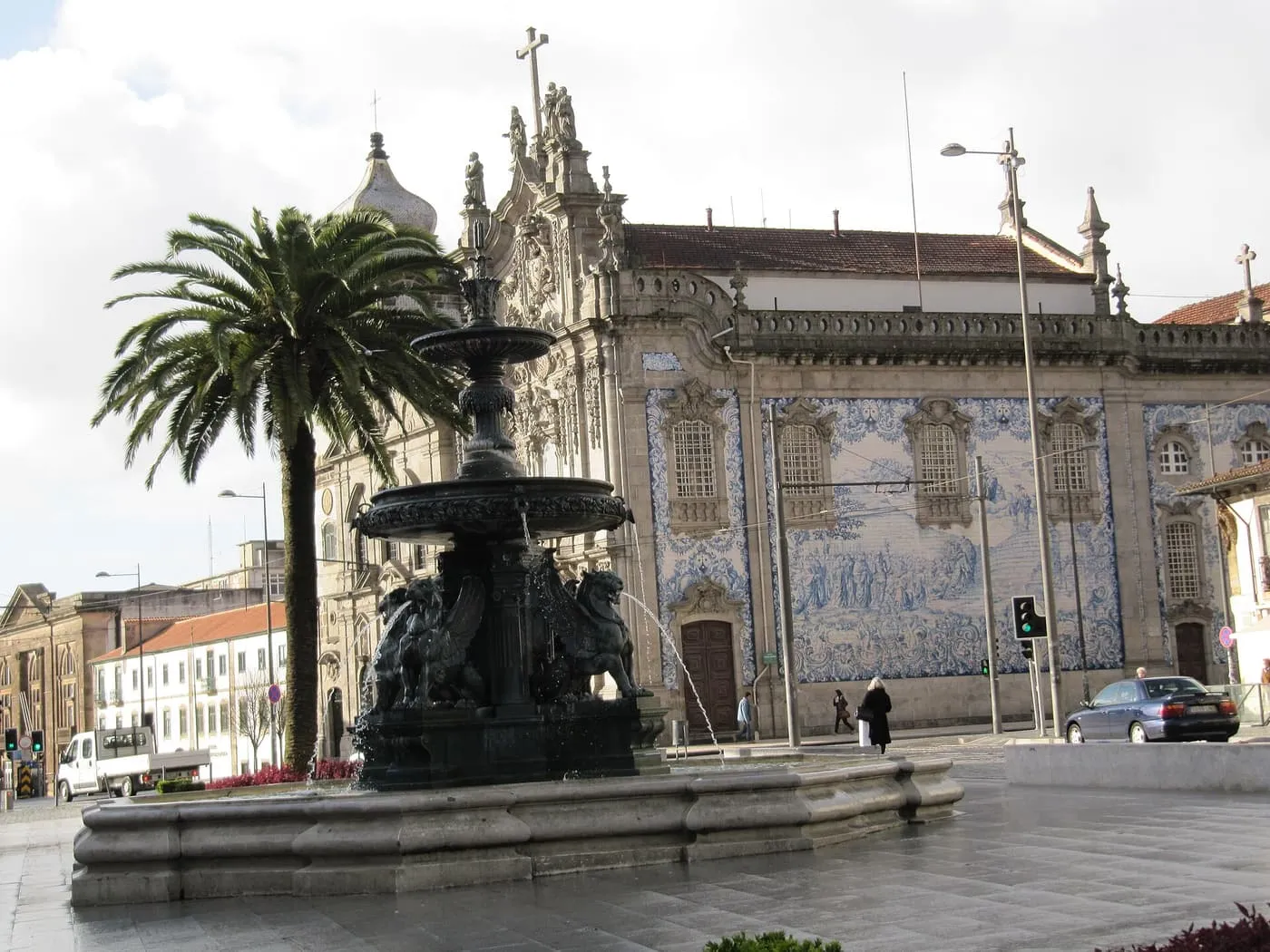
The tiled side wall of the Igreja do Carmo. Photo: jad99, Wikimedia Commons, CC BY-SA 2.0.
Sé do Porto
Terreiro da Sé · charged · 9:00 to 18:30 summer, 9:00 to 17:30 winter · closed at Christmas and Easter
The cathedral is a Romanesque-Gothic building of the 12th and 13th centuries, later given Baroque additions. The Gothic cloister, begun in the late 14th century, holds seven large azulejo panels of scenes from the Song of Songs, from the second quarter of the 18th century. Nasoni’s staircase, finished in 1736, leads to the upper courtyard of the cloister, which has more panels of pastoral and mythological scenes and a panoramic view. In the Casa do Cabido, beside the cloister, the former archive room has tiles by Vital Rifarto, and the chapter hall has a painted ceiling of 1737. The silver altar in the Santíssimo Sacramento chapel was built between 1632 and the 19th century. Mass is at 11:00 every day.
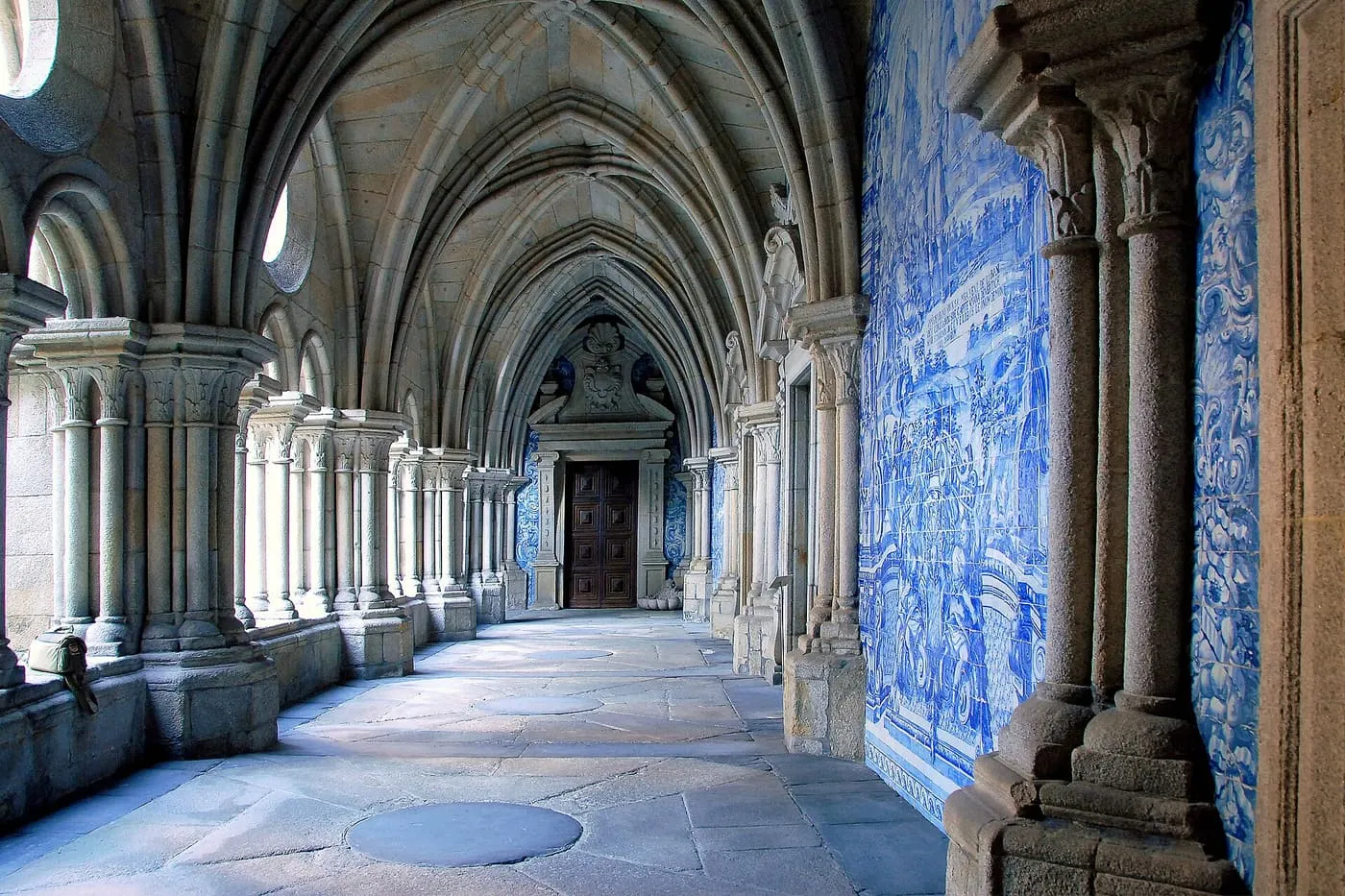
The Gothic cloister of the Sé, with its azulejo panels. Photo: António Amen, Wikimedia Commons, CC BY-SA 3.0.
The Sé is also a free viewpoint outside: the terrace of the Terreiro da Sé looks over the old town. Porto’s viewpoints lists the others.
Practical information
- Free all day: the Capela das Almas wall, the Santo Ildefonso façade, the Carmo side wall and the São Bento hall (6:30 to 1:00).
- Paid: the Igreja do Carmo (€8) and the Sé.
- Carmo visitor route: 30 to 45 minutes.
- The one thing that decides a visit: the Sé closes at Christmas and Easter. The Carmo closes at 17:00 from 1 November.
For the other churches and the Order’s museum route, see the Igreja de São Francisco, whose carving is gilded wood, not tile. Free things to do in Porto lists the rest of the free sights, Porto’s walking tours compares the guided options, and Porto in 2 days fits the tile sites into a plan. What to book in Porto has the closed days for every sight.
Common questions
Where can I see azulejos in Porto for free?
The hall of São Bento station (open 6:30 to 1:00, about 20,000 tiles by Jorge Colaço), the tiled façade of the Igreja de Santo Ildefonso, the tiled wall of the Capela das Almas, and the tiled side wall of the Igreja do Carmo, which you see from the street.
How much is the Igreja do Carmo?
€8 for the church and the visitor route, which takes 30 to 45 minutes and includes the Hidden House between the Carmo and Carmelitas churches, the sacristy, the historic rooms and the catacombs. Tickets are sold on site and online.
What are the Sé do Porto's opening hours?
The church, museum and cloisters are open from 9:00 to 18:30 in summer and 9:00 to 17:30 in winter. The cathedral closes at Christmas and Easter. Mass is at 11:00 every day.
What tiles are in the Sé do Porto?
Seven large panels in the Gothic cloister showing scenes from the Song of Songs, from the second quarter of the 18th century, and tile panels in the chapter house by Vital Rifarto. The upper courtyard of the cloister has more panels and a panoramic view.
Who made the tiles in São Bento station?
Jorge Colaço painted the roughly 20,000 tiles in the vestibule, which show the history of transport and events from Portuguese history and life. The station was built at the start of the 20th century on the site of the São Bento de Ave-Maria convent.
Can I paint my own azulejo in Porto?
Yes. Two-hour tile-painting workshops start at €32 on GetYourGuide, and you take the painted tile home.