One of 3 self-guided walks in Tokyo. See every walk.
In this guide
💡 The Short Version: This 3.5 km self-guided night walk takes you from the free 45th-floor observatories of the Tokyo Metropolitan Government Building through the smokey yakitori lanes of Omoide Yokocho, past the neon canyons of Kabukicho, into the historic miniature bars of Golden Gai, ending at lantern-lit Hanazono Shrine. Exercise common sense in Kabukicho: the UK Foreign Office highlights risks of drink spiking and fraudulent credit card charges initiated by aggressive English-speaking street touts (kyakuhiki). Never follow street touts into backstreet bars; always verify cover charges before sitting. Or book a tour: a guided 3-hour Shinjuku izakaya and food crawl starts from ¥6,000.
⚠️ Safety advisory for Kabukicho: Under Tokyo Metropolitan ordinances, soliciting customers on the street (kyakuhiki) is illegal. Any venue employing street touts to lure foreign travellers inside operates outside municipal standards. Stick to ground-floor bars with visible, posted price lists, keep drinks within sight, and inspect credit card transaction slips before entering PINs.
The walking route at a glance
Map of the walk numbered stops in walking order
Open the complete route in Google Maps — the exact 3.5 km sequence configured for turn-by-turn mobile navigation.
| Stop | Distance | Admission / Cost | Recommended dwell time | What to expect |
|---|---|---|---|---|
| 1. Tokyo Metropolitan Government Building | Start | Free | 45 minutes | 202m panoramic night views and facade projection mapping |
| 2. Omoide Yokocho | 1.2 km | Pay for food (¥1,500–¥3,000) | 45 minutes | Charcoal-grilled yakitori in narrow post-war alleyways |
| 3. Kabukicho & Godzilla Road | 0.5 km | Free to explore | 30 minutes | Neon avenues, entertainment towers, and giant Godzilla head |
| 4. Golden Gai | 0.6 km | Cover charge (¥500–¥1,000) + drinks | 60 minutes | Intimate micro-bars seating 5–8 people in historic post-war shacks |
| 5. Hanazono Shrine | 0.4 km | Free | 20 minutes | Serene vermilion shrine courtyards lit by traditional paper lanterns |
1. The Tokyo Metropolitan Government Building
Begin your walk 45 minutes before sunset at the Tokyo Metropolitan Government Building (TMG / Tocho) in Nishi-Shinjuku. Designed by Pritzker Prize-winning architect Kenzo Tange and completed in 1991, the 243-metre twin-tower complex houses Tokyo’s municipal headquarters.
Both the North and South towers feature observation decks on the 45th floor at an elevation of 202 metres. The South Observatory is open to the public daily from 9:30 to 22:00 (last entry at 21:30) and admission is entirely free, making it the most cost-effective viewpoint in the metropolis. High-speed elevators whisk visitors from the ground floor to the 45th floor in 55 seconds. At dusk, the panoramic windows provide views over the dense skyscraper cluster of Shinjuku, Mount Fuji silhouetted against the western horizon on clear winter evenings, and the illuminated spire of Tokyo Tower to the southeast. Consult the Tokyo Metropolitan Government visitor guide for current inspection closure dates.
Before departing, walk down to the citizen’s plaza (Tomin Hiroba) between the towers. Every evening, the municipal government stages TOKYO Night & Light, an immense architectural projection mapping show recognized by Guinness World Records as the largest permanent display in the world. Displays run every 30 minutes from 19:00 until 21:30, transforming the 127-metre granite facade of Main Building No. 1 with animated historical, cultural, and musical sequences.
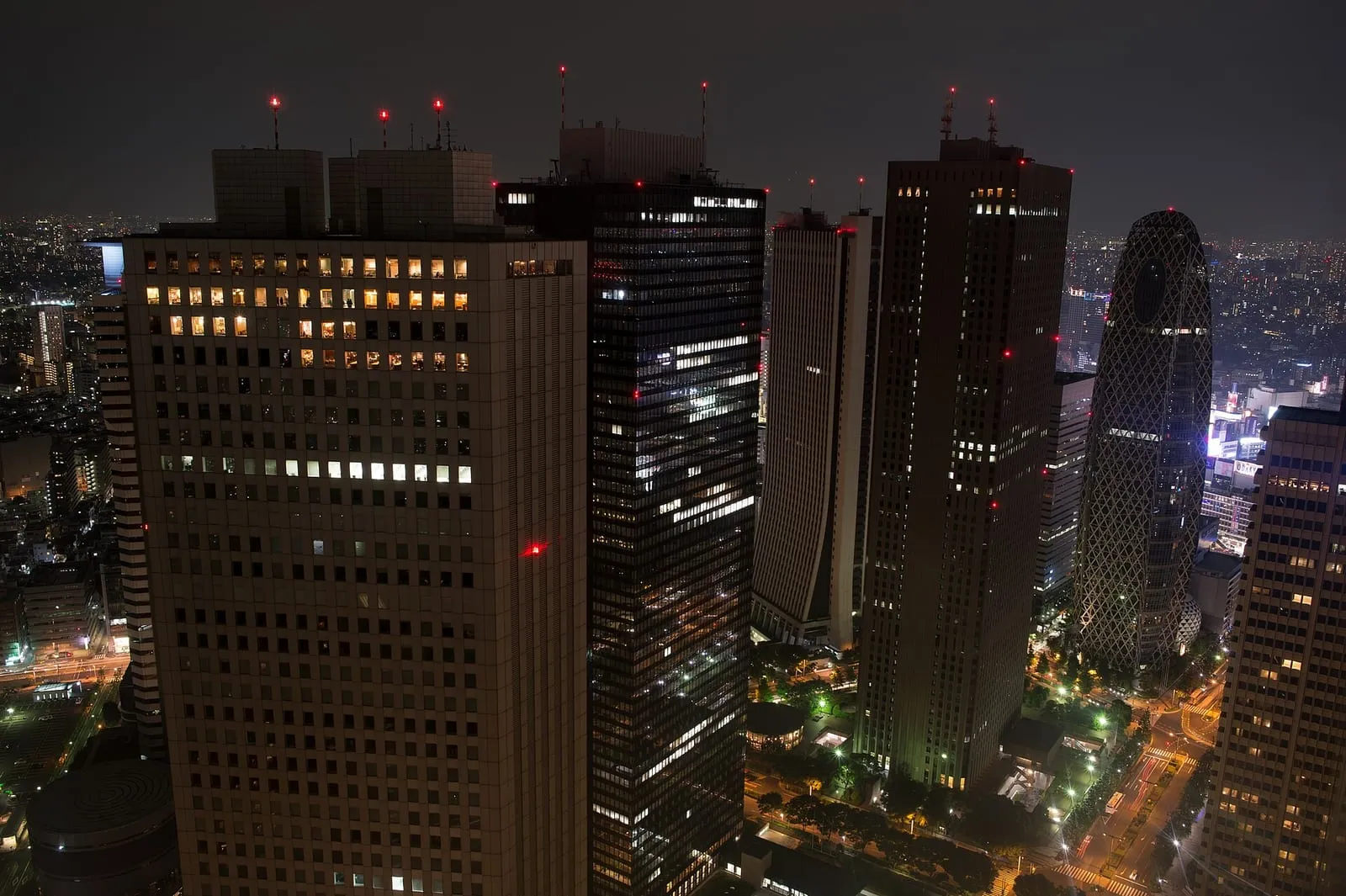
Illuminated commercial skyscrapers of Shinjuku seen from the 45th-floor observation deck. Photo: Takashi Hososhima, Wikimedia Commons, CC BY-SA 2.0.
2. Omoide Yokocho
Depart the government district and walk 1.2 kilometres eastward beneath the elevated railway tracks towards Shinjuku Station’s West Exit. Tucked between the train tracks and the Odakyu department store complex lies Omoide Yokocho (“Memory Lane”, historically nicknamed Shonben Yokocho or “Piss Alley”).
Originating as an unregulated post-war black market in 1946 where traders sold cheap offal skewers because flour and rice were strictly rationed by the occupation authorities, Omoide Yokocho today encompasses roughly 80 tiny restaurants along three tightly packed pedestrian lanes. Most establishments accommodate no more than five to eight diners on narrow wooden stools lining an open grill counter.
Specialities here focus on yakitori (charcoal-grilled chicken skewers seasoned with salt or sweet tare sauce) and motsuyaki (skewered pork offal). Skewers typically cost ¥150 to ¥300 each. Note that most stalls levy an automatic small table charge (otoshi) of ¥300 to ¥500 per customer, which includes a small cold appetizer such as pickled daikon, edamame, or braised beef tendon. Wash down your meal with draft beer (nama biiru) or a Highball (whisky and soda).
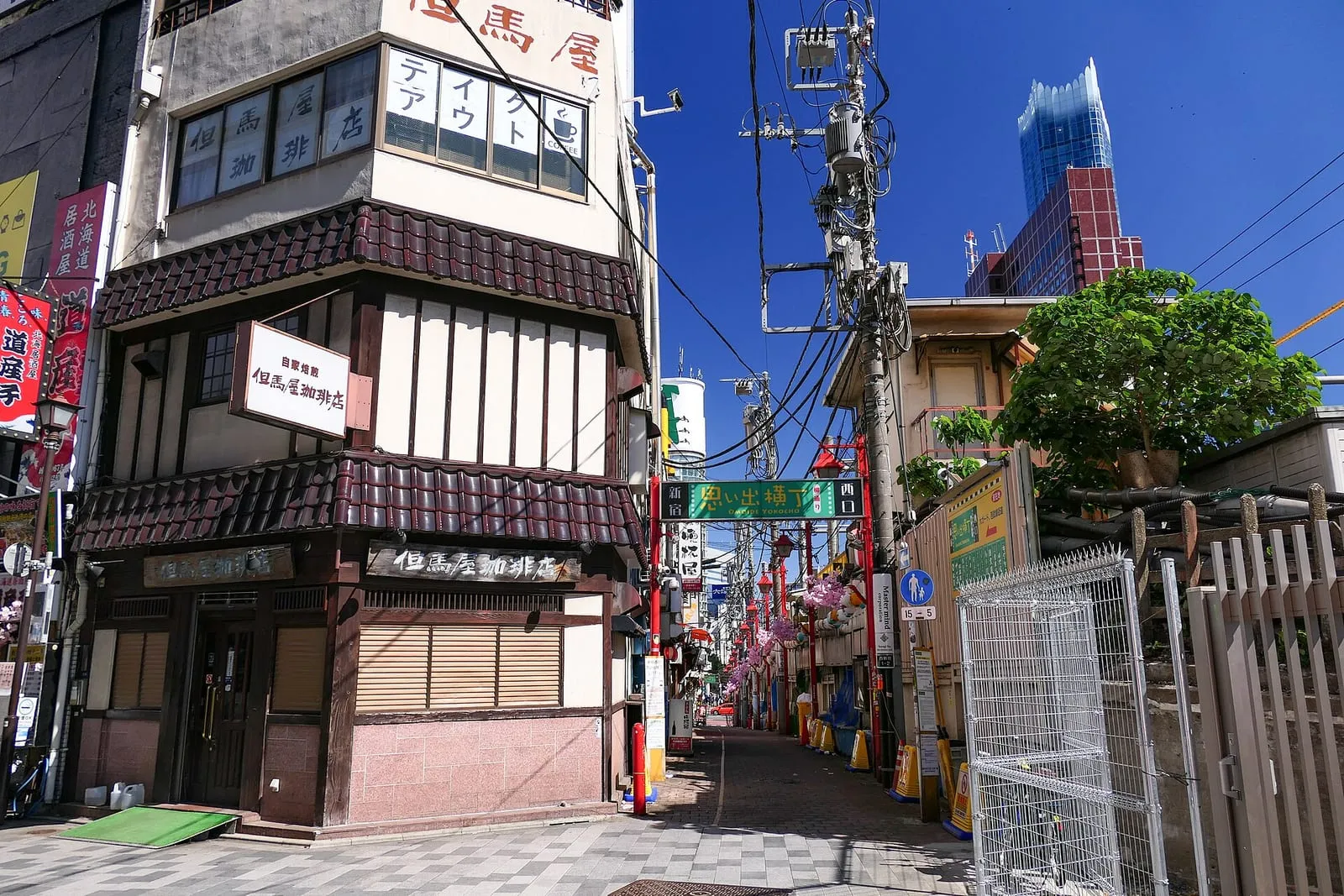
The rustic timber facade of Omoide Yokocho entrance alleyway. Photo: MaedaAkihiko, Wikimedia Commons, CC BY-SA 4.0.
3. Kabukicho and Godzilla Road
From Omoide Yokocho, pass beneath the railway tracks via the historic O-Guard underpass to reach Shinjuku’s East Exit entertainment district: Kabukicho.
Named in 1948 after an unrealised municipal plan to construct a grand kabuki theatre to spur post-war cultural recovery, Kabukicho developed instead into Tokyo’s most sprawling entertainment zone, packed with host and hostess clubs, pachinko parlours, love hotels, izakayas, and cinemas.
Pass under the famous red neon archway of Kabukicho Ichiban-gai and proceed down Central Road (Godzilla Road) toward the Hotel Gracery / Toho Cinemas complex. Perched on the 8th-floor outdoor terrace 40 metres above the street is a full-scale, 12-metre-tall replica head of Godzilla (Godzilla-iwa). On the hour between 12:00 and 20:00, Godzilla roars, flashes amber laser eyes, and vents mist onto the street below. Hotel guests and patrons of the 8th-floor cafe can access the outdoor deck for direct close-up views.
Staying safe in Kabukicho
Kabukicho is safe for casual sightseeing along main avenues, but visitors must remain aware of aggressive commercial solicitation. The UK Foreign Office travel advisory for Japan and the Tokyo Metropolitan Police Department highlight the following precautions:
- Ignore street touts (kyakuhiki): Men standing on street corners approaching foreigners with English greetings (“Looking for a bar?”, “Cheap beers, no cover charge”, “Girls massage”) are unlicensed touts working on high commission. Following a tout into a venue frequently leads to spiked drinks, credit card skimming, or exorbitant “seating and service fees” running into hundreds of thousands of yen.
- Never enter a venue without a printed menu: Legitimate Japanese bars and izakayas prominently display their menu, seating fees, and drink prices at the entrance. If prices are not clearly stated, walk away.
- Police assistance: If you feel threatened or encounter billing extortion, proceed immediately to the Shinjuku Kabukicho Police Box (koban) situated at 1-10-1 Kabukicho near Godzilla Road; see our security breakdown in is Tokyo safe?.
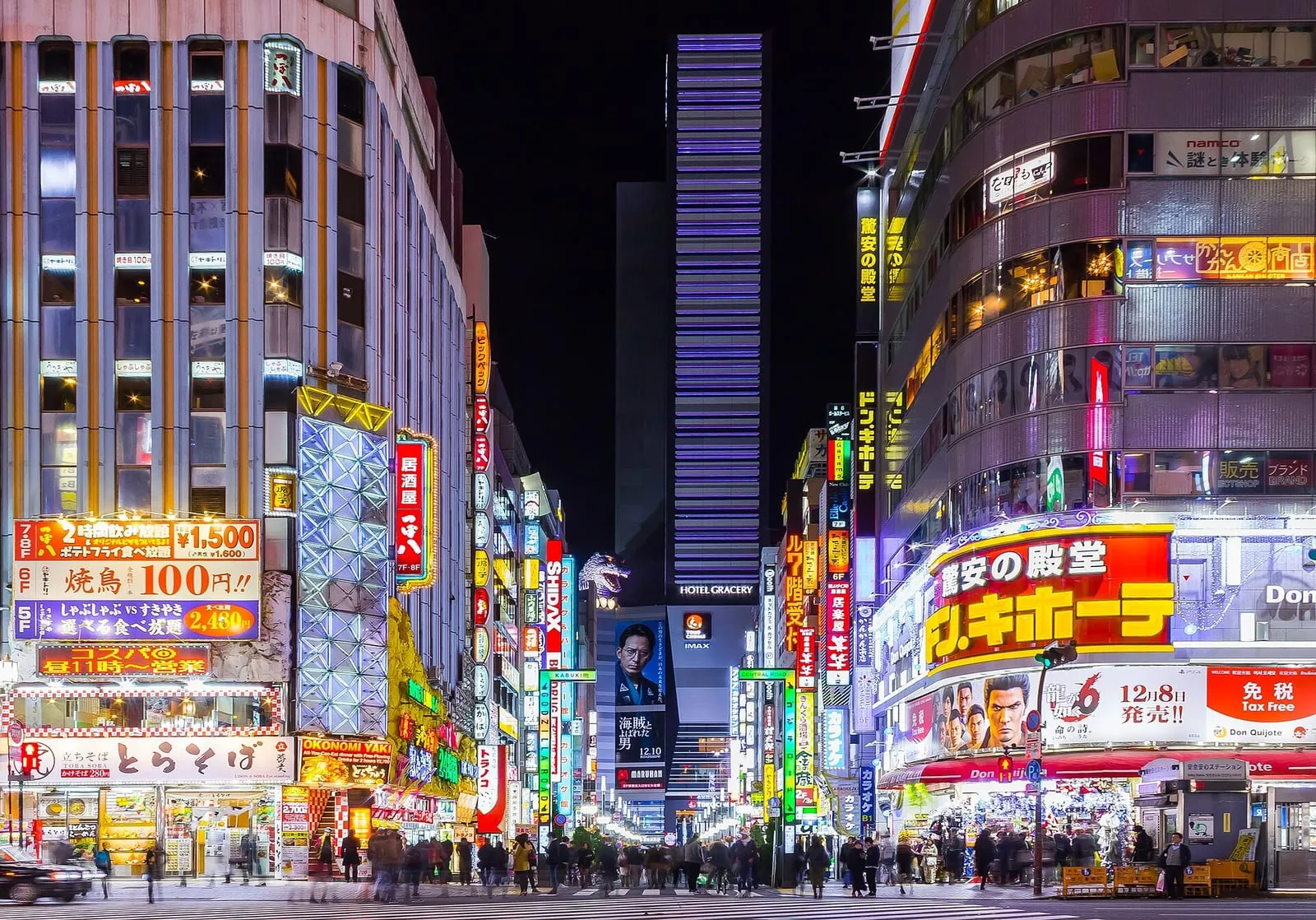
Illuminated commercial facades and pedestrian traffic along Central Road in Kabukicho. Photo: Kakidai, Wikimedia Commons, CC BY-SA 4.0.
4. Golden Gai
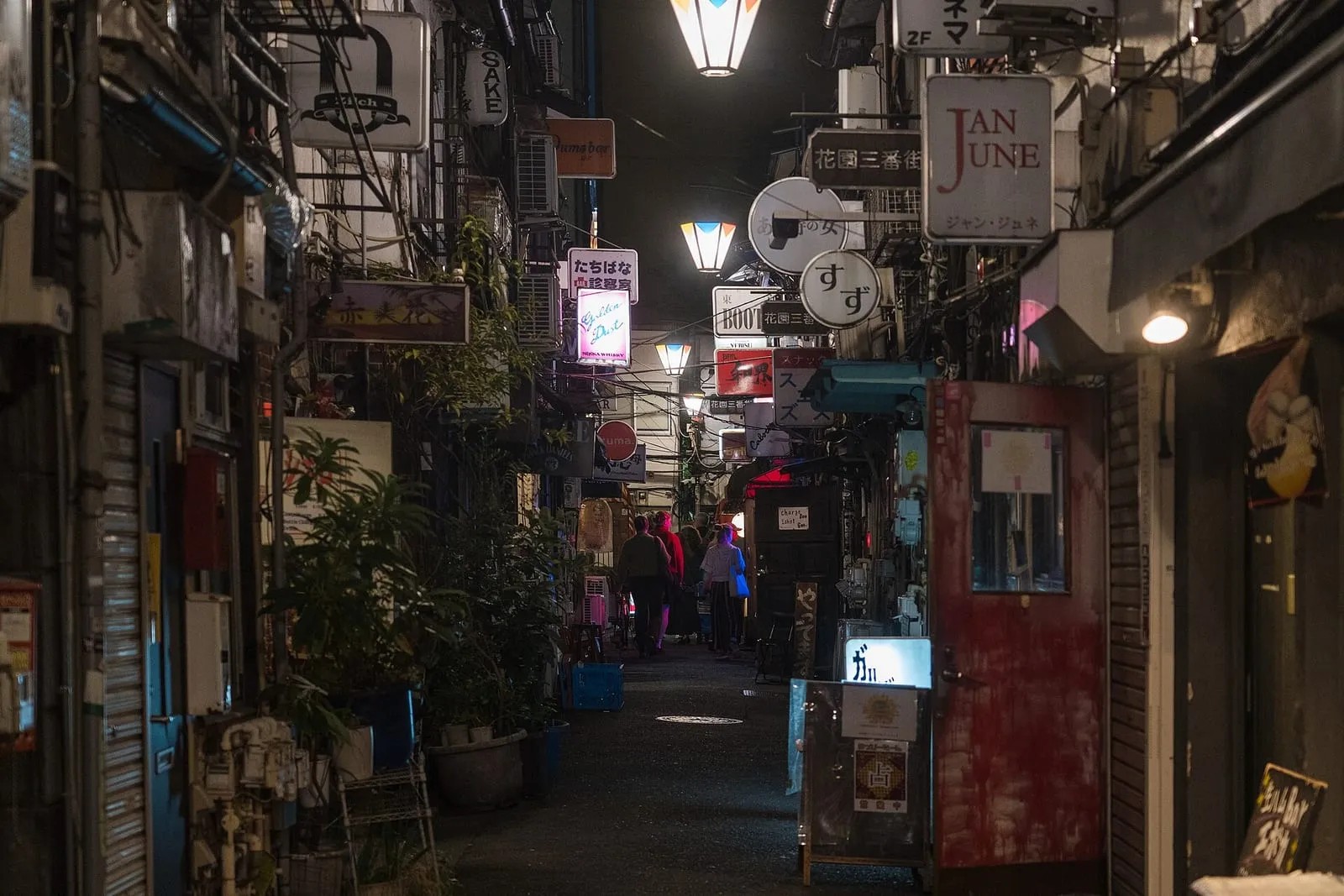
Cross east past the Shinjuku Ward Office to enter Shinjuku Golden Gai. This compact warren of six narrow timber-lined passageways houses approximately 280 to 300 miniature bars packed into a site roughly the size of a football pitch.
Golden Gai’s architectural character dates from the immediate post-war era. While most of Tokyo’s wooden shantytowns were demolished during the 1960s Olympic modernisation or targeted by developer arson during the speculative land bubble of the 1980s, Golden Gai’s independent bar owners formed a mutual defence league, taking turns standing night watch to protect their historic wooden buildings. Over the decades, it became the regular bohemian haunt of Japanese film directors, novelists, poets, and musicians, including Nagisa Oshima and Haruki Murakami.
Each bar measures only a few square metres, typically housing a counter with room for four to eight patrons. Establishments are intensely individualistic, decorated with vintage vinyl records, antique film posters, punk memorabilia, or photography.
Golden Gai etiquette and costs
- Cover charges (seki-ryo / table charge): Almost all Golden Gai bars charge a seating fee ranging from ¥500 to ¥1,000 per person, in addition to drink orders (cocktails, beers, and whisky generally cost ¥800 to ¥1,500).
- Language and entrance signs: Look for signs on the wooden doors. English-language welcome signs, blackboard menus with prices, or notices reading “No cover charge” indicate tourist-friendly bars (such as Albatross, Bar Champion, or Deathmatch in Hell). Doors displaying “Members Only” or Japanese-only notices are private bars reserved for regular local clientele; do not force entry.
- Group sizes: Golden Gai is unsuited for groups larger than three people. Couples and solo travellers will find it much easier to secure empty bar stools.
- Photography: Photography inside the narrow public alleyways is restricted by local merchants’ association signs to protect patron privacy. Never photograph into open bar doorways without permission.
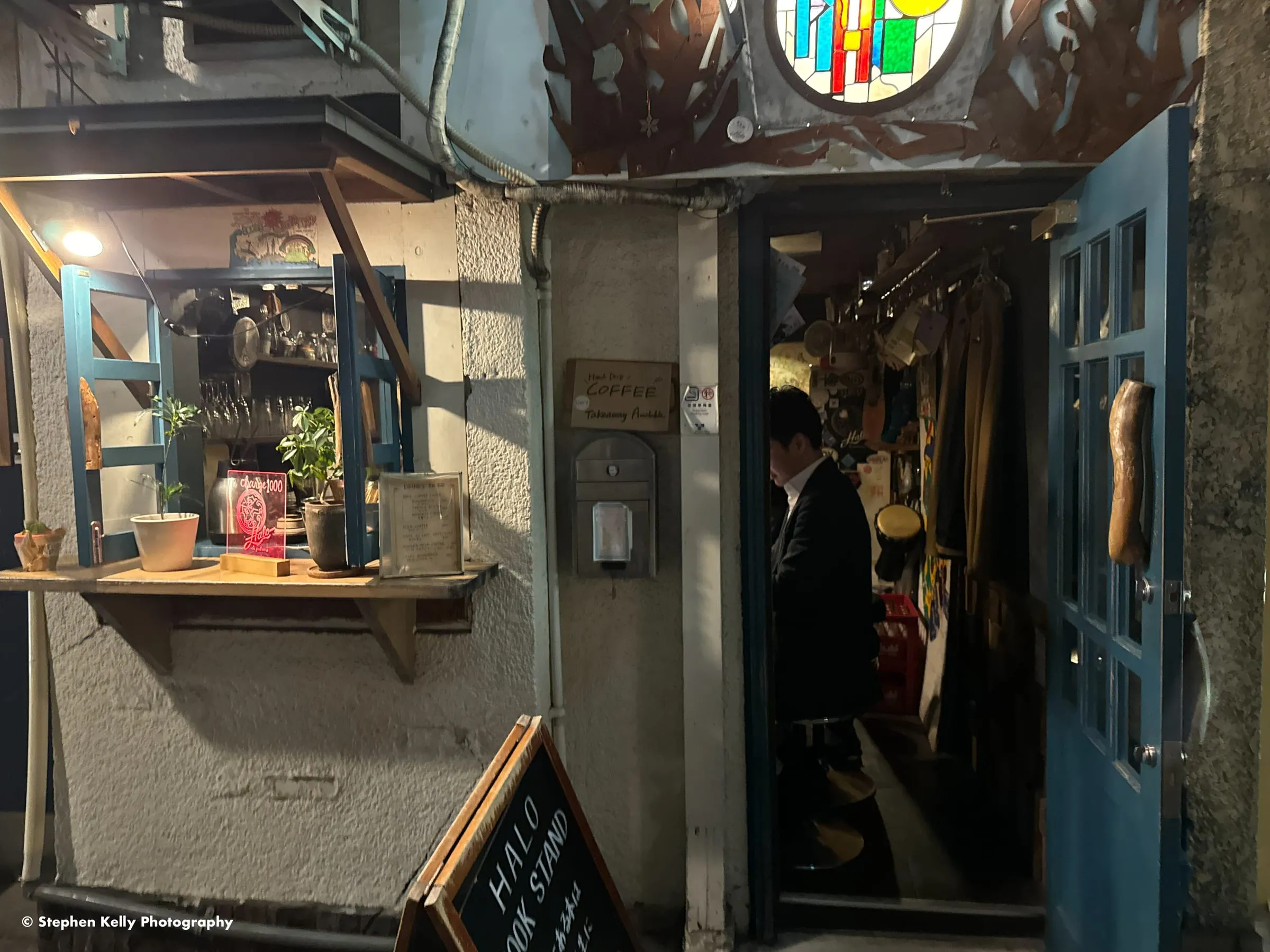
Intimate timber-clad bar fronts and paper lanterns in Golden Gai. Photo: Stephen Kelly from San Francisco, CA, USA, Wikimedia Commons, CC BY 2.0.
5. Hanazono Shrine
Conclude your walking tour by stepping through the quiet eastern exit of Golden Gai onto the grounds of Hanazono Shrine (Hanazono-jinja).
Established in the mid-17th century by the Tokugawa Shogunate and dedicated to Inari Okami (the Shinto kami of agriculture, commerce, and creative success), the shrine was originally situated within the imperial floral gardens (hanazono) before relocating to its present location. The contrast between the silent vermilion-lacquered shrine complex and the pulsating neon nightlife of adjacent Kabukicho is striking.
Take a few moments to walk beneath the red torii gates and observe the stone fox statues (kitsune), sacred messengers of Inari holding keys and jewels in their jaws. The grounds remain open 24 hours a day and are softly illuminated by traditional paper lanterns after dusk. The shrine hosts the spirited Tori-no-Ichi rooster fair in November and a lively open-air antique market on Sundays from dawn until mid-afternoon. Review basic visiting etiquette in our Tokyo shrine and temple etiquette guide.
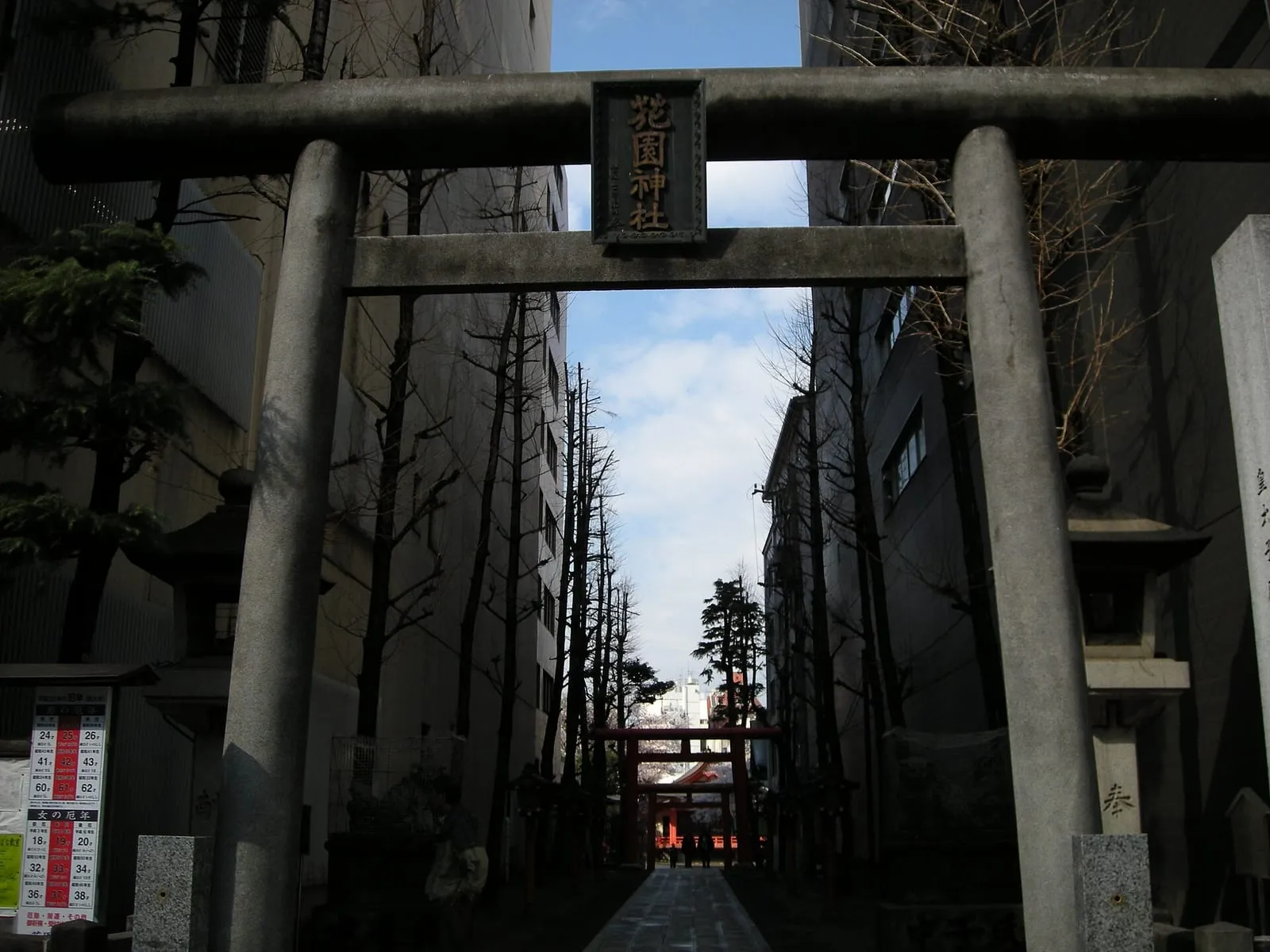
Stone torii gate and approach path at Hanazono Shrine. Photo: Fay1982, Wikimedia Commons, CC BY-SA 4.0.
Self-guided walk vs guided bar crawl
| Consideration | Self-guided walk | Guided bar crawl |
|---|---|---|
| Cost | Free walking; pay-as-you-go drinks and snacks | From ¥5,000 to ¥13,200 per person (includes food/drinks) |
| Language barrier | Requires navigating Japanese menus or choosing tourist-friendly spots | English-speaking guide handles ordering, seating, and etiquette |
| Seating access | May encounter full bars or “members only” doors in Golden Gai | Reserved seating at vetted, welcoming izakayas and bars |
| Safety confidence | Requires vigilance regarding touts in Kabukicho | Guide steers group clear of touts and overpriced venues |
| Pacing | Complete flexibility to spend 15 minutes or two hours per stop | Structured 2 to 3-hour tour schedule |
Guided Shinjuku izakaya and nightlife tours
Joining a licensed local nightlife guide removes the intimidation factor from navigating Golden Gai’s micro-bars and Omoide Yokocho’s grill counters, ensuring guaranteed seating and transparent pricing.
Shinjuku Local Bar & Izakaya Crawl Tour
From ¥6,000 · 4.9 stars from 2,966 reviews · 3 hours · Small group
Tokyo: Shinjuku Local Bar & Izakaya Crawl Tourad is Shinjuku’s most popular evening crawl. The local guide navigates the labyrinth of Omoide Yokocho for charcoal yakitori, introduces the group to a classic retro izakaya for seasonal small plates and sake, and finishes inside an authentic Golden Gai micro-bar that welcomes foreign travellers.
Shinjuku Food Tour (13 Dishes and 4 Eateries)
From ¥13,200 · 4.9 stars from 3,939 reviews · 3 hours · Comprehensive food crawl
Tokyo: Shinjuku Food Tour (13 Dishes and 4 Eateries)ad combines full-course dining with cultural commentary. The itinerary stops at four distinct culinary venues, providing tastings of seasonal sashimi, Wagyu beef skewers, handmade gyoza, and local craft drinks while touring the backstreets of Kabukicho and Shinjuku 3-Chome.
Shinjuku Night Walking Tour with Secret Alley
From ¥5,000 · 5.0 stars from 39 reviews · 1.5 hours · Express evening walk
Tokyo: Shinjuku Night Walking Tour with Secret Alleyad provides a focused introduction to Shinjuku’s post-war architectural history, covering the black-market origins of Memory Lane, the history behind Golden Gai’s survival, and photography viewpoints along Kabukicho’s Godzilla Road.
Connecting walks and logistics
- Transport: Shinjuku Station is served by the JR Yamanote, Chuo, and Saikyo lines, Tokyo Metro Marunouchi Line (M08), and Toei Shinjuku (S01) and Oedo (E27) lines; check train connections in our Tokyo public transport guide.
- Neighbourhood comparison: If choosing between staying in Shinjuku or Shibuya for your trip, consult our detailed comparison in Shinjuku or Shibuya and curated hotel areas in where to stay in Tokyo.
- Daytime counterpart: Pair this evening walk with the daytime Meiji Jingu, Harajuku and Shibuya walk or an excursion to western Tokyo via our Ghibli Museum tickets guide.
- Broader itineraries: This route forms the evening programme for Day 2 of our 3 days in Tokyo itinerary and is featured in Tokyo in one or two days and 5 days in Tokyo. Full citywide trip planning is indexed on the Tokyo hub.
Common questions
What is Golden Gai?
A network of six narrow pedestrian alleys packed with roughly 280 to 300 miniature two-storey bars on the East Exit side of Shinjuku Station. Most bars seat between four and eight patrons.
What is the difference between Golden Gai and Omoide Yokocho?
Omoide Yokocho sits northwest of Shinjuku Station and specializes in open-air yakitori and motsuyaki grill stalls; Golden Gai sits on the east side beyond Kabukicho and consists almost entirely of tiny drinking dens and themed cocktail bars.
Is Kabukicho safe at night?
Kabukicho is safe to stroll through on main avenues, but the UK Foreign Office and Tokyo Metropolitan Police warn of drink spiking, card fraud, and inflated bills orchestrated by unlicensed street touts (kyakuhiki). Never follow a tout into an unvetted bar or club.
How long does the Shinjuku night walk take?
The walking route covers 3.5 km and takes roughly 2.5 to 3.5 hours, including time spent at the Tokyo Metropolitan Government observation deck, dinner at Omoide Yokocho, and drinks in Golden Gai.