In this guide
💡 The Short Version: In Tokyo, the vast majority of national and municipal museums are closed on Mondays, including the Tokyo National Museum, the National Museum of Western Art, the Edo-Tokyo Museum, and Shinjuku Gyoen. If a Monday falls on a national holiday, they open on Monday and close on Tuesday instead. Conversely, traditional feudal gardens like Rikugien and Koishikawa Korakuen are open seven days a week (¥300 admission), closing only for New Year from 29 December to 1 January. Or book a tour: digital art museum tickets and guided cultural tours start from ¥3,800.
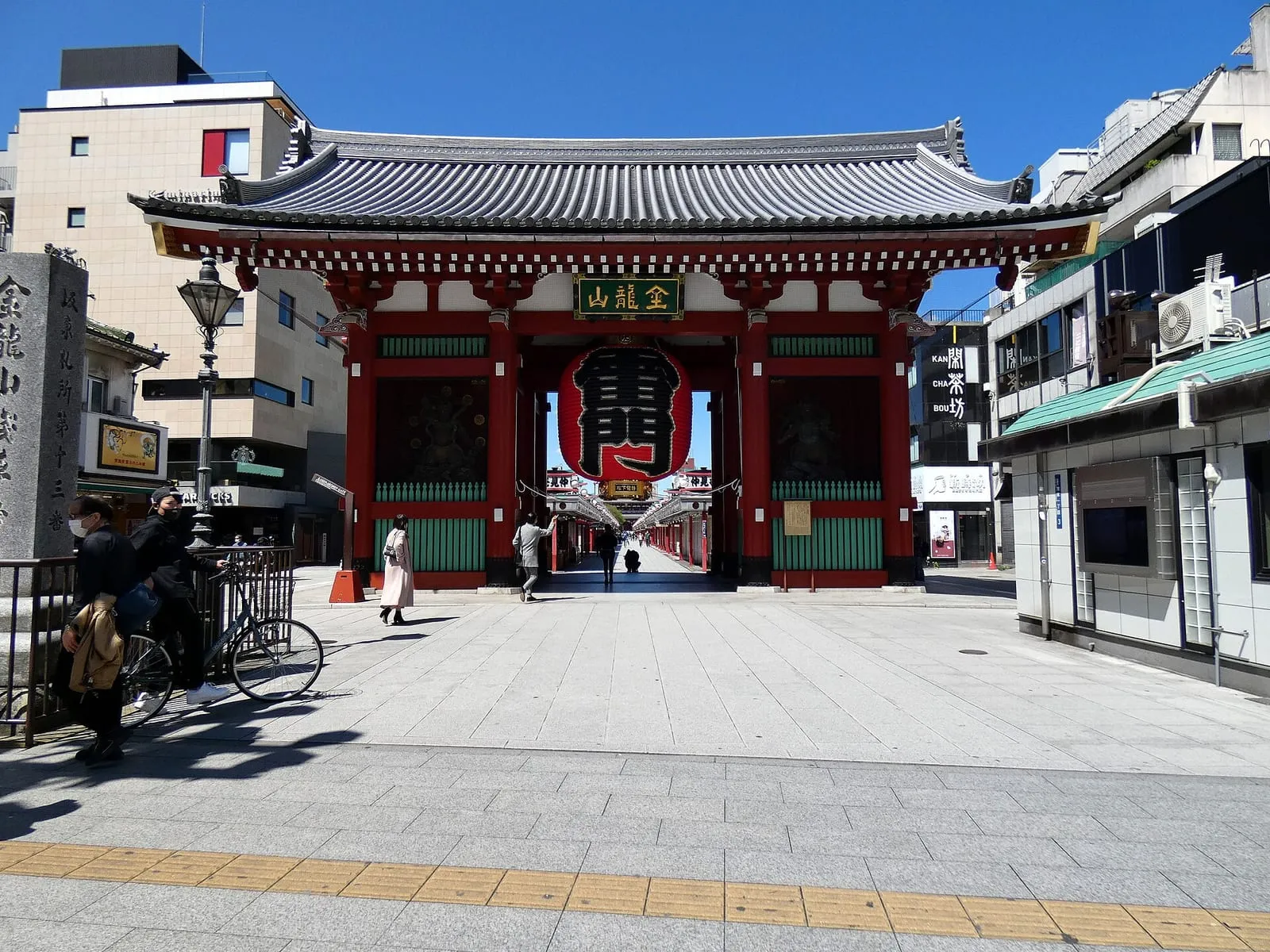
⚠️ The Monday closure rule: Always check the weekday when scheduling museum visits. If your sightseeing day falls on a Monday, visit open venues such as Rikugien, Koishikawa Korakuen, Hamarikyu Gardens, Meiji Jingu, Senso-ji, or private evening galleries like the Mori Art Museum.
Major Tokyo museums and gardens: hours, admission and closures
| Cultural sight | District | Adult admission | Standard hours | Regular weekly closure |
|---|---|---|---|---|
| Tokyo National Museum (TNM) | Ueno Park | ¥1,000 | 9:30 to 17:00 (Fridays/Saturdays to 20:00) | Closed Mondays (next weekday if holiday) |
| National Museum of Western Art | Ueno Park | ¥500 | 9:30 to 17:30 (Fridays/Saturdays to 20:00) | Closed Mondays (next weekday if holiday) |
| National Museum of Nature and Science | Ueno Park | ¥630 | 9:00 to 17:00 (Fridays/Saturdays to 20:00) | Closed Mondays (next weekday if holiday) |
| Edo-Tokyo Museum | Ryogoku | ¥800 | 9:30 to 17:30 (Saturdays to 19:30) | Closed Mondays; New Year |
| Mori Art Museum | Roppongi Hills | ¥2,000 (weekdays) ¥2,200 (weekends) | 10:00 to 22:00 daily (Tuesdays to 17:00) | Open 7 days a week |
| Nezu Museum | Minami-Aoyama | ¥1,400 | 10:00 to 17:00 (last entry 16:30) | Closed Mondays; exhibition changes |
| Shinjuku Gyoen National Garden | Shinjuku | ¥500 | 9:00 to 16:00 (winter), to 17:30/18:30 (summer) | Closed Mondays; 29 Dec–3 Jan |
| Rikugien Garden | Bunkyo-ku | ¥300 | 9:00 to 17:00 (last entry 16:30) | Open 7 days (closes 29 Dec–1 Jan) |
| Koishikawa Korakuen | Bunkyo-ku | ¥300 | 9:00 to 17:00 (last entry 16:30) | Open 7 days (closes 29 Dec–1 Jan) |
| Hamarikyu Gardens | Chuo-ku (Tokyo Bay) | ¥300 | 9:00 to 17:00 (last entry 16:30) | Open 7 days (closes 29 Dec–1 Jan) |
Tokyo National Museum (Ueno Park)
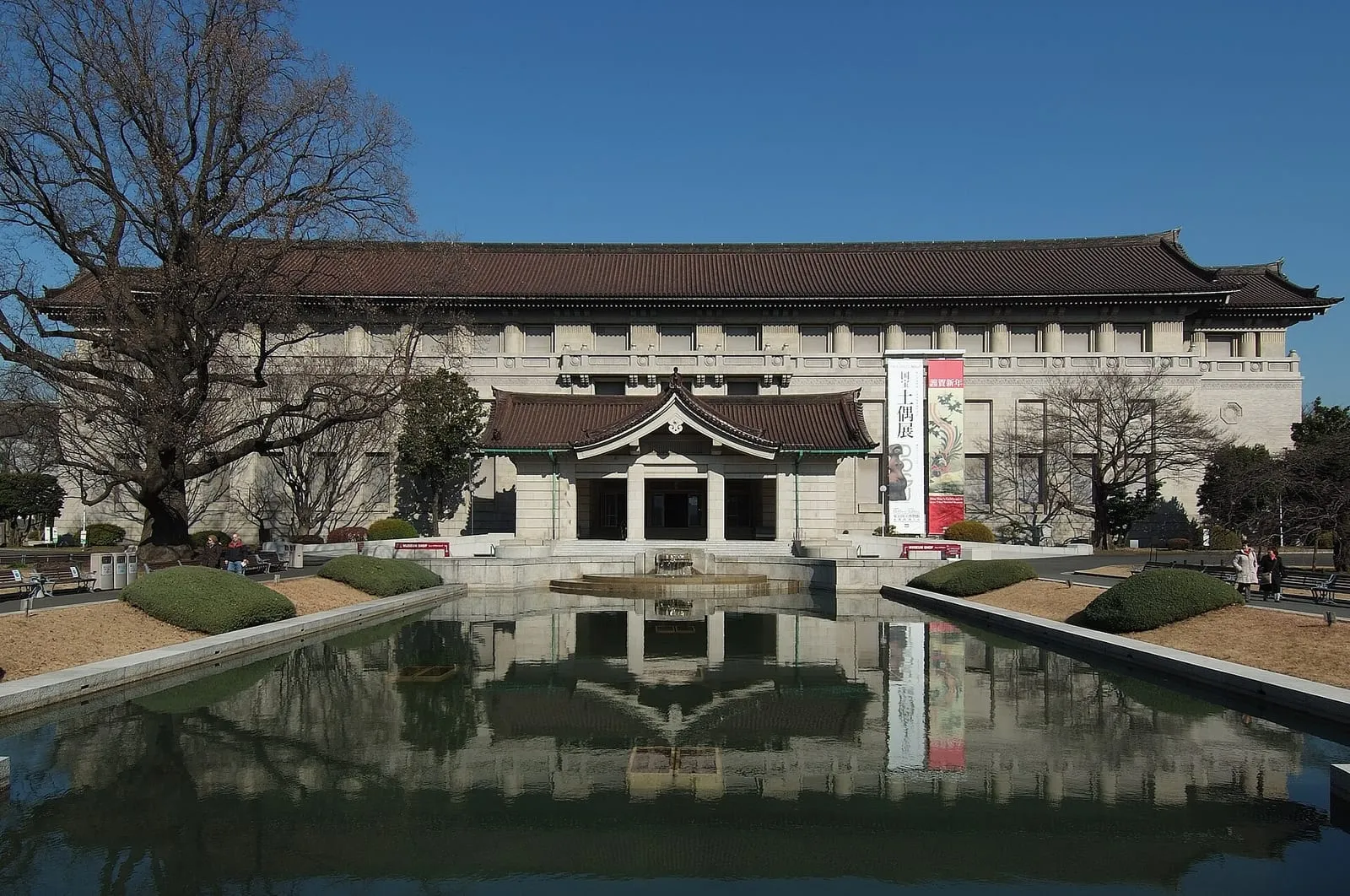
Established in 1872, the Tokyo National Museum (TNM / Tokyo Kokuritsu Hakubutsukan) is Japan’s oldest and most prestigious national museum. Located at the northern end of Ueno Park, its encyclopedic collection exceeds 120,000 cultural artifacts, including 89 designated National Treasures and 648 Important Cultural Properties.
The museum spans several distinct exhibition galleries set around landscaped grounds:
- Honkan (Main Gallery): Completed in 1937 in the Imperial Crown style (Teikan Yoshiki), this grand building traces the comprehensive history of Japanese visual arts from Jomon pottery (c. 10,000 BC) through Heian Buddhist sculpture, samurai armour, katana masterworks by Masamune and Muramasa, Edo-period Kimono textiles, and woodblock prints (ukiyo-e) by Hokusai and Hiroshige.
- Toyokan (Asian Gallery): Showcases ancient arts and archaeological treasures from China, Korea, India, Southeast Asia, Central Asia, and Egypt, including Chinese bronzes, Korean celadon ceramics, and Gandharan Buddhist sculptures.
- Heiseikan: Houses the extensive Japanese Archaeology Gallery on the ground floor (including enigmatic dogu clay figurines and bronze dotaku bells) and hosts major temporary loan exhibitions on the upper floor.
- The Gallery of Horyu-ji Treasures: A minimalist glass-and-steel structure designed by Yoshio Taniguchi housing over 300 sacred 7th- and 8th-century Buddhist antiquities donated by Horyu-ji Temple in Nara in 1878, including gilded bronze statuettes and ceremonial metalwork.
TNM tickets and opening hours
The museum opens Tuesday through Sunday from 9:30 to 17:00. On Fridays and Saturdays, as well as Sundays preceding national holiday Mondays, opening hours are extended until 20:00.
Regular collection tickets cost ¥1,000 for adults, ¥500 for university students, and are completely free for visitors aged under 18 or 70 and older (passport verification required at the gate). Permanent collection galleries are free for all visitors on Culture Day (3 November), International Museum Day (18 May), and Respect for the Aged Day (third Monday of September). Timed-entry reservations are not required for regular collection galleries, but special exhibitions require separate advance ticket purchases. Check exhibition rotations and temporary room closures directly on the Tokyo National Museum official site.
National Museum of Western Art (Ueno Park)
Situated directly across from Ueno Station, the National Museum of Western Art (NMWA) is renowned both for its European art holdings and its architecture. The main building was designed by Swiss-French master architect Le Corbusier and completed in June 1959. In July 2016, the building was inscribed on the UNESCO World Heritage List as part of The Architectural Work of Le Corbusier, an Outstanding Contribution to the Modern Movement.
The museum was founded to house the Matsukata Collection, assembled in Europe in the early 20th century by industrialist Kojiro Matsukata. The permanent collection traces Western art from the late medieval era through the mid-20th century, featuring masterpieces by Paolo Veronese, Peter Paul Rubens, Rembrandt, Claude Monet (including his monumental canvas Water Lilies), Pierre-Auguste Renoir, Paul Cezanne, and Vincent van Gogh. The open-air forecourt displays famous bronze casts by Auguste Rodin, including The Thinker, The Burghers of Calais, and the colossal Gates of Hell.
Admission to the permanent collection costs ¥500 for adults and ¥250 for college students; admission is free for visitors aged 18 and under or 65 and older. Entry to the collection is completely free for everyone on the second and fourth Saturdays of each month, as well as on International Museum Day and Culture Day. The museum opens 9:30 to 17:30 (extended to 20:00 on Fridays and Saturdays) and is closed on Mondays; verify loan exhibitions on the National Museum of Western Art official portal.
The elevated architecture of the Edo-Tokyo Museum in Ryogoku. Photo: Guilhem Vellut from Annecy, France, Wikimedia Commons, CC BY 2.0.
Edo-Tokyo Museum (Ryogoku)
Located at 1-4-1 Yokoami in Sumida Ward, directly adjacent to the Ryogoku Kokugikan sumo arena, the Edo-Tokyo Museum is dedicated to the urban history, culture, and architecture of Tokyo from its foundation as Edo in 1590 to the late 20th century.
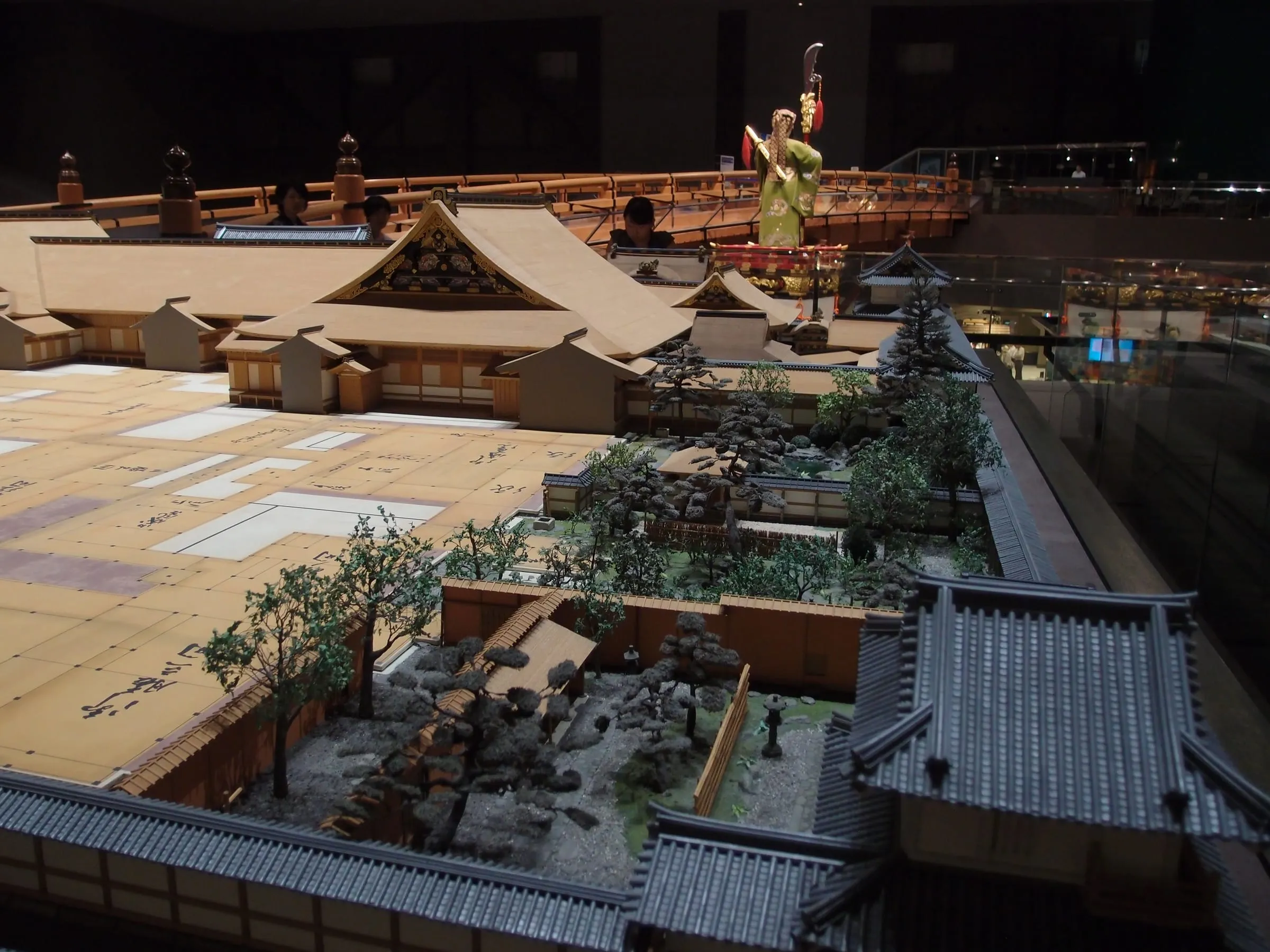
The museum building, designed by Metabolist architect Kiyonori Kikutake, elevates an enormous 30,000-tonne exhibition hall on four massive pylons, drawing inspiration from traditional elevated grain storehouses (kurazukuri). Inside, the permanent exhibition begins as visitors cross a life-size wooden replica of Nihonbashi Bridge, the historic zero-mile marker of Edo’s road network.
Extensive interactive displays feature intricately detailed 1:50 scale models populated by thousands of miniature figures depicting shogunal processions, merchant tenements (nagaya), and kabuki theatres, as well as full-scale reconstructions of Meiji-era publishing houses, a 1930s Tokyo suburban family home, and wartime bomb shelters.
Permanent exhibition tickets cost ¥800 for adults, ¥640 for university and vocational students, and ¥400 for junior high school students from outside Tokyo and seniors aged 65 and over. Standard hours are 9:30 to 17:30 (Saturdays until 19:30), with the museum closed on Mondays and over the New Year holiday. Consult the Edo-Tokyo Museum official site for current operating status, renovation schedules, and offsite loan programmes.
Traditional Edo-period stroll gardens
Unlike the national museums, Tokyo’s historic metropolitan feudal gardens (daimyo teien) remain open seven days a week, making them ideal outdoor destinations for Mondays.
Rikugien Garden (Bunkyo Ward)
Constructed between 1695 and 1702 by Yanagisawa Yoshiyasu, a senior councillor to the fifth Tokugawa shogun, Rikugien is one of Tokyo’s most celebrated Edo-period stroll gardens (kaiyu-shiki-teien). The name means “Six Poems Garden”, reflecting Yoshiyasu’s design which recreates 88 miniature scenes from classical Japanese waka poetry.
The garden features a large central pond (Sensui) with artificial islands, stone footbridges, winding forested gravel trails, and an elevated viewpoint (Fujishirotoge) offering views across the manicured pine canopies. The lakeside teahouse, Fukiage Chaya, serves matcha green tea and seasonal wagashi confections for ¥510. Rikugien is especially renowned for its weeping cherry blossom tree in late March and spectacular Japanese maple illuminations in late November; see our autumn leaves guide. Admission is ¥300 (¥150 for seniors 65+). Open daily 9:00 to 17:00 (last entry 16:30); located a 7-minute walk from JR Komagome Station on the Yamanote Line. Check events on the Tokyo Metropolitan Park Association Rikugien page.
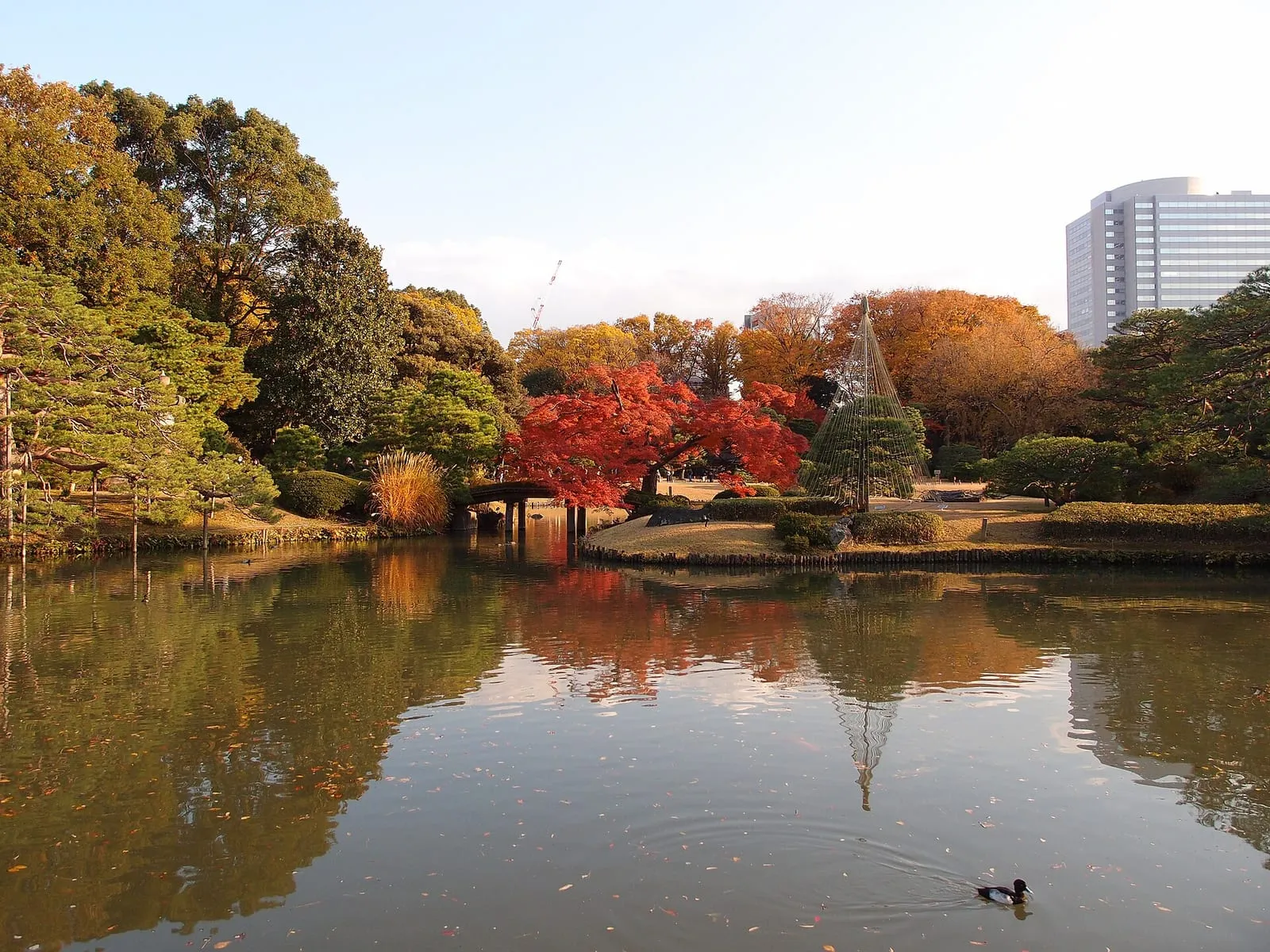
Central pond and manicured Japanese maples at Rikugien Garden. Photo: Guilhem Vellut, Wikimedia Commons, CC BY 2.0.
Koishikawa Korakuen (Bunkyo Ward)
Bordering Tokyo Dome in Bunkyo Ward, Koishikawa Korakuen is Tokyo’s oldest surviving feudal garden, begun in 1629 by Tokugawa Yorifusa, the founder of the Mito branch of the Tokugawa clan, and completed by his son Tokugawa Mitsukuni.
The garden incorporates strong Chinese literary and landscape aesthetics influenced by Confucian scholar Zhu Zhiyu. Prominent features include the Engetsu-kyo (“Full Moon Bridge”), a stone arch bridge whose reflection in the water forms a perfect circle; a replica of China’s West Lake embankment (Seiko-no-tsutsumi); and scenic plum and iris groves. Admission is ¥300 (¥150 for seniors 65+). Open daily 9:00 to 17:00 (last entry 16:30); located a 5-minute walk from Iidabashi Station or Korakuen Station. Details are on the Koishikawa Korakuen visitor page.
Shinjuku Gyoen National Garden
Spanning 58.3 hectares across Shinjuku and Shibuya wards, Shinjuku Gyoen originated as the Edo residence of Lord Naito before becoming an imperial greenhouse and garden in 1879. The park uniquely combines three distinct landscape styles: a formal French geometric garden, an expansive English landscape lawn dotted with towering Himalayan cedars, and a traditional Japanese garden with tranquil ponds and an imperial wooden pavilion (Taiwan Pavilion).
Shinjuku Gyoen costs ¥500 for adults, ¥250 for seniors (65+) and students, and is free for children aged 15 and under. Operating hours vary seasonally: 9:00 to 16:00 (gate closes 16:30) from 1 October to 14 March; 9:00 to 17:30 from mid-March to June; and 9:00 to 18:30 from July to mid-August. The garden is closed on Mondays (or Tuesday if Monday is a holiday), except during the peak spring cherry blossom window (25 March to 24 April) and autumn chrysanthemum exhibition (1 to 15 November), when it remains open every day. Learn more on the Shinjuku Gyoen National Garden official portal.
Digital art and private museum alternatives
If you are scheduling visits on a Monday or seeking contemporary exhibitions outside classical museums, Tokyo’s immersive digital art spaces and private galleries offer compelling alternatives:
teamLab Planets TOKYO Digital Art Museum
From ¥3,800 · 4.6 stars from 15,131 reviews · Instant booking
Tokyo: teamLab Planets TOKYO Digital Art Museum Entry Ticketad grants admission to Tokyo’s world-famous sensory art exhibition in Toyosu. Visitors walk barefoot through knee-deep water reflecting projection mapped koi carp, navigate infinite mirror rooms hanging with crystal LEDs (The Infinite Crystal Universe), and wander among floating orchid gardens. Open seven days a week from 9:00 to 22:00.
teamLab Borderless & Roppongi Art Architecture Tour
From ¥23,000 · 4.6 stars from 24 reviews · 4 hours · Guided art tour
Tokyo: TeamLab Borderless & Roppongi Art Architecture Tourad combines admission to the newly reopened teamLab Borderless at Azabudai Hills with a guided architectural walk through the high-design galleries and public art installations of Roppongi, including Tokyo Midtown and 21_21 Design Sight.
Ueno Local Food Tour: Sushi, Ramen & Cultural Walk
From ¥13,500 · 5.0 stars from 69 reviews · 3 hours · Small group
Tokyo: Ueno Local Food Tour – Sushi, Ramen, Yakitori & Drinksad complements a daytime visit to Ueno Park’s museums with an evening food crawl through the lively market alleys of Ameyoko, sampling fresh sashimi, handmade gyoza, and local craft drinks.
Connecting museum days with city itineraries
- Ueno Museum Cluster: The Tokyo National Museum and National Museum of Western Art sit directly along our curated Asakusa, Ueno and Yanaka walk, making it simple to combine temple exploration with high art.
- Ryogoku Culture Day: Pair the Edo-Tokyo Museum with traditional sumo culture at the Kokugikan arena; see our sumo tournament tickets guide.
- Free Museum Alternatives: Read our roundup of free things to do in Tokyo for details on complimentary entry days and no-cost civic observation decks.
- Ghibli Museum: Located in Mitaka in western Tokyo; requires strict advance ticket booking on the 10th of each preceding month and closes on Tuesdays; see our dedicated Ghibli Museum tickets guide.
- Itinerary Integration: Museum visits are scheduled around Monday closures throughout our 3 days in Tokyo, 5 days in Tokyo, and Tokyo in one or two days guides. For citywide transport, see our Tokyo public transport guide.
Common questions
Which Tokyo museums are open on Monday?
Most national and municipal museums in Tokyo close on Mondays. However, the Tokyo Metropolitan gardens (Rikugien, Koishikawa Korakuen, and Hamarikyu Gardens) are open on Mondays. The Mori Art Museum in Roppongi and digital art venues like teamLab Planets are also open seven days a week.
How much does entry to the Tokyo National Museum cost?
Regular collection galleries cost ¥1,000 for adults, ¥500 for university students, and are free for visitors under 18 and seniors aged 70 or older. Special exhibitions require separate tickets.
What happens when a Japanese national holiday falls on a Monday?
Museums that normally close on Mondays open to the public on the holiday Monday and close on the following Tuesday instead.
Are there free museum days in Tokyo?
Yes. The Tokyo National Museum and National Museum of Western Art offer free entry to permanent collections on Culture Day (3 November) and International Museum Day (18 May). Western Art is also free on the second and fourth Saturdays of each month.