In this guide
💡 The Short Version: Tokyo has two distinct seafood markets serving completely different purposes. Tsukiji Outer Market is the historic street-food district in Chuo Ward, best visited between 9:00 and 14:00 for sushi breakfasts, grilled seafood skewers, and tamagoyaki. Toyosu Market is the ultra-modern wholesale complex 2.3 km southeast on Tokyo Bay, open 5:00 to 17:00, where the famous early-morning tuna auction takes place between 5:30 and 6:30. Both markets are strictly closed on Sundays, public holidays, and scheduled market Wednesdays. Or book a tour: an early-morning tour covering the Toyosu auction and Tsukiji tastings starts from ¥18,200.
⚠️ Closure calendar warning: Never visit either Tsukiji or Toyosu on a Sunday, national holiday, or market closing Wednesday. The wholesale facilities and 90% of outer market food stalls will be shuttered. Always check the official Tokyo Metropolitan Central Wholesale Market calendar before planning your morning.
Tsukiji vs Toyosu: understanding the split
In October 2018, Tokyo completed one of the most complex logistical operations in municipal history: moving its 83-year-old central fish market from Tsukiji to Toyosu. The move divided Tokyo’s seafood scene into two separate destinations:
| Feature | Tsukiji Outer Market (Jogai Shijo) | Toyosu Market (Toyosu Shijo) |
|---|---|---|
| Primary purpose | Street food, retail shopping, breakfast dining | Wholesale trading, tuna auctions, professional logistics |
| Atmosphere | Open-air Edo-style alleys, smoky grills, active stalls | Temperature-controlled, enclosed glass-and-steel industrial complex |
| Tuna auction | No (relocated to Toyosu in 2018) | Yes (daily from 5:30 to 6:30) |
| Best visiting hours | 9:00 to 14:00 | 5:30 to 8:30 (for auctions and morning sushi) |
| Admission fee | Free | Free |
| Nearest station | Tsukiji (Hibiya Line) / Tsukijishijo (Toei Oedo Line) | Shijomae Station (Yurikamome Line) |
| Notable attractions | Over 400 food stalls, knife makers, Tsukiji Hongwanji | Tuna viewing deck, rooftop garden, Senkyaku Banrai onsen |
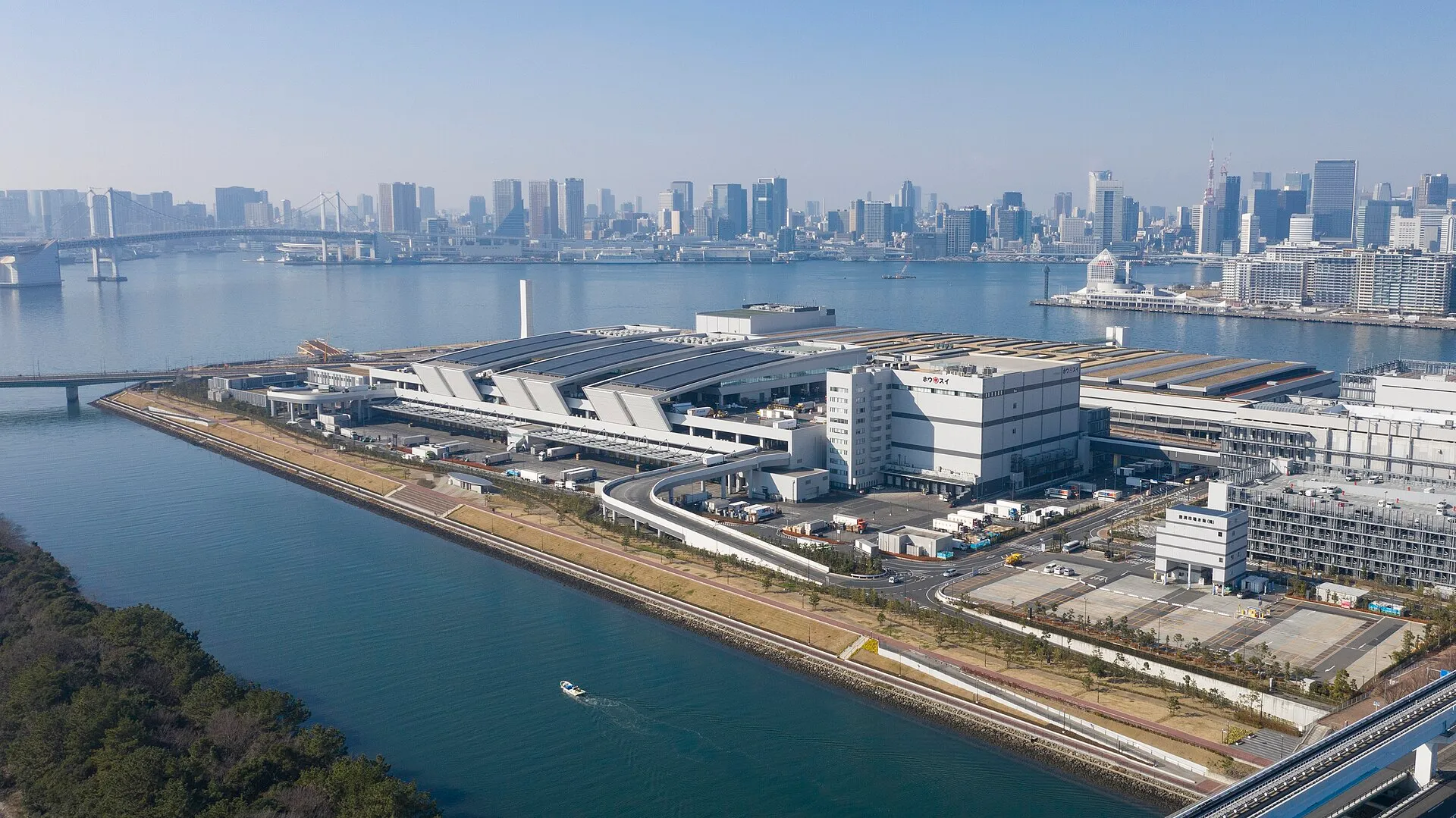
Modern temperature-controlled facilities of Toyosu Market along the Tokyo Bay waterfront. Photo: Arne Müseler, Wikimedia Commons, CC BY-SA 3.0 de.
Toyosu Market: wholesale auctions and morning sushi
Spanning 40 hectares across reclaimed land on Tokyo Bay, Toyosu Market (Toyosu Shijo) is roughly 1.7 times the size of old Tsukiji. Built at a cost of ¥600 billion, it operates under stringent cold-chain hygiene standards, maintaining cold storage from dockside unloading to wholesale distribution.
The market comprises three massive interconnected buildings:
- Block 7 (Fisheries Wholesale Market Building): The site of the world-famous frozen and fresh tuna auctions. Also houses administrative offices, a visitor exhibition gallery, and a 3rd-floor restaurant concourse.
- Block 6 (Fisheries Intermediate Wholesale Market Building): Where licensed intermediate wholesalers sell seafood to Tokyo’s top restaurant chefs. The 3rd floor hosts the largest cluster of relocated historic Tsukiji sushi restaurants (including legendary counters Sushi Dai and Daiwa Sushi), while the 4th floor houses Uogashi Yokocho, a shopping arcade selling chef knives, seaweed, and culinary supplies.
- Block 5 (Fruit and Vegetable Building): Houses wholesale produce auctions with a colourful elevated visitor viewing corridor.
How to watch the Toyosu Tuna Auction
The giant bluefin tuna auction takes place daily between 5:30 and 6:30. Hundreds of frozen and fresh tuna—each weighing between 100 and 300 kilograms with tails severed to expose fat marbling—are inspected with flashlights by brokers before auctioneers ring handbells and chant rapid-fire bids.
Visitors can witness the spectacle through two distinct options:
- The 3rd-Floor Visitor Walkway (Free, no reservation): A glass-enclosed elevated corridor in Block 7 overlooking the auction floor. Open daily from 5:00 to 17:00 on market operating days. You look down onto the auction through double-paned glass windows. Note: Because the first morning train on the Yurikamome Line does not arrive at Shijomae Station until 5:35, visitors must take a taxi from central Tokyo or stay at neighbouring hotels like La Vista Tokyo Bay.
- The Tuna Auction Observation Deck (Lottery required): A dedicated lower viewing platform positioned directly on the auction hall floor, separated from the brokers only by low glass panels that allow you to hear the auctioneer’s resonant calls and smell the cold sea mist. Access is granted exclusively through a free monthly online lottery run by the Tokyo Metropolitan Government. Applications open on the official Toyosu Market Tuna Auction Lottery Portal during the first week of the preceding month, with winners notified by email mid-month.
Consult the official Tokyo Metropolitan Wholesale Market visitor guide for detailed floor maps and security instructions.
Senkyaku Banrai and Toyosu dining
Opened in February 2024 directly adjacent to Shijomae Station, Toyosu Manyo Club / Senkyaku Banrai is an Edo-themed commercial and entertainment facility designed to restore street-level vibrancy to Toyosu. The complex features a three-storey outdoor dining street (Toyosu Jokamachi) lined with traditional timber facades selling fresh oysters, eel skewers, and ramen, topped by a 24-hour natural onsen bathhouse with free public rooftop footbaths overlooking Tokyo Bay.
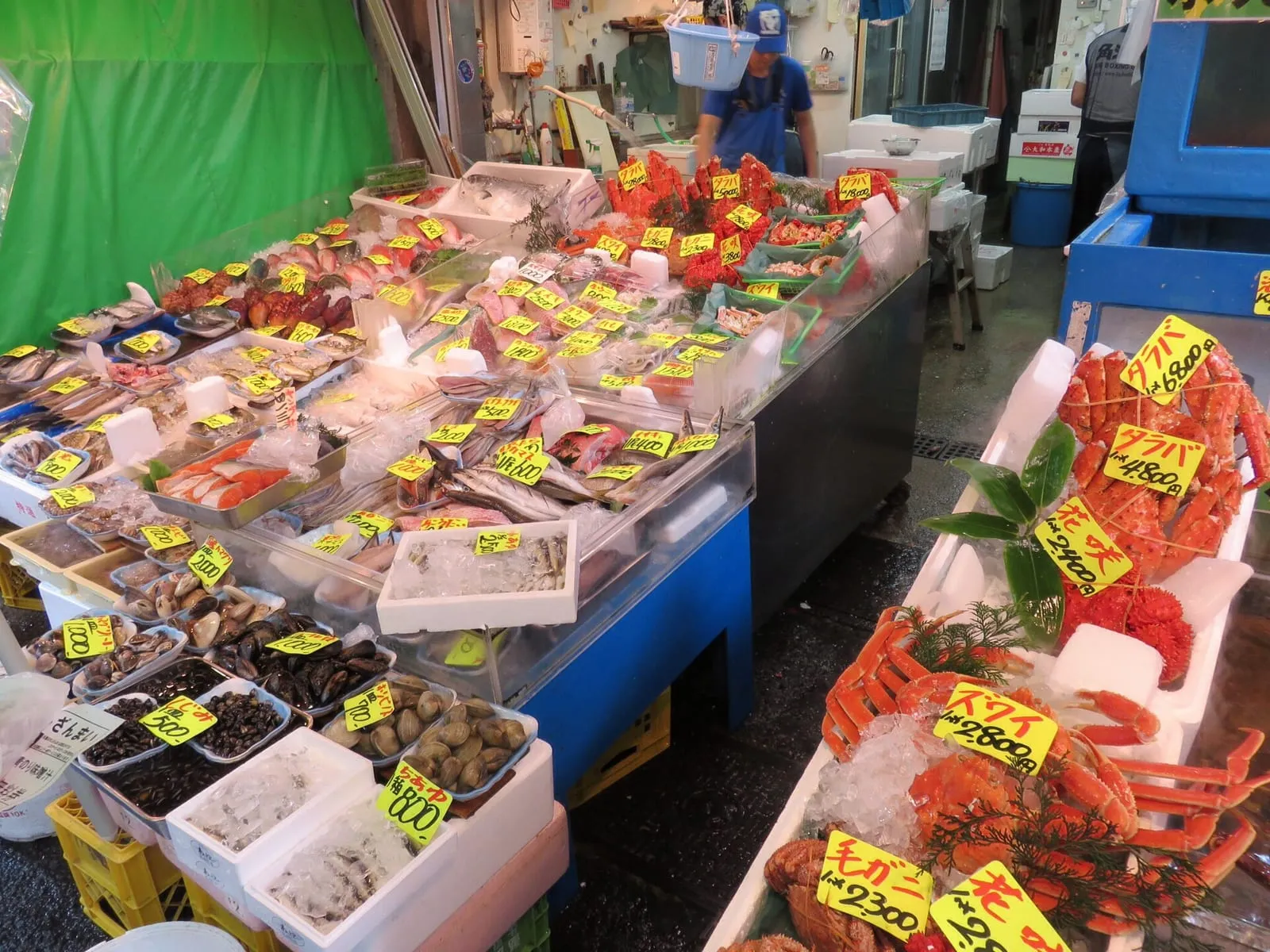
Fresh king crab, scallops, and shellfish on crushed ice at Tsukiji Outer Market. Photo: Aw1805, Wikimedia Commons, CC BY-SA 3.0.
Tsukiji Outer Market: street food and culinary craft
While wholesale trading left for Toyosu, the Tsukiji Outer Market (Tsukiji Jogai Shijo) remains Tokyo’s main food-street district. Encompassing roughly four dense blocks between Shin-Ohashi-dori and Harumi-dori, more than 400 independent merchants continue centuries of culinary trade.
Essential Tsukiji street foods
- Tamagoyaki (Japanese rolled omelette): Watch master egg cooks flip golden rectangular omelettes using long chopsticks. Stalls like Yamacho and Marutake serve freshly cooked, steaming sweet egg skewers on wooden sticks for ¥150 to ¥200.
- Torched seafood skewers: Vendors display live king crab legs, colossal scallops, oysters, and sea urchin (uni), seasoning them with soy sauce and blowtorching them to order right on the pavement.
- Fresh sashimi & kaisendon: Bowls of warm vinegared rice piled high with fresh bluefin tuna (akami, chutoro, and otoro), salmon roe (ikura), and sea urchin, typically priced between ¥2,000 and ¥4,500.
- Japanese chef knives: Tsukiji is world-renowned for handcrafted culinary cutlery. Historic bladesmiths like Masamoto Sohonten (founded 1872), Nenohi, and Sugimoto offer professional kitchen knives with complimentary on-site kanji name engraving.
⚠️ December visitor restrictions: The Tsukiji Outer Market Association formally asks international travellers to refrain from sightseeing in tour groups during December. Tens of thousands of Tokyo residents flood the narrow alleys to buy dried herring roe (kazunoko), festive fishcakes, and New Year decorations. Guided food tours pause throughout December, and casual visitors should expect severe congestion.
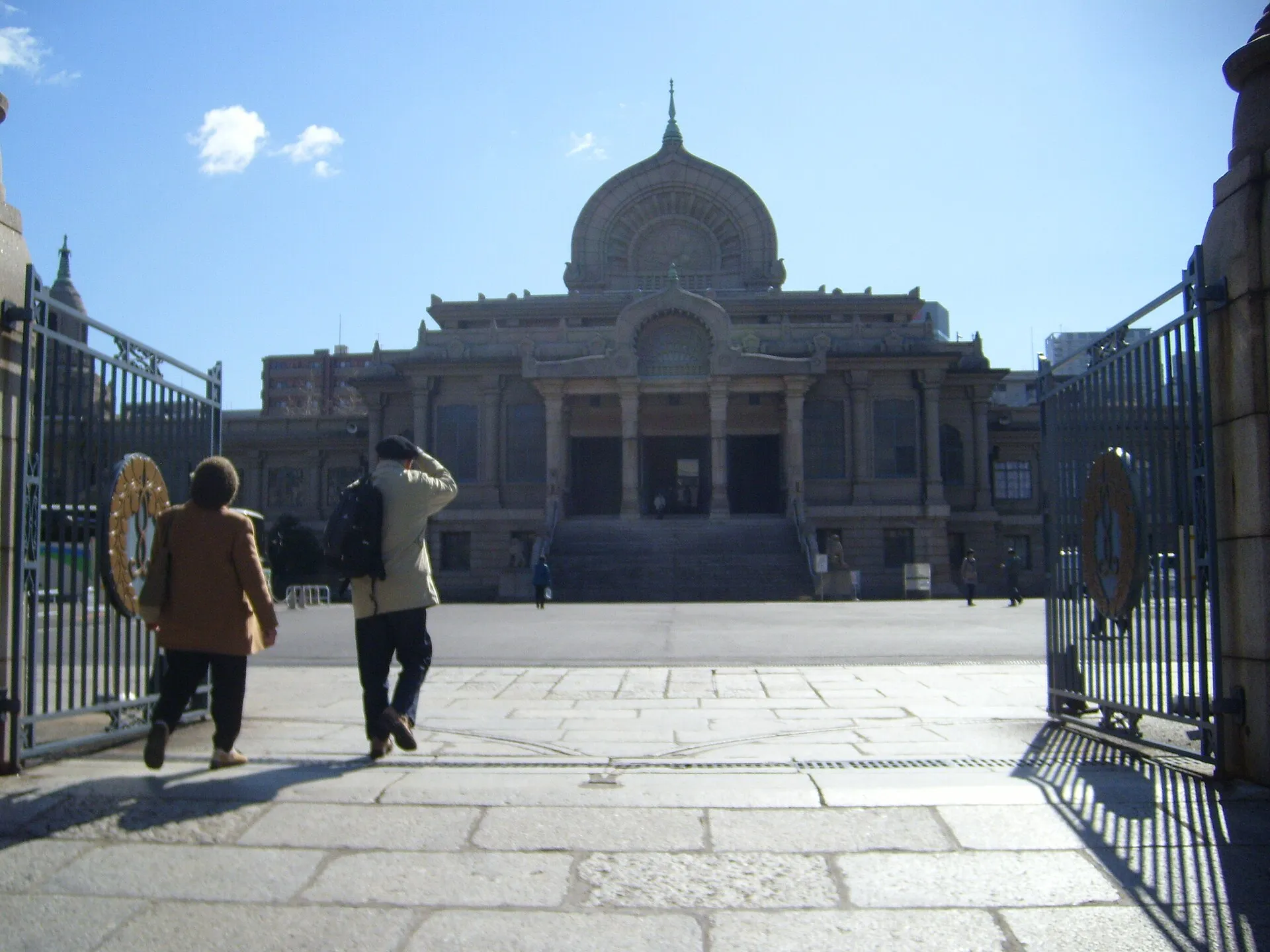
Ancient Indian Buddhist architectural facade of Tsukiji Hongwanji Temple. Photo: Shakher59, Wikimedia Commons, CC BY-SA 4.0.
Tsukiji Hongwanji Temple
Located directly adjacent to Exit 1 of Tsukiji Station, Tsukiji Hongwanji is a striking Jodo Shinshu Buddhist temple founded in 1617. After the original wooden temple burned down in the 1923 Great Kanto Earthquake, it was reconstructed in 1934 by architect Chuta Ito using reinforced concrete in an extraordinary ancient Indian Buddhist style, complete with lotus-motif stone carvings, stained-glass windows, and a pipe organ. The temple grounds are open daily from 6:00 to 17:00, and admission is free.
Market tours: independent visit vs guided experience
| Consideration | Independent visit | Guided market tour |
|---|---|---|
| Toyosu Auction access | Must arrange pre-dawn taxi to Shijomae; view from 3rd floor | Guide handles early-morning logistics and auction explanations |
| Tsukiji navigation | Navigating crowded alleys independently | Fast-track tastings at verified stalls without confusion |
| Culinary commentary | Limited to visual observation | Live explanations of knife metallurgy, fish grading, and dashi chemistry |
| Language barrier | Counter ordering via point-and-pay | Bilingual local translates ingredients, catches, and custom requests |
| Total cost | Pay-as-you-go snacks (¥1,500–¥3,500) | From ¥2,000 for walking tours to ¥18,200 for VIP auction adventures |
Top guided market tours
Booking an expert local guide eliminates the challenge of dawn navigation and ensures you taste the freshest seafood without falling into tourist traps:
Tokyo: Toyosu Tuna Auction & Tsukiji Market Gourmet Adventure
From ¥18,200 · 4.9 stars from 495 reviews · 3.5 hours · Early-morning VIP tour
Tokyo: Toyosu Tuna Auction & Tsukiji Market Gourmet Adventuread provides the definitive all-in-one market experience. The licensed guide coordinates the early-morning arrival at Toyosu, secures prime viewing positions for the tuna auction, explains bidding hand signals and grading techniques, and then escorts the group by private transit to Tsukiji Outer Market for a multi-course seafood breakfast tasting.
Tokyo: Tsukiji Fish Market Food Walking Tour with 5 Tastings
From ¥15,000 · 4.7 stars from 825 reviews · 3 hours · Comprehensive tasting crawl
Tokyo: Tsukiji Fish Market Food Walking Tour with 5 Tastingsad concentrates entirely on Tsukiji’s historic street food. The tour includes five generous food tastings (tamagoyaki, fried fish cakes, tuna sashimi, dashi soup, and matcha confections), an introduction to traditional Japanese knife makers, and a seated sushi lunch.
Tokyo: Tsukiji Fish Market Guided Walking Tour
From ¥2,000 · 4.8 stars from 2,040 reviews · 2 hours · Budget-friendly walk
Tokyo: Tsukiji Fish Market Guided Walking Tourad is the premier budget-conscious option. The guide leads you through the market labyrinth, introduces the history of Tsukiji Hongwanji Temple, points out hidden artisan purveyors, and leaves you free to purchase snacks according to your personal appetite.
Getting there and connecting itineraries
- Transit to Tsukiji: Take the Tokyo Metro Hibiya Line to Tsukiji Station (Station H11, Exit 1 or 2) or the Toei Oedo Line to Tsukijishijo Station (Station E18, Exit A1). The market is a two-minute walk from either exit.
- Transit to Toyosu: Take the Yurikamome elevated monorail to Shijomae Station (Station U14), which connects directly to the 3rd-floor market concourses via sheltered pedestrian skybridges.
- Connecting to teamLab Planets: Toyosu Market sits just one monorail stop (or a 15-minute walk) from teamLab Planets in Toyosu, making it natural to pair an early market morning with a morning sensory art slot.
- Pairing with Kabuki: Tsukiji is an easy 10-minute walk west to the Kabukiza Theatre in Ginza; see our kabuki tickets and viewing guide.
- Itinerary Integration: Tsukiji anchors the morning of Day 3 in our 3 days in Tokyo itinerary and is featured throughout 5 days in Tokyo. Browse citywide hotel bases in where to stay in Tokyo.
Common questions
What is the difference between Tsukiji and Toyosu?
In October 2018, Tokyo's wholesale seafood auction and commercial trade relocated from Tsukiji to a purpose-built facility in Toyosu. The historic Tsukiji Outer Market remains in its original location, operating over 400 retail stalls, seafood counters, and knife shops.
When are Tsukiji and Toyosu markets closed?
Both markets strictly follow the Tokyo Central Wholesale Market calendar. They are closed on Sundays, Japanese national holidays, and designated market Wednesdays (usually two per month). Individual retail stalls at Tsukiji set additional closing days.
Can tourists watch the tuna auction at Toyosu?
Yes. Visitors can watch from the elevated 3rd-floor visitor gallery for free without booking between 5:30 and 6:30, or apply to the monthly online lottery for special access to the lower observation deck.
When is the best time to visit Tsukiji Outer Market?
Between 9:00 and 14:00. Before 9:00, stalls prioritize professional commercial chefs and restaurant buyers. Most retail stalls sell out and close by 14:00.
Can I do a food tour in Tsukiji in December?
The Tsukiji Outer Market Association explicitly requests that international tourists refrain from taking group tours during December, when Tokyo residents pack the narrow lanes to purchase ingredients for traditional New Year feasts.