In this guide
💡 The Short Version: Tokyo offers an exceptional selection of world-renowned sights that cost zero yen to enter. The highlights include Senso-ji in Asakusa (grounds open 24 hours; main hall open 6:00 to 17:00), Meiji Jingu in Harajuku (open daily from sunrise to sunset), the Imperial Palace East Gardens (closed Mondays and Fridays), the free 202m observatories of the Tokyo Metropolitan Government Building in Shinjuku, and the Shibuya Crossing vantage points. Or book a tour: licensed walking tours covering the free historic sights start from just ¥1,000 per person.
⚠️ Key closure rules for free sights: The Imperial Palace East Gardens are closed on Mondays and Fridays (or Tuesdays if Monday is a national holiday). The Tokyo National Museum and many municipal museums are closed on Mondays. Plan your itinerary around these recurring weekly closures.
The best free sights in Tokyo at a glance
| Attraction | Category | Opening hours | Closed days | Nearest station |
|---|---|---|---|---|
| Senso-ji | Buddhist temple | Main hall 6:00–17:00 (6:30 in winter); grounds open 24h | Open daily | Asakusa (Ginza, Asakusa, Tobu lines) |
| Meiji Jingu | Shinto shrine | Sunrise to sunset (approx. 5:00–18:00 summer, 6:00–16:30 winter) | Open daily | Harajuku (JR Yamanote) / Meiji-jingumae |
| Imperial Palace East Gardens | Historic castle park | 9:00–16:00 (winter), 9:00–17:00 (summer) | Mondays & Fridays; 28 Dec–3 Jan | Otemachi / Tokyo Station |
| Tokyo Metropolitan Government Building | Skyline observatory | 9:30–22:00 (South Deck, last entry 21:30) | Periodic inspection days | Tochomae (Toei Oedo Line) / Shinjuku |
| Shibuya Scramble Crossing | City landmark & viewpoints | 24 hours daily (free viewpoints open station hours) | Open daily | Shibuya (JR, Metro, Tokyu lines) |
| Tsukiji Outer Market | Food market streets | Lanes open 24h; shops trade approx. 8:00–14:00 | Most stalls close Wednesdays & Sundays | Tsukiji (Hibiya Line) / Tsukijishijo |
| Bunkyo Civic Center Sky View | Skyline observatory | 9:00–20:30 daily | Third Sunday of May; 29 Dec–3 Jan | Korakuen / Kasuga stations |
| Ueno Park & Shinobazu Pond | Public park & temples | 5:00–23:00 daily | Open daily | Ueno Station (JR, Metro, Keisei lines) |
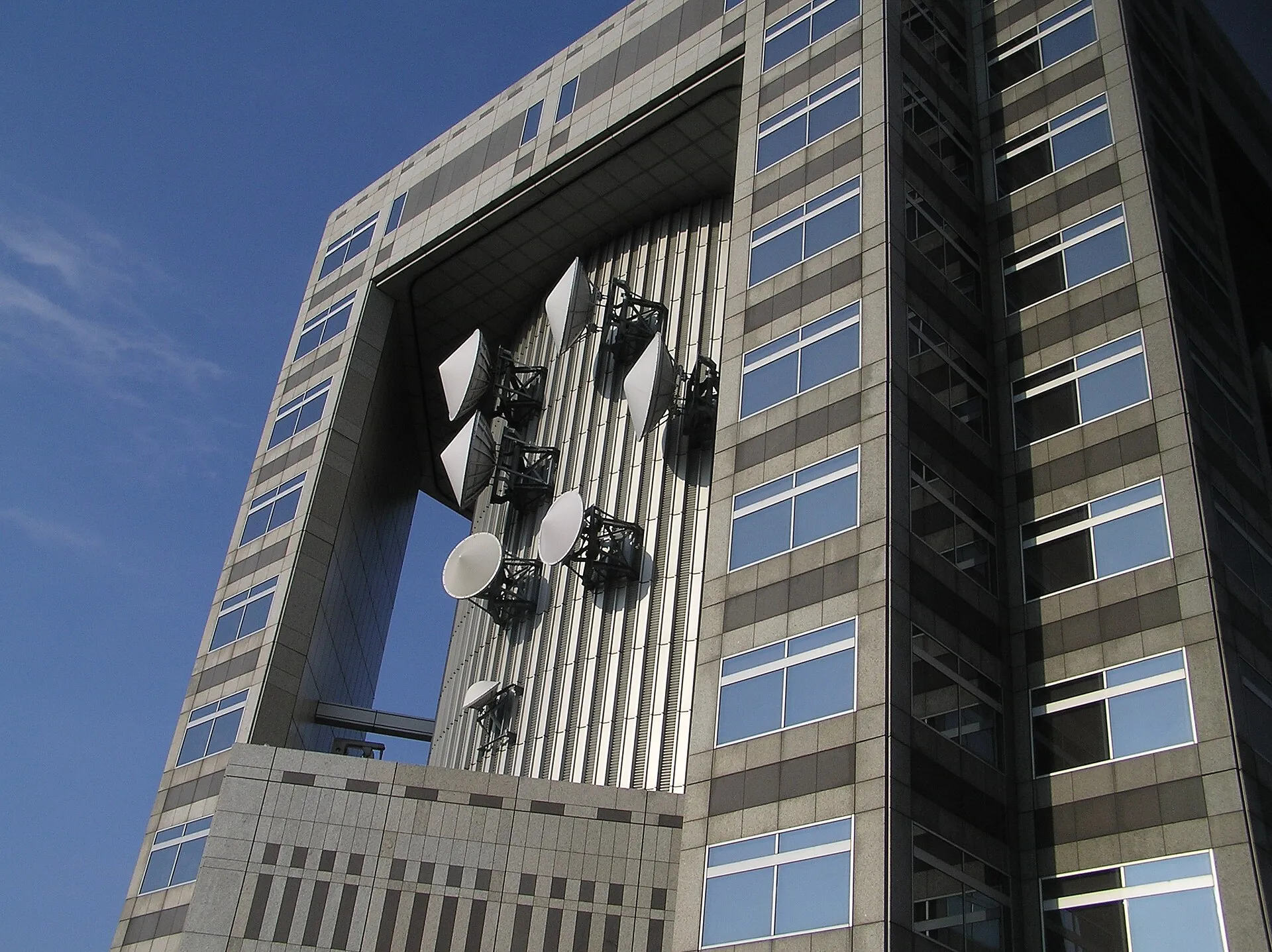
The 243-metre twin towers of the Tokyo Metropolitan Government Building in Shinjuku. Photo: Morio, Wikimedia Commons, CC BY-SA 3.0.
1. Tokyo Metropolitan Government Building Observatories (Shinjuku)
Instead of paying upwards of ¥2,500 to ¥3,500 for commercial viewing decks like Shibuya Sky or Tokyo Skytree, head to the Tokyo Metropolitan Government Building (Tocho) in Nishi-Shinjuku.
Designed by architect Kenzo Tange, the 243-metre municipal headquarters features two observation decks on the 45th floor at an altitude of 202 metres. The South Observatory is open to the public free of charge daily from 9:30 to 22:00 (last entry at 21:30). High-speed express lifts transport visitors from the ground floor in under a minute. The panoramic windows look across Shinjuku’s skyscraper district, east toward Tokyo Tower and the Skytree, and west toward Mount Fuji on clear autumn and winter days.
In the evening, the outdoor citizen’s plaza between the towers hosts TOKYO Night & Light, the world’s largest permanent projection mapping display, illuminating the 127-metre granite facade of Main Building No. 1 with animated light shows every 30 minutes from 19:00 to 21:30. Check official deck schedules on the Tokyo Metropolitan Government visitor page.
2. Senso-ji and Asakusa Shrine
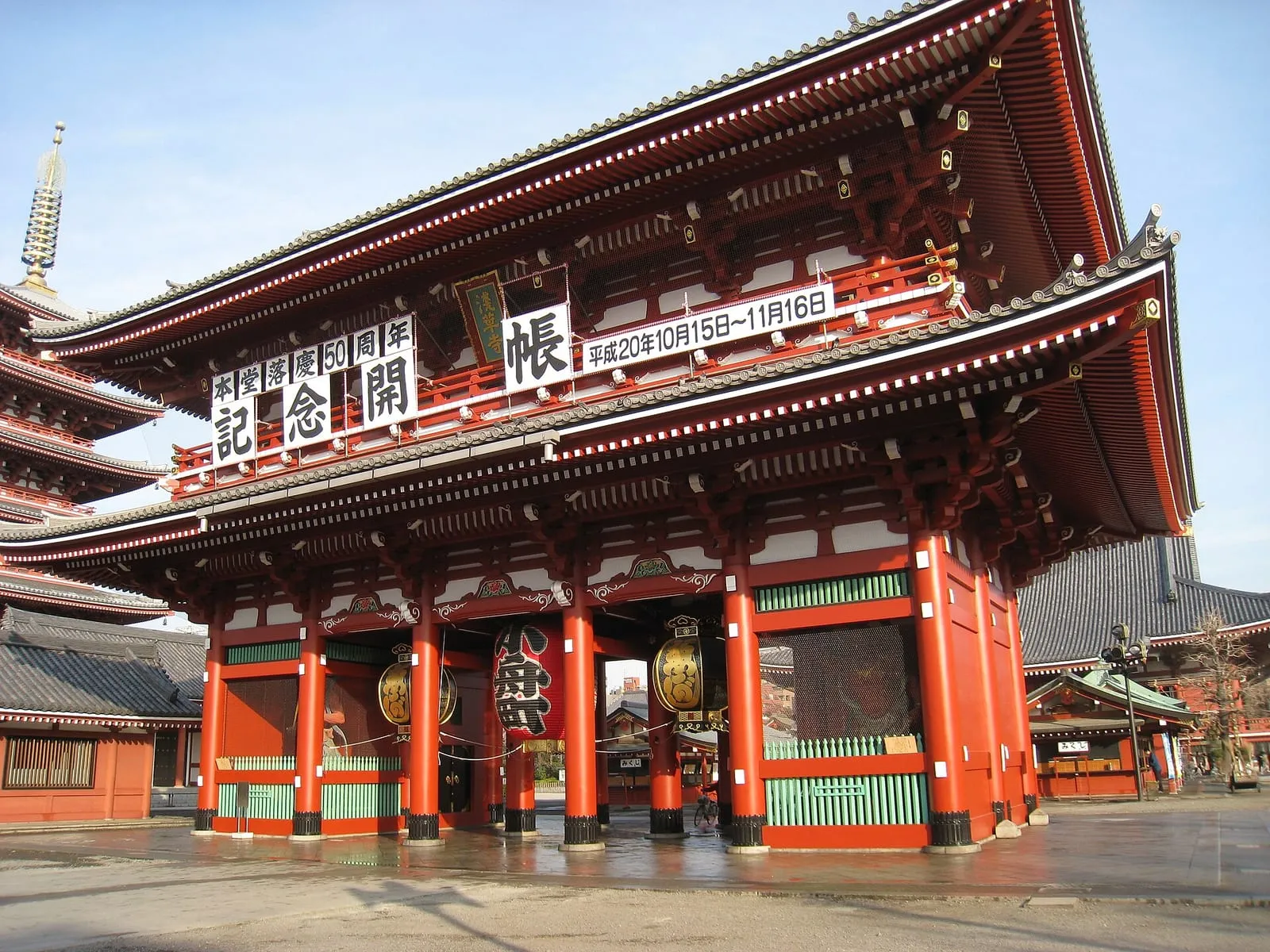
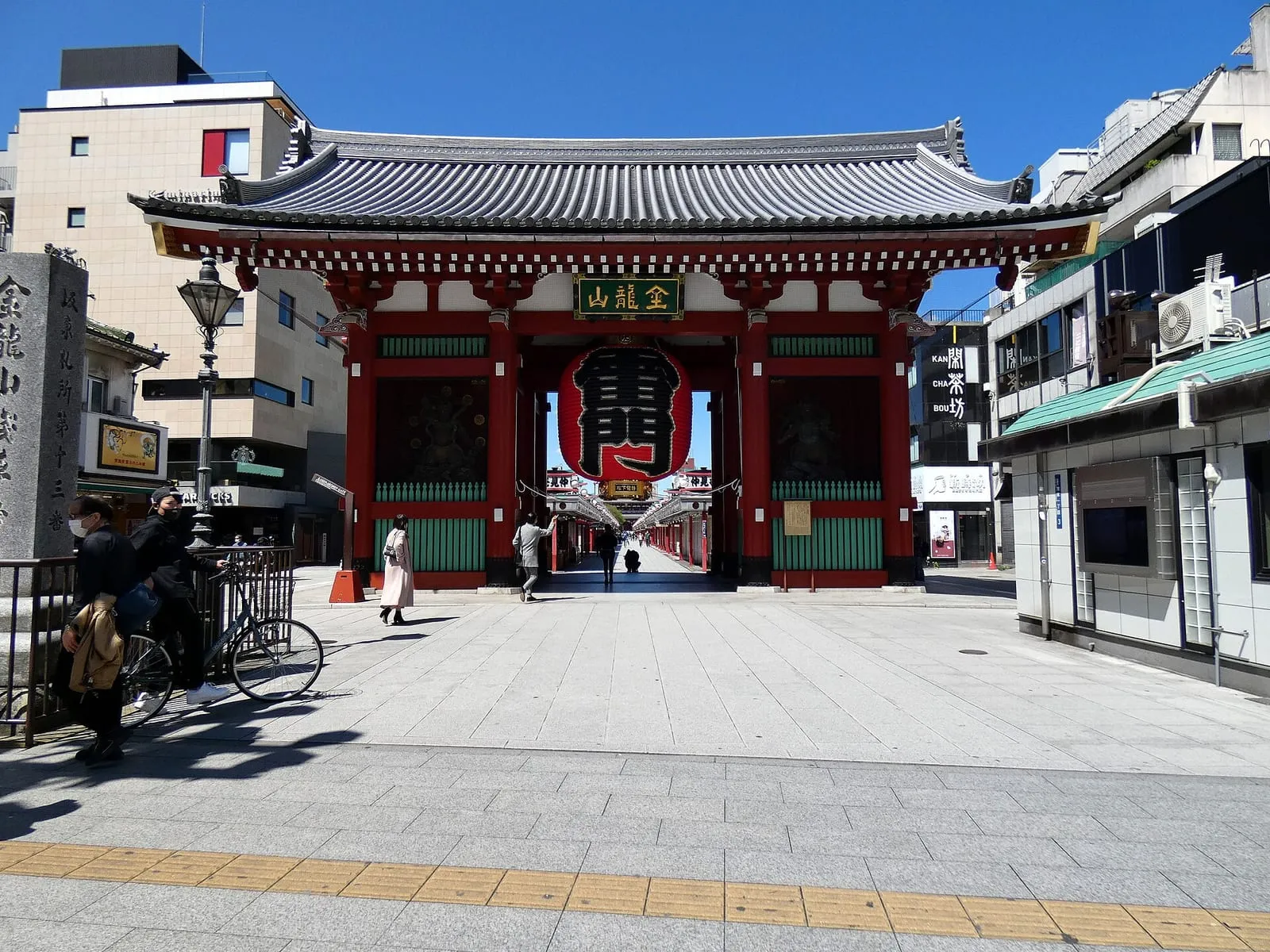
Tokyo’s oldest and most venerated Buddhist temple, Senso-ji was founded in 628 AD after two local fishermen pulled a golden statuette of Kannon, the Bodhisattva of Compassion, from the Sumida River. Admission to the temple precinct, the colossal Kaminarimon (Thunder Gate), the 250-metre Nakamise-dori market street, and the inner Kannondo prayer hall is entirely free.
The main hall is open from 6:00 to 17:00 (from 6:30 between October and March), but because the exterior perimeter gates never close, visitors can stroll through the atmospheric, lantern-lit grounds at dawn or late in the evening without crowds. Directly adjacent stands Asakusa Shrine, an authentic Edo-period Shinto shrine dating from 1649 that miraculously survived wartime bombing. Read our comprehensive Senso-ji and Asakusa guide for festival timetables and ritual etiquette.
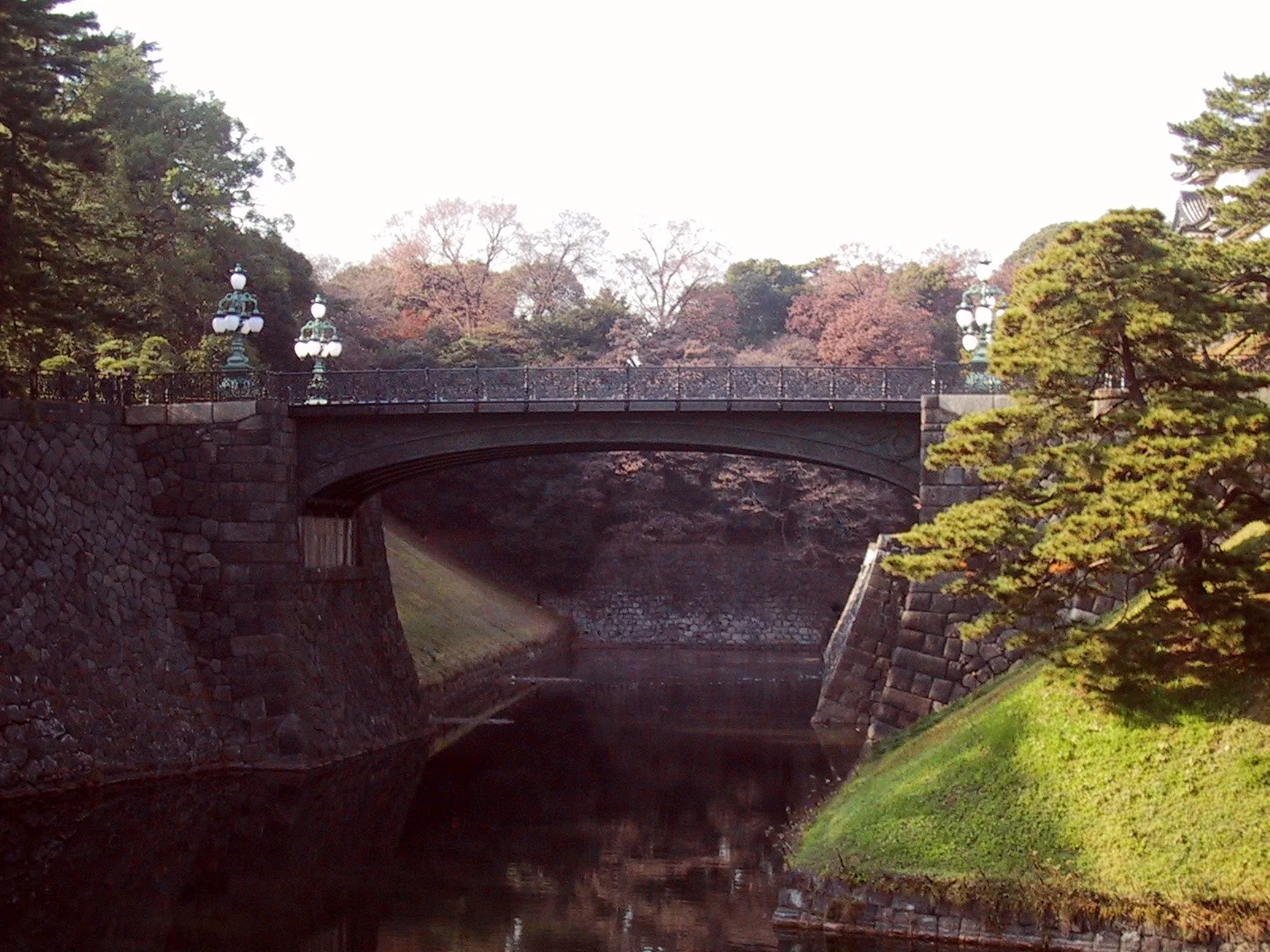
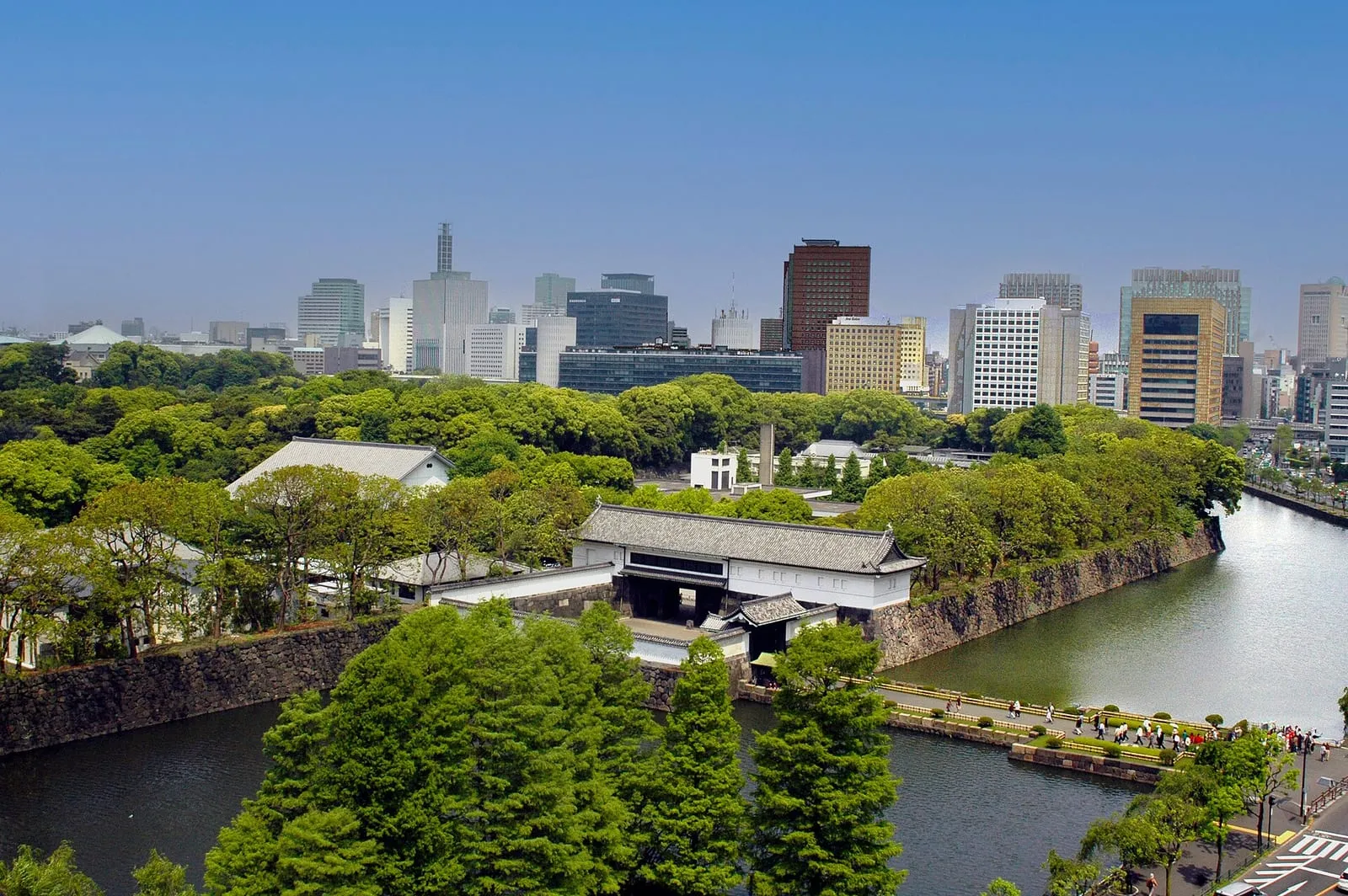
The stone Nijubashi bridge crossing the inner moat at the Tokyo Imperial Palace. Photo: Chris 73, Wikimedia Commons, CC BY-SA 3.0.
3. Imperial Palace East Gardens and Nijubashi
Occupying 52 lush hectares on the former site of Edo Castle’s innermost citadels (Honmaru and Ninomaru), the Imperial Palace East Gardens (Kokyo Higashi Gyoen) are completely free to enter.
Visitors collect a plastic entry token at any of the three security gates (Ote-mon, Hirakawa-mon, or Kitahanebashi-mon) following a brief security bag inspection. Highlights include the massive stone foundation of the Edo Castle Keep (Tenshudai), which was the tallest wooden castle tower in Japanese history before burning down in the Great Fire of Meireki in 1657; the preserved Fujimi-yagura defensive guard tower; and the Ninomaru Garden, a tranquil Edo-style stroll garden featuring a pond stocked with colourful Nishikigoi carp and an iris garden with dozens of traditional cultivars.
The gardens are open Tuesday through Thursday, Saturday, and Sunday from 9:00 to 16:00 (winter) or 17:00 (summer). They are closed on Mondays and Fridays (unless a national holiday falls on that day, in which case they close on Tuesday). Detailed seasonal hours and walking maps are provided in our Imperial Palace East Gardens guide. Just south of the gardens, the gravel plaza of Kokyo Gaien provides free, postcard-worthy views of the stone double-arch Nijubashi Bridge framing the imperial palace moats.
4. Meiji Jingu Shrine and Yoyogi Park
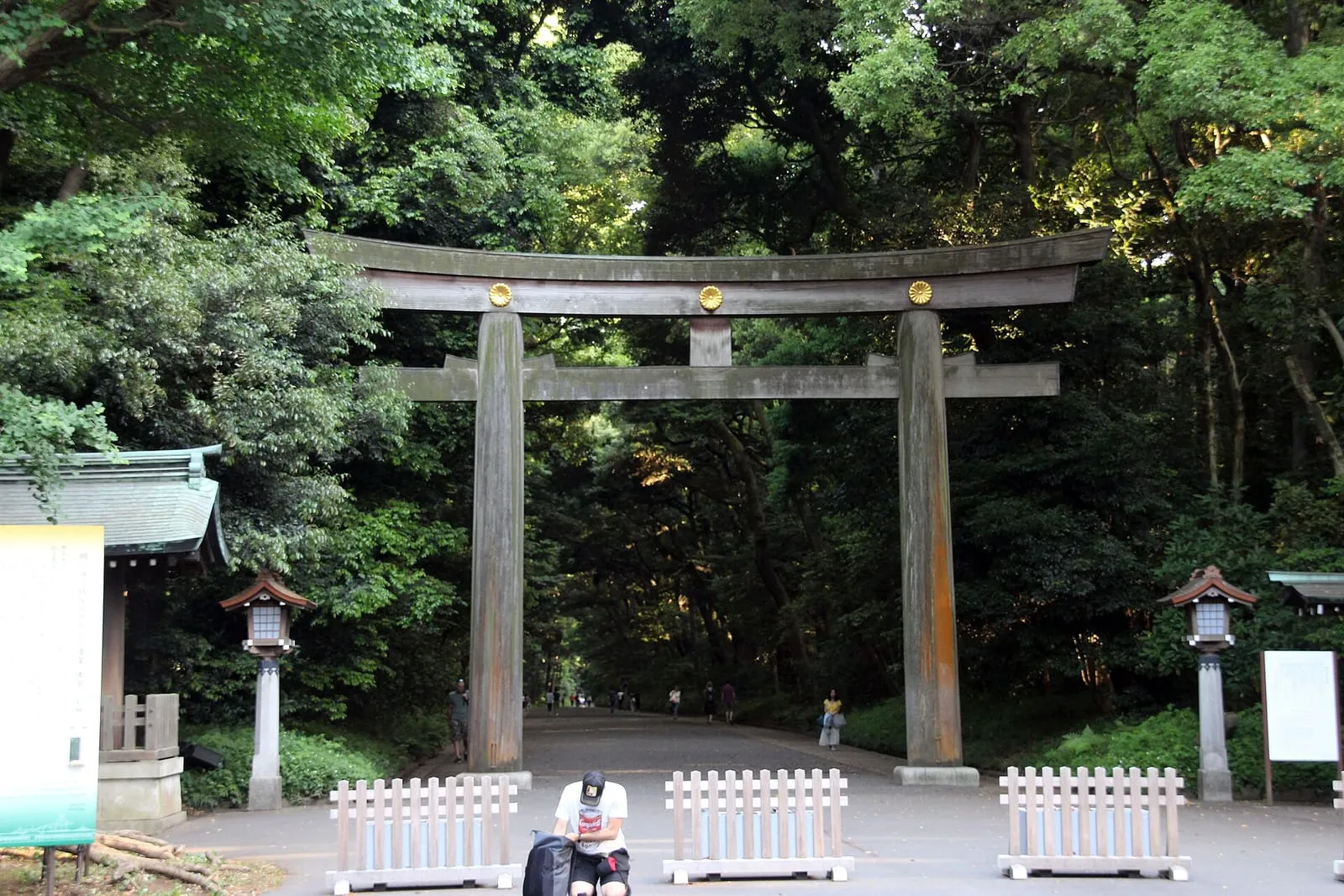
Dedicated to Emperor Meiji and Empress Shoken, who oversaw Japan’s transformation from an isolated feudal state into a modern nation in the late 19th century, Meiji Jingu is Tokyo’s grandest Shinto shrine.
Admission is completely free. The shrine complex stands inside a 170-acre man-made sacred forest comprising over 100,000 trees donated and planted by citizens from across Japan during its construction in 1920. Walking along the wide, crushed-gravel approach paths beneath towering 12-metre cypress torii gates provides a serene retreat from the dense shopping streets of neighbouring Harajuku. The shrine gates open daily at sunrise and close at sunset (from roughly 5:00 to 18:00 in midsummer, and 6:00 to 16:30 in midwinter); verify exact monthly solar hours in our Meiji Jingu guide.
Directly bordering the shrine grounds is Yoyogi Park, one of Tokyo’s largest municipal green spaces. Entry is free daily. On Sunday afternoons, the park’s eastern paved plaza near Harajuku Station becomes a cultural hub where retro rockabilly dance troupes with greased pompadours and leather jackets perform vintage American rock-and-roll routines to loudspeaker boomboxes.
5. Free elevated views of Shibuya Crossing
While walking across the world’s busiest pedestrian intersection is free of charge, the bird’s-eye perspective is what makes Shibuya Scramble celebrated. You do not need to purchase a ticket to Shibuya Sky to enjoy an elevated view:
- Shibuya Mark City 2F Walkway: A free indoor glass pedestrian corridor connecting the Tamagawa exit of JR Shibuya Station to Shibuya Mark City. Large floor-to-ceiling windows look directly across the scramble crossing from second-storey height. The skybridge also houses Taro Okamoto’s 30-metre masterpiece mural, The Myth of Tomorrow.
- Shibuya Hikarie Sky Lobby (11th floor): Located directly opposite the station, this peaceful public atrium offers panoramic glass windows looking west across Shibuya’s rail viaducts and intersection, complete with quiet lounge seating.
- Full details on navigating Shibuya’s viewpoints and finding the faithful Hachiko dog statue are detailed in our Shibuya Crossing guide.
6. Secret free observation decks across Tokyo
Beyond Shinjuku’s municipal towers, Tokyo is dotted with lesser-known civic and commercial high-rises that welcome visitors to complimentary public observation lounges:
- Bunkyo Civic Center (25th Floor Sky View): Located directly north of Tokyo Dome near Korakuen Station. The observation lounge at 105 metres has outward-angled glare-free glass windows providing an unobstructed vista looking southwest, aligning the skyscrapers of Shinjuku directly in front of Mount Fuji on crisp mornings. Open daily 9:00 to 20:30; free admission.
- Caretta Shiodome (Sky View 46th & 47th Floors): Take the free high-speed glass elevator from the ground level to the restaurant floors at 200 metres for sweeping views over Tokyo Bay, Hamarikyu Gardens, Tsukiji, and the Rainbow Bridge. Open daily 11:00 to 23:00; free access.
- Ebisu Garden Place Tower (38th & 39th Floors): Features a dedicated public viewing gallery called Top of Yebisu, offering southern skyline views across Roppongi, Tokyo Tower, and Shinagawa. Open daily 11:00 to 23:00; free admission.
- Carrot Tower (Sangenjaya, 26th Floor): Located just two stops from Shibuya on the Tokyu Den-en-toshi Line, this civic tower offers a quiet 120-metre viewing deck over western Tokyo residential districts toward Mount Fuji. Open 9:30 to 23:00; free admission.
7. Free museum dates and contemporary art galleries
While most major Tokyo museums charge admission (typically ¥1,000 to ¥2,200), smart timing allows free entry to prestigious cultural collections:
- Tokyo National Museum (Ueno Park): General collection galleries in the Honkan, Heiseikan, and Toyokan wings are free to enter on Culture Day (3 November), International Museum Day (18 May), and Respect for the Aged Day (third Monday of September). Admission is permanently free year-round for visitors under 18 and seniors aged 70 or older (bring a valid passport as proof of age); see Tokyo museums for exhibition details.
- Bank of Japan Currency Museum (Nihonbashi): Situated directly opposite the historic Bank of Japan headquarters, this immaculately curated museum showcases the history of Japanese currency from ancient gold oban and Edo-period paper scrip to modern banknotes. Open Tuesday to Sunday 9:30 to 16:30; admission is completely free (Currency Museum official site).
- Advertising Museum Tokyo (Caretta Shiodome): The only museum in Japan dedicated to advertising, featuring Edo-era woodblock flyers (nishiki-e) through modern television and poster campaigns. Open Tuesday to Saturday 12:00 to 18:00; admission is free.
- Ginza Art Galleries: High-end commercial galleries in Ginza host major contemporary art exhibitions open to the public without admission fees, including Maison Hermes Le Forum (8th floor of the Renzo Piano glass-brick tower), the Shiseido Gallery (underground since 1919, Tokyo’s oldest corporate art space), and the POLA Museum Annex.
Independent exploration vs low-cost guided walks
While Tokyo’s premier historic sights charge no admission fee, navigating their complex samurai and imperial history independently means relying on concise public plaques. Affordable local walking tours provide rich cultural storytelling:
| Feature | Exploring independently | Low-cost guided tour |
|---|---|---|
| Admission fee | ¥0 | ¥0 (sight entry is free) |
| Tour cost | ¥0 | From ¥1,000 to ¥2,000 per person |
| Historical commentary | Limited to mobile reading and signs | Live English commentary on shogunal politics, samurai codes, and Shinto customs |
| Navigation | Self-guided via Google Maps | Effortless route navigation connecting gates, bridges, and hidden relics |
| Group size | Your own party | Small group (typically 10 to 15 people) |
Top-rated affordable walking tours
If you want an expert local guide to bring Tokyo’s free landmarks to life without breaking your budget, these guided walks offer outstanding value:
Imperial Palace and Shogun Walking Tour
From ¥1,000 · 4.8 stars from 2,486 reviews · 2 hours · Instant confirmation
Tokyo: Imperial Palace and Shogun Walking Tourad is Tokyo’s best-value guided cultural walk. Meeting outside Tokyo Station, the licensed guide leads participants through the outer palace plazas, explains the structural engineering of the moats and stone walls, navigates the security checkpoint into the East Gardens, and recounts the rise and fall of the Tokugawa shoguns at the castle keep foundation.
Asakusa and Sensoji Walking Tour
From ¥2,000 · 4.9 stars from 1,055 reviews · 2 hours · Mobile voucher
Tokyo: Asakusa and Sensoji Walking Tourad provides an engaging, budget-friendly overview of Senso-ji and the Asakusa shitamachi district. The guide unpacks the 7th-century Kannon miracle, explains how to pray at Buddhist and Shinto sanctuaries, and samples traditional snacks along Nakamise-dori.
Imperial Palace A Walk Through Japanese History
From ¥6,000 · 4.9 stars from 1,964 reviews · 2 hours · Small-group tour
Tokyo: Imperial Palace A Walk Through Japanese Historyad offers deep historical analysis of Edo Castle’s transformation into the modern Imperial Palace, exploring architectural details, samurai clan alliances, and the botanical history of the Ninomaru stroll garden.
How to connect Tokyo’s free sights
You can easily link Tokyo’s major free sights into logical full-day walking itineraries:
- East Tokyo Heritage Day: Combine Senso-ji, the Kappabashi kitchen district, Ueno Park, and the Yanaka historical quarter using our curated Asakusa, Ueno and Yanaka walk.
- Imperial & Central Tokyo: Spend the morning exploring the Imperial Palace East Gardens and Kokyo Gaien before walking south to browse the free morning food stalls at the Tsukiji outer market.
- West Tokyo Highlights: Spend the morning wandering the tranquil forests of Meiji Jingu, stroll down Harajuku’s Cat Street to watch the action at Shibuya Crossing, and conclude at dusk on the 45th-floor free observation deck during our Shinjuku night walk.
- Complete Route Planning: These free landmarks form the backbone of Day 1 and Day 2 in our 3 days in Tokyo itinerary and feature heavily throughout our Tokyo in one or two days and 5 days in Tokyo guides. Consult the Tokyo hub for full transit connections and neighbourhood planning.
Common questions
What can you do in Tokyo for free?
Visit ancient Buddhist temples like Senso-ji, Shinto shrines including Meiji Jingu, stroll the Imperial Palace East Gardens, take in 202m panoramic skyline views from the Tokyo Metropolitan Government Building in Shinjuku, and watch the Shibuya Scramble Crossing from elevated walkways.
Is there a free observation deck in Tokyo?
Yes. The Tokyo Metropolitan Government Building in Shinjuku has free 45th-floor observation decks open until 22:00. The Bunkyo Civic Center (25th floor) and Caretta Shiodome (46th floor) also provide free public viewing decks.
When are the Imperial Palace East Gardens open and free to enter?
Admission is always free. The gardens are open Tuesday through Thursday, Saturday, and Sunday from 9:00, but are strictly closed on Mondays and Fridays, as well as 28 December through 3 January.
When is the Tokyo National Museum free to visit?
General collection galleries are free on Culture Day (3 November 2026), International Museum Day (18 May), and Respect for the Aged Day (third Monday of September), and always free for visitors under 18 and seniors aged 70 or over.