In this guide
💡 The Short Version: Respecting local customs and municipal ordinances ensures a smooth and welcome reception in Kyoto. Obey the strict ¥10,000 photography fine and alleyway entry restrictions in Gion, always wear clean socks when removing shoes at temples, and never eat or drink while walking down crowded market lanes. Or book a tour: the Gion Magical Night Walking Tourad guides you safely through historic preservation quarters without accidentally breaching local etiquette.
Kyoto takes immense pride in its 1,200-year heritage as Japan’s imperial capital. Because ancient wooden temples, delicate moss gardens, and active geiko communities sit alongside modern residential neighbourhoods, visitors are expected to observe traditional manners alongside recent municipal regulations enacted to curb overtourism.
Understanding the logic behind Japanese social customs—based on mutual consideration, spatial purity, and respect for craftsmen—transforms potential cultural missteps into moments of meaningful appreciation.
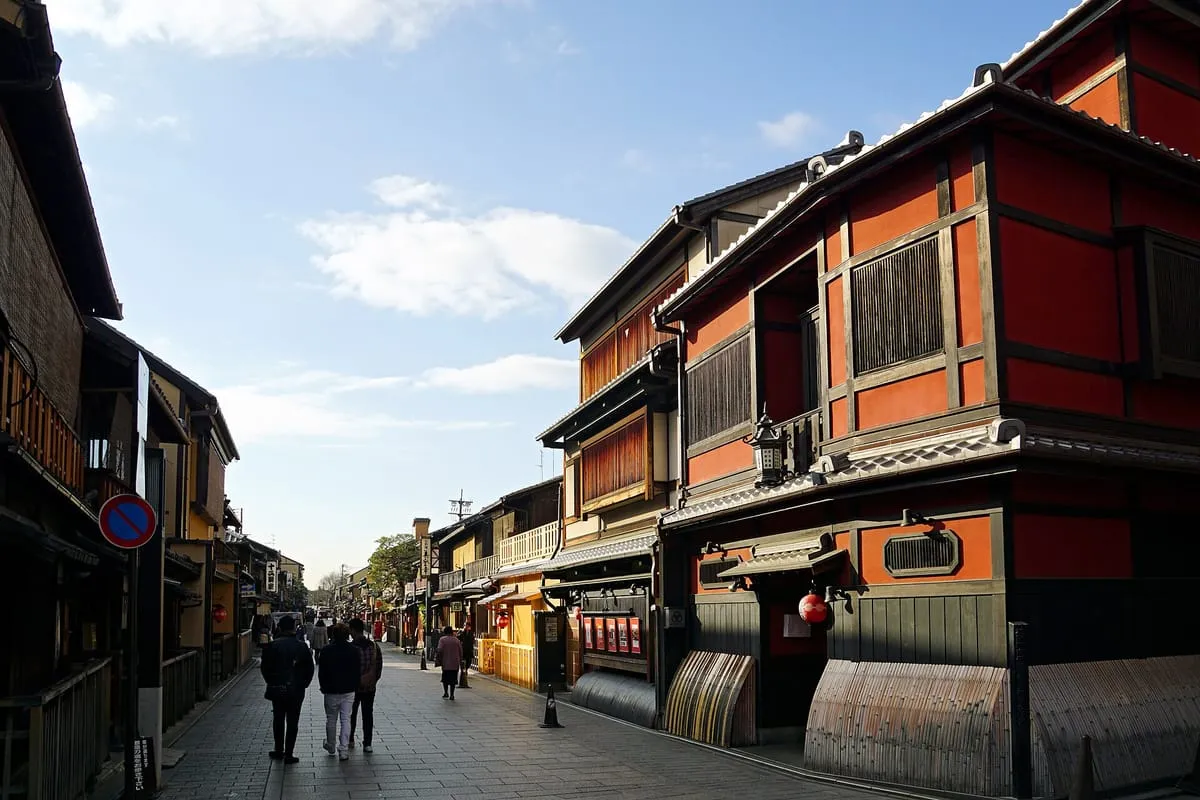 A preserved stone-paved street flanked by traditional timber machiya townhouses in Gion. Photo: 663highland, Wikimedia Commons, CC BY 2.5.
Kyoto Etiquette Quick Reference
| Situation | Required behaviour | What to avoid | Official rule / Penalty |
|---|---|---|---|
| Gion private alleys | Stay on public roads (Shijo, main Hanami-koji) | Entering private residential side streets (shido) | Banned by local residents’ council; ¥10,000 fine for photos |
| Seeing Geiko or Maiko | Step aside, grant clear passage | Blocking path, touching silk kimonos, asking for selfies | Harassment strictly prohibited |
| Shinto Shrines | Bow twice, clap hands twice, pray, bow once | Clapping at Buddhist temples | Sacred purification etiquette |
| Buddhist Temples | Bow silently with hands pressed flat (gassho) | Clapping hands or making loud noise | Contemplative Buddhist reverence |
| Tatami rooms & temples | Remove shoes; wear clean socks | Bare feet on tatami; stepping on fabric borders (heri) | Cultural taboo; damages woven rush mats |
| Street food & markets | Eat standing beside the vendor’s stall | Walking while eating (tabearuki); littering | Strictly enforced by Nishiki Market Association |
| Kyoto City Buses | Use subways/trains if carrying large suitcases | Boarding buses with luggage over 160 cm linear dimensions | Suitcase restriction policy enacted late 2023 |
| Smoking on streets | Smoke only inside enclosed designated kiosks | Walking while smoking; tossing cigarette butts | City-wide street smoking ban; ¥1,000 on-the-spot fine |
1. Gion photography rules and private alley restrictions
Preserving the dignity of working artists (geiko and apprentice maiko) and residents in Gion is enforced by the Gion South Side District Council (Gion Shinbashi-dori Machizukuri Kyogikai) and Kyoto municipal police:
- Private alley bans: In spring 2024, the local council intensified restrictions by completely closing private residential side streets (shido) off southern Hanami-koji to non-resident tourists. Clear red warning signs reading “Private Road / Do Not Enter” are mounted at the entrances. Visitors must remain on public roads such as Shijo-dori, main Hanami-koji, and the Shirakawa canal promenade.
- The ¥10,000 photography fine: Taking photos or video on designated private residential streets in Gion is prohibited by local ordinance and carries an immediate fine of up to ¥10,000. Photography on public streets is permitted, but you must never point long telephoto lenses into private homes or ochaya teahouse windows.
- Never obstruct working performers: When a maiko or geiko emerges from an ochaya to travel to an evening appointment (ozashiki), step aside immediately. Never touch their expensive hand-painted silk kimonos, never block their walking path for selfies, and never call out or pursue them down the street.
- Do not lean on timber lattice (Koshi): The dark wooden lattice screens fronting traditional machiya townhouses are delicate, historic wooden craftworks. Never lean against the woodwork, do not place heavy daypacks or camera tripods against exterior walls, and never sit on stone residential entry steps.
2. Temple and Shrine manners
Travellers frequently confuse Japan’s two primary religions: Shinto, Japan’s indigenous nature-worship faith centred on shrines (jinja), and Buddhism, which arrived from mainland Asia in the 6th century centred on temples (tera or ji). Each has distinct architectural boundaries and devotional rituals.
The Chozu-ya water purification ritual
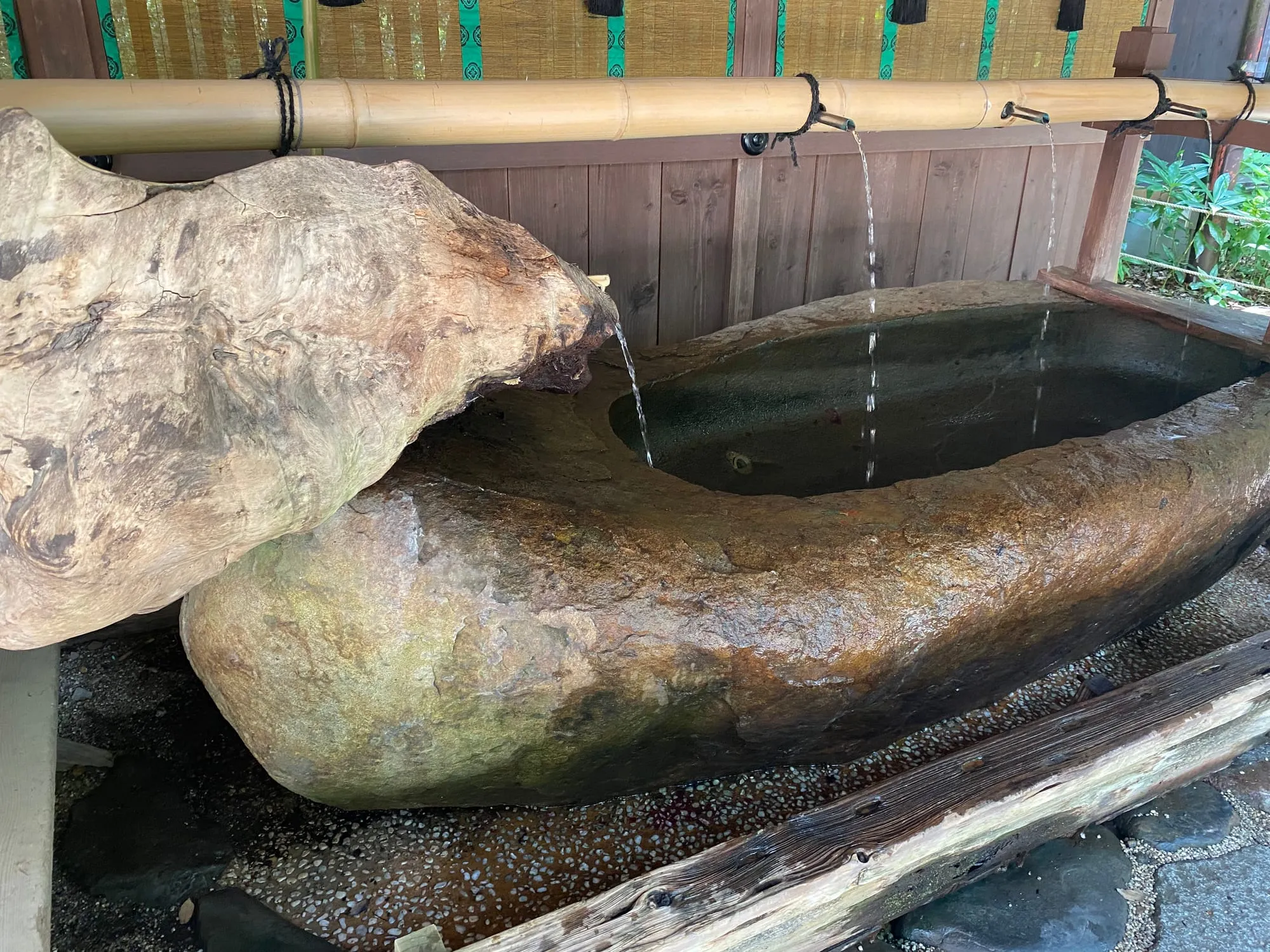
Before approaching a Shinto shrine sanctuary or major Buddhist hall, purify your hands and spirit at the stone water basin (chozu-ya):
- Take the wooden water ladle in your right hand, fill it from the running spout, and pour water over your left hand to rinse it.
- Switch hands and rinse your right hand.
- Switch back to your right hand, cup water in your left palm, and bring it to your mouth to rinse discreetly (never drink directly from the communal ladle, and spit water gently into the drainage trough beside the stone basin).
- Tilt the ladle vertically so the remaining water trickles down the handle to clean it for the next visitor, and place it face down on the rack.
How to pray: Shrine vs Temple
- At a Shinto Shrine (e.g. Fushimi Inari, Yasaka Shrine):
- Approach the altar offering box (saisen-bako).
- Toss a coin gently into the box. A 5-yen coin (go-en) is traditionally preferred because go-en is a homophone for good fortune and meaningful connections.
- Ring the hanging bell once if one is present.
- Bow deeply twice (at roughly a 90-degree angle).
- Clap your hands firmly twice at chest level, slide your right fingers slightly down your left hand, and hold your hands together in silent prayer.
- Finish with one final deep bow.
- At a Buddhist Temple (e.g. Kiyomizu-dera, Kinkaku-ji):
- Toss your coin into the wooden offering box.
- If an incense burner (jokoro) is present, purchase an incense bundle (¥100), light it, place it in the sand, and gently waft the aromatic smoke toward your head or limbs with your hands for physical and spiritual blessing.
- Bow your head silently with palms pressed flat together against your chest (gassho). Make your prayer in complete silence.
- Never clap at a Buddhist temple. Clapping is strictly a Shinto ritual.
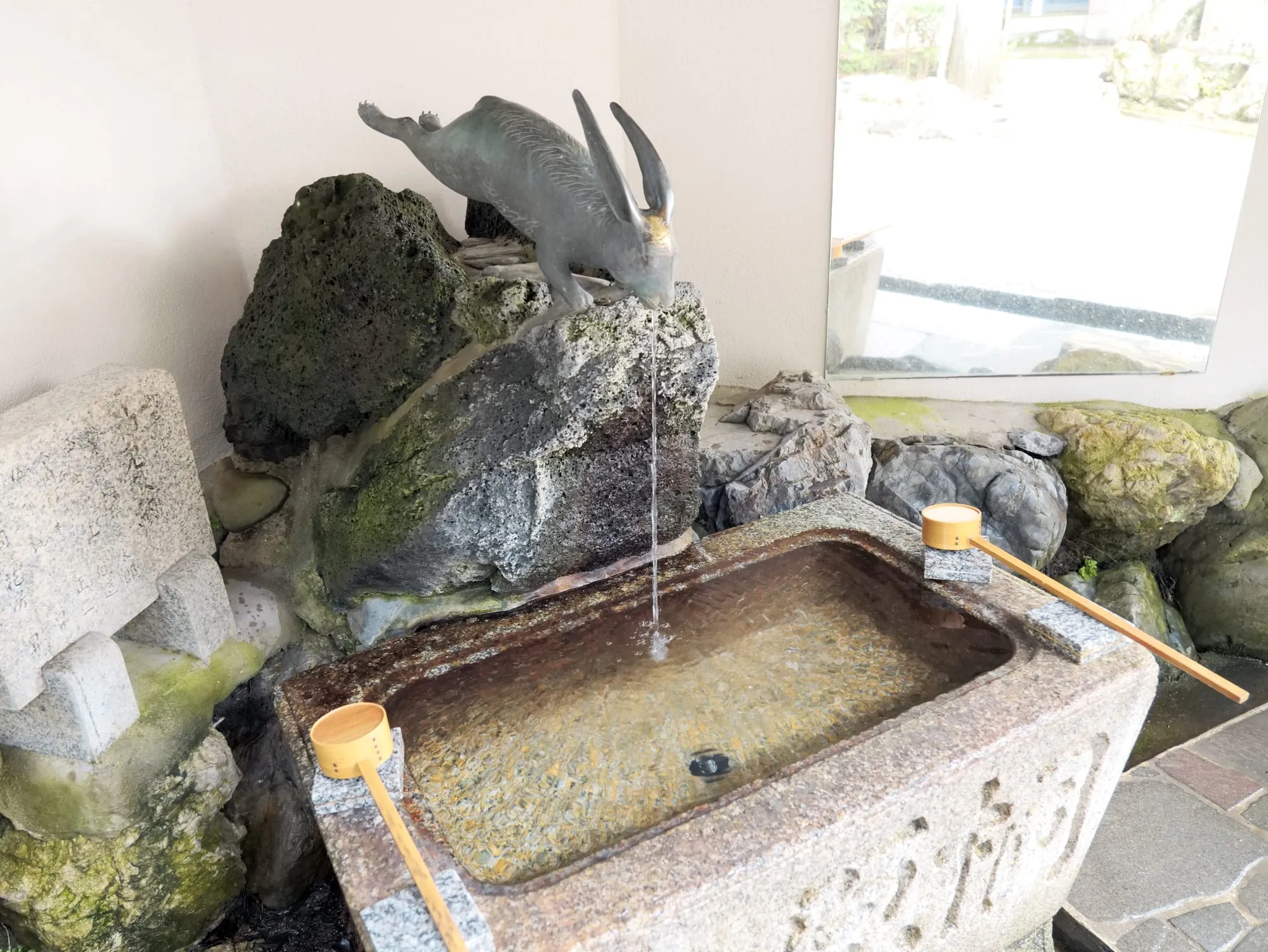
A water basin at Ujigami Shrine. Photo: Hyppolyte de Saint-Rambert, Wikimedia Commons, CC BY 4.0.
3. Shoe etiquette and tatami mat rules
Removing outdoor footwear before entering private or sacred spaces is one of Japan’s most deeply rooted cultural customs:
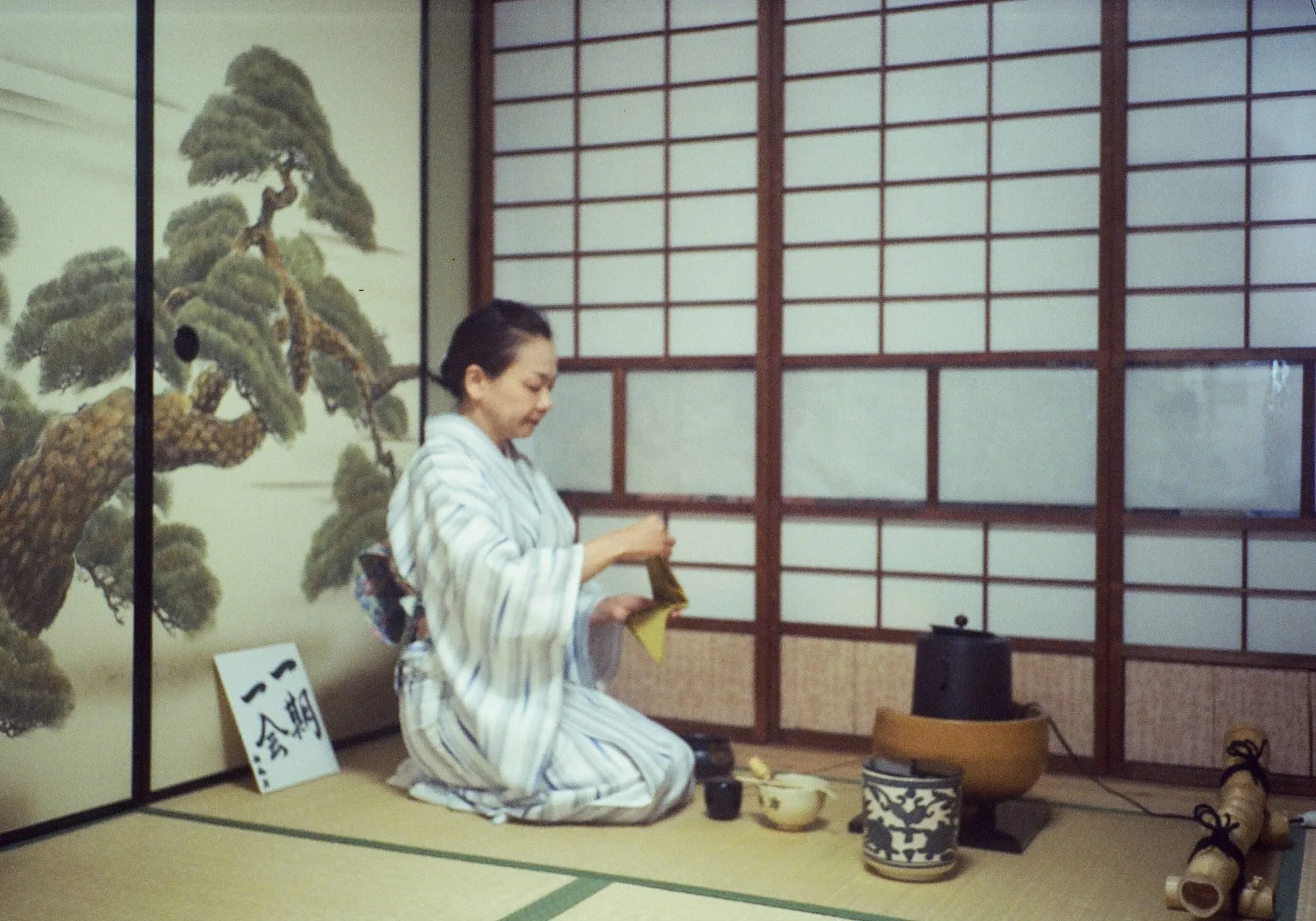
- Where to remove shoes: At temple main halls, historic castle palaces like Nijo Castle, traditional ryokan inns, and tearooms for a tea ceremony. You will see a raised wooden floor (agari-kamachi) separated from the stone or concrete entrance foyer (genkan).
- How to arrange your shoes: Step out of your shoes directly onto the raised wooden platform without letting your socks touch the lower concrete floor. Turn your shoes around by hand so the toes point toward the outside door, and place them into the provided wooden shoe shelves (getabako).
- Socks are strictly mandatory: Walking barefoot on woven rush tatami straw mats is a severe cultural transgression. Human skin oils degrade the delicate natural rush fibers. Always wear or carry a clean pair of socks when touring Kyoto.
- Do not step on borders or thresholds: Never step on the raised wooden threshold (shikii) between sliding doors, as this warps the delicate tracks. On tatami mats, avoid stepping directly on the cloth borders (heri); historically, samurai family crests were woven into these borders, and stepping on them was viewed as an insult.
4. Street food, rubbish and public transit
- No eating while walking (Tabearuki): Walking through streets or covered shopping arcades while holding open food skewers, ice cream cones, or drink cups is considered unrefined. In 2019, the Nishiki Market Association formally banned walking while eating to avoid sauce stains on other pedestrians and goods. Finish your snack in front of the vendor’s counter or inside their designated standing area, and hand your rubbish back to the seller.
- Carry your rubbish home: Public rubbish bins were removed across Japan following the 1995 Tokyo subway attacks. Always carry a small plastic bag in your daypack to hold empty drink bottles and wrappers until you return to your hotel room.
- Luggage restrictions on city buses: Because municipal buses suffer severe crowding, Kyoto City restricts passengers from bringing large suitcases (exceeding 160 cm linear dimensions) onto buses. Use the subway, JR trains, or book luggage delivery services (Takkyubin).
- Transit manners: Switch mobile phones to silent (manner mode) and refrain from making voice phone calls on trains and buses. On crowded carriages, carry your backpack on your chest or place it on the overhead luggage rack to avoid bumping seated passengers.
- Designated smoking zones: Smoking while walking is banned across central Kyoto to protect children and prevent burn accidents. Street smoking carries an on-the-spot fine of ¥1,000. Smoke only inside enclosed designated smoking kiosks.
Learn how to navigate transit efficiently in our public transport guide, or plan your days with our 3 days in Kyoto itinerary.
Common questions
What is the penalty for taking photos in Gion?
Photography is banned on private side streets and alleys in Gion, marked with clear warning signs. Violations carry local fines of up to 10,000 yen.
When do I need to take off my shoes in Kyoto?
Remove shoes when entering temple main halls, traditional ryokans, tearooms, and any room with tatami straw matting. Look for a raised wooden step and shoe cubbies.
How do you pray at a Shinto shrine versus a Buddhist temple?
At a Shinto shrine: bow twice, clap your hands twice, pray silently, then bow once. At a Buddhist temple: bow your head silently with hands pressed together (gassho); do not clap.