In this guide
💡 The Short Version: Our judgement, not a ranking: pick Vienna for three days of Habsburg palaces (Schönbrunn at €42), major art galleries (Kunsthistorisches Museum at €22 online, Upper Belvedere at €23), classical music and coffee houses. Pick Budapest for three days built around thermal baths (Széchenyi from 13,200 HUF on weekdays, Dandár from 3,500 HUF), the Hungarian Parliament (14,000 HUF for non-EEA visitors, booked online only), Danube evening cruises and District VII ruin bars. Hungary sits at 71.8 against Austria’s 110.0 on Eurostat’s 2024 price level index (EU27 = 100). With five to seven days, do both: RegioJet links the two capitals in 2 hours 24 minutes from €9, and ÖBB railjets run roughly hourly in 2 hours 39 to 58 minutes. Or book a tour: the Schönbrunn Palace and gardens tourad is from €57 in Vienna, and the 3-hour Buda and Pest orientation walkad is from €35 in Budapest (GetYourGuide).
⚠️ Book Budapest’s Parliament and Vienna’s timed museum slots early, and carry a passport between them. Budapest’s Hungarian Parliament sells advance tickets online only (at jegymester.hu; 14,000 HUF for non-EEA visitors), and Gellért Thermal Bath is closed until a planned 2028 reopening. In Vienna, Schönbrunn, the Kunsthistorisches Museum, the Imperial Treasury and the Upper Belvedere all require timed slots, and the S-Bahn trunk line is closed until the end of October 2027, turning the airport CAT into a bus. Austria enforces border checks on the Hungarian border until 15 March 2027.
Vienna and Budapest side by side
Prices are each operator’s adult rate in local currency: euros (€) in Vienna and Hungarian forints (HUF) in Budapest. Each row links to the city’s own guide for the full detail.
| Vienna | Budapest | |
|---|---|---|
| What to book & advance window | Schönbrunn Palace €42 Palace Ticket, fixed slot; Kunsthistorisches Museum €22 online, timed slot; Imperial Treasury €16 online; Upper Belvedere €23; Spanish Riding School opens 12 months ahead; State Opera standing €13–€18 on the day only | Hungarian Parliament 14,000 HUF non-EEA (7,000 HUF EEA), advance tickets online only; Széchenyi Baths from 13,200 HUF weekday (online 180 days ahead, non-refundable); State Opera tour released 1 week ahead; Dohány Street Synagogue 9,000 HUF; House of Terror 4,000 HUF |
| Closed days | Tuesdays: Imperial Treasury, Leopold Museum, Natural History Museum. Mondays: Belvedere 21, Secession, Prunksaal (Oct–May except Dec 2026). Sundays: shops and Naschmarkt stalls shut | Saturdays: Dohány Street Synagogue. Mondays: House of Terror, Hungarian National Gallery, Buda Castle funicular (odd-numbered weeks only). Sundays: St Stephen’s Basilica opens from 13:00. Gellért Bath closed to 2028 |
| City pass verdict | Vienna City Card (€19/24h, €31/48h, €37/72h) saves only €2–€9 over 72h and loses over 24h; Vienna Pass starts at €109/day and loses on four big sights (€107.90) | Budapest Card (repriced 1 May 2026: 17,990 HUF/24h, 23,990/48h, 29,990/72h) omits Parliament, Széchenyi, House of Terror and Opera; a standard first-timer list costs ~12,000 HUF more with a 72h card. Pays only for Lukács + National Gallery + cruise |
| Public transport | Wiener Linien: single €3.20 (80 min), 24h €9.70, 7-day €25.20 digital / €28.90 paper (no 48h/72h tickets since 1 Jan 2026). U-Bahn runs all night Fri/Sat | BKK: single 500 HUF, 90 min 850 HUF, 24h 2,750 HUF, 72h 5,750 HUF. Contactless works on metro and 100E only. Tram 6 and night buses run all night |
| Airport to centre | Vienna Airport (VIE): ÖBB railjet 15 min or REX 7 20 min to Hauptbahnhof (€5.50); CAT bus to Wien Mitte (21 min, €14.90) until 31 Oct 2027; Airport Bus €11; Taxi 40100 fixed €42 | Budapest Airport (BUD): Bus 100E direct to Deák Ferenc tér in 40 min (2,500 HUF separate ticket); or Bus 200E + metro M3 on an ordinary 850 HUF 90-min ticket |
| Tourist tax & entry rules | Ortstaxe 5% of room rate (excl. VAT/breakfast) to 30 June 2027, rising to 8% from 1 July 2027. Schengen 90/180; EES running in full since 10 Apr 2026; ETIAS not yet required; border checks with Hungary to 15 Mar 2027 | 4% of room rate in most central districts (varies by district); under-18s exempt. Schengen 90/180; EES running in full since 10 Apr 2026; ETIAS not yet required; carry passport across Austrian border |
| Price level & currency | Euro (€). Eurostat 2024 restaurants & hotels index: 110.0 (EU27 = 100) | Hungarian forint (HUF). Eurostat 2024 restaurants & hotels index: 71.8 (EU27 = 100) |
| How many days | 3 to 4 days; see 3 days in Vienna | 3 days; see 3 days in Budapest and Budapest in one day |
| Best day trips | Bratislava (56 min), Wachau Valley (~1 hr), Salzburg (2h 25m), Budapest (2h 24m–2h 58m), Hallstatt | Szentendre (39 min HÉV), Gödöllő, Danube Bend, Eger, Lake Balaton, Vienna & Bratislava |
| Best season & weather | May and September (highs 20.7–21.1 °C); July warmest at 26.4 °C; May wettest at 78.9 mm; Christmas markets from 6 Nov 2026 (most shut 23 Dec) | April–May and September–October; June–Aug highs 26.6–28.6 °C; June wettest at 60.0 mm; Sziget 10–14 Aug 2027; Christmas markets 13 Nov 2026 to 1 Jan 2027 |
On winter markets, both cities open early in November: Vienna’s Schönbrunn and Stephansplatz markets open on 6 November 2026 and Rathausplatz on 13 November, matching Budapest’s free markets at Vörösmarty Square and St Stephen’s Basilica on 13 November 2026. The split comes at Christmas Eve: six of Vienna’s central Christmas markets close on 23 December, whereas Budapest’s markets stay open through 31 December (Vörösmarty) and 1 January 2027 (Basilica).
Entry rules: Both Austria and Hungary sit inside the Schengen Area (90 days in any 180-day period for visa-exempt visitors); the EU Entry/Exit System (EES) has been running in full since 10 April 2026, while ETIAS is not yet required and has no confirmed start date. See the entry tables on the Vienna and Budapest hubs.
Book a tour instead
A guided tour puts a guide and, where noted, entry or river transport in one booking. Prices are GetYourGuide’s lowest “from” rates for one adult in euros.
| City | From | Tour |
|---|---|---|
| Vienna | €57 | Schönbrunn Palace and gardens guided tourad ( from ), 2 hours, palace admission included |
| Vienna | €24 | Vienna city-centre highlights walking tourad ( from ), 2 hours |
| Vienna | €65 | Naschmarkt food tasting tourad ( from ), 2½ hours |
| Vienna to Budapest | €135 | Bratislava and Budapest guided day tripad ( from ), 13 hours, small group |
| Budapest | €35 | 3-hour Buda and Pest orientation walking tourad ( from ) |
| Budapest | €45 | Hungarian Parliament entry ticket with audio guidead ( from ; direct non-EEA ticket is 14,000 HUF without audio guide) |
| Budapest | €39 | Széchenyi Thermal Spa full-day ticketad ( from ) |
| Budapest | €25 | Danube evening cruise with unlimited Prosecco, beer and spritzad ( from ), 75 minutes |
For independent travel between the two cities, the train beats any coach tour on both cost and hours in the city: RegioJet starts at €9 each way versus €135 for a 13-hour coach excursion.
Which city for whom
Each verdict below is grounded in the figures and schedules in the table.
A first visit: Vienna for polished imperial sights, Budapest for river drama and thermal baths
Pick Vienna if your list is furnished imperial palaces, major European painting collections and classical music. The 3 days in Vienna itinerary splits neatly into the Hofburg and Innere Stadt, Schönbrunn and the Kunsthistorisches Museum, and the Belvedere and Prater. Pick Budapest if you want a city defined by geography and evening atmosphere: the Danube splits flat Pest from hilly Buda, Castle Hill and Fisherman’s Bastion (terrace 1,700 HUF, grounds free) face the lit Parliament across the water, and half a day belongs to the thermal baths.
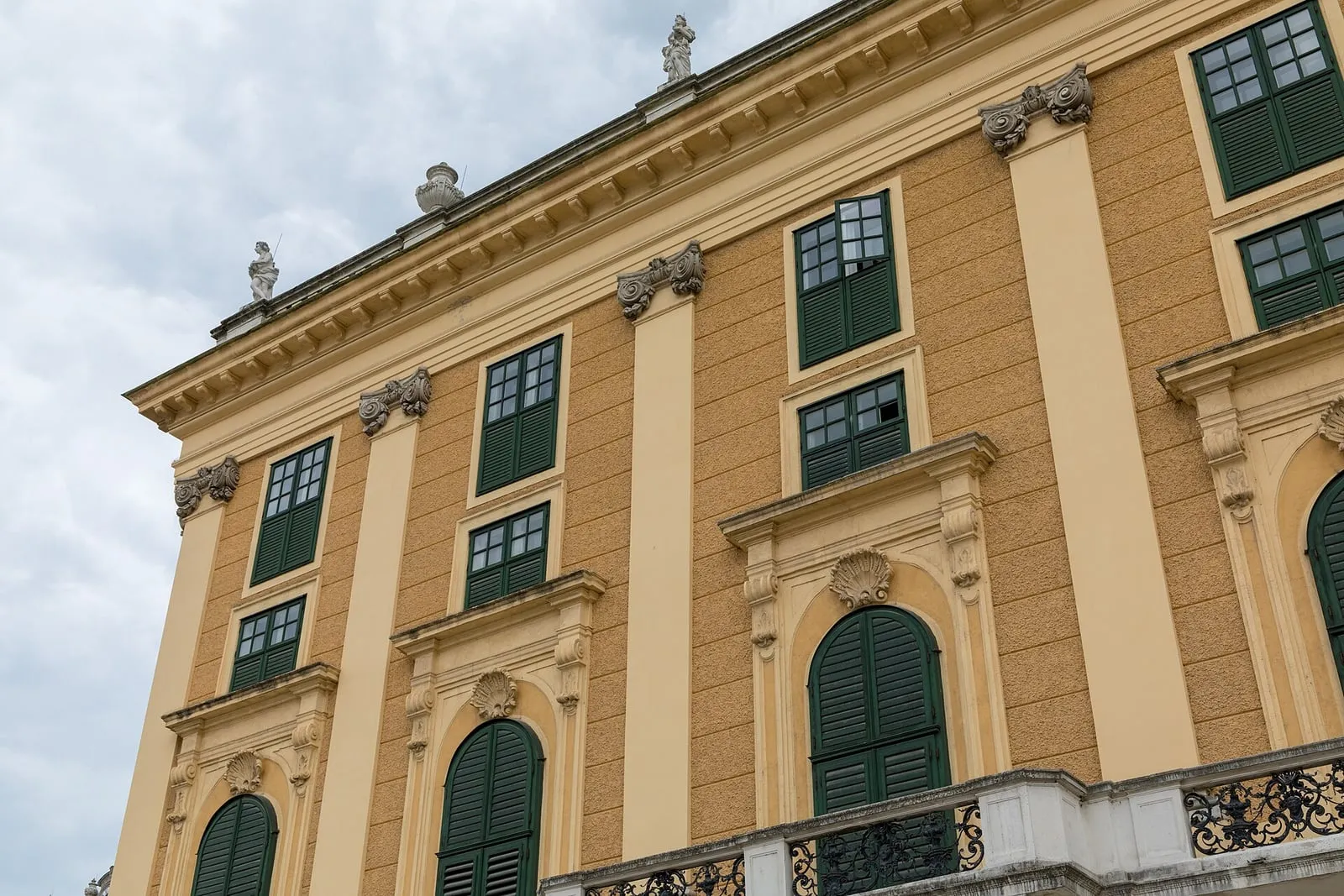
The yellow Baroque facade of Schönbrunn Palace, Vienna. Photo: Dietmar Rabich, Wikimedia Commons, CC BY-SA 4.0.
A long weekend (2 to 3 days): Budapest for variety, Vienna if you avoid Sunday shopping
Budapest gives a fuller Friday-to-Sunday programme. Every major thermal bath is open seven days a week (Széchenyi stays open until 22:00 on Fridays, and Rudas runs Friday and Saturday night bathing, online booking only), shops open on Sundays, and evening Danube cruises run nightly. The one weekend check is the Dohány Street Synagogue, shut on Saturdays. In Vienna, retail shops and the Naschmarkt stalls shut all day Sunday, so a Friday-to-Sunday trip pushes market visits and shopping onto Saturday.
Food and drink: Vienna for fine dining and cafés, Budapest for ruin bars and hearty value
Vienna has the deeper fine-dining bench — 17 Michelin-starred restaurants (two with three stars: Steirereck and Amador), plus formal coffee houses, veal schnitzel houses and Heurigen wine taverns on the northern hills (where to eat in Vienna).
Budapest wins on nightlife and casual eating: paprika-rich stews, lángos, chimney cake and the Central Market Hall by day, followed by District VII’s ruin bars at night, where Instant-Fogas opens daily from 18:00 to 06:00 with free entry (note that District VII late-licence bars prohibit taking drinks out into the street). Budapest also runs food tours at well under Viennese restaurant prices.
Sights and culture: Vienna for museums and opera, Budapest for architecture and baths
Vienna outguns Budapest on museum collections and live classical music. The Kunsthistorisches Museum (€22 online), the Upper Belvedere (€23), the Albertina and the Leopold Museum rival Paris and Madrid, and the Vienna State Opera sells 435 same-day standing places for €13 to €18.
Budapest answers with architectural theatre and experiences Vienna lacks: the neo-Gothic Hungarian Parliament, the Ottoman-era Rudas bath (12,000 HUF), the neo-Baroque Széchenyi Baths (from 13,200 HUF weekday), the Cold War bunker of the Hospital in the Rock and the House of Terror (4,000 HUF).
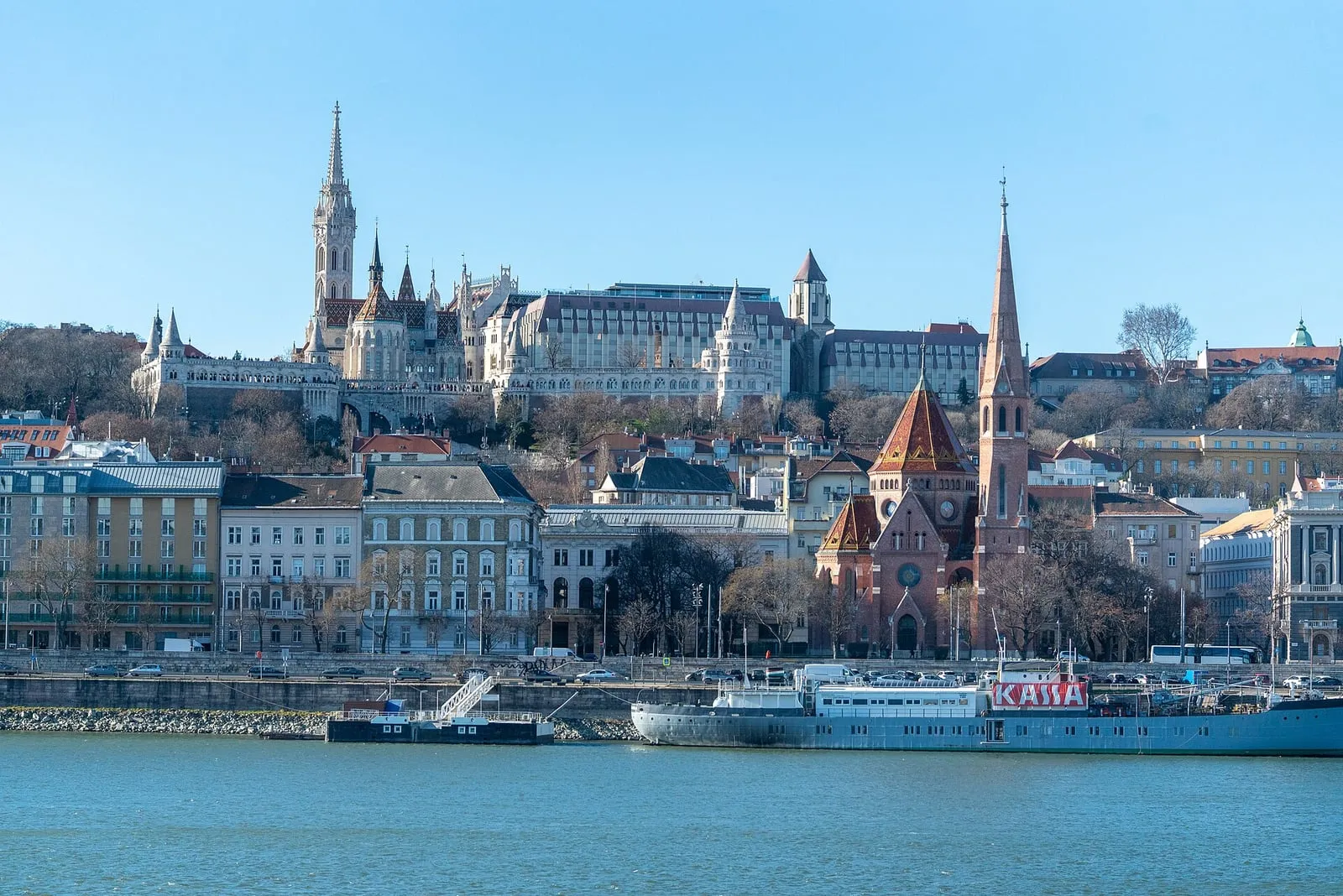
Fisherman’s Bastion and Matthias Church on Castle Hill, Budapest. Photo: Paul Colin Hennig firstdorsal.eu, Wikimedia Commons, CC BY-SA 4.0.
A tight budget: Budapest comfortably
Budapest, without hesitation. Hungary’s Eurostat 2024 price level index for restaurants and hotels is 71.8 against Austria’s 110.0 — a 38.2-point gap. Look at the fixed visitor costs in each city’s currency:
- Public transport: 2,750 HUF for 24 hours and 5,750 HUF for 72 hours in Budapest, versus €9.70 for 24 hours and €25.20 (7-day digital) in Vienna.
- Airport transfer: 850 HUF via Bus 200E + metro M3 (or 2,500 HUF on direct Bus 100E) in Budapest, versus €5.50 on Vienna’s REX 7 or €14.90 on the CAT bus.
- Tourist tax: 4% of the room rate in central Budapest versus 5% in Vienna (climbing to 8% from 1 July 2027), applied to lower Budapest hotel rates.
- Three flagship entries: Vienna’s top three (Schönbrunn Palace Ticket €42 + Kunsthistorisches Museum €22 online + Upper Belvedere €23) total €87, versus 36,200 HUF for Budapest’s top three (Hungarian Parliament 14,000 HUF non-EEA + Széchenyi Baths from 13,200 HUF weekday + Dohány Street Synagogue 9,000 HUF) — and budget options like Dandár bath (3,500 HUF weekdays) and free Castle Hill grounds keep Budapest even lower.
Families and couples: Vienna for families, Budapest for late-night couples
For families, choose Vienna. Budapest’s four famous historic baths (Széchenyi, Rudas, Lukács, Dandár) bar children under 14, restricting families to Palatinus on Margaret Island (child weekday ticket 2,500 HUF, family ticket for three 7,600 HUF). In Vienna, under-19s enter the five major federal museums free, under-6s ride public transport free (and under-15s free on Sundays and school holidays), and the Prater and Schönbrunn gardens give children space to run.
For couples, choose Budapest for evening thermal bathing at Rudas or Friday nights at Széchenyi, followed by a candlelit Danube dinner cruise; choose Vienna for an evening at the State Opera or Musikverein and a quiet coffee house morning.
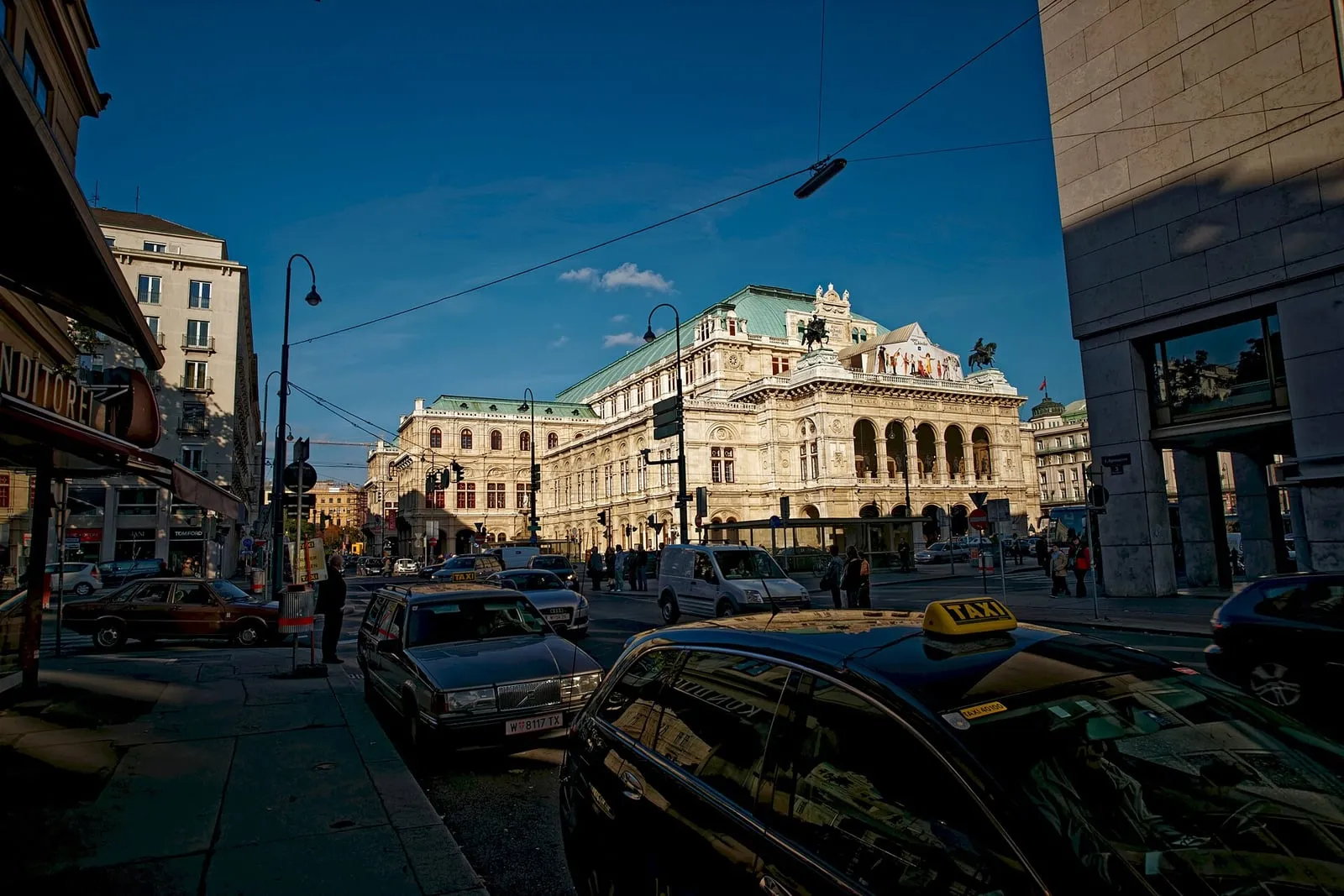
The Vienna State Opera on the Ringstrasse, Vienna. Photo: Txllxt TxllxT, Wikimedia Commons, CC BY-SA 4.0.
Doing both: the train, the order and where to stay
Vienna and Budapest sit closer together by rail than most travellers realise, making a combined 5- to 7-day Danube trip one of the easiest twin-centre journeys in Europe.
| Operator | Route | Journey time | Frequency | Fares |
|---|---|---|---|---|
| RegioJet | Wien Hauptbahnhof ↔ Budapest-Kelenföld (M4 metro) | 2 hours 24 to 2 hours 31 minutes | 4 trains daily (07:34, 10:27, 13:27, 17:27 from Vienna) | €9 to €39.90 each way (rises as seats sell) |
| ÖBB railjet / EuroCity | Wien Hauptbahnhof ↔ Budapest-Keleti (M2, M4 metro) | 2 hours 39 to 2 hours 58 minutes | Roughly hourly (06:40 to 21:45 from Vienna) | Dynamic pricing at oebb.at |
See Vienna to Budapest by train and Vienna and Bratislava from Budapest for the full timetables. Remember that Austria enforces border checks on its Hungarian land border until 15 March 2027, so carry your passport or EU national ID card on the train. You can even break the journey with a half-day stop in Bratislava, 56 minutes east of Vienna.
Which order: Vienna first (3 days), then Budapest (3 days). Start with Vienna’s structured museum timetable while your energy is highest, then take the morning RegioJet or ÖBB railjet down the Danube to finish in Budapest’s thermal baths and riverside evening cruises. Moving on a Monday avoids Budapest’s Monday closures (House of Terror, National Gallery, odd-week Castle funicular) and leaves Tuesday to Thursday clear for both Buda and Pest.
Where to stay: in Vienna, stay in the Innere Stadt inside the Ring (where to stay in Vienna, hotels near St Stephen’s Cathedral), or near Wien Hauptbahnhof (U1) for an early train to Budapest. In Budapest, stay in Belváros-Lipótváros (District V) along the Pest riverside, within walking distance of the Parliament, the Chain Bridge and the 100E airport bus terminus at Deák Ferenc tér (where to stay in Budapest, hotels near the Hungarian Parliament).
For full sight-by-sight booking tables, see Vienna and Budapest. Comparing other Central European pairs? Read Vienna vs Prague, Prague vs Budapest, Bratislava vs Vienna and where to go each month.
Common questions
Is Vienna or Budapest better for a first trip?
Pick Vienna if your priority is imperial palaces (Schönbrunn, Hofburg), Old Master galleries (Kunsthistorisches Museum, Belvedere) and classical concerts; pick Budapest if your priority is thermal baths (Széchenyi, Rudas, Lukács), riverside panoramas, ruin bars and lower everyday prices. Both need three full days.
How much cheaper is Budapest than Vienna?
Significantly cheaper. Eurostat's 2024 price level index for restaurants and hotels (EU27 = 100) puts Hungary at 71.8 against Austria at 110.0 — roughly 35% lower. A 24-hour transport ticket is 2,750 HUF in Budapest against €9.70 in Vienna, and Budapest's tourist tax is 4% of the room rate against Vienna's 5% (rising to 8% on 1 July 2027).
How long is the train from Vienna to Budapest?
RegioJet runs four direct trains daily from Wien Hauptbahnhof to Budapest-Kelenföld in 2 hours 24 minutes to 2 hours 31 minutes, with fares from €9 to €39.90 each way. ÖBB railjet and EuroCity trains run roughly hourly to Budapest-Keleti in 2 hours 39 minutes to 2 hours 58 minutes.
Can you visit Budapest as a day trip from Vienna?
Yes, though staying a night or two is far better. By train, the 06:40 ÖBB departure out and 20:30 return from Keleti give close to 11 hours in Budapest, while RegioJet's 07:34 out and 17:58 back give around 8 hours. Carry a passport or EU national ID card: Austria enforces border checks with Hungary until 15 March 2027.
Are Budapest's thermal baths open to children?
No at the four famous historic baths: Széchenyi, Rudas, Lukács and Dandár all admit no one under 14 (and Gellért is closed for renovation until a planned reopening in 2028). Families with younger children use Palatinus on Margaret Island instead, where a child ticket (ages 3 to 14) is 2,500 HUF on weekdays.
Which days are major sights closed in Vienna and Budapest?
In Vienna, Tuesdays shut the Imperial Treasury, Leopold Museum and Natural History Museum, and Mondays shut Belvedere 21, the Secession and the Prunksaal (Oct–May, except Dec 2026). In Budapest, Saturdays shut the Dohány Street Synagogue, Mondays shut the House of Terror and National Gallery, and the Buda Castle funicular does not run on Mondays of odd-numbered weeks.