In this guide
💡 The Short Version: Tokyo’s summer is characterised by an early rainy season in June (averaging 11.6 rain days) followed by intense heat and humidity in July and August (daily maximum 31.3 °C, 76 per cent humidity). Urban heat advisories are common, making early morning visits to Meiji Jingu (gates open at 5:00) and evening observation decks essential. The signature cultural highlights are massive river fireworks festivals (hanabi) in late July and August, energetic community matsuri with portable shrines, and traditional Bon Odori dances during Obon in mid-August. Or book a tour: an evening Tokyo Yakatabune dinner cruise on Tokyo Bayad with all-inclusive dining starts from ¥11,800.
Summer weather in Tokyo: heat, humidity, and rain
Tokyo’s summer brings a sharp division between the wet early weeks and the sweltering heat of midsummer. The figures below are official thirty-year baseline averages (1991–2020) recorded by the Japan Meteorological Agency at its central observatory:
| Month | Daily High | Daily Low | Mean Humidity | Rainfall | Rain Days | Weather Highlights |
|---|---|---|---|---|---|---|
| June | 26.1 °C | 18.5 °C | 78 % | 167.8 mm | 11.6 | Tsuyu (plum rain) rainy season begins; overcast skies and frequent light rain; peak hydrangeas in shrine gardens. |
| July | 29.9 °C | 22.4 °C | 76 % | 156.2 mm | 10.5 | Rainy season ends in early July, giving way to intense heat, bright sun, high humidity, and evening firework displays. |
| August | 31.3 °C | 23.5 °C | 76 % | 154.7 mm | 7.9 | The hottest month of the year; temperatures frequently exceed 35 °C; cicadas buzz in parks; Obon holiday travel in mid-August. |
The Japanese Ministry of the Environment operates a Wet Bulb Globe Temperature (WBGT) alert system, issuing daily “Heat Stroke Alerts” (Netchusho Keikai Alert) when high temperatures and humidity combine to create dangerous thermal stress. The UK Foreign Office similarly cautions international travellers that heat stroke is a genuine medical risk during Japanese summers.
Major summer fireworks festivals (Hanabi Taikai)
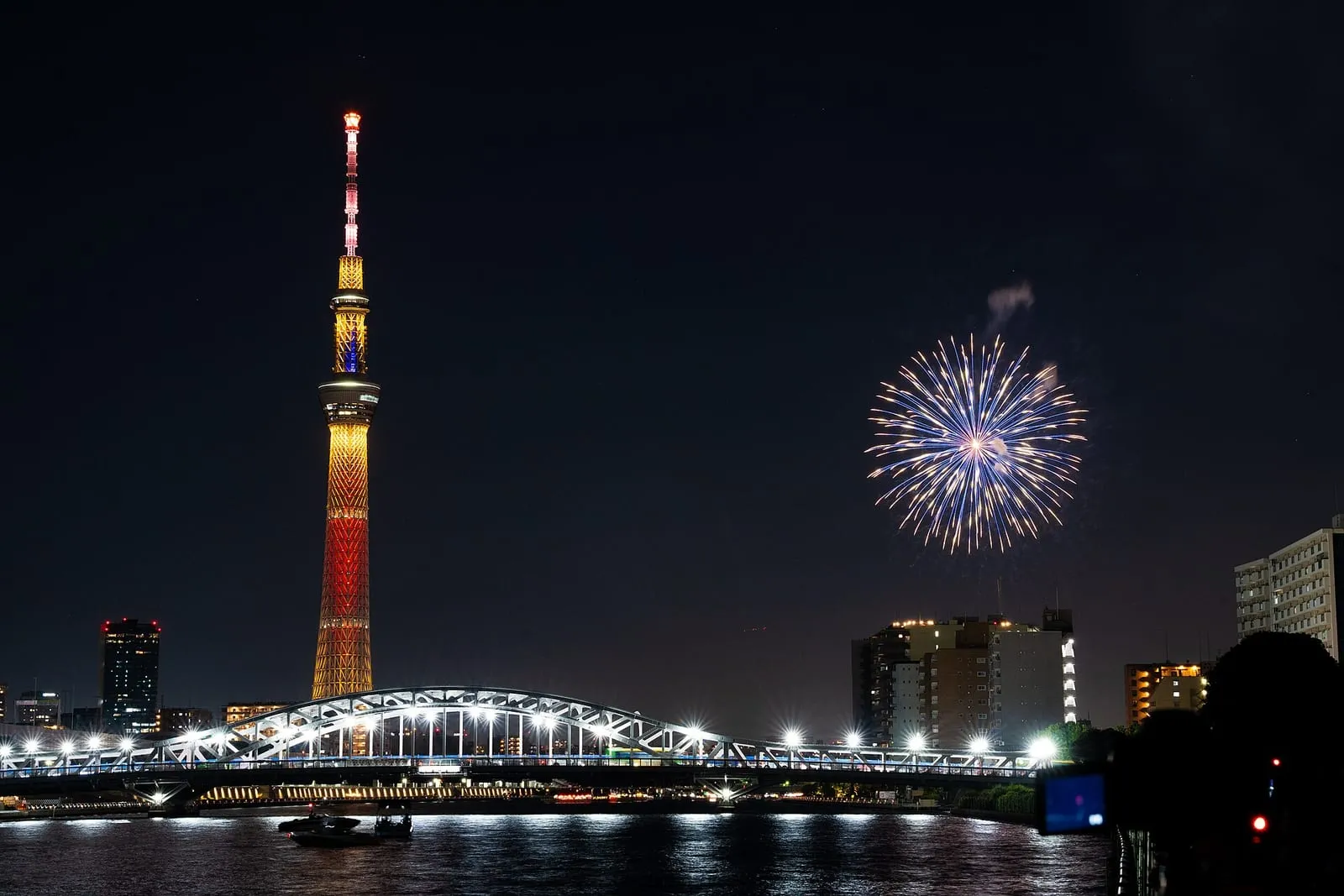
Japanese firework displays (hanabi) are not merely brief celebratory bursts; they are intricate two-hour pyro-musical artistic competitions where master pyrotechnicians compete with spherical multi-ring shells that blossom into chrysanthemums, peonies, and weeping willow patterns.
Spectators dress in colourful lightweight cotton summer kimonos (yukata) and wooden sandals (geta), spreading blue tarps along river embankments hours in advance.
| Festival Name | Usual Schedule | Location & Nearest Station | Shell Count | Notes & Attendance |
|---|---|---|---|---|
| Sumida River Fireworks | Last Saturday of July (19:00–20:30) | Sumida River (Asakusa & Ryogoku) | 20,000 shells | Japan’s oldest and most famous display; draws close to one million spectators along river bridges. |
| Edogawa Fireworks Festival | First Saturday of August (19:15–20:30) | Edogawa riverbank (Shinozaki Station) | 14,000 shells | Celebrated for its explosive opening salvo, launching 1,000 shells in the first five seconds. |
| Itabashi Fireworks Festival | First Saturday of August (19:00–20:30) | Arakawa riverbed (Nishidai Station) | 13,000 shells | Features the “Niagara Falls” cascade, a 700-metre curtain of falling silver sparks. |
| Jingu Gaien Fireworks | Mid-August (19:30–20:30) | Meiji Jingu Stadium (Gaienmae Station) | 10,000 shells | Urban stadium setting combining live pop concerts with fireworks bursting overhead (ticketed entry). |
The official tourism organization GO TOKYO publishes confirmed annual festival dates and ticketed viewing area allocations each spring.
Traditional summer festivals (Matsuri)
Tokyo’s summer festival calendar is packed with community Shinto and Buddhist rituals celebrating good health, abundant harvests, and protection from summer pestilence:
1. Sanja Matsuri in Asakusa
Held annually on the third weekend of May · Centred on Asakusa Shrine and Senso-ji
Although held in late spring, Sanja Matsuri is the undisputed curtain-raiser for Tokyo’s summer festival season. Over three days, neighbourhood associations parade 100 portable shrines (mikoshi) through Asakusa’s historic streets.
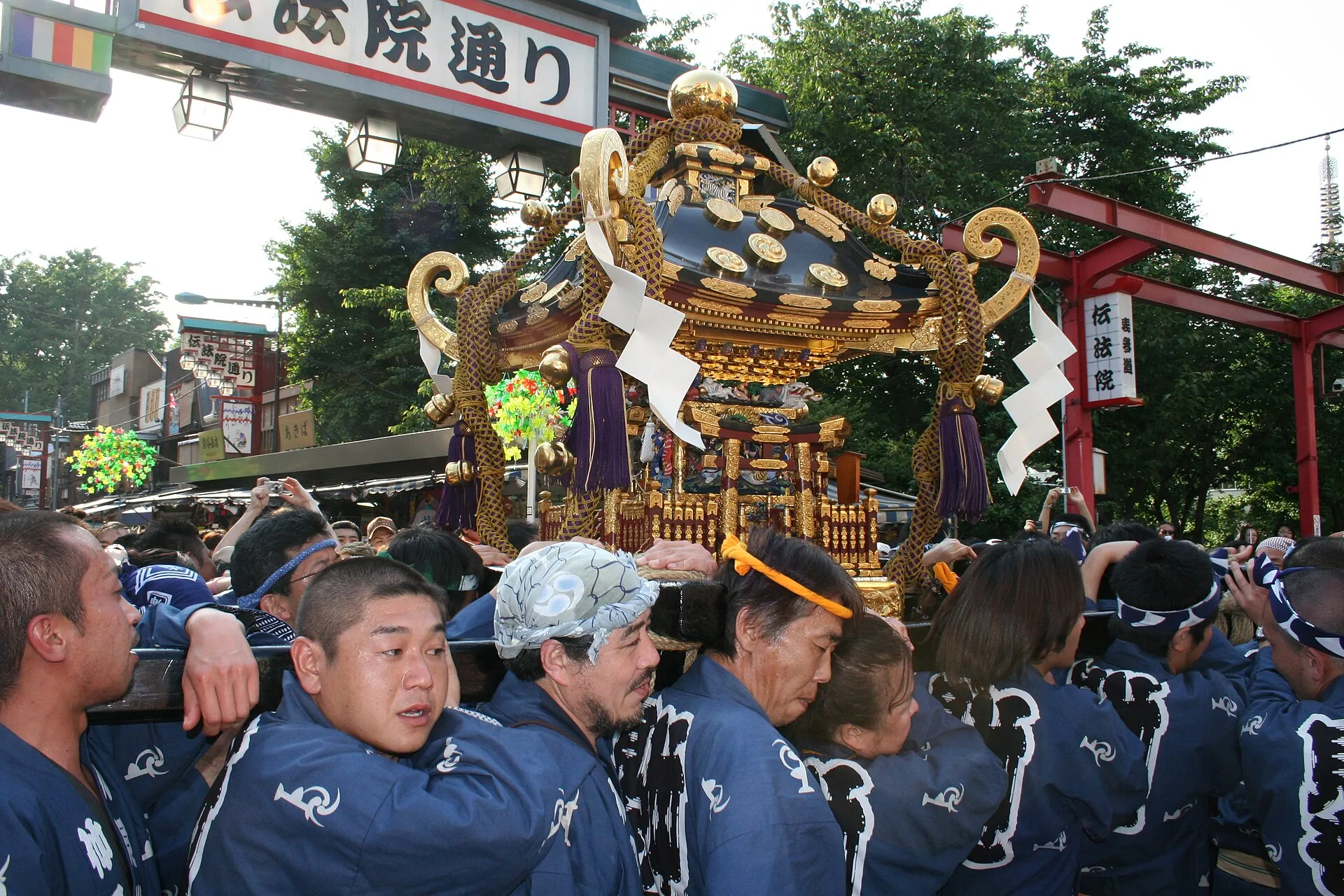
Devotees carrying a portable mikoshi shrine through Asakusa during Sanja Matsuri. Photo: Kakidai, Wikimedia Commons, CC BY-SA 4.0.
On Sunday morning, the three massive main mikoshi of Asakusa Shrine are carried through dense crowds by thousands of chanting bearers wearing traditional happi coats. Details are on the Asakusa Shrine official site.
2. Fukagawa Hachiman Matsuri
Held mid-August · Centred on Tomioka Hachiman Shrine in Monzen-nakacho
Ranked alongside Kanda Matsuri and Sanno Matsuri as one of the three great festivals of Edo, this festival is universally known as the Mizukake Matsuri (Water-Splashing Festival).
To purify the shrine bearers and provide relief from the suffocating August heat, spectators line the 8-kilometre route armed with wooden buckets, water pistols, ladles, and fire department hoses, drenching both the bearers and the golden shrines in cascades of cool water. The main triennial grand festival (Hon-matsuri) draws over 500,000 cheering participants.
3. Koenji Awa Odori
Last weekend of August · Streets outside JR Koenji Station
Originating in Tokushima on the island of Shikoku, the Awa Odori is Japan’s most famous traditional dance. In Tokyo, the western neighbourhood of Koenji hosts the largest Awa Odori celebration outside Shikoku, bringing together 10,000 costumed dancers and musicians across eight street stages. Dancers chant “Yattoosa!” to the driving rhythm of shamisen lutes, bamboo flutes, and booming taiko drums.
4. Obon and Bon Odori Dances
Mid-August (typically 13 to 16 August)
Obon is a Buddhist custom honoring the spirits of ancestors, who are believed to return temporarily to the earthly realm. In neighbourhood squares and temple grounds across Tokyo (such as Tsukiji Hongwanji and Roppongi Hills), circular wooden towers (yagura) are erected. Residents gather at dusk in yukata to circle the tower in traditional folk dances (Bon Odori), welcoming the spirits. While Obon is not an official public holiday, Mountain Day (11 August) is a statutory public holiday.
Practical strategies for coping with the summer heat
- Adopt a split-day schedule: Complete temple and garden visits during the coolest hours between 6:00 and 9:30. Meiji Jingu opens at 5:00 from May to August, offering tranquil forest shade. Return to your air-conditioned hotel during the blistering midday peak (12:00 to 15:00) to rest, then venture back out after 16:30 for evening dinners, illuminated night walks, and observation decks.
- Utilise underground networks: Shinjuku, Tokyo Station, and Shibuya feature immense subterranean labyrinths connecting rail stations to department store basements (depachika). These underground tunnels are fully air-conditioned, allowing you to walk hundreds of metres across central districts without exposing yourself to direct sun.
- Hydration essentials: Street vending machines in Tokyo stand roughly every 50 metres, accepting IC cards and contactless coins. Drink electrolyte-replenishing sports drinks such as Pocari Sweat or Aquarius, or unsweetened cold barley tea (mugicha), which replenishes lost minerals.
- Sun protection: Follow Japanese local practice: carry a compact folding umbrella that doubles as a UV parasol (higasa), wear breathable linen or moisture-wicking Uniqlo AIRism base layers, and purchase instant cooling body wipes from convenience stores.
- Indoor sightseeing: Reserve midday hours for climate-controlled indoor attractions. Wading through cold water at teamLab Planets in Toyosu is a refreshing summer escape, while Tokyo museums in Ueno provide national art treasures in cool comfort.
Guided summer evening experiences
Taking to the water or attending an indoor dinner performance provides an ideal escape from midday pavement heat:
| Experience | Duration | Venue & Transport | Why it works in summer | Price |
|---|---|---|---|---|
| Tokyo Yakatabune Dinner Cruisead | 1.5 hours | Tokyo Bay / Odaiba from Shinagawa pier | Cool sea breezes, traditional sukiyaki or tempura dining, and illuminated skyline views | From ¥11,800 |
| Shinjuku Live Sumo Dinner Showad | 1.5 hours | Climate-controlled Shinjuku theatre | Air-conditioned cultural entertainment with live bouts, photos, and chicken hot pot | From ¥7,700 |
| Best of Tokyo Full-Day Tourad | 6 hours | Central Tokyo highlights | Expert guide navigates shade, air-conditioned transit, and crowd bottlenecks | From ¥16,000 |
Tokyo Yakatabune Dinner Cruise: 400-Year Edo & Odaiba Route
From ¥11,800 · 4.7 stars from 1,364 reviews · 1.5 hours · Traditional boat cruise
Tokyo Yakatabune Dinner Cruise: 400-Year Edo & Odaiba Routead glides across the waters of Tokyo Bay on a traditional red-lanterned wooden boat, offering refreshing sea breezes and panoramic views of Rainbow Bridge while guests enjoy freshly fried tempura and beverages.
Tokyo: Shinjuku Sumo Show & Experience with a Photo
From ¥6,000 · 4.9 stars from 9,980 reviews · 1.5 hours · Indoor cultural dinner
Tokyo: Shinjuku Sumo Show & Experience with a Photoad offers an entertaining indoor dinner performance in Shinjuku, pairing exhibition wrestling bouts and audience interactions with a hearty chanko nabe meal inside a comfortable, air-conditioned venue.
Best of Tokyo: Guided Full-Day City Tour with a Local
From ¥20,248 · 4.6 stars from 250 reviews · 6 hours · Small group
Best of Tokyo: Guided Full-Day City Tour with a Localad connects Tokyo’s premier cultural sights, steering visitors through efficient subway lines and shaded walkways.
Where next
Continue planning your Tokyo journey across seasons:
- Compare monthly rainfall, temperatures, and packing advice in best time to visit Tokyo.
- Find essential heat, earthquake, and typhoon safety precautions in is Tokyo safe?.
- Discover evening street food and atmospheric drinking alleys in our Shinjuku night walk.
- Check operating hours and advance booking requirements for all 55 city sights on the Tokyo hub.
Common questions
How hot does Tokyo get in summer?
Tokyo is hot and humid in summer. Official Japan Meteorological Agency records show August averages a daily high of 31.3 °C and a low of 23.5 °C, with July and August relative humidity averaging 76 per cent. Due to the urban heat island effect, midday temperatures in central asphalt areas frequently surpass 35 °C.
When is the Sumida River Fireworks Festival?
The Sumida River Fireworks Festival (*Sumidagawa Hanabi Taikai*) is held annually on the last Saturday of July along the riverbanks between Asakusa and Ryogoku. Over 20,000 fireworks are launched, drawing close to one million spectators.
What is Obon and does it cause closures in Tokyo?
Obon is a traditional Buddhist period in mid-August (typically 13 to 16 August) when ancestral spirits are honoured. While not a statutory public holiday, many small independent restaurants and family businesses close for several days as workers travel to ancestral hometowns.
How should travellers cope with summer heat in Tokyo?
Schedule outdoor sightseeing for early morning (shrine grounds open at 5:00) or late evening. Drink ion-replenishing sports drinks like Pocari Sweat from vending machines, make use of underground pedestrian networks linking major train stations, and carry a compact UV umbrella.