In this guide
💡 The Short Version: In an average spring, Tokyo’s cherry blossoms open on 24 March and achieve full bloom on 31 March, measured by the Japan Meteorological Agency’s benchmark Somei Yoshino tree at Yasukuni Shrine. The peak full-bloom window lasts roughly seven to ten days before petals scatter. Shinjuku Gyoen (¥500 admission) is open seven days a week from 25 March to 24 April, waiving its standard Monday closure. Chidorigafuchi moat and Meguro River are lit up at night (yozakura). Or book a tour: a guided walking tour of Tokyo cherry blossom spotsad connects prime viewing locations from ¥10,000.
Understanding Tokyo’s cherry blossom season
Cherry blossom viewing (hanami) is Japan’s most deeply rooted seasonal tradition. The arrival of the delicate pale pink blossoms (sakura) marks the start of the Japanese fiscal and academic year, symbolising renewal and the transience of life.
The benchmark variety is the Somei Yoshino (Yoshino cherry), a five-petaled cultivar that blooms before its leaves unfold, creating spectacular unbroken canopies of pale pink and white clouds across city parks and river embankments.
The Japan Meteorological Agency (JMA) monitors an official standard Somei Yoshino tree located on the grounds of Yasukuni Shrine in central Chiyoda ward. The agency tracks two vital phenological milestones:
- Kaika (First Bloom): Declared when five or six blossoms open on the sample tree (historical thirty-year baseline average: 24 March).
- Mankai (Full Bloom): Declared when roughly 80 per cent or more of floral buds on the sample tree are fully open (historical thirty-year baseline average: 31 March).
| Metric | 30-Year JMA Normal (1991–2020) | 2024 Record | 2025 Record | 2026 Record |
|---|---|---|---|---|
| First Bloom (Kaika) | 24 March | 29 March | 24 March | 19 March |
| Full Bloom (Mankai) | 31 March | 4 April | 31 March | 28 March |
| Peak Viewing Window | 31 March to 7 April | 4 April to 11 April | 31 March to 7 April | 28 March to 4 April |
Once full bloom is achieved, the delicate petals remain on the branches for approximately one week. If spring temperatures remain cool and calm, blossoms can linger for up to ten days. However, heavy spring rains (sakura-ame) or sudden strong winds will accelerate petal drop, carpeting pathways and canal surfaces in pink drifts known as hana-ikada (flower rafts).
The top cherry blossom spots in Tokyo
Tokyo features dozens of celebrated hanami locations, ranging from tranquil imperial gardens to festival atmospheres along urban canals.
| Location | Opening hours | Admission | Cherry trees | Key highlight & rules |
|---|---|---|---|---|
| Shinjuku Gyoen | 9:00 to 18:00 (spring season); gate shuts 17:30 | ¥500 adults; ¥250 seniors & students | Approx. 1,000 trees (65 cultivars) | Extended season from early to late bloomers. Alcohol strictly prohibited; bag search at gates. |
| Chidorigafuchi Moat | Open 24/7; boathouse 9:00 to 20:30 | Free entry (rowboat ¥800 / 30 mins) | Approx. 260 trees | 700-metre path along the Imperial Palace moat; spectacular evening LED illuminations. |
| Meguro River (Nakameguro) | Open 24/7; illuminations sunset to 20:00 | Free admission | Approx. 800 trees | 3.8-kilometre canal promenade lined with boutique cafes, street food vendors, and pink paper lanterns. |
| Ueno Park | 5:00 to 23:00; lanterns lit until 20:00 | Free admission | Approx. 1,200 trees | Tokyo’s liveliest party atmosphere; broad paved avenues packed with picnic mats and food stalls. |
| Sumida Park (Asakusa) | Open 24/7 | Free admission | Approx. 640 trees | Riverside promenade stretching along the Sumida River with direct views of Tokyo Skytree. |
| Rikugien Gardens | 9:00 to 17:00 (night entry until 21:00) | ¥300 general admission | Notable weeping cherry | Colossal 15-metre weeping cherry tree (shidarezakura) dramatically lit after dusk. |
1. Shinjuku Gyoen National Garden
Admission ¥500 · 9:00 to 17:30 (gates close 18:00) from 15 March · Open daily 25 March to 24 April
Spanning 144 acres across Shinjuku and Shibuya wards, Shinjuku Gyoen offers the most varied cherry blossom display in the capital. Because the grounds cultivate over 65 distinct cherry varieties, the blooming window extends for more than a month:
- Early bloomers (mid-February to early March): Deep pink kanzakura and Taiwanese cherry trees (kanhizakura).
- Mid-season main bloom (late March to early April): Classic Somei Yoshino and delicate white Oshima zakura.
- Late bloomers (mid to late April): Multi-petaled yaezakura (such as ichiyo and fugenzo) featuring dense, ruffled pink blossoms that flower alongside fresh green leaves.
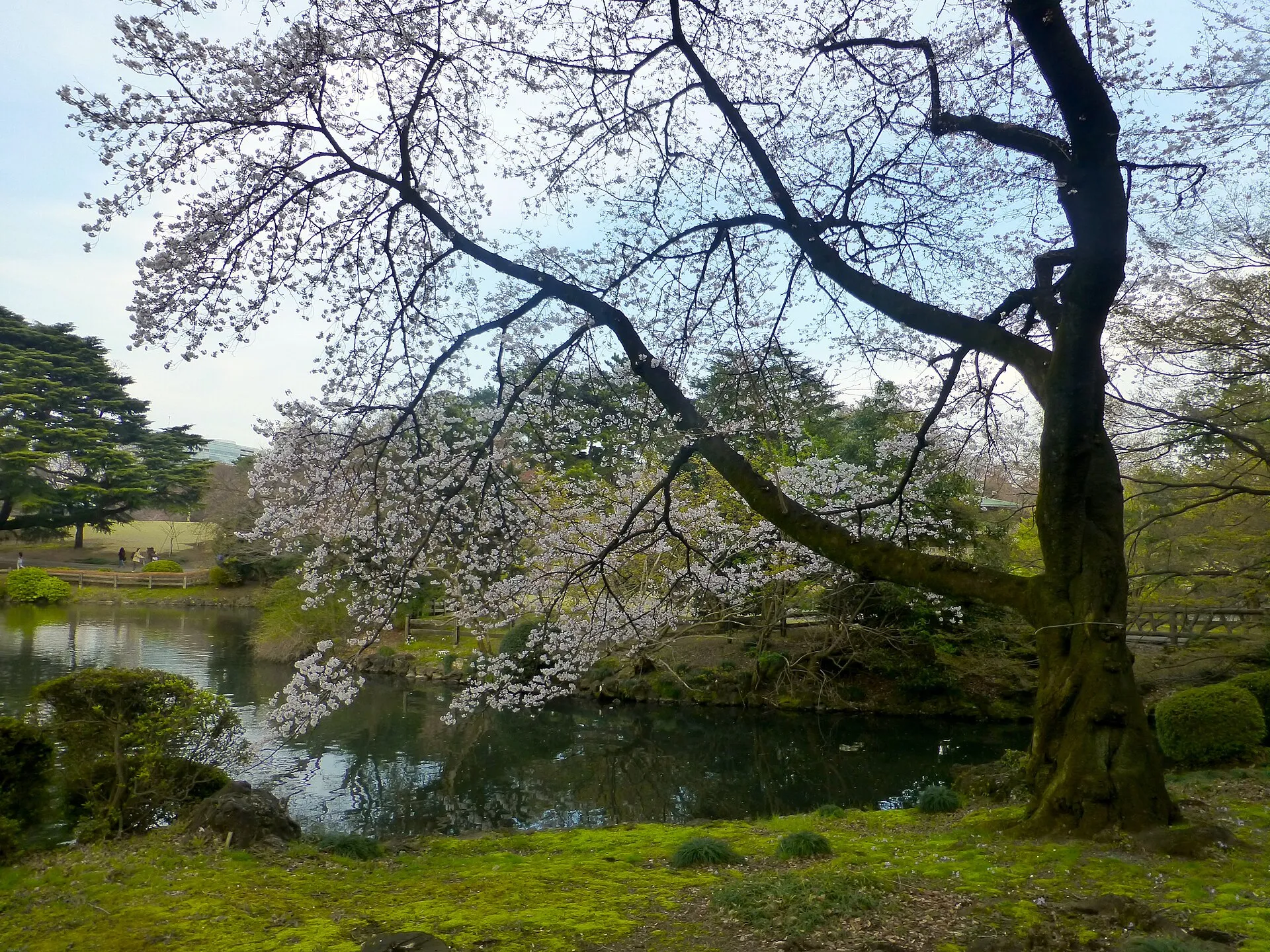
Cherry blossoms framing the lawns and walking paths of Shinjuku Gyoen. Photo: Kakidai, Wikimedia Commons, CC BY-SA 4.0.
Visitor guidelines: Shinjuku Gyoen enforces strict peace and order regulations. Alcohol is forbidden; security guards inspect backpacks at every turnstile. Portable balls, frisbees, musical instruments, and open flames are banned. This makes Shinjuku Gyoen the most pleasant, family-friendly hanami spot for unhurried picnics on sprawling manicured lawns.
2. Chidorigafuchi Moat and Kitanomaru Park
Walking path accessible 24/7 · Illuminations sunset to 22:00 during festival · Free admission
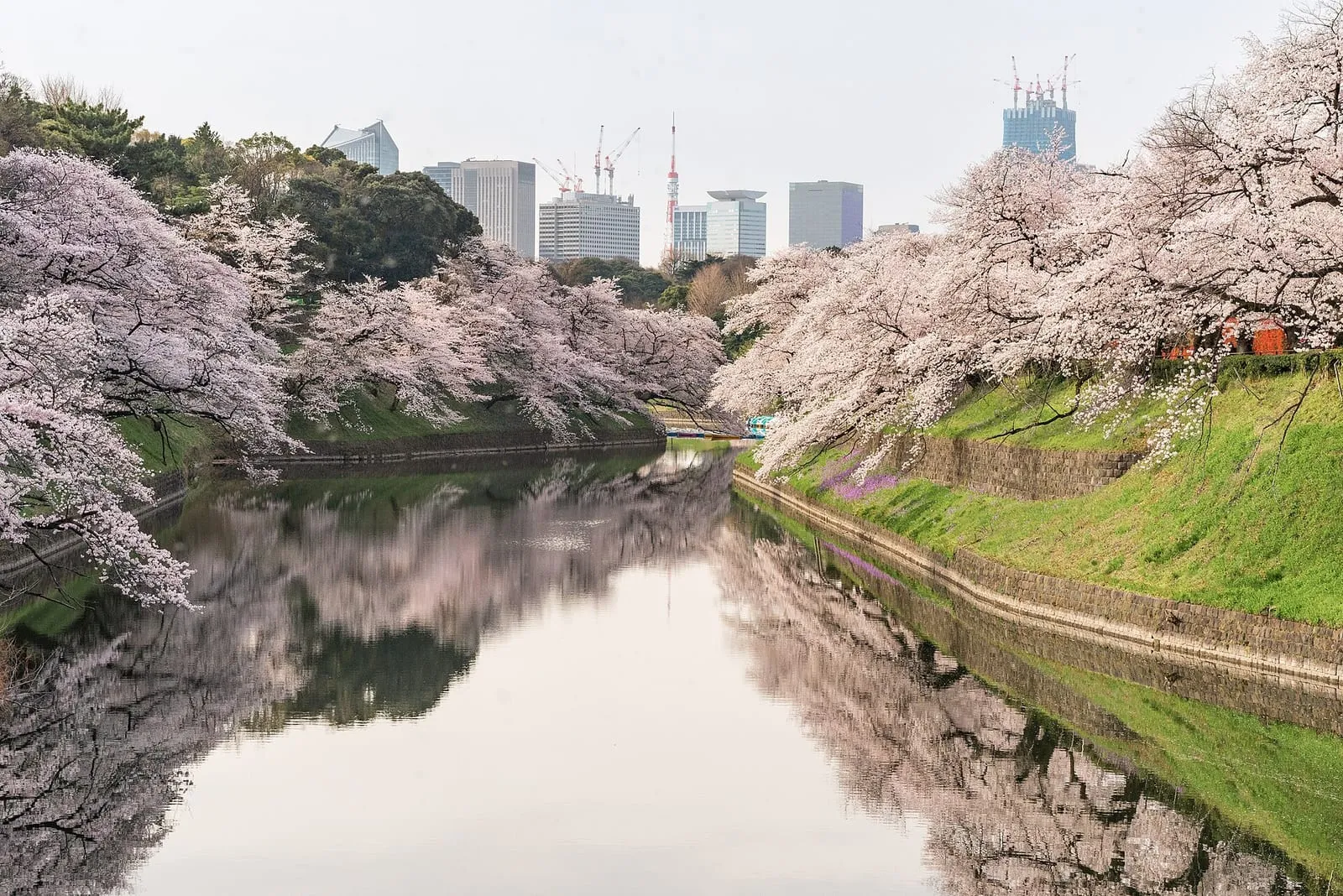
Located northwest of the Imperial Palace, the 700-metre pedestrian walkway along Chidorigafuchi Moat is one of the most photographed vistas in Japan. Centuries-old Somei Yoshino branches drape gracefully over steep emerald embankments, casting delicate reflections onto the dark surface of the moat.
- Boathouse rental: Renting a rowboat from the Chidorigafuchi Boathouse (operated by Chiyoda Ward Tourism) allows you to paddle directly beneath overhanging blossom boughs. During peak blooming days, rental costs ¥800 for 30 minutes; queues can exceed two hours by mid-morning, so arrive before the 9:00 opening.
- Evening illuminations (Yozakura): As dusk falls, solar-powered LED floodlights illuminate the entire tree line against the backdrop of Marunouchi and Chiyoda corporate towers. Cross through Tayasumon Gate into neighbouring Kitanomaru Park for additional peaceful blossom groves.
3. Meguro River in Nakameguro
Promenade open 24/7 · Lanterns illuminated sunset to 20:00 · Free admission
The concrete canal of the Meguro River, stretching between Ikejiri-Ohashi and Meguro stations, is transformed each spring into a continuous 3.8-kilometre floral canopy. Over 800 cherry trees form an arching roof across the water, meeting in the middle to create an enclosed floral tunnel.
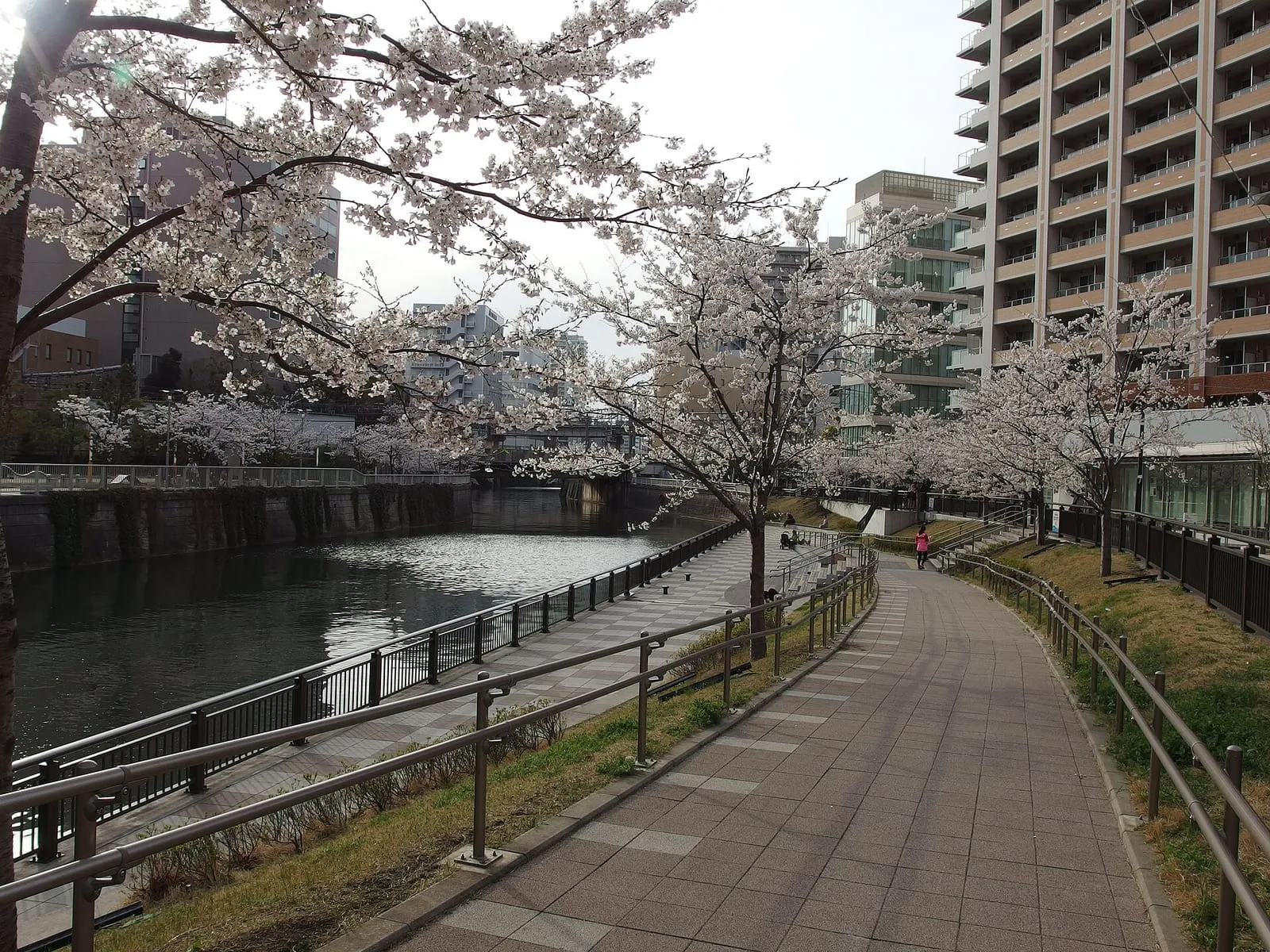
Cherry trees over a walkway beside the Meguro River. Photo: Guilhem Vellut, Wikimedia Commons, CC BY 2.0.
The central hub of activity is outside Nakameguro Station (Tokyu Toyoko Line and Tokyo Metro Hibiya Line). During the Nakameguro Sakura Festival, riverside stalls sell pink sparkling wine in flutes, strawberry champagne, skewered dango dumplings, and seasonal street food. The narrow pavements become packed after 17:00, so visit before 10:00 for tranquil photography.
4. Ueno Park
Park open 5:00 to 23:00 · Lanterns illuminated sunset to 20:00 · Free admission
Ueno Park has been Tokyo’s premier popular hanami gathering ground since the 17th century, when Tokugawa shoguns planted cherry trees on temple grounds. The park’s wide central avenue, Sakura-dori, is lined with over 1,000 cherry trees hung with red and white paper lanterns (bonbori).
Here you will encounter traditional Japanese corporate and family hanami parties: groups spreading large blue plastic tarps (bousui shiito) across the ground, removing their shoes, and sharing bento boxes, grilled yakitori, and sake. If you wish to experience the communal energy of springtime Tokyo, grab a craft beer and street food snack from vendors near Shinobazu Pond.
5. Sumida Park in Asakusa
Park accessible 24/7 · Free admission
Stretching along both banks of the Sumida River near Asakusa Station, Sumida Park features roughly 640 cherry trees. The eastern riverbank offers an unobstructed view of the futuristic Tokyo Skytree towering above pink blossoms. Boarding the Tokyo Water Bus (Mizube Line or Himiko) from Asakusa Pier provides views of the blooming trees from the water.
6. Rikugien and Koishikawa Korakuen
Admission ¥300 · Open 9:00 to 17:00 (extended night opening for weeping cherry)
For an alternative to the pale Somei Yoshino, visit Tokyo’s Edo-period stroll gardens. Rikugien in Bunkyo ward features a weeping cherry tree (shidarezakura) standing 15 metres high and 20 metres wide, cascading like a pink waterfall. Special evening lighting displays are organised throughout early bloom. Nearby Koishikawa Korakuen, founded in 1629 by the Mito Tokugawa clan, features weeping cherries framing traditional arched stone bridges.
Hanami rules and picnic etiquette
Joining a hanami picnic requires understanding Japanese public park manners:
- Space reservation (Bashotori): Reserving picnic spots using plastic tarps is allowed in designated areas of Ueno and Yoyogi parks, but completely banned in Shinjuku Gyoen and Chidorigafuchi. Never leave tape or bricks on grass, and never block pedestrian thoroughfares.
- Shoe etiquette: Treat picnic tarps like the interior of a Japanese home. Always slip off your shoes before stepping onto someone’s mat; leave footwear neatly arranged facing outward at the mat edge.
- Protecting tree branches: Cherry blossom branches and root networks are fragile. Never pull down branches for selfies, never shake trunks to make petals fall, and never step directly over exposed surface roots.
- Waste disposal (Gomi Mochi-kaeri): Japanese parks provide very few public waste bins. Visitors are strictly expected to bring rubbish bags and carry all cans, bento trays, and wrappers back to their hotel or convenience store bins.
Planning logistics for spring travel
- Hotel bookings: Cherry blossom season is Tokyo’s highest demand travel window. Hotel rooms in central districts like Shinjuku, Shibuya, and Ginza book out six to eight months in advance, with room rates increasing by 40 to 80 per cent. Check hotel options in where to stay in Tokyo.
- Flexible scheduling: Never fix your hanami day to a single rigid date months ahead. Reserve flexible days in your itinerary, monitor real-time bloom trackers on arrival, and head to the parks on the first sunny afternoon after blooms open.
- Rainy day backups: Spring precipitation averages 9 to 10 rain days across March and April. Have indoor alternatives ready, such as digital art museums in our teamLab tickets guide or national exhibits in Tokyo museums.
Guided cherry blossom tours
A guided blossom tour connects multiple top viewing spots across different neighbourhoods while navigating crowds and public transit effortlessly.
| Tour | Duration & Highlights | Format | Price |
|---|---|---|---|
| Spring Cherry Blossom Walking Tourad | 4.5 hours; curated walking route through top blossom gardens | Small group walk | From ¥10,000 |
| Best of Tokyo Full-Day City Tourad | 6 hours; Senso-ji, Meiji Jingu, and Shibuya highlights | Small group city overview | From ¥16,000 |
| Mount Fuji & Lake Ashi Day Tripad | 10 hours; Fuji 5th Station, Lake Ashi, bullet train | Full-day coach & shinkansen | From ¥14,800 |
Tokyo: Spring Cherry Blossom Walking Tour with Guide
From ¥10,000 · 5.0 stars from 5 reviews · 4.5 hours · Small group walk
Tokyo: Spring Cherry Blossom Walking Tour with Guidead leads travellers through central Tokyo’s most picturesque sakura avenues, offering cultural stories behind hanami traditions while finding peaceful viewpoints away from dense tour groups.
Best of Tokyo: Guided Full-Day City Tour with a Local
From ¥20,248 · 4.6 stars from 250 reviews · 6 hours · Small group
Best of Tokyo: Guided Full-Day City Tour with a Localad delivers a comprehensive overview of Tokyo’s historic temples and modern districts, pairing blossom walks with stops at Senso-ji and Meiji Jingu.
From Tokyo: Mt Fuji, Hakone Lake Ashi Cruise and Bullet Train
From ¥7,800 · 4.8 stars from 6,302 reviews · 10 hours · Coach & shinkansen
From Tokyo: Mt Fuji, Hakone Lake Ashi Cruise and Bullet Trainad offers views of Mount Fuji framed by spring blooms along Lake Kawaguchiko or Lake Ashi, finishing with a bullet train ride back to Tokyo.
Where next
Continue planning your spring holiday with our seasonal guides:
- Check climate trends and packing advice in our best time to visit Tokyo guide.
- Prepare for the late-April holiday rush in Golden Week in Tokyo.
- Follow an unhurried spring walking route from Meiji Jingu through Harajuku in our Meiji Jingu, Harajuku and Shibuya walk.
- Browse advance tickets for every observation deck and museum on the Tokyo hub.
Common questions
When do cherry blossoms bloom in Tokyo in 2027?
The Japan Meteorological Agency typically issues its first official spring blooming forecast in January. Based on 30-year historical averages, Tokyo's sample Somei Yoshino cherry tree begins flowering on 24 March and reaches full bloom on 31 March. Recent warmer springs have caused blossoms to open as early as 14 to 20 March.
Where are the best cherry blossom viewing spots in Tokyo?
The top hanami viewing spots are Shinjuku Gyoen (over 1,000 cherry trees spanning early and late cultivars), Chidorigafuchi moat (illuminated nighttime blossom canopies with rowboats), the Meguro River canal in Nakameguro (blossom archways over the water), and Ueno Park (celebrated for high-energy open-air picnics).
Is Shinjuku Gyoen open on Mondays during cherry blossom season?
Yes. While Shinjuku Gyoen normally closes every Monday throughout the year, it remains open seven days a week during its special spring season from 25 March to 24 April.
Is alcohol permitted during hanami picnics in Tokyo parks?
Alcohol rules differ by venue: drinking alcohol is strictly prohibited in Shinjuku Gyoen, with staff conducting mandatory bag inspections at entry gates. Conversely, responsible alcoholic beverage consumption is permitted in Ueno Park and Yoyogi Park during designated festival hours.