In this guide
💡 The Short Version: A complete kabuki programme at the Kabukiza in Ginza spans roughly four hours across multiple acts and intervals, but casual visitors can purchase single-act tickets (Makumi-seki) to watch an individual drama or dance sequence for ¥1,600 to ¥3,000 (November 2026). A portable English audio guide can be rented for ¥800 for a single act or ¥1,000 for the full programme, providing simultaneous translation of classical dialogues and character motivations. Or book a tour: when premium lower-level reserved seats are sold out at the box office, the Kabuki Show at Kabukiza Theatre Admission Ticketad (from ¥16,500, 4.7 stars from 300 reviews) secures full-programme reserved admission with English customer support.
Understanding kabuki at the Kabukiza
Dating from the early seventeenth century Edo period, kabuki is Japan’s classical theatrical art form, designated by UNESCO as Intangible Cultural Heritage. Performances combine stylised acting, elaborate silk costumes, dramatic stage make-up (kumadori), live shamisen musical accompaniment, and dynamic stagecraft.
The Kabukiza in Ginza serves as the principal showcase for the art form, operated by theatrical production company Shochiku. The theatre stages a fresh, rotating programme almost every month, typically running from the 1st through the 25th or 27th.
On most scheduled performance days, the schedule features two distinct productions:
- Matinee programme (Daytime Show): commences at approximately 11:00 and concludes around 15:30.
- Evening programme (Night Show): begins at approximately 16:30 and concludes around 20:45.
Each programme typically features three contrasting theatrical pieces: a dramatic history play (jidaimono), an emotionally charged domestic drama depicting merchant life (sewamono), and an energetic choreographic dance piece (shosagoto).
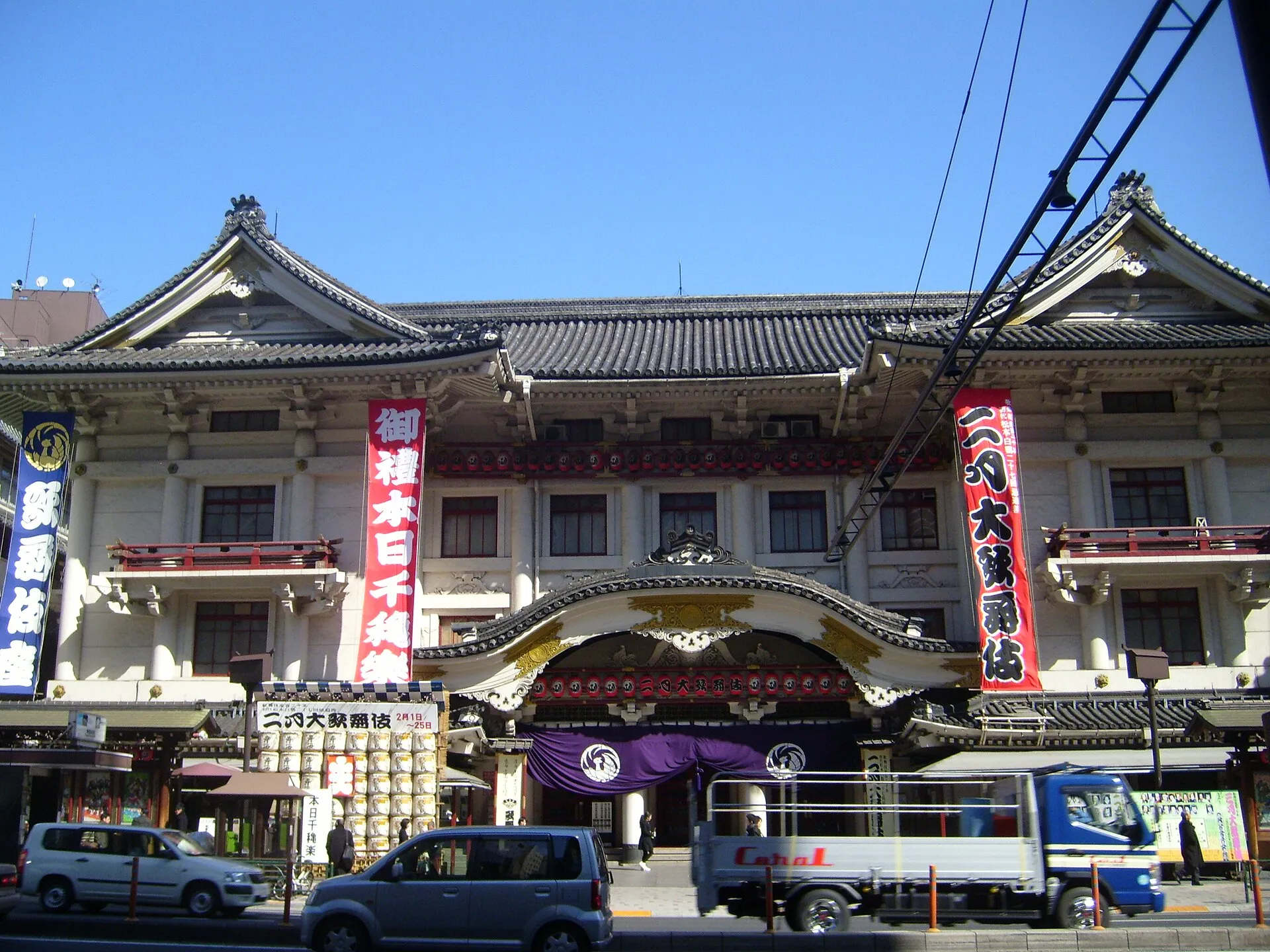
The traditional Japanese architectural facade of Kabukiza in Ginza. Photo: Shakher59, Wikimedia Commons, CC BY-SA 4.0.
Single-act tickets (Makumi-seki)
For travellers who wish to experience the spectacle of classical theatre without committing to a four-hour sitting, the Kabukiza reserves the entire fourth floor (level 4) exclusively for single-act viewers (Hitomaku-mi).
Single-act prices and schedule
Prices for single-act admission vary with the act and are published each month on Kabuki Web.
| Act, November 2026 | Time | 4th-level seat | 2nd-level upgraded seat |
|---|---|---|---|
| Kanadehon Chushingura, Acts 1 and 3 | 11:00–12:36 | ¥2,200 | ¥7,900 |
| Kanadehon Chushingura, Act 4 | 13:11–14:43 | ¥2,200 | ¥7,900 |
| Kanadehon Chushingura, Joururi | 15:03–15:42 | ¥1,600 | ¥5,800 |
| Kanadehon Chushingura, Acts 5 and 6 | 16:30–18:15 | ¥3,000 | ¥10,800 |
| Kanadehon Chushingura, Acts 7 and 11 | 18:45–21:17 | ¥3,000 | ¥10,800 |
The table is the programme to 25 November 2026; prices change with each month’s programme.
How to purchase single-act tickets
- Online advance reservation: single-act tickets can be pre-booked online through the official Shochiku portal starting from 12:00 noon (Japan time) the day before the performance date.
- Same-day box office purchases: remaining single-act tickets are sold at the dedicated Makumi-seki ticket booth situated on the ground floor outside the Kabukiza’s main entrance on the left. The window opens approximately 30 minutes before the scheduled start time of each respective act.
- Queueing and entry: fourth-floor ticket holders access the gallery via a dedicated lift located beside the outside ticket office; you do not enter through the main front lobby. In the non-reserved section, seats are selected in order of the sequential queue number printed on your ticket.
Tours and guided cultural options
Attending kabuki through pre-booked tours ensures confirmed seating in the primary auditorium tiers and pairs the performance with broader cultural context.
Kabukiza full-programme reserved admission
From ¥16,500 · 4.7 stars from 300 reviews · 4.5 hours · main auditorium seating
Tokyo: KABUKI Show at Kabukiza Theatre Admission Ticketad: secures official reserved seating in the main auditorium stalls or upper dress circles for the full four-hour production. Includes English performance synopses and customer assistance.
Shinjuku sumo performance and chanko nabe experience
From ¥16,000 · 4.8 stars from 8,752 reviews · 2 hours · dinner & demonstration
Tokyo: Sumo Entertainment Show with Chicken Hot Pot & Geishaad: an engaging alternative evening performance exploring traditional wrestling techniques, ring ceremonies, and geisha dances alongside a traditional chanko nabe hot pot feast.
Evening izakaya and cultural walking crawl
From ¥6,000 · 4.9 stars from 2,966 reviews · 3 hours · guided food tour
Tokyo: Shinjuku Local Bar & Izakaya Crawl Tourad: an authentic after-theatre dining crawl through the historic lantern-lit alleys of Omoide Yokocho and Golden Gai, sampling grilled yakitori and regional sake.
Seating levels and prices side by side
Choosing the appropriate ticket category depends on budget, duration, and desire for close-up theatrical immersion.
| Seating category | Typical price | Location | Who it suits |
|---|---|---|---|
| First-class (Sajiki-seki) | ¥18,000 to ¥22,000 | Ground stalls & private side boxes with low tables | Enthusiasts wanting maximum stage intimacy and bento service |
| Second-class (Upper Stalls) | ¥14,000 to ¥16,000 | Rear stalls & front second-tier balcony | Clear, unobstructed view of the stage and hanamichi walkway |
| Third-class (Upper Balcony) | ¥4,000 to ¥6,000 | Third-floor gallery | Budget travellers wanting to watch the complete 4-hour performance |
| Single-Act (Makumi-seki) | ¥1,600 to ¥3,000 | Fourth-floor standing & seated gallery | First-timers seeking an authentic 1-hour cultural taster |
| Reseller Full-Show Ticket | From ¥16,500 | Confirmed lower-level auditorium | Overseas travellers needing English booking and confirmed seats |
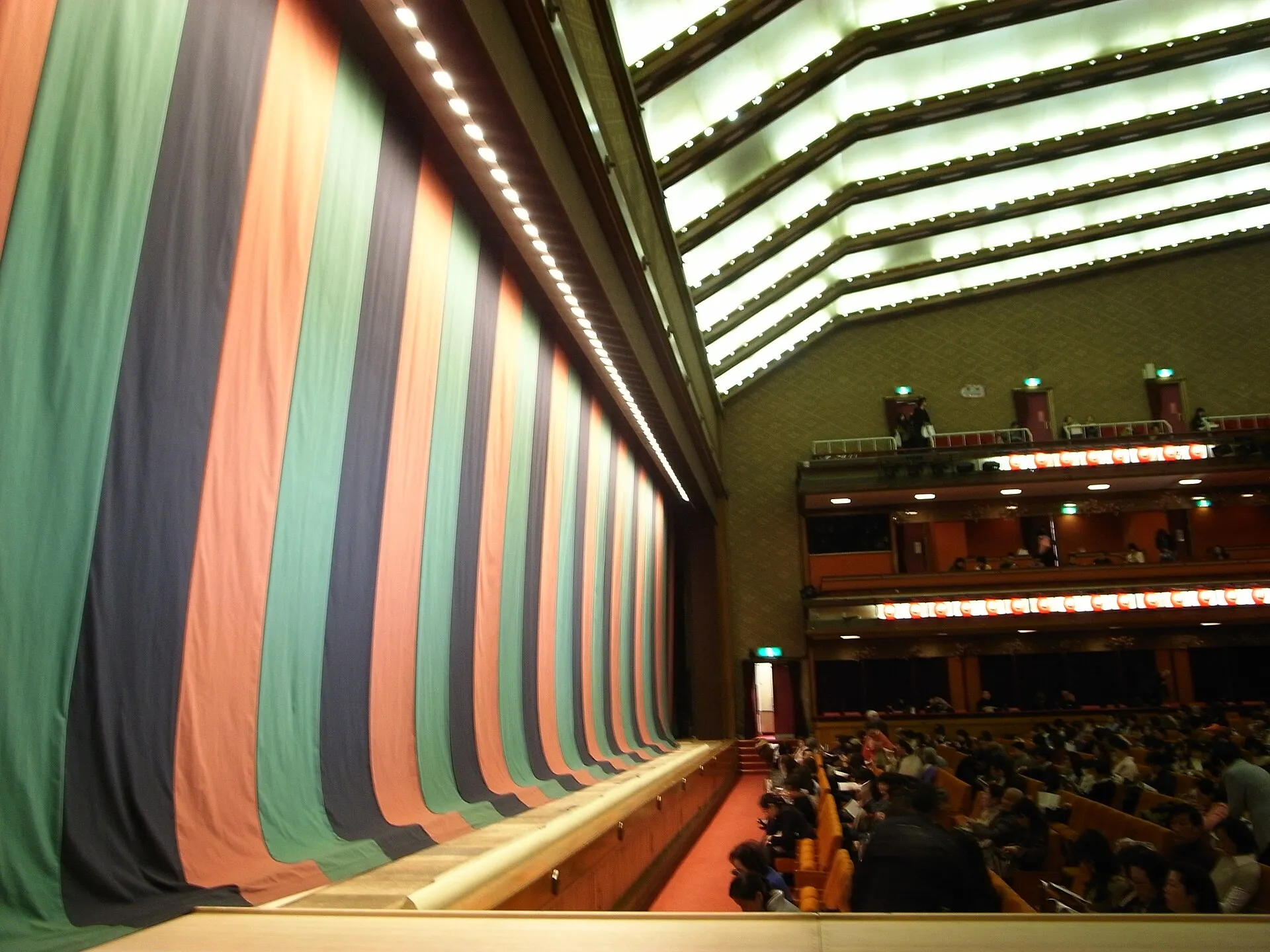
The traditional black, green and persimmon striped curtain at the Kabukiza. Photo: Shakher59, Wikimedia Commons, CC BY-SA 4.0.
Stage elements to watch for
Kabuki employs a range of stage conventions that heighten theatrical drama:
- Hanamichi (Flower Path): a raised wooden footbridge extending from the rear of the auditorium directly through the audience onto the left side of the main stage. Actors deliver dramatic soliloquies, make explosive entrances, and execute theatrical exits (roppo) along this pathway.
- Onnagata (Female Role Specialists): because all kabuki roles have been performed by male actors since an imperial edict in 1629, the onnagata undergo decades of physical training to embody idealised female grace through stylised posture, gestures, and vocal modulation.
- Mawari-butai (Revolving Stage): a circular revolving platform cut into the stage floor, invented in Japan in the eighteenth century, allowing rapid, fluid set changes without dropping the curtain.
- Kakegoe (Audience Shouts): during moments of high dramatic tension or when an actor strikes a dynamic statue-like pose (mie), expert connoisseurs seated in the upper gallery call out the actor’s hereditary guild or guild house name (such as “Naritaya!” for the Ichikawa Danjuro lineage) to praise the performer.
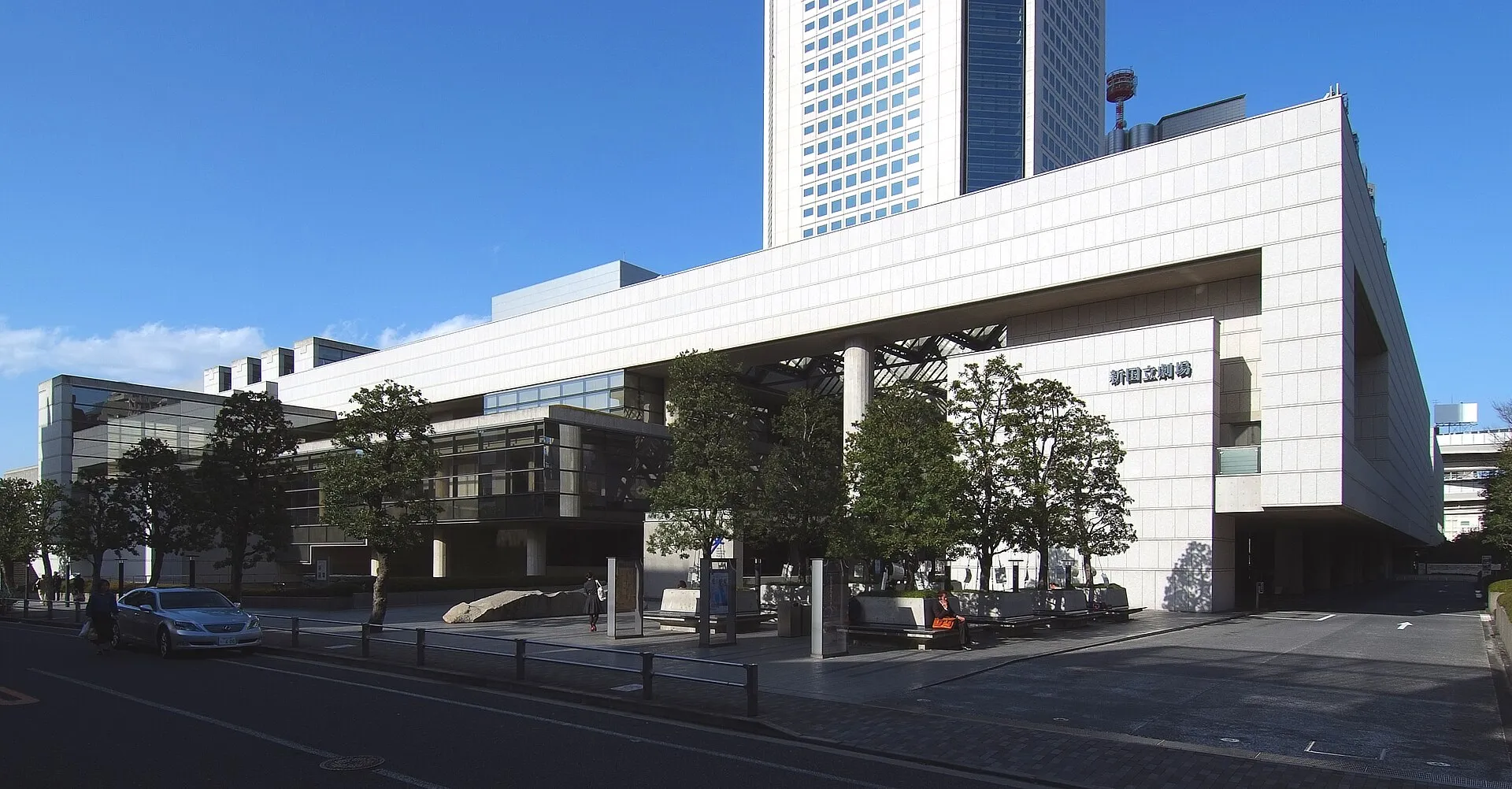
The National Theatre in Chiyoda. Photo: Wikimedia Commons, CC BY-SA 3.0.
Theatre etiquette and practical tips
- Audio guide rental: while the dialogue is performed in classical Edo-period Japanese, the theatre provides an English earphone guide for hire in the lobby. The unit costs ¥800 for single-act viewers or ¥1,000 for full-programme attendees (cash only), delivering synchronous commentary and plot summaries directly into one ear without drowning out the live shamisen music.
- Photography regulations: photography, filming, and sound recording are strictly prohibited inside the auditorium throughout the performance, even without a flash. Mobile phones must be powered off entirely, as vibration motors can disrupt quiet dialogue sequences.
- Interval bento dining: during the longer 30-minute intervals (makuai) between acts, patrons holding main auditorium tickets may eat themed makunouchi bento lunchboxes at their seats or in the theatre restaurants. Single-act attendees on the fourth floor are not permitted to consume food in the gallery.
- Dress standards: formal evening wear is not required; casual clothes and comfortable walking shoes are completely standard among foreign and local visitors alike.
Getting to the Kabukiza
The Kabukiza is located at 4-12-15 Ginza, Chuo-ku, Tokyo, directly integrated into the underground rail network:
- Direct subway connection: Tokyo Metro Hibiya Line and Toei Asakusa Line connect directly to Higashi-Ginza Station. Exit 3 leads straight into the Kobikicho Square concourse in the theatre’s lower basement, requiring no street-level walking in inclement weather.
- From Ginza Station: walk 5 minutes eastward along Harumi-dori avenue from Ginza Station (Tokyo Metro Ginza, Marunouchi, and Hibiya Lines) Exit A7.
- From JR Yurakucho Station: a pleasant 12-minute walk from the JR Yamanote Line central exit through the Ginza shopping district.
Pairing kabuki with your Tokyo itinerary
- Morning at the fish market: visit the food stalls and sushi counters of Tsukiji Outer Market, located just an 8-minute walk south of Higashi-Ginza, before attending an 11:00 matinee.
- Ginza shopping and dining: browse luxury department stores and retail complexes detailed in our tax-free shopping guide, or sample acclaimed cuisine covered in where to eat in Tokyo.
- Contrast with modern entertainment: compare the traditional drama of kabuki with high-speed karting (Street Kart Tokyo) or futuristic digital art at teamLab Planets.
- Broader trip planning: consult our Tokyo public transport overview and the comprehensive Tokyo city hub for hotel ideas and ticket booking timelines across Japan.
Common questions
How long does a kabuki performance last?
A full kabuki programme lasts between 3.5 and 4.5 hours, consisting of two or three distinct plays or dance dramas separated by 20 to 30-minute intervals. Most calendar runs offer two daily programmes: a matinee beginning around 11:00 and an evening show beginning around 16:30.
Can you watch just one act of kabuki?
Yes. The Kabukiza sells dedicated single-act tickets (Makumi-seki) located in the fourth-tier gallery. Prices differ by act: in November 2026 they run from ¥1,600 to ¥3,000, and an act lasts from about 40 minutes to two and a half hours.
Is an English audio guide available at the Kabukiza?
Yes. An English-language audio guide (earphone guide) providing simultaneous scene commentary, plot explanations, and historical context is available in the lobby for ¥800 for a single act or ¥1,000 for a full programme, payable in cash.
What is the dress code for attending kabuki?
There is no strict dress code; smart casual attire is perfectly acceptable for both single-act viewers and full-programme ticket holders. Japanese patrons frequently attend in traditional kimono.