In this guide
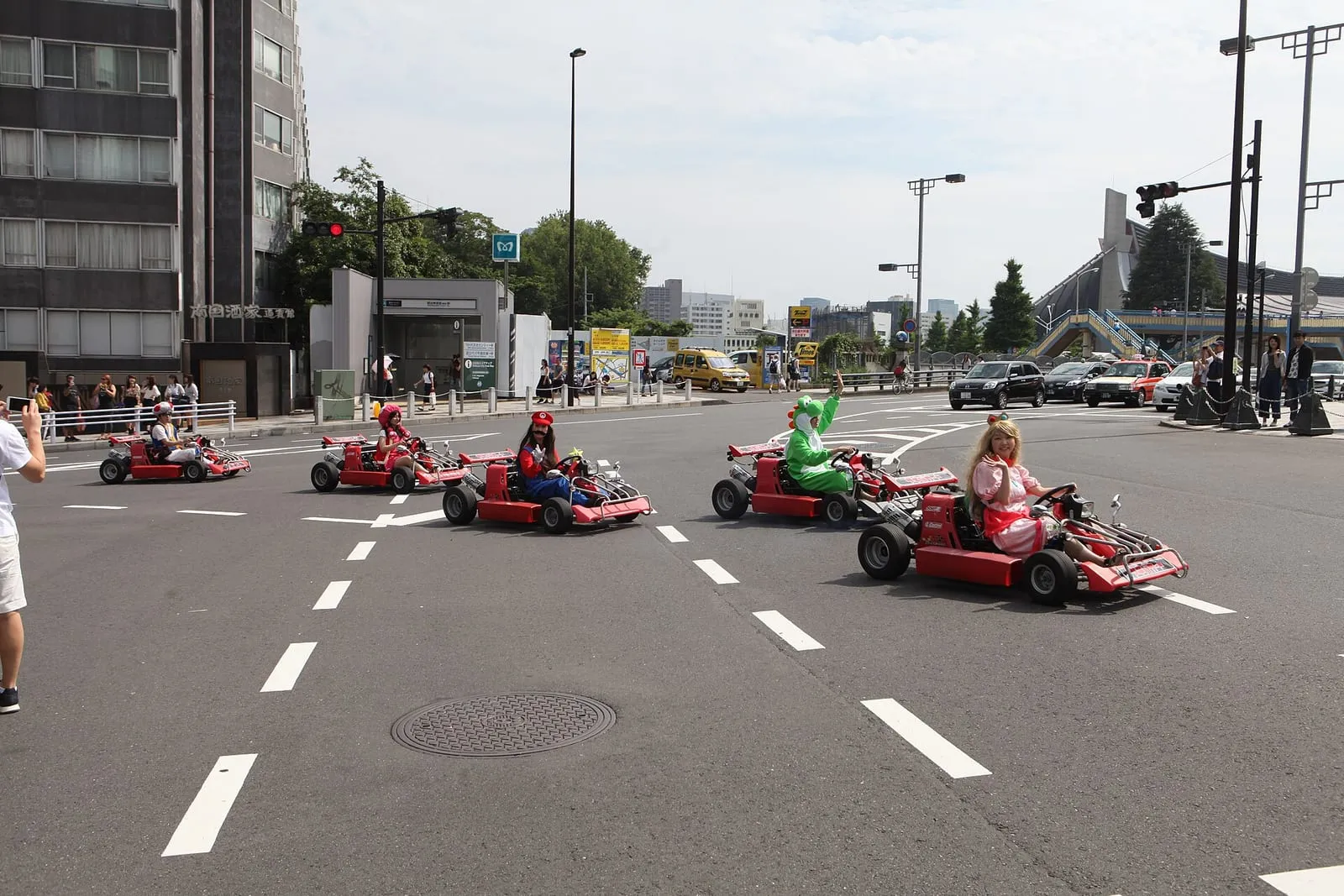
💡 The Short Version: Street kart tours involve driving single-seat, street-legal go-karts on Tokyo’s open public roads in costume, following a lead guide in regular city traffic. To participate, you must hold a driving licence recognized by Japanese law: either an International Driving Permit (IDP) issued strictly under the 1949 Geneva Convention, or an official Japanese translation of your domestic licence for citizens of Switzerland, Germany, France, Belgium, Monaco, or Taiwan. An IDP cannot be issued in Japan; you must secure the physical booklet before leaving home. Tours cost from ¥8,050 to ¥10,000 for one hour in Akihabara and Shinjuku, and ¥14,000 to ¥16,500 in Shibuya. Or book a tour: reserve the highly rated Tokyo: Street Kart Experience in Shibuyaad (from ¥16,500, 4.9 stars from 1,974 reviews) to drive across Shibuya Scramble Crossing. All prices are in Japanese yen (¥).
⚠️ No licence, no drive: Operators operate a zero-tolerance policy. If you arrive without the original physical IDP booklet (1949 convention only) or official translation alongside your physical passport, your booking will be cancelled on the spot without a refund. Digital photos or smartphone PDFs are legally invalid.
Legal status and driving licence requirements
Under Japan’s Road Traffic Act, street karts are categorized as microcars or minicars (engine displacement under 50cc). Because they drive on standard municipal roads and express multi-lane avenues alongside lorries, city buses, and taxis, drivers are subject to the same legal standards as any automobile operator in Japan.
Foreign visitors must present one of four recognized licence formats to the shop staff at registration:
| Licence category | Eligibility and requirements | Key details |
|---|---|---|
| 1949 Geneva Convention IDP | Drivers from signatory countries (including the UK, US, Australia, Canada, New Zealand, Ireland) | Must be the physical booklet marked Convention on Road Traffic of 19 September 1949. The 1968 Vienna Convention IDP is not recognized in Japan |
| Official Japanese Translation | Drivers holding domestic licences from Switzerland, Germany, France, Belgium, Monaco, or Taiwan | Must present the original domestic licence alongside an official translation issued by the Japan Automobile Federation (JAF) or an embassy |
| Japanese Driver’s Licence | Residents or holders of a valid Japanese domestic licence | Standard Class 1 ordinary vehicle licence (futsu menkyo) |
| US SOFA Driving Permit | US Military personnel and their families stationed in Japan | US Forces Japan Form 4EJ military operator permit |
- Obtaining your permit before departure: You cannot purchase or obtain an IDP once you land in Tokyo. Foreign embassies in Tokyo and Japanese police prefectural bureaus do not issue IDPs to temporary visitors.
- Physical documents only: You must carry both your original physical domestic driving licence and the physical IDP booklet, along with your original passport. Photocopies, digital scans, laminated facsimiles, or international licences bought on commercial websites without government authority are refused.
- Minimum age: Drivers must be at least 18 years old, which is the legal minimum driving age for four-wheeled motor vehicles in Japan.
History, Nintendo lawsuits, and costumes
Street kart tours originally began operating under the commercial trade name “MariCar” in the mid-2010s, outfitting participants in red overalls and green caps reminiscent of the Mario Kart video game franchise.
In 2017, Nintendo initiated legal proceedings against the primary operator in the Tokyo District Court, alleging unfair competition and trademark infringement. The Japanese courts ruled decisively in Nintendo’s favour, finding that the operator had unlawfully exploited Nintendo’s intellectual property and ordering the payment of substantial damages. The judgment was upheld by the Supreme Court of Japan.
Consequently, all commercial go-kart rental companies in Tokyo now operate as entirely separate entities without any affiliation with Nintendo. The primary operator rebranded to Street Kart. Official Nintendo character costumes are strictly prohibited; instead, rental shops provide a wide selection of authorized animal onesies (dinosaurs, pandas, penguins), superhero capes, anime-style jumpsuits, and seasonal holiday outfits included in the tour price.
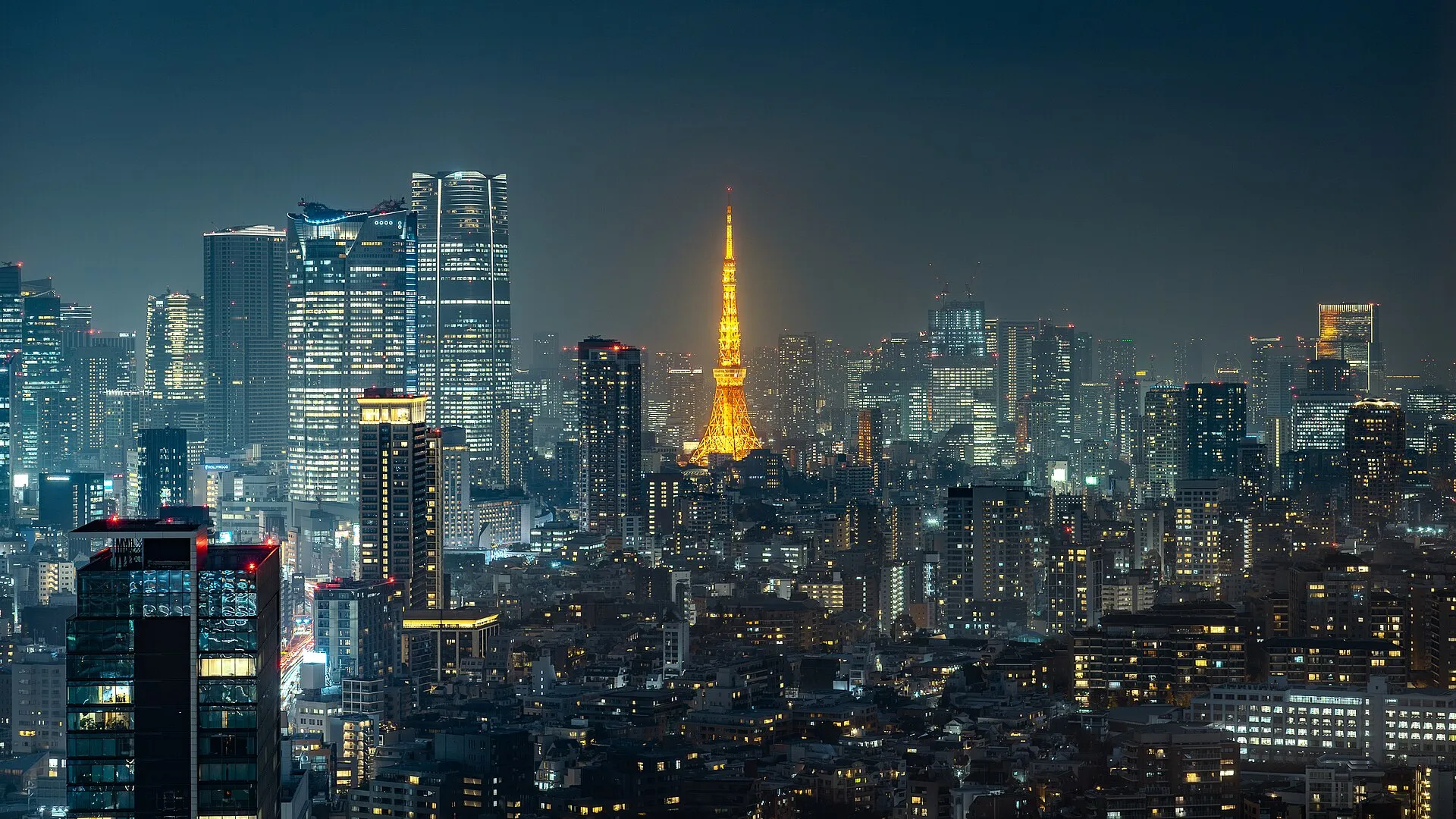
Tokyo Tower’s lattice ironwork seen from street level in Minato. Photo: David Kernan, Wikimedia Commons, CC BY 4.0.
Safety regulations, vehicle handling, and operational rules
Driving a low-slung go-kart inches above the tarmac on Tokyo’s busy metropolitan boulevards requires strict adherence to convoy safety protocols:
- Convoy formation: Tours travel in single file behind an experienced lead guide who navigates traffic lights, lane changes, and intersections. A tail guide follows the rear of the group to assist any drivers separated by traffic signals.
- Speed and acceleration: The karts are powered by small single-cylinder petrol engines capable of reaching speeds between 50 and 60 km/h (31 to 37 mph). Drivers must maintain safe following distances (at least two vehicle lengths) and avoid sudden braking.
- Controls: The karts feature automatic transmissions with two foot pedals: accelerator on the right, brake on the left. Steering is unassisted and requires a firm two-handed grip.
- Helmets and seatbelts: Under Japanese road safety legislation, microcars are exempt from mandatory helmet and seatbelt requirements. However, operators provide protective glasses or clear face shields to guard against airborne dust, exhaust fumes, and road spray.
- Zero tolerance for alcohol: Japan enforces an absolute zero-tolerance policy for driving under the influence of alcohol (shukki obi unten). The legal blood alcohol concentration limit is effectively 0.00%. Operators administer mandatory breathalyser tests before handing over vehicle keys; any detected trace of alcohol results in immediate cancellation without refund.
- Smartphones and photography: Using a handheld mobile phone, taking selfies, or operating handheld cameras while driving is illegal under Japanese road traffic law. Guides take group photos at red traffic lights and scenic stopping points, which are transferred to drivers free of charge after the tour. If you wish to record video while driving, you must attach an action camera to an approved chest mount or secure helmet mount before setting off.
Dress code and weather policies
Because you will be driving open-cockpit vehicles in urban traffic, sensible attire is mandatory:
- Footwear: Flat, closed-toe footwear is compulsory. Sports trainers or walking shoes are ideal. High heels, wedges, sandals, slip-on mules, and flip-flops are prohibited. Many shops rent flat shoes or trainers for ¥500 if you arrive in unsuitable footwear.
- Clothing: Avoid loose scarves, long flowing dresses, or wide-legged trousers that could come into contact with moving mechanical components. In winter months (December to March), temperatures on the road can feel freezing due to windchill; thermal base layers, heavy coats, and warm gloves are essential.
- Lockers: Operators provide on-site lockers to store personal belongings, daypacks, and coats during the drive.
- Rain and inclement weather: Tours proceed in light to moderate rain; shops provide waterproof rain suits and clear protective goggles. In the event of severe weather warnings—such as typhoon advisories, torrential thunderstorms, or heavy snow—tours are cancelled by the operator, and participants receive a full refund or the option to reschedule.
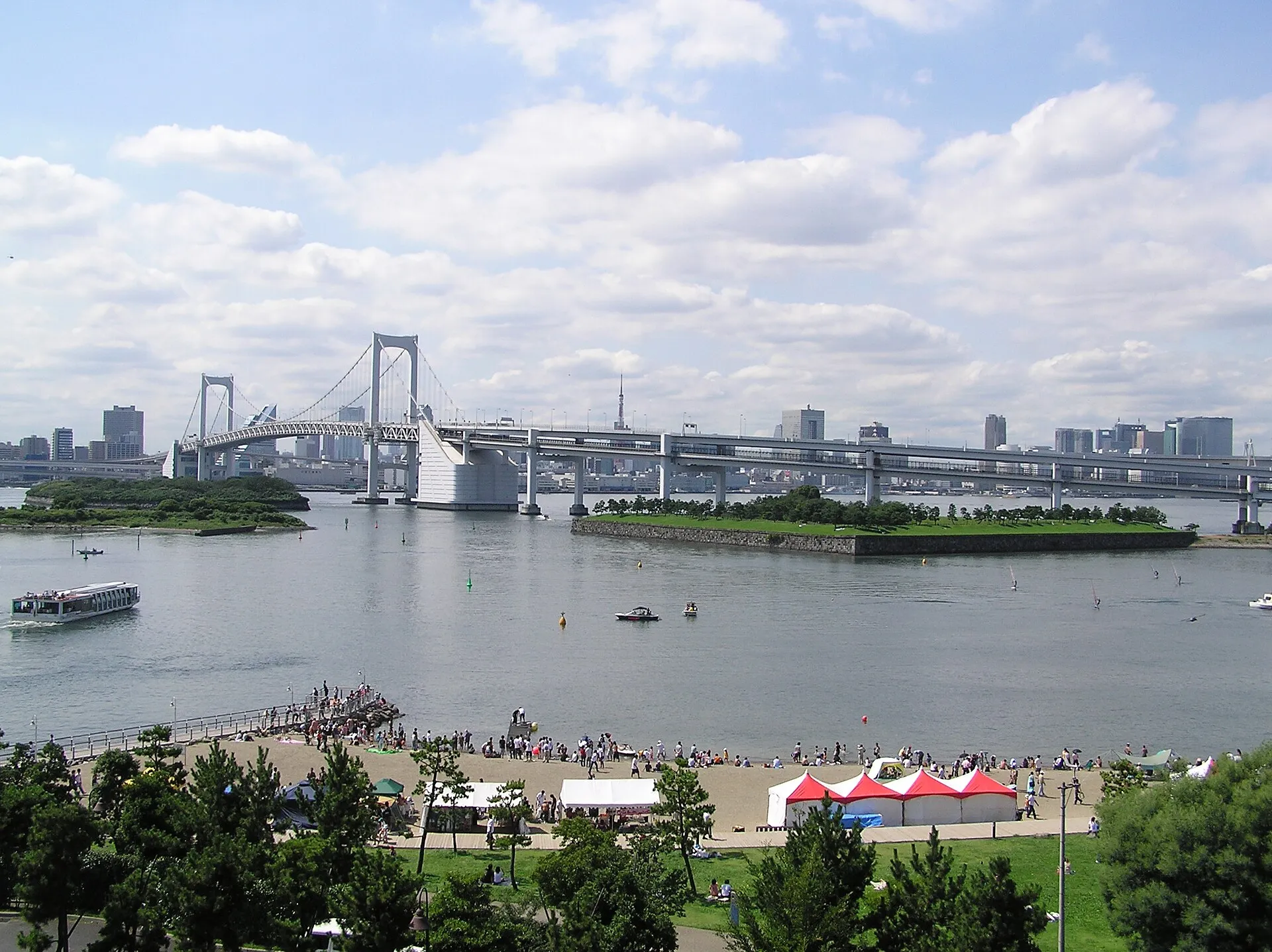
The Rainbow Bridge suspension spans crossing Tokyo Bay. Photo: Morio, Wikimedia Commons, CC BY-SA 3.0.
Comparing the major tour routes
Different shops around Tokyo operate distinct driving courses, catering to different sightseeing preferences:
| Route | Duration | Starting location | Main sights along route | Price range |
|---|---|---|---|---|
| Shibuya Crossing Route | 1 hour | Shibuya (near station) | Shibuya Scramble Crossing, Omotesando, Harajuku, Miyashita Park | ¥14,000–¥16,500 |
| Shibuya & Shinjuku Route | 1 to 1.5 hours | Shibuya or Shinjuku | Meiji Dori, Kabukicho neon alleys, Tokyo Metropolitan Government Building | ¥9,000–¥12,000 |
| Akihabara Route | 1 hour | Akihabara | Electric Town, Kanda Shrine, Asakusa (Sumida River), Tokyo Station | ¥8,050–¥10,000 |
| Bay Area & Rainbow Bridge | 1.5 to 2 hours | Shin-Kiba / Odaiba | Rainbow Bridge lower deck, Tokyo Tower, Roppongi, Ginza | ¥17,000–¥22,000 |
Popular street kart tours
Booking through recognized platforms guarantees vehicle availability and transparent cancellation policies.
Tokyo: Street Kart Experience in Shibuya
From ¥16,500 · 4.9 stars from 1,974 reviews · 1 hour
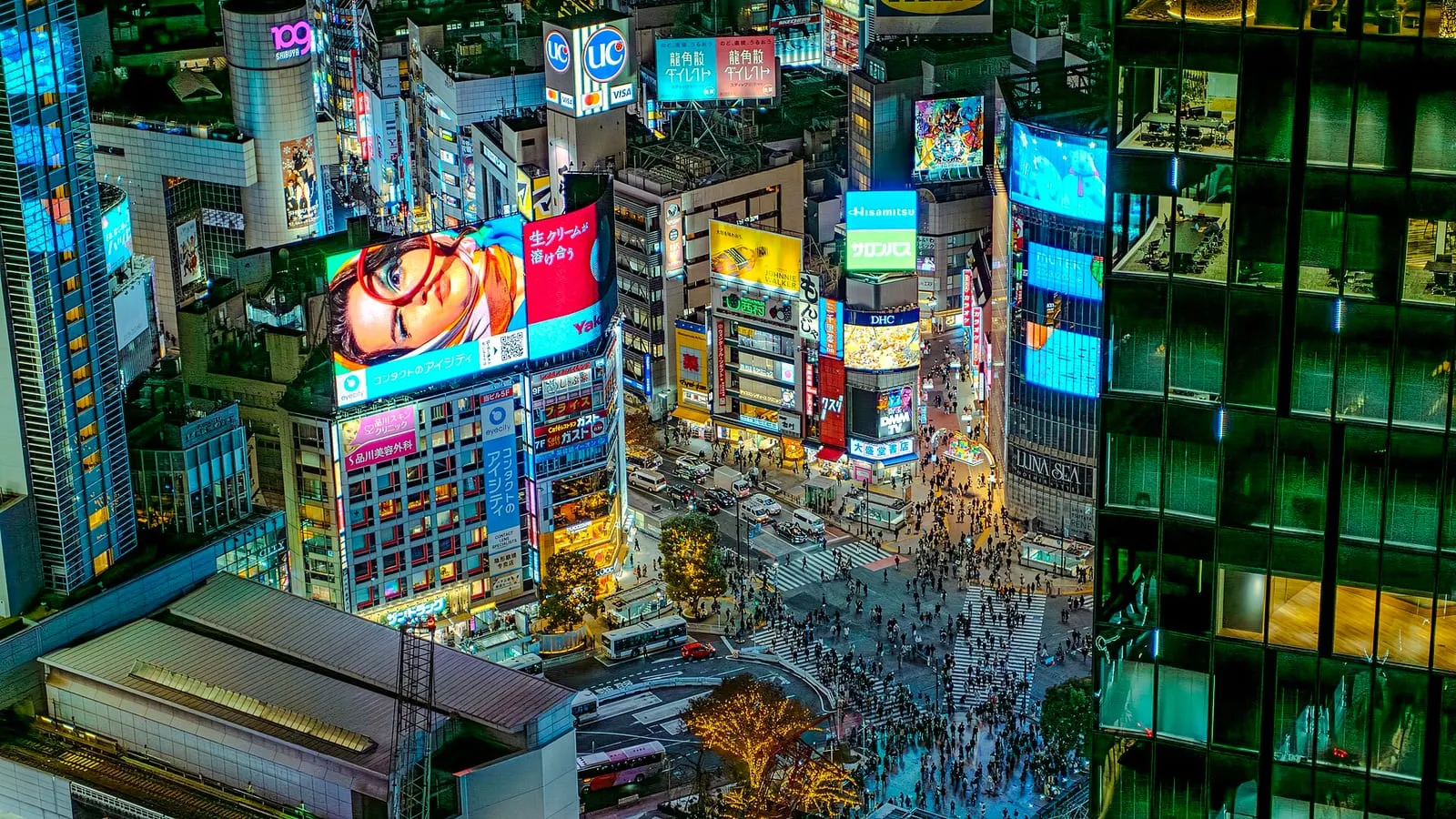
The Tokyo: Street Kart Experience in Shibuyaad is the flagship street kart experience in Tokyo. Departing from a workshop located minutes from Shibuya Station, the tour takes your convoy directly across the Shibuya Scramble Crossing. Guides coordinate stops at major intersections to capture high-resolution photos of you in your kart against the giant digital video screens and illuminated shopping towers. The route loops through fashionable Omotesando before returning to Shibuya.
Shibuya Kart: Premium Go-Karting Tour through Shibuya, Tokyo
From ¥10,000 · 4.7 stars from 1,056 reviews · 45 minutes to 1.5 hours
The Shibuya Kart: Premium Go-Karting Tour through Shibuya, Tokyoad offers a competitive price point for exploring the Shibuya district. Participants can choose between a concise 45-minute sprint through Shibuya’s core avenues or an extended 90-minute circuit that incorporates the tree-lined boulevards of Harajuku and Aoyama.
Tokyo: Shibuya and Shinjuku Streets Guided Go-Karting Tour
From ¥9,000 · 4.6 stars from 747 reviews · 1 hour
The Tokyo: Shibuya and Shinjuku Streets Guided Go-Karting Tourad connects western Tokyo’s two largest railway hubs. The driving path follows major arterial roads between Shinjuku’s high-rise skyscraper district and Shibuya, cruising past Omoide Yokocho and along Meiji Dori. It is particularly striking during evening departures when neon shop signage illuminates the roadway.
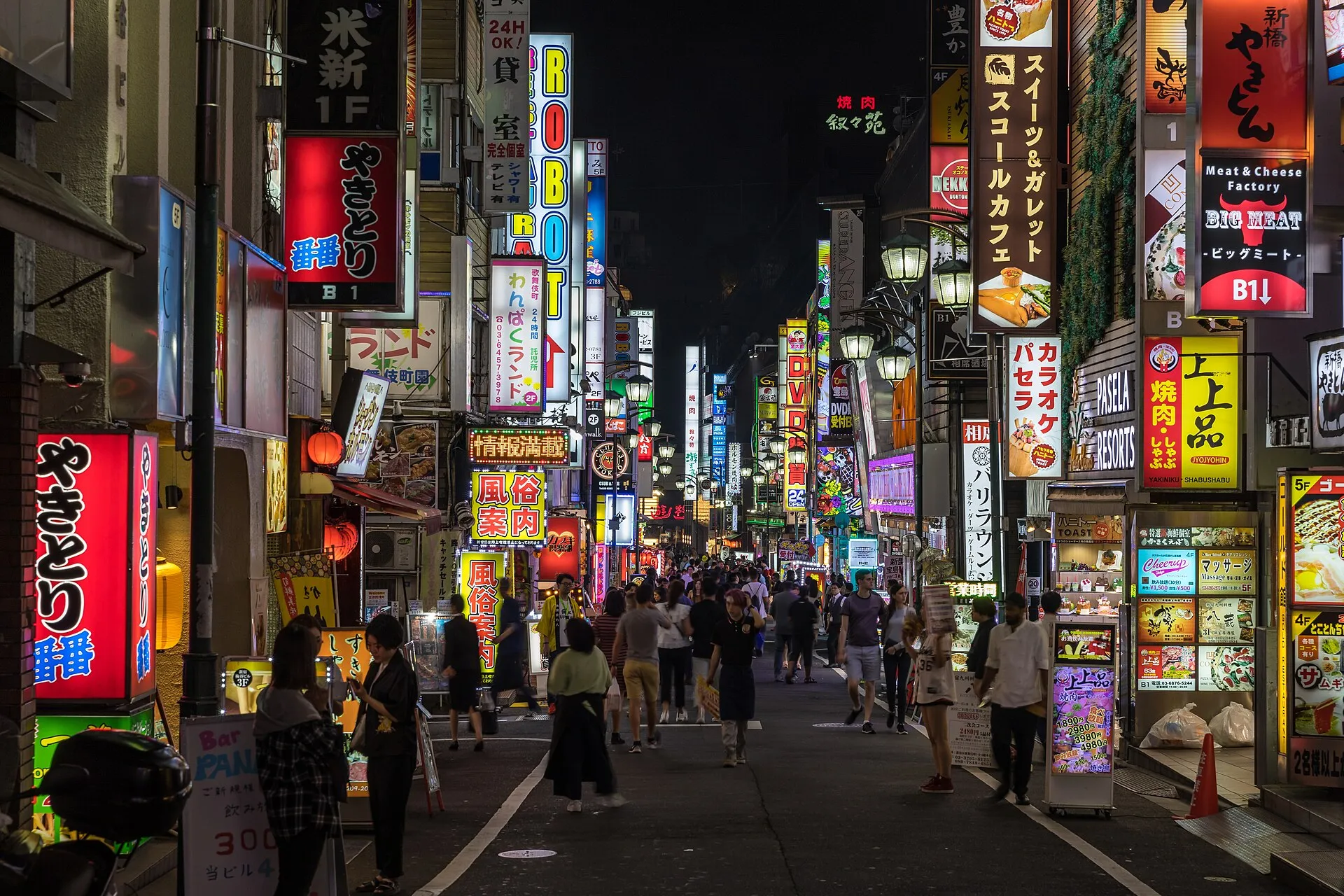
Illuminated restaurant and entertainment signs in Kabukicho, Shinjuku. Photo: Basile Morin, Wikimedia Commons, CC BY-SA 4.0.
Insurance coverage and excess liabilities
All reputable kart tour operators include baseline motor third-party liability insurance in the headline booking price, covering bodily injury to third parties and property damage up to standard statutory limits.
However, standard contracts carry an insurance excess (deductible) of ¥50,000 per incident for physical damage caused to the kart itself. If you scratch the bodywork, clip a kerb, collide with another kart in the convoy, or cause mechanical breakage through reckless driving, you are liable to pay this ¥50,000 fee on the spot.
Most operators offer an optional Collision Damage Waiver (CDW) at the reception desk for an additional fee of ¥1,500 to ¥2,000 per driver. This waiver eliminates the ¥50,000 excess, provided the driver followed guide instructions and did not commit an intentional traffic violation.
Where to go next
If you are joining a Shibuya-based tour, combine your drive with a pedestrian exploration of the area using our Shibuya Crossing guide and our self-guided Meiji Jingu, Harajuku and Shibuya walk. For a bird’s-eye view of the streets and intersections you just drove through, book an evening timeslot at the open-air rooftop observation deck with our Shibuya Sky tickets guide.
To explore the sights featured on the bay routes, read our guide to Tokyo Tower tickets. If you are choosing an accommodation base convenient for early tour check-in or evening nightlife, compare districts in Shinjuku or Shibuya and our neighbourhood breakdown of where to stay in Tokyo. For navigation on the subway network to reach your tour starting point, consult our guide to Tokyo public transport, and plan the rest of your itinerary with the Tokyo hub.
Common questions
Do you need a driving licence for a Tokyo street kart tour?
Yes. Street karts are legally classified as motor vehicles under Japanese traffic law. You must present either an International Driving Permit issued under the 1949 Geneva Convention, an official Japanese translation of a domestic licence from selected countries (Switzerland, Germany, France, Belgium, Monaco, Taiwan), a valid Japanese driver's licence, or a US SOFA licence.
Can you obtain an International Driving Permit after arriving in Japan?
No. Japanese authorities and police stations do not issue International Driving Permits to foreign tourists. You must obtain a physical 1949 Geneva Convention IDP booklet in your home country before departing for Japan. Digital scans, phone photographs, or provisional permits are strictly rejected.
Are Tokyo street karts associated with Nintendo or Mario Kart?
No. Street kart tours are operated by independent private companies. Following trademark litigation by Nintendo in Japanese courts, operators cannot use the name 'MariCar' or provide official Nintendo character costumes. Costumes provided today include superhero outfits, anime figures, and animal onesies.
How much do Tokyo street kart tours cost?
One-hour guided street kart tours cost between ¥8,050 and ¥10,000 per driver in Akihabara and Shinjuku, and between ¥14,000 and ¥16,500 for high-demand routes through Shibuya. Two-hour routes crossing the Rainbow Bridge to Tokyo Tower cost between ¥17,000 and ¥22,000.
What footwear and clothing are required?
Drivers must wear flat, closed-toe footwear such as trainers or walking shoes. High heels, open-toed sandals, flip-flops, and platform soles are prohibited. Flowing skirts or trailing scarves that could become entangled in the wheels or drive mechanism are also banned.