In this guide
💡 The Short Version: Seoul’s 24-hour convenience stores (CU, GS25, 7-Eleven, Emart24) function as culinary social hubs. Must-try experiences include cooking instant ramyeon (₩1,500–₩3,500) on automated Han River-style induction cookers, pouring foil pouch drinks (₩1,200–₩2,000) over cups of clear ice balls, and unwrapping Triangle Gimbap (Samgak Gimbap, ₩1,000–₩1,500) using the three-tab method. Popular snack pairings include melting string cheese into spicy Buldak noodles and sipping sweet Binggrae Banana Flavoured Milk (₩1,700).
The Seoul convenience store landscape
In South Korea, convenience stores (pyeon-ui-jeom) are essential neighbourhood community hubs. Seoul boasts over 10,000 branches across four major brands:
- CU: South Korea’s largest domestic operator, noted for creative dessert collaborations and bakery lines.
- GS25: Renowned for high-quality prepared lunchboxes (dosirak) and exclusive craft beer collaborations.
- 7-Eleven: Exceptional ready-to-eat hot food cases, Korean skewers, and imported treats.
- Emart24: Sleek modern outlets operated by the Shinsegae retail group, offering boutique wine selections and café counters.
Stores feature microwave stations, boiling hot water dispensers, outdoor picnic tables, free phone-charging ports, and parcel delivery lockers.
| Food item | Typical price | Signature product | Flavour profile and serving notes |
|---|---|---|---|
| Automated bowl ramyeon | ₩2,000 to ₩4,000 | Shin Ramyun, Neoguri, Buldak | Cooked to al dente perfection on induction cooktops in 3 minutes |
| Pouch iced drink + ice cup | ₩1,800 to ₩3,200 | Hazelnut coffee, Peach ade, Blue lemon | Sweet, chilled refreshments poured over clear spherical ice balls |
| Triangle gimbap (Samgak) | ₩1,000 to ₩1,500 | Tuna Mayo, Jeonju Bibimbap | Crisp laver seaweed enclosing seasoned rice and savoury fillings |
| Bento lunchbox (Dosirak) | ₩4,500 to ₩6,500 | 11-side dish Baekban, Spicy Pork | Complete multi-compartment meal heated in store microwave for 90 seconds |
| Binggrae Banana Milk | ₩1,700 to ₩1,800 | Classic yellow hourglass bottle | Cult-classic creamy, sweet, vanilla-banana scented dairy drink |
| Honey Butter Chips | ₩1,500 to ₩2,000 | Haitai Calbee Honey Butter | Golden potato crisps glazed with Acacia honey and French butter powder |
The automated ramyeon cooker ritual
Eating instant ramyeon boiled on an automated machine while sitting along the banks of the Han River—or inside a 24-hour convenience store—is a quintessential modern Seoul experience.
How to use the induction cooker step-by-step:
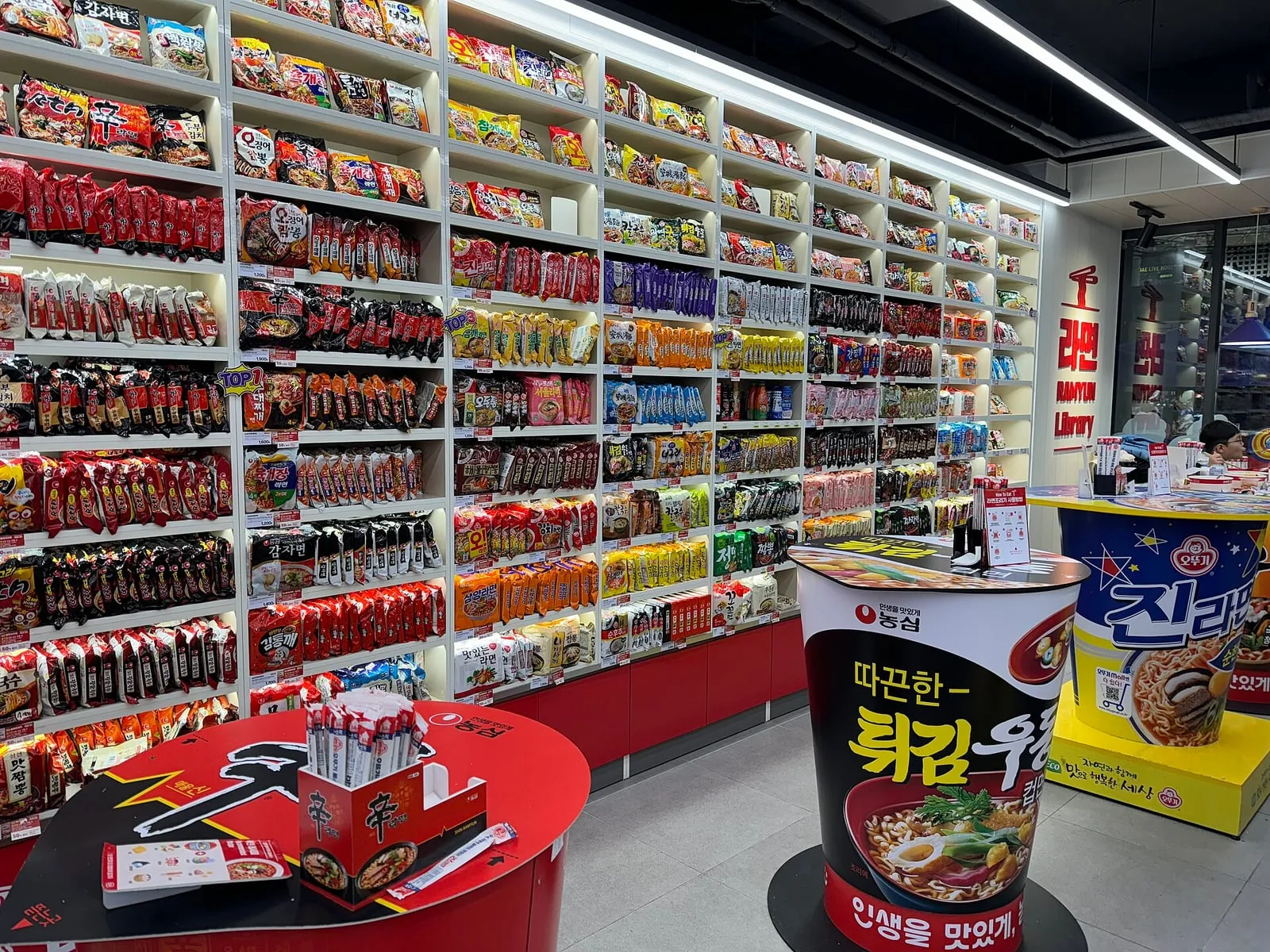
- Select your ramyeon: Walk to the instant noodle aisle. Rather than a standard styrofoam cup, select either a bagged ramyeon packet or a branded cardboard/foil induction tray (such as Nongshim Shin Ramyun, Chapagetti, Neoguri, or Samyang Buldak Carbonara).
- Purchase your tray and toppings: Take the packet to the cashier. The clerk will hand you a heat-resistant paper or aluminium cooking bowl printed with a square barcode on the outer rim. Pick up add-ons from the dairy fridge: an individually wrapped raw egg (₩500), a slice of American processed cheddar cheese (₩800), or a stick of mozzarella string cheese (₩1,500).
- Assemble the ingredients: Open the bowl and empty the dry noodle block into the bottom. Tear open the dehydrated vegetable sachet and soup powder, scattering both across the dry noodles.
- Scan the barcode: Walk to the automated ramyeon cooker machine. Hold the barcode on your bowl in front of the optical laser scanner on the machine front. A chime sounds, confirming the noodle type, and the induction plate illuminates.
- Start cooking: Place the bowl firmly on the matching circular heating ring. Press the flashing Start / Cook (조리시작) button. The machine automatically dispenses the precise volume of boiling water (typically 350 to 400 ml) into your bowl and begins high-speed induction heating.
- Stir and time: A digital LED countdown timer begins at 3:00 or 3:30. Use wooden chopsticks to gently press the noodles into the bubbling soup as they soften. If adding a raw egg, crack it into the bowl during the final 60 seconds so it poaches gently without burning to the bottom of the paper bowl.
- Finish: When the timer beeps, carefully lift the bowl using the thick rim (which remains cool) and take it to the dining counter or outdoor picnic bench.
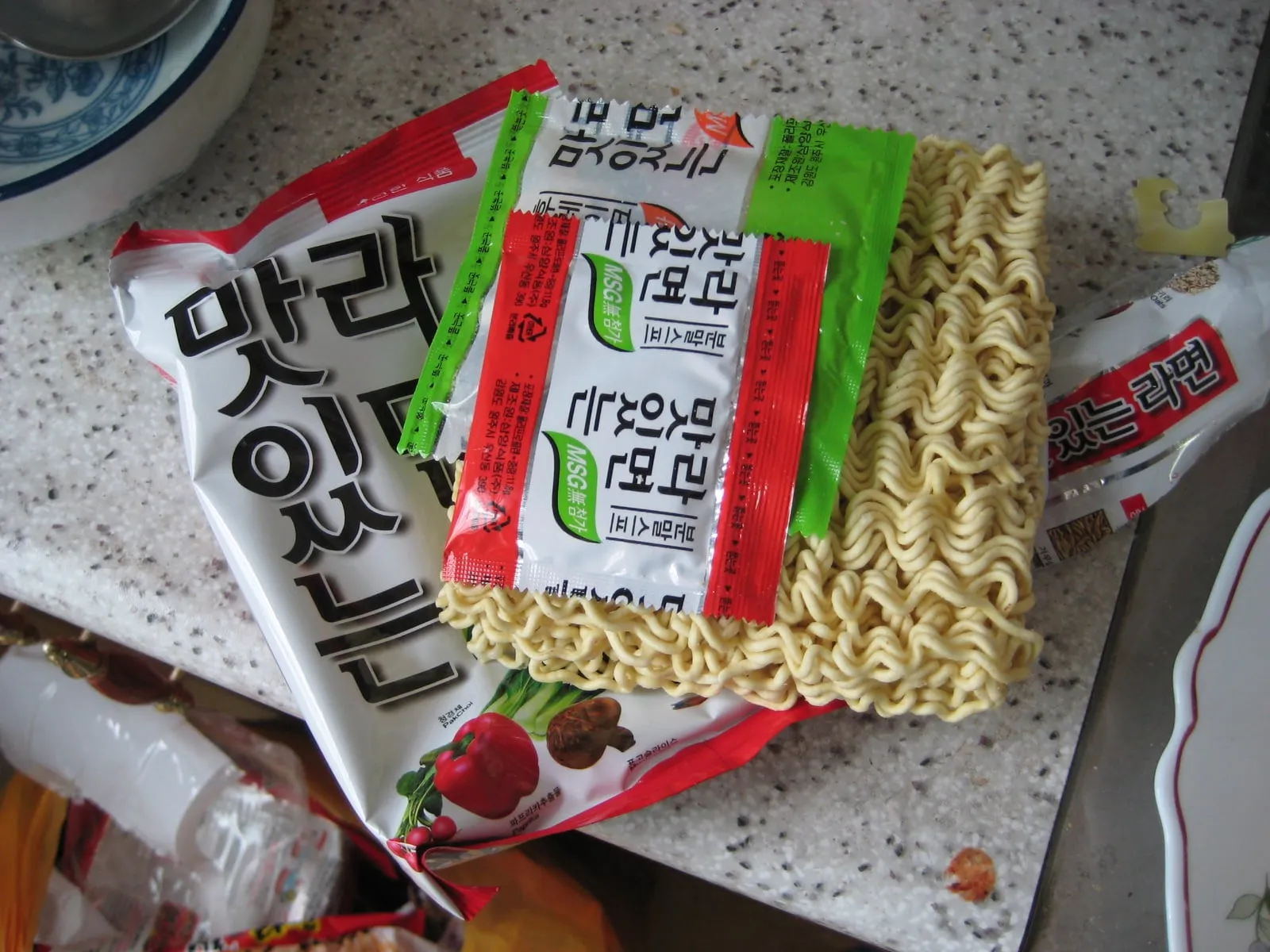
A dry ramyeon noodle block and seasoning packets. Photo: Timber Tank, Wikimedia Commons, CC BY-SA 2.0.
The iced pouch drink and ice cup hack
Korean convenience store drink fridges feature rows of colourful liquid foil pouches hung on wire racks, paired with separate freezer chests filled with sealed plastic cups of crystal-clear ice.
- How it works: Pick your favourite pouch from the rack:
- Coffee: Sweet Americano, Hazelnut drip coffee, Vanilla latte, or cold brew.
- Fruit Ades: Tart blue lemonade, sweet peach iced tea, Shine Muscat grape ade, or watermelon punch.
- The ice cup (eoreum cup): Open the freezer chest beside the rack. Select an ice cup: a standard cup of cubed ice (₩700), a jumbo cup (₩1,000), or a luxury dome cup containing one solid spherical ice ball (₩1,500).
- At the counter: Pay for both items together (combined cost is ₩1,800 to ₩3,200). Peel off the foil lid of the ice cup, tear open the pouch spout along the pre-scored notch, and pour the drink over the ice. The combination stays ice-cold for over an hour, providing an affordable alternative to cafe takeaway drinks.
Mastering Triangle Gimbap (Samgak Gimbap)
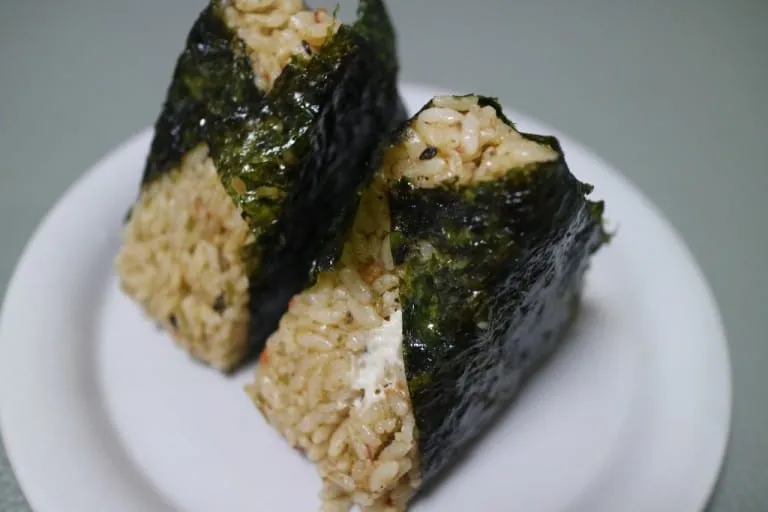
Samgak Gimbap are triangular parcels of steamed white rice wrapped in crisp roasted seaweed, sealed inside an ingenious patented plastic film that keeps the moisture of the rice from touching the seaweed until the moment of eating.
Popular flavours to look for:
- Chamchi Mayo (참치마요): Flaked tuna blended with rich mayonnaise and black pepper (the undisputed bestseller).
- Jeonju Bibimbap (전주비빔밥): Rice pre-tossed with red pepper paste and minced beef, with a savoury centre.
- Spicy Pork Bulgogi (제육볶음): Marinated pork sautéed in spicy gochujang.
The three-step unwrapping method:
- Pull Tab 1: Find the red pull-strip marked with the number 1 at the top point of the triangle. Pull it straight down through the centre of the package, continuing all the way around to the back so the wrapper is split in two halves.
- Slide Corner 2: Hold the centre of the rice gently. Take the bottom-left corner tab marked 2 and slide the plastic sleeve off to the left. The left side of the seaweed will settle onto the rice.
- Slide Corner 3: Take the bottom-right corner tab marked 3 and pull the plastic sleeve away to the right. Fold the exposed flaps of seaweed neatly around the base of the rice triangle.
Essential snacks and viral convenience store combinations
Seoulites love experimenting with food combinations (pyeon-ui-jeom kkul-johap), creating viral culinary pairings using convenience store ingredients:
1. The Mark Meal (Mark Jeongol)
Invented by a fan of K-pop singer Mark from GOT7, this indulgent combination has become legendary:
- Cook a cup of Ottogi spicy spaghetti or rabokki (ramyeon with rice cakes).
- Add half a packet of microwaved convenience store tteokbokki.
- Top with a sliced convenience store cocktail sausage (Euiseong garlic sausage) and shredded mozzarella.
- Microwave for 90 seconds until the cheese blankets the noodles in a molten, spicy-sweet glaze.
2. Buldak Cheese Melt
For those who enjoy spicy food, purchase Samyang 2x Spicy Buldak Bokkeum-myeon. Boil the noodles, drain the excess water, add the spicy sauce, and place a peeled mozzarella string cheese stick across the noodles. Microwave for 45 seconds so the mild string cheese tempers the fiery chilli heat.
3. Binggrae Banana Flavoured Milk
Introduced in 1974, this sweet, vanilla-banana scented milk comes packaged in an unmistakable chubby plastic jar modelled after traditional Korean earthenware moon jars (hangari). Poking a miniature straw through the foil seal is a ritual after visiting a traditional Korean bathhouse (jjimjilbang).
4. Honey Butter Chips
When launched by Haitai Calbee, these acacia honey and French butter potato crisps sparked national shortages. Crisp and sweet-savoury, they remain a beloved convenience snack alongside spicy corn snacks and chocolate turtle chips (Kkobuk Chip).
For sit-down restaurant options and evening markets across the city, continue exploring our comprehensive guide to where to eat in Seoul and our Gwangjang Market street food guide.
Common questions
What are the main convenience store chains in Seoul?
The four dominant chains in Seoul are CU, GS25, 7-Eleven, and Emart24. You will encounter at least one branch on almost every commercial block, subway concourse, and residential street corner, open 24 hours daily.
How do the automated instant ramyeon cookers work?
Purchase a designated ramyeon packet or foil/paper bowl at the counter. The cashier provides an induction-safe bowl with a barcode. Scan the barcode at the machine, place the bowl with dry noodles and soup powder on the hot plate, and press the start button. The machine dispenses boiling water and cooks the noodles for exactly 3 to 3.5 minutes.
How do you unwrap a Korean triangle gimbap (Samgak Gimbap)?
Follow the numbered tabs printed on the plastic film: first, pull Tab 1 straight down the centre and wrap it around the back. Second, pull corner Tab 2 gently away to release the left side. Third, slide corner Tab 3 away to release the right side. The roasted nori seaweed folds cleanly onto the rice without tearing.
Can you drink alcohol outside convenience stores in Seoul?
Yes. Many convenience stores place plastic outdoor tables and parasols on the pavement during warmer months. Customers may consume purchased beers, soju, and snacks at these tables, provided you clean up your rubbish and bottles afterwards.
Can you pay with international credit cards and T-money at convenience stores?
Yes. All major chains (CU, GS25, 7-Eleven, Emart24) accept foreign Visa and Mastercard credit cards, Apple Pay, and T-money transit cards for food and snack purchases. T-money card cash reloads must be paid using Korean won cash banknotes.