💡 The Short Version: The 2027 cherry blossom (beotkkot) bloom in Seoul is projected from early to mid-April 2027, with peak bloom expected between 6 April and 12 April 2027. Key viewing spots include the pedestrianised Yeouido Spring Flower Festival (1,800 King cherry trees), the 2.5-kilometre loop around Seokchon Lake surrounding Lotte World, the leafy avenues of Seoul Forest, and the Gothic amphitheatre at Kyung Hee University. All public parks are free. Avoid weekend crowds by visiting before 09:00 on weekdays, and use National Assembly Station (Line 9) instead of the packed Yeouinaru Station.
Bloom forecast and historical timing for 2027
Cherry blossoms (beotkkot) in South Korea follow the northward advance of warm spring temperatures up the peninsula. The bloom begins in late March on the southern island of Jeju, advances through Busan and Jinhae, and reaches Seoul during the first week of April.
| Bloom phase | Anticipated 2027 dates | What to expect across Seoul |
|---|---|---|
| First flowering (Gae-hwa) | 31 March to 3 April 2027 | First buds open on south-facing trees along Yeouido and the Han River |
| Opening progression | 4 April to 6 April 2027 | Branches fill out with pink-and-white petals; municipal festival zones activate |
| Full peak bloom (Man-gae) | 7 April to 12 April 2027 | 80% to 100% of trees in full canopy; petals flutter down in gentle breezes; evening illuminations |
| Petal fall (Kkot-bi) | 13 April to 17 April 2027 | ‘Blossom rain’ carpets footpaths and lake surfaces as fresh green leaves emerge |
The entire bloom window lasts roughly 10 to 12 days, although severe spring thunderstorms or sudden cold snaps can accelerate petal fall. Travellers planning a dedicated spring trip should aim for the target window of 6 April to 11 April 2027.
Top five cherry blossom viewing locations
| Location | Number of trees | Nearest subway | Unique features |
|---|---|---|---|
| Yeouido Spring Flower Festival | 1,800+ King cherry trees | National Assembly (Line 9, Exits 1 & 6) | 1.7-km pedestrianised floral boulevard; evening LED lighting until 22:00 |
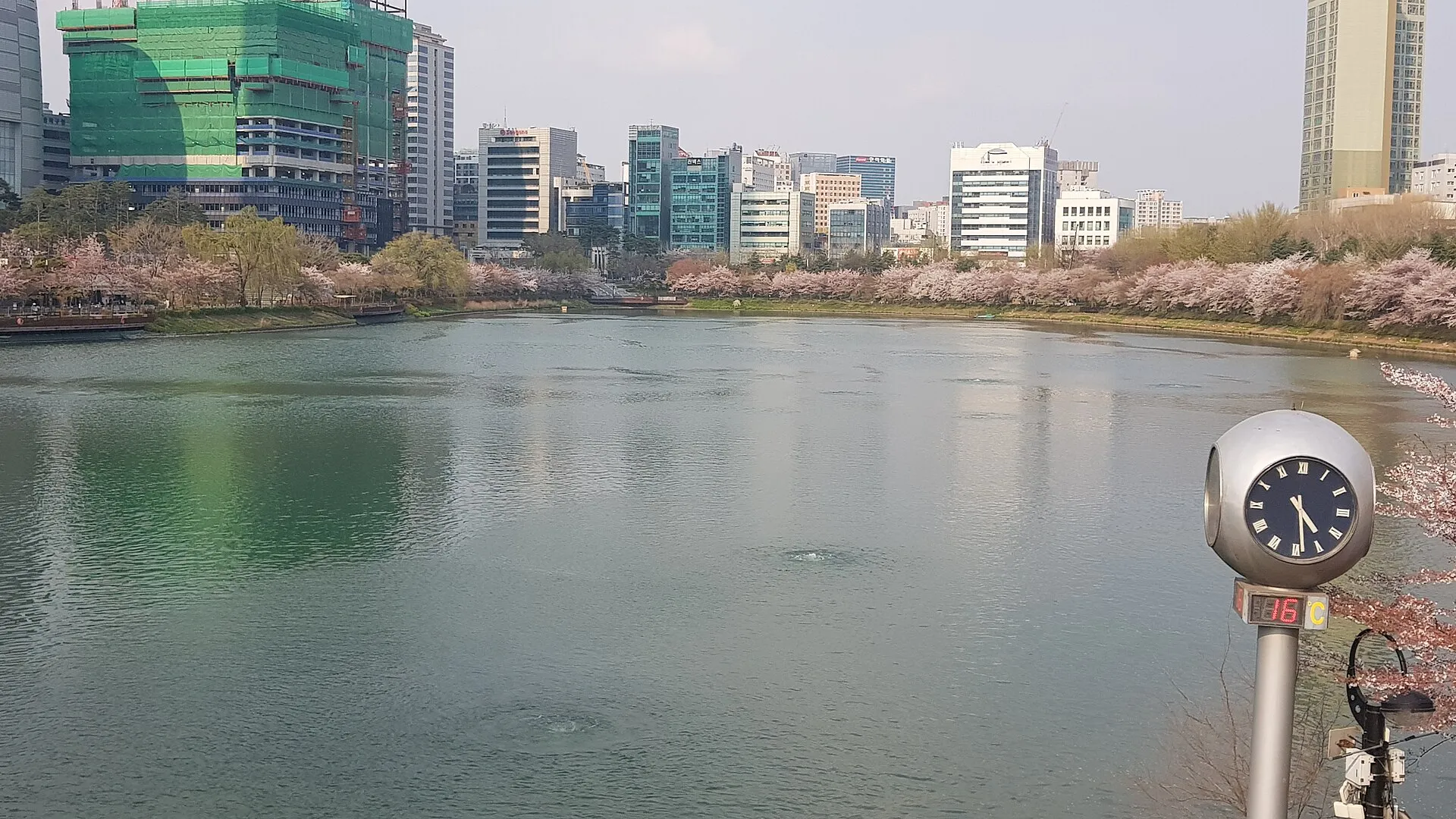
| Seokchon Lake (Jamsil) | 1,000+ cherry trees | Jamsil (Lines 2 & 8, Exits 2 & 3) | 2.5-km lakeside ring framing Lotte World Magic Island and Lotte World Tower |
| Seoul Forest (Seongsu) | Several hundred trees | Seoul Forest (Suin-Bundang Line, Exit 3) | Tranquil tree-canopy bridge, deer enclosures, and artisan Seongsu cafes |
| Kyung Hee University | Mature historic trees | Hoegi (Line 1 & Gyeongui-Jungang, Exit 1) | European Gothic stone Peace Hall and university amphitheatre framed in petals |
| Changgyeonggung Palace | Heritage palace trees | Hyehwa (Line 4, Exit 4) | Joseon royal pavilions, glass greenhouse, and night lantern reflections |
1. Yeouido Spring Flower Festival (Yunjung-ro)
Free · pedestrianised 24 hours (illuminations 18:30 to 22:00) · Yeouiseo-ro, Yeongdeungpo-gu
The annual Yeouido Spring Flower Festival is South Korea’s most famous urban blossom celebration. The focal point is Yunjung-ro (Yeouiseo-ro), a broad curving avenue behind the National Assembly building along the southern bank of the Han River.
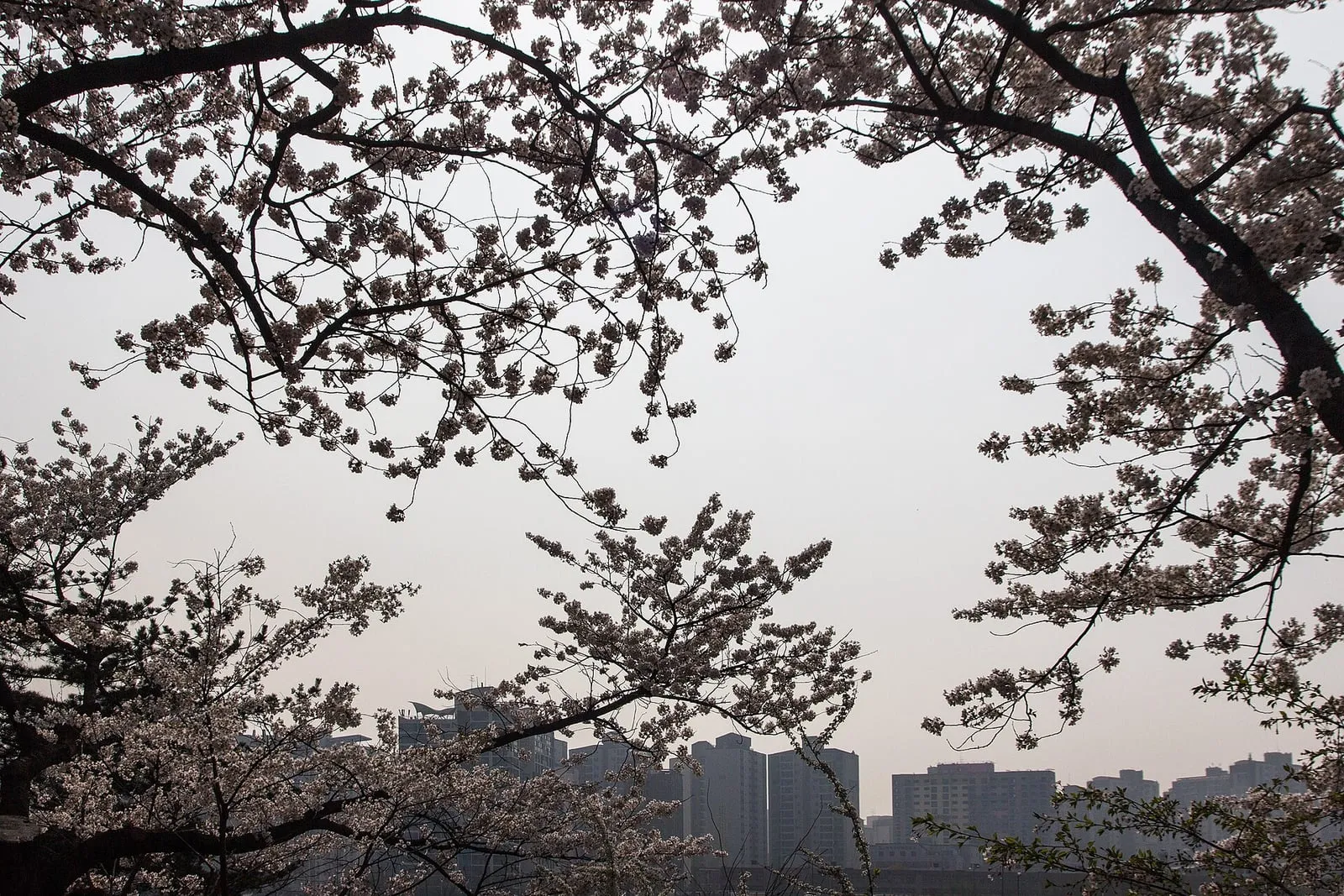
The street is planted with more than 1,800 mature King cherry trees (Wangbeotkkot), a variety native to Mount Hallasan on Jeju Island. Their branches interlock across the road to form a dense pale-pink ceiling 1.7 kilometres long. During the festival, the road is closed to all vehicular traffic, allowing hundreds of thousands of pedestrians to stroll beneath the blooms.
In the evening, multi-coloured LED floodlights illuminate the blossoms from below, casting pink, violet, and soft white highlights against the night sky. Street food wagons, acoustic buskers, and photo installations line the pavement.
2. Seokchon Lake Cherry Blossom Festival
Free · open 24 hours · Songpa-gu (Subway Lines 2 & 8 to Jamsil Station)
Located in south-eastern Seoul, Seokchon Lake is divided into East and West Lakes by a central roadway. Together, they form a continuous 2.5-kilometre pedestrian loop bordered by over 1,000 weeping and King cherry trees whose branches drape towards the water.
The West Lake wraps around Magic Island, the fairytale castle theme park of Lotte World. Walking along the shoreline allows you to photograph pink blossom branches framing medieval-style turrets and roller coasters reflected in the calm water. At the East Lake, look upwards to see the blossoms set against the 555-metre glass spire of Seoul Sky and Lotte World Tower.
The flat rubberised walking track makes Seokchon Lake popular with joggers and families with prams. Cafes with lakeside outdoor terraces line the southern shore along Songridan-gil.
3. Seoul Forest
Free · open 24 hours · 273 Ttukseom-ro, Seongdong-gu (Suin-Bundang Line)
For a natural woodland atmosphere, Seoul Forest in Seongsu-dong offers broad grass lawns and walking paths without the concrete feel of roadside boulevards.
The premier blossom spot inside the park is the elevated pedestrian footbridge near the deer enclosure. Walking across this timber walkway places you at eye level with the flowering canopy, allowing you to photograph expansive blankets of pink blossoms with minimal background distraction. The path continues towards the Han River waterfront, connecting directly to riverside walking and cycling paths.
After enjoying the blossoms, walk five minutes into neighbouring Seongsu-dong to explore converted warehouse coffee roasteries and bakeries (see where to eat in Seoul).
4. Kyung Hee University (Seoul Campus)
Free · campus grounds open daily daylight hours · 26 Kyungheedae-ro, Dongdaemun-gu
Referred to locally as one of the most picturesque university campuses in East Asia, Kyung Hee University features dramatic European Gothic stone architecture constructed in the mid-20th century.
During spring, the university hill is smothered in cherry blossoms. The most striking photography view sits in front of the Grand Peace Hall—a monumental Neo-Gothic auditorium resembling a European cathedral—and the central library fountain plaza, where weeping blossom branches frame soaring granite archways and rose windows. The campus hill requires moderate uphill walking from Hoegi Station.
5. Changgyeonggung Palace
₩3,000 (free in Hanbok) · Tue–Sun 09:00 to 21:00 (closed Mondays) · Jongno-gu
While Gyeongbokgung and Changdeokgung draw massive crowds, adjacent Changgyeonggung Palace offers an exquisite, less congested setting for blossom photography.
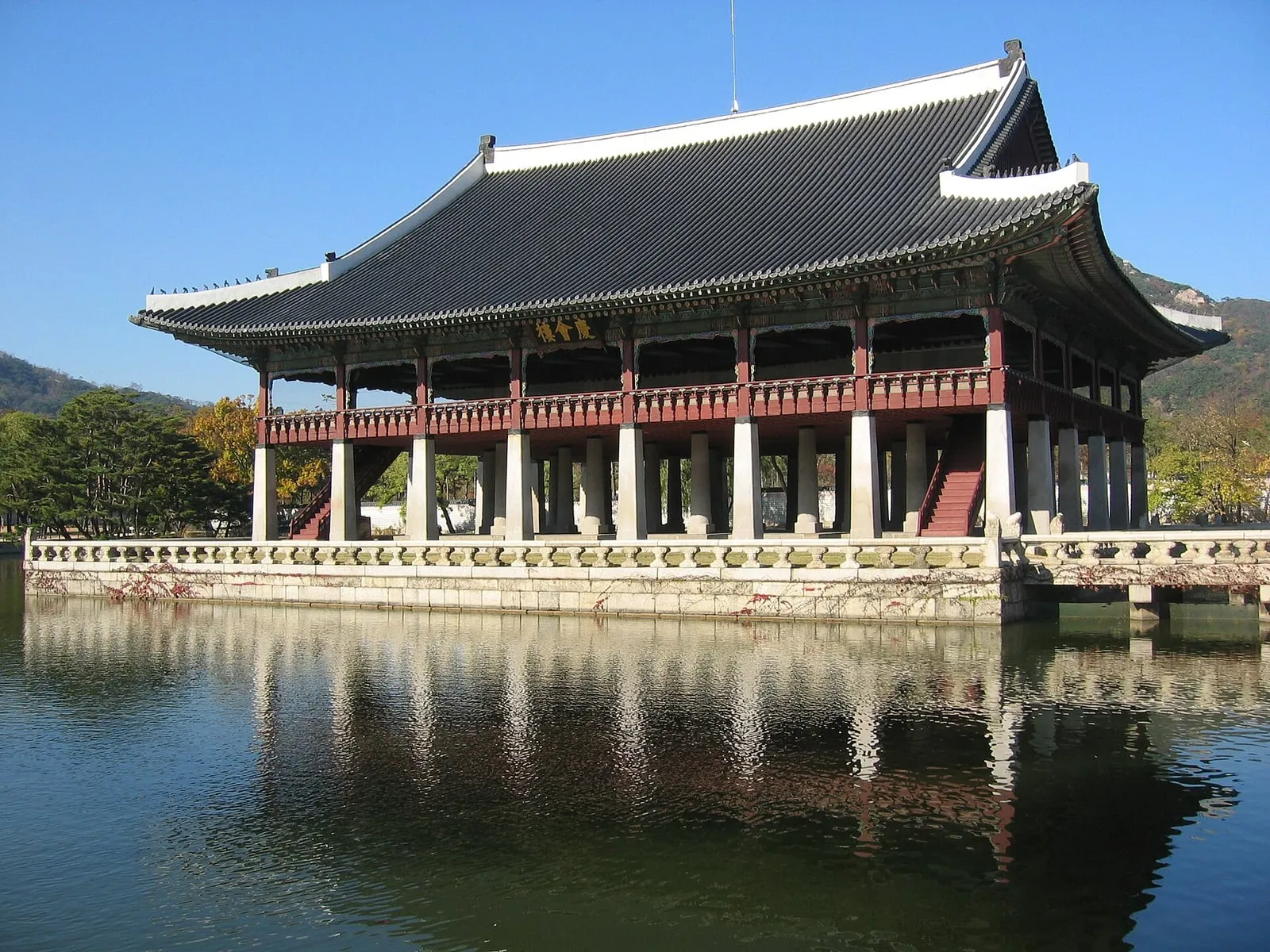
Originally built as a summer palace for royal queens, Changgyeonggung is planted with dozens of cherry trees clustered around the Chundangji lotus pond and the Grand Greenhouse (Korea’s first Western-style Victorian glass and iron conservatory, completed in 1909). Changgyeonggung remains open until 21:00 year-round, allowing visitors to walk beneath illuminated blossoms and traditional tiled eaves after dark.
Crowd navigation and transport strategies
Cherry blossom peak week draws millions of spectators. A few practical transit strategies prevent long queues and transport gridlock:
1. Bypass Yeouinaru Station
During the Yeouido festival, Yeouinaru Station (Subway Line 5, Exit 2) experiences severe platform overcrowding, with queues to exit the station often stretching 30 to 45 minutes on weekends.
- The alternative route: Take Subway Line 9 to National Assembly Station and use Exit 1 or 6. You emerge directly behind the parliamentary grounds, only 150 metres from the beginning of the pedestrianised Yunjung-ro blossom avenue.
- Cycling option: Rent a public municipal Seoul Bike (Ddareungi) at Dangsan Station (Lines 2 and 9) and cycle along the Han River bike path directly to the park.
2. Time your visits to early morning
To experience the blossom tunnels without throngs of people:
- Arrive at Yeouido or Seokchon Lake between 07:30 and 09:00 on a Tuesday, Wednesday, or Thursday. The morning sunlight casts warm, soft light through the petals, and you will share the path only with local morning walkers and photographers.
- Avoid weekend afternoons between 13:00 and 17:00, when pedestrian footpaths become impassable.
3. Pack a Han River picnic
Emulate local university students by organising a spring picnic (beotkkot picnic):
- Pick up triangle gimbap, strawberry snacks, and drinks from a local convenience store.
- Order delivery of crispy Korean fried chicken (chimaek) directly to designated Han River park delivery zones (baedal-zone), spread out a lightweight mat on the grass beneath the trees, and enjoy the spring breeze.
For broader seasonal context, consult our comprehensive guide on the best time to visit Seoul.
Common questions
When will cherry blossoms bloom in Seoul in 2027?
Based on multi-year climatological trends from the Korea Meteorological Administration, cherry blossoms (beotkkot) in Seoul are forecast to begin opening between 31 March and 3 April 2027, reaching peak full bloom between 6 April and 12 April 2027.
Where is the biggest cherry blossom festival in Seoul?
The Yeouido Spring Flower Festival along Yunjung-ro boulevard behind the National Assembly is Seoul's premier celebration, featuring over 1,800 mature King cherry trees forming a 1.7-kilometre blossom tunnel along the Han River.
How can I avoid extreme crowds during cherry blossom season?
Visit major festival sites before 09:00 on Tuesday, Wednesday, or Thursday mornings. Weekend afternoons see immense congestion. At Yeouido, bypass the overcrowded Yeouinaru Station (Line 5) by walking from National Assembly Station (Line 9, Exit 1 or 6).
Do cherry blossom festivals in Seoul charge an entry fee?
No. The Yeouido Spring Flower Festival, Seokchon Lake walking path, Seoul Forest, and Kyung Hee University campus are completely free to enter. Royal palaces charge modest entry fees of ₩1,000 to ₩3,000, or free entry if wearing Hanbok.
What is special about the King Cherry tree (Wangbeotkkot)?
Native to Jeju Island, the King cherry tree produces exceptionally dense, snowy-white and soft-pink blossom clusters with larger petals than standard varieties, creating dense overhead floral canopies.