One of 2 self-guided walks in Seoul. See every walk.
In this guide
💡 The Short Version: Start at Dongdaemun (Heunginjimun Gate, Exit 6 or 7) and finish at Hyehwamun Gate: a 3.0-kilometre ridge walk taking 2 to 3 hours with museum and viewpoint stops. The entire trail and the Seoul City Wall Museum are completely free. Starting 90 minutes before sunset offers daytime masonry viewing, sunset over Bukhansan mountain, and night illumination along the stone ramparts until 23:00. The climb totals 100 metres of elevation gain from the valley floor to the 125-metre Naksan summit. Finish at Hyehwamun Gate near Hyehwa Station on Line 4.
The route
Map of the walk numbered stops in walking order
Open the whole route in Google Maps - all six stops in walking order on your phone.
The Hanyangdoseong (Seoul City Wall) was constructed in 1396 to delineate and defend Hanyang, the Joseon dynasty capital. Originally stretching 18.6 kilometres along the ridges of Seoul’s four inner mountains—Baegaksan (Bugaksan), Inwangsan, Namsan (Mokmyeoksan), and Naksan (Tarakman)—the fortress remains one of the longest continuous historic city wall systems in the world.
The Naksan section is the most accessible and leisurely of the surviving wall stretches. Unlike the steep mountain crags of Bukhansan or Inwangsan, Naksan (meaning ‘Camel Mountain’, named for its humped silhouette) rises to a modest 125 metres above sea level. This walking trail provides an outdoor masterclass in Joseon stone masonry techniques, alongside views across the modern architecture of Dongdaemun and the peaks of Bukhansan National Park.
| Stop | Entry (adult) | Open | Route highlights |
|---|---|---|---|
| 1. Dongdaemun (Heunginjimun Gate) | Free | Exterior 24 hours | Joseon Great East Gate featuring a rare semi-circular outer barbican (ongseong) |
| 2. Seoul City Wall Museum | Free | Tue–Sun 09:00 to 18:00 (closed Mon) | Detailed exhibits and architectural models tracing 600 years of fortress construction |
| 3. Dongdaemun Seonggwak Park | Free | Open 24 hours | Landscaped hill with curving stone masonry rising away from dense Dongdaemun traffic |
| 4. Ihwa Mural Village | Free | Public streets 24 hours | Cliffside residential village featuring outdoor metal sculptures and open-air cafes |
| 5. Naksan Park Summit | Free | Open 24 hours (wall illuminated dusk–23:00) | Panoramic 125-metre viewing pavilions looking west across downtown Seoul to Bugaksan |
| 6. Hyehwamun Gate | Free | Exterior 24 hours | Historic northeastern auxiliary gate connecting the trail to the Daehangno arts quarter |
1. Dongdaemun (Heunginjimun Gate)
Free · exterior viewable 24 hours · 288 Jong-ro, Jongno-gu (Subway Lines 1 & 4)
Begin the walk at Heunginjimun, commonly known as Dongdaemun (the Great East Gate of Seoul). Designated National Treasure No. 1, this monumental portal was erected in 1398 under King Taejo and rebuilt in its current form in 1869 under King Gojong.
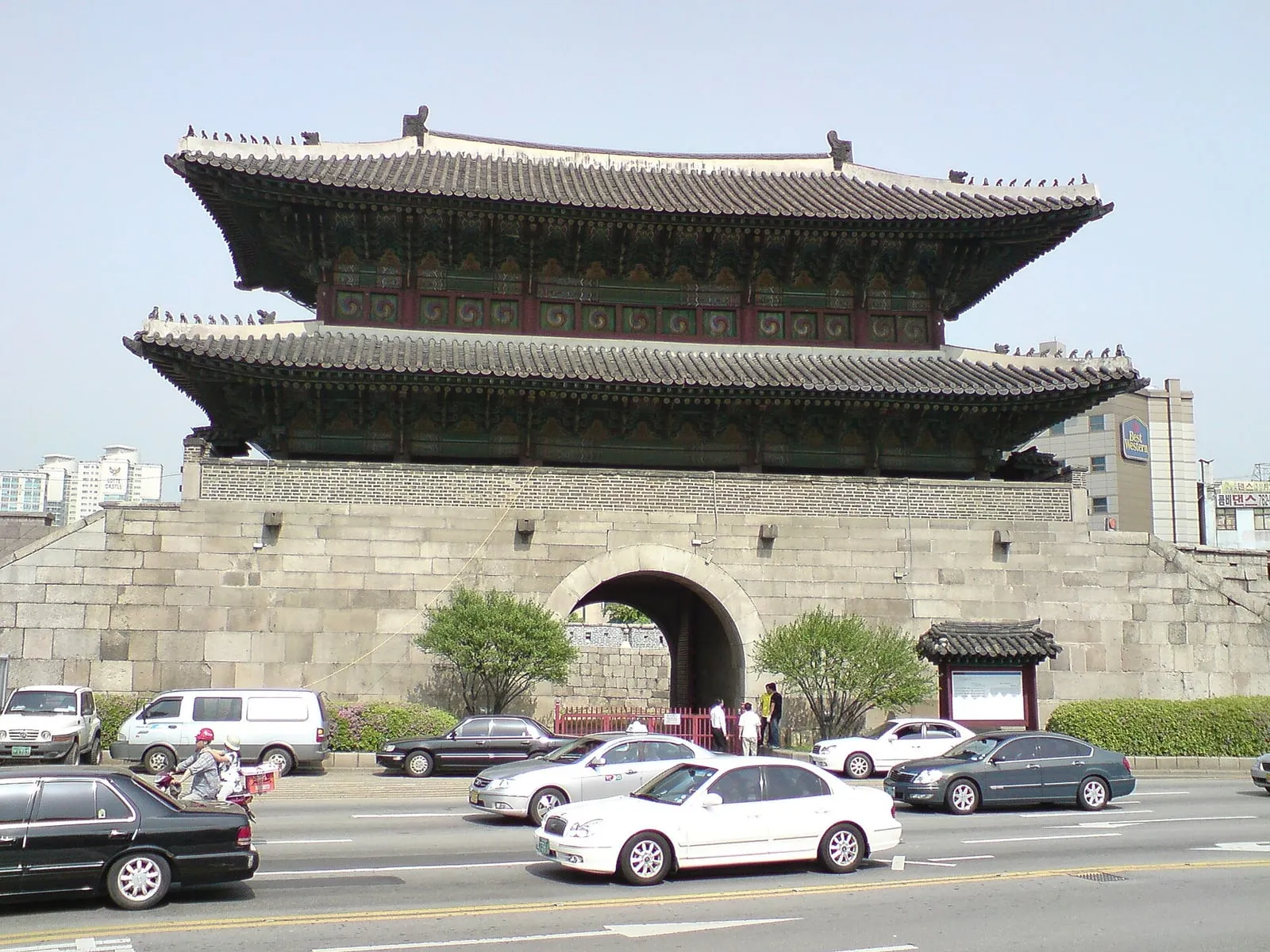
Heunginjimun Gate, also called Dongdaemun. Photo: Karl Baron, Wikimedia Commons, CC BY-SA 2.0.
Dongdaemun is distinguished from Seoul’s other royal gates by its ongseong—a semi-circular curved stone barbican wall built outside the main gate passage to protect defenders against frontal battering rams. Because Dongdaemun was constructed in the lowest, flattest valley of the capital’s perimeter, its natural topography made it vulnerable to assault, requiring this reinforced defensive apron. Take Exit 6 or 7 of Seoul Metro Dongdaemun Station to admire the two-storey timber gatehouse before crossing north to the foot of the hill.
2. Seoul City Wall Museum
Free · Tue–Sun 09:00 to 18:00 (closed Mondays) · 283 Yulgok-ro, Jongno-gu
Directly uphill from the gate, enter the Seoul City Wall Museum located inside the Dongdaemun Seonggwak Park administration complex. Operated by the Seoul Museum of History, this three-storey facility offers a clear overview of the wall’s evolution before you walk the masonry.
Exhibits trace the timeline from the initial Joseon construction through colonial dismantlement to modern 21st-century conservation. A scale topographical model illustrates how the 18.6-kilometre wall connected the four guardian peaks. Crucially, the museum details the distinct stone shapes used across four centuries, allowing you to identify the four primary construction eras as you follow the trail:
- King Taejo (1396): The lower foundations consist of rough, uncut natural stones and round river boulders wedged together with smaller filler stones.
- King Sejong (1422): The masonry was rebuilt with shaped rectangular stones measuring 40 to 50 centimetres, with stone wedges filling vertical gaps.
- King Sukjong (1704): Reconstructed sections feature square-cut granite blocks measuring roughly 60 by 60 centimetres, uniform in shape and fitted with flush, mortarless joints.
- King Sunjo (1800): Later repairs feature even larger, finely chiselled rectangular ashlar blocks up to 80 centimetres wide.
3. Dongdaemun Seonggwak Park
Free · open 24 hours · Jongno 6-ga, Jongno-gu
Step out of the museum directly onto the grassy hills of Dongdaemun Seonggwak Park. Here the stone ramparts begin their steep ascent up the slope. A paved walking path runs along the inner side of the wall, flanked by native Korean grasses, wildflower beds, and wild cosmos in autumn.
Looking back south from the top of the park lawn reveals a contrast between the 600-year-old grey granite parapets and the futuristic curving aluminium contours of the Dongdaemun Design Plaza (DDP) across the road. The gentle climb brings you away from the rumble of city traffic in minutes.
4. Ihwa Mural Village
Free · public streets open 24 hours · Ihwa-dong, Jongno-gu
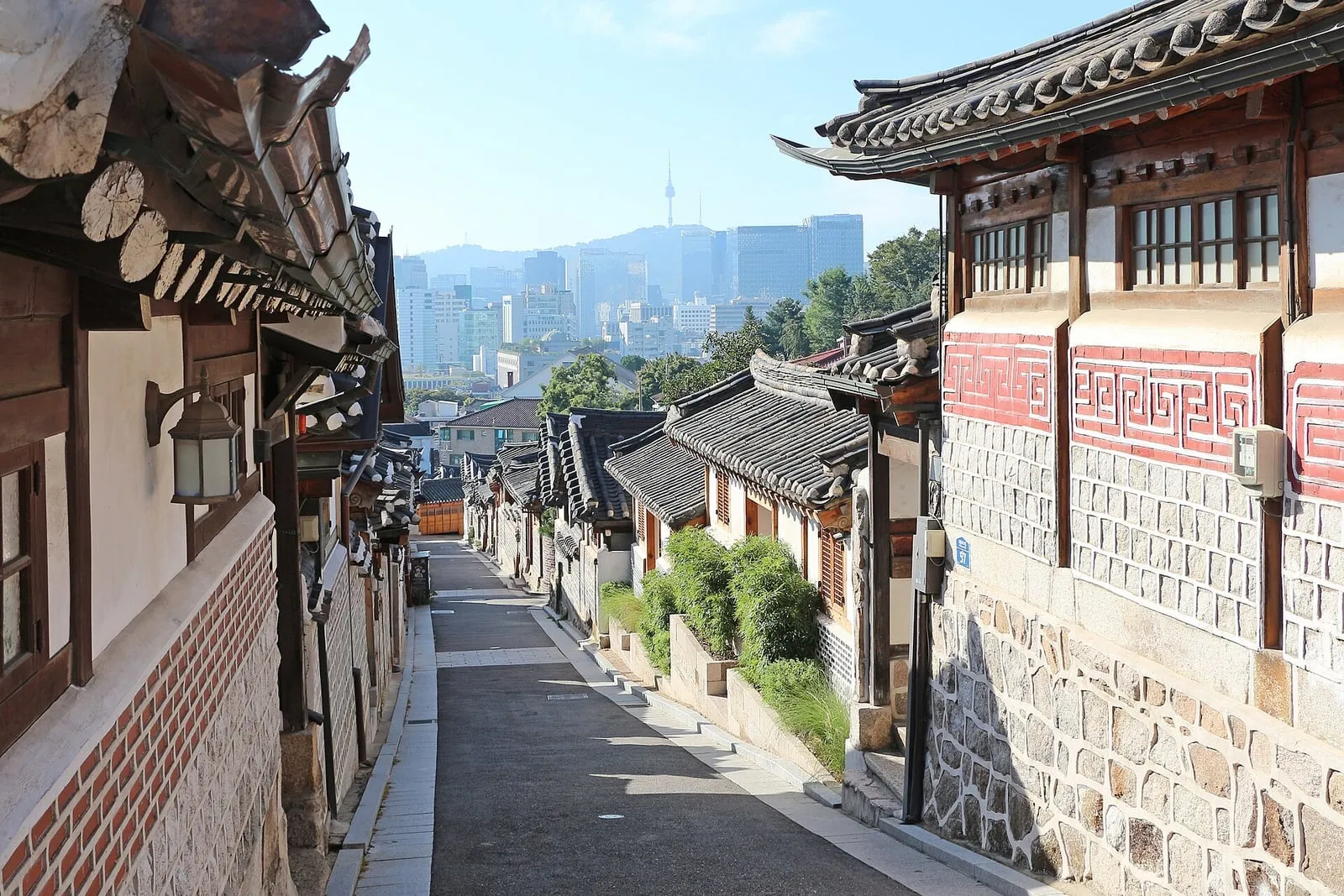
As the path continues along the wall towards Naksan, pass through the wooden gate portals into Ihwa Mural Village. Perched beneath the fortress ridge, this neighbourhood developed as a settlement for lower-income workers following the Korean War, featuring steep concrete stairs and pastel-painted shophouses.
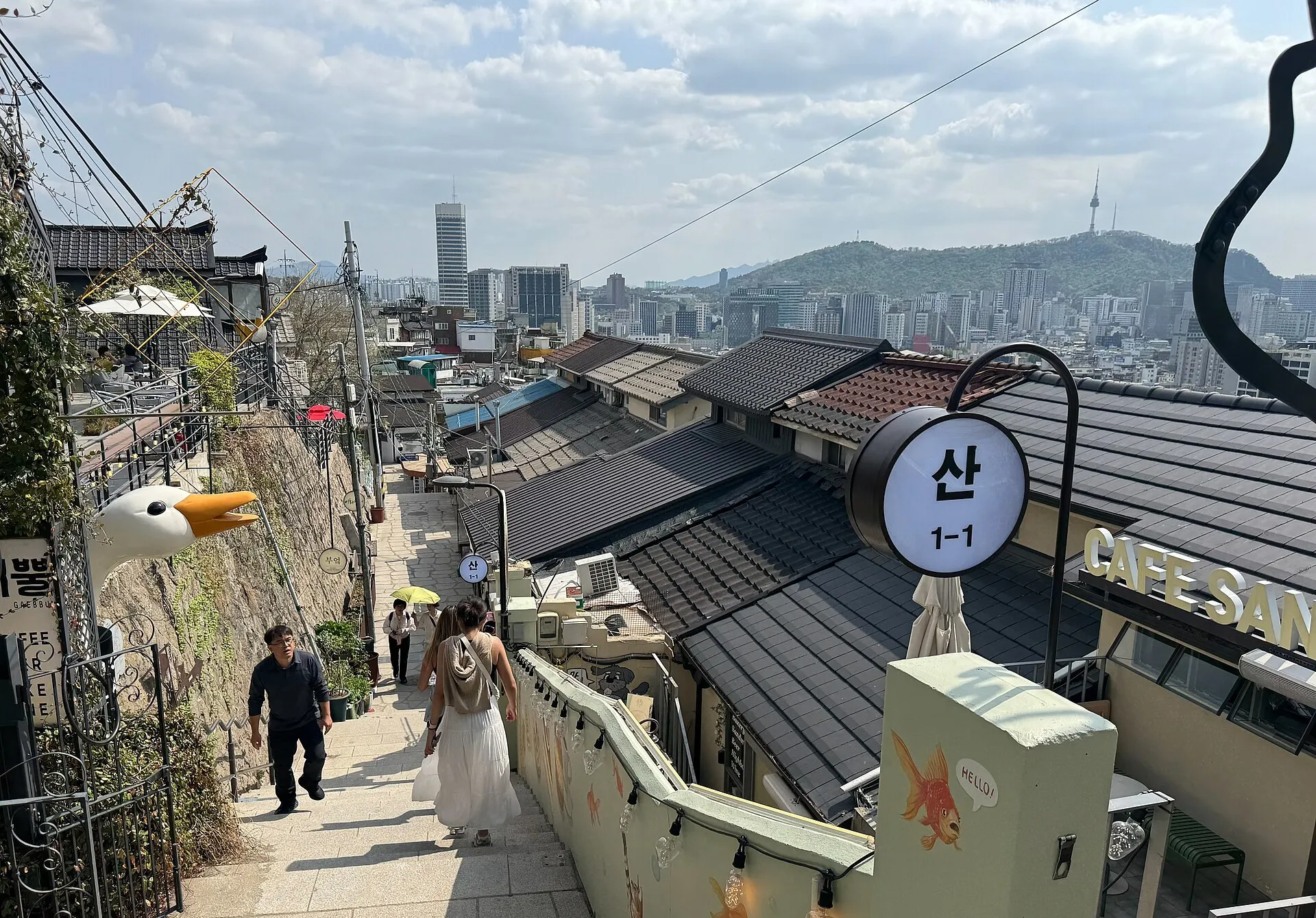
A stepped lane in Ihwa Mural Village. Photo: Stephen Kelly, Wikimedia Commons, CC BY 4.0.
In 2006, the Ministry of Culture launched an initiative that revitalised the hillside through murals, mosaic stairs, and whimsical outdoor metal sculptures—including silhouettes of gentlemen in bowler hats walking dogs along the rooftops against the skyline. While some staircase murals were painted over by residents tired of loud crowds, the alleyways retain charming terrace cafes, leather craft shops, and balcony lookouts over central Seoul. Observe residential quiet signs throughout this zone.
Guided fortress wall walks
While the City Wall trails are free and well signposted, guided hikes provide historical commentary on General Yi Seong-gye’s defensive fortifications and take you to panoramic viewpoints for night photography.
Seoul: City Wall Hike 18km Full Completion or Half Adventure
From ₩120,000 · 5 stars from 3 reviews · 5 - 9 hours · fortress ramparts & mountain passes
Seoul City Wall Hike: 18.6km Full Completion or Half Coursead: A guided hiking trek along the 14th-century stone ramparts, taking in mountain passes, ancient gates, and panoramic skyline vistas.
Moonlight Seoul Night Tour: Naksan Park & City Wall
From ₩80,464 · 4.9 stars from 345 reviews · 5 hours · illuminated evening ramparts
Seoul Han River Night Ferry: 63 Building & Gwangjang Marketad: An evening walking tour along the illuminated battlements of Naksan Park, offering spectacular photography views over Dongdaemun.
Seoul: Small Group History Walking Tour
From ₩120,014 · 4.8 stars from 198 reviews · 3 hours · historic gates & fortress history
Seoul: Gyeongbok Palace and Bukchon Hanok Walking Tourad: Explores Seoul’s historic defensive perimeters and imperial gates with an English-speaking historian.
Official ticket or tour: the prices side by side
Walking options compared.
| Option | Official admission | Tour cost | What it covers |
|---|---|---|---|
| Independent wall walk | Free (open 24 hours) | — | Self-guided walk along paved stone pathways with information signs |
| City Wall guided hike | Guide service included | From ₩120,000 | Full 18.6 km or half-course guided trek along the fortress wall |
5. Naksan Park Summit
Free · open 24 hours (illumination daily dusk to 23:00) · 41 Naksan-gil, Jongno-gu
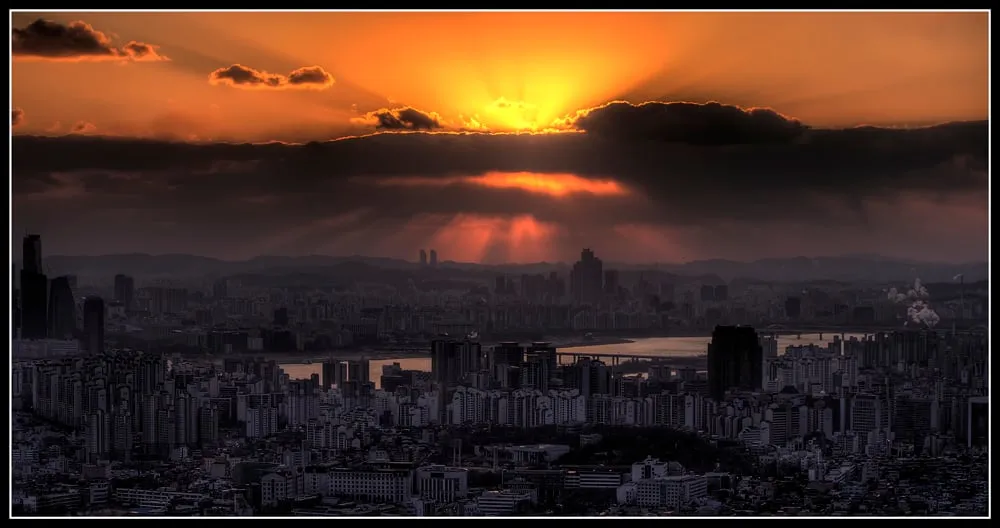
Follow the wall path up the final slope to reach the summit of Naksan Park (125 metres). Three timber viewing pavilions and stone observation terraces crown the ridge, offering unbroken vistas across the capital.
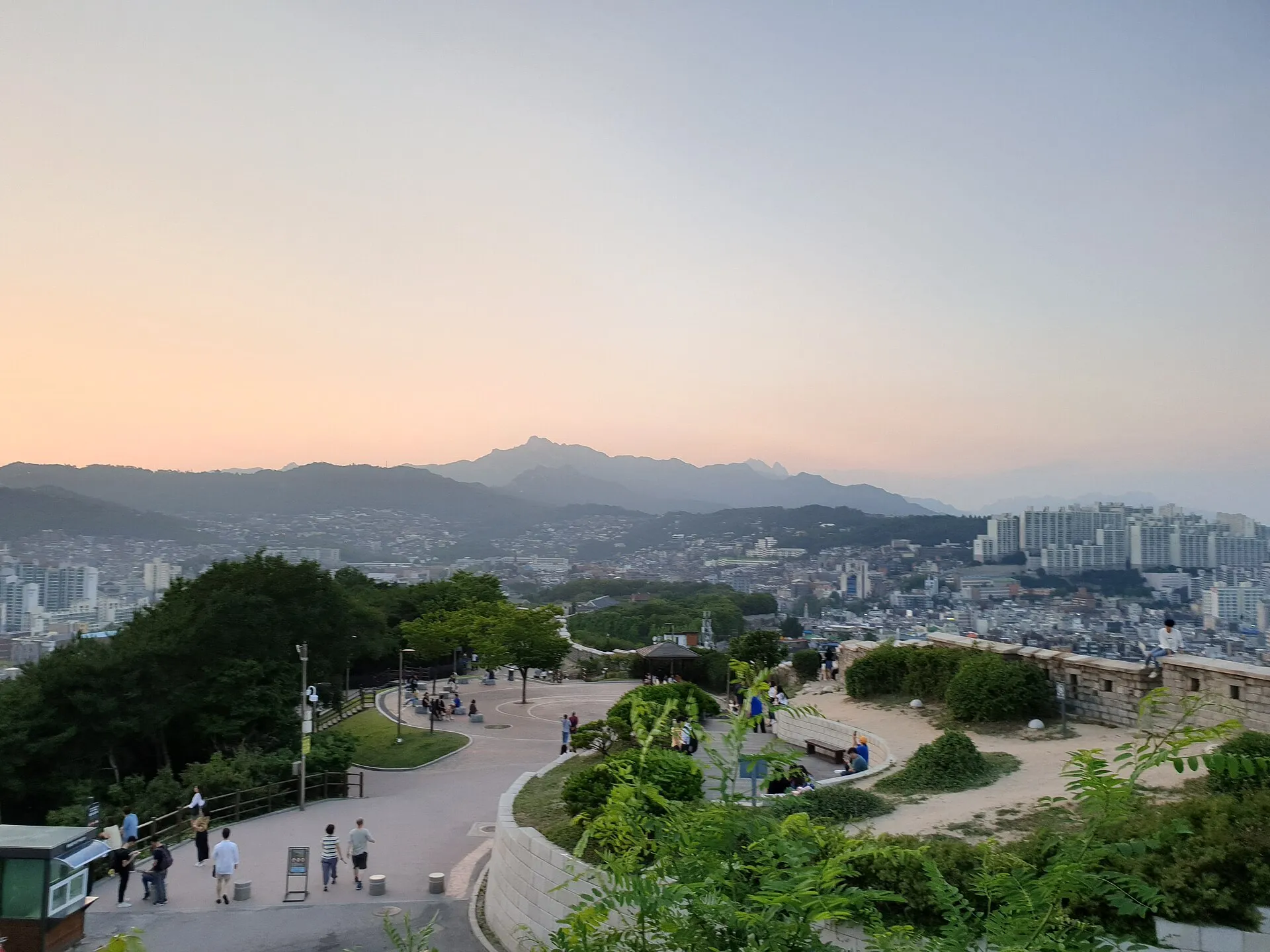
The Naksan Park viewpoint at dusk. Photo: Choism97, Wikimedia Commons, CC BY-SA 4.0.
To the west, downtown Seoul opens up before you: the tiled complexes of Changdeokgung Palace and Gyeongbokgung Palace sit framed against the rocky peaks of Bugaksan and Inwangsan. Looking south, the city stretches to Namsan Mountain and N Seoul Tower.
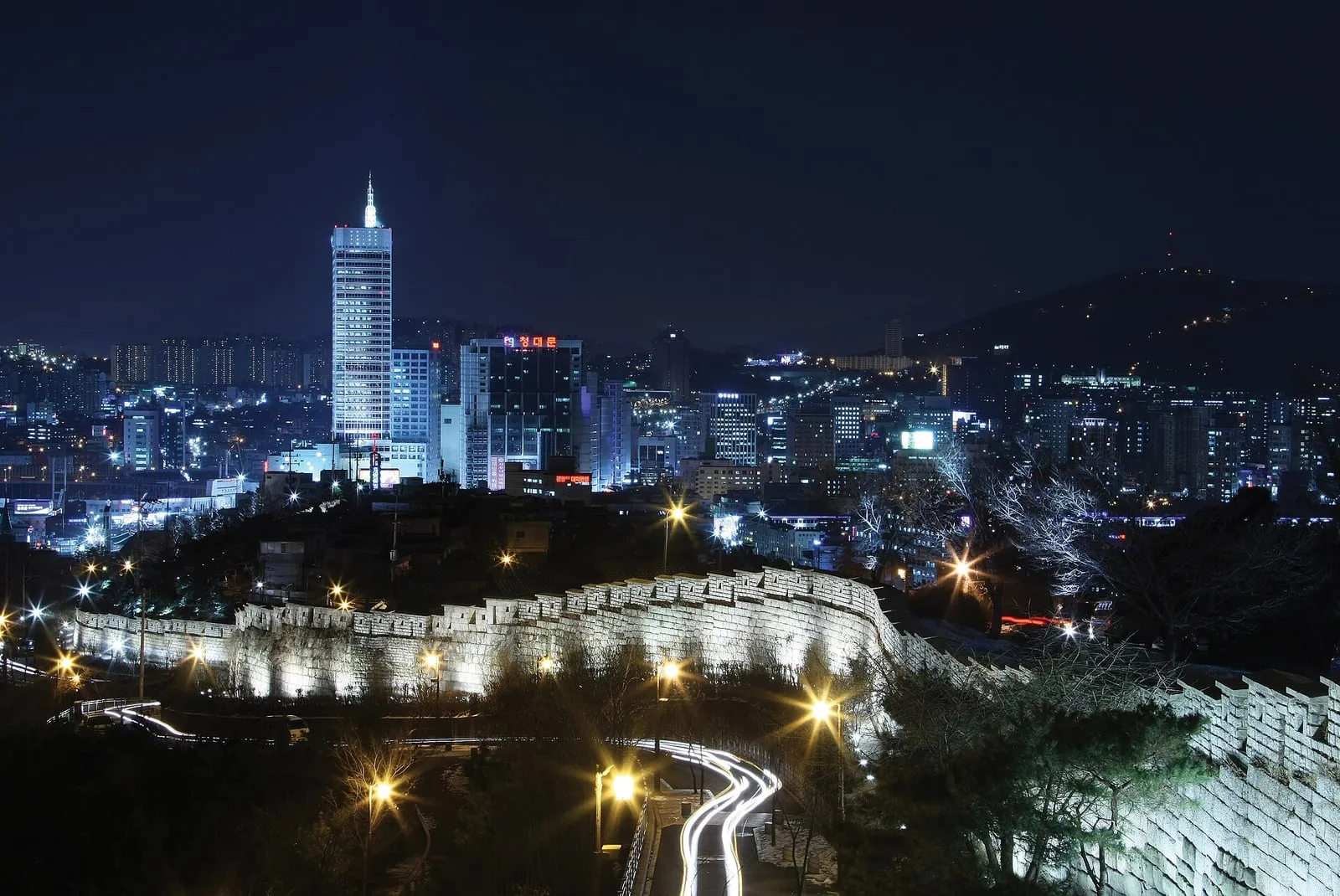
The summit is particularly scenic in late afternoon. As the sun sets behind Inwangsan, municipal timers activate warm amber LED uplighting built into the foot of the ramparts. The illuminated parapet undulates across the ridgeline like a golden ribbon, while the skyscraper lights of Dongdaemun and Jongno flicker to life below.
6. Hyehwamun Gate
Free · exterior viewable 24 hours · Changgyeonggung-ro, Seongbuk-gu
From the Naksan summit pavilions, follow the path descending the northern spine of the ridge towards Hyehwamun Gate. The stepped flagstone path winds alongside the outer face of the stone wall, where you can inspect King Sukjong’s 18th-century granite blocks up close.
Pass through the archway into the neighbourhood below. Hyehwamun (originally named Honghwamun when built in 1396) served as the capital’s northeastern auxiliary gate, controlling the mountain pass route to Uijeongbu and northern Gangwon province. The original wooden gatehouse was dismantled during the colonial era for tramway construction, but was restored in 1992 on higher stone foundations slightly west of its original footprint.
The gate sits 300 metres east of Hansung University Station (Subway Line 4, Exit 4) and a 10-minute walk northeast of Seoul Metro Hyehwa Station (Line 4), the gateway to Seoul’s lively Daehangno theatre and university dining district.
Planning your walk
Best time to walk and photography tips
The premier time to undertake this walk is late afternoon, roughly 90 minutes before sunset. This allows you to browse the Seoul City Wall Museum in daylight, hike the slope through Ihwa Mural Village during golden hour, and reach Naksan Park summit just as the sun sets behind the mountains.
The wall lights switch on at sunset every evening. When shooting photos along the parapet at night, stand at the wooden viewing decks of Naksan summit looking northwest to capture the glowing stone battlement snaking towards the skyline.
Getting to the start and returning
- Starting point: Dongdaemun Station (Seoul Subway Lines 1 and 4, Exit 6 or 7). Head north across the intersection to the park gates.
- Finishing point: Hyehwamun Gate is located a 5-minute walk from Hansung University Station (Line 4, Exit 4), or walk 10 minutes south along Daehangno to Hyehwa Station (Line 4).
- Transport tip: Use a T-money card or Climate Card on the subway system (see our detailed guide to public transport in Seoul).
Combining with dinner
After concluding the walk at Hyehwamun or Hyehwa Station, explore Daehangno’s student eateries, or hop back onto Subway Line 4 for two stops to Dongdaemun to visit the late-night street food stalls around Gwangjang Market or experience traditional barbecue in our best Korean BBQ in Seoul guide.
Other walking routes
For an architectural route through historic artisan lanes, hanok courtyard houses, and traditional art galleries, pair this fortress hike with the Bukchon Hanok Village and Insadong walk, starting from Anguk Station.
Common questions
How long is the Seoul City Wall Naksan section walk?
The walking trail is 3.0 kilometres from Dongdaemun (Heunginjimun Gate) to Hyehwamun Gate. Continuous walking takes about 1 hour, but touring the City Wall Museum, seeing Ihwa Mural Village, and lingering for sunset views at Naksan summit takes 2 to 3 hours.
What is the elevation profile of the Naksan section?
The walk begins at 25 metres elevation at Dongdaemun, climbs steadily along paved slopes and stone staircases through Seonggwak Park to reach the Naksan Park summit at 125 metres (a total ascent of 100 metres), before descending down a stepped path to Hyehwamun Gate.
Is the Seoul City Wall trail free to enter?
Yes. Walking the entire Hanyangdoseong fortress wall trail, Dongdaemun Seonggwak Park, Ihwa Mural Village, Naksan Park summit, and Hyehwamun Gate is completely free of charge. Entry to the Seoul City Wall Museum is also free.
When are the city wall lights turned on?
The stone ramparts are illuminated daily from sunset until 23:00 throughout the year. Starting the walk 60 to 90 minutes before dusk allows you to see the masonry in daylight and watch the LED lights illuminate the stonework as the downtown city lights turn on.
What should you wear on this walk?
Wear supportive walking shoes or trainers. The route follows well-maintained stone flagstones and timber boardwalks, but features sustained climbs with several flights of stairs.