In this guide
💡 The Short Version: Admission to the permanent collection is free of charge on museum.go.kr with no advance booking required. Special temporary exhibitions cost ₩5,000 to ₩10,000 on museum.go.kr. The museum spans three floors of Korean history and art. Head straight to the Room of Quiet Contemplation on Floor 2 to view the two Pensive Bodhisattvas, the Golden Crown of Silla on Floor 1, and the Gyeongcheonsa Pagoda in the central hall. Take Seoul Metro Line 4 or Korail Gyeongui-Jungang Line to Ichon Station Exit 2 for direct underground access. Open daily from 09:30 to 17:30, staying open until 21:00 on Wednesdays and Saturdays (last admission 30 minutes before closing).
Permanent galleries and admission costs
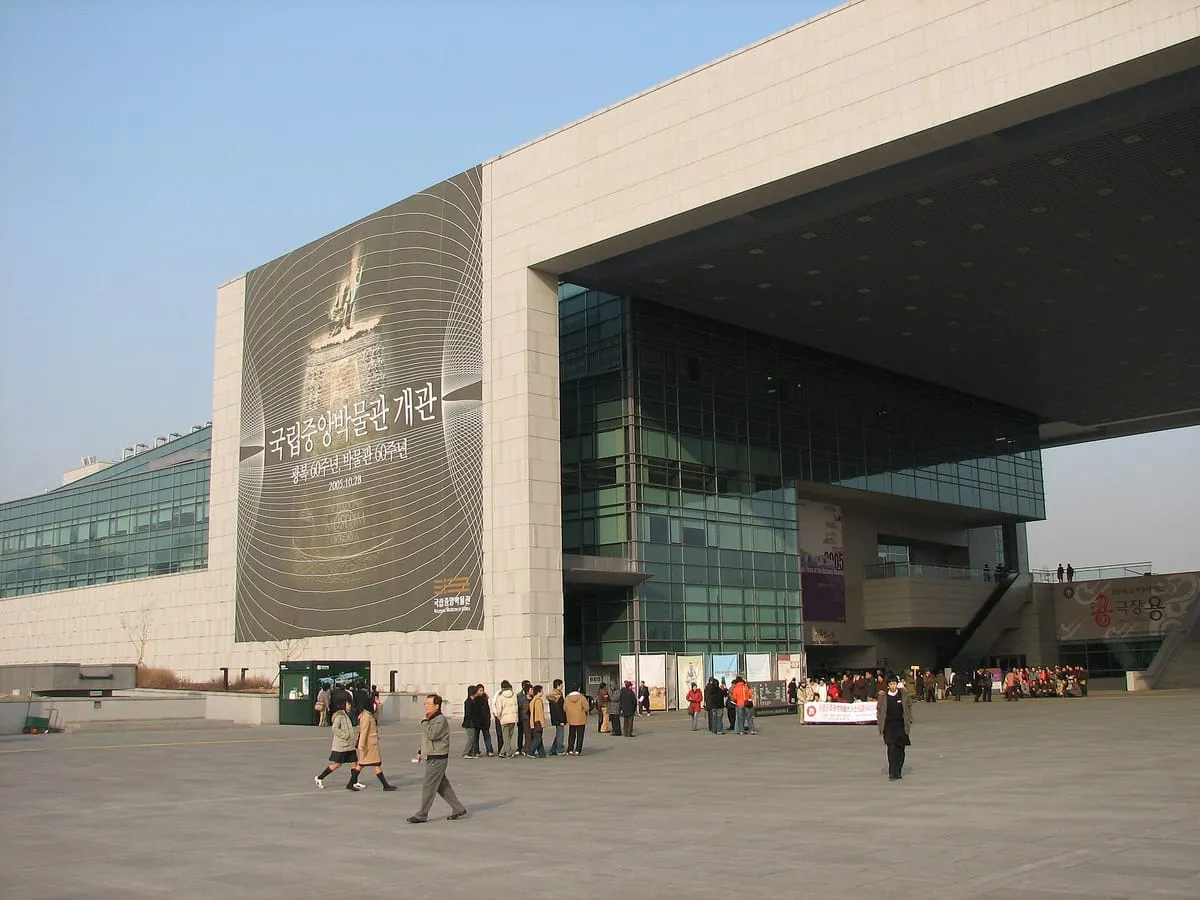
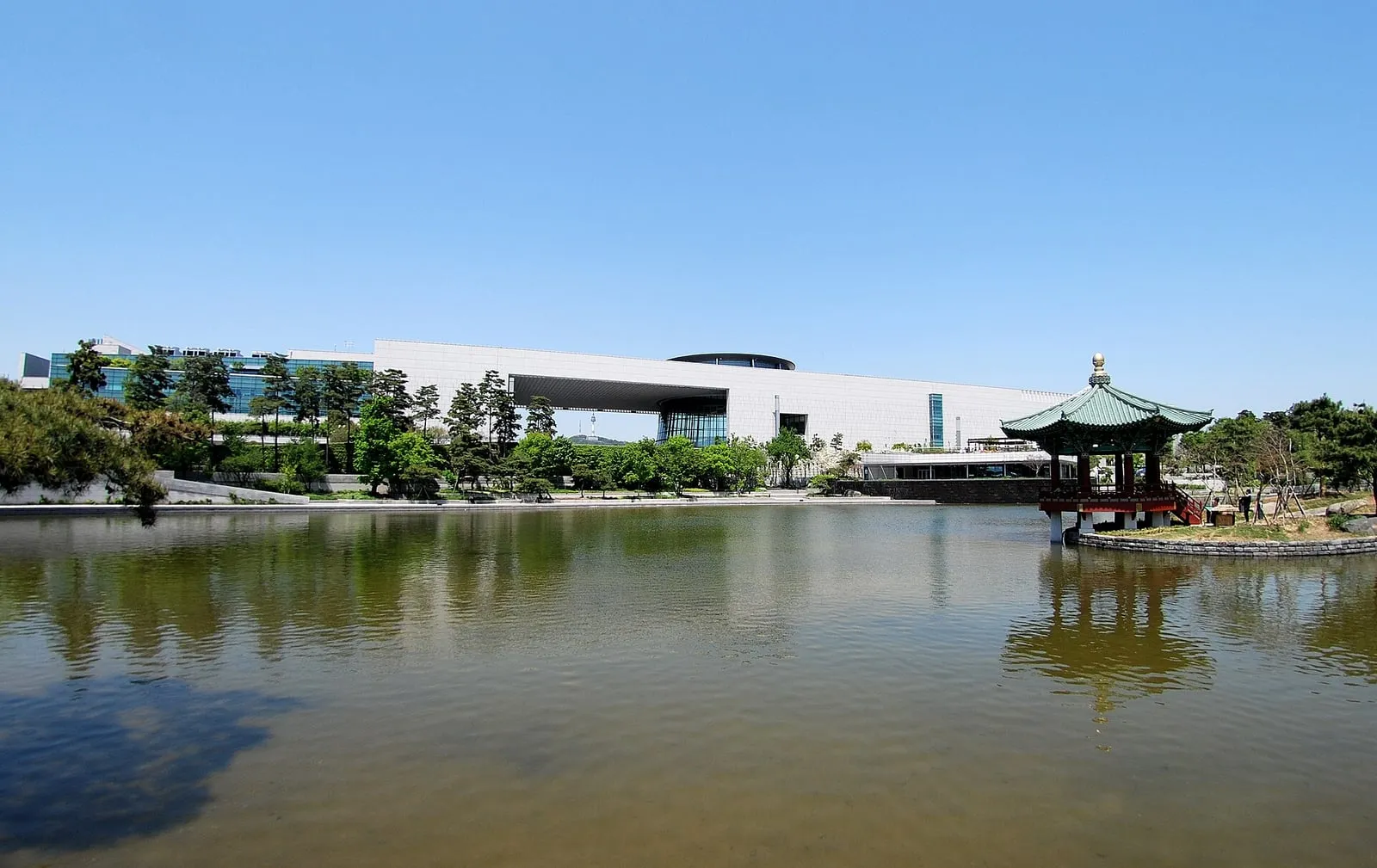
The National Museum of Korea (NMOK) stands in Yongsan Family Park in central Seoul, covering more than 137,000 square metres of floor space. It presents over 12,000 historic and artistic artefacts spanning five millennia of Korean peninsula history.
| Section | Location | Admission | What it contains |
|---|---|---|---|
| Permanent Exhibition Hall | Main building, Floors 1–3 | Free (₩0) | Seven main galleries covering Prehistory to Modern eras, calligraphy, Buddhist sculpture, and Asian arts |
| Children’s Museum | West wing, 1F | Free (₩0) | Interactive hands-on historical exhibits for families; timed online reservations recommended |
| Special Exhibition Gallery | Special hall, 1F | 5,000–₩10,000 | Rotating international and themed national treasure exhibitions |
| Audio Guide Device | Information desk, 1F | ₩3,000 | Handheld multimedia player with detailed English commentary |
| Mobile App Guide | Smartphone download | Free (₩0) | Official NMOK application with location-based Bluetooth exhibits |
Because permanent entry is entirely free, visitors can enter and leave throughout the day. Baggage storage lockers are available free of charge in the entrance foyer.
Key highlights to see
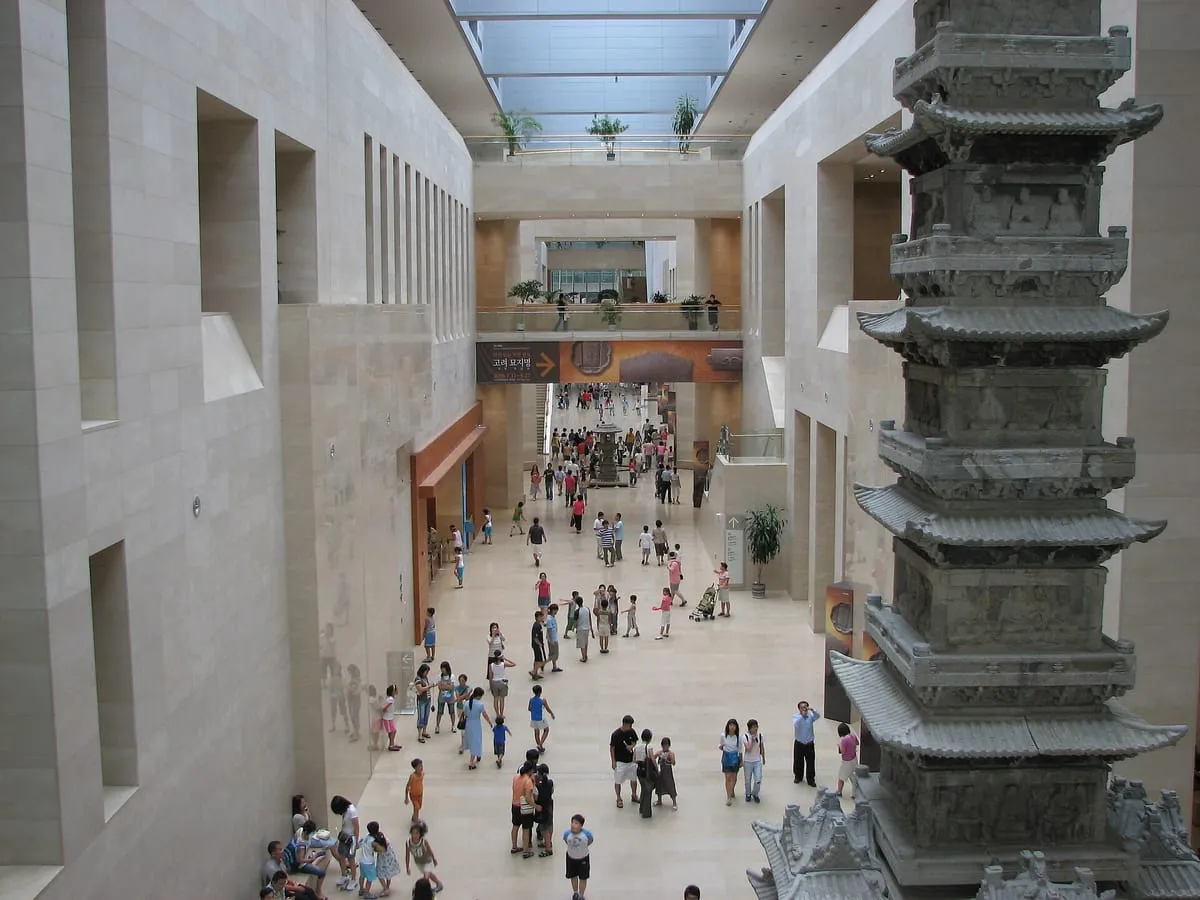
With three extensive floors and over 3 km of walking corridors, seeing the entire collection takes multiple visits. Focus your route around these core national treasures:
The Room of Quiet Contemplation (Floor 2)
The Room of Quiet Contemplation (Sa-yu-ui Bang) is located on the second floor. Designed with earthen-toned walls, acoustic baffling, and a tilted floor, the gallery displays two National Treasure gilt-bronze Pensive Bodhisattvas (National Treasures No. 78 and No. 83) side by side.
Created in the late 6th and early 7th centuries during the Three Kingdoms period, each statue depicts a bodhisattva seated with one leg crossed over the other, fingers gently resting against the cheek in contemplation. The subtle smiles and naturalistic drapery are regarded as significant achievements of Korean Buddhist sculpture. Visitors can sit quietly in the dimmed light and view the statues from 360-degree angles.
Ten-Story Stone Pagoda of Gyeongcheonsa (Floor 1, Path to History)
Standing along the central marble corridor known as the Path to History, this marble pagoda rises 13.5 metres high. Carved in 1348 during the Goryeo Dynasty, it features bas-relief carvings of buddhas, bodhisattvas, dragons, and lotus flowers across every level. Originally located at Gyeongcheonsa Temple in Gaeseong (modern-day North Korea), it was dismantled and taken to Japan in 1907, returned in 1918, and restored inside this indoor hall to shield its marble carvings from weathering.
Golden Crown of Silla (Floor 1, Prehistory and Ancient History)
Located in the Silla Kingdom gallery, this 5th-century gold crown was excavated from the Hwangnamdaechong royal tomb in Gyeongju. Crafted from pure gold and hung with comma-shaped green jade pendants (gogok), the crown features upright antler and tree-shaped branches that symbolised royal authority, lineage, and the sacred tree connecting heaven and earth.
Goryeo Celadon and Joseon White Porcelain (Floor 3)
The third floor houses the museum’s collection of ceramic artistry:
- Goryeo Celadon: Prized for its jade-green glaze and inlaid sanggam white-and-black slip technique, producing crane and cloud motifs.
- Joseon White Porcelain: Including the minimalist Moon Jars (Dalhangari), large spherical white porcelain jars admired for their understated, asymmetrical form and milk-white glaze.
Practical visiting advice
- Hours:
- Monday, Tuesday, Thursday, Friday, and Sunday: 09:30 to 17:30 (last admission 17:00).
- Wednesday and Saturday: 09:30 to 21:00 (late-night opening; last admission 20:30).
- Closed Days: New Year’s Day (1 January), Seollal (Lunar New Year’s Day), and Chuseok (Korean Thanksgiving Day). The outdoor park and mirror pond grounds remain open year-round.
- Dining: The museum features a food court (Hulim), several cafes, a convenience store, and a full-service Korean restaurant (Gyeongcheonsa) on the ground floor overlooking the outdoor gardens.
- Accessibility: Wheelchairs and strollers are loaned free of charge at the main information desk. Lifts and gently sloping ramps connect all exhibition levels.
Guided cultural tours and museum visits
Permanent galleries at the National Museum of Korea are completely free. Joining a guided tour connects national archaeological treasures with the palaces where they were created.
Seoul: Highlights of Seoul Full-Day Tour
From ₩80,464 · 4.9 stars from 910 reviews · 8 - 8.5 hours · museum & palace highlights
Seoul: Highlights of Seoul Full-Day Tourad: Combines national museum treasures with royal palaces, temples, and historic markets with lunch and coach transport included.
Seoul: City Highlights Palace Tour
From ₩87,283 · 4.9 stars from 1,100 reviews · 4 hours · royal Joseon history
Seoul: Half-Day City Highlights & Palace Tour with Hanbokad: An English-speaking licensed guide explains royal artefacts and palace court ceremonies.
Seoul: Small Group History Walking Tour
From ₩120,014 · 4.8 stars from 198 reviews · 3 hours · heritage walking seminar
Seoul: Gyeongbok Palace and Bukchon Hanok Walking Tourad: 3-hour guided walking tour exploring 600 years of Korean dynasties and cultural heritage.
How to get there
The National Museum of Korea is situated in the Yongsan district, immediately south of Mount Namsan:
- By Subway: Ride Line 4 (light blue) or the Gyeongui-Jungang Line to Ichon Station.
- The Museum Path: Exit via Exit 2. Instead of climbing stairs to the street, take the underground moving walkway (“Museum Path”), which brings you straight out into the plaza facing the museum’s open portal and reflecting pond (Geoulmot).
- Combining Visits: The National Museum of Korea sits adjacent to the National Hangeul Museum (also free admission) in Yongsan Family Park. It is easily combined with an ascent of N Seoul Tower or a broader itinerary from our guide to Day trips from Seoul.
Common questions
Is admission to the National Museum of Korea free?
Yes. Admission to the permanent exhibition galleries is free on museum.go.kr for all domestic and international visitors. You do not need to purchase a ticket in advance; simply walk through the main entrance. Special temporary exhibitions in the special exhibition hall require separate admission tickets, typically priced between ₩5,000 and ₩10,000.
What are the key highlights to see at the National Museum of Korea?
Three central highlights are the Ten-Story Stone Pagoda of Gyeongcheonsa in the central atrium, the 5th-century Golden Crown of Silla from Hwangnamdaechong tomb on the first floor, and the two National Treasure Pensive Bodhisattvas in the Room of Quiet Contemplation on the second floor.
What is the Room of Quiet Contemplation?
The Room of Quiet Contemplation (Sa-yu-ui Bang) is a minimalist, dimly lit gallery on the second floor designed by architect Choi Wook. It enshrines two bronze Pensive Bodhisattvas from the 6th and 7th centuries (National Treasures No. 78 and No. 83), allowing visitors to view their subtle smiles in quiet reflection.
Are English audio guides available?
Yes. Portable English audio guide devices can be rented from the information desk in the main hall for ₩3,000. Alternatively, visitors can download the official 'National Museum of Korea' smartphone app for free to listen to audio commentary and view exhibition maps.
How do you get to the museum by public transit?
Take Seoul Subway Line 4 or the Gyeongui-Jungang Line to Ichon Station. Take Exit 2, which connects directly to a moving-walkway underground passage called the 'Museum Path' leading straight into the museum forecourt.