💡 The Short Version: Running annually from mid-December through early January, the Seoul Lantern Festival and concurrent Gwanghwamun Winter Market illuminate central downtown Seoul nightly from 18:00 to 22:00. Hundreds of traditional Korean mulberry paper (Hanji) sculptures glow above the water of Cheonggyecheon Stream, complemented by artisan market stalls on Gwanghwamun Square and the Seoul Light digital projections across Gwanghwamun Gate. Admission is free. Dress warmly for sub-zero evening temperatures.
Overview and operating hours
First launched in 2009 along the restored waters of Cheonggyecheon Stream, the Seoul Lantern Festival is Seoul’s principal winter outdoor celebration. The festival operates alongside the Gwanghwamun Winter Market and the Seoul Light digital art programme.
- Festival run: Annually from mid-December through early January.
- Illumination hours: Nightly from 18:00 to 22:00.
- Admission: Free public access across all festival venues.
- Primary subway stations: Gwanghwamun Station (Line 5, Exits 2 & 9), City Hall Station (Lines 1 & 2, Exits 4 & 5), and Jongno 3-ga Station (Lines 1, 3, & 5).
| Zone | Primary display | Hours | Venue highlights |
|---|---|---|---|
| Cheonggyecheon Stream | Floating Hanji paper lantern sculptures | 18:00 to 22:00 | 1.2-km sunken river walk from Cheonggye Plaza to Supyogyo Bridge |
| Gwanghwamun Square | Themed lanterns and displays | 18:00 to 22:00 | Mythological creatures (Haechi), royal Joseon processions, modern light art |
| Gwanghwamun Winter Market | Wooden chalets and artisan crafts | 17:30 to 21:30 | Handmade Korean crafts, leatherwork, winter street snacks, and warm spiced drinks |
| Seoul Light Gwanghwamun | Architectural digital projection mapping | 18:00 to 21:30 (hourly) | Light shows projected onto the stone gate facade |
| Seoul Light DDP | 220-metre media facade | 19:00 to 22:00 | Curving aluminium panels of Dongdaemun Design Plaza transformed into digital art |
The four festival experiences
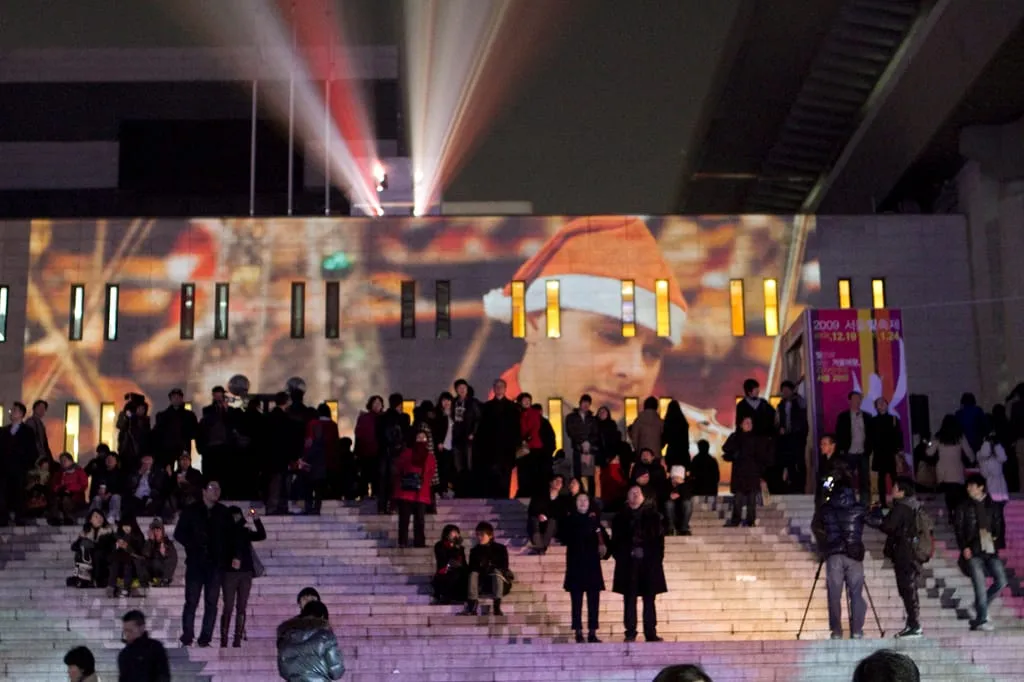
1. Traditional Hanji paper lanterns along Cheonggyecheon Stream
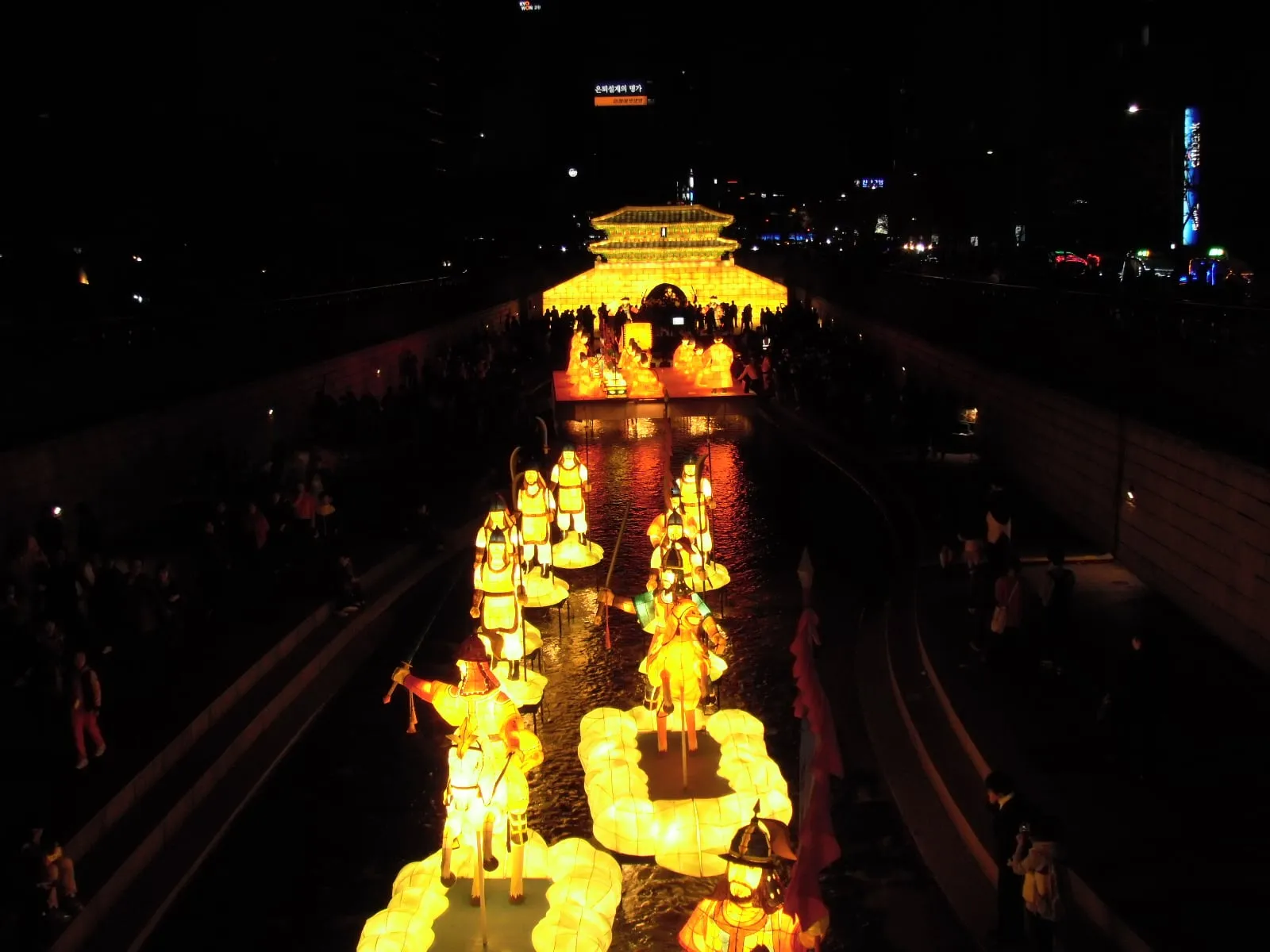
Cheonggyecheon is an urban stream flowing through downtown Seoul beneath street level. During the festival, the watercourse from Cheonggye Plaza eastward to Supyogyo Bridge (a stretch of 1.2 kilometres) is lined with floating and waterside lantern sculptures.
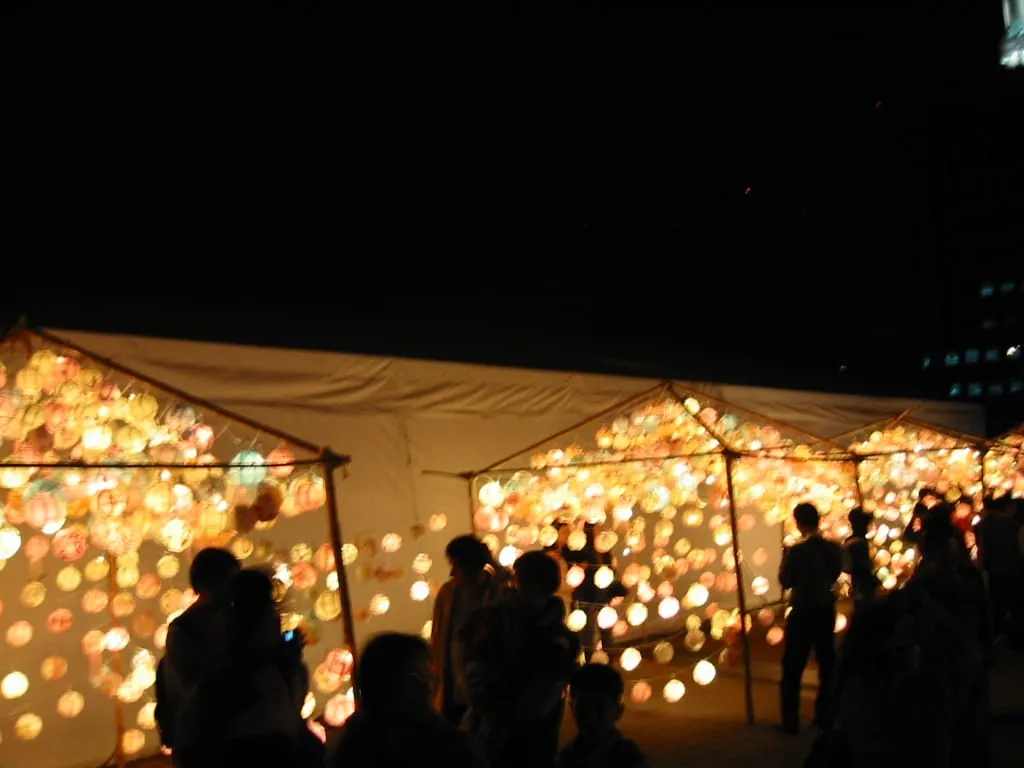
The lanterns are crafted using wire steel armatures covered in sheets of traditional Korean mulberry paper (Hanji), painted with translucent pigments and illuminated from within by LED bulbs. Hanji paper possesses a fibrous texture that diffuses light with a soft glow.
Key thematic zones include:
- Royal Joseon Heritage: Displays depicting King Sejong the Great, royal court musicians playing traditional bronze bells (pyeonjong), and court officials in formal Joseon robes.
- Korean Folklore and Mythology: Representations of the Blue Dragon, White Tiger, Black Tortoise, and Haechi (the mythical horned lion-like guardian of Seoul).
- City Life and Fables: Figures from Korean folk stories and displays contributed by partner cities.
One-way pedestrian traffic systems operate along the stream banks during busy weekend hours, with visitors entering at Cheonggye Plaza and exiting near Gwanggyo or Jangtonggyo bridges.
2. Gwanghwamun Winter Market (Artisan chalets)
Spread across the pedestrian promenade of Gwanghwamun Square between the King Sejong statue and the Admiral Yi Sun-sin fountain, the Gwanghwamun Winter Market features seasonal market stalls with an artisan focus.
Dozens of illuminated timber chalets house local independent craftsmen, ceramic artists, and social enterprises:
- Artisan goods: Scented candles with Korean pine and plum blossom notes, handcrafted wooden tableware, leather goods, winter scarves, and traditional knot-work (maedeup) accessories.
- Winter food: Stalls serve winter street food: sweet fish-shaped red bean waffles (bungeoppang, 3 for ₩2,000), roasted chestnuts (gunbam), rice cakes in red pepper sauce (tteokbokki), and cups of spiced warm fruit drink (vin chaud, ₩5,000) prepared with citrus and ginger.
3. Seoul Light: Gwanghwamun digital projection mapping
Every evening from 18:00, the stone base and timber gatehouse of Gwanghwamun Gate—the primary entrance to Gyeongbokgung Palace—serves as a canvas for digital media projection mapping.
Laser projectors cast 10-minute animated light narratives across the 120-metre stone facade on the hour and half-hour. Shows explore dynastic history, ink-wash landscape paintings, and digital patterns synchronised to orchestral and traditional Korean instrumental music.
4. Seoul Light DDP (Dongdaemun Design Plaza)
The digital light presentations extend eastwards to the Dongdaemun Design Plaza (DDP), designed by architect Zaha Hadid.
The 220-metre-long curving aluminium facade of DDP serves as a large projection surface. Digital artists project light sequences across the silver exterior, exploring themes of nature, technology, and geometry. Shows run in repeated 15-minute cycles every evening from 19:00 to 22:00, free for anyone viewing from the central plaza.
Practical tips for winter festival visitors
How to dress for sub-zero temperatures
Seoul winter nights between mid-December and early January are cold. Daytime temperatures hover near freezing, but once the sun sets around 17:15, winds channel through downtown streets, dropping temperatures to between -5°C and -12°C.
- Outerwear: A long down coat (long padding) is standard winter attire in Seoul.
- Layers: Wear thermal base layers, wool socks, and insulated walking shoes or boots.
- Accessories: A windproof wool hat, lined gloves, and a scarf are recommended.
- Hot-paek (Hand warmers): Stop at a convenience store (CU or GS25) before heading out to purchase disposable adhesive chemical heat packs (hot-paek) for ₩1,000 to ₩1,500. Shake them to activate and place them into your coat pockets.
Managing crowds and timing
- Timing: 18:00 to 19:30 on a Tuesday, Wednesday, or Thursday evening. You can view the lanterns as they illuminate at dusk, browse the market chalets with minimal queues, and watch the opening media shows.
- Weekend evenings (19:30 to 21:00): Cheonggyecheon Stream becomes congested, requiring slower walking along the water edge.
- Dining options: Before or after viewing the lanterns, walk 10 minutes east along Jongno for hand-cut noodles or mung bean pancakes at Gwangjang Market, or visit a nearby restaurant featured in our best Korean BBQ in Seoul guide.
Getting there and transit tips
- Gwanghwamun Station (Subway Line 5): Take Exit 9 to emerge onto Gwanghwamun Square between the King Sejong statue and the market chalets. Take Exit 5 to step out at Cheonggye Plaza where the stream lanterns begin.
- City Hall Station (Subway Lines 1 and 2): Take Exit 4 and walk three minutes north along Taepyeongno to reach Cheonggye Plaza.
- Jonggak Station (Subway Line 1): Take Exit 5 to enter the Cheonggyecheon walkway at Gwanggyo Bridge, midway along the lantern trail.
For comprehensive seasonal information, see our guide on the best time to visit Seoul and practical transit advice in public transport in Seoul.
Common questions
What are the festival dates for the Seoul Lantern Festival?
The winter lantern festival at Gwanghwamun and Cheonggyecheon runs annually from mid-December through early January, illuminating nightly from 18:00 to 22:00.
Where does the Seoul Lantern Festival take place?
The festival spans two connected locations: the sunken watercourse of Cheonggyecheon Stream (from Cheonggye Plaza to Supyogyo Bridge) and the pedestrian plaza of Gwanghwamun Square, extending northward to the front of Gyeongbokgung Palace.
Is admission to the Seoul Lantern Festival free?
Yes. Admission to the entire outdoor festival, including the Cheonggyecheon Stream lanterns, Gwanghwamun Square displays, Gwanghwamun Winter Market, and Seoul Light media facade projection shows, is free of charge.
What is Seoul Light media art?
Seoul Light is an outdoor digital projection mapping presentation that projects animations and digital art across the stone facade of Gwanghwamun Gate and the curved aluminium panels of DDP.
How should visitors dress for the festival in winter?
Temperatures during December and January evenings in Seoul routinely drop to between -5°C and -10°C, compounded by cold winds blowing through the sunken river corridor. Dress in a knee-length down coat, thermal base layers, gloves, scarf, warm hat, and pocket hand warmers (hot-paek).