In this guide
💡 The Short Version: Independent visits to the Korean Demilitarised Zone are strictly prohibited; you must book a licensed tour group. Half-day tours cost ₩65,000 to ₩90,000 and full-day extensions cost ₩95,000 to ₩130,000 on GetYourGuidead. A physical passport is mandatory under Ministry of National Defense rules on the day of the tour for military inspection at Tongil Bridge. Civilian tours to the Joint Security Area (JSA / Panmunjom) have been suspended since July 2023. Standard civilian tours visit four core locations: the 3rd Infiltration Tunnel, Dora Observatory, Imjingak Peace Park, and Dorasan Station. Part of our wider collection of Day trips from Seoul.
The DMZ explained: military rules and passport checks
The Korean Demilitarised Zone is a 250-kilometre buffer strip, roughly 4 kilometres wide, established along the 38th parallel under the 1953 Korean Armistice Agreement. It separates South Korea from North Korea and remains the most heavily fortified border on earth, flanked by landmines, guard posts, and razor-wire fencing.
Because the DMZ lies entirely within the Civilian Control Zone (CCZ), access is governed by strict operational protocols:
- Mandatory tour groups: Civilians cannot drive, cycle, or walk past the military checkpoints. You must join a pre-registered tour bus with an accredited guide.
- Physical passport inspection: At Tongil Bridge (Unification Bridge) over the Imjin River, armed soldiers of the Republic of Korea Army board the coach. Every passenger must present their original physical passport under Ministry of National Defense rules. Digital images on phones, photocopies, national ID cards, and driving licences are strictly refused. Anyone without a physical passport is turned back at the checkpoint.
- Dress code and conduct: While the strict business-casual dress code of Panmunjom does not apply to standard DMZ tours, military authorities forbid excessively torn clothing, military-camouflage print, and flags or political slogans. Pointing, waving, or making unapproved gestures toward North Korean guard posts from Dora Observatory is forbidden.
- Photography boundaries: Photography is permitted only in designated areas. At Dora Observatory and military checkpoints, directional signs indicate yellow lines behind which cameras must remain. Pointing lenses at South Korean military installations, bunkers, or individual soldiers is strictly illegal.
Or book a tour
You can reserve the guided half-day excursion directly on GetYourGuide: Seoul: Half-Day DMZ Tour with 3rd Tunnel & Dora Observatoryad{rel=“sponsored nofollow noopener”}, which includes central subway meeting points and military escort clearance.
Core tour stops
Standard DMZ tours follow a coordinated military rotation through four core locations in the Paju border sector:
1. Imjingak Peace Park
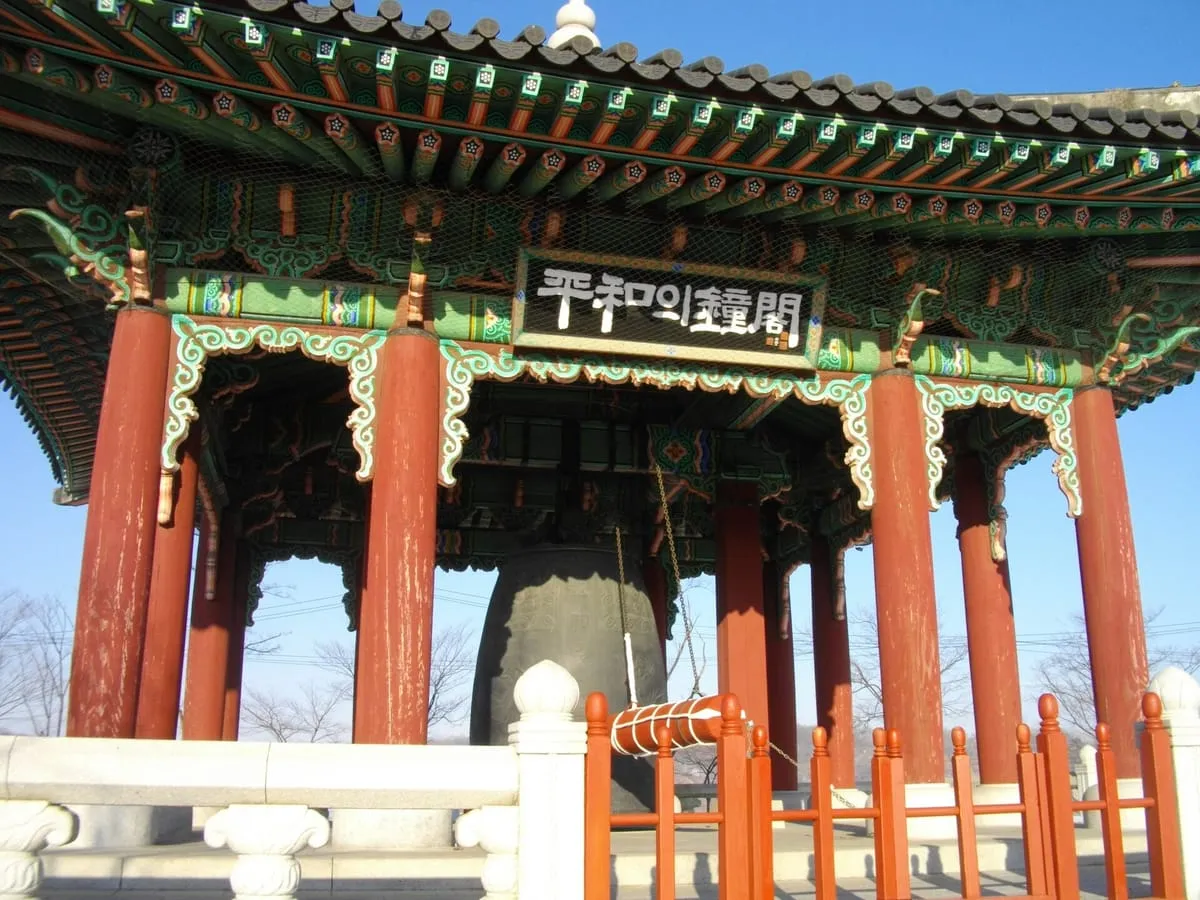
Situated on the southern banks of the Imjin River, 7 km south of the Military Demarcation Line, Imjingak was built in 1972 as a place of remembrance for families displaced by the Korean War.
Key monuments within the park include:
- Freedom Bridge: A former wooden and steel railway bridge where 12,773 United Nations and South Korean prisoners of war crossed back to freedom following the 1953 armistice.
- Mangbaedan Altar: A granite memorial facing north where divided families gather on traditional holidays (Chuseok and Seollal) to bow towards their ancestral villages and perform memorial rites.
- Korean War Steam Locomotive: An evocative bullet-riddled steam engine abandoned at Jangdan Station during the war, marked by over 1,020 bullet holes and shrapnel scars.
- Imjingak Peace Gondola: A civilian cable car crossing the Imjin River into the Civilian Control Zone, offering aerial views of the wetlands and perimeter fences (often available as an optional ticket add-on for ₩11,000).
2. The 3rd Infiltration Tunnel
Discovered in October 1978 based on intelligence provided by a North Korean defector, this is the most famous of four clandestine invasion tunnels discovered beneath the border.
Dug through solid bedrock 73 metres underground, the tunnel measures 1,635 metres long and 2 metres wide, designed to move approximately 30,000 fully equipped troops per hour behind South Korean defence lines.
- The descent: Visitors descend an interceptor tunnel at an 11-degree gradient (350 metres long). The walk down is simple, but the return climb up the steep incline requires moderate cardiovascular stamina. Select tours utilise an automated rubber-tyred monorail (incline train) for visitors with mobility concerns.
- Inside the bedrock: Once inside the original tunnel, visitors walk 265 metres along the narrow granite corridor up to the first of three thick concrete interception walls erected by the South Korean military.
- Equipment: Bright yellow safety hard hats are mandatory, as the ceiling is uneven with low-hanging rock outcroppings. All loose items, bags, mobile phones, and cameras must be deposited in secure coin lockers before descending; photography is completely banned underground.
Guided DMZ tours from Seoul
Independent travel past the Civilian Control Line is prohibited by South Korean military law. All foreign visitors must book an official licensed group tour with military security clearance and passport registration.
Seoul: DMZ Tour + North Korean Defector Q&A
From ₩68,190 · 4.9 stars from 23,549 reviews · 7 - 9 hours · 3rd Tunnel & Dora Observatory
Seoul: DMZ Tour + North Korean Defector Q&Aad: The top-rated DMZ itinerary. Includes civilian clearance, passage through the Third Infiltration Tunnel, panoramic viewing into North Korea from Dora Observatory, and an exclusive live Q&A session with a North Korean defector.
Seoul: DMZ, 3rd Infiltration Tunnel and Optional Suspension Bridge
From ₩61,371 · 5 stars from 9,852 reviews · 7 - 9.5 hours · Gamaksan suspension bridge
Seoul: DMZ, 3rd Infiltration Tunnel and optional Suspension Bridge Tourad: Pairs the Third Tunnel and Dora Observatory with an excursion to the scenic red suspension bridge at Mount Gamaksan, with morning pickup from central Seoul.
Seoul: DMZ Tour, JSA Museum, Defector Talk & Bridge Options
From ₩61,371 · 4.9 stars from 6,715 reviews · 6 - 9 hours · historic briefing & bridge
Seoul: DMZ Tour, JSA Museum, Defector Talk & Bridge Optionsad: Covers Imjingak Peace Park, the Unification Bridge military checkpoint, the Third Tunnel, and the Dorasan Station railway terminus.
Seoul: Half-Day DMZ Tour Led by Retired Military Officer
From ₩68,190 · 4.9 stars from 2,474 reviews · 6 hours · military operational briefing
Seoul: Half-Day DMZ, Retired Military Officer & Defector Q&Aad: Led by a former South Korean armed forces officer who provides firsthand technical analysis of DMZ defensive fortifications and underground infiltration tactics.
Official ticket or tour: the prices side by side
Tour options compared.
| Option | Official admission | Tour cost | What it covers |
|---|---|---|---|
| Independent visit past Civilian Control Line | Prohibited by law | — | Civilian entry requires military clearance manifest and military escort |
| Standard DMZ half-day tour | Clearance included | From ₩61,371 | Imjingak, 3rd Tunnel, Dora Observatory, Dorasan Station |
| DMZ tour with Defector Q&A | Clearance included | From ₩68,190 | Core DMZ sights plus live interview session with North Korean defector |
| DMZ with Gamaksan Suspension Bridge | Clearance included | From ₩61,371 | Core DMZ sights plus mountain suspension bridge walk |
| Military Officer guided tour | Clearance included | From ₩68,190 | Specialist military commentary, defensive tactics, and tunnel analysis |
3. Dora Observatory
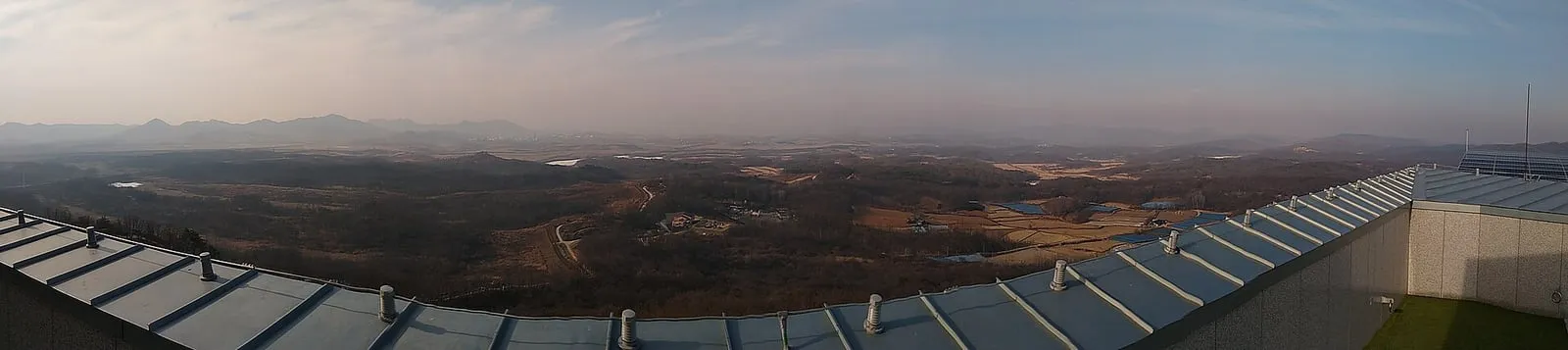
Perched on Mount Dora within the DMZ, Dora Observatory provides panoramic views straight across the border into the North Korean countryside through high-powered viewing binoculars.
From the observation deck, visitors can observe:
- Kijong-dong: Often referred to in the West as the “Propaganda Village”, a quiet settlement in the northern half of the DMZ featuring colourful building facades, paved streets, and a 160-metre flagpole flying a massive 270 kg North Korean flag.
- Kaesong Industrial Complex: The now-shuttered joint economic zone where South Korean corporations once operated manufacturing facilities employing North Korean workers.
- Geumgangsan and Songaksan: Distinctive granite mountain peaks inside North Korean territory.
4. Dorasan Station
Dorasan Station is the symbolic final station on South Korea’s Gyeongui railway line, located just hundreds of metres south of the southern DMZ fence.
Constructed in 2002 with full customs, immigration, and quarantine facilities, the modern station was designed to link South Korea’s rail network to Pyongyang, Beijing, and the Trans-Siberian railway into Europe. A platform sign poignantly reads: “Not the last station from the South, but the first station toward the North.” Access to the platform requires a nominal ₩1,000 platform ticket stamped by military personnel.
Or book a tour: civilian independent access past the civilian control line is prohibited, so book the Seoul: DMZ Tour + North Korean Defector Q&Aad (from ₩68,190, 4.9 stars from 23,598 reviews) for guaranteed military clearance, coach transport and 3rd Tunnel entry.
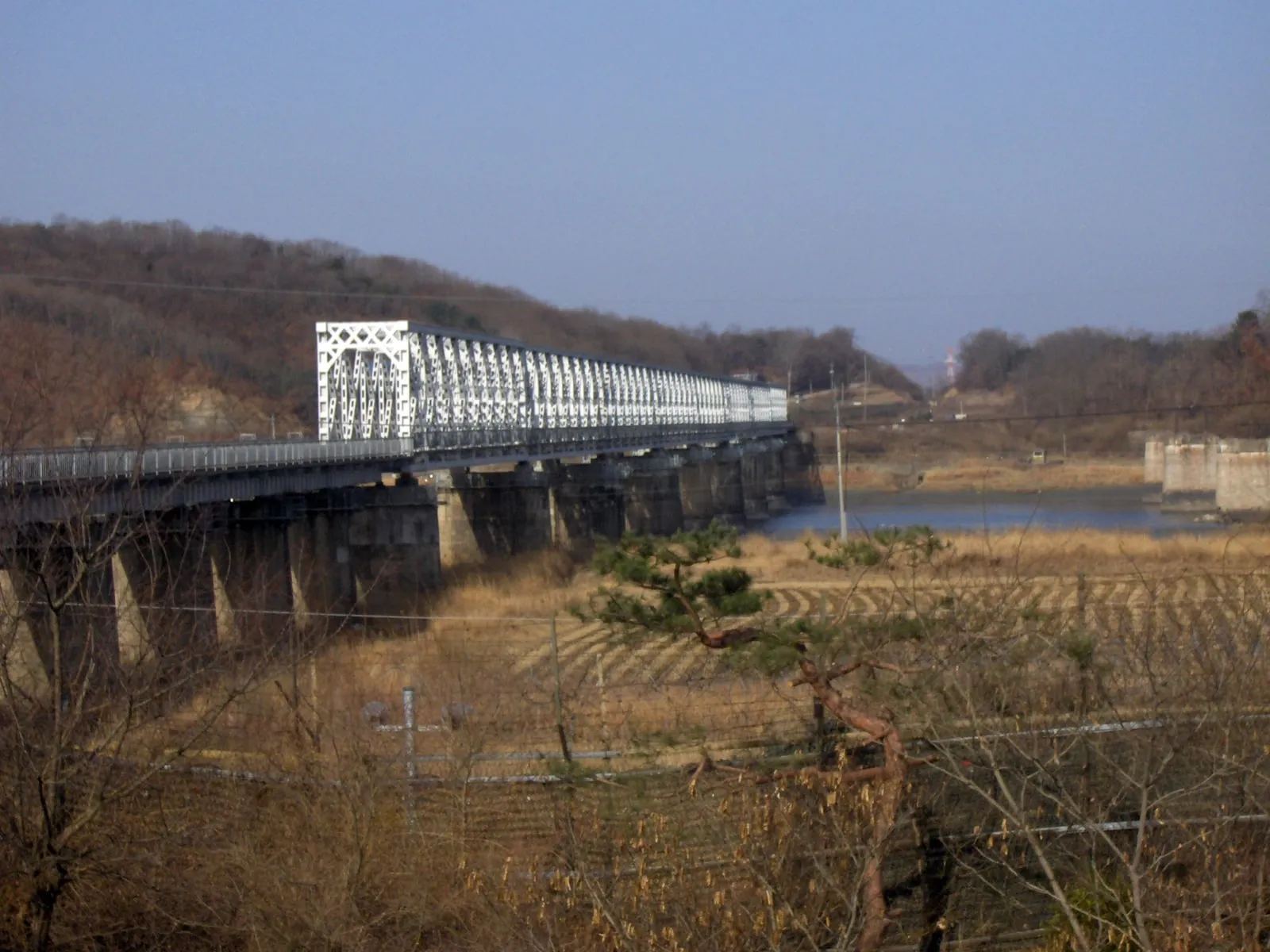
The Bridge of Freedom at Imjingak, near the DMZ. Photo: JoshBerglund19, Wikimedia Commons, CC BY 2.0.
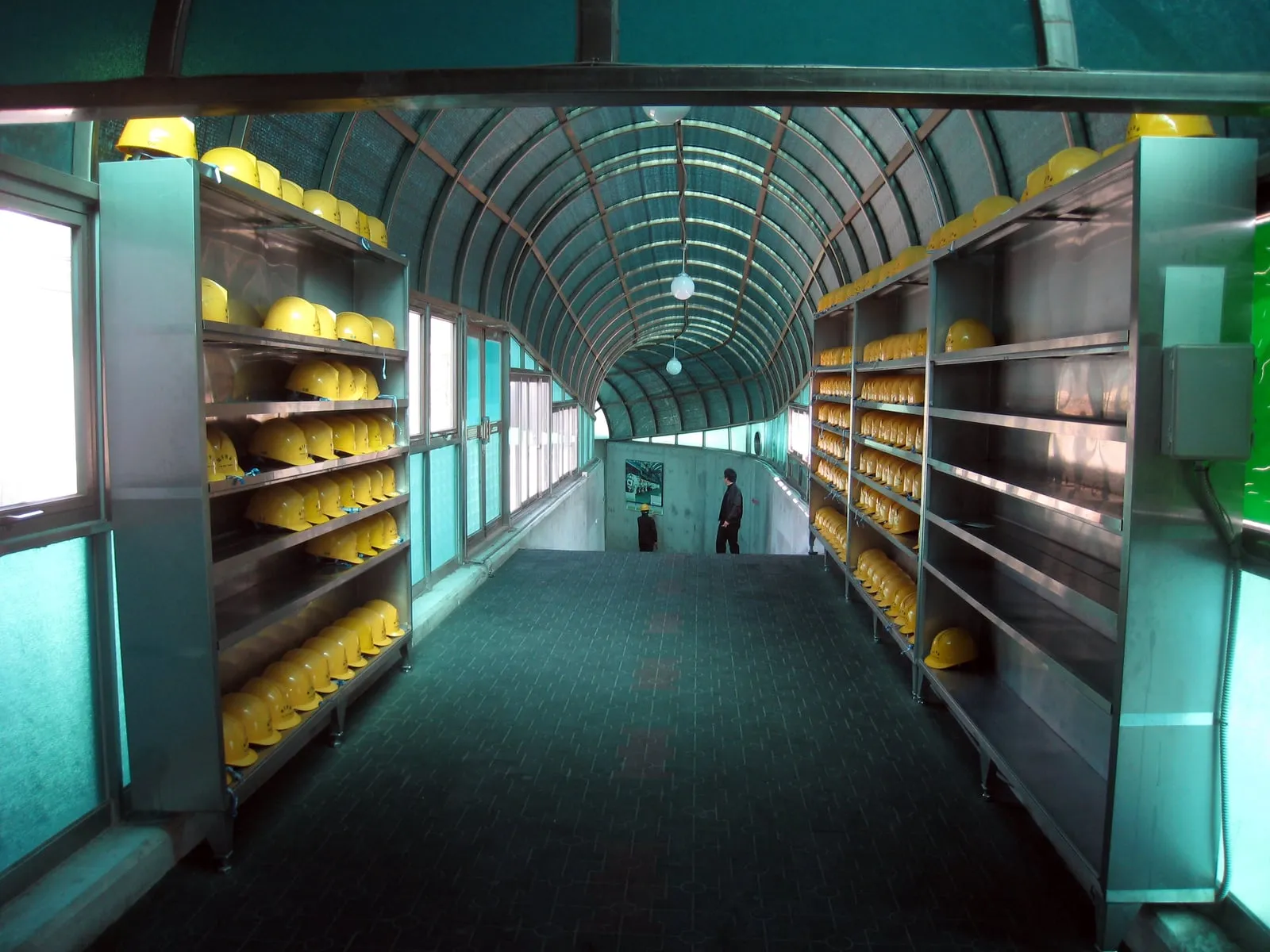
Helmet racks in the corridor to the Third Tunnel at the DMZ. Photo: Josh Berglund, Wikimedia Commons, CC BY 2.0.
Optional tour extensions
Many full-day tour itineraries append regional attractions located in the hills around Paju:
- Gamaksan Suspension Bridge: A 150-metre footbridge suspended 45 metres above the Silmari Valley, commemorating the British Gloucestershire Regiment’s stand during the Battle of the Imjin River in 1951.
- Majang Lake Suspension Bridge: A 220-metre boardwalk bridge spanning across the waters of Majang Lake, surrounded by lakeside cafes and walking paths.
- North Korean Defector Talks: Several specialist tour operators include an interactive 30 to 45-minute Q&A session with a North Korean defector. Guests can ask direct questions regarding everyday schooling, military conscription, market economics, and escape journeys.
JSA (Panmunjom) status explained
Travellers frequently confuse the DMZ tour with the JSA (Joint Security Area / Panmunjom) tour:
| Factor | Standard DMZ Tour | JSA / Panmunjom Tour |
|---|---|---|
| Current Status | Runs Tuesday to Sunday | Not part of commercial DMZ tours |
| Locations Visited | Imjingak, 3rd Tunnel, Dora Observatory, Dorasan | Blue conference huts straddling the demarcation line |
| Military Escort | ROK Army at checkpoint; civilian guide inside | United Nations Command soldiers escorting every step |
| Advance Booking | 1 to 7 days ahead | Historically required 1 to 3 months advance vetting |
| Physical Demands | Moderate (steep tunnel climb) | Minimal walking; strict standing and dress rules |
A tour sold online as a “DMZ Tour” visits the Paju tunnel and observatory sector, not the conference rooms of Panmunjom.
Practical booking advice
- When tours run: Most DMZ sites (specifically the 3rd Tunnel and Dora Observatory) are closed on Mondays and national holidays. Tours operate Tuesday through Sunday.
- Early departures: Because military authorities allocate daily quotas for tour bus entry at Tongil Bridge, most coaches depart central Seoul pick-up points (Hongdae, Myeongdong, Dongdaemun) between 06:45 and 07:30.
- Prices: Tours on GetYourGuide start from ₩61,371 for a standard tour and ₩68,190 for the half-day with a military officer or a defector Q&A.
- Booking links: Reserve seats on GetYourGuidead.
To compare the DMZ with other regional excursions including Suwon Fortress and Nami Island, read our complete guide to Day trips from Seoul.
Common questions
Can you visit the DMZ independently without a tour?
No. Independent civilian travel into the Demilitarised Zone and the Civilian Control Zone (CCZ) north of Tongil Bridge is strictly forbidden under South Korean military law. All visitors must be registered on an authorised group manifest and travel on a licensed tour bus accompanied by an accredited guide.
Do you need a physical passport for a DMZ tour?
Yes. Every traveller must carry their original, physical passport on the day of the tour. Republic of Korea Army soldiers board the bus at the Tongil Bridge military checkpoint to verify each passport against the official passenger manifest. Digital smartphone photos, photocopies, or driving licences are rejected without exception.
Are tours to the Joint Security Area (JSA / Panmunjom) currently operating?
No standard DMZ tour sold from Seoul enters the Joint Security Area (JSA) at Panmunjom, whose visits are controlled by the United Nations Command. Commercial DMZ tours visit the 3rd Tunnel, Dora Observatory and Imjingak, not the blue conference huts.
What should you expect inside the 3rd Infiltration Tunnel?
Visitors descend a steep 350-metre interceptor tunnel into granite bedrock before walking along a 265-metre section of the tunnel dug by North Korea. The ceiling is roughly two metres high with exposed rock, requiring yellow safety hard hats. All mobile phones, cameras, and bags must be stored in lockers before entering.
How long does a DMZ tour take from Seoul?
Standard half-day tours depart central Seoul around 07:00 to 07:30 and return by 14:00 to 14:30 (roughly 6 to 7 hours). Full-day tours adding the Gamaksan or Majang Lake suspension bridges, or an extended defector discussion, return between 16:30 and 17:30.