In this guide
💡 The Short Version: Bukhansan National Park offers alpine granite climbing on Seoul’s northern doorstep with free admission (₩0) under the Korea National Park Service. The premier objective is Baegundae Peak (836 metres), the highest summit in the city. The 3.4 km hike from Bukhansanseong Fortress entrance takes 4 to 5 hours round trip, finishing with a thrilling steel-cabled rock scramble to the windy summit flag. Wear grippy hiking shoes; polished granite is dangerous in flat sneakers. Between December and March, crampons (aizen) are essential. Take Subway Line 3 to Gupabal Station (Exit 1 or 2), then catch local Bus 704 or 34 to the fortress entrance. Compare other excursions in our guide to Day trips from Seoul.
Bukhansan National Park overview
Designated as South Korea’s 15th national park in 1983, Bukhansan covers 79.9 square kilometres across northern Seoul and Gyeonggi-do. The park is listed in the Guinness Book of World Records as the national park with the highest number of visitors per square foot, welcoming over five million hikers and mountaineers annually.
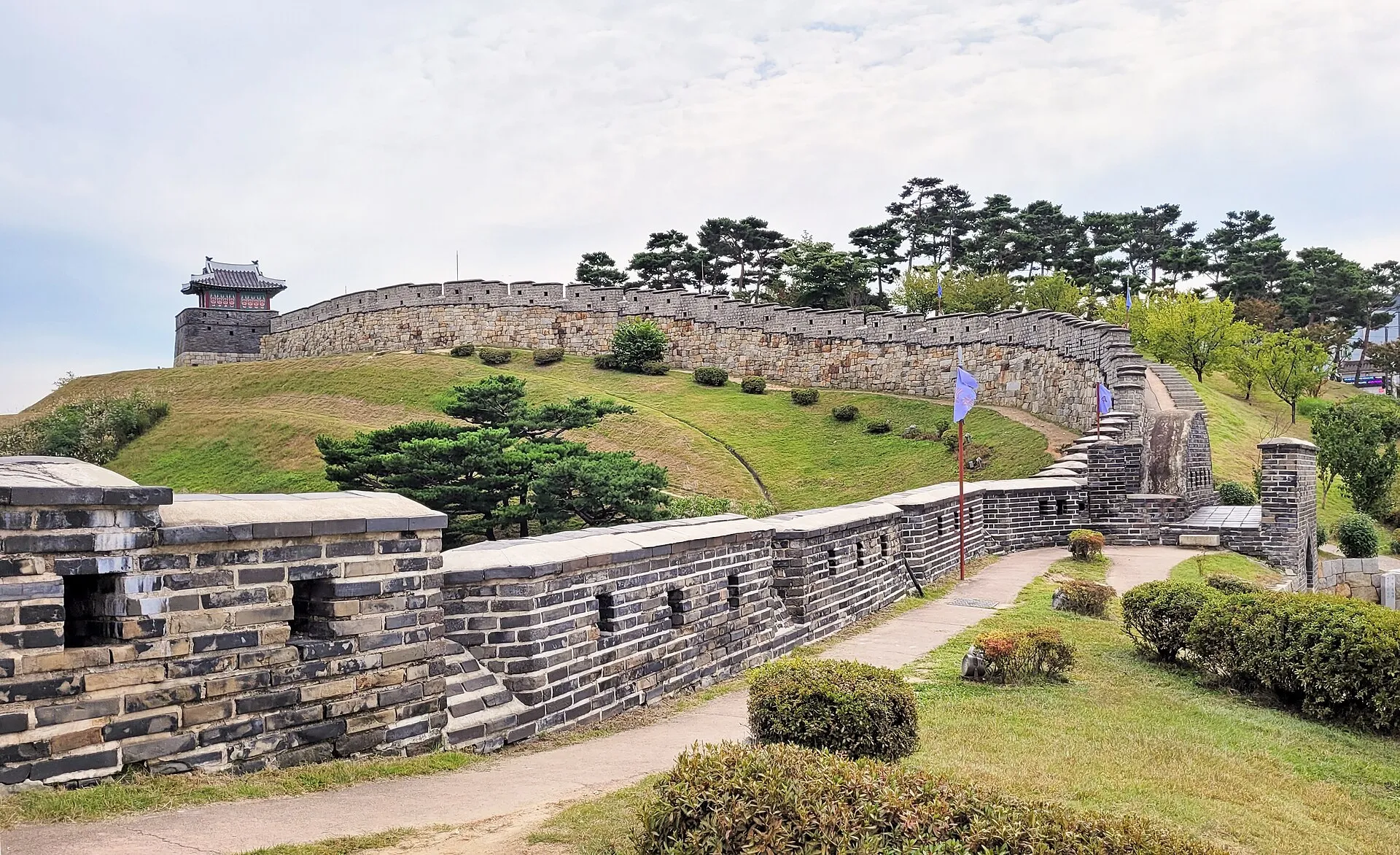
Its rugged landscape is defined by massive sheer granite domes, pine-forested gorges, clear mountain streams, and dozens of secluded Buddhist hermitages. Winding across its ridges are the restored stone battlements of the 18th-century Bukhansanseong Fortress, built in 1711 to shield Joseon monarchs in the event of foreign invasion.
The Baegundae Peak trail profile
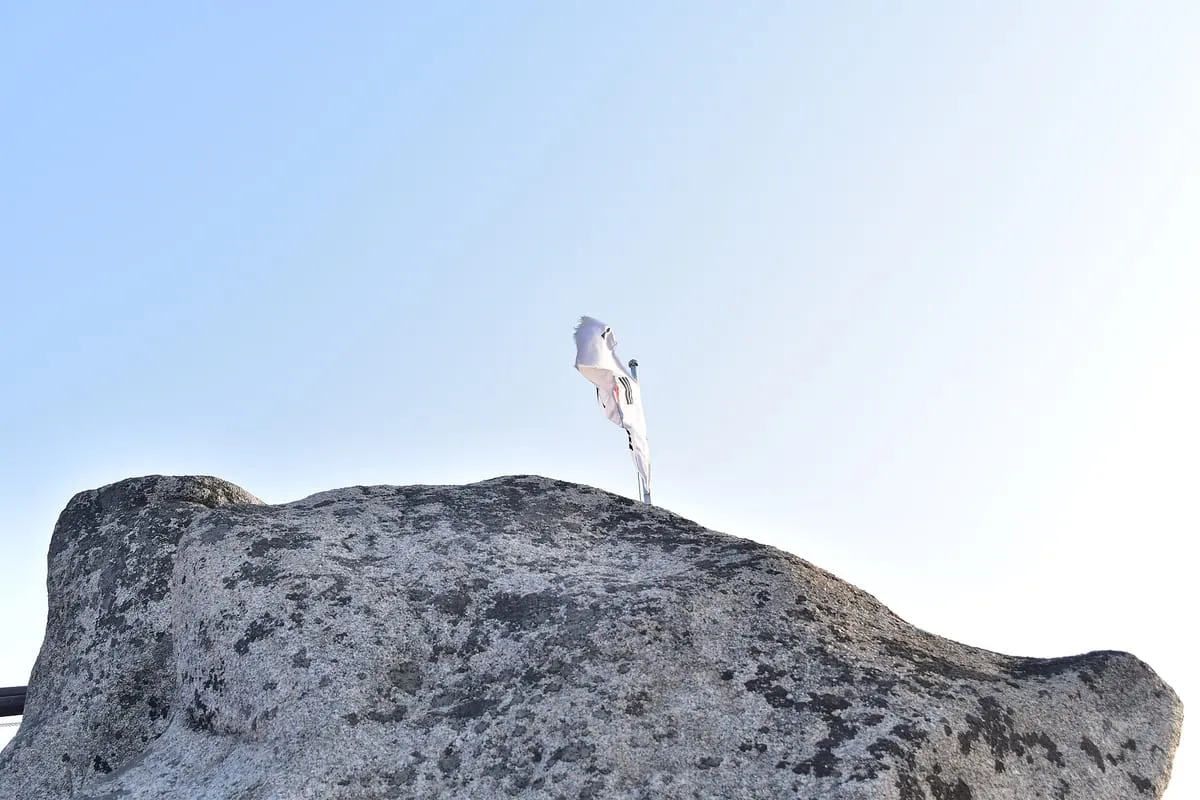
Baegundae Peak (836 metres) stands alongside Insubong (810 metres, a world-famous vertical granite climbing face) and Mangyeongdae (799 metres). Together, the three towering peaks gave the range its historic name: Samgaksan (the “Three Horned Mountains”).
| Trail segment | Distance | Elevation change | Terrain |
|---|---|---|---|
| Trailhead to Daeseomun Gate | 1.1 km | +120 m | Paved access road running alongside the stream gorge |
| Daeseomun to Borisa Temple | 1.2 km | +180 m | Compact dirt trails and wide granite stone staircases |
| Borisa to Baegun-bongamun Gate | 0.8 km | +280 m | Steep, continuous rocky switchbacks through the mountain forest |
| Baegun-bongamun to Summit Flag | 0.3 km | +120 m | Exposed granite ridge with steel safety cables and carved footholds |
| Total one-way ascent | 3.4 km | +700 m | Approximately 2 to 2.5 hours of continuous climbing |
The summit scramble
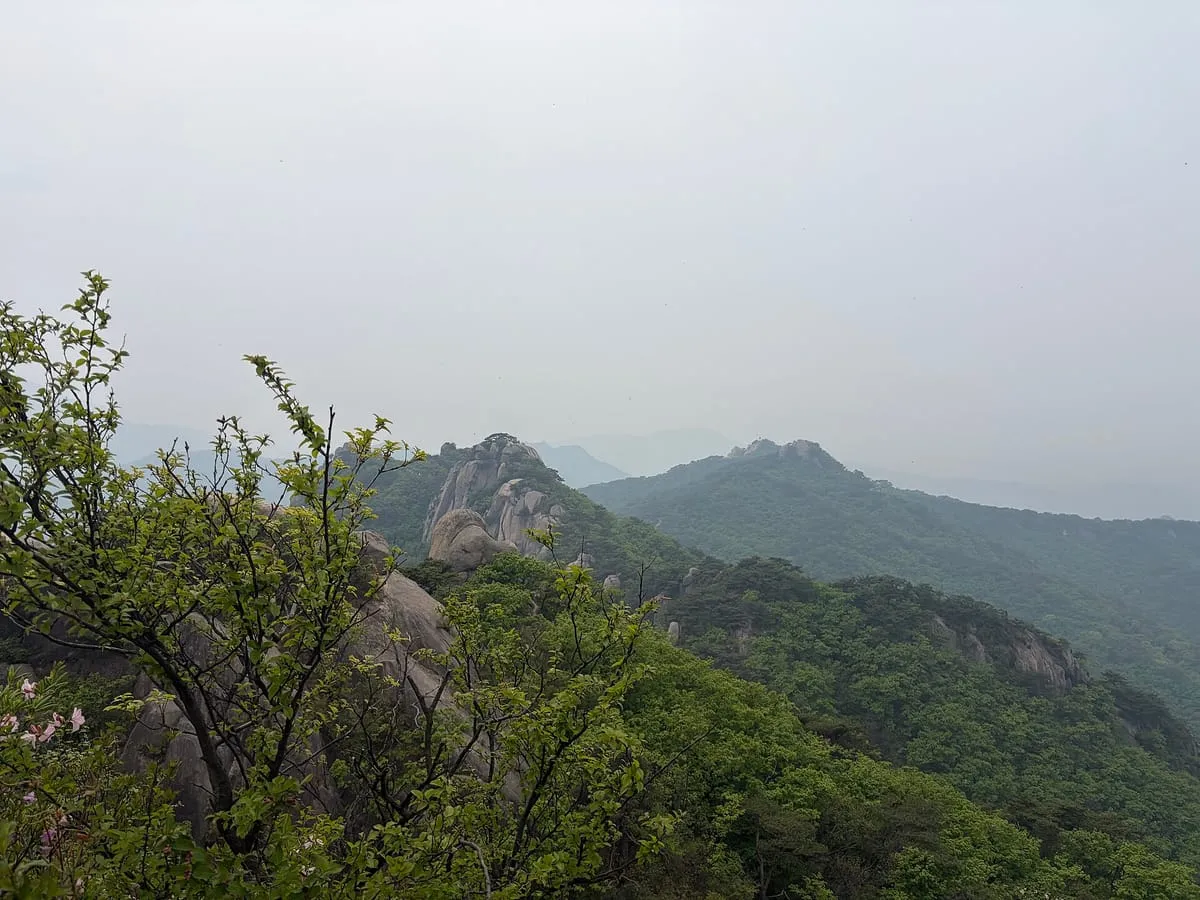
The final 300 metres above the mountain fortress gate (Baegun-bongamun, also known as Wi-mun) is the most dramatic section of the hike.
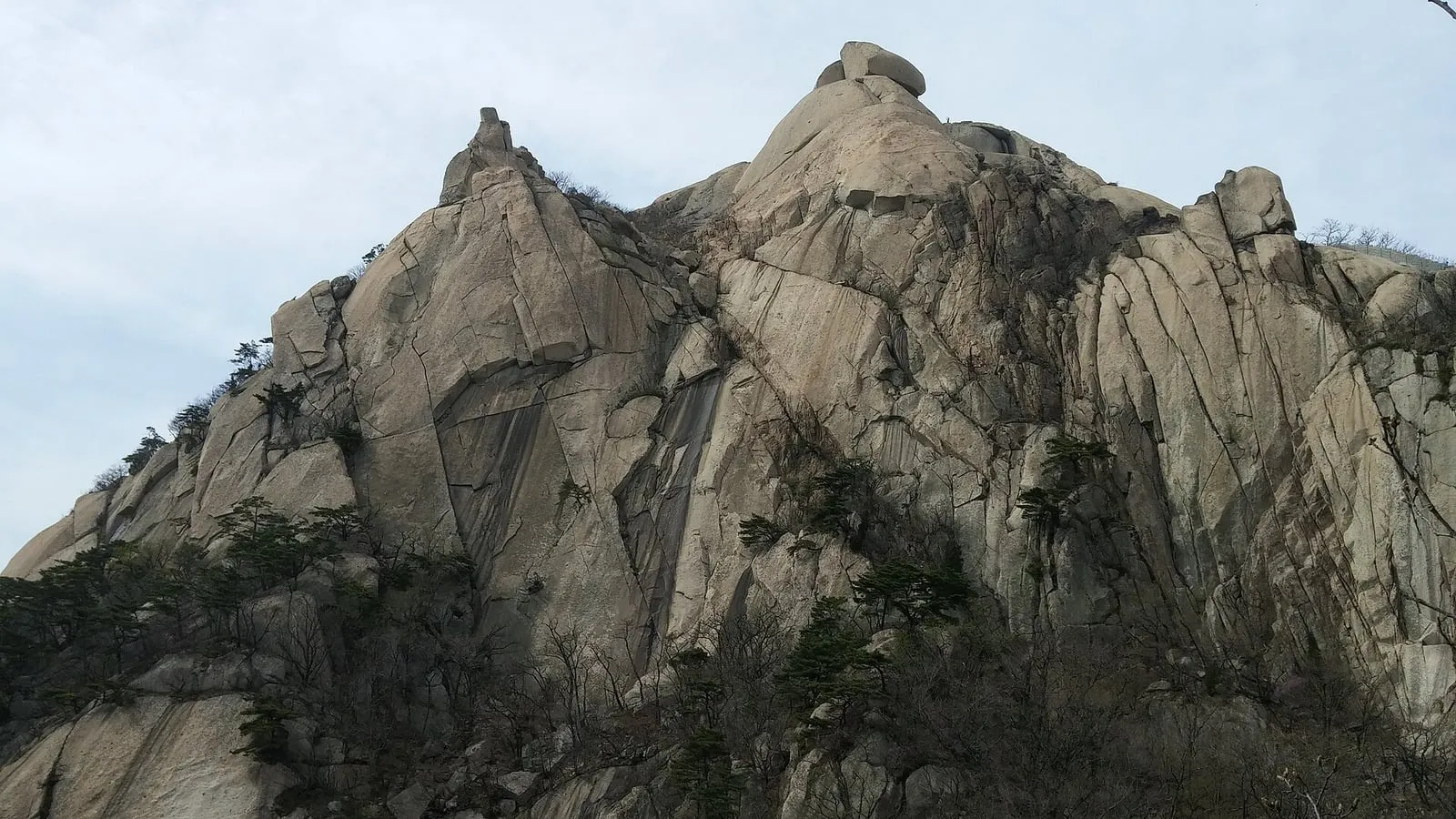
The path leaves the tree line and ascends directly onto the bald granite bedrock of Baegundae. Heavy-duty steel handrails, woven wire cables, and metal stanchions are anchored firmly into the rock face. Hikers grip the cables with both hands while stepping onto footholds chiseled directly into the granite.
At the summit platform, a large wooden deck surrounds the South Korean national flag, offering a 360-degree panorama across the sprawling skyscrapers of central Seoul to the south, the forested peaks of Dobongsan to the north, and the sheer vertical granite wall of Insubong just across the chasm.
Or book a tour: if you prefer guided hiking along historic stone fortifications before tackling granite mountain trails, the Seoul City Wall Hike: 18.6km Full Completion or Half Coursead (from ₩120,000, 5.0 stars from 3 reviews) provides expert navigation along mountain ridges.
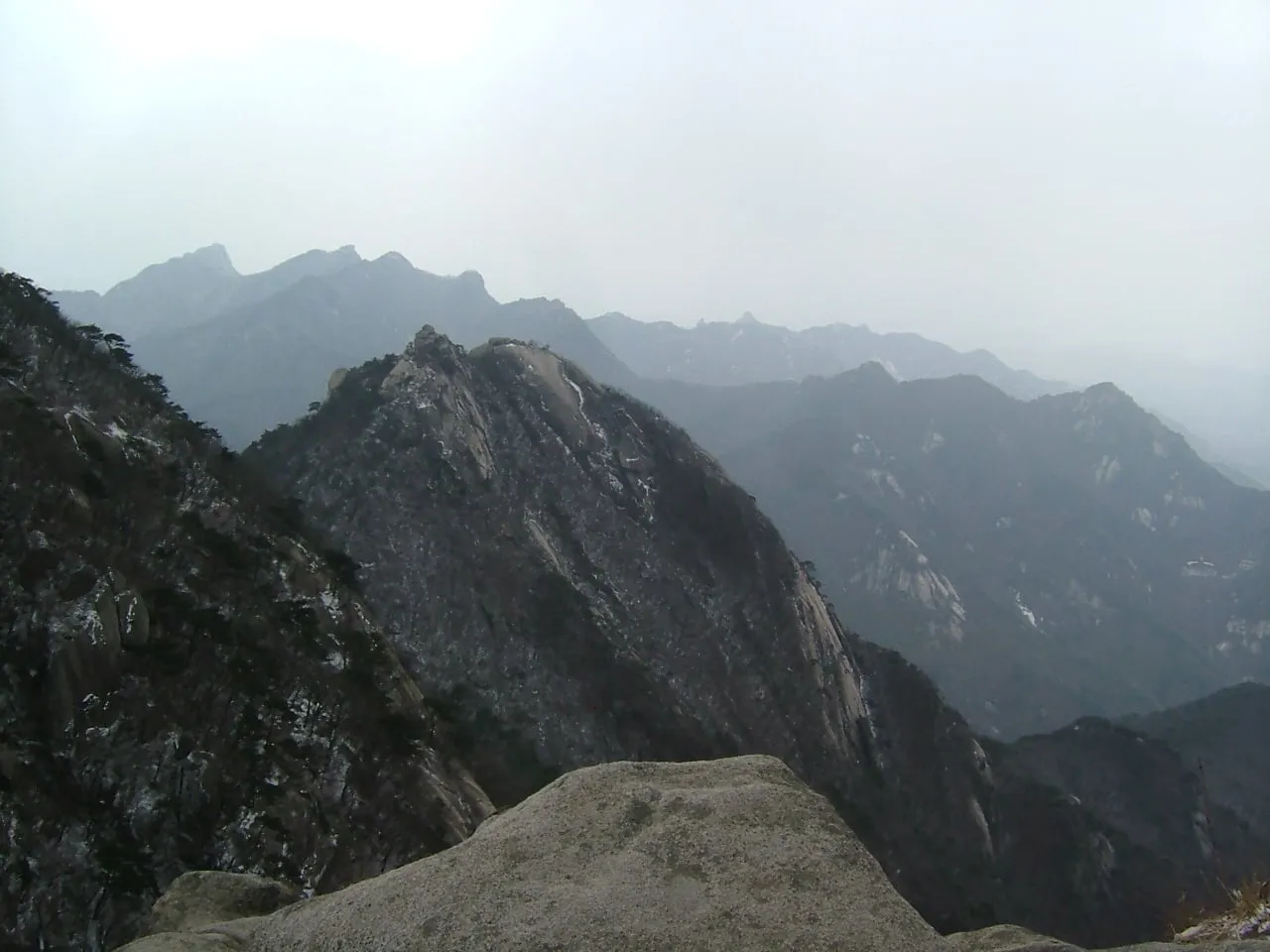
Granite ridges and valleys in Bukhansan National Park. Photo: No machine-readable author provided. Geomr~commons, Wikimedia Commons, CC BY-SA 3.0.
Essential gear and safety rules
While Bukhansan is easily reached by city subway, its upper trails are genuine alpine mountain terrain:
- Footwear: Do not hike in smooth-soled street shoes, flat running trainers, or fashion canvas footwear. The massive granite rock slabs become polished and slick from millions of hikers. Wear proper hiking shoes or trail runners with deep-lugged sticky rubber soles.
- Hydration: There are no water taps, kiosks, or refreshment stands above Borisa Temple. Carry at least 1.5 litres of water per person during spring and autumn, and 2 litres during summer.
- Winter crampons (aizen): From December through March, melting and refreezing snow turns the granite steps and cable scrambles into sheer ice sheets. Slip-on microspikes or crampons (aizen) and gloves are strictly mandatory for winter ascents. Without them, park rangers turn unprepared hikers around at the trail checkpoints.
- Gloves: Lightweight work gloves or grip gloves protect your hands when hauling yourself up the cold steel summit cables.
- Leave No Trace: Bukhansan is a strictly protected national park. Camping, open fires, and cooking are strictly prohibited. Carry all food wrappers, fruit peels, and plastic bottles back down to the trailhead recycling bins.
Guided hiking tours and mountain treks
Bukhansan trails are accessible by subway, but guided hikes provide experienced mountain leadership along rocky granite passes.
Seoul: City Wall Hike Full Completion or Half Adventure
From ₩120,000 · 5 stars from 3 reviews · 5 - 9 hours · mountain ridge hiking
Seoul City Wall Hike: 18.6km Full Completion or Half Coursead: Guided hiking along Seoul’s mountain ramparts, offering scenic ridge walking and historic defensive fortifications.
Seoul: Highlights of Seoul Full-Day Tour
From ₩80,464 · 4.9 stars from 910 reviews · 8 - 8.5 hours · city landmarks with mountain views
Seoul: Highlights of Seoul Full-Day Tourad: Full-day coach tour taking in Seoul’s natural and historic landmarks with lunch included.
Seoul: Small Group History Walking Tour
From ₩120,014 · 4.8 stars from 198 reviews · 3 hours · historic walking tour
Seoul: Gyeongbok Palace and Bukchon Hanok Walking Tourad: 3-hour guided walk covering the foothills and palaces of northern Seoul.
Trailhead facilities: food and gear shops
The commercial strip leading from the bus stop to the Bukhansanseong Information Centre is packed with hiking culture:
- Outdoor gear retailers: Dozens of brand shops (The North Face, Black Yak, K2, Kolon Sport) sell boots, socks, trekking poles, gloves, and microspikes if you need last-minute equipment.
- Pre-hike food: Convenience stores (CU, GS25) at the entrance sell bottled water, sports drinks, and foil-wrapped gimbap rolls (roughly ₩3,500 to ₩4,500), which make the traditional summit lunch.
- Post-hike dining: After descending, join local Korean hikers at the lively restaurants along the stream for savoury seafood scallion pancakes (haemul pajeon) and bowls of chilled Korean rice wine (makgeolli).
How to get to Bukhansan from Seoul
The most popular western approach via the Bukhansanseong Fortress entrance is simple and economical using the metropolitan transit network:
- Subway Line 3 to Gupabal: Board Seoul Subway Line 3 (orange line) north from central stations such as Jongno 3-ga (roughly 22 minutes) or Anguk to Gupabal Station.
- Transfer to Local Bus: Take Exit 1 or Exit 2. Walk to the sheltered bus transfer island in the middle of the road.
- Board Bus 704 or Bus 34: Board either Bus 704 or Bus 34. On sunny weekend mornings, long queues of hikers in colourful trekking gear form at the stop; buses arrive every 8 to 12 minutes.
- Alight at the Fortress Entrance: Ride approximately 10 to 12 minutes (6 stops) and disembark at Bukhansanseong Fortress Entrance (Bukhansanseong Ip-gu). The fare is ₩1,500 using your T-money transit card.
- Walk to the Trailhead: Follow the pedestrian promenade past the gear shops and cafes for 400 metres to reach the Bukhansan National Park Information Centre and the start of the trail.
After conquering Seoul’s highest peak, explore other exciting regional destinations in our guide to Day trips from Seoul.
Common questions
How much is admission to Bukhansan National Park?
Admission to Bukhansan National Park is 100% free of charge (₩0). The South Korean National Park Service abolished park entrance fees across the country. You only pay for standard public transport (subway and local bus fares).
How difficult is the hike to Baegundae Peak?
The hike is rated moderate to strenuous. The 3.4 km route from the Bukhansanseong Fortress entrance gains roughly 700 metres of elevation over 2 to 2.5 hours of continuous uphill climbing. The final 300 metres involve scrambling across exposed granite rock faces using heavy-duty steel safety cables and carved stone footholds.
What gear do you need for hiking Bukhansan?
Sturdy hiking shoes or boots with deep rubber tread are essential, as smooth gym trainers slip easily on polished granite slopes. Bring at least 1.5 litres of water and snacks, as there are no drinking taps or shops once you leave the trailhead. From December to March, microspikes or crampons (aizen) are mandatory due to packed snow and treacherous hidden ice.
How long does the Baegundae Peak hike take round trip?
Allow 4 to 5 hours total: roughly 2 to 2.5 hours for the ascent, 30 to 45 minutes to take photographs and rest at the summit, and 1.5 to 2 hours for the descent back down to the Bukhansanseong information centre.
How do you reach Bukhansan National Park from central Seoul by subway?
Take Seoul Subway Line 3 (orange line) north to Gupabal Station. Leave via Exit 1 or Exit 2 to the bus stop on the central island and board local Bus 704 or Bus 34. Ride for 10 to 12 minutes to the 'Bukhansanseong Fortress Entrance' (Bukhansanseong Ip-gu) stop.