In this guide
💡 The Short Version: Summer (June to August) has highs of 20°C to 23°C and nearly 19 hours of daylight, enough for evening swims at Sørenga and fjord island ferries. May brings blossom and 17 May Constitution Day. Autumn (September to October) turns the birch and aspen of Oslomarka gold. Winter (November to March) means snow in the hills, tobogganing at Korketrekkeren, the Christmas market at Spikersuppa and floating saunas. Or book a tour: a 1.5-hour scenic fjord cruisead on an electric ship from NOK 430 shows the inner Oslofjord from the water, with commentary in six languages through a free app.
⚠️ Shops and most museums close on 17 May and over Easter. On 17 May (National Day), supermarkets, shops and most museums shut. From Maundy Thursday to Easter Monday, shops and many businesses close for five days. Buy groceries the day before.
Month-by-month climate and daylight overview
Temperatures and rainfall are 30-year averages from the Norwegian Meteorological Institute’s Blindern station in Oslo, shown with daylight hours:
| Month | Daily High / Low | Monthly Rain | Daylight (Mid-Month) | Conditions and events |
|---|---|---|---|---|
| January | 0°C / -5°C | 58 mm | 6.7 hours | Snow in the Nordmarka hills; tobogganing at Korketrekkeren; fewest tourists |
| February | 1°C / -5°C | 45 mm | 9.0 hours | Reliable snow for cross-country skiing; winter school holidays |
| March | 5°C / -2°C | 41 mm | 11.6 hours | Driest month; Holmenkollen Ski Festival World Cup jumping; snow melts at sea level |
| April | 11°C / 2°C | 48 mm | 14.4 hours | Spring thaw; city streets swept of winter gravel; Easter holidays; Inferno Metal Festival |
| May | 17°C / 7°C | 60 mm | 17.1 hours | Parks turn green; 17 May Constitution Day; Bygdøy ferry starts running |
| June | 20°C / 11°C | 80 mm | 18.8 hours | Midsummer (Sankthansaften); nearly 19 hours of daylight; Oslo Pride; Bislett Games |
| July | 23°C / 13°C | 87 mm | 18.1 hours | Warmest swimming weather; Fjord ferries at peak frequency; locals take fellesferie |
| August | 21°C / 13°C | 103 mm | 15.6 hours | Wettest month; major music festivals (Øya, Oslo Jazz); warm seawater bathing |
| September | 16°C / 9°C | 82 mm | 12.8 hours | Autumn foliage; Oslo Culture Night (Kulturnatt); Oslo Marathon; harvest food fairs |
| October | 10°C / 4°C | 93 mm | 10.0 hours | Golden forest walks in Oslomarka; CODA contemporary dance festival; museum season |
| November | 4°C / 0°C | 85 mm | 7.4 hours | First seasonal snowfalls; Jul i Vinterland Christmas market opens at Spikersuppa |
| December | 1°C / -4°C | 54 mm | 5.9 hours | Darkest month (solstice 5h 54m); Nobel Peace Prize (10 Dec); Christmas holiday markets |
Summer in Oslo (June to August): endless light and fjord living
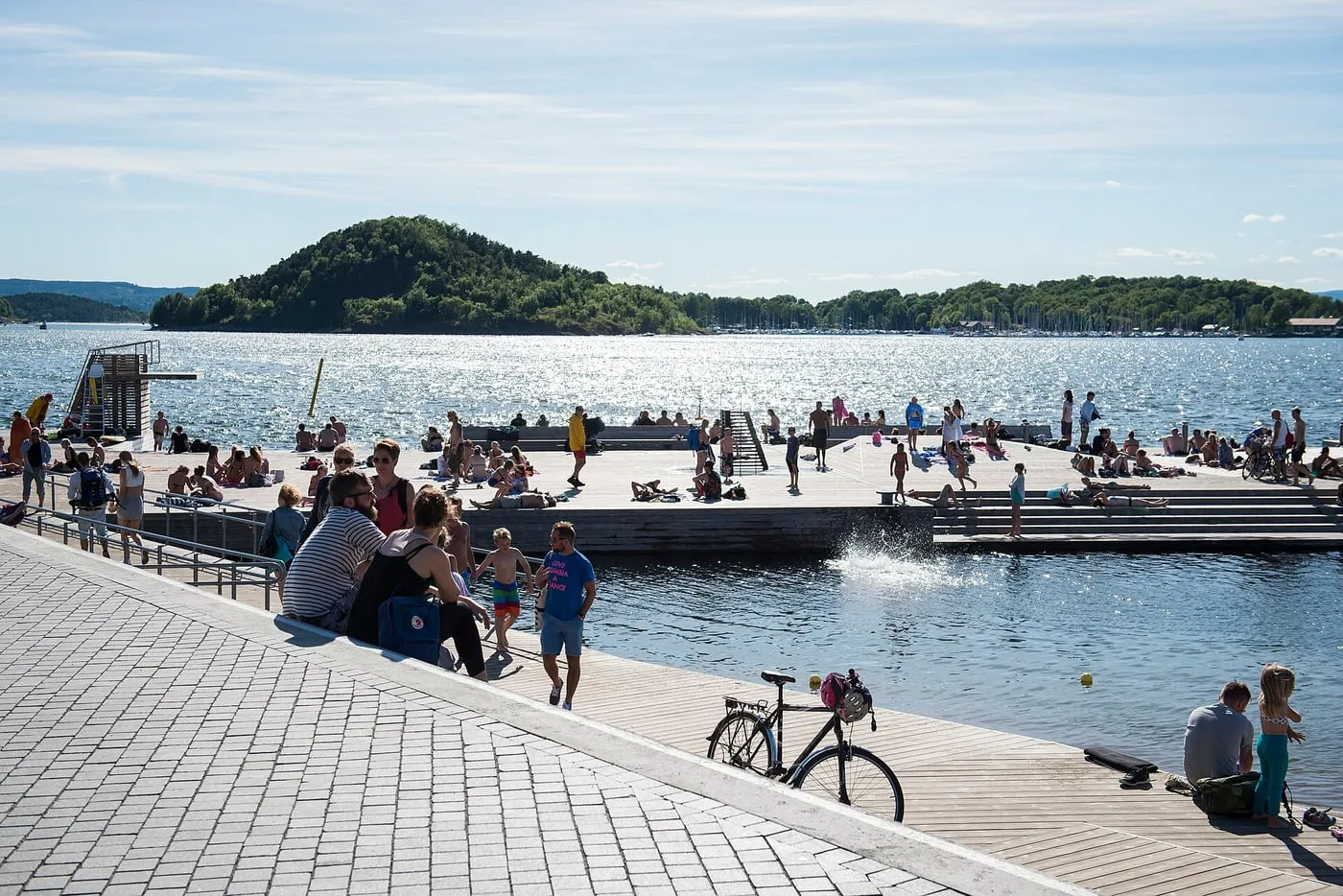
The sun is down for only a few hours each night in summer, so evenings stay light and terraces and quays stay busy late.
Why visit in summer
- Waterfront swimming: Sørenga, just behind the Opera House, has a seawater pool and timber sunbathing decks. There are also beaches on Bygdøy and Hovedøya.
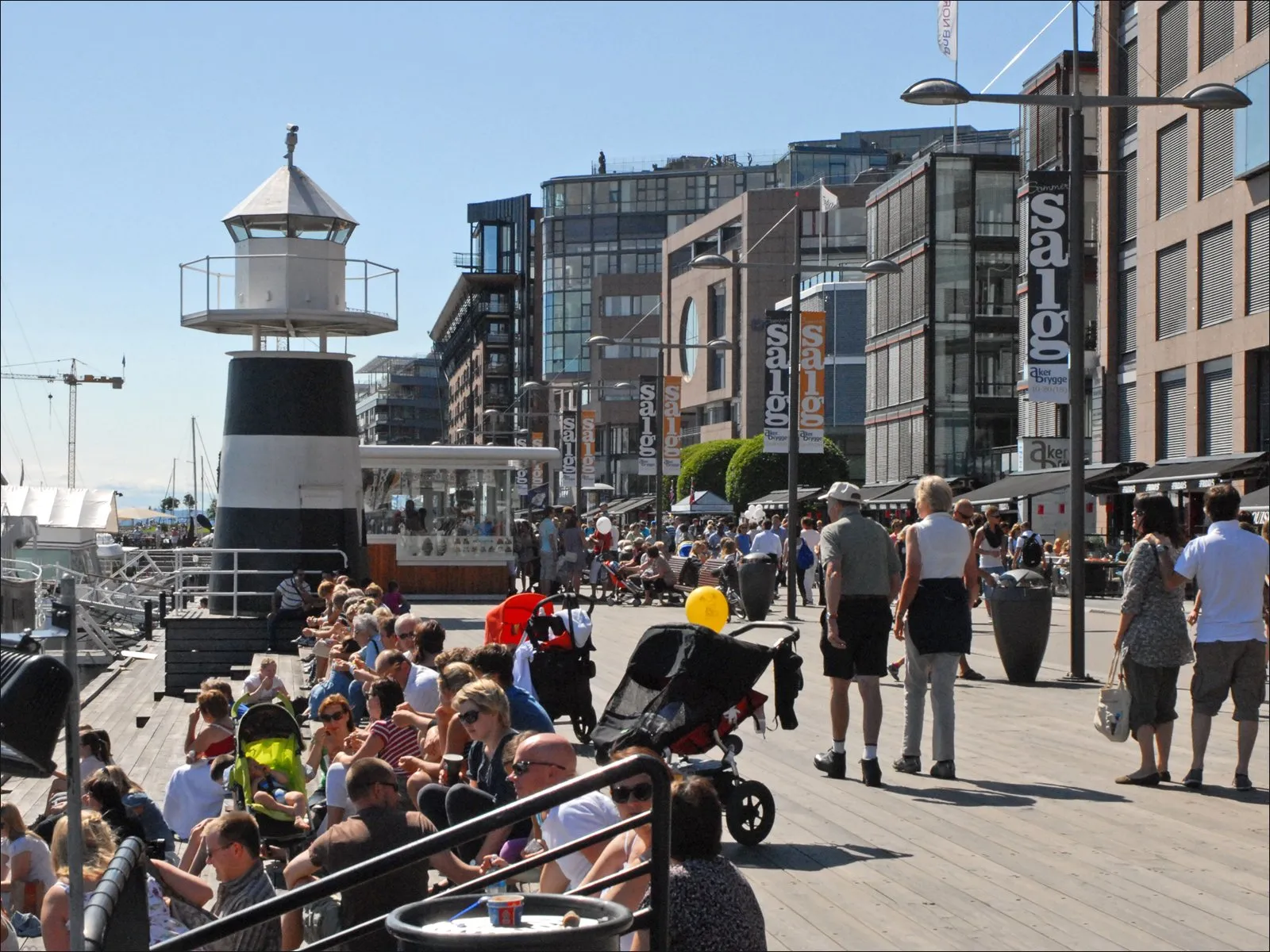
- Island ferries: Ruter ferries (lines B1 and B2) run every 20 to 30 minutes from Aker Brygge to Hovedøya, Gressholmen and the camping beaches of Langøyene; see Oslofjord cruises and island hopping.
- Festivals:
- Øya Festival (August): an indie rock and electronic music festival in Tøyenparken.
- Oslo Jazz Festival (August): international and Nordic jazz at venues and waterfront stages across the city.
- Oslo Pride (late June): ends with a parade through the city centre.
- The July shutdown (fellesferie): In the middle three weeks of July many Norwegians take their annual holiday at mountain cabins or on the south coast. Attractions and restaurants stay open, but some independent shops in Grünerløkka close for two to three weeks.
Spring (April and May): blossoms and National Day
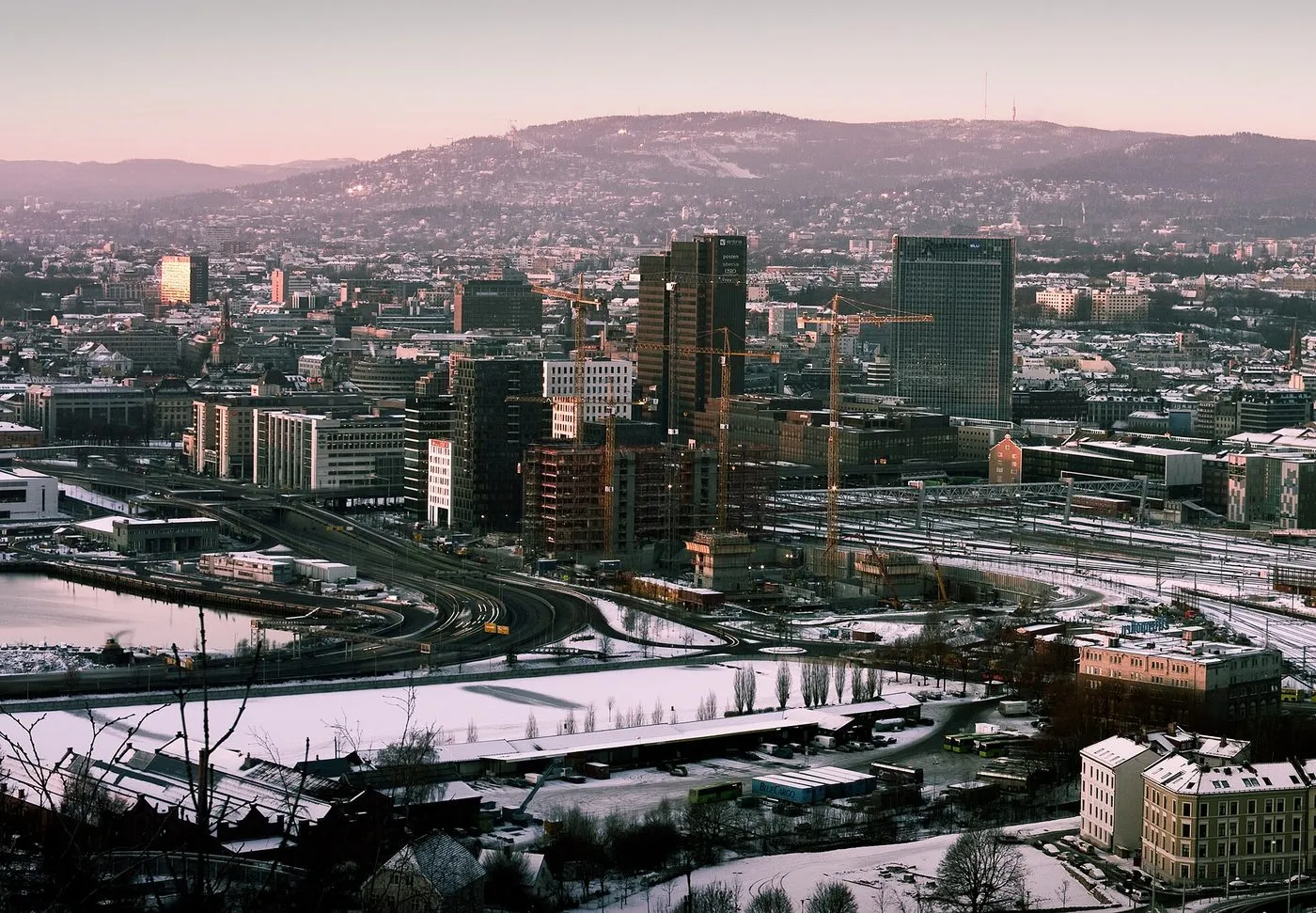
Snow melts from the hills in April, and by May the city parks are green and the lilacs are out.
The spectacle of 17 May (Syttende Mai)
National Day marks the signing of the constitution at Eidsvoll in 1814. The main event is a children’s parade, not a military one:
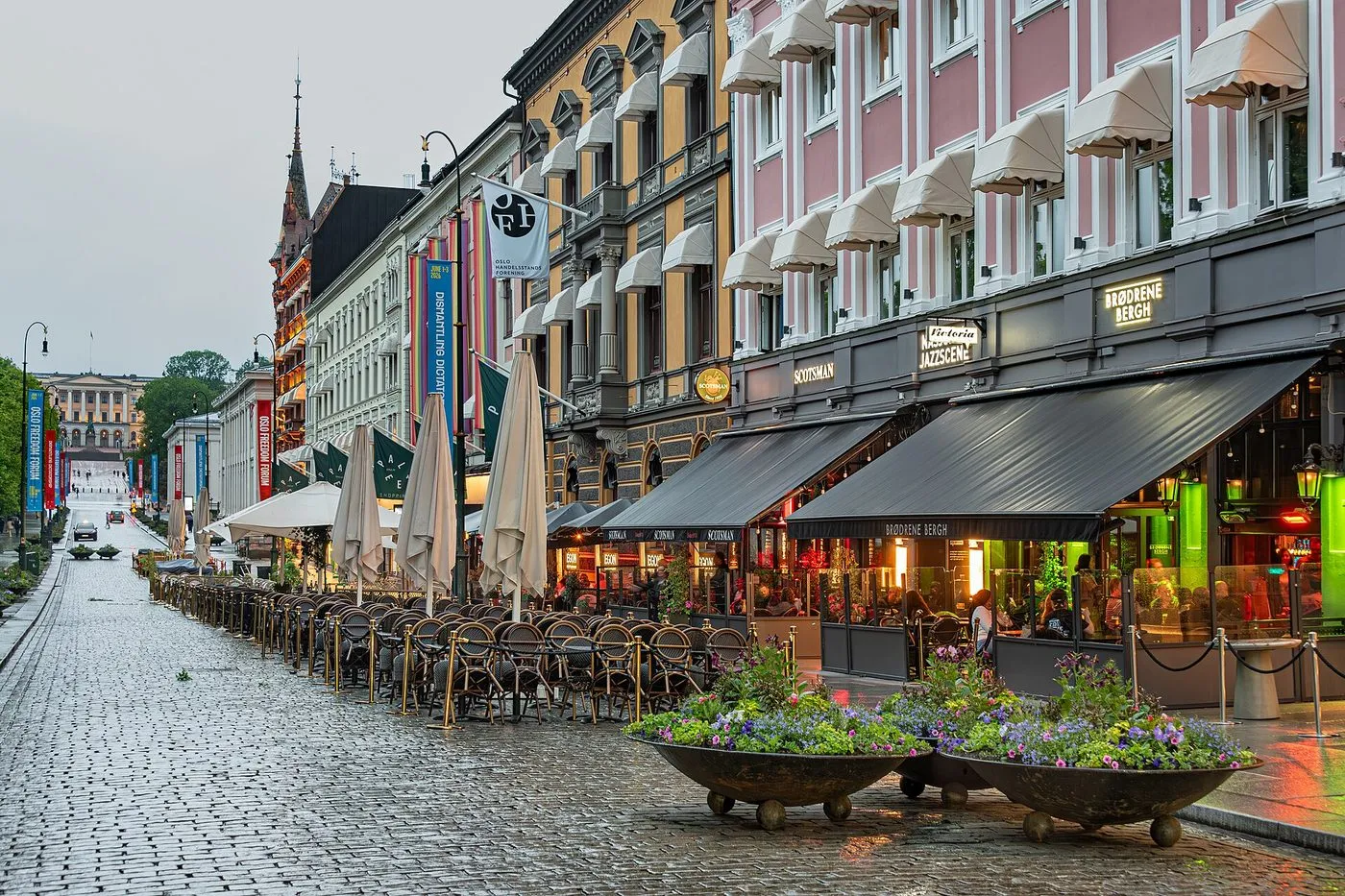
- The Children’s Parade (Barnetoget): School children with brass bands march along Karl Johans gate past crowds of flag-waving spectators to the Royal Palace, where the royal family waves from the balcony.
- National dress (bunad): Many people wear a woollen bunad with silver brooches and embroidery particular to their home region.
- Practicalities: Book hotels months ahead and restaurant tables for celebratory breakfasts or lunches by March. Shops are shut all day.
Autumn (September and October): foliage and harvest season
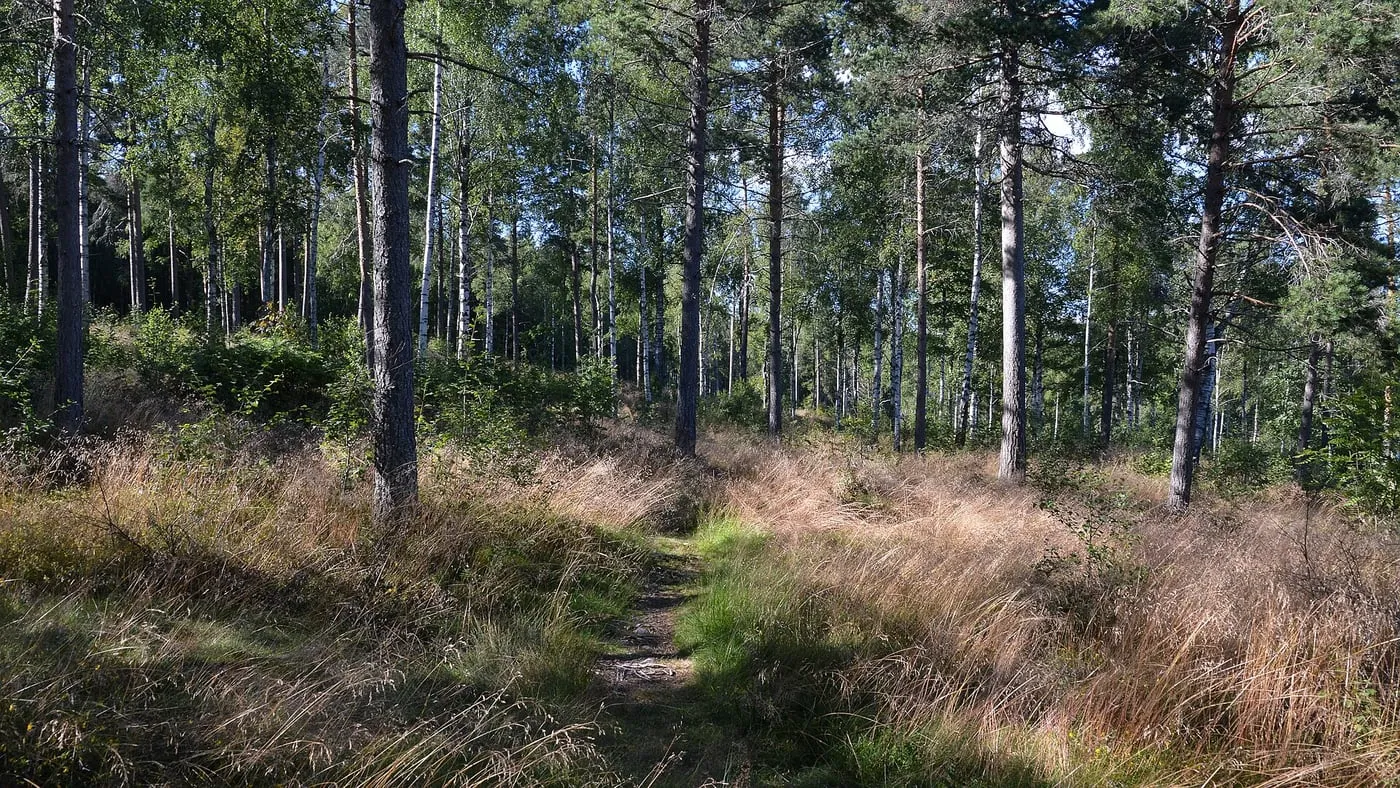
Birch and aspen turn gold and rust in September and October, and the museums are quieter.
Autumn highlights
- Hiking in Nordmarka: Take metro Line 1 to Frognerseteren or Line 5 to Sognsvann for lakeside trails and forested ridges.
- Oslo Culture Night (Oslo kulturnatt): Held in mid-September. Galleries, churches and historic buildings open their doors for free concerts and walks until midnight.
- Game season: Venison, grouse and reindeer come onto menus, along with fårikål, a lamb and cabbage stew with black pepper that is Norway’s national dish, in traditional restaurants; see where to eat in Oslo.
Winter (November to March): snow sports, markets, and saunas
Winter is for snow in the hills and indoor warmth in the city, which Norwegians call koselig (cosy).
| Winter activity | Where |
|---|---|
| Christmas market and ice skating | Jul i Vinterland and Spikersuppa |
| Tobogganing | Korketrekkeren sled run from Frognerseteren to Midtstuen |
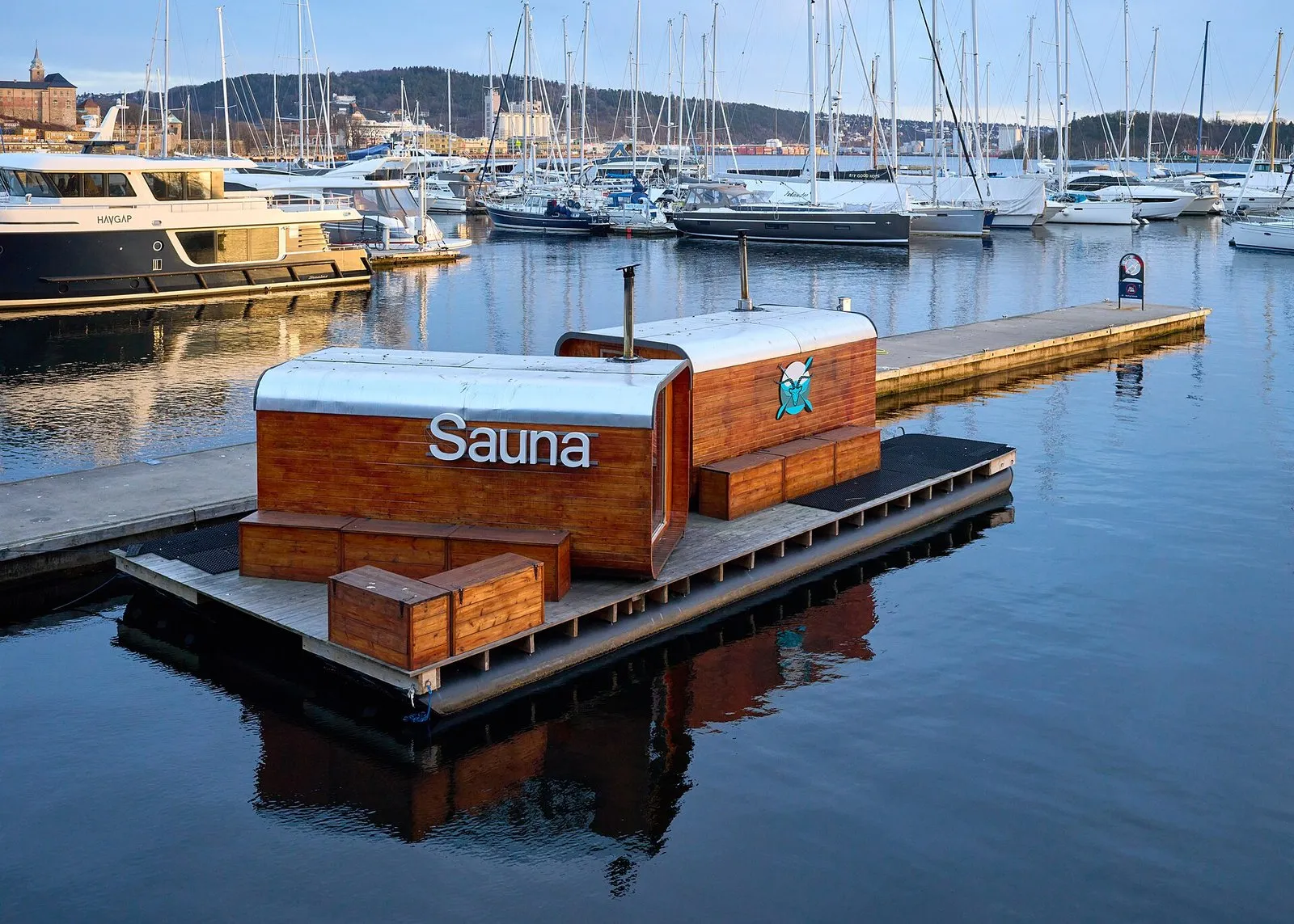
| Saunas | Wood-fired floating saunas and ice plunges at Langkaia and Sukkerbiten |
| Museums | Fram and Kon-Tiki on Bygdøy, open every day of the year |
- Christmas Markets: Central Spikersuppa on Karl Johans gate hosts Jul i Vinterland from early November through early January, with wooden stalls, mulled gløgg, an ice rink and a 33-metre Ferris wheel.
- Korketrekkeren toboggan run: When there is snow (typically late December to February), hire a wooden toboggan at Frognerseteren and ride the 2-kilometre run; metro Line 1 takes you back up.
- Daylight: December and January have only 6 to 7 hours of daylight. Plan outdoor sights between 10:00 and 14:00 and museums, saunas and dinner after.
- Holiday opening hours are in Oslo in winter and Christmas.
Packing recommendations by season
- Summer (June–August): Light clothes, walking trainers, swimwear and a quick-dry towel for the harbour pools, sunglasses and a light windproof rain jacket.
- Spring and autumn (April–May, September–October): Wool or fleece layers, a waterproof jacket, an umbrella and sturdy shoes with rubber soles.
- Winter (November–March): Three layers: a merino base layer, a fleece or wool mid-layer and a windproof, waterproof coat. Add a wool hat, lined mittens, a neck gaiter and waterproof boots with deep treads, plus slip-on spiked brodder for icy pavements.
- The full checklist is in packing for Oslo.
Decision summary: when should you go?
| Your Travel Priority | Optimal Month | Why This Window Works |
|---|---|---|
| Warmest weather, long daylight, fjord swimming | July & August | Over 15 hours of light, waterfront terraces, island ferries running often |
| National costume and spring celebrations | May | 17 May parades, green parks, mild weather |
| Autumn colour, hiking, fewer tourists | September | Forest colour in Nordmarka, game on menus, shorter museum queues |
| Christmas markets, tobogganing, saunas | December & January | Jul i Vinterland market, snow in the hills, floating saunas on the fjord |
- Next steps: 1 or 2 days in Oslo, 3 days in Oslo, where to stay in Oslo and Is the Oslo Pass worth it?.
Common questions
What is the best month to visit Oslo?
June to August for warm weather and long days: highs of 20°C to 23°C and up to 19 hours of daylight. May for spring blossom and the 17 May Constitution Day parade. November to early January for Christmas markets, harbour saunas and snow in the hills.
How cold does it get in Oslo in winter?
Between December and February daily highs are around 0°C and nightly lows around -5°C. In cold snaps it can fall to -12°C or -15°C, especially in the hill suburbs around Holmenkollen and Frognerseteren.
How many hours of daylight does Oslo get throughout the year?
Nearly 19 hours at midsummer in late June, and the sky never gets fully dark. Around the winter solstice in late December it is just under six hours, with sunrise around 09:15 and sunset around 15:15.
Which month has the most rainfall in Oslo?
August is historically the wettest month, averaging 103 mm of rainfall, followed by October (93 mm) and July (87 mm). March is the driest month, averaging 41 mm.
What closes in Oslo on 17 May (Constitution Day)?
17 May (Syttende Mai) is Norway's National Day. Shops, supermarkets, Vinmonopolet (the state wine and spirits shop) and government offices are closed, as are most indoor museums including Norsk Folkemuseum. Holmenkollen has reduced hours. The city centre fills with parades, brass bands and people in traditional *bunad* dress.